Inspiration
Humanitarian aid often fails not because people do not want to help, but because the systems that move aid are slow, opaque, and bureaucratic. Donations pass through multiple intermediaries, funds can be delayed for weeks through international wire transfers, and donors rarely see where their money actually goes.
At the same time, humanitarian crises—from conflict to food insecurity—are increasing in both frequency and scale. My teammates and I were all motivated by the same question: if the infrastructure for moving money globally already exists through blockchain networks, why isn't humanitarian aid using it?
CrisisChain was built from that question. We wanted to create a system where donors could fund humanitarian response directly, where NGOs could receive funds without waiting on intermediaries, and where every step of the process is transparent and verifiable.
What it does
CrisisChain is a Web3 infrastructure layer for humanitarian crowdfunding and transparent aid delivery.
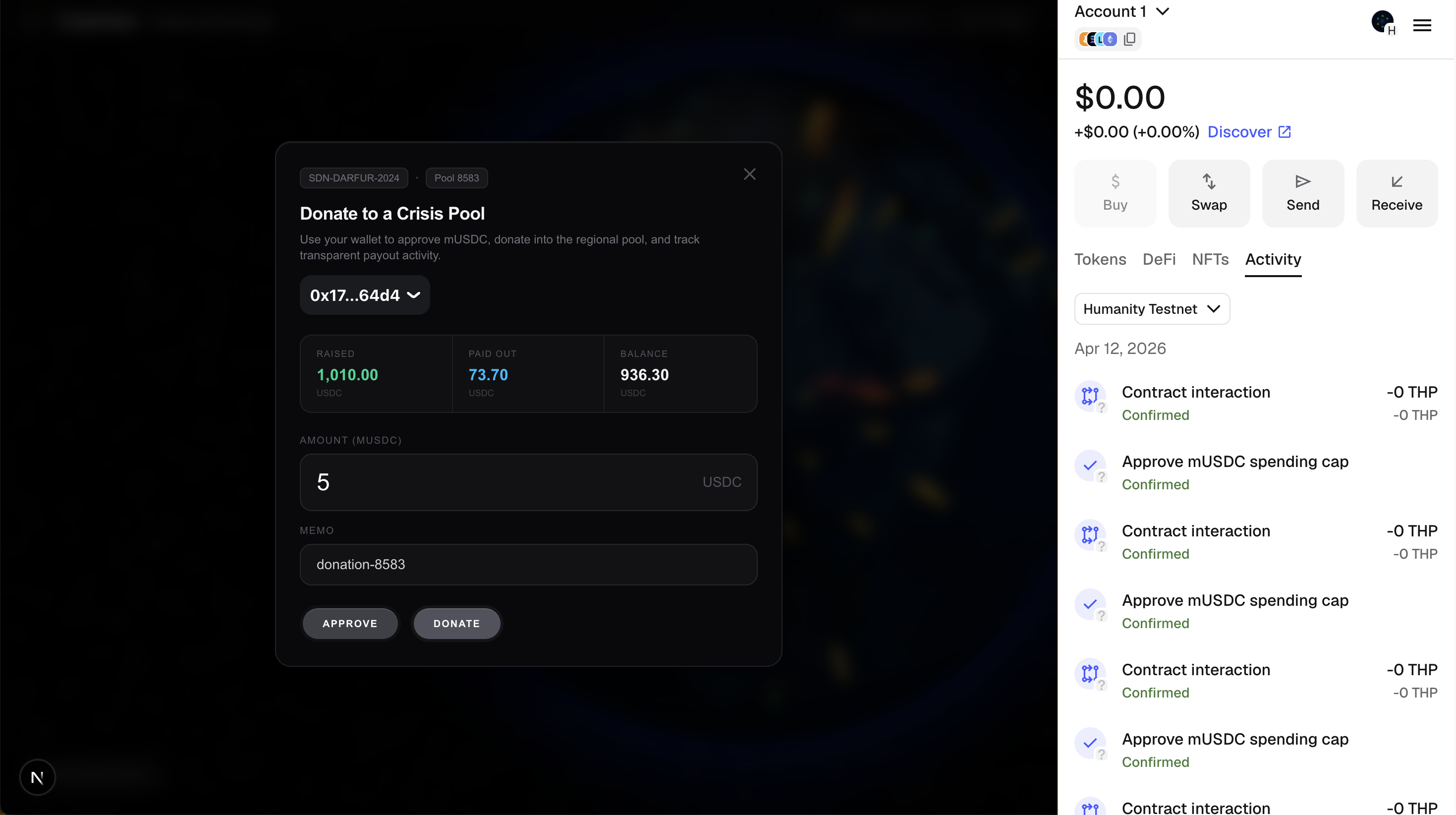
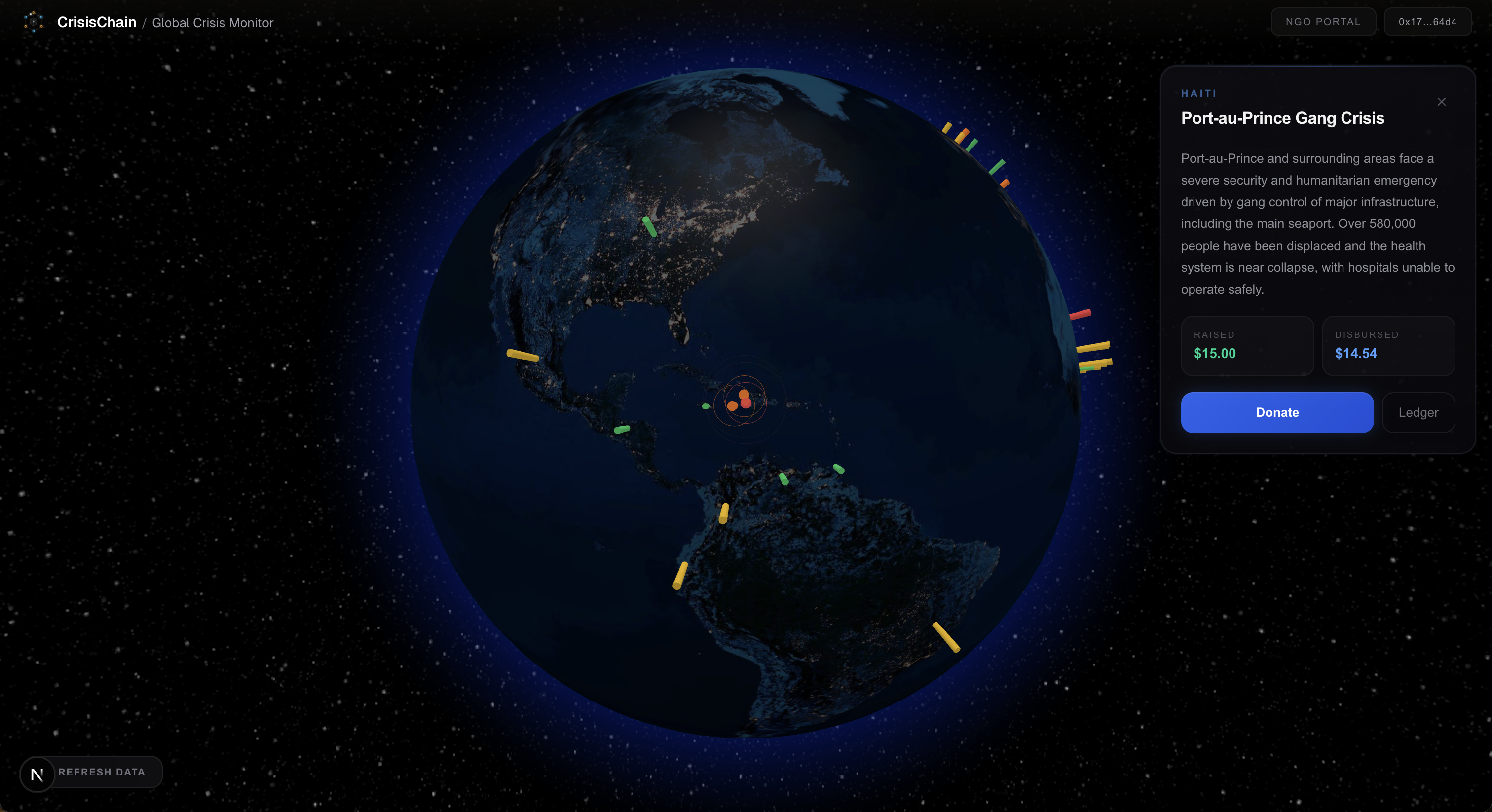
Donors contribute cryptocurrency directly to regional crisis funds, which are linked to NGOs operating in those regions. These funds exist on-chain, allowing donors to see exactly where their contributions go.
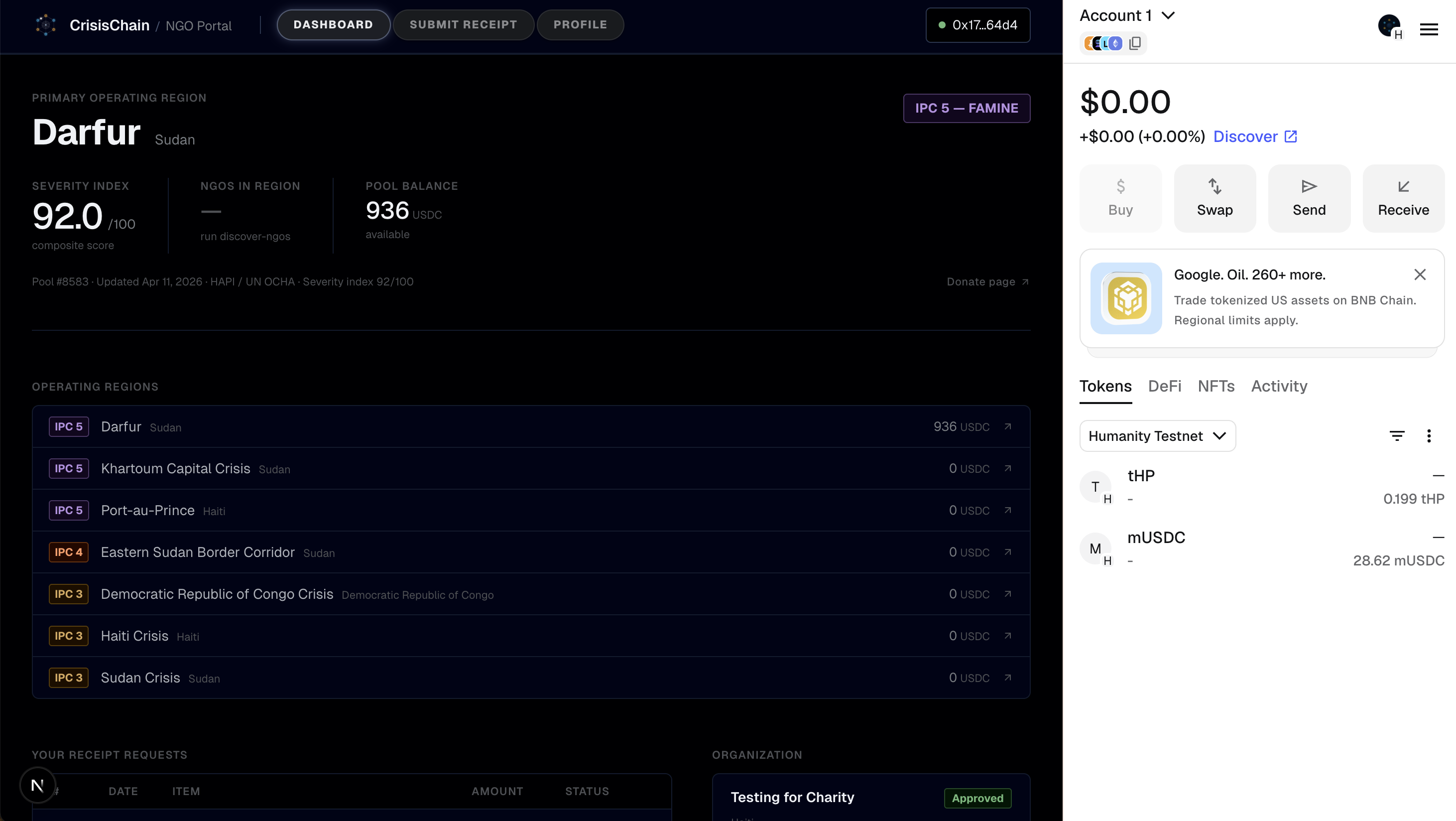
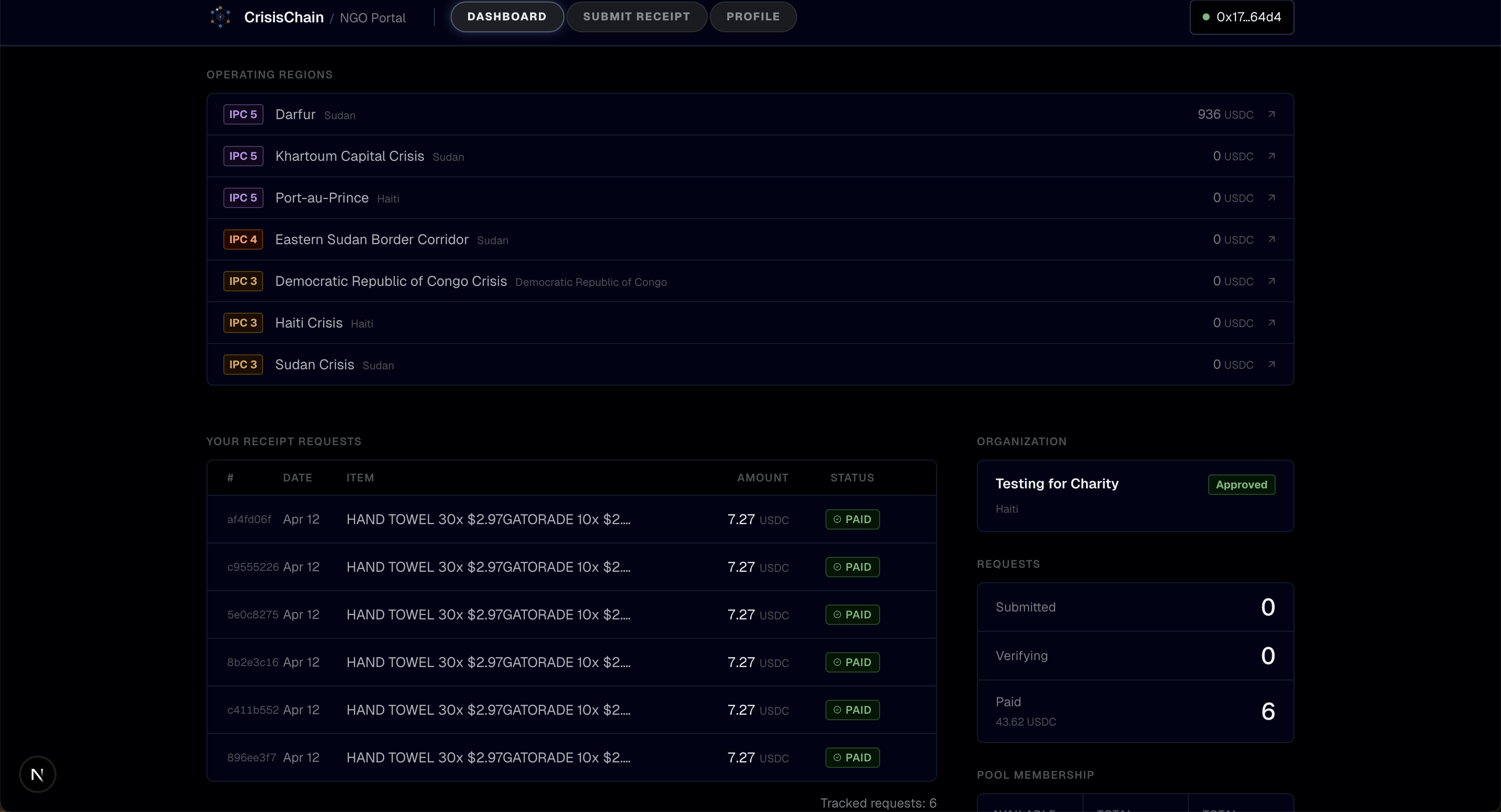
When NGOs purchase supplies—such as food, medicine, or shelter materials—they upload receipts through the platform. CrisisChain verifies these purchases and automatically reimburses the NGO from the regional fund, providing instant settlement without the delays and fees associated with international wire transfers.
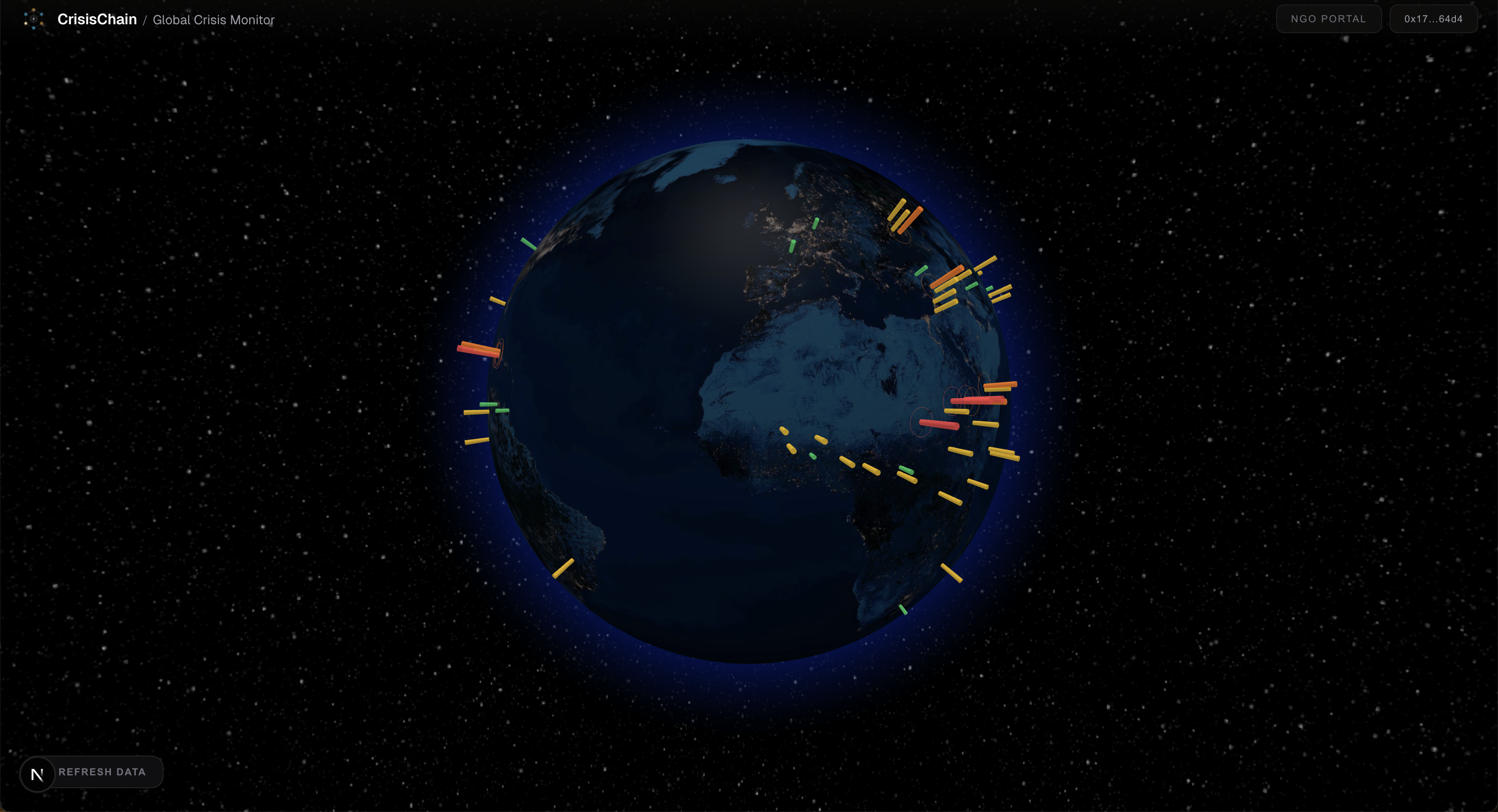
The system also integrates live humanitarian data sources to detect crisis severity and automatically deploy funding pools for regions experiencing escalating humanitarian needs.
In short, CrisisChain creates direct pipelines between donors and responders, powered by transparent ledgers and programmable payments.
How we built it
CrisisChain combines blockchain infrastructure, data pipelines, and real-world verification systems.
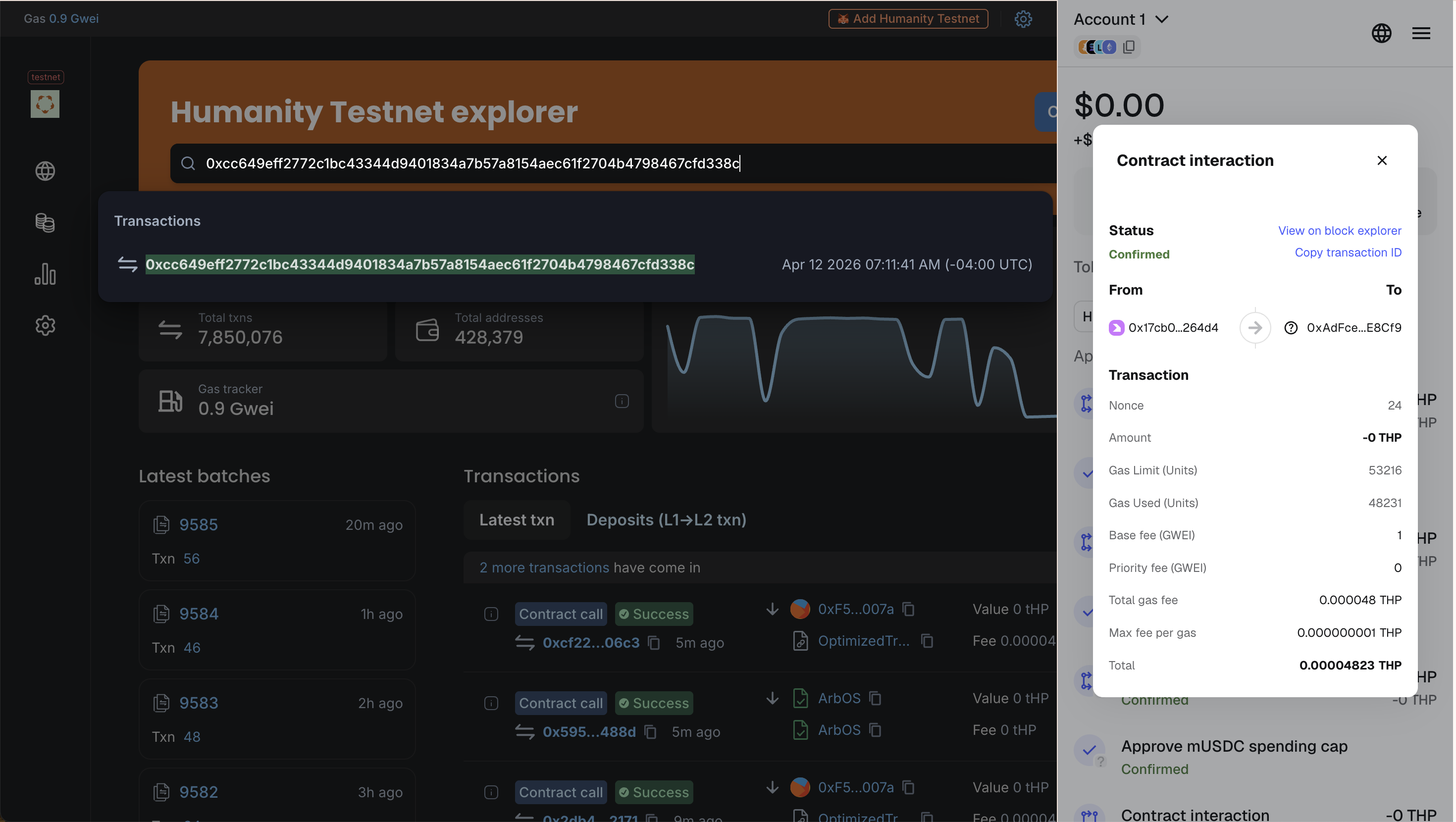
On the blockchain side, we built Solidity smart contracts that manage crisis funding pools and automated reimbursements. These contracts were deployed using Foundry and interact with an ERC-20 USDC-style token for stable donations.
To ensure transparency and accountability, we designed a Proof-of-Delivery verification system that aggregates multiple signals before releasing funds:
OCR analysis of uploaded receipts Geographic verification of delivery locations Peer NGO attestations Beneficiary confirmation
The backend infrastructure consists of several services:
A Rust indexer (Axum + Alloy) that tracks on-chain events and syncs them to a PostgreSQL database FastAPI services for crisis intelligence, AI summaries, and OCR receipt verification An Express API gateway that connects the web interface to the blockchain A Python data pipeline that ingests humanitarian data from ACLED, HDX HAPI, and ReliefWeb
For the frontend, we built a Next.js application using TypeScript, wagmi, viem, and RainbowKit for wallet connectivity. The crisis visualization layer uses react-globe.gl and Three.js to display live global crisis data.
All infrastructure runs in Dockerized services, allowing the system to simulate a full end-to-end humanitarian funding pipeline.
Challenges we ran into
Making crypto invisible
Humanitarian responders should not need to understand gas fees, wallets, or blockchain infrastructure just to receive funding. Designing a crypto-native system for users who are not crypto-native forced us to rethink UX repeatedly.
We simplified wallet authentication, removed unnecessary blockchain terminology, and redesigned flows so NGOs interact with familiar concepts like funds, receipts, and reimbursements, rather than contracts and transactions.
Designing trust without re-centralization
Automated payouts raise an important question: who verifies that aid actually happened?
Relying on a single oracle introduces a dangerous central point of failure. Instead, we built a multi-signal trust model that combines independent verification sources. By requiring a threshold of signals before releasing funds, the system reduces the risk of fraud while avoiding centralized control.
Turning humanitarian data into automated action
Humanitarian datasets are extremely rich but not designed for automation. Data from sources like ACLED and HDX had different formats, region identifiers, and severity indicators.
We built a normalization pipeline that converts heterogeneous crisis signals into a unified severity score, which can automatically trigger the deployment of a funding pool on-chain.
Accomplishments that we're proud of
Building a full end-to-end prototype that connects donors, NGOs, crisis data, and blockchain infrastructure in a single system Designing a multi-signal verification model for humanitarian reimbursements Successfully integrating real humanitarian data sources into an automated funding pipeline Creating a system where donations, purchases, and reimbursements are transparently visible on-chain Shipping a working system in a single hackathon weekend
Most importantly, we demonstrated that blockchain infrastructure can move beyond speculation and become practical infrastructure for humanitarian response.
What we learned
One of the biggest lessons was that the barrier to blockchain adoption is rarely the technology itself—it is the user experience.
If a system requires users to understand private keys, gas fees, or network configurations, it will never be adopted by humanitarian organizations working in crisis environments.
We also learned that the data for crisis response already exists. The missing piece is the infrastructure that can act on that data automatically. Building CrisisChain showed us that this automation layer is not only possible—it is achievable even in a short development cycle.
What's next
Our next goal is to turn CrisisChain from a prototype into a deployable humanitarian infrastructure layer.
Future development includes:
Adding geotracking and reading receipt meta data along with photo verification of deliveries and orders to reduce the amount of fraud possible with receipts Integrating real stablecoins and live blockchain networks (not just testnets) Partnering with NGOs and humanitarian organizations for real-world pilots Expanding the verification network to include more independent data sources Improving mobile-first UX for responders operating in the field Building deeper analytics tools for donors to track impact
Long term, we envision CrisisChain as an open protocol for humanitarian funding, where donors, NGOs, and data providers can coordinate aid transparently and efficiently across borders.
Built With
- acled
- axum
- docker
- erc
- express.js
- fastapi
- foundry
- humanity
- next.js
- ocr
- postgresql
- rainbowkit
- reliefweb
- rust
- solidity
- testnet
- typescript
- usdc
- viem
- wagmi


Log in or sign up for Devpost to join the conversation.