-
-
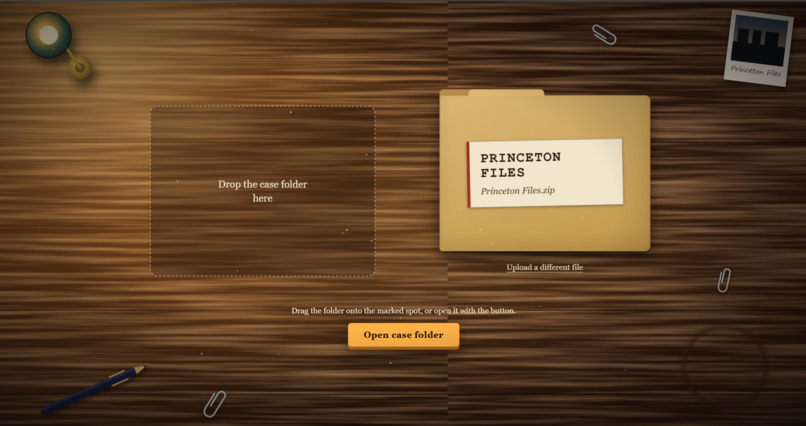
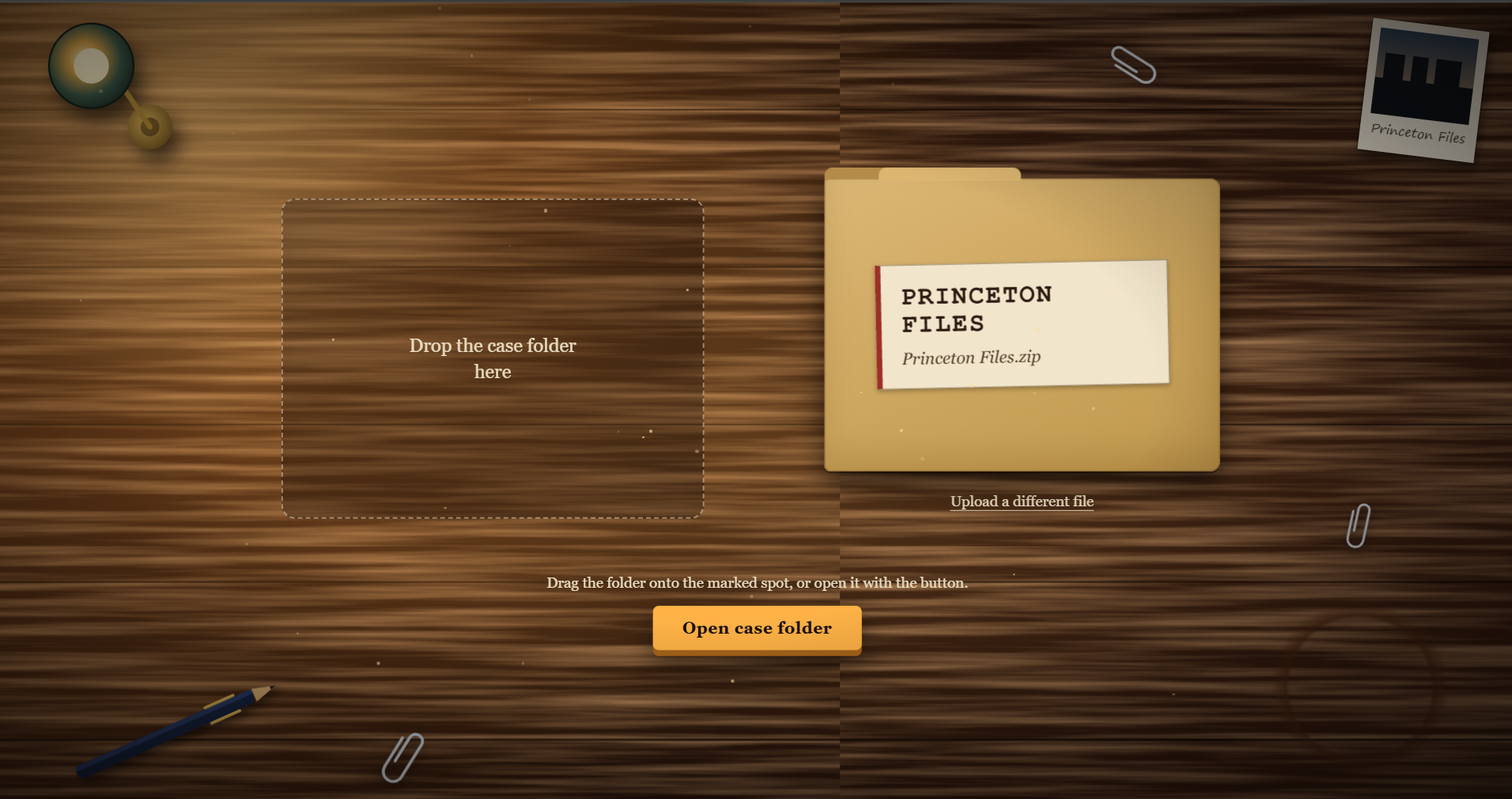
Upload Page
-
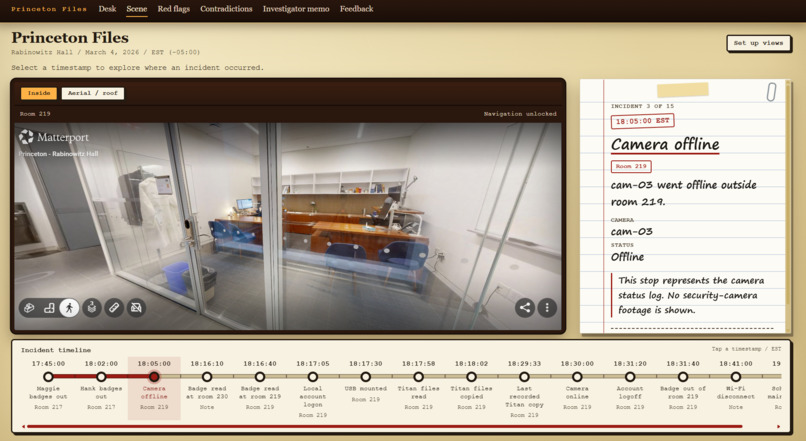
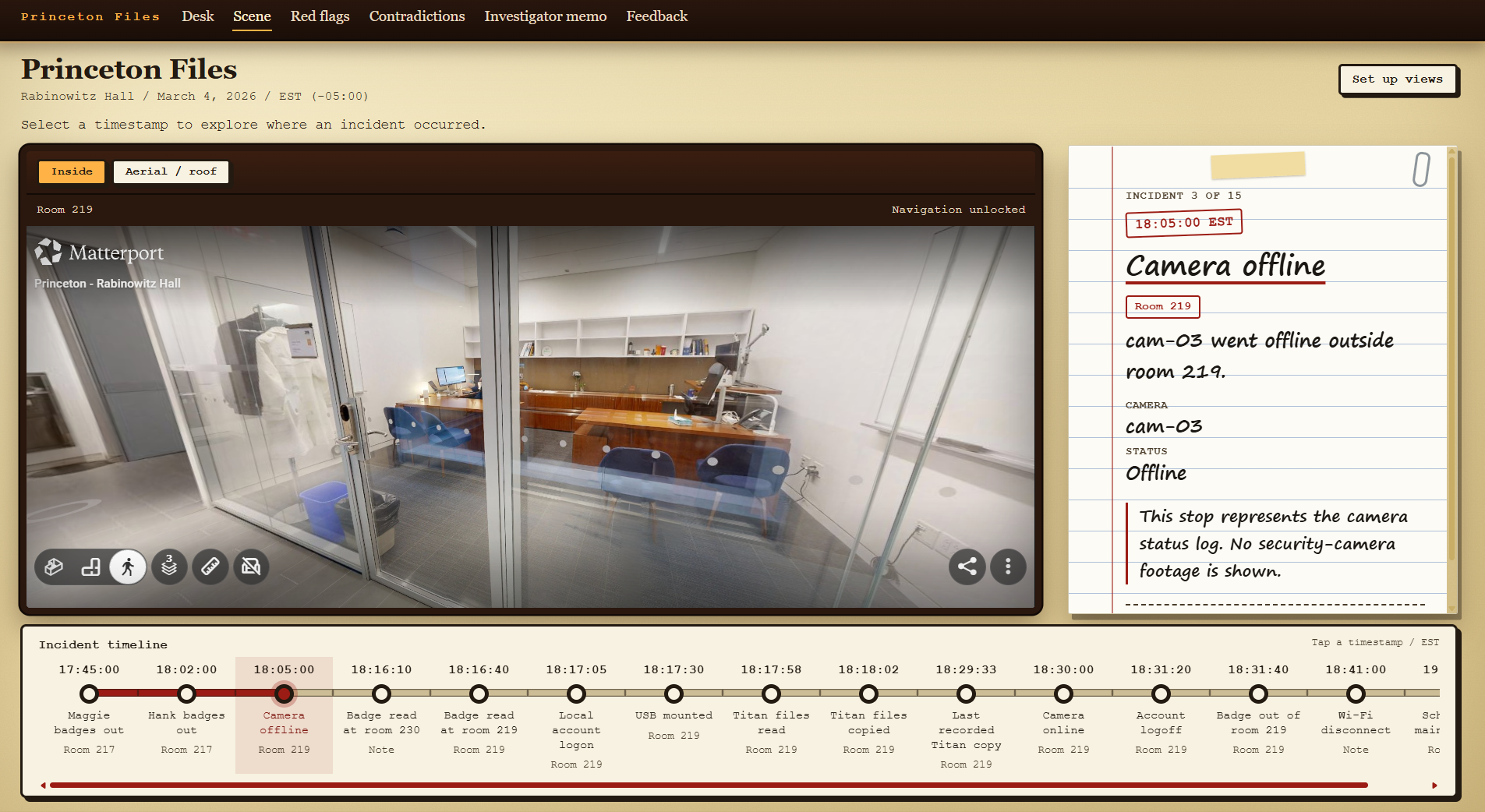
Matterport + Vexcel 3D Visuals
-
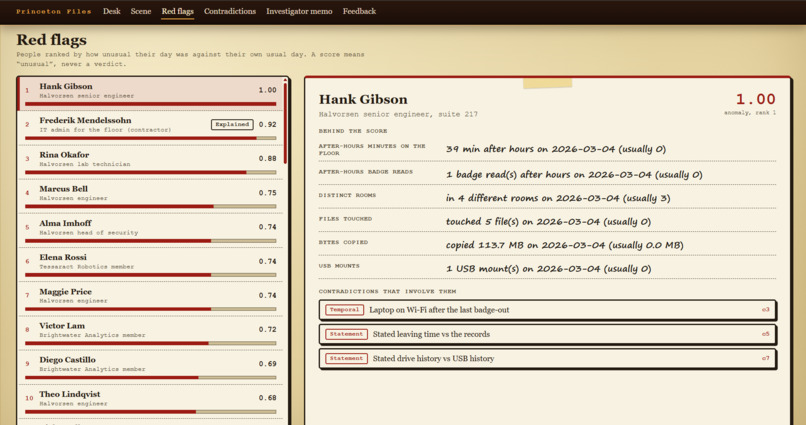
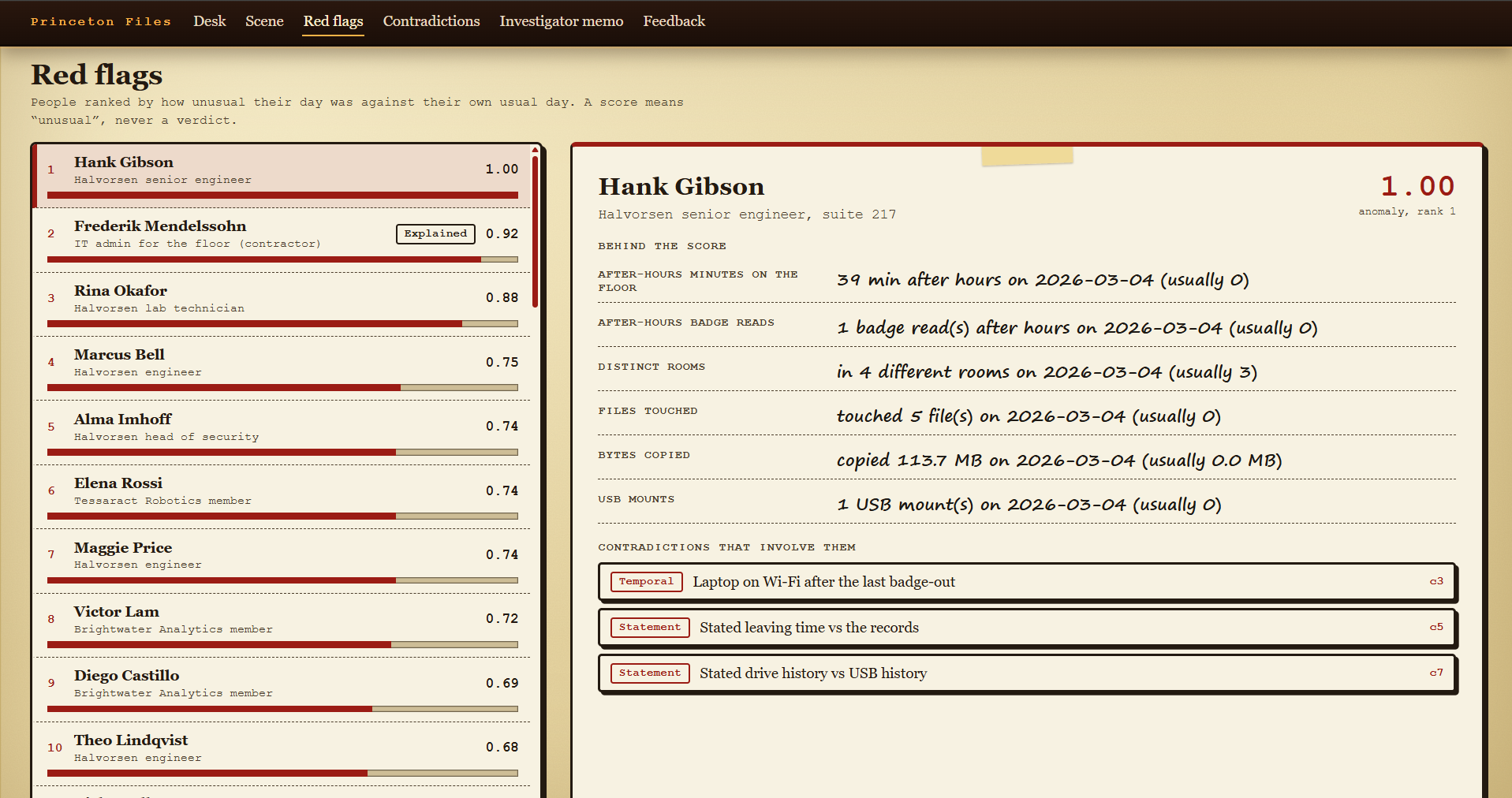
ML Output of Anomalies
-
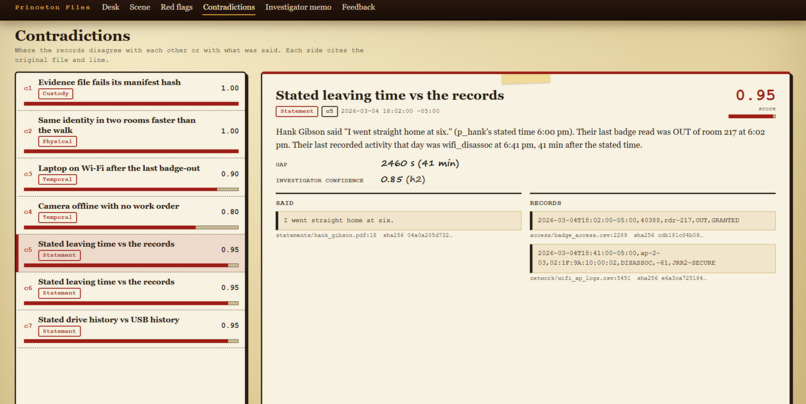
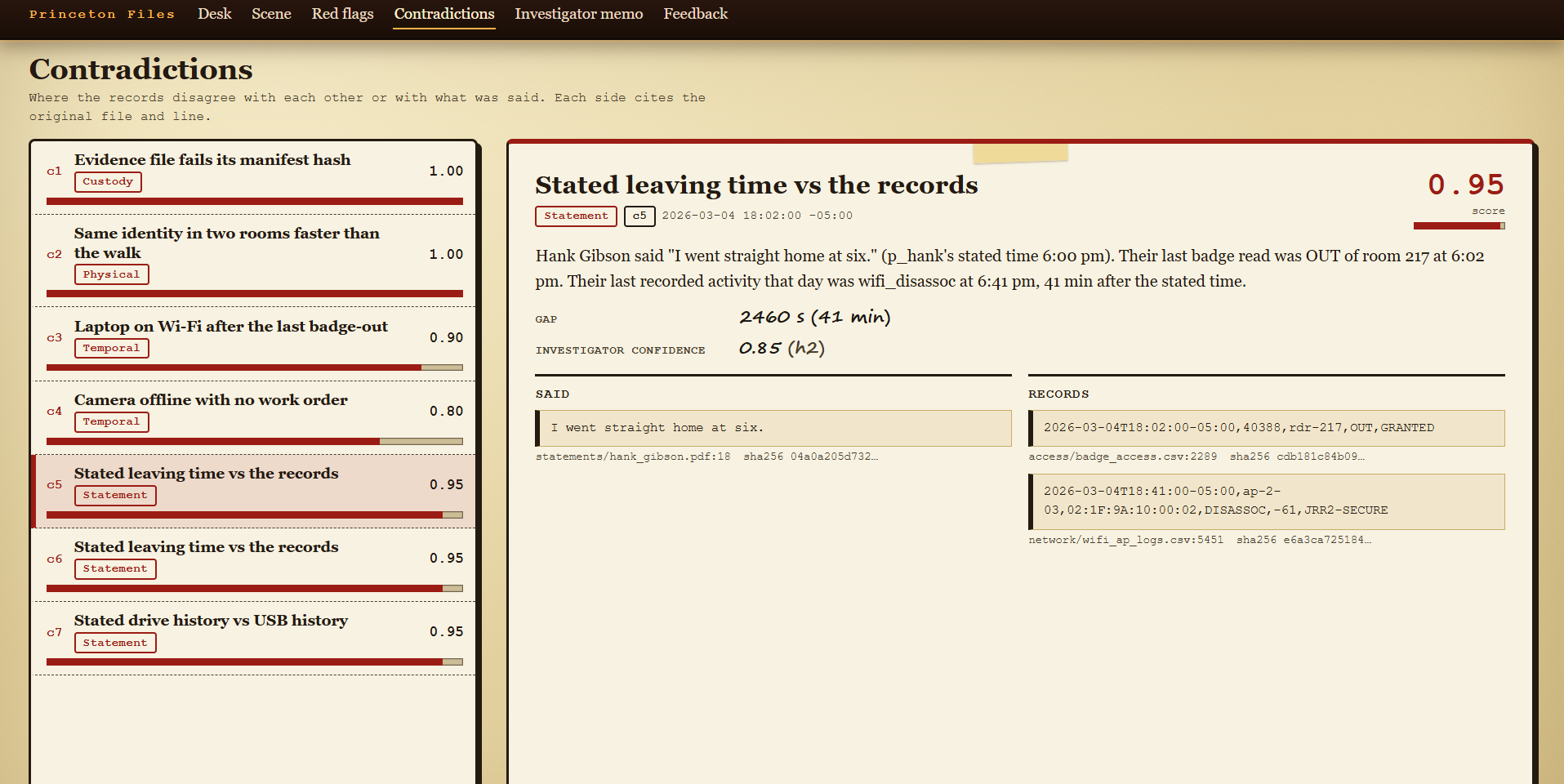
Contradictions
-
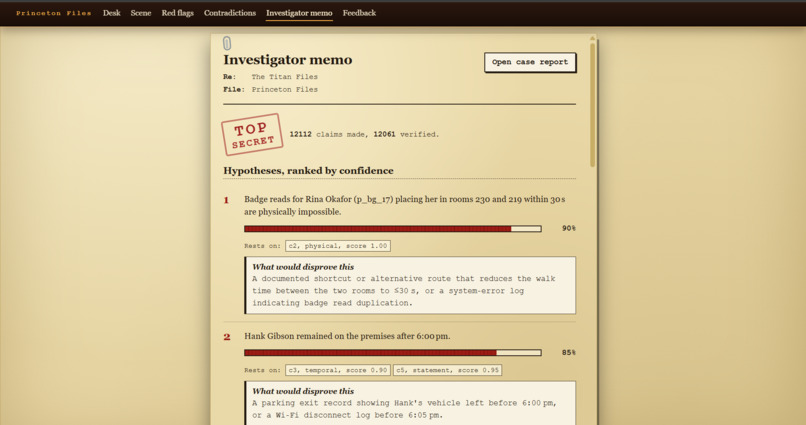
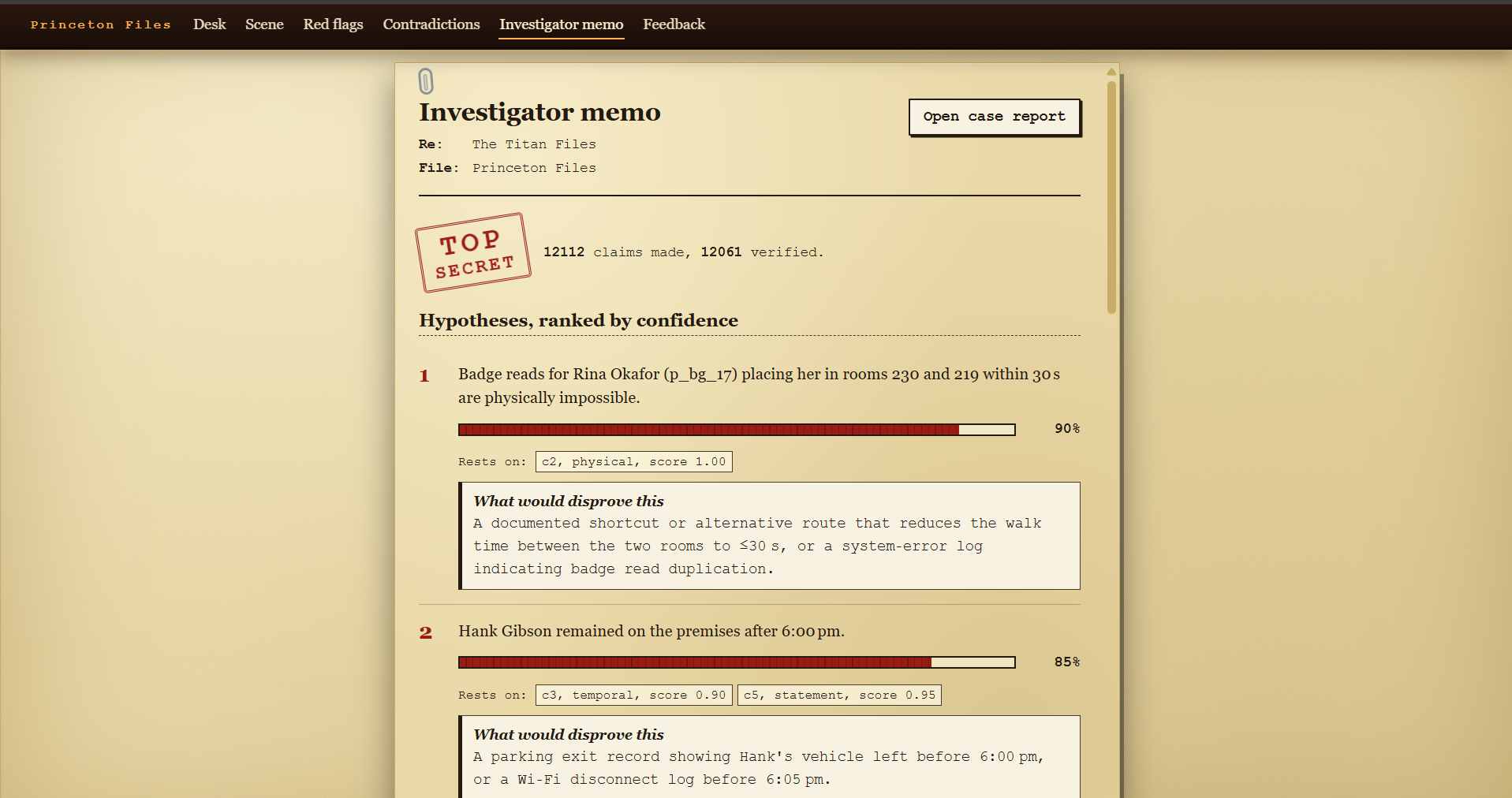
Investigator Memo
Inspiration
In 1980, police in the US cleared over 70% of murder cases. By 2023, that number had dropped to 58%.
Since then we've gained phones that log every location, badge readers on every door, Wi-Fi that remembers every device, cameras on every corner. With all that progress, cases should be getting solved faster, right?
So what happens when our ability to collect evidence far outpaces our ability to parse it?
Detectives end up buried in spreadsheets, cross-referencing badge swipes against Wi-Fi logs against witness statements by hand, for weeks. The contradiction that cracks a case is often sitting right there, hidden in the gap between two files nobody had time to line up.
The scene itself has the same problem. Preserving a crime scene in 3D usually means a forensic laser scanner that can cost $50,000 to $90,000, or paying an outside firm that owns one. Many departments simply can't. But a scene changes the moment people walk through it, and a trial can happen years later.
Not every Sherlock has a Watson. So we built Princeton Files, a supplementary tool that carries part of that load, so the detective can spend their time thinking instead of being buried under enormous data records. It connects the dots. The detective decides what they mean.
What it does
Mainly, it does the cross-checking a detective would otherwise do by hand.
- Reads the whole case folder (logs, records, emails, statements) and builds one timeline
- Checks every claim against every other piece of evidence and flags contradictions using a deterministic ML model, like a badge swipe the Wi-Fi disagrees with, or "I went straight home at six" against a 6:44 pm parking exit
- Clears red herrings with evidence, not hunches
- Verifies every finding against the raw files (exact quote, hash, chain of custody) before showing it, and lists what it rejected
- A lead investigator agent writes a memo of ranked hypotheses and requests specific missing evidence
- A typewritten feedback letter asks sharp follow-up questions: what would confirm or disprove each theory
- Never labels anyone a perpetrator. It reports facts and conflicts. The detective makes every call.
It also keeps the scene in the case. Pick a timestamp and see where in the building an event happened. The scene is built with Matterport, which captures from a phone, so any department can scan a location and walk through a 3D replica of it later, without buying or outsourcing expensive scanning hardware.
How we built it
- Frontend: React, Vite, TypeScript and Framer Motion, styled as a golden paper case file with a typewriter effect
- Backend: FastAPI with a staged pipeline: ingest, extract, resolve, graph, detect, verify, analyze, critique
- Agents: a LangGraph pipeline with a lead investigator built on deepagents and specialist subagents (timeline, physics, comms, money), running on Groq
- Local analysis: IsolationForest model to flag outliers, a rules engine plus a local NLI model that detects contradictions between statements and records
- Verifier and safety nets: quote, hash and custody checks; a rules-engine fallback if the model is unavailable; a wording filter that blocks verdict and intent language, so the tool can't slip into accusing anyone
- Scene: a Matterport 3D model of the real Princeton JRR building, linked to the evidence timeline
- The case: The Princeton Files, a synthetic case set in that building, with planted contradictions and red herrings so we could test whether it finds what it should and clears who it should
Challenges we ran into
- Making sure AI output can't reach the detective unless the raw evidence backs it up
- Groq rate limits and changing model availability, so we select models dynamically and fall back gracefully
- Windows file locks, and integrating four people's work into one pipeline in 36 hours
Accomplishments that we're proud of
- A verifier that rejects any claim the raw evidence doesn't support
- The pipeline runs end to end on about 12,000 evidence events and finds the planted contradictions, including a tampered log caught by a hash mismatch
- It clears its red herrings instead of accusing them
- Hundreds of automated tests passing
- A case file that actually feels like a case file
What we learned
- Verification matters more than generation: a small set of checked facts beats a large set of plausible ones
- A good evidence tool should refuse to conclude. The best output is a sharper question.
- Integration is a feature. Four slices, one pipeline, and a demo that has to survive a live run.
What's next for Princeton Files
- More case types and real-world evidence formats
- Live evidence requests that rerun the analysis when new files arrive
- Lower latency without compromising integrity
Built With
- ai-agents
- css
- deepagents
- fastapi
- framer-motion
- git
- github
- groq
- html
- langchain
- langgraph
- llm
- matterport
- natural-language-processing
- pydantic
- pytest
- python
- pytorch
- react
- sentence-transformers
- sse
- typescript
- uvicorn
- vite


