-
-
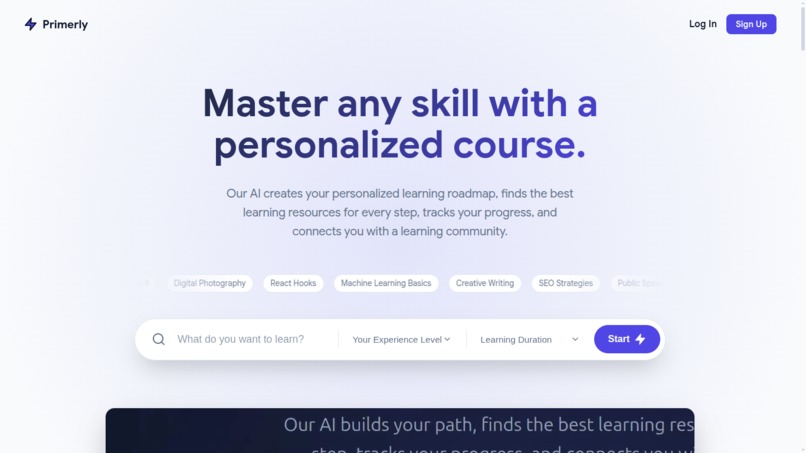
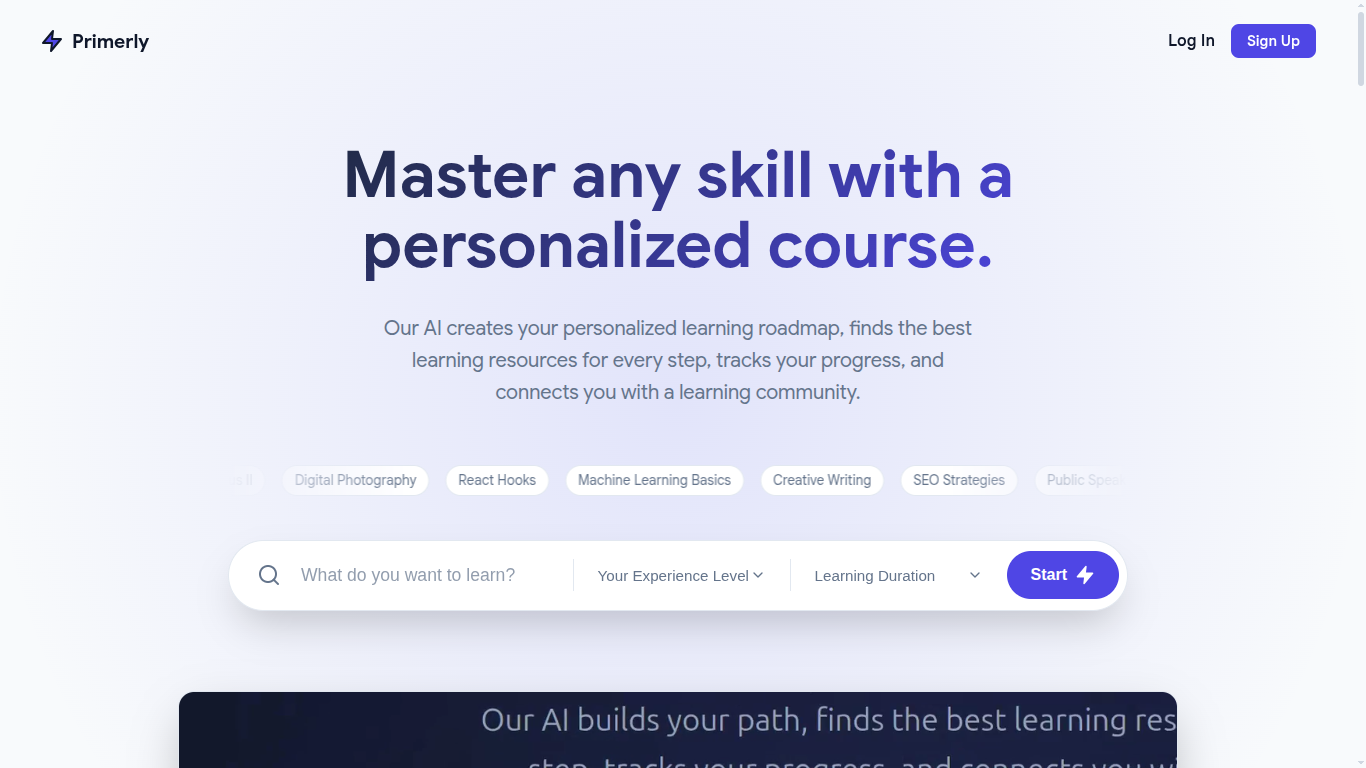
Landing page
-
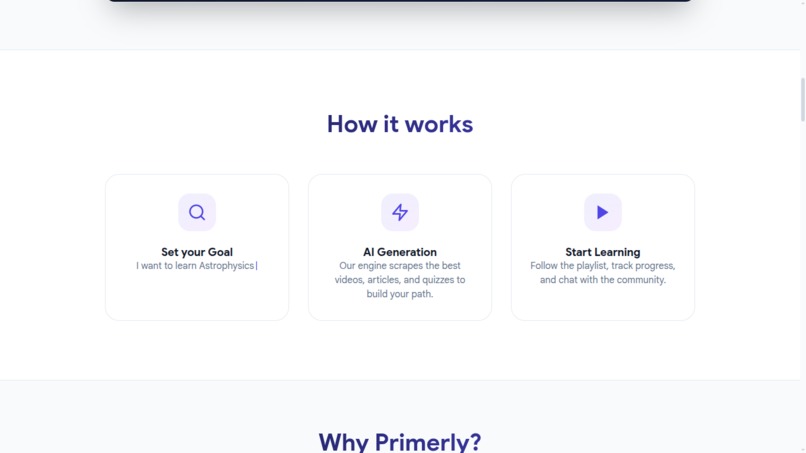
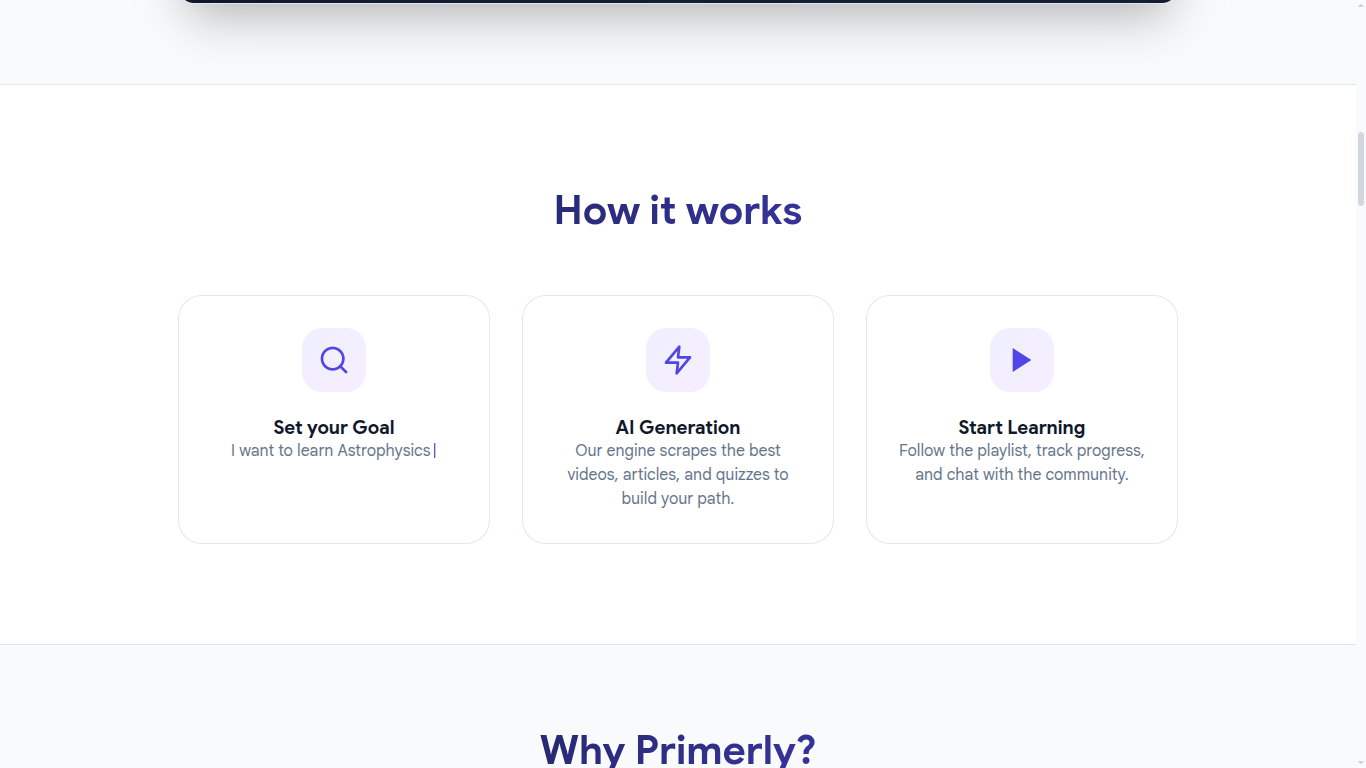
How it works
-
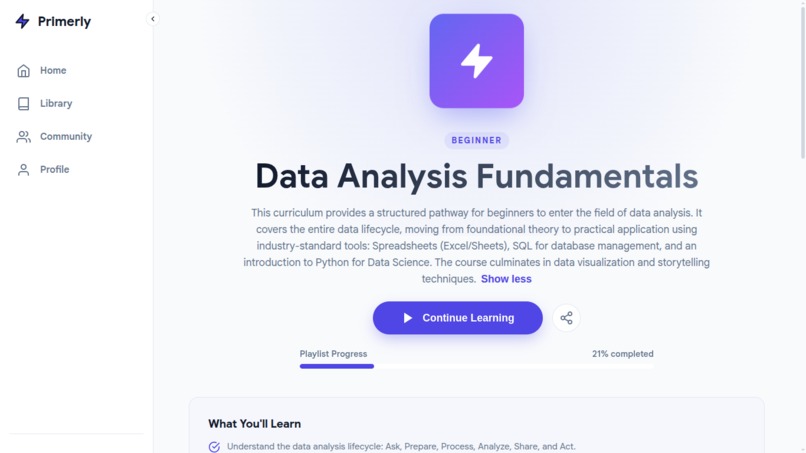
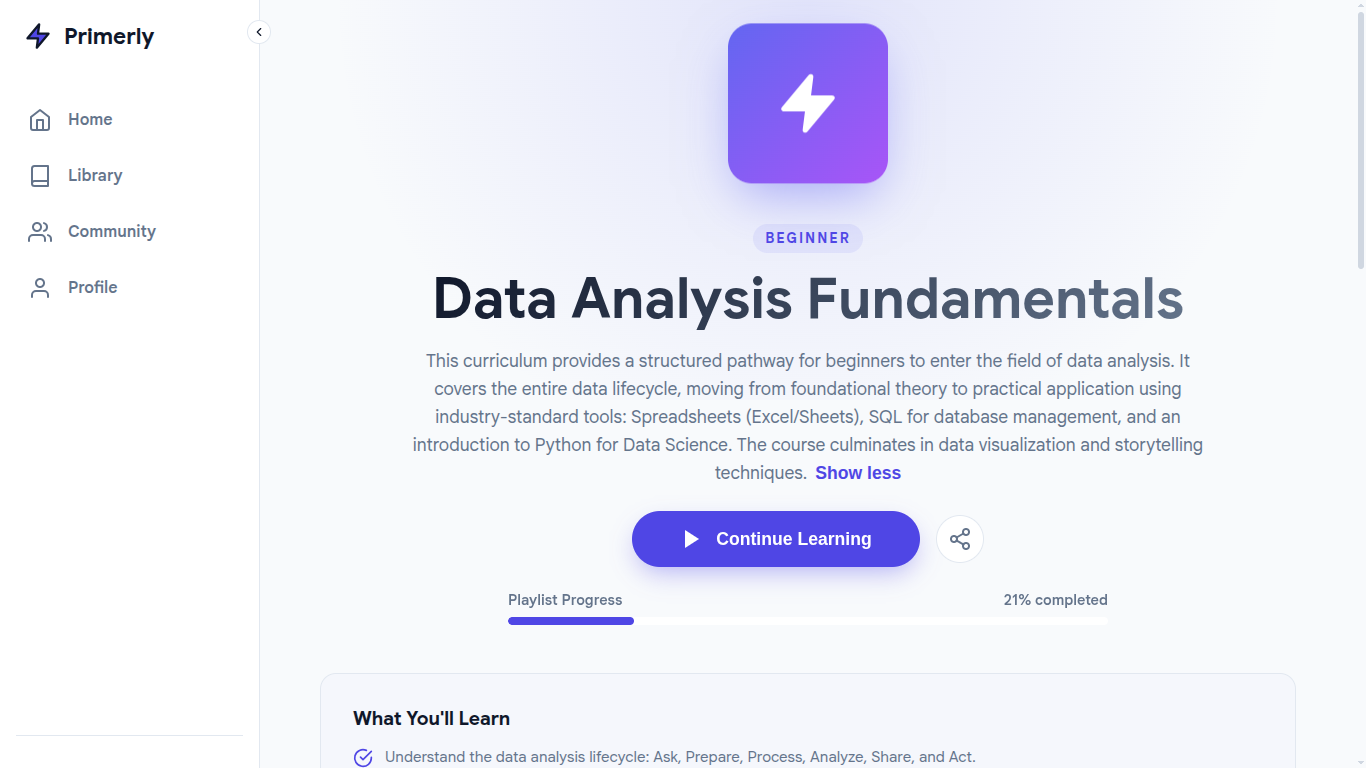
Gemini-generated Curriculum
-
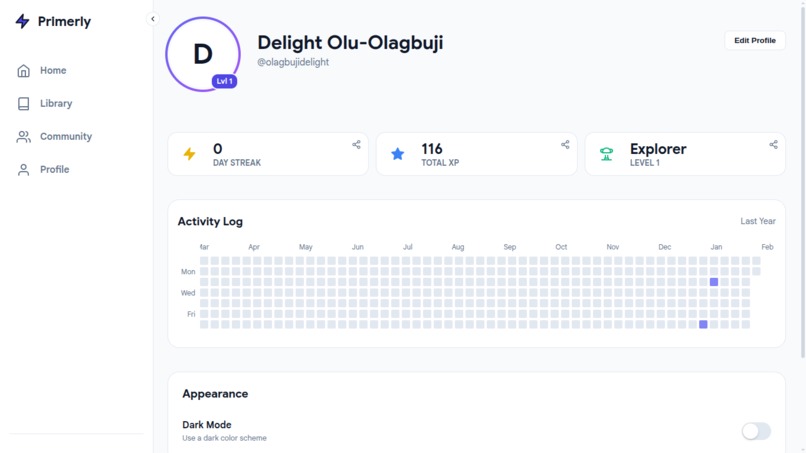
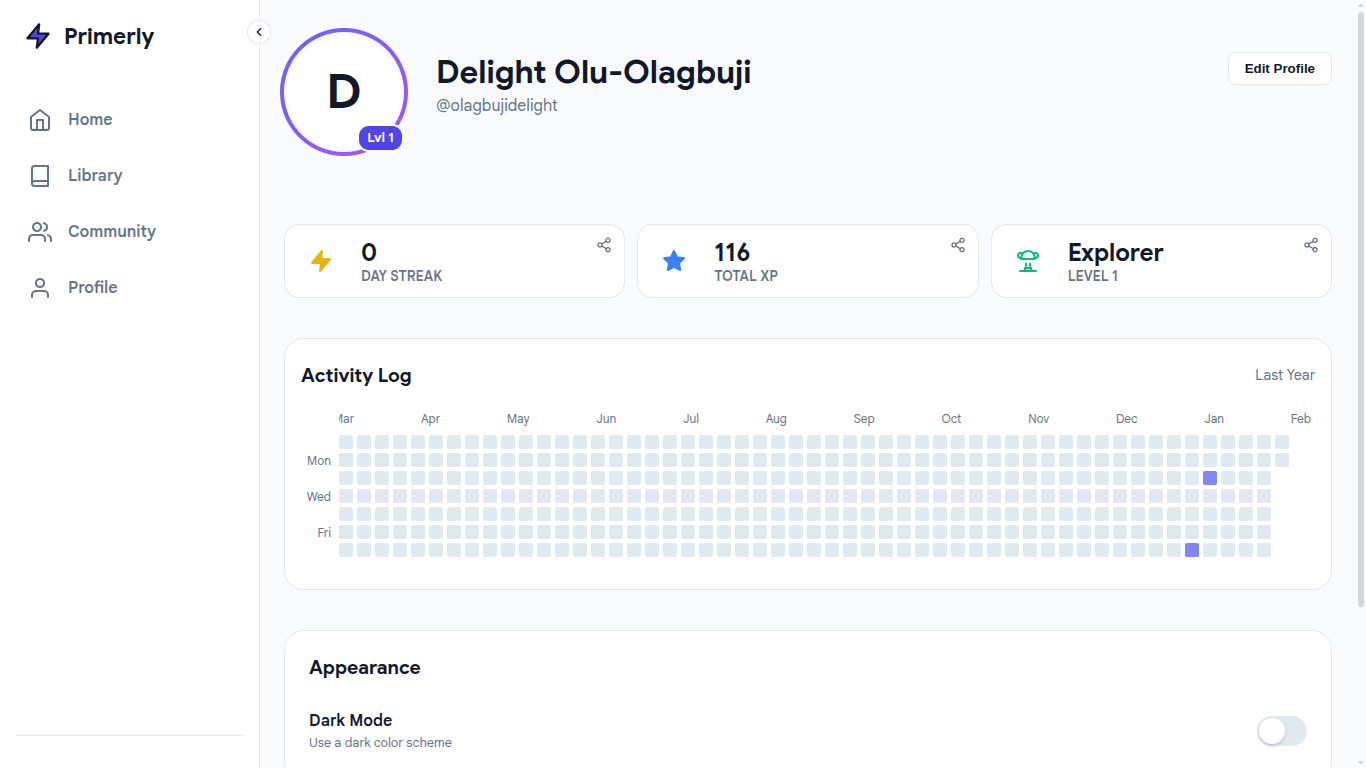
User Activity Profile
-
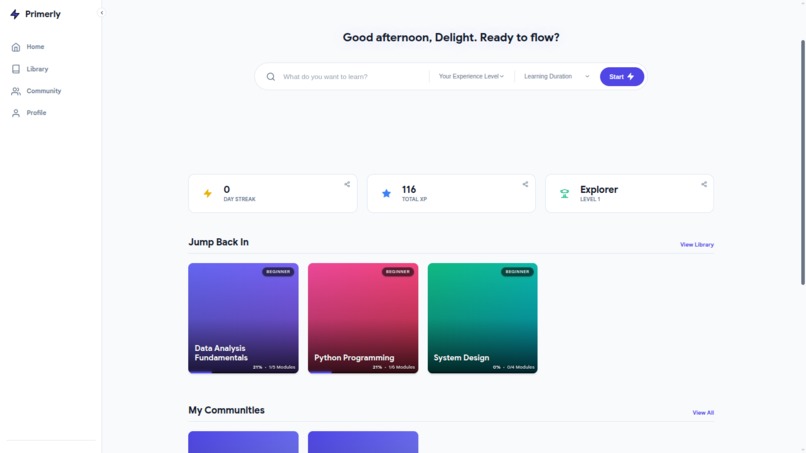
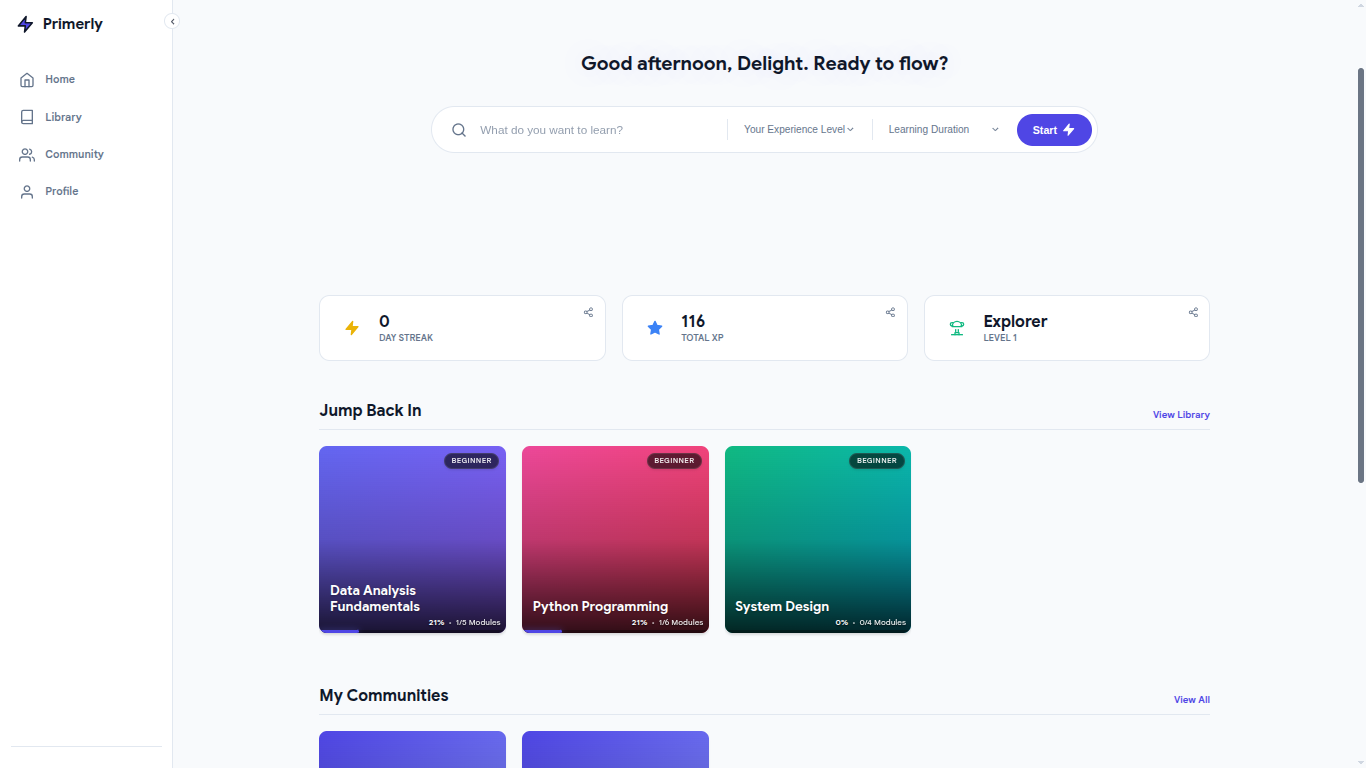
User Dashboard
-
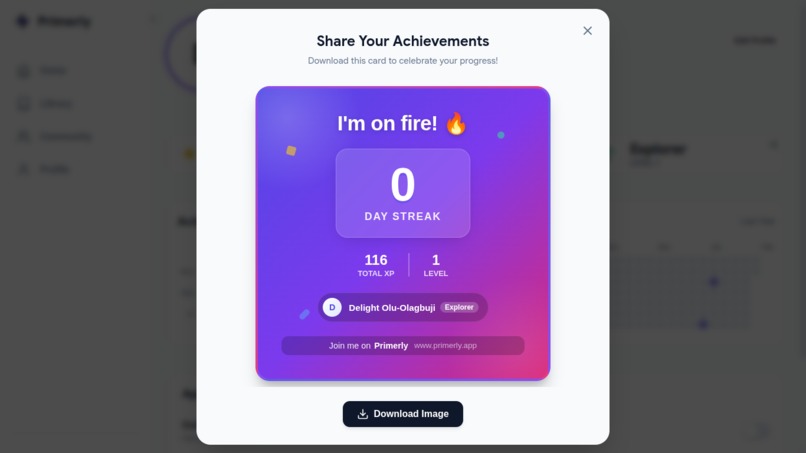
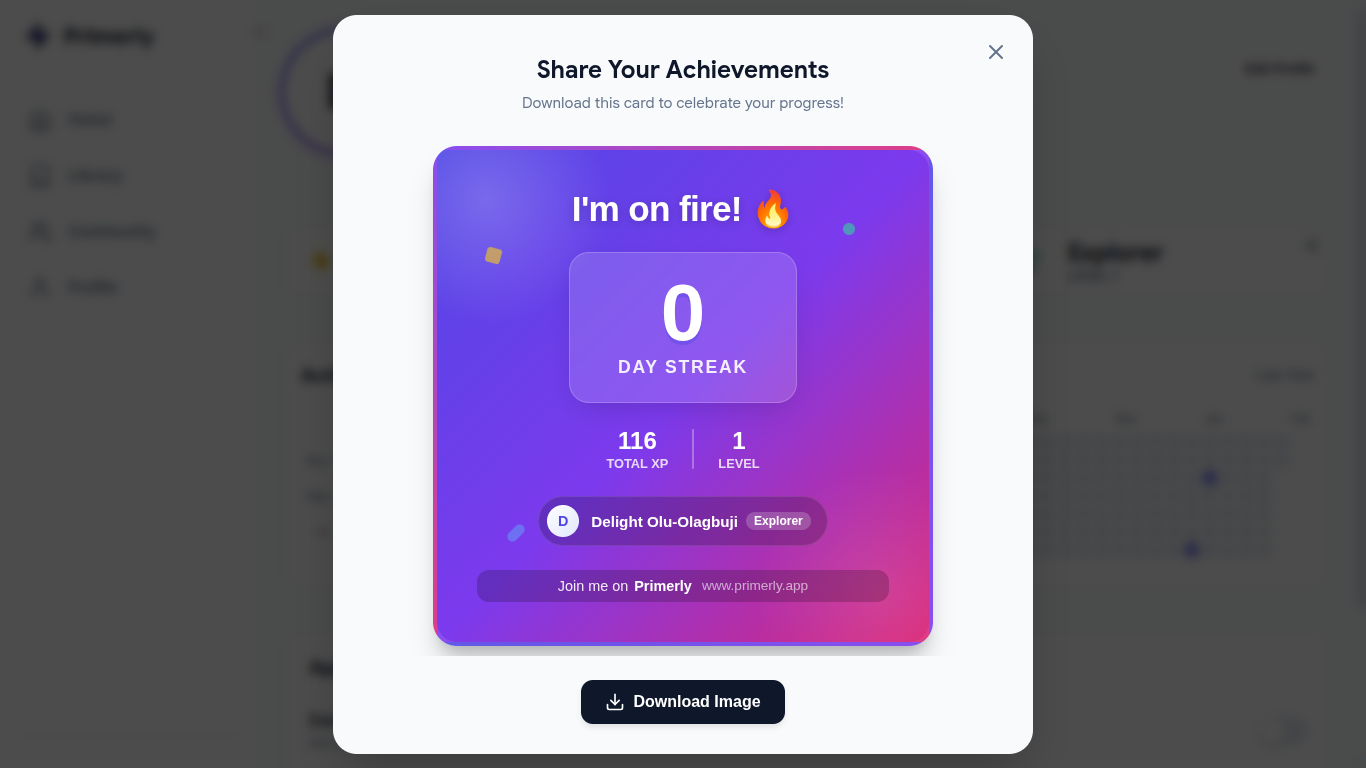
Shareable achievements
-
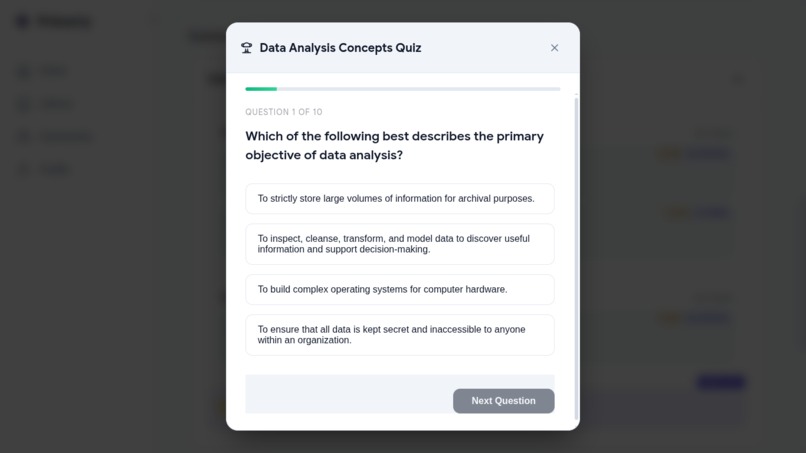
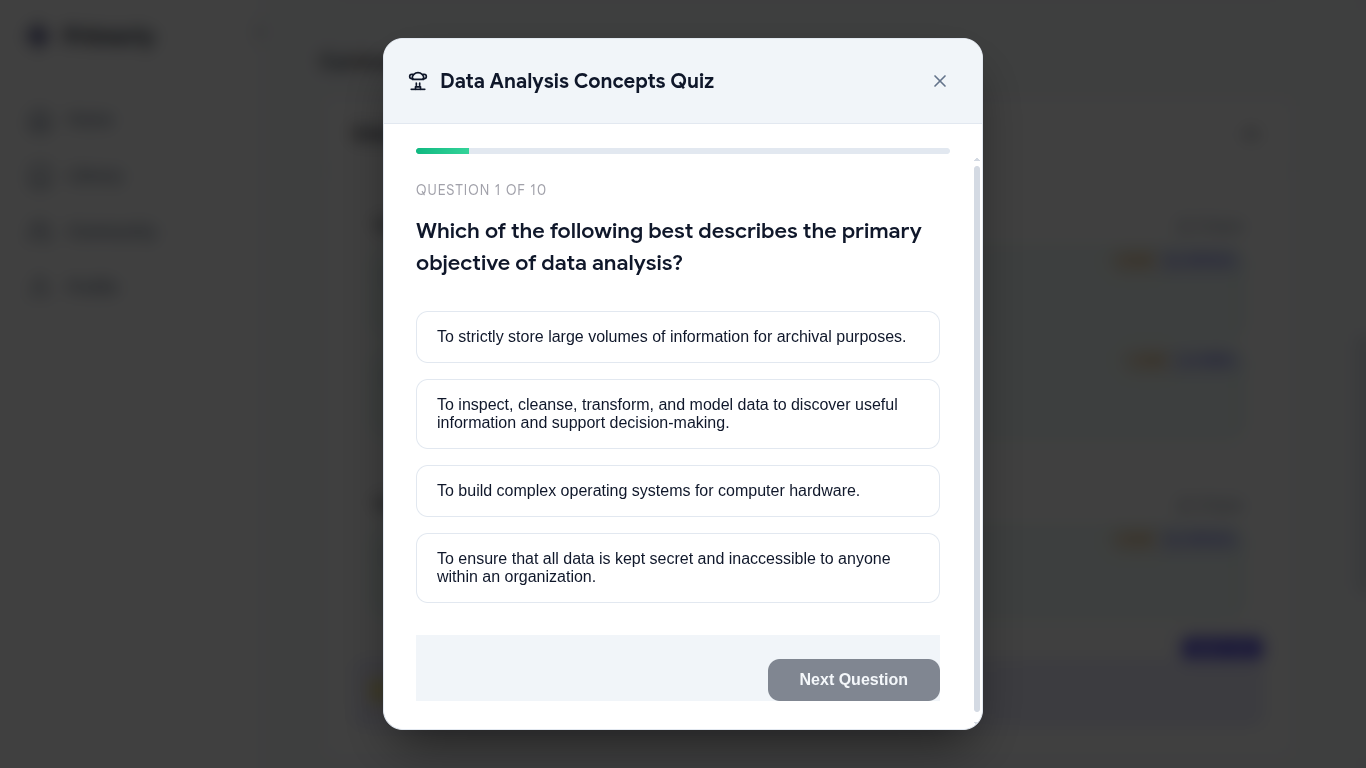
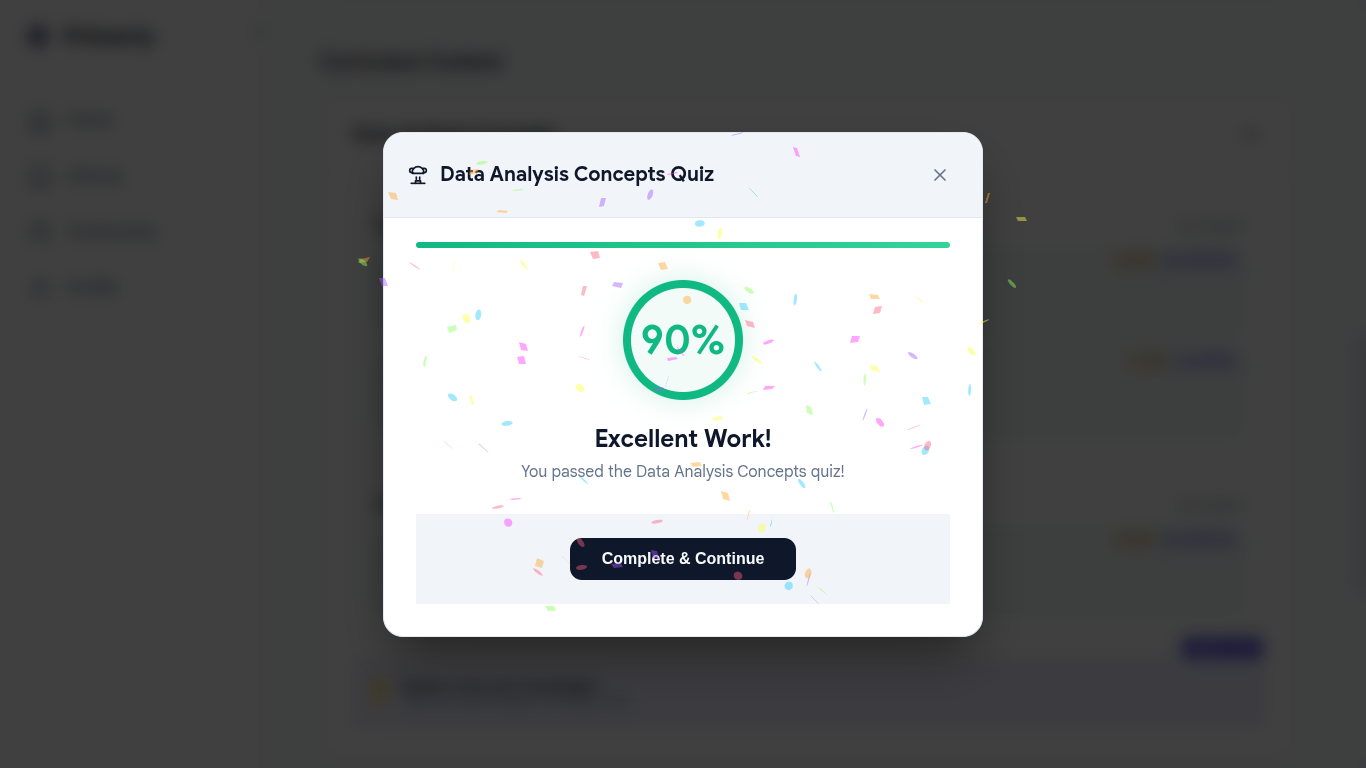
AI-generated quizzez
-
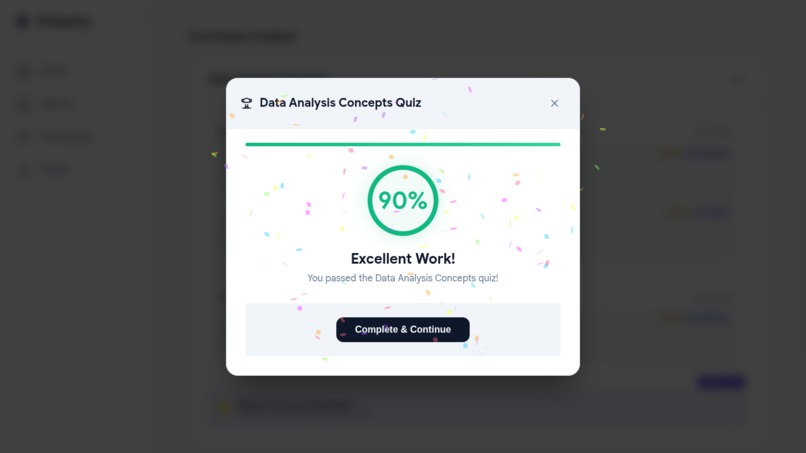
AI-generated quizzes
-
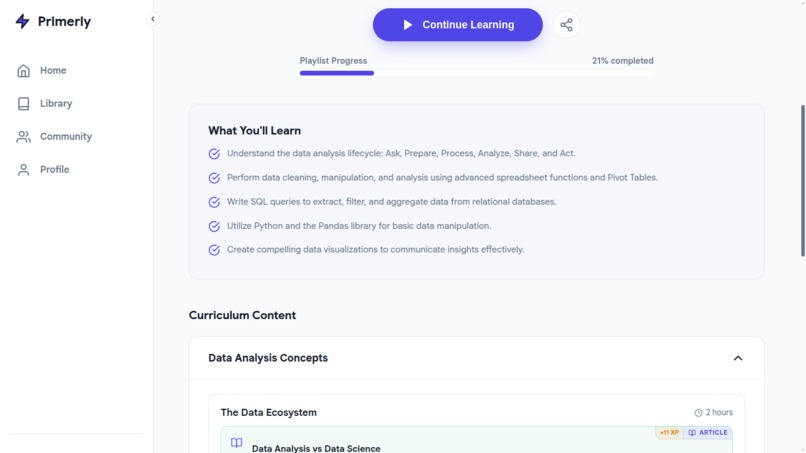
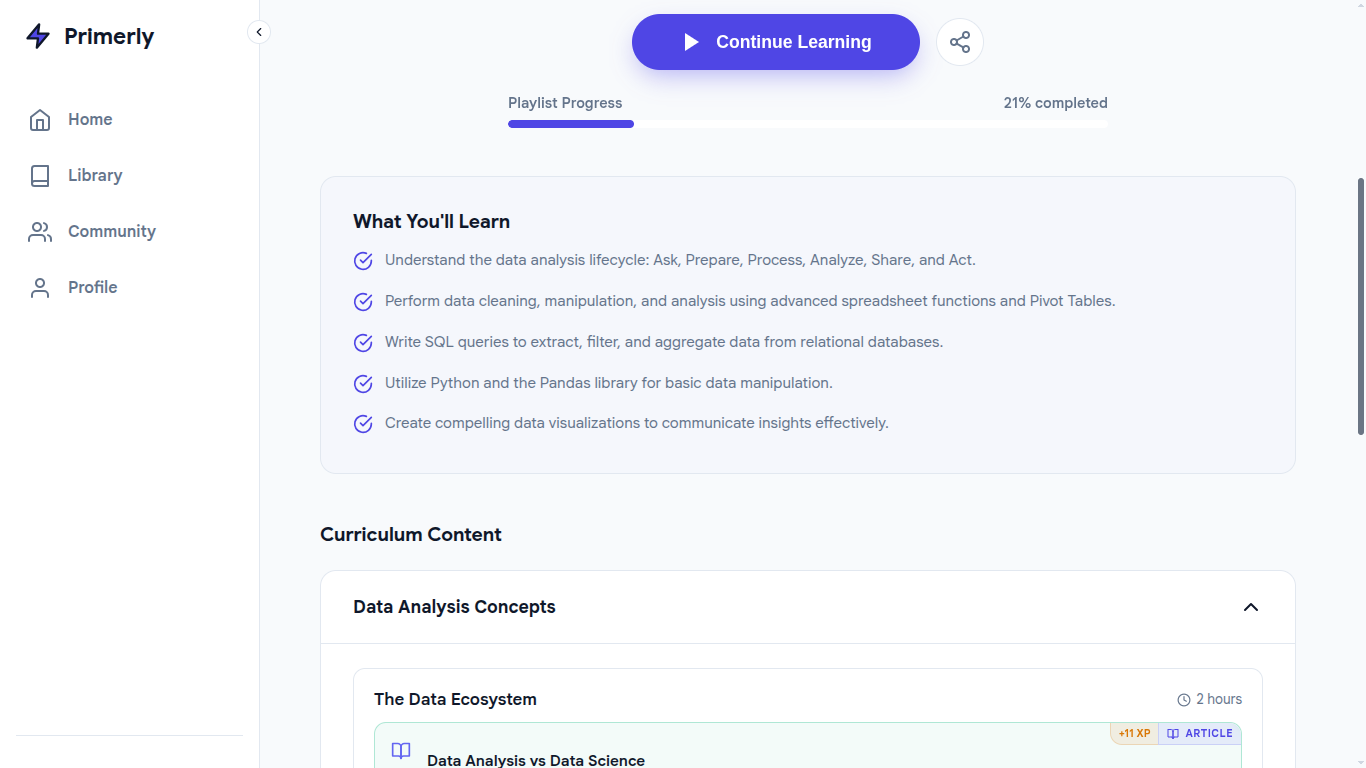
Gemini-generated Curriculum Learning Objectives
-
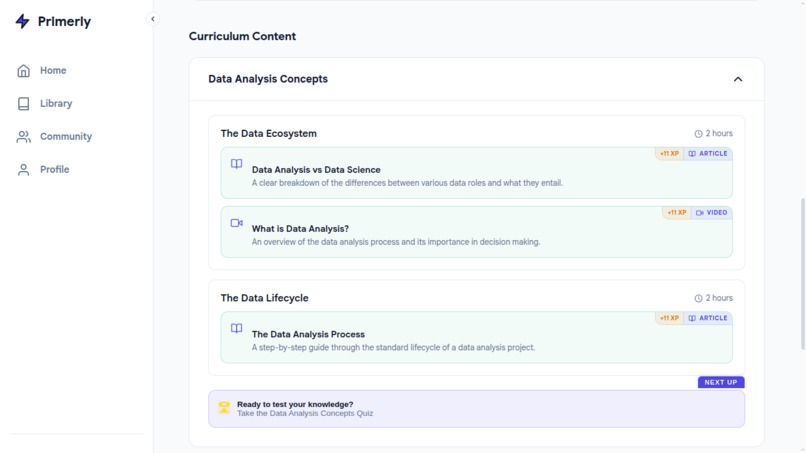
Gemini-generated Curriculum content
-
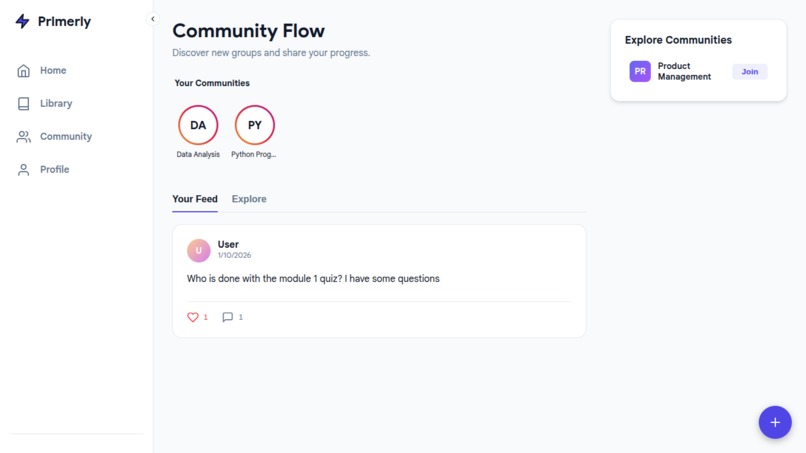
In-app Communities
-
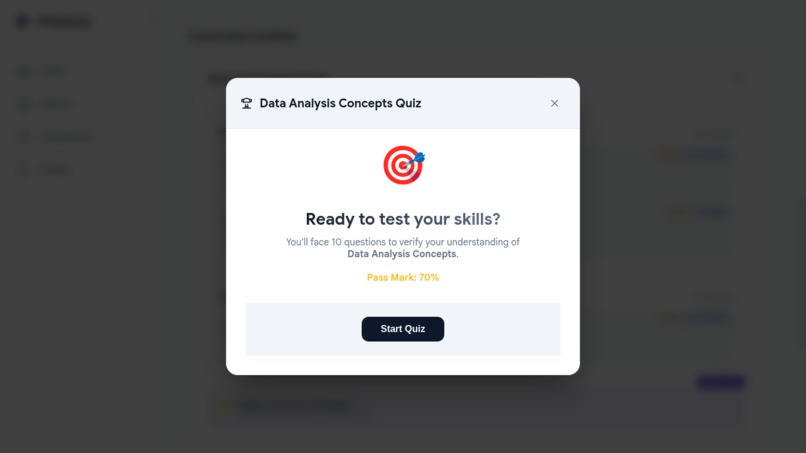
AI-generated quizzez
-
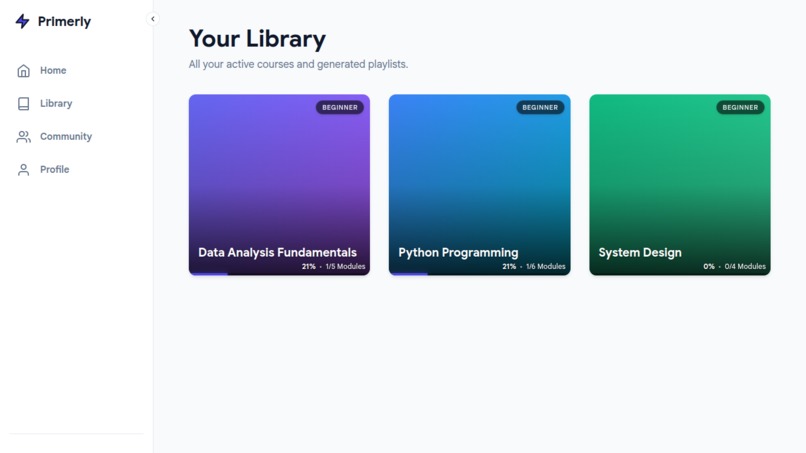
Course List
-
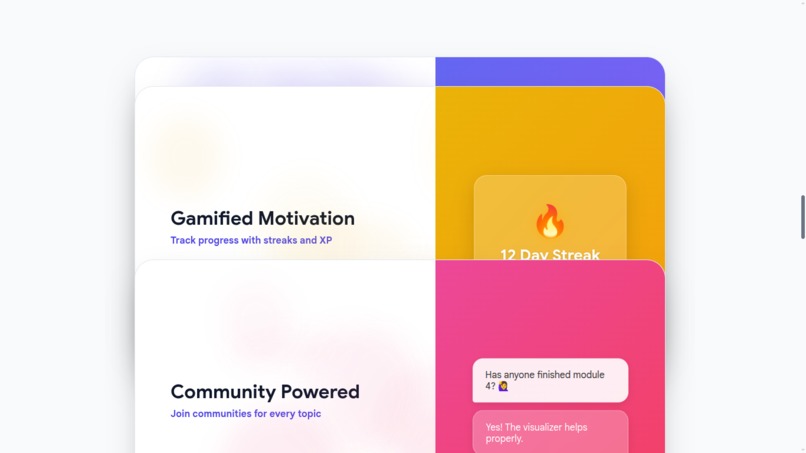
App core features 1
-
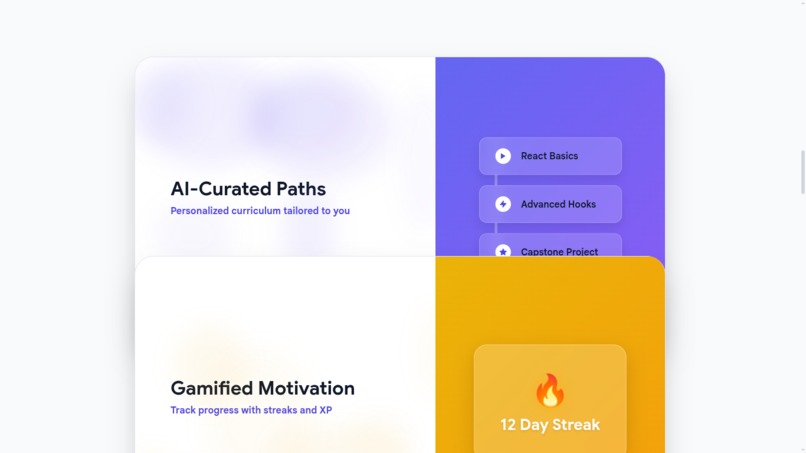
App core features 2
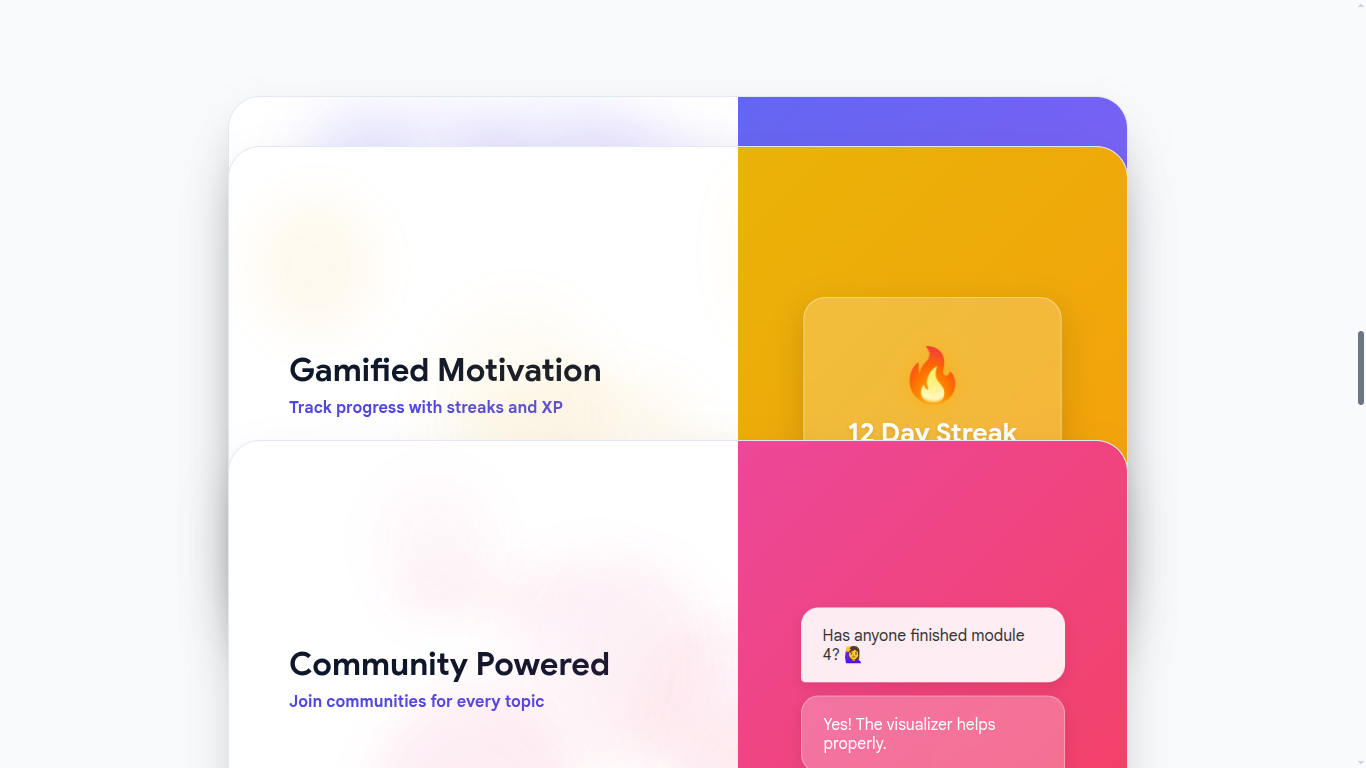
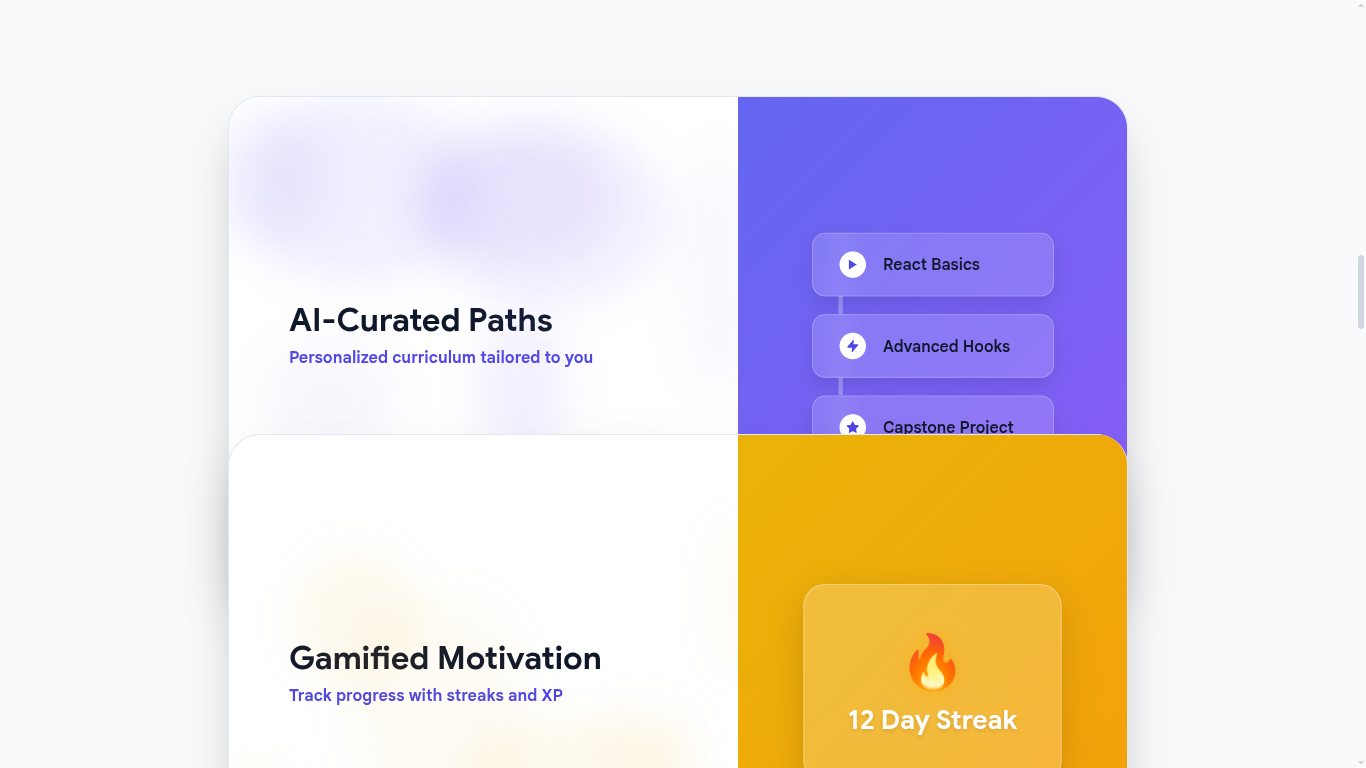
Inspiration
I noticed that when people want to learn a new skill like "Machine Learning", "Data Analysis", or even "Public Speaking", they don't struggle to find content; they struggle to find a path.
I was inspired to build Primerly because I wanted to turn the chaos of "100 open YouTube tabs" into a single, cohesive learning roadmap. I wanted a tool that didn't just give you links, but understood your specific constraints: your experience level and how much time you actually have to study.
What it does
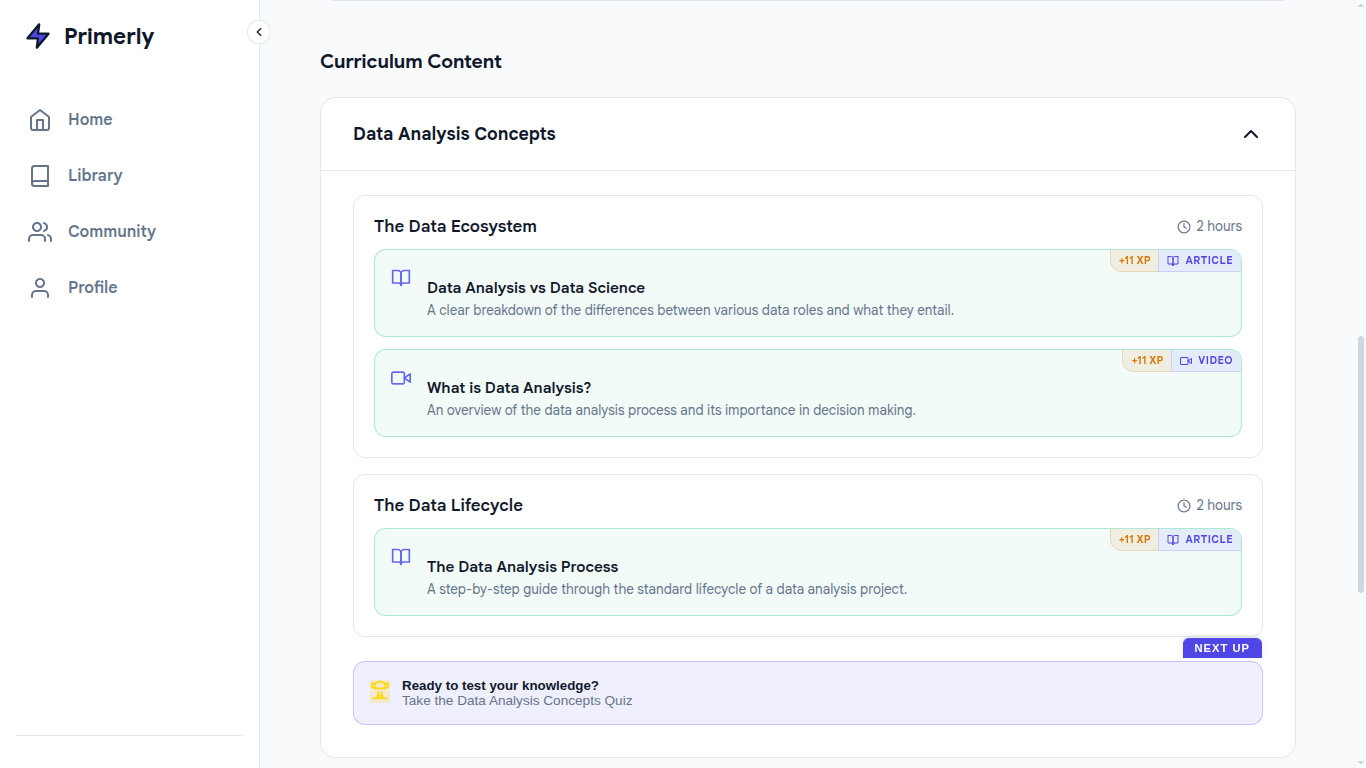
Primerly is an AI-powered educational architect. Users provide a topic, their current experience level, and a target duration. The app then uses Gemini 3 Pro API to generate a detailed, structured curriculum complete with:
- Topics sequenced for pedagogical flow.
- Links to high-quality videos and articles.
- Estimated study hours per lesson.
- Optimized search queries to ensure users always find the most up-to-date information on the web.
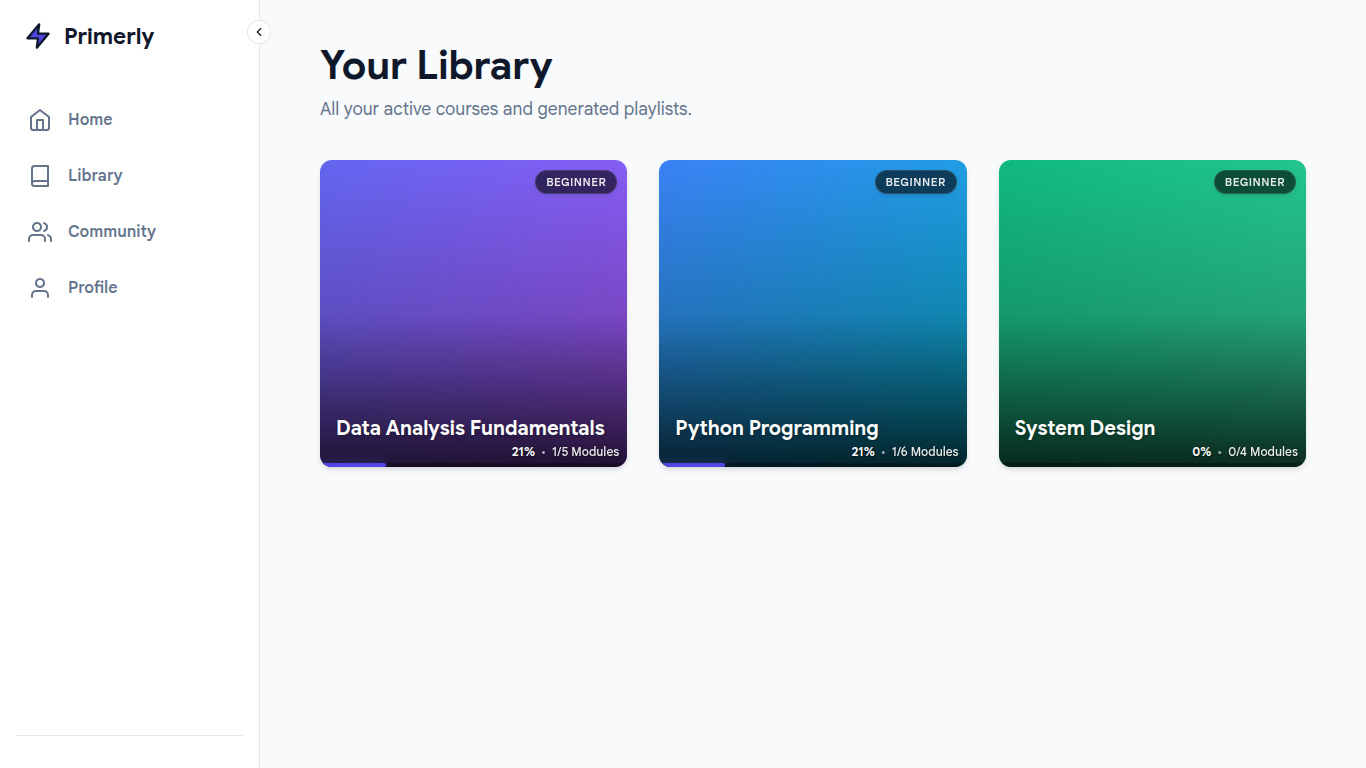
- Progress Tracking, allowing users to check off lessons as they master them.
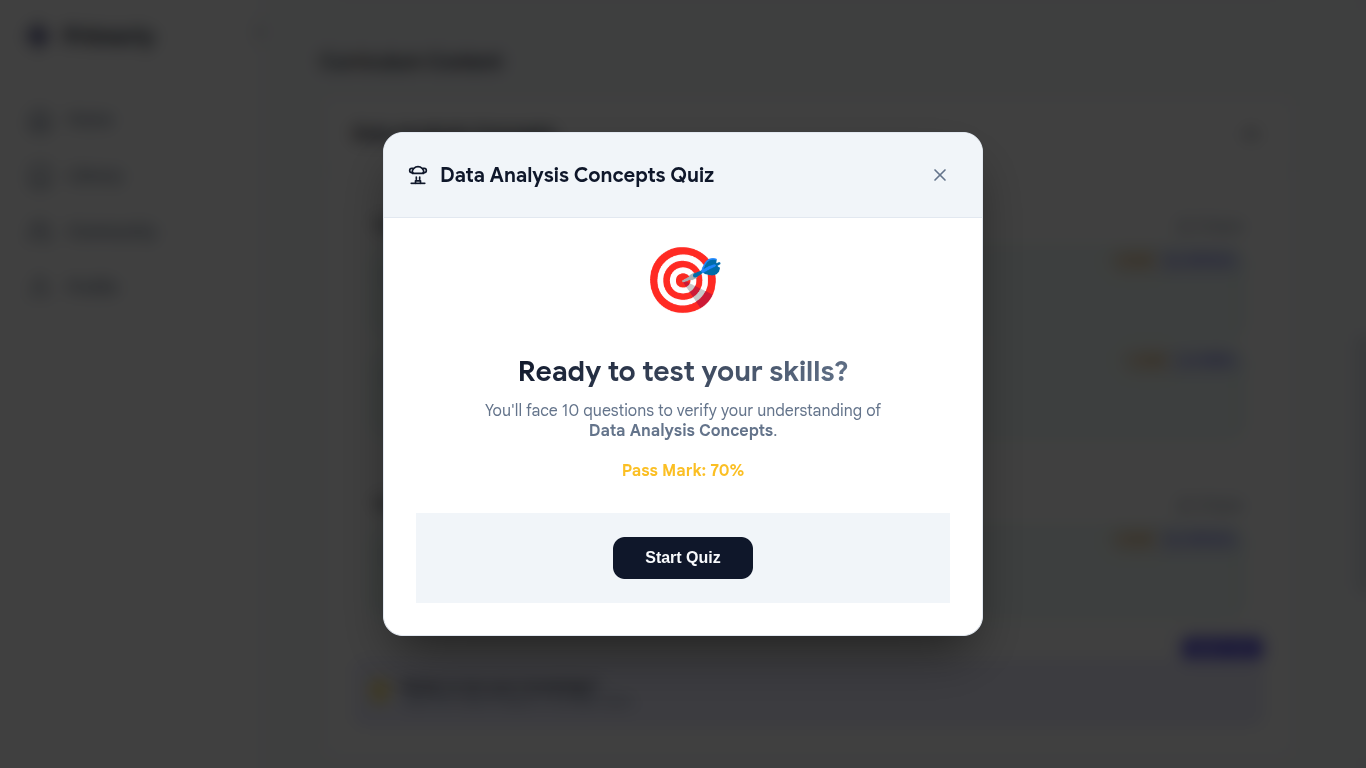
- AI-Generated Quizzes (using Gemini 3 Pro) at the end of each module to validate the user's progress.
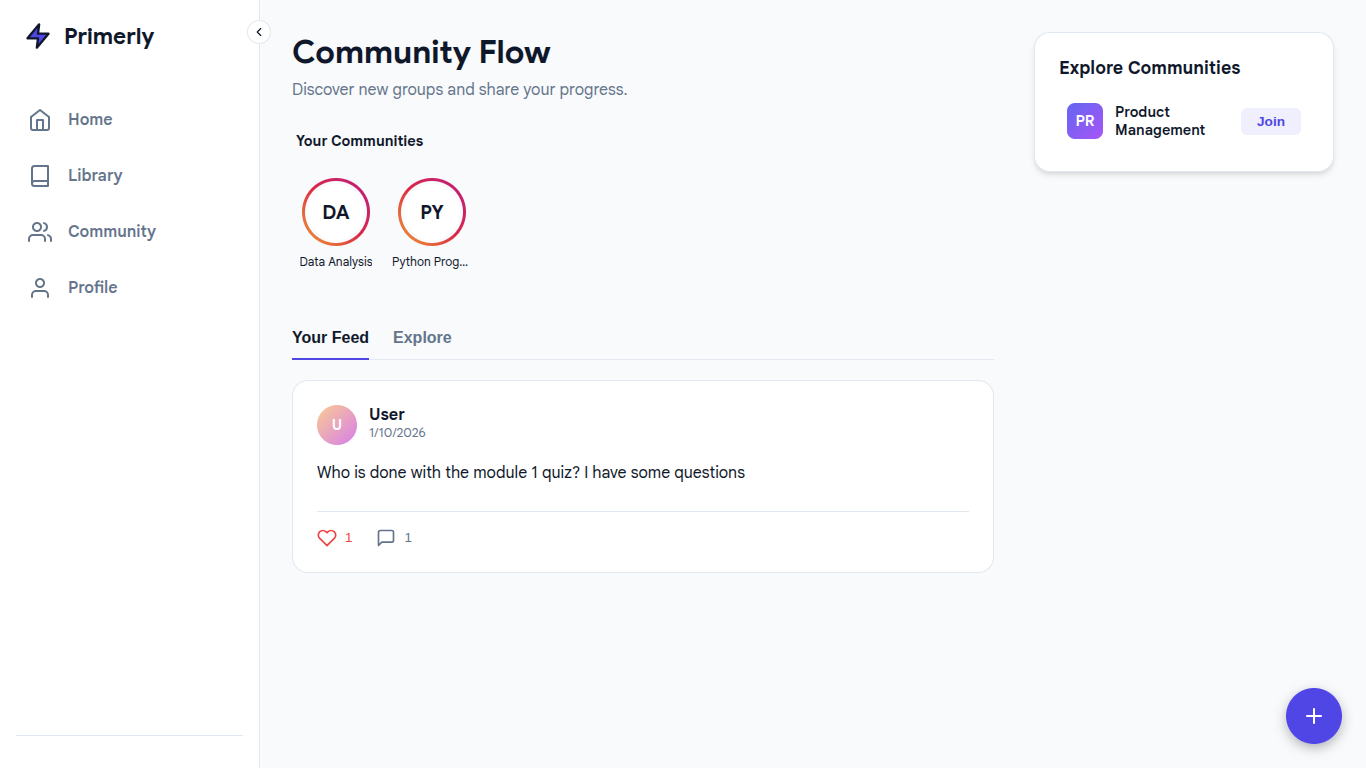
- Learning Community: A space where users can share their generated roadmaps and study together.
How we built it
The project was built with a focus on scalability and deterministic AI outputs:
- Back-end: Developed using FastAPI to handle asynchronous AI generation requests efficiently.
- Schema & Validation: We used Pydantic to enforce a strict contract between the AI and the application. By programmatically generating JSON Schemas from our Python models, we forced the LLM to return structured data that our UI could parse reliably.
- Prompt Engineering: Instructions were externalized into versioned templates. We implemented a system to inject real-time constraints into the AI’s system instructions: $$\text{Final Prompt} = \text{System Template} + \text{Pydantic Schema} + \text{User Input}$$
- Package Management: Used uv for lightning-fast, reproducible dependency management.
Challenges we ran into
One of the biggest hurdles was Link Hallucination. Early versions saw the AI "inventing" plausible-looking but broken URLs. We overcame this by shifting the architecture: instead of asking the AI for hardcoded links, we tasked it with generating optimized search queries. This allowed the application to remain "future-proof," fetching live resources at the moment of generation. We also faced hurdles with environment isolation, which we resolved by strictly aligning our IDE with the uv-managed virtual environment.
Accomplishments that we're proud of
We are incredibly proud of achieving Type-Safe AI integration. Moving from "chat-based" AI to "structured-data" AI allowed us to build a UI that never breaks, even when dealing with complex, nested curricula. Additionally, reaching the Beta testing phase with 10 passionate learners has been a major milestone, proving that there is a genuine demand for structured, AI-guided learning.
What we learned
This project was a masterclass in Software Architecture for AI. We learned that the secret to a scalable AI app isn't just a "better prompt," but a robust validation layer that treats AI output as untrusted data until it passes a Pydantic check. We also deepened our understanding of Instructional Design, learning how to translate educational principles into algorithmic constraints.
What's next for Primerly
- Implementing a feedback loop where AI re-adjusts the entire roadmap in real-time based on the user's quiz performance, speeding up for mastered topics and providing extra depth for challenging ones.
- Automatically generating a "Proof of Learning" public profile or digital certificate that showcases the user's completed roadmaps and assessment scores to potential employers.
- A background worker system that uses AI to periodically verify and update external links, ensuring the learning roadmap always points to the latest industry standards.
- Developing a lightweight mobile interface focused on "Daily Sprints," allowing users to tackle 5-minute segments of their roadmap on the go.
Built With
- fastapi
- gemini-3-pro
- javascript
- next.js
- python
- supabase
- vercel

Log in or sign up for Devpost to join the conversation.