Inspiration
It all started during a brainstorming session, when a teammate's partner told him he looked like a monkey, and everything just went from there. We took that joke and mixed it with a game from our childhood, Benji Bananas, where a monkey swings from vine to vine collecting bananas. We loved the swinging, but we wanted to play it together, so we turned it into a fast-paced party brawler where monkeys race, fight over bananas and slap each other off islands.
What it does
Primate Rush is a short-round multiplayer game for up to four players. You can play on local Wi-Fi with friends or fill the empty seats with bots.
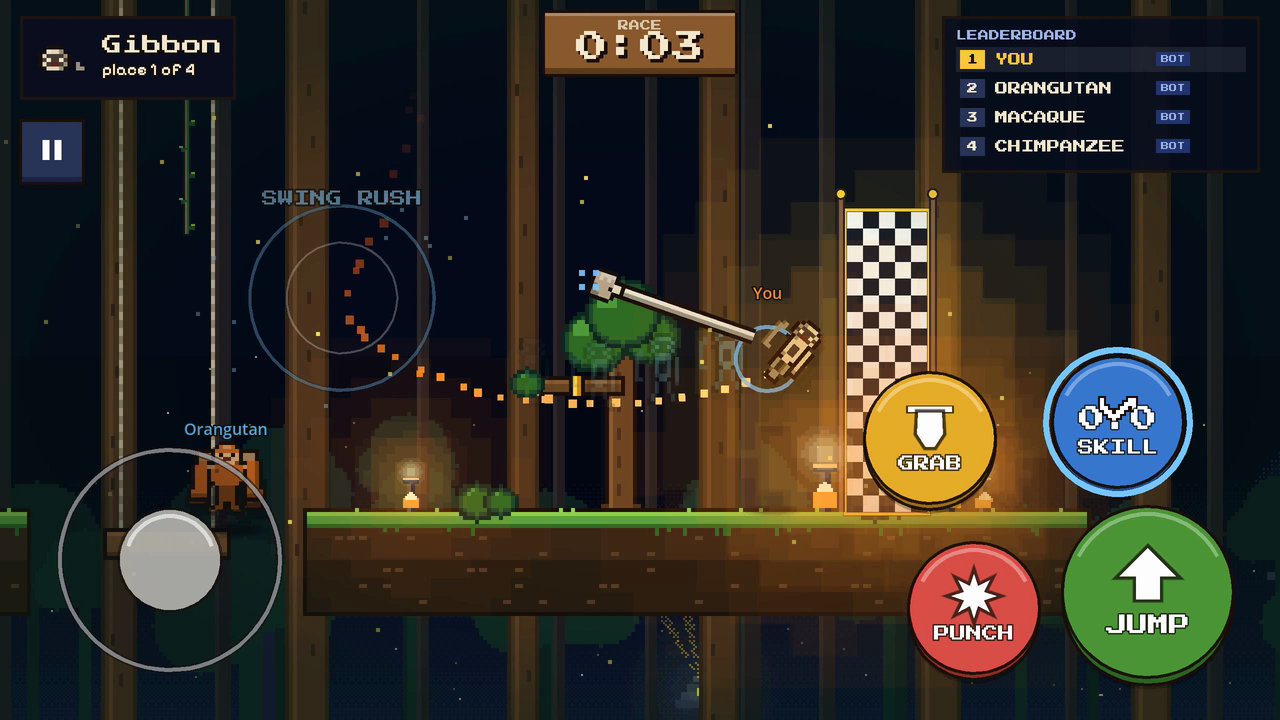
- Race: parkour through Jungle Run or Canopy Climb and reach the finish line first
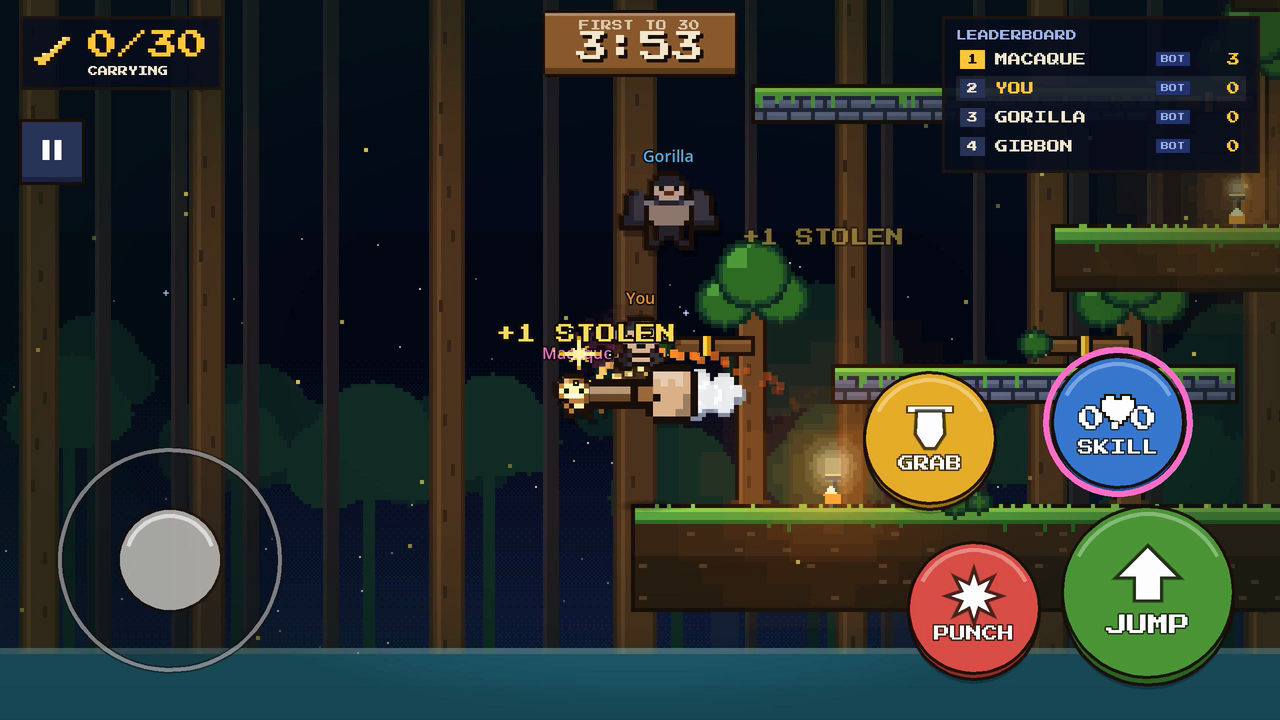
- Banana Rush: grab bananas and steal them from anyone you hit, first to 30 wins
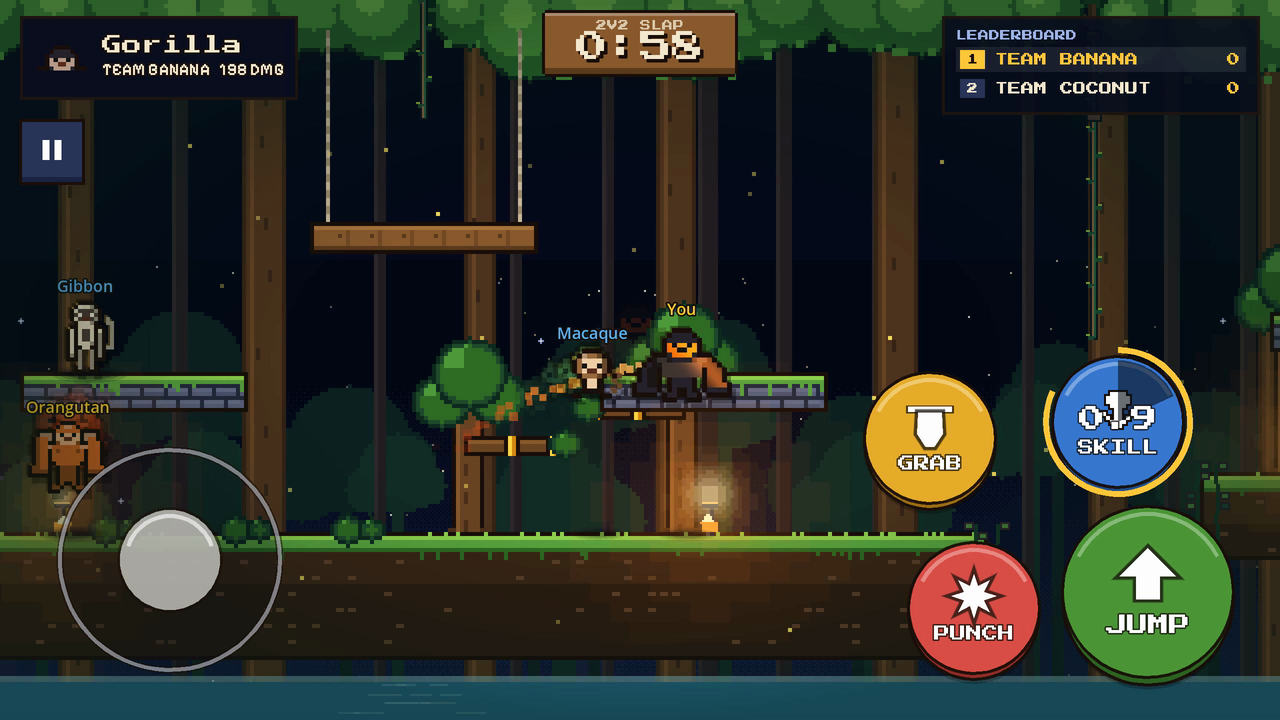
- 2v2 Slap: knock the other team off Slap Island, last team standing wins
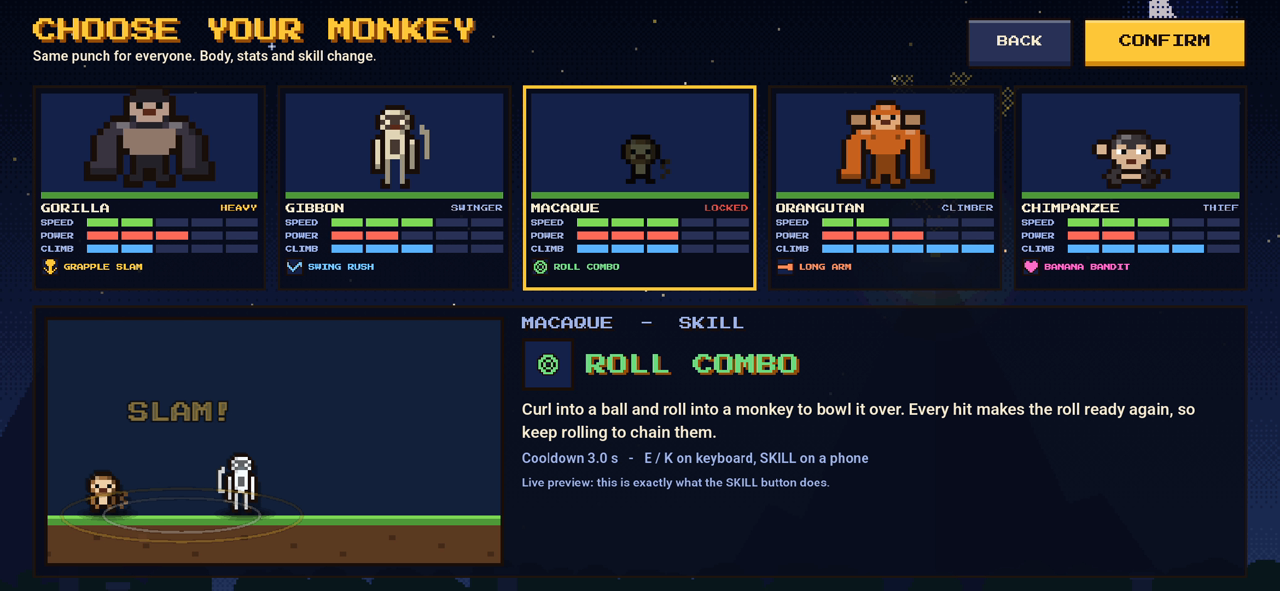
Nobody dies. A hit costs you time, position or bananas, never a life, so everyone stays in the round and the chaos never stops. Five monkeys share the same punch but play differently. The Gorilla grabs and slams, the Orangutan punches across the screen, the Macaque rolls through crowds, the Gibbon swings from thin air and the Chimpanzee steals bananas and drops peels.
Not pay to win
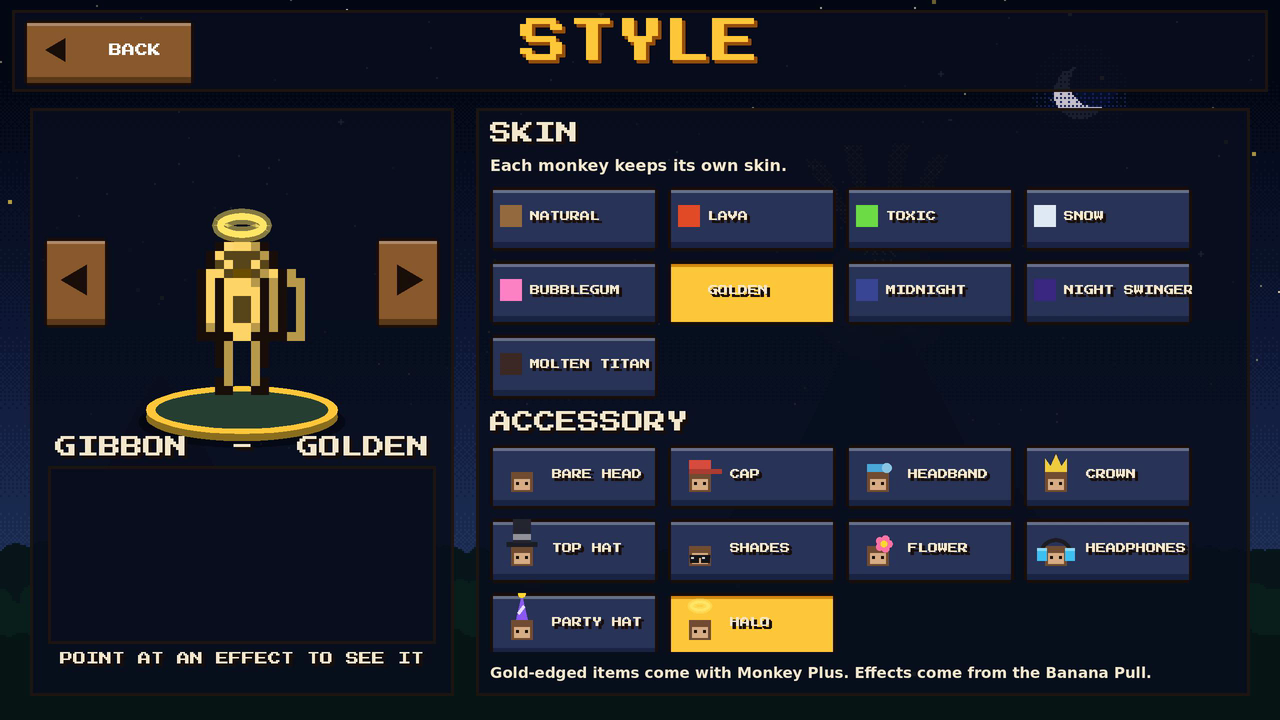
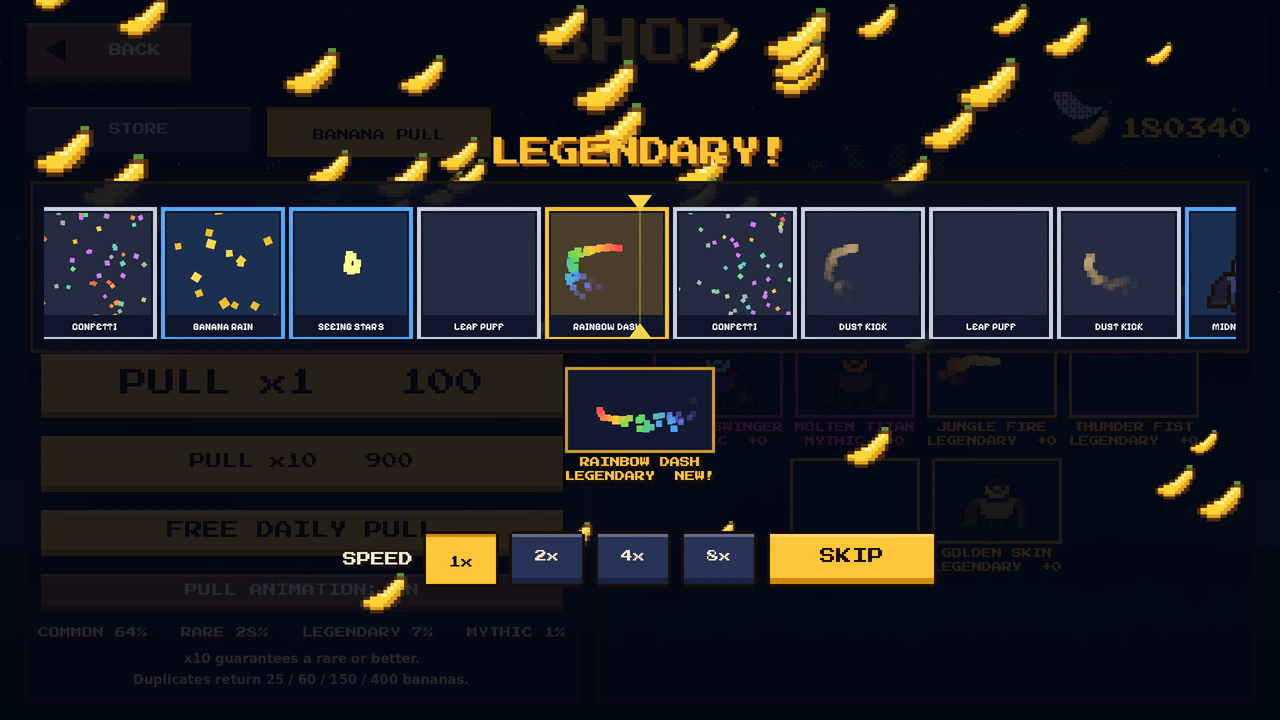
Winning comes from movement, timing and recovery. Every monkey is balanced from the same data files, and no purchase changes speed, damage or knockback. Money buys style and variety: skins, hats, trails, hit and win effects, bananas for the Banana Pull, and the Macaque through Monkey Plus.
How we built it
- Godot 4.7 with GDScript only, exported to Android through a Gradle build
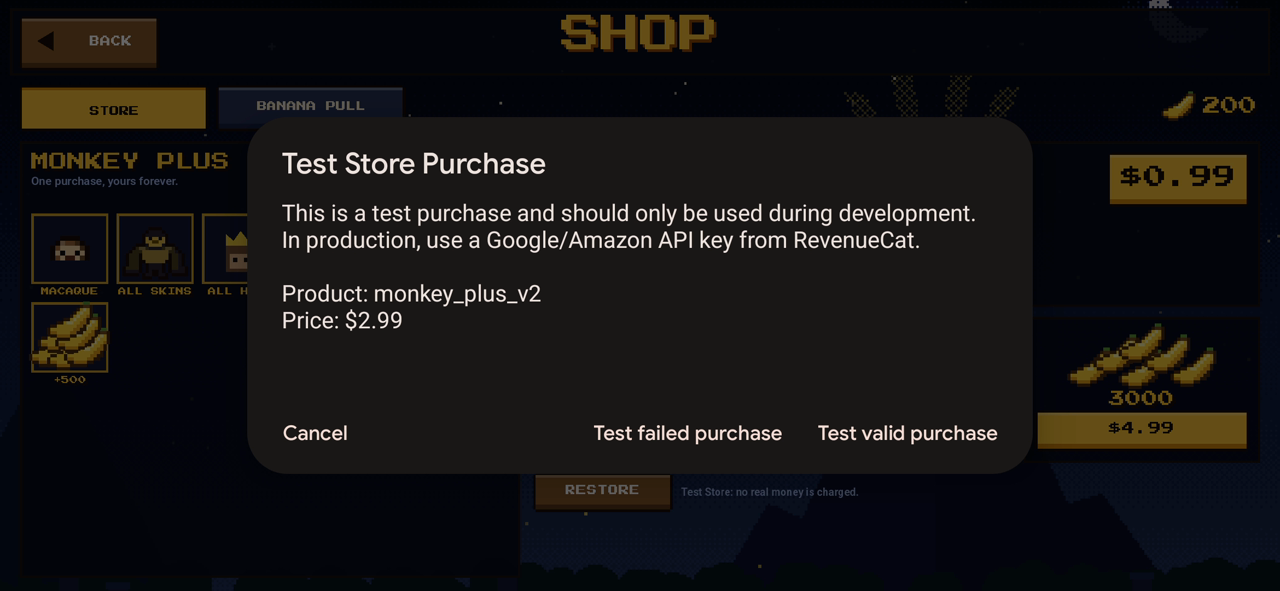
- RevenueCat Android SDK through the GodotX RevenueCat plugin, with two entitlements (monkey_plus and starter_pack) and three banana consumable packs. Entitlements are the source of truth, and consumables add to the in-game wallet
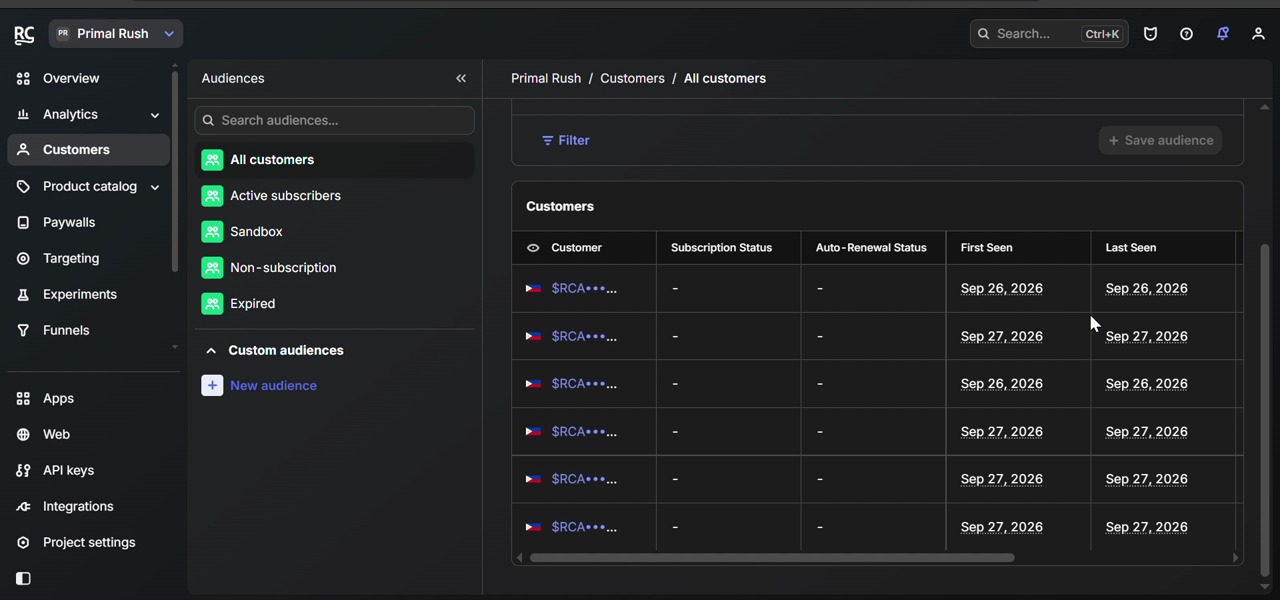
- RevenueCat Test Store, so every purchase creates real customers and entitlements in the dashboard without a Play Console account
- One input system for everything. Touch controls, keyboard, bots and the network all produce the same input frame, so bots and online players use the exact same movement code
- Host-authoritative Wi-Fi multiplayer with automatic host discovery
- Pixel-art monkeys and jungle maps, plus an original soundtrack we composed with a small Python tool
Challenges we ran into
- Getting the Android build working took longer than expected. Godot 4.7 needs Android Platform 36 and Build-Tools 36.1.0, and Gradle refused to run on Java 25, so we had to set up JDK 21 by hand
- The RevenueCat plugin only gets packed into Gradle builds, so our first APKs had no store at all even though the shop screen showed up
- Making swinging feel good for both players and bots meant a lot of tuning of momentum, grab range and wall jumps
- Keeping purchases fair in a competitive game, so paying players look cooler without playing stronger
What we learned
We learned how in-app purchases actually work with entitlements, offerings and consumables, and how to keep a store safe to run on desktop with a stub mode. We also learned the whole Android build pipeline from SDK setup to signing, and that a game jam idea gets much better once real people start slapping each other in it.
What's next
More monkeys and maps, online matches beyond local Wi-Fi, and a Google Play release.

Log in or sign up for Devpost to join the conversation.