-
-
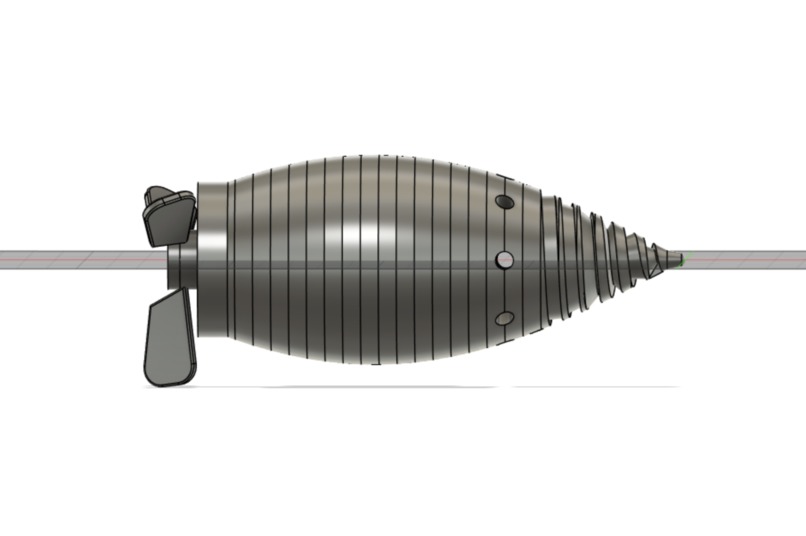
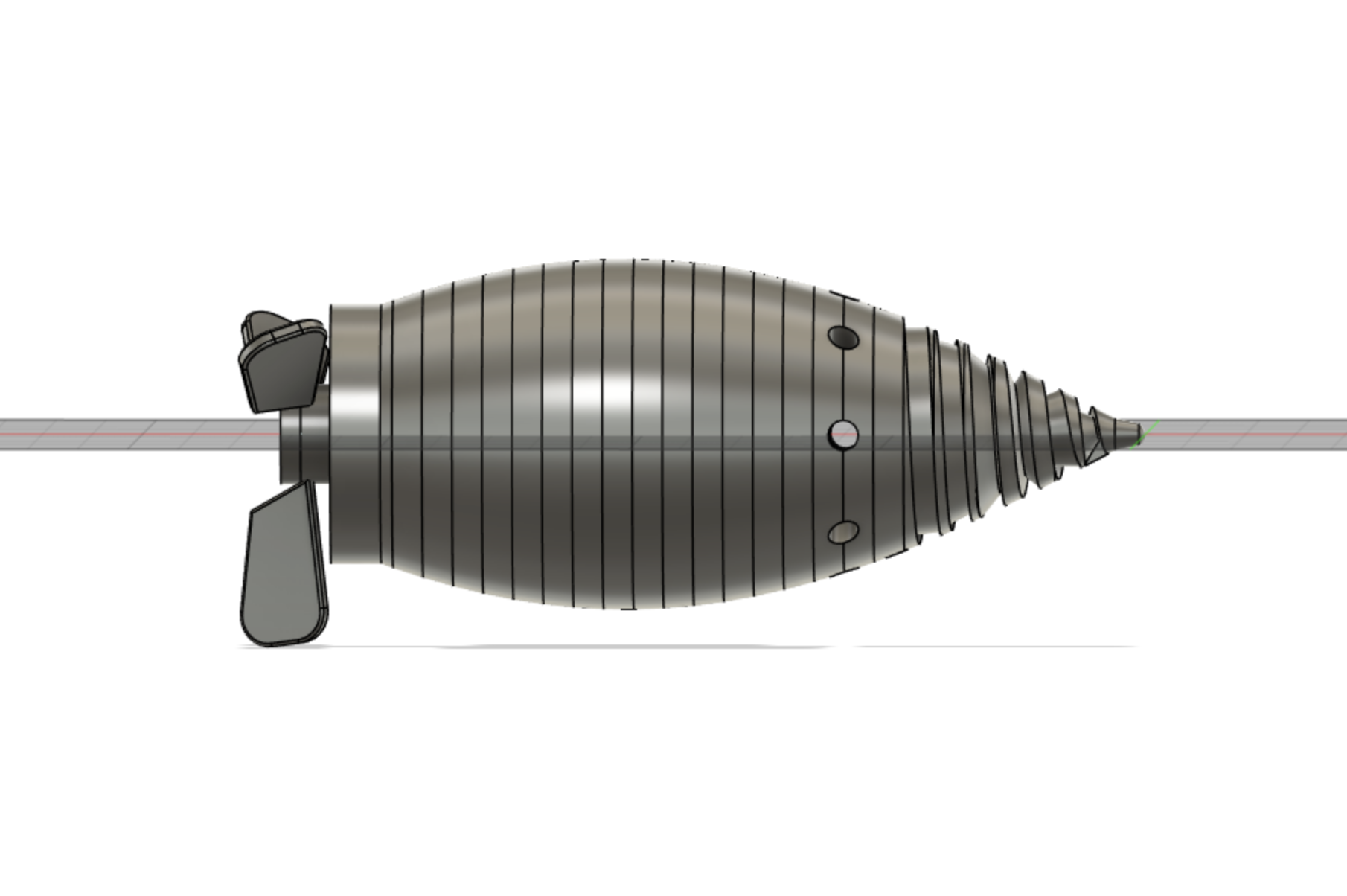
CAD prototype sideview
-
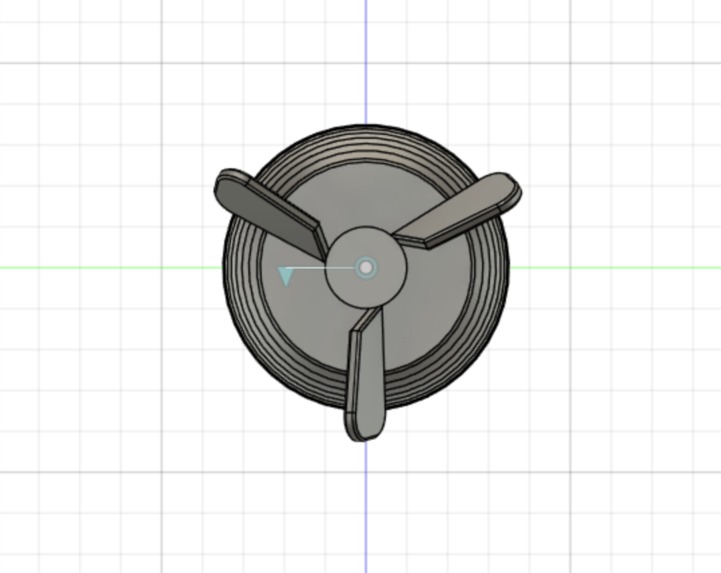
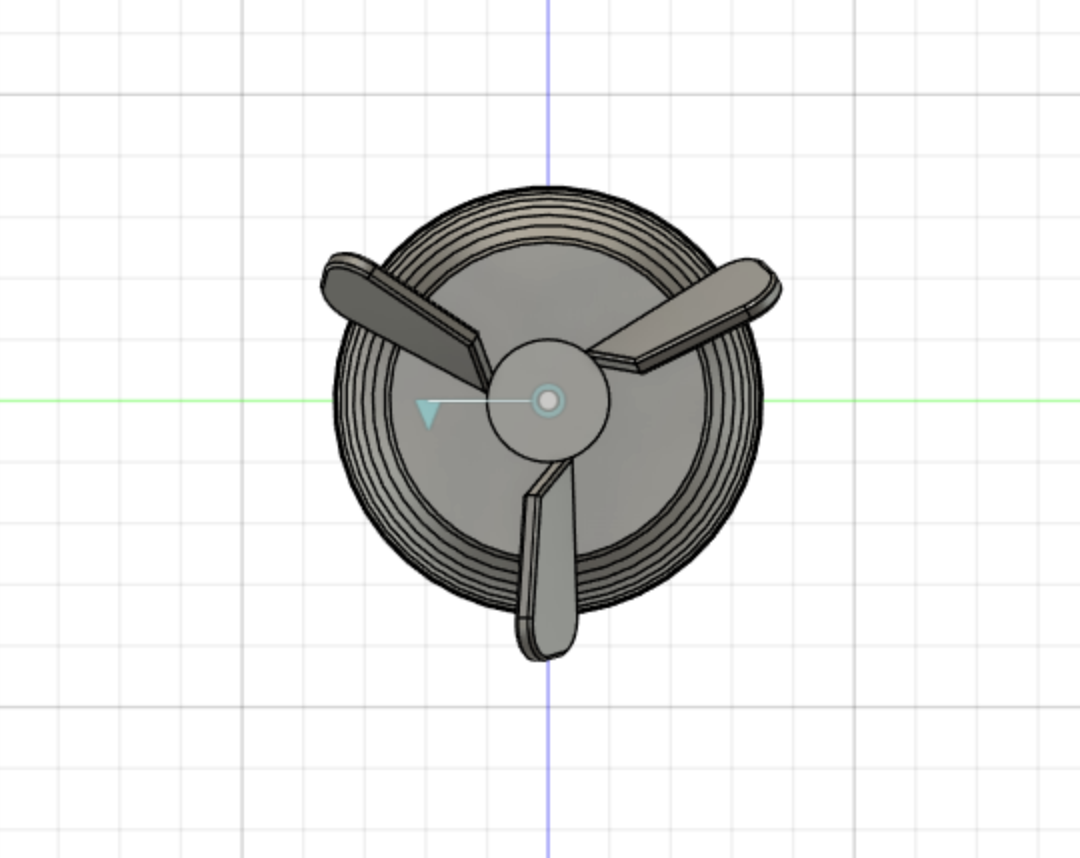
CAD prototype turbine
-
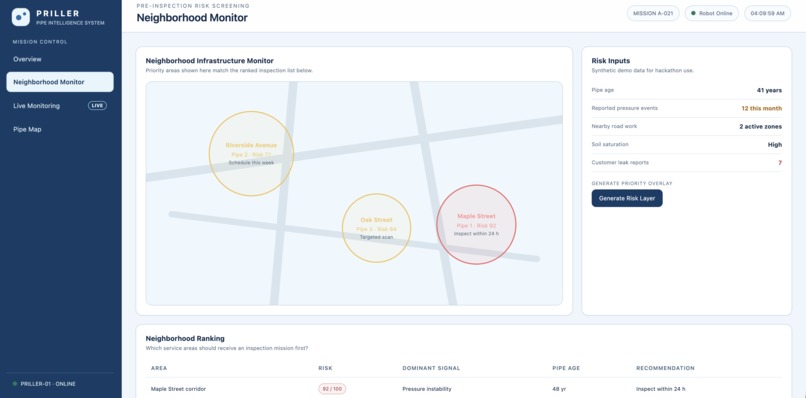
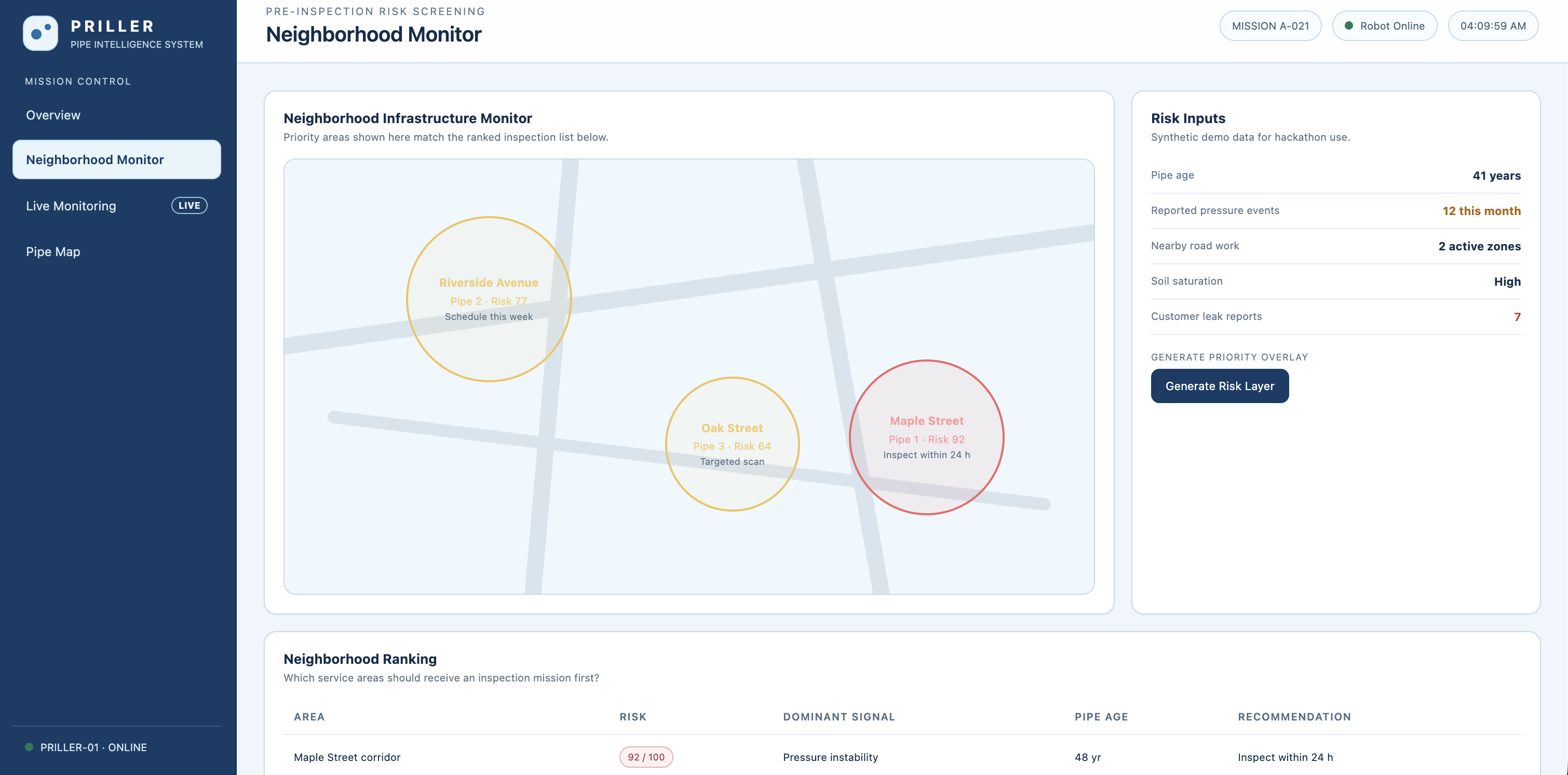
monitor page - concern neighborhoods
-
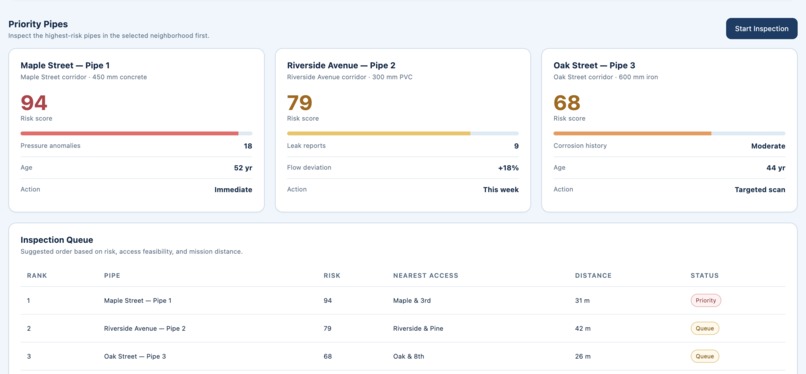
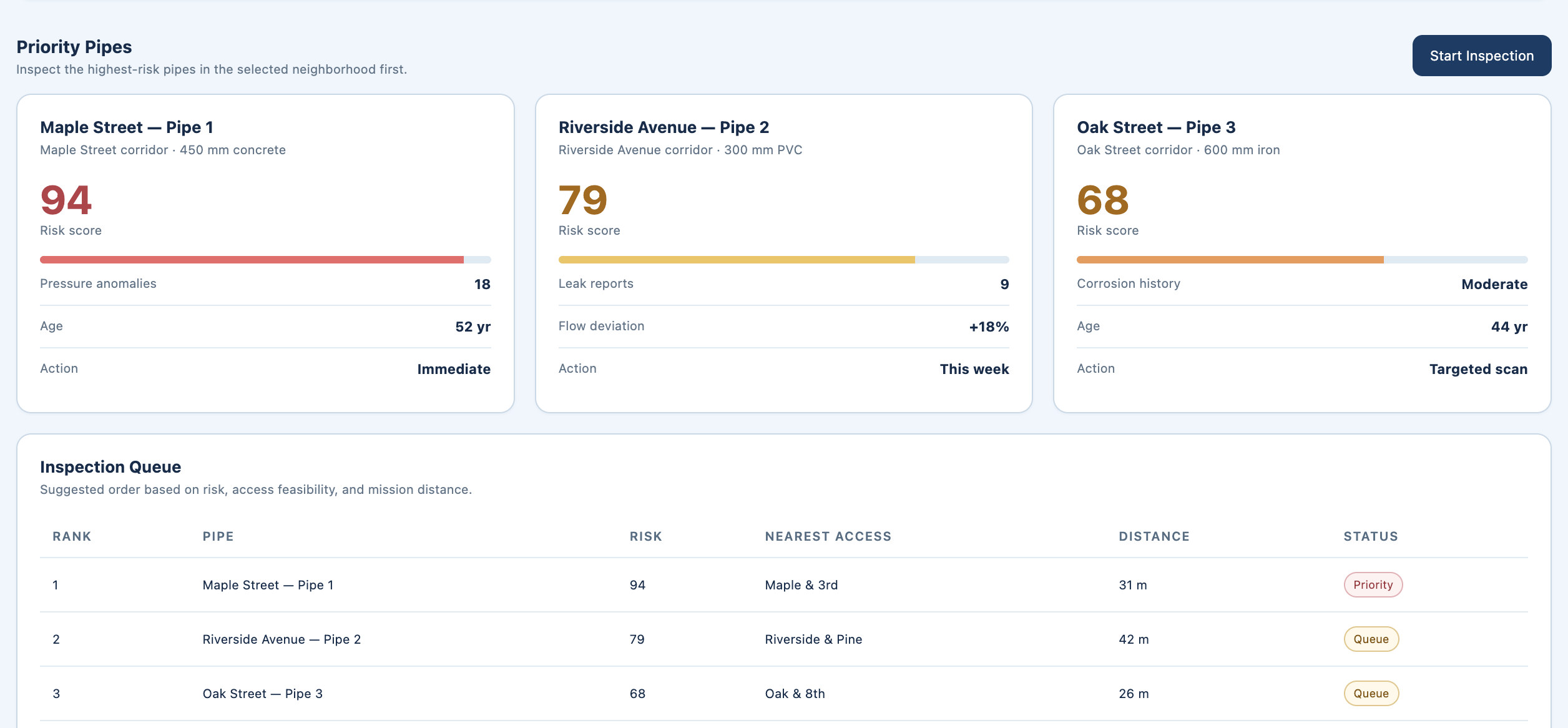
monitor page - priority pipes details
-
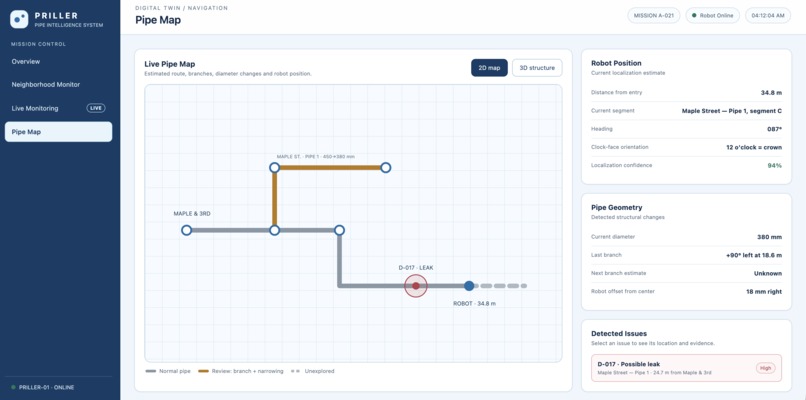
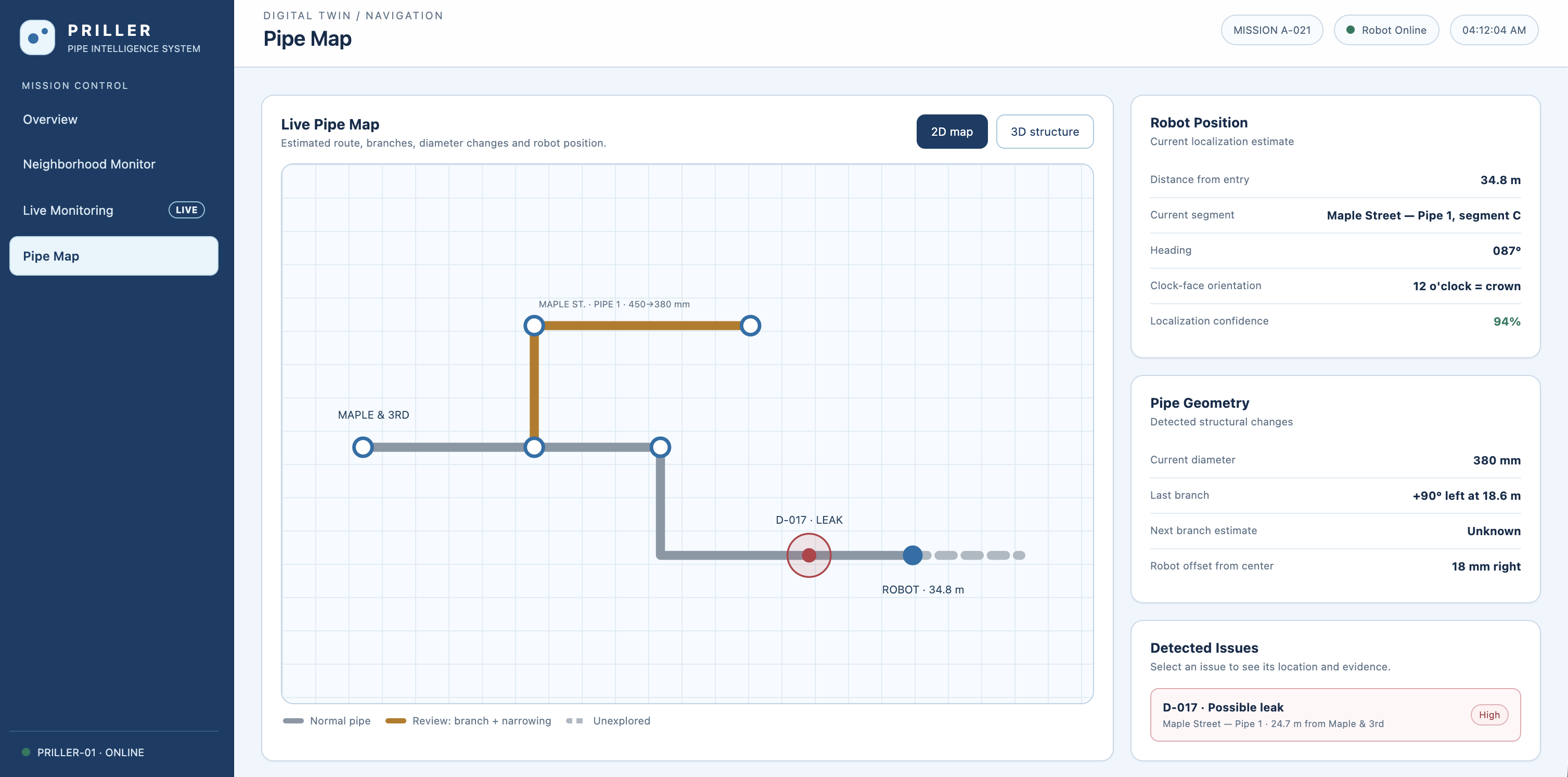
monitor page - 2d pipe map
-
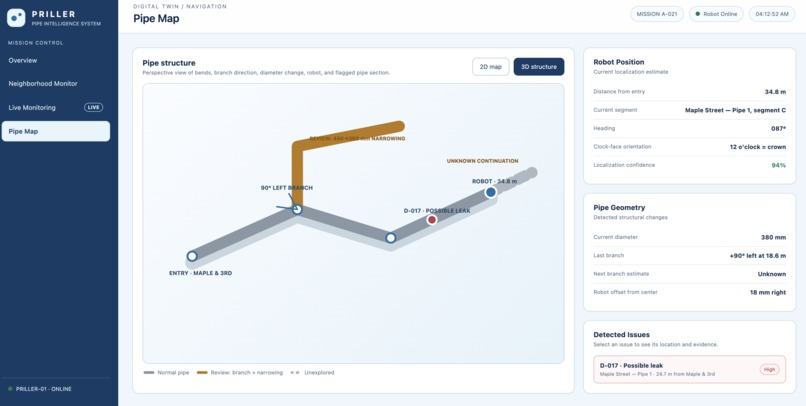
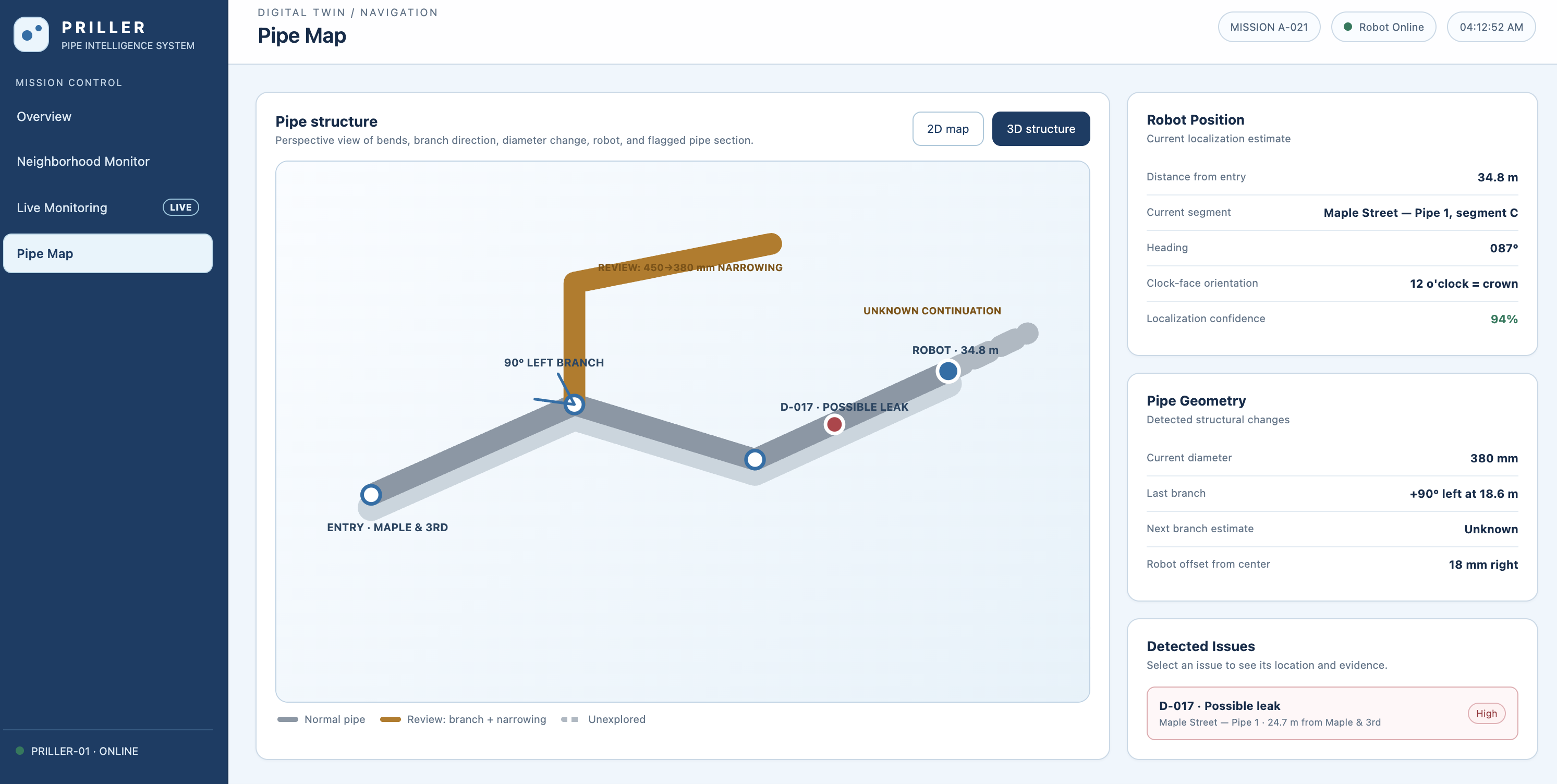
monitor page - 3d pipe map
Inspiration
We've dealt with leaking and burst pipes in our own dorms and homes. When it happens, it disrupts students' lives, damages belongings, and leaves schools with expensive repairs. By the time anyone notices, the damage is already done.
That made us want to catch these problems earlier. We wanted to build something that could navigate inside pipes, help us understand their condition, and find warning signs instead of patching another burst.
What it does
Priller is a pipe-inspection robot designed to map pipeline systems using sonar, locate leaks, and identify areas that may be vulnerable to future damage. Its design also includes an auger to help clear blockages as it moves through pipes.
Our dashboard brings that information together so users can see where the robot is, explore the pipe network, and inspect flagged issues alongside sensor evidence. A neighborhood view helps users understand which areas need attention first.
For this hackathon, we created the robot's CAD design and a software prototype showing how users would monitor inspections and review findings.
How we built it
We used Autodesk Fusion 360 to model the robot, working through its body shape, propeller, and auger to support movement and inspection inside pipes.
We used Codex to help build a web dashboard around the robot's intended capabilities, including its position, sensor readings, pipe geometry, and detected issues. We wanted the interface to make inspection data easy to understand and act on.
We also used Grok to help create our demo video and communicate how the robot would work.
Challenges we ran into
On the hardware side, translating our idea into a CAD model was harder than we expected. Getting the shape we wanted meant learning beyond the basic tools. We worked through YouTube tutorials and repeated revisions to make the body leaner, soften sharp edges, add openings, and animate the design.
On the software side, the challenge was organizing everything intuitively. We had plenty of features to show, but technical pipe labels and crowded views made the interface harder to follow. We had to think from the user's perspective: where is the problem, what evidence supports it, and what needs attention first?
Accomplishments that we're proud of
We're proud of how much we improved the robot's shape and propeller design as we learned more about CAD and movement through water.
We're also proud of connecting hardware and software around a problem we've personally experienced. Our team comes from different majors and technical backgrounds, so building Priller meant learning from each other and figuring out how our pieces fit together.
By the end, we had both a robot design and an interface showing how its findings could help people make maintenance decisions.
What we learned
We learned practical CAD skills, from customizing geometry to animating a design. We also explored how Grok could support video creation through browser-based workflows and scripts.
Working across hardware and software taught us to think about the whole system: what the robot could measure, how we would present those measurements, and what someone would need to understand before taking action.
What's next for Priller
Our next step is to build a functional prototype based on our CAD model and test it in real pipes. We want to collect sensor data to develop and validate a model for detecting leaks and weak spots.
We also want to incorporate real-time weather data so future risk assessments can account for conditions such as freezing temperatures. Combined with inspection results and maintenance history, this could help users prioritize vulnerable pipes before problems become emergencies.
Built With
- autodesk-fusion-360
- codex
- cursor
- html
- powerpoint


Log in or sign up for Devpost to join the conversation.