-
-
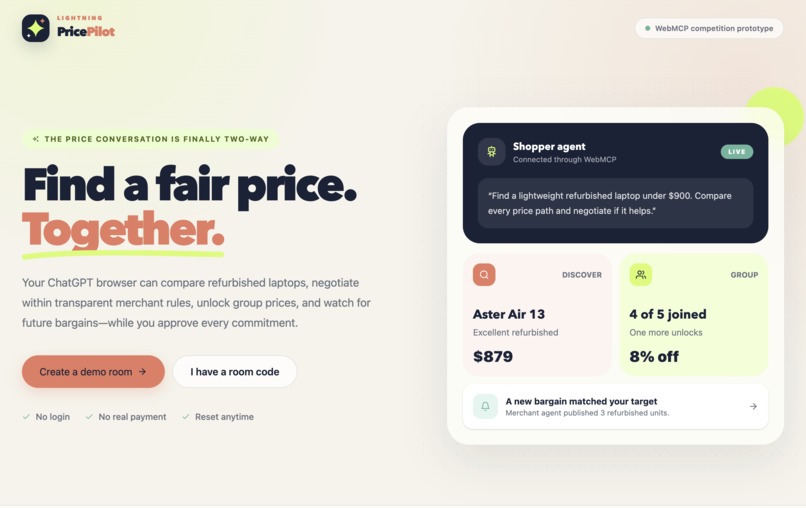
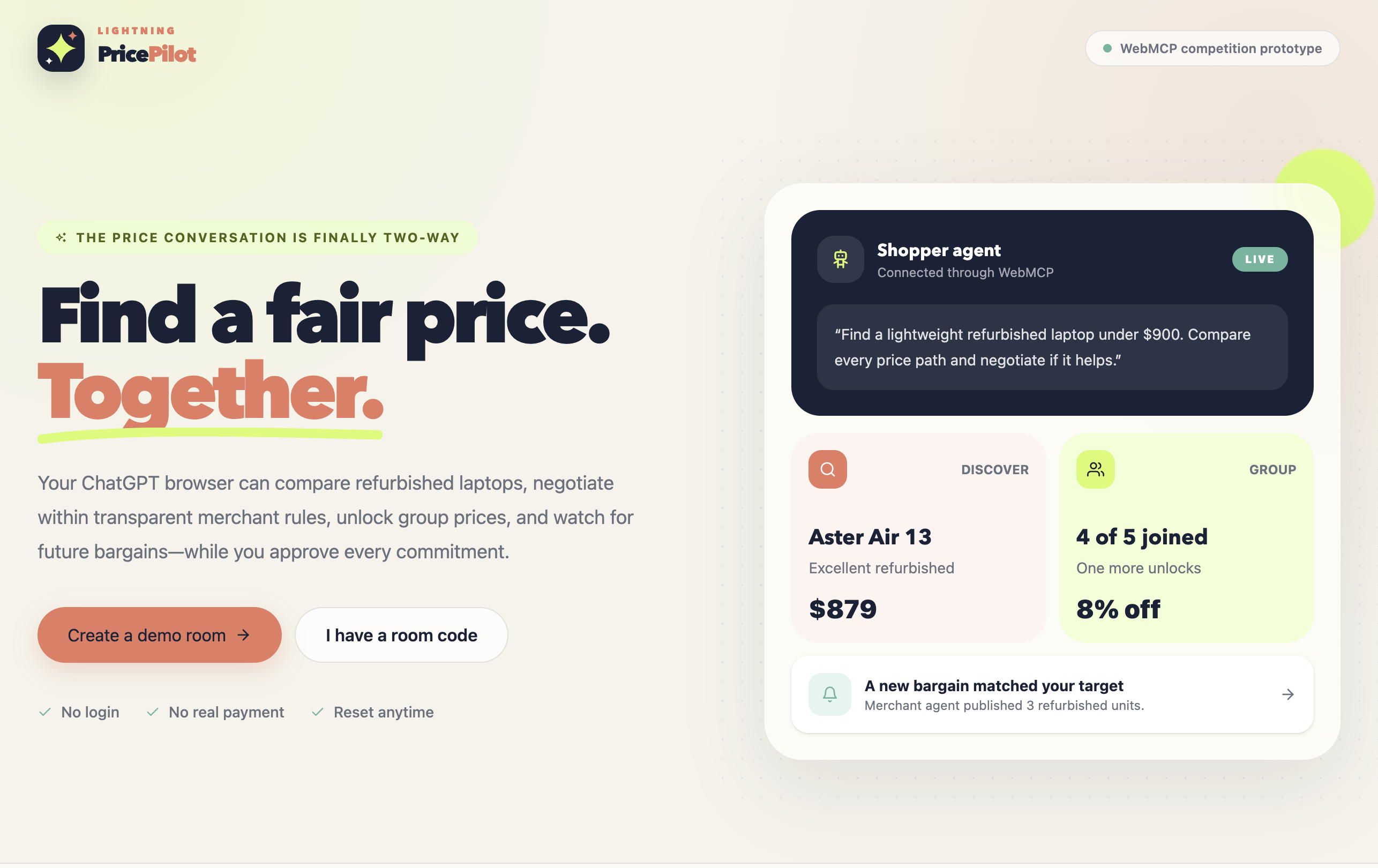
App Landing Page
-
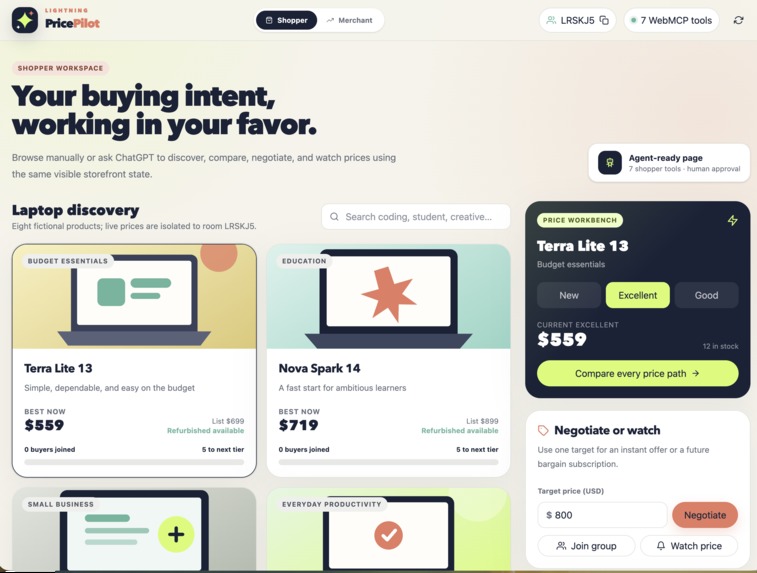
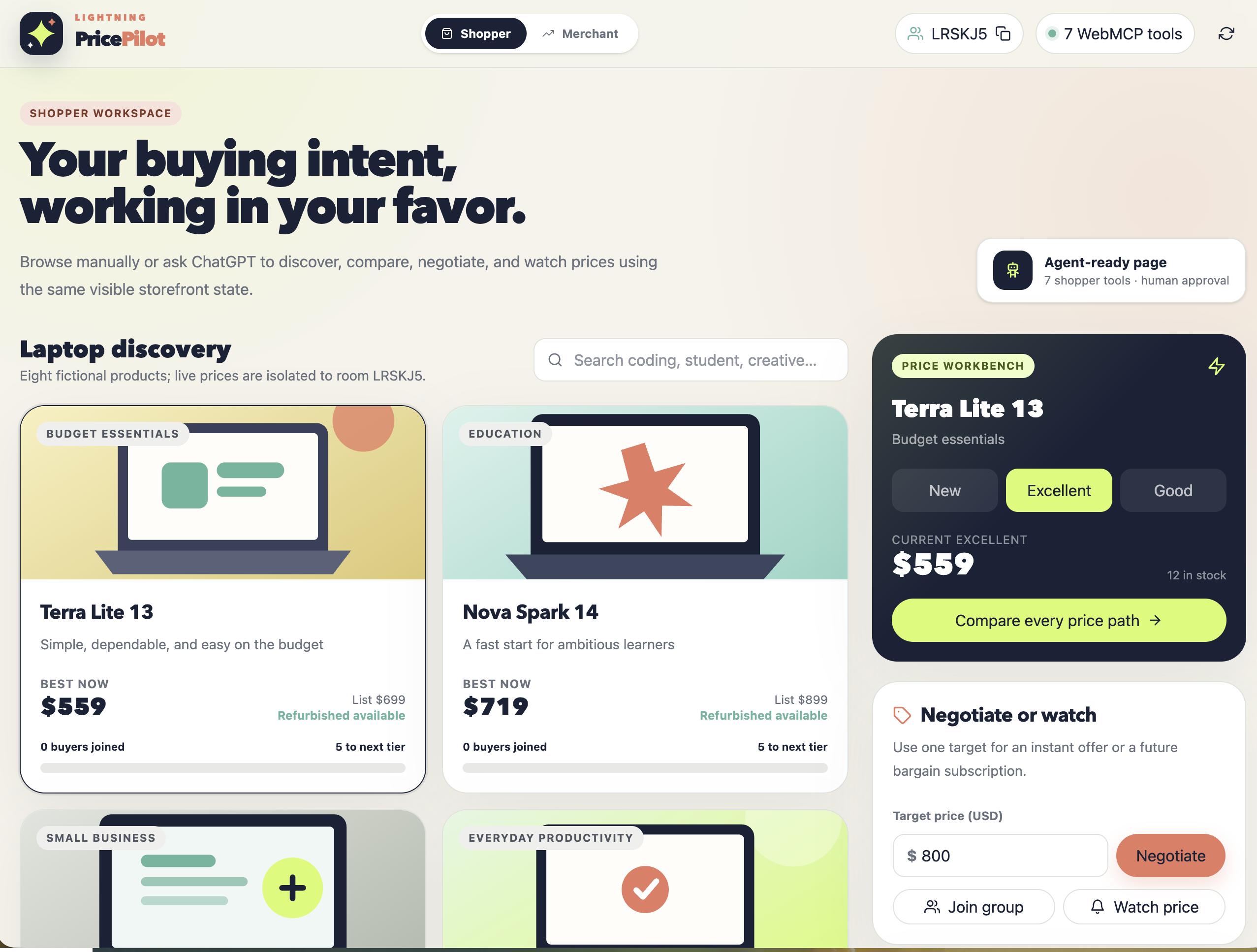
Shopper Page
-
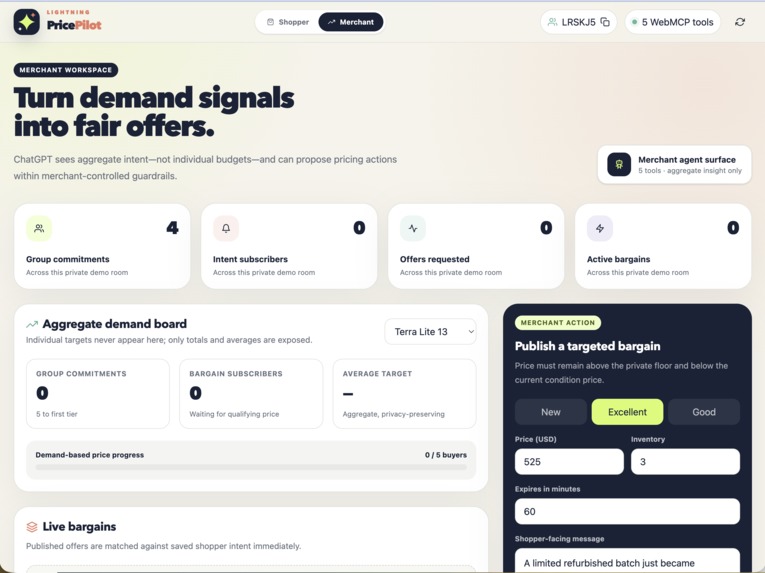
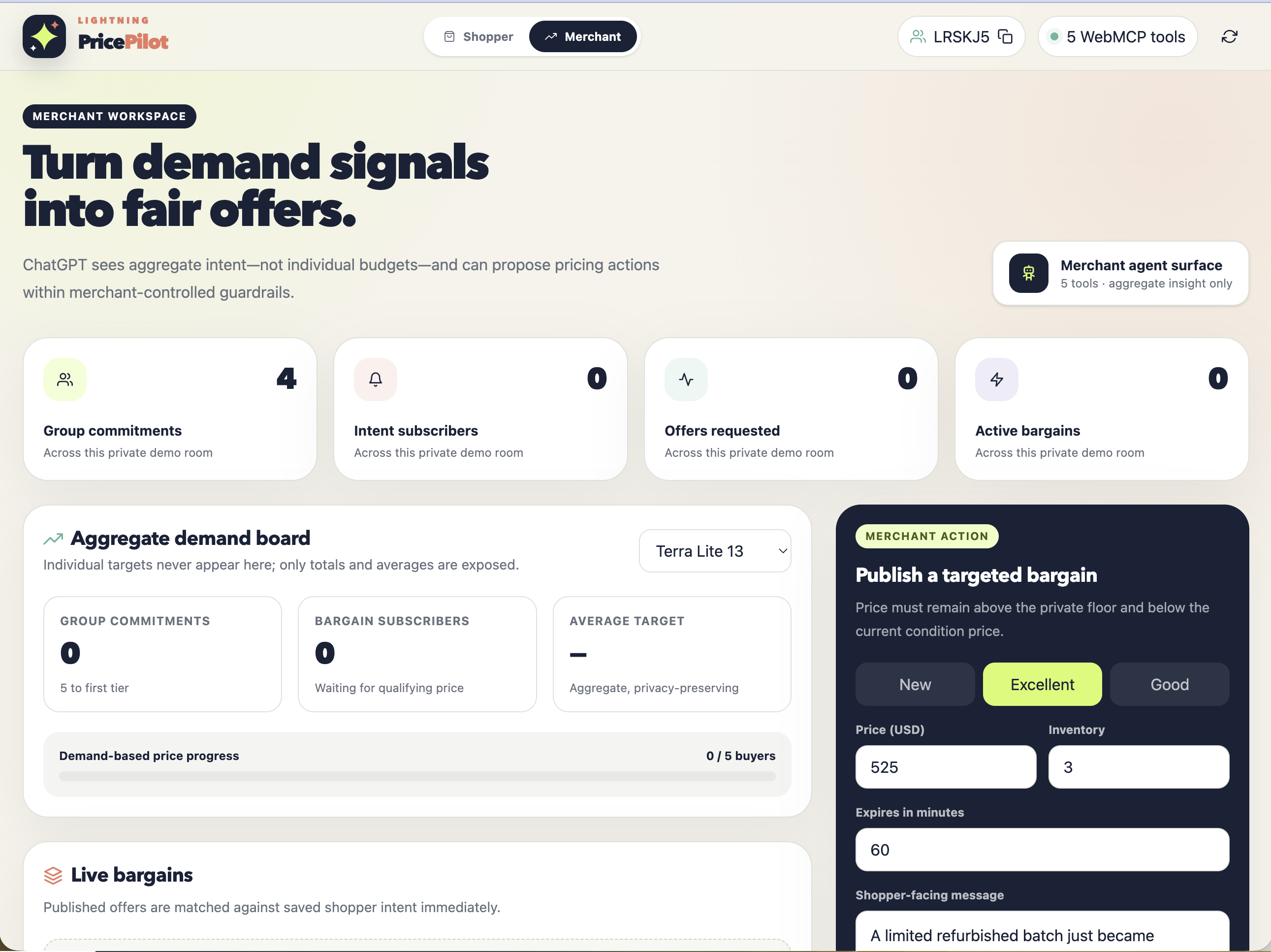
Merchant Page
-
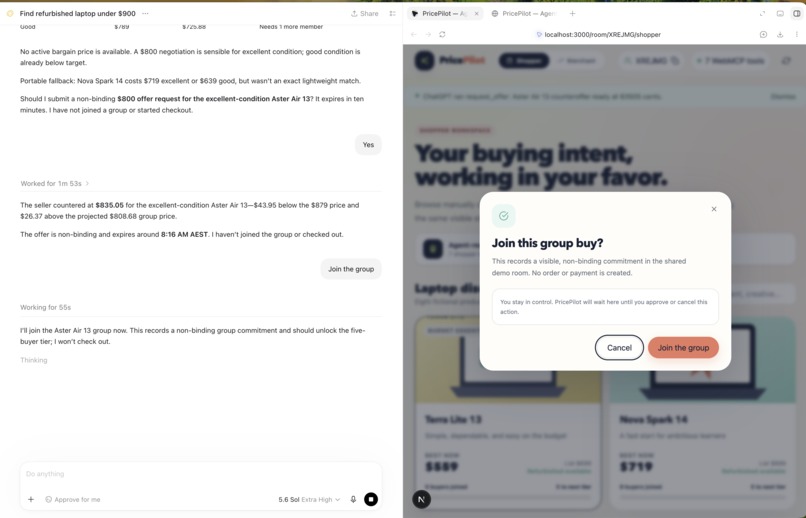
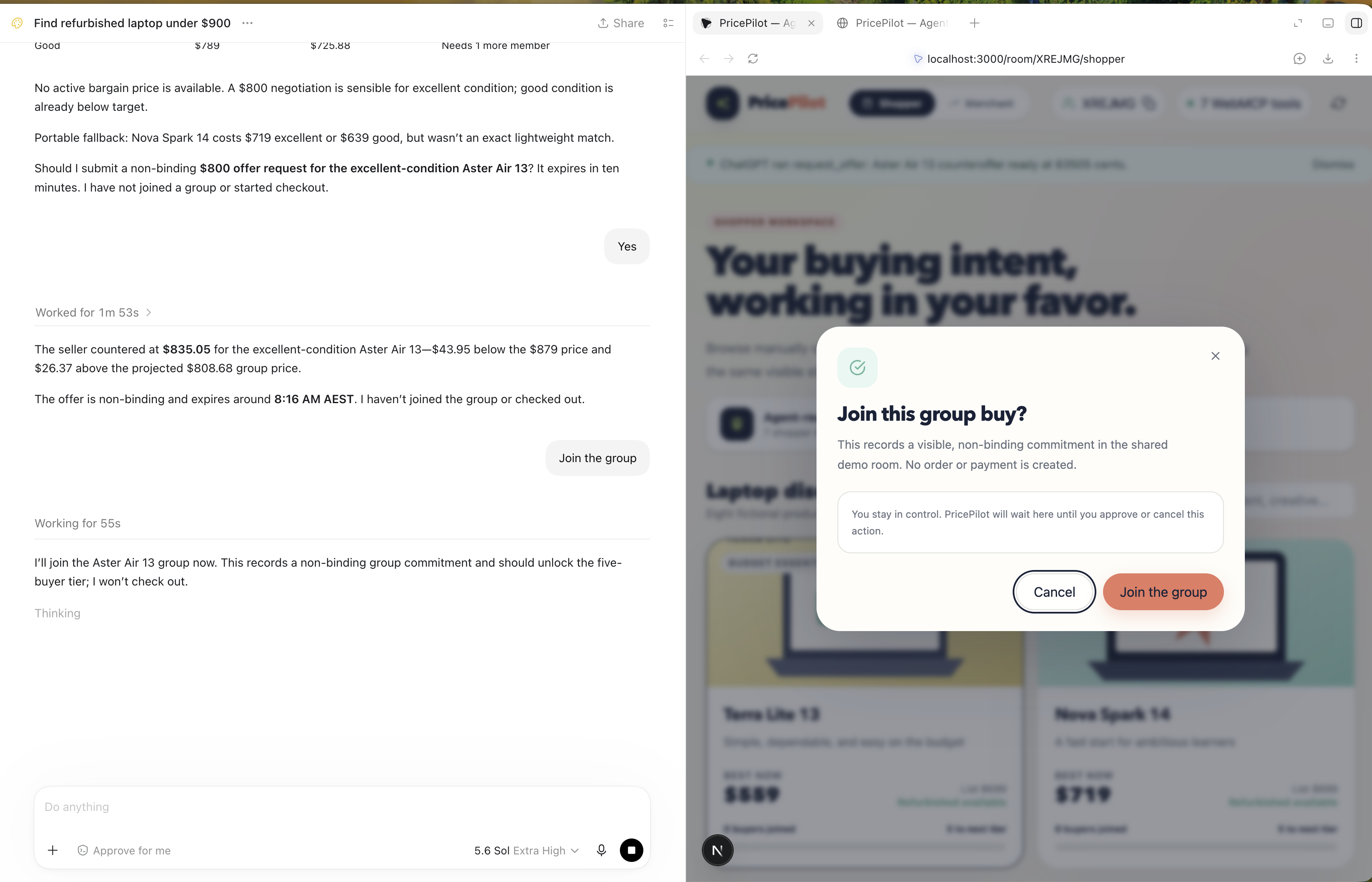
Shopper joining buying group after ChatGPT negotiated a group price for the laptop
-
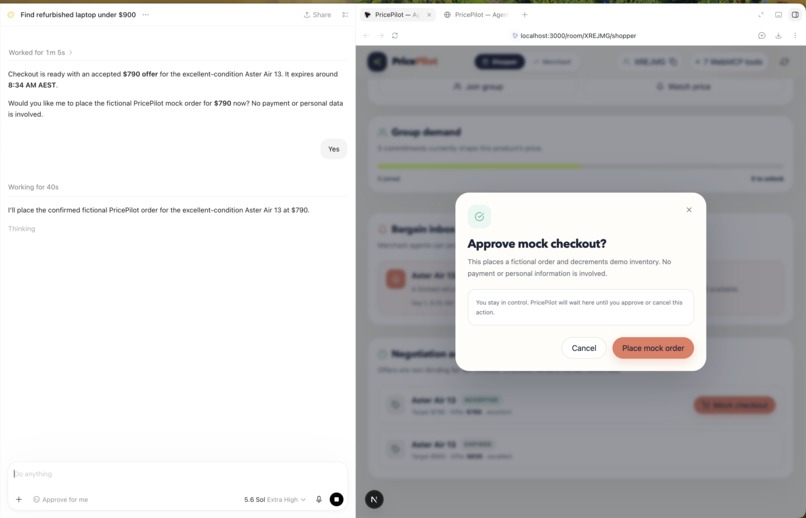
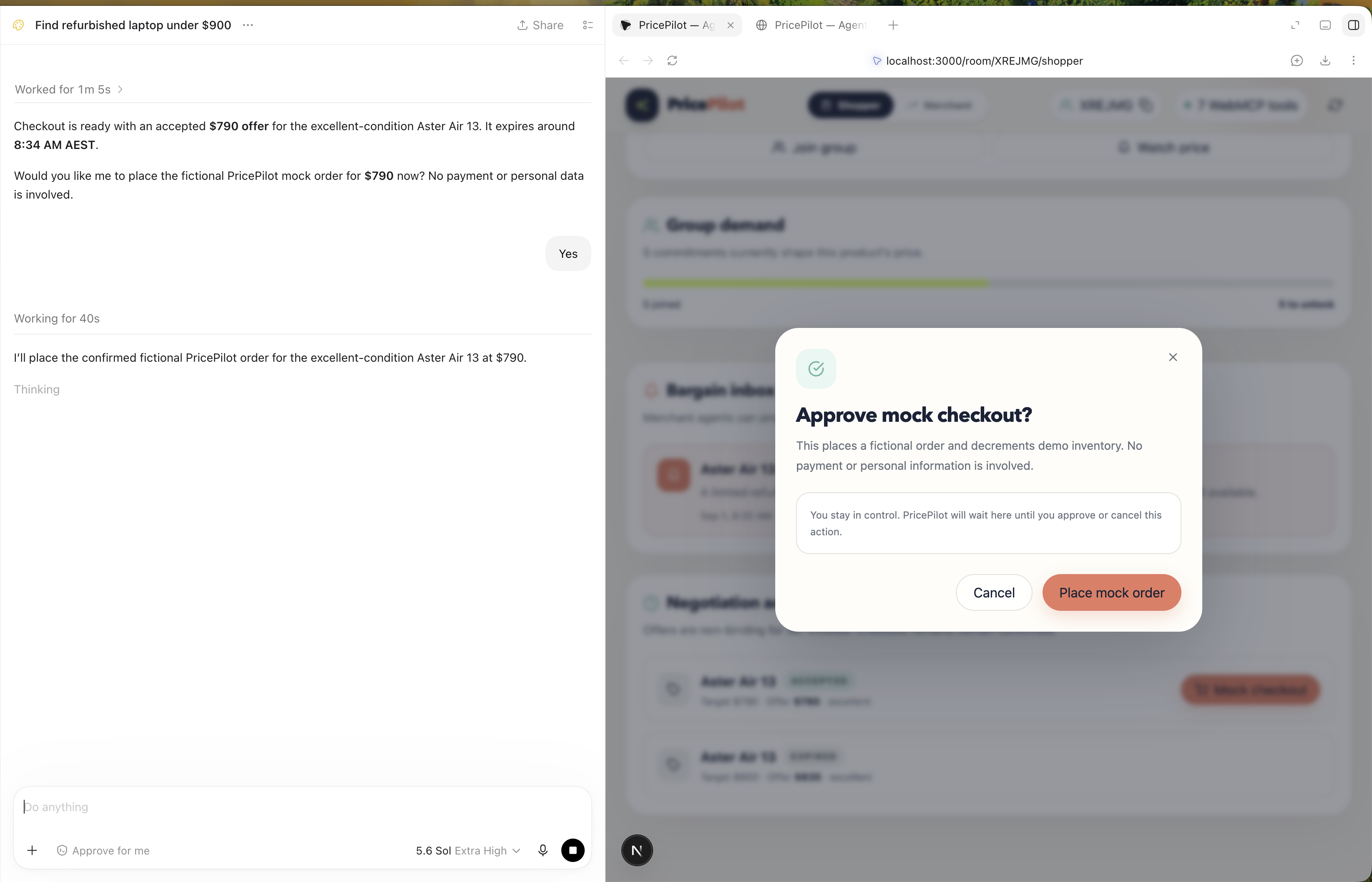
Shopper placing order after ChatGPT negotiated a good price for the laptop
-
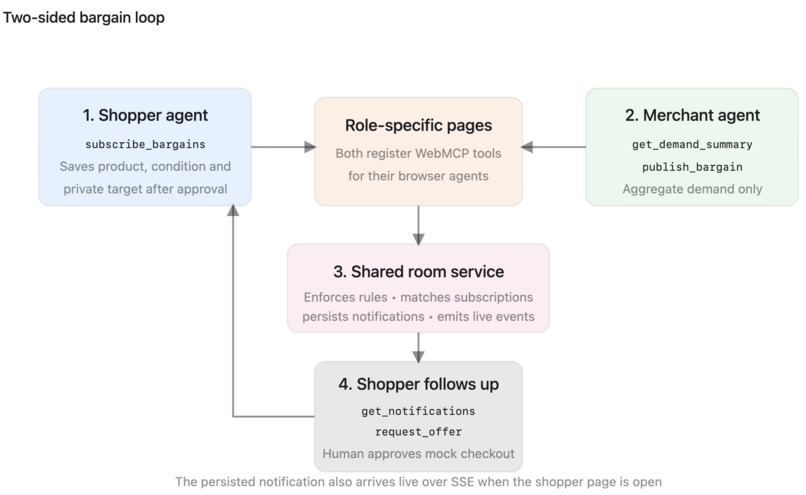
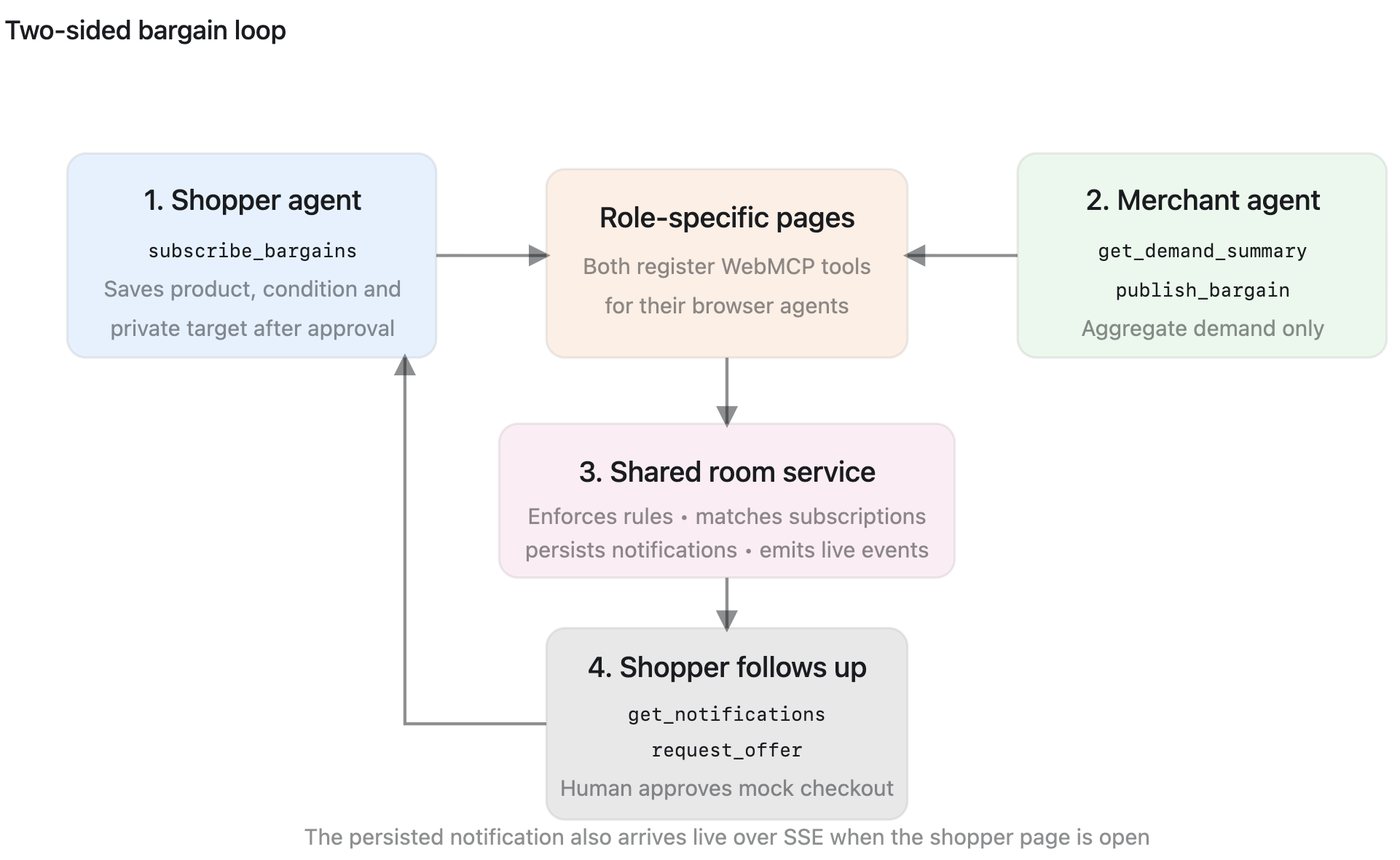
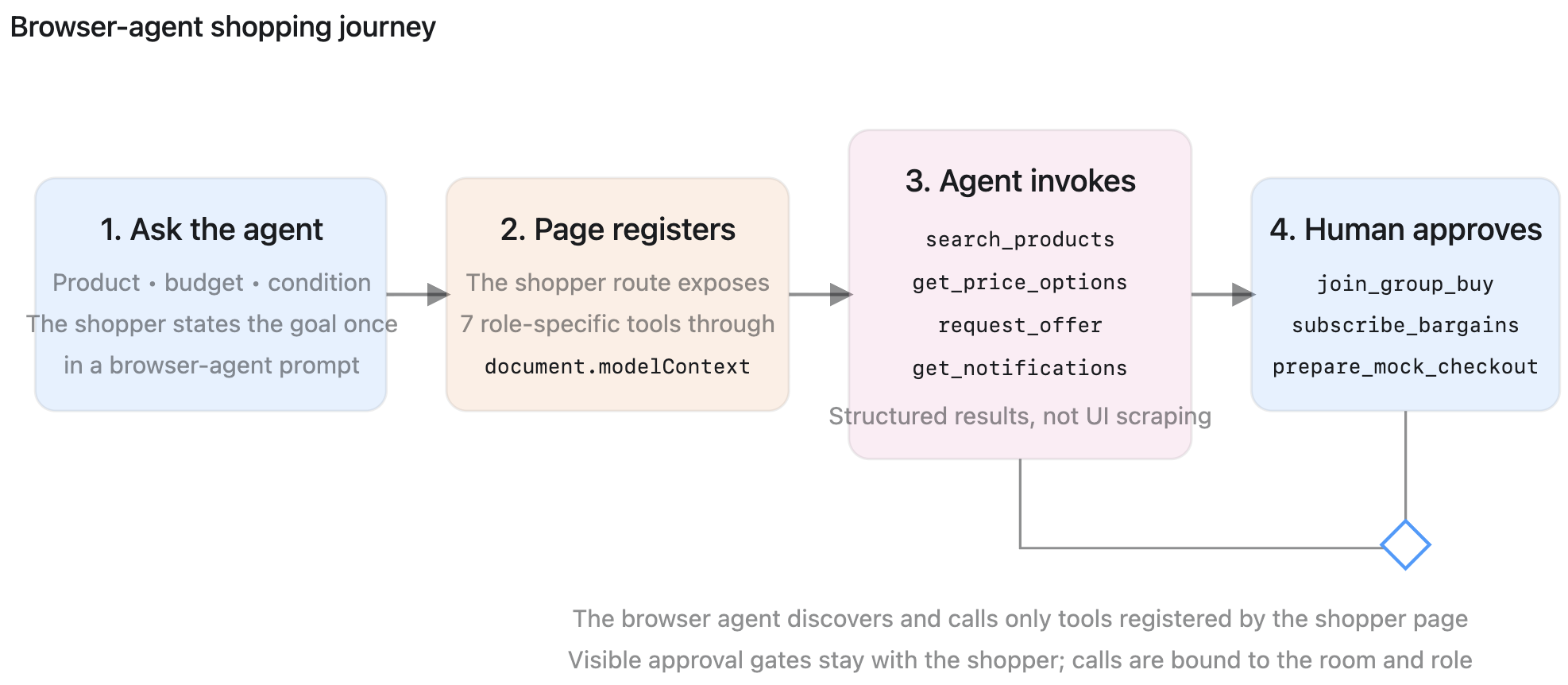
Two-sided bargain loop diagram
-
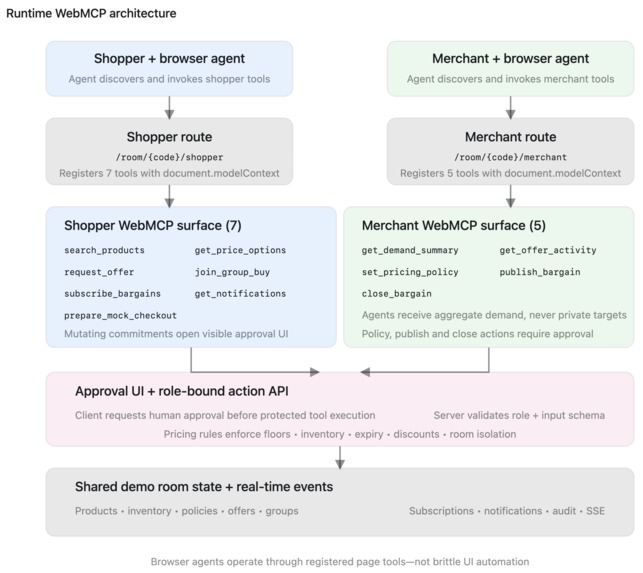
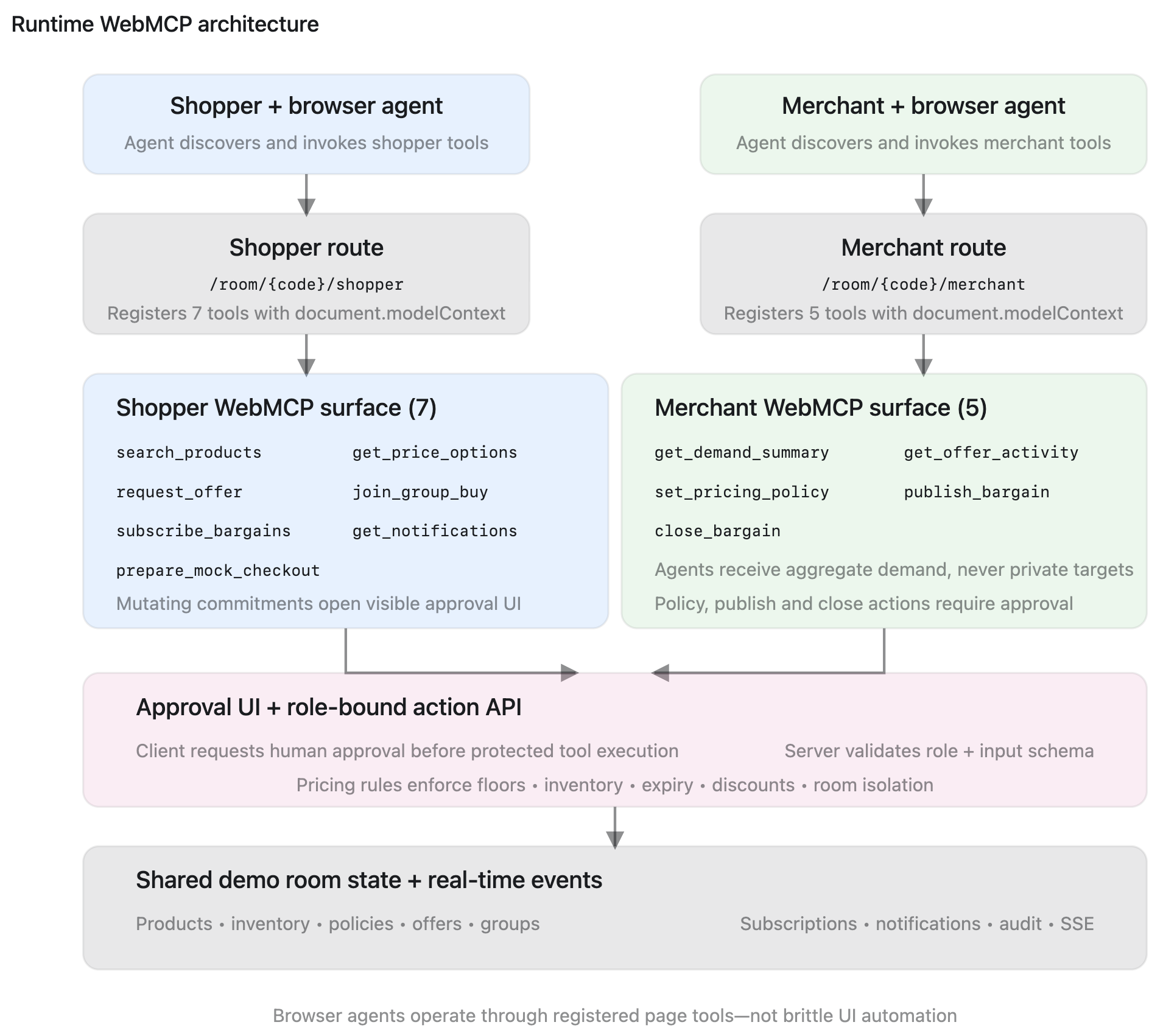
Architecture diagram
-
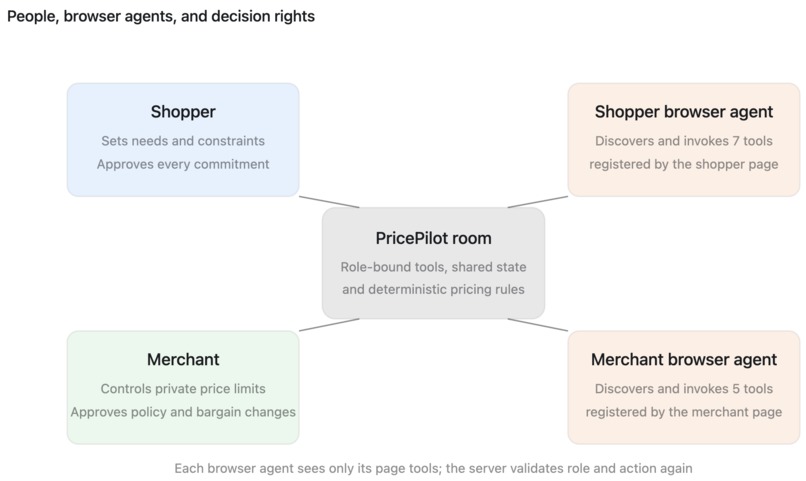
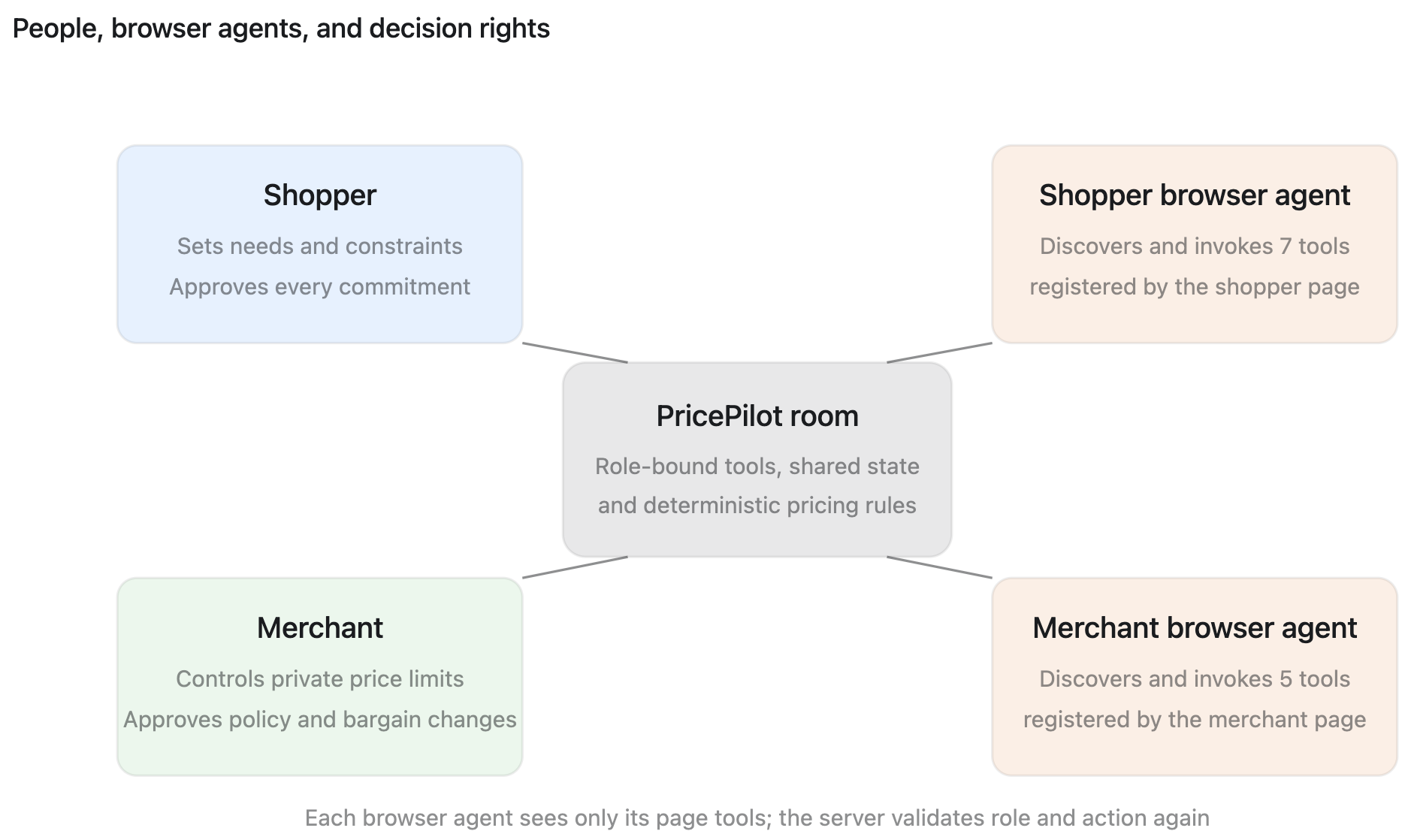
Actors diagram
-
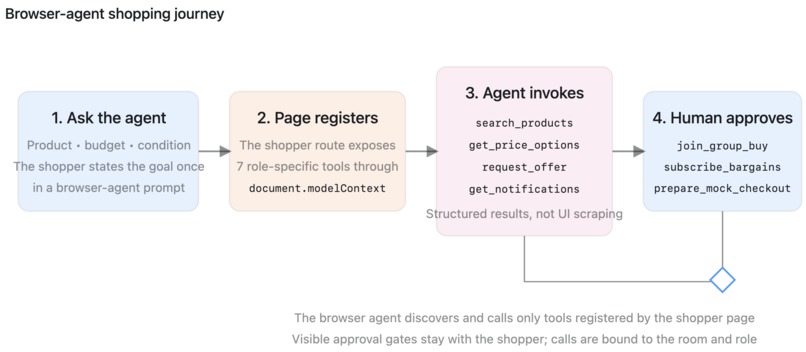
Use case diagram
Inspiration
The app's idea was inspired by my recent coffee brewing kettle buying experience. It wasn't a great experience trying to find a reasonable price after spending a couple of hours checking on Amazon and coffee equipment websites, only to realize the bargain price kettle I want in Amazon has target delivery date next year 2027 on the very final order payment page. My intent is to get it as soon as possible. Hence, it inspired me to create LightningPricePilot - a Two-sided Intent Market so that shopper can better communicate their intent to the merchant.
What it does
LightningPricePilot is a two-sided intent marketplace where shoppers and merchants use AI agents to discover fairer laptop prices.
Instead of scraping product cards, a shopper’s agent uses structured WebMCP tools to search laptops, compare new and refurbished prices, negotiate within merchant-defined guardrails, join group buys, subscribe to target-price bargains, receive notifications, and prepare a mock checkout. On the other side, a merchant’s agent can analyze aggregate demand, review offer activity, adjust private pricing policies, and publish limited bargains to matching shoppers.
The experience keeps people in control: commitments, policy changes, bargain publication, and checkout require visible human approval. Merchant price floors remain private, shopper targets are shown only in aggregate, and the demo never collects payment or personal information.
Why your use case is a strong fit for WebMCP
Product discovery and pricing depend on live website state: condition-specific inventory, current and group-buy prices, group progress, active bargains, offer expiry, and merchant pricing policies. These details are difficult for an agent to understand reliably by reading page text or clicking through filters.
WebMCP turns that state into precise, discoverable actions. On the shopper page, an agent can search the laptop catalogue, compare condition, group, and bargain price paths, request a rule-bound offer, join a group buy, save a target-price subscription, read bargain notifications, and prepare a mock checkout. On the merchant page, a different agent can review aggregate demand and offer activity, update private pricing guardrails, and publish or close limited bargains.
Each page registers only the tools appropriate to its role, with the room code already bound to every call. Both roles use the same validated room backend, so a shopper action can change aggregate demand and a merchant action can create a qualifying shopper notification without exposing the merchant’s private floor through the shopper tool surface.
This transforms the storefront from a static catalogue into a structured negotiation space for people, shopper agents, and merchant agents.
How it creates a better user experience
The shopper describes the outcome once:
“Find me a lightweight laptop under $900. Excellent refurbished condition is acceptable. Compare every available price path and negotiate toward $800 if sensible.”
The agent can then present understandable options instead of another long list of products:
- Buy at the current price for the selected condition
- Join a group buy and show how many more commitments would unlock its next discount
- Use an active, inventory-limited merchant bargain
- Request a ten-minute offer or transparent counteroffer within the merchant’s private guardrails
- Save the product, acceptable condition, and target price for a future bargain
Every price path states why it is available, whether it is currently unlocked, and what the shopper must do next. Offers include their rationale and expiry. Joining a group, saving a subscription, and placing the fictional mock order pause for visible human approval.
The shopper no longer needs to repeatedly search the catalogue, compare product conditions, monitor group progress, or refresh the page looking for a relevant bargain. Matching merchant bargains create persisted in-app notifications, while server-sent events update the open room live.
Merchants gain a complementary experience: they can see group commitments, subscriber counts, average target prices, and offer volume; tune the private floor and discount limits; and publish limited bargains that are matched against saved shopper intent. They do this without receiving a list of individual shopper budgets.
Describe what people and agents can do together that was difficult or impossible before
People remain responsible for the important trade-offs:
- Which laptop condition is acceptable
- What target price is worthwhile
- Whether to join a non-binding group buy
- Whether to save buying intent in the room
- Whether to complete a fictional checkout
- On the merchant side, whether to change pricing policy or publish or close a bargain
Agents handle the structured, repetitive work:
- Search products by need, use case, condition, and budget
- Compare current condition, unlocked group, and active bargain prices
- Request an accepted offer or explain a policy-bound counteroffer
- Retrieve relevant bargain notifications
- Summarize aggregate demand and recent offer outcomes
- Turn a demand signal into a proposed limited bargain
For example, the merchant agent can see that a product has five group commitments, three bargain subscribers, an aggregate average target, and recent offer activity. It can propose a price, condition, inventory allocation, expiry, and shopper-facing message. The merchant reviews the action before publication; matching subscribers then receive an in-app notification that the shopper agent can retrieve and explain.
This creates something that was previously difficult: asynchronous negotiation around durable buyer intent. A shopper can save a condition and target price, leave the original search, and return to a persisted notification after a merchant publishes a qualifying bargain. Demand is used to unlock lower group prices and guide shared bargains—not to secretly calculate a different price for each shopper.
Briefly explain how you implemented WebMCP
LightningPricePilot implements two role-specific WebMCP surfaces with document.modelContext.registerTool.
The shopper page registers seven tools:
search_products— find up to five laptops by plain-language query, use case, condition, or maximum budgetget_price_options— compare the current condition price, group-buy path, and any active bargain for one laptoprequest_offer— create a non-binding ten-minute accepted offer or counteroffer within merchant guardrailsjoin_group_buy— record the shopper’s non-binding group commitment and unlock a tier when its threshold is reachedsubscribe_bargains— save a product, acceptable condition, and target price in the demo roomget_notifications— retrieve persisted bargain notifications, treating merchant-authored messages as untrusted contentprepare_mock_checkout— place a human-approved fictional order from a valid offer and decrement demo inventory
The merchant page registers five tools:
get_demand_summary— return group commitments, subscriber counts, aggregate average targets, and offer countsget_offer_activity— return recent accepted, countered, expired, and checked-out offersset_pricing_policy— update the private floor, maximum instant discount, and five- and ten-buyer discountspublish_bargain— publish a condition-specific, inventory-limited, expiring bargain and notify matching subscribersclose_bargain— stop an active bargain while preserving its notification and audit history
Each tool posts its role, action, and structured input to the room action API. The server validates the room, role-specific action allowlist, and input schema before running shared domain logic against the room’s persisted state. The deterministic pricing service enforces condition inventory, merchant floors, instant-discount limits, five- and ten-buyer group tiers, bargain inventory, and expiry.
How we built it
We built LightningPricePilot with Next.js 16, React, and TypeScript. The shopper and merchant pages register 12 role-specific tools using document.modelContext.registerTool: seven shopper tools and five merchant tools. The app intentionally contains no embedded model or OpenAI API key—the intelligence comes from the WebMCP-capable browser agent.
Every tool calls a shared, validated room API backed by Zod schemas and deterministic pricing logic. That pricing engine handles condition-based inventory, private merchant floors, instant-discount limits, group-buy tiers, expiring offers, and inventory-limited bargains.
Accomplishments that we're proud of
Being able to demonstrate how WebMCP can empower AI Agents, improve efficiency and facilitate communications between humans and agents is a solid accomplishment.
Built With
- codex
- drizzle
- neon
- next.js
- render
- typescript
- webmcp

Log in or sign up for Devpost to join the conversation.