-
-
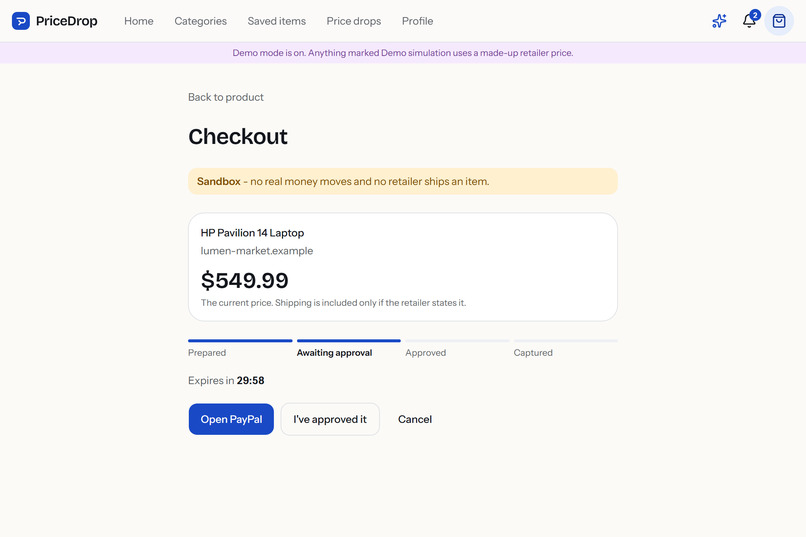
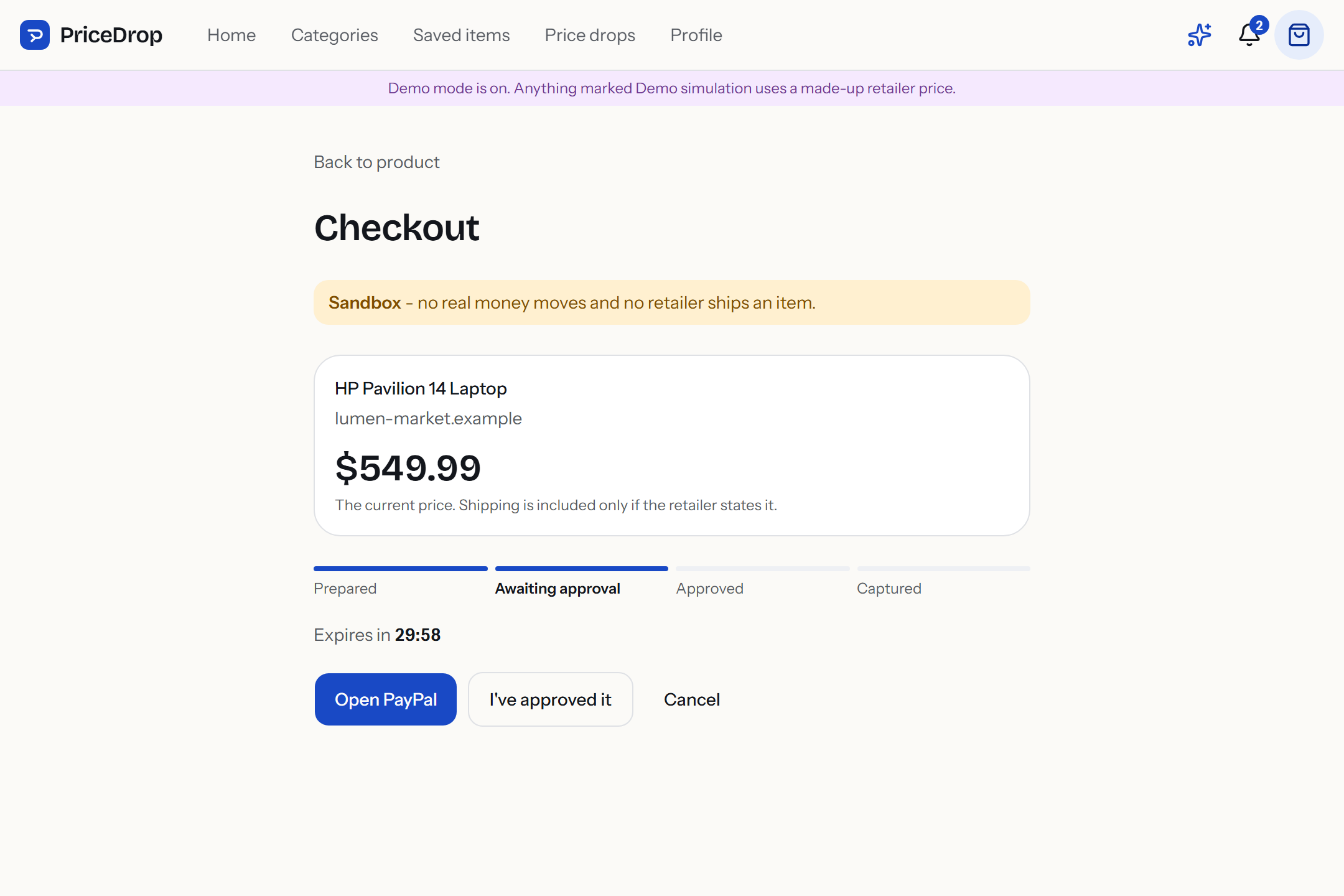
Paypal Check out
-
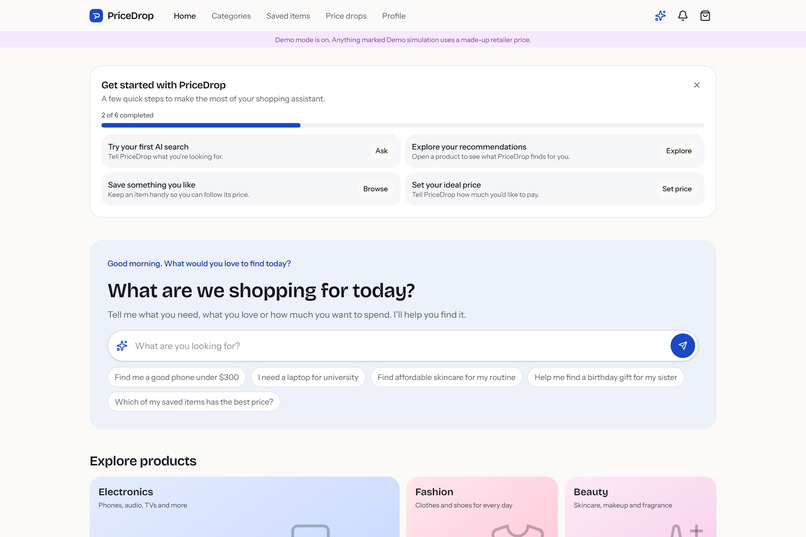
Dashboard
-
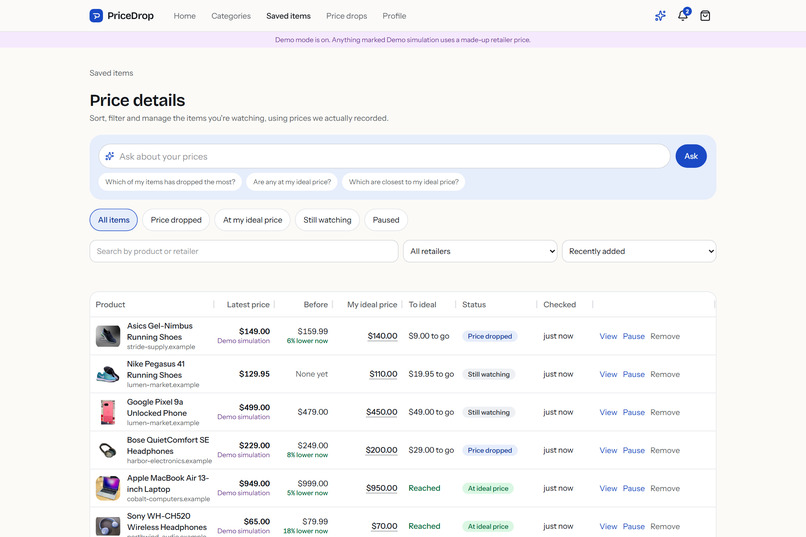
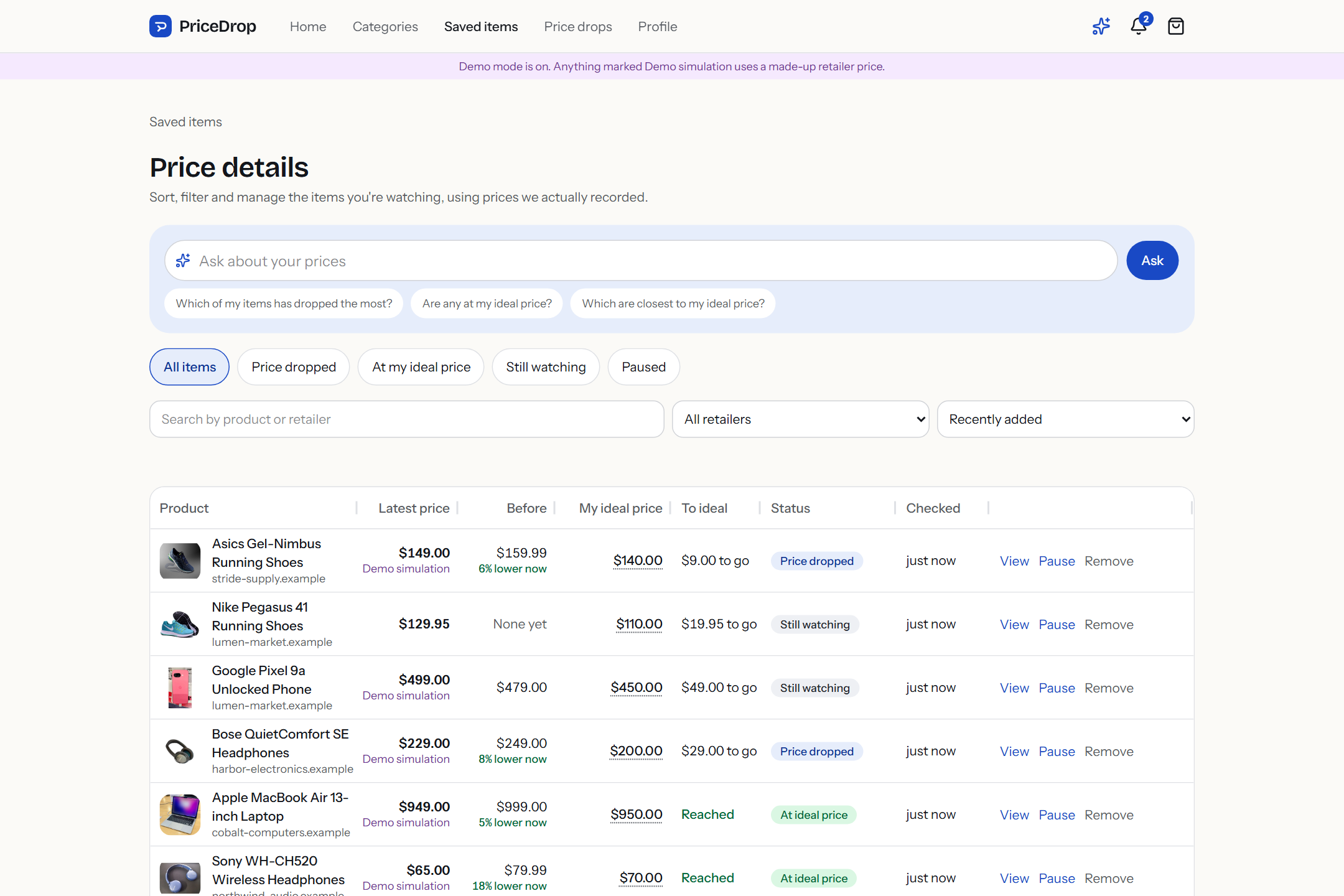
Price details
-
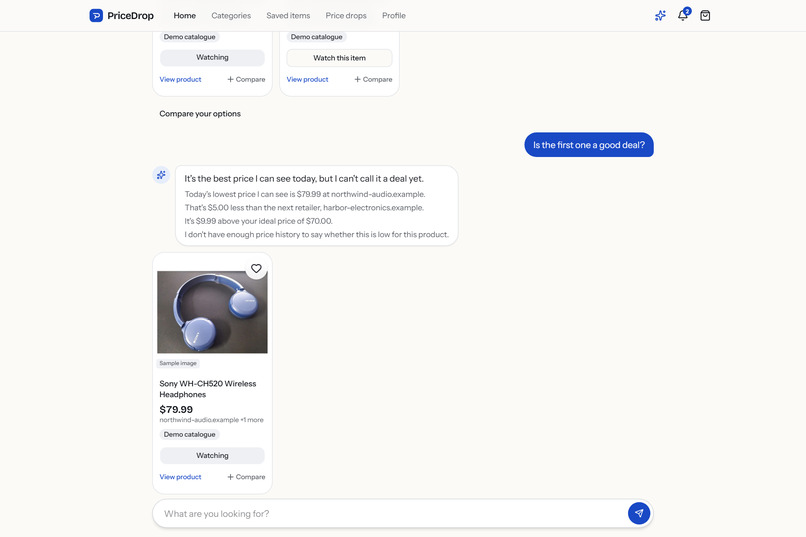
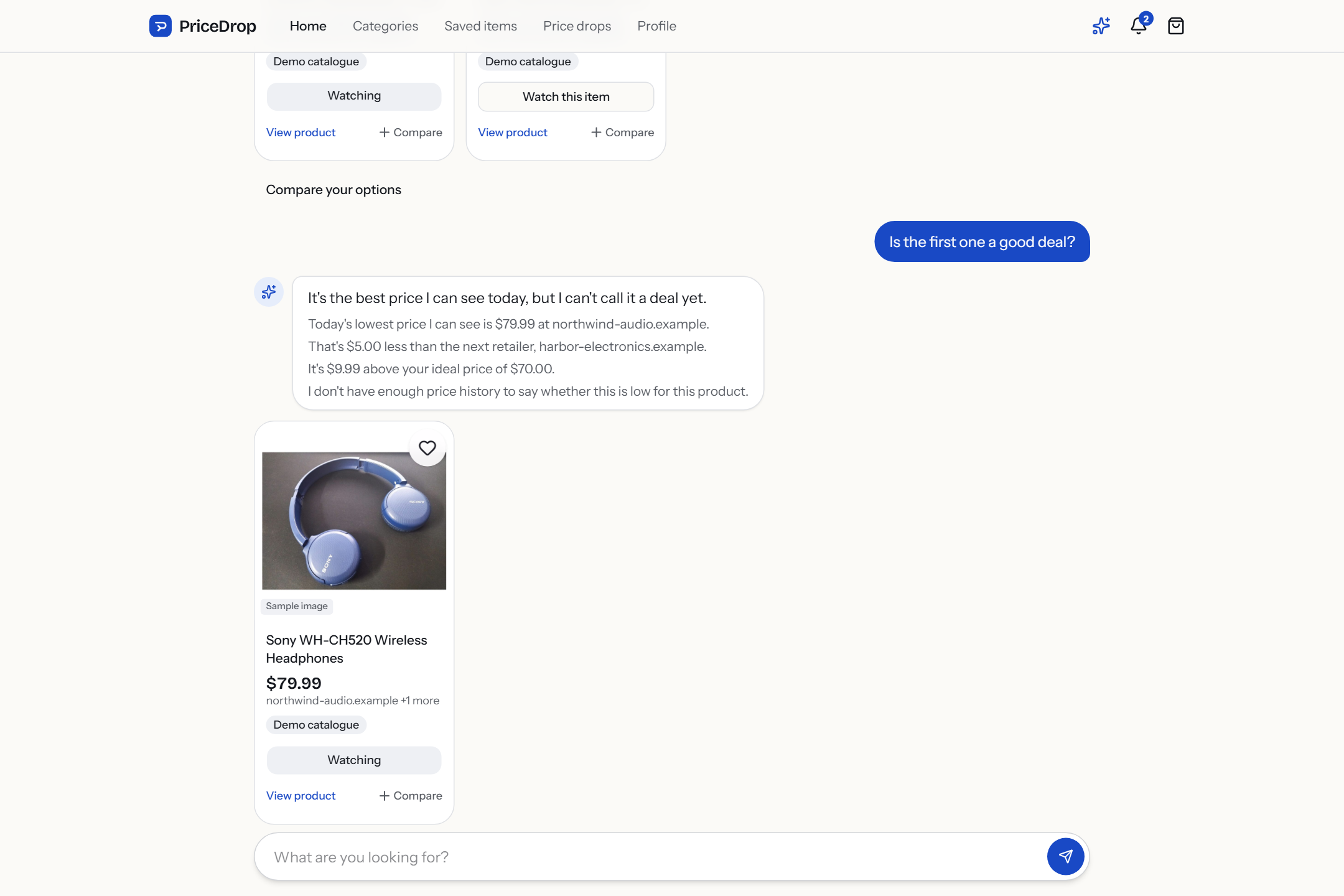
Assistant deal check
-
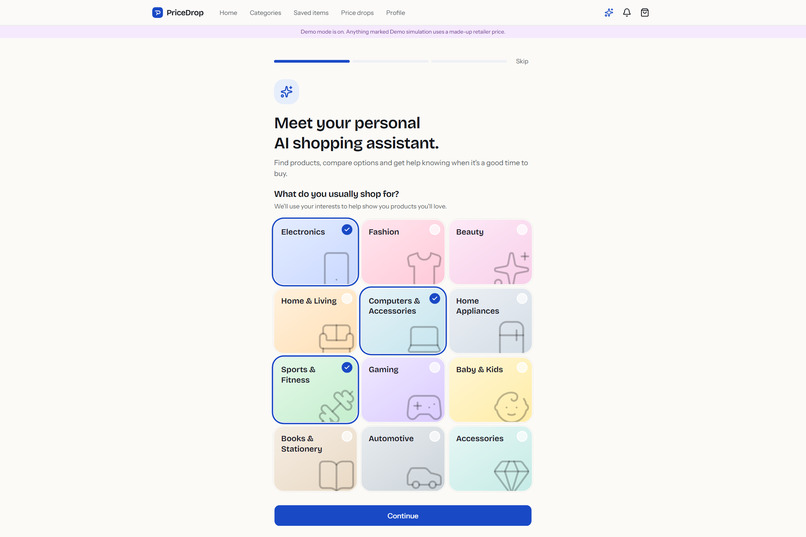
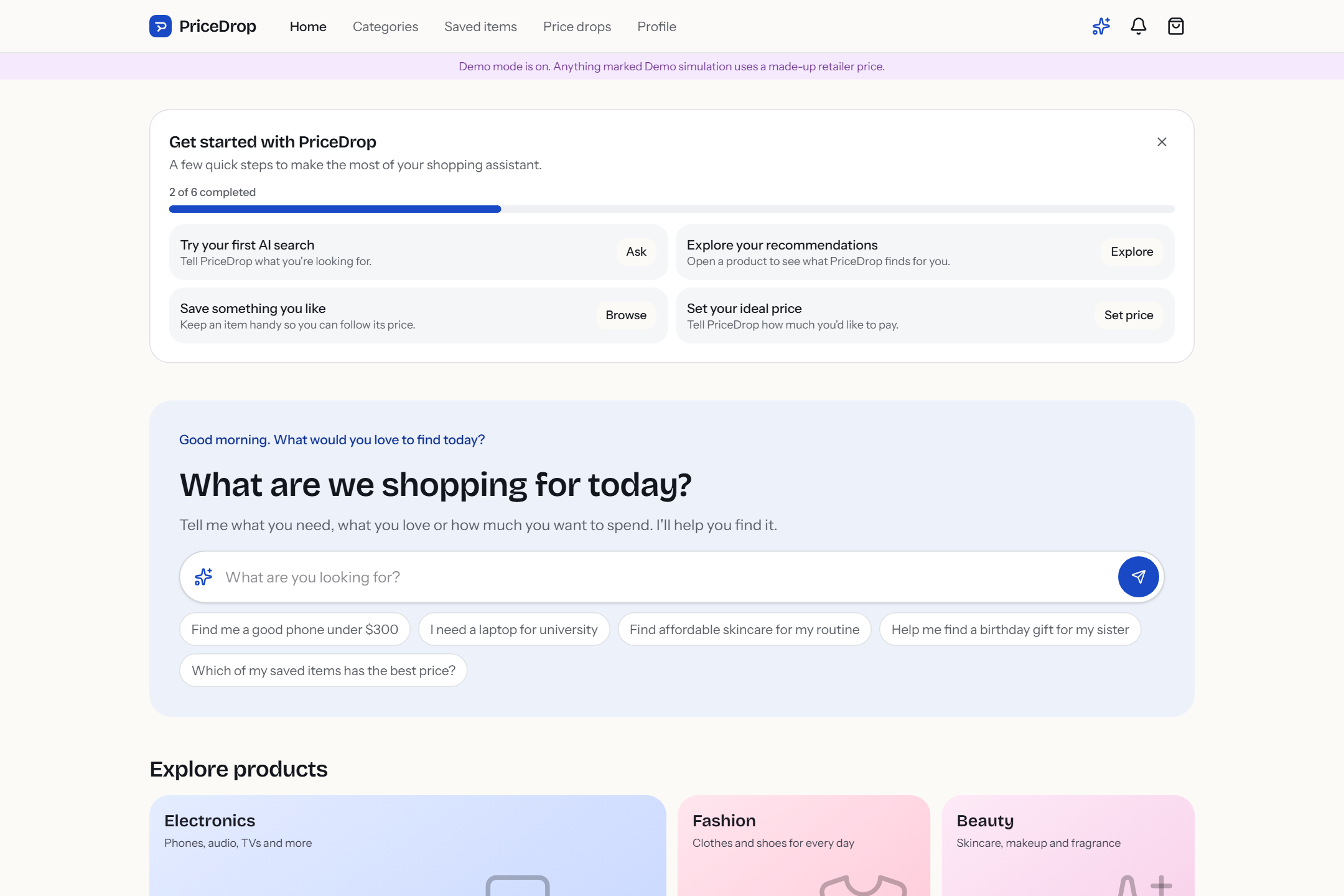
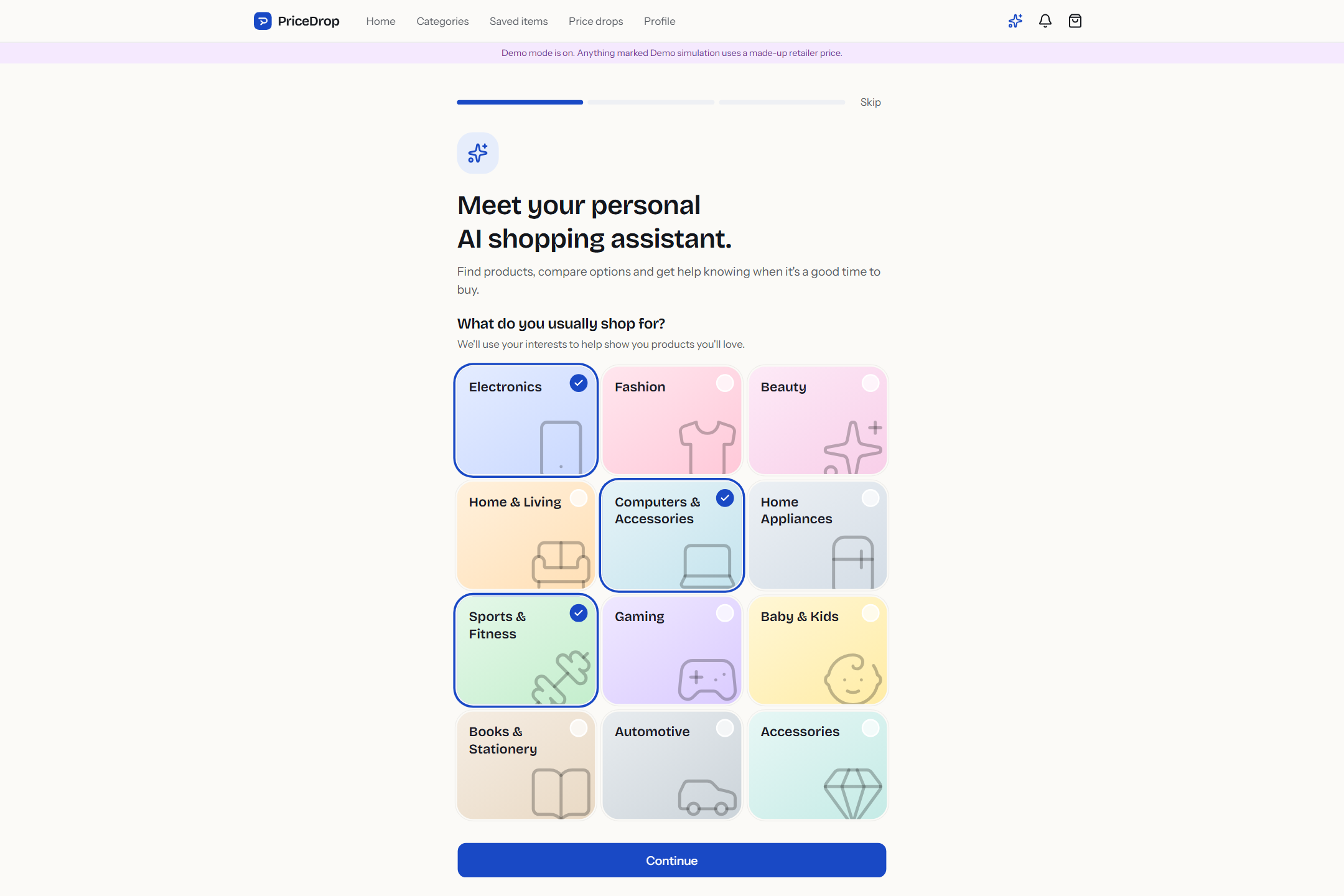
Onboarding
-
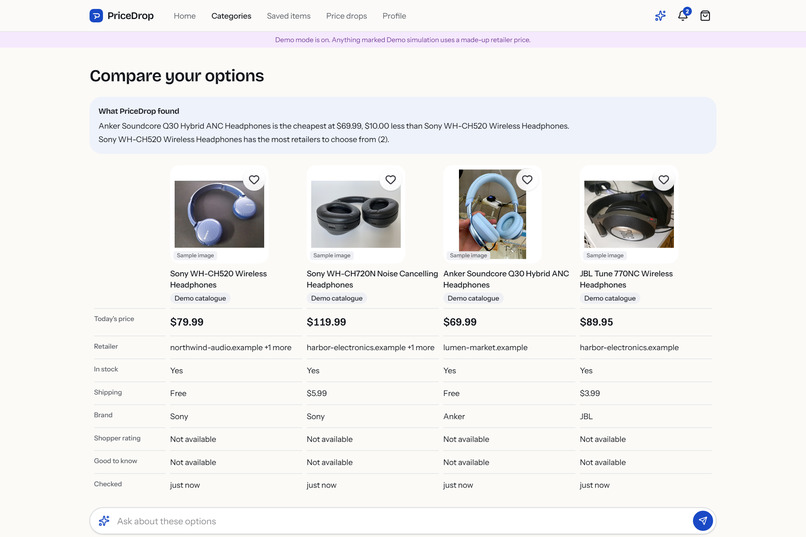
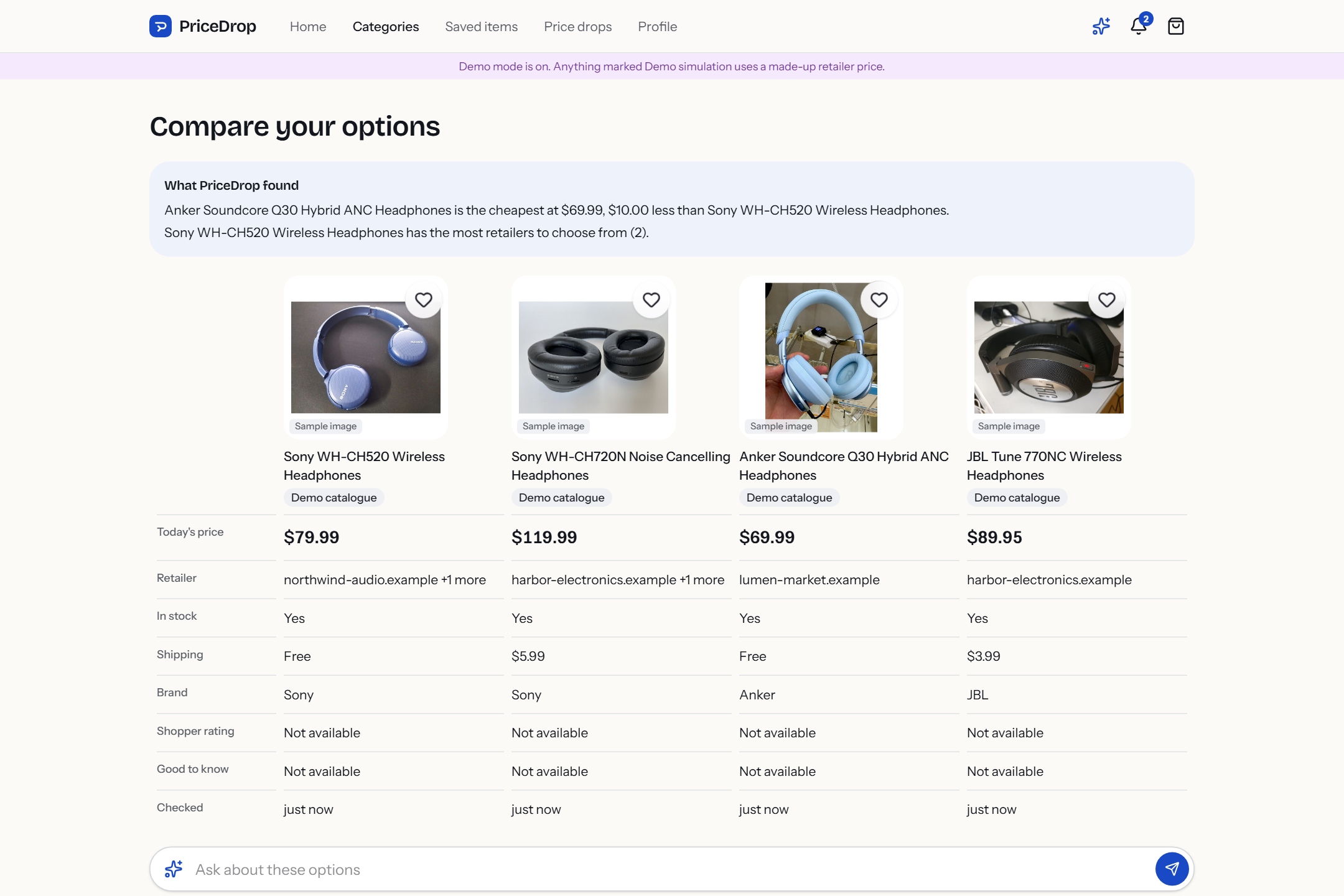
Compare
-
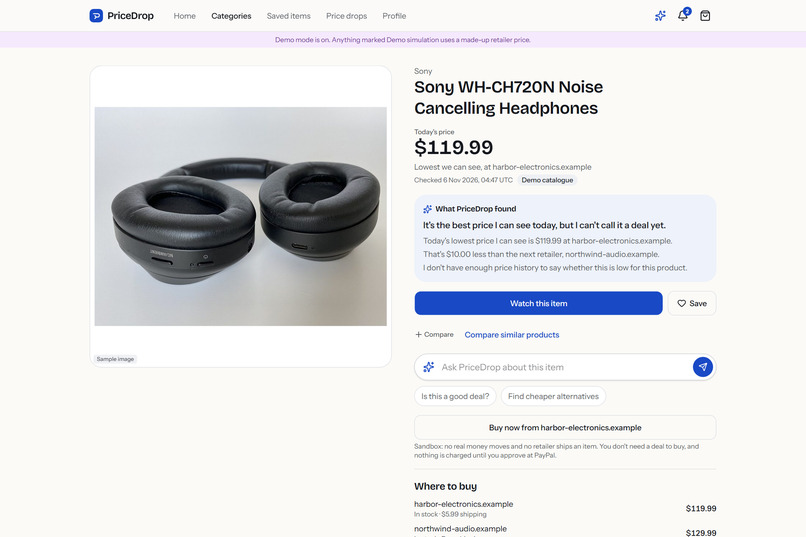
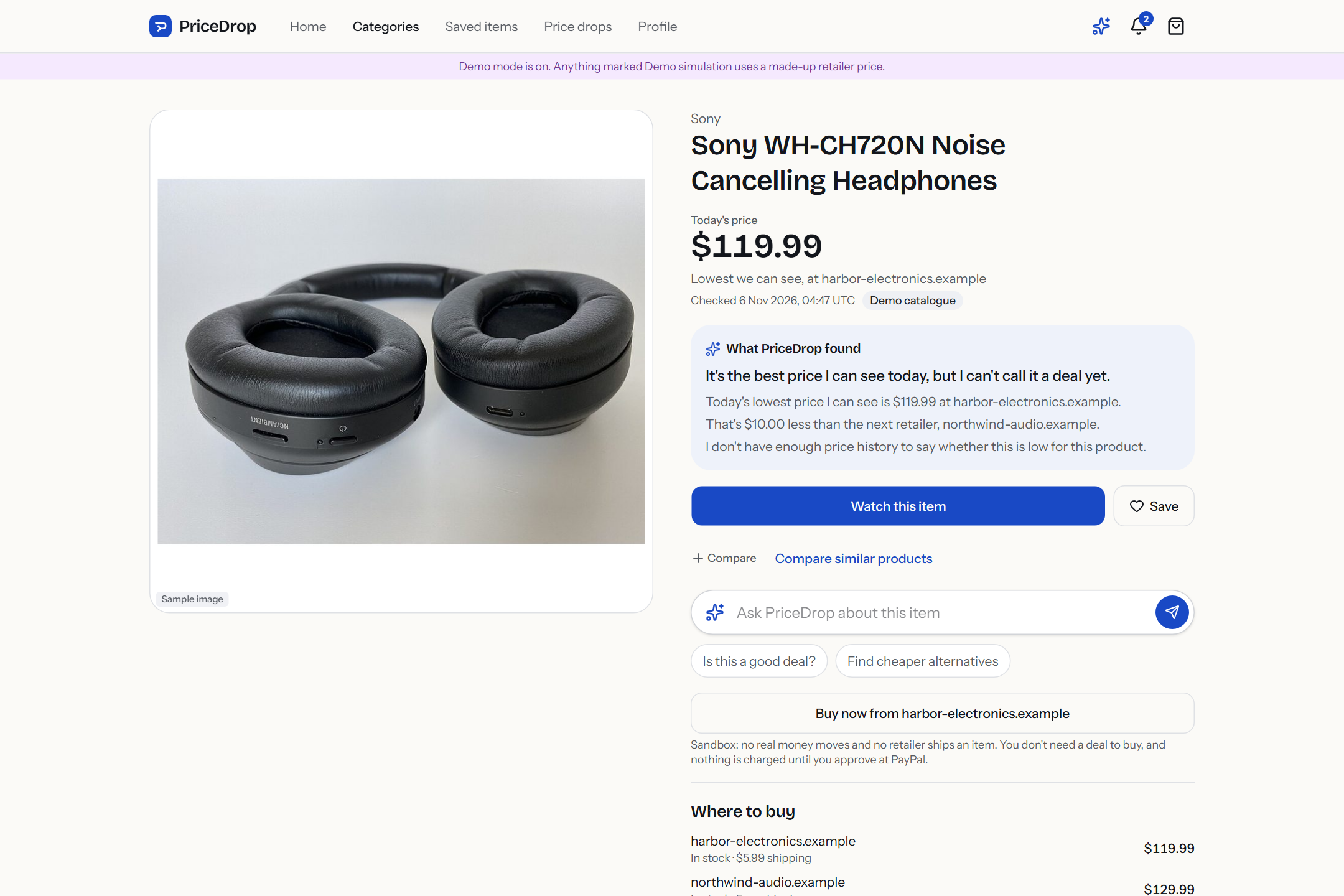
Product Page
-
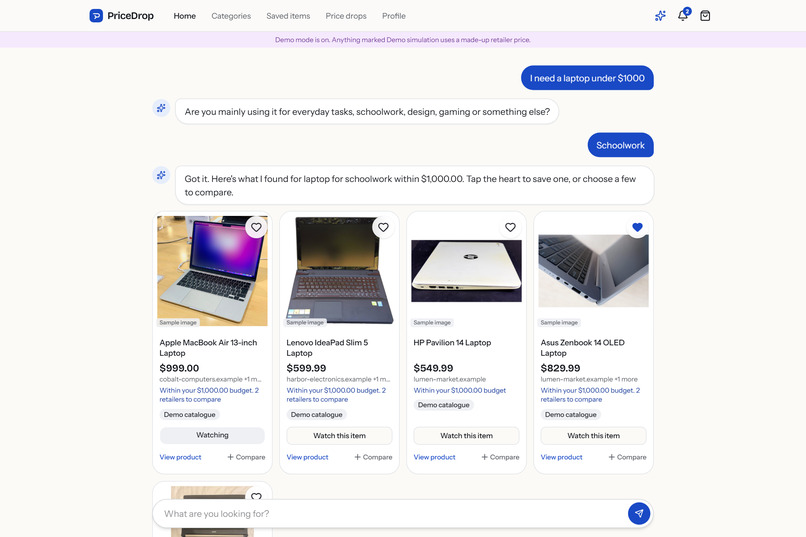
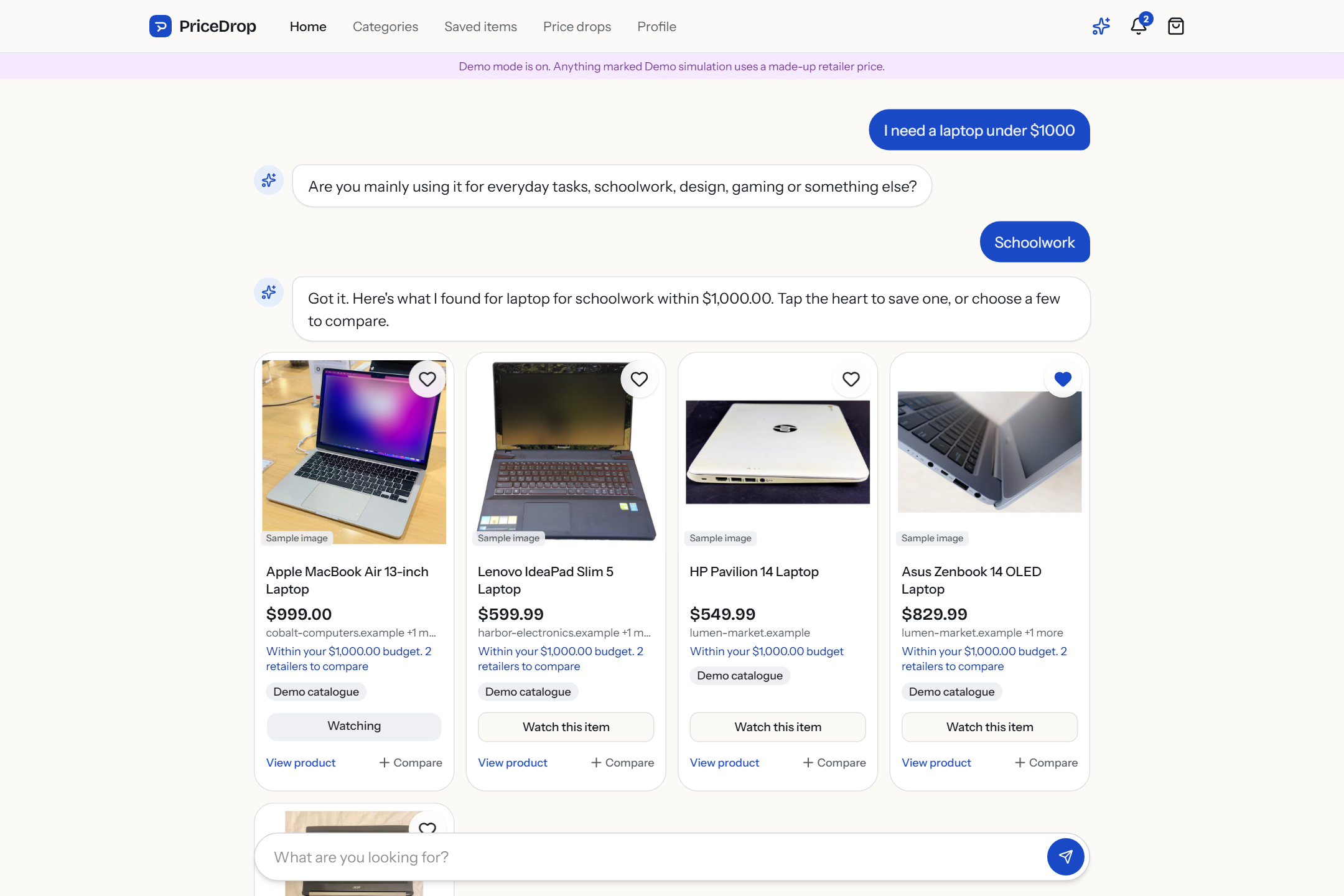
Assistant finds products
-
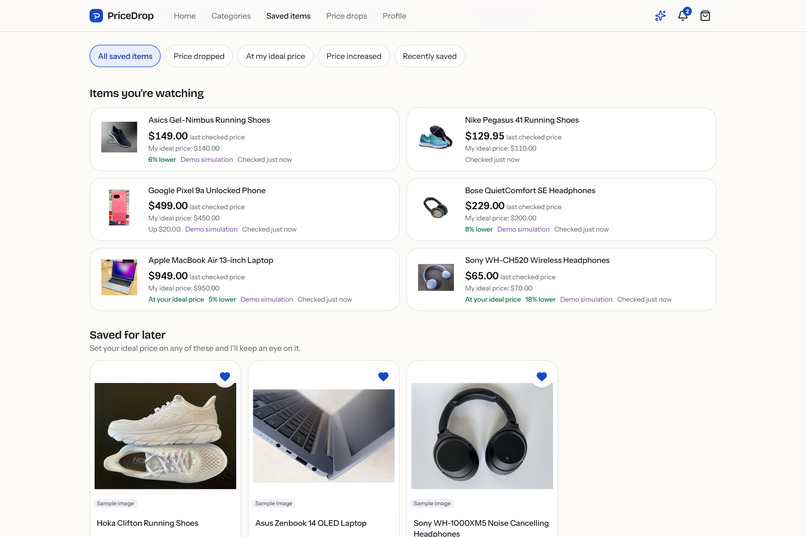
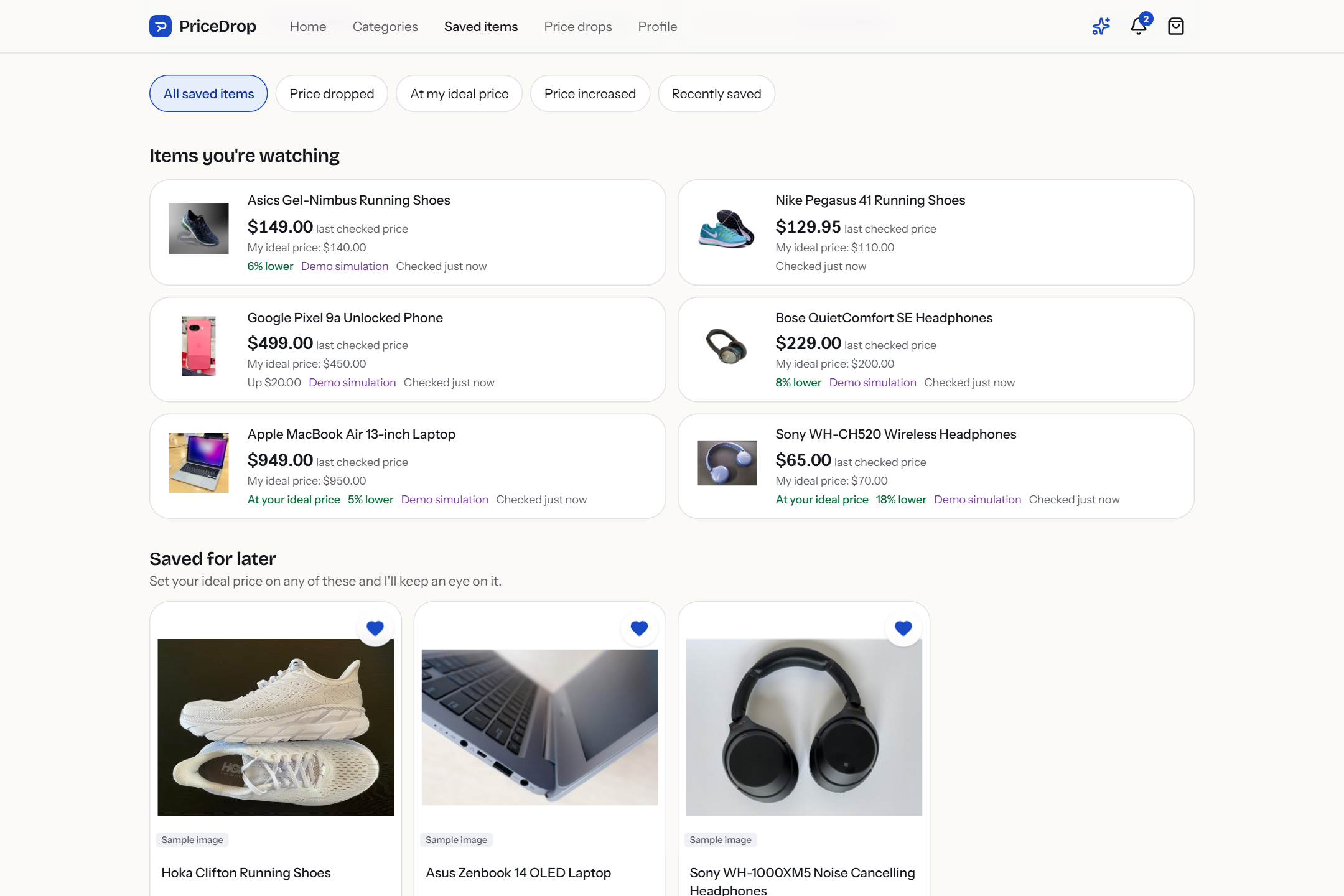
Saved Items
-
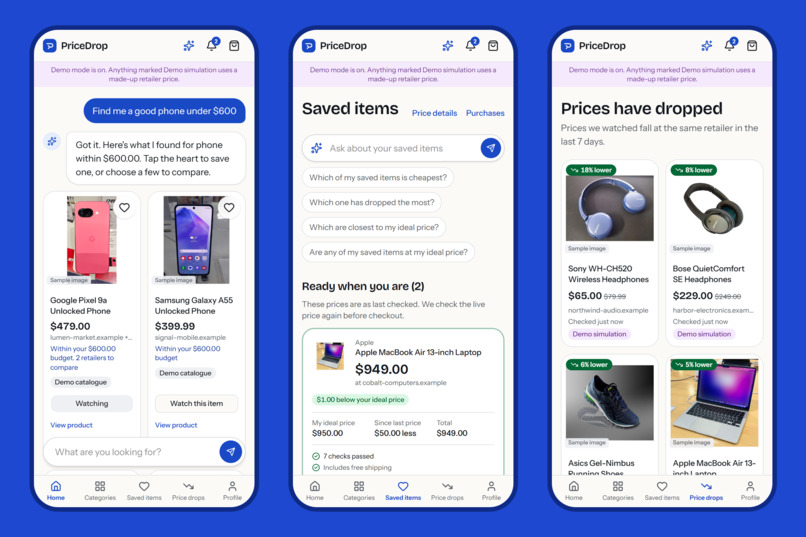
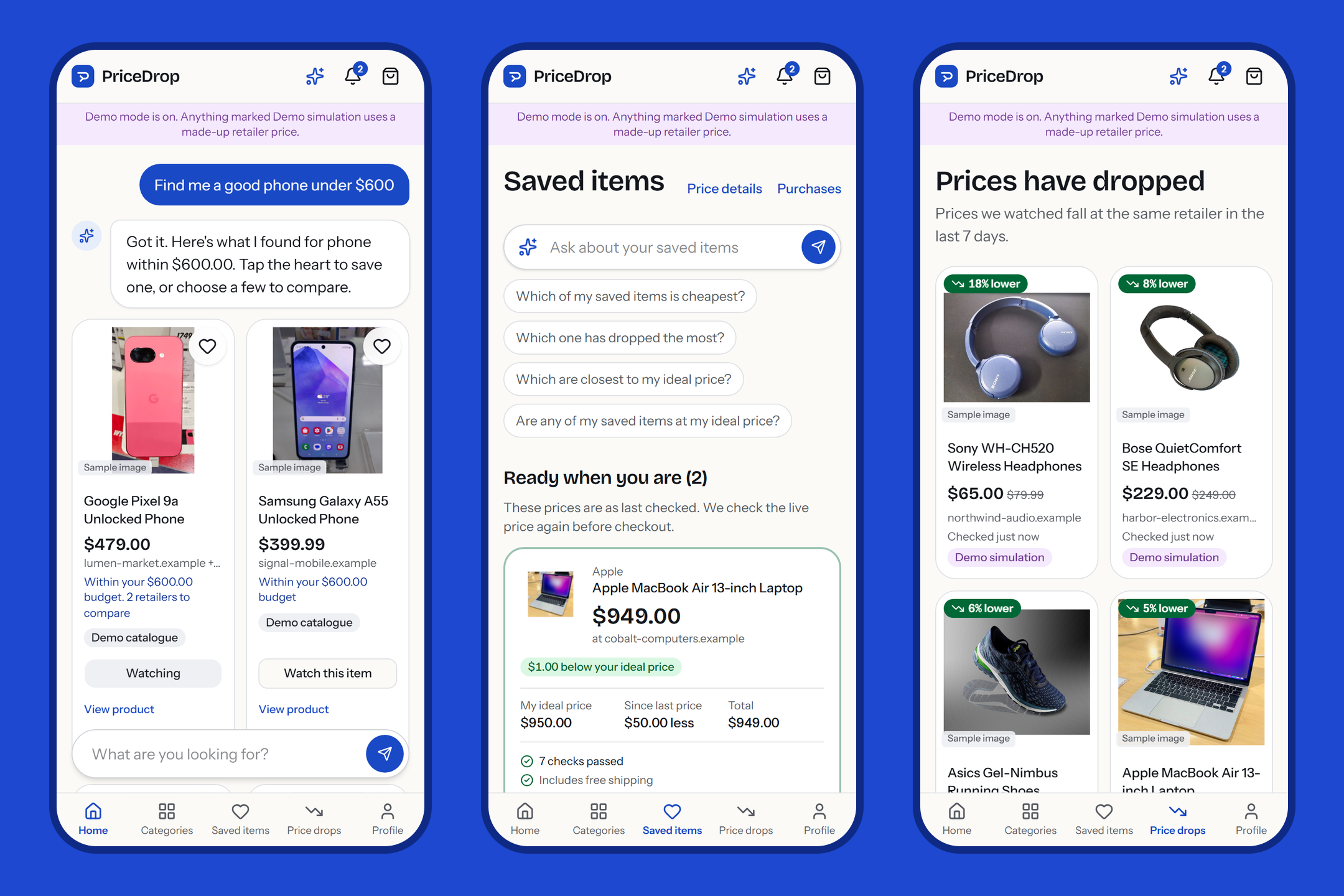
Mobile view
PriceDrop: A Smarter Way to Shop
Inspiration
I've always found online shopping discounts a little difficult to trust. Sometimes a product is advertised as being 40% off, but you have no idea whether it was ever sold at the original price. Prices vary between retailers, deals come and go, and finding the best option can take hours of searching.
I also noticed that most price-tracking tools expect you to already know exactly what you want. But shopping doesn't always work that way. Sometimes you know you need a laptop, but you're not sure which one to get. Sometimes you have a budget but want help finding the best option. And sometimes you've found something you love, but you're wondering if you should buy it now or wait.
I wanted to build something that made that experience easier.
Something you could talk to naturally, almost like a friend who knows their way around online shopping. You could explain what you're looking for, get actual product recommendations, compare your options and keep an eye on prices without doing all the work yourself.
That's how PriceDrop started.
Its goal is simple: find what you love, and let PriceDrop help you get it for less.
What it does
PriceDrop is an AI-powered shopping agent that helps people discover products, make better buying decisions and shop with more confidence.
Instead of having to navigate endless filters, users can simply tell PriceDrop what they need. They can ask for a laptop for university, find a phone within a particular budget, compare headphones or look for cheaper alternatives to something they've already found.
PriceDrop searches the Channel3 product catalogue and presents matching products with their prices, retailers and reasons they might be a good fit. If the request needs more information, it asks a follow-up question rather than making assumptions.
But finding products is only part of it. Users can also ask whether something is actually a good deal, compare available options and get help understanding price information. When there isn't enough history to make a reliable judgement, PriceDrop says so instead of pretending to know.
Users can save products they're interested in, set the price they'd ideally like to pay and receive in-app updates when that price is reached.
And when they're ready to buy, they can go through PayPal checkout. The shopper always has the final say. Nothing is charged without their approval.
How I built it
I built PriceDrop with Next.js, TypeScript and Supabase, with a focus on making the AI useful while keeping important decisions and financial actions under strict control.
Gemini powers the conversational experience. It helps understand what shoppers mean, turn their requests into structured search criteria and respond naturally. I also added validation to make sure the AI doesn't introduce things like a budget the user never mentioned or explanations that don't match the actual product data.
Channel3 provides the product catalogue, current offers and similar product results. Since catalogue credits are limited, I implemented caching and usage controls to make the most of the available free allowance.
One of the most important parts of the project was integrating PayPal. I used PayPal Orders v2 in Sandbox, with the entire order creation and capture process handled on the server. The buyer must approve the payment through PayPal before the server captures it. A purchase is only recorded after PayPal confirms that the transaction is completed.
I was particularly careful about security here. The PayPal secret never reaches the browser, order amounts are calculated and validated on the server, and repeated capture requests cannot create duplicate purchases.
I also integrated AG Grid Community to provide a more detailed way to manage saved products. Users can search, sort, filter and edit their ideal prices in one place, while the mobile experience uses cards instead of forcing people to work with a wide table.
Supabase handles authentication and data storage, with Row Level Security to ensure that users can only access their own information. GitHub Actions handles scheduled price checks, while Vercel provides hosting.
I wanted to build the entire project using free tiers, so making careful decisions about usage, caching and infrastructure was part of the development process.
Challenges I faced
One of my biggest challenges was figuring out how much responsibility to give the AI.
It was tempting to let the assistant handle everything, but when money is involved, that isn't something I wanted to take chances with. I had to separate what the AI could interpret from what the application itself must verify. The AI can help someone decide what to buy, but it cannot independently place an order, change payment amounts or make financial decisions on their behalf.
Getting PayPal Sandbox payments working also took some effort. I ran into merchant account errors and had to work through the order creation, approval and capture process to make sure each step behaved correctly.
What I learned
Building PriceDrop taught me that making an AI product useful is not just about making the AI sound intelligent.
It's about knowing when to use AI, when to rely on ordinary application logic and when to admit that you don't have enough information.
I learned a lot about integrating PayPal, handling orders securely, working with product data and building an application where AI and traditional backend logic work together.
More importantly, I learned that trust is part of the product itself. If someone is using PriceDrop to make a purchasing decision, they should be able to understand where the information came from and know that the application won't make financial decisions for them.
Sometimes the most useful answer PriceDrop can give is simply, "I can't tell yet."
What's next
There's still a lot I'd love to add to PriceDrop.
I'm looking to introduce email price alerts, expand price checks to saved products even when users haven't set an ideal price, and eventually add a My Savings section once there's enough reliable purchase and price data to calculate it properly.
I'd also like to move beyond Sandbox payments and support live PayPal transactions when the product is ready.
For now, I'm focused on making PriceDrop a shopping assistant that people can genuinely rely on: one that makes finding products easier, helps people think through their options and gives them more confidence about when to buy.
PriceDrop is currently running with PayPal Sandbox. No real money is charged, and no physical products are shipped.
Built With
- ag-grid
- channel3
- gemini
- github-actions
- next.js
- paypal
- postgresql
- react
- supabase
- tailwindcss
- typescript
- vercel
