Inspiration
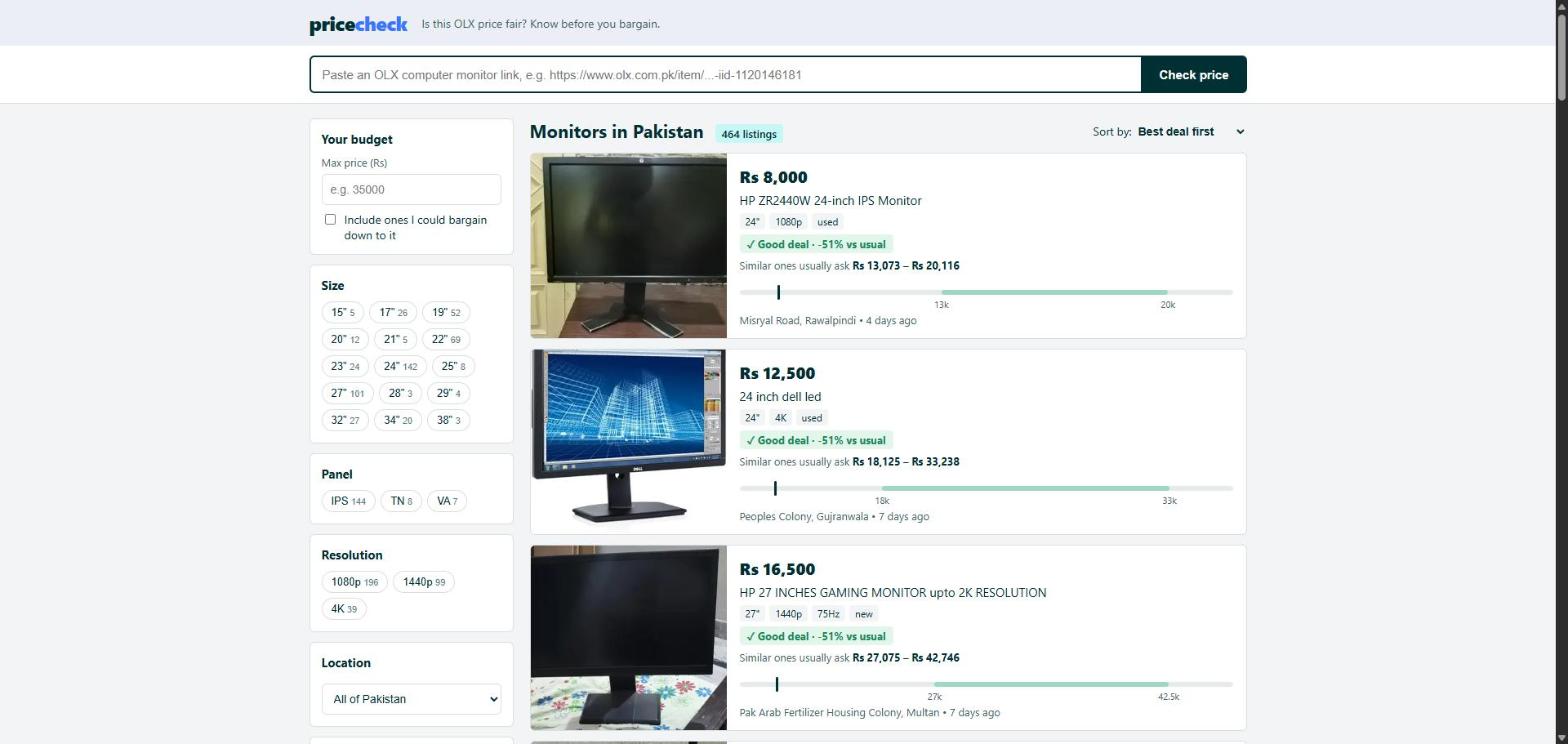
My friend wanted a used 27" monitor and had no idea how much to haggle on OLX, Pakistan's biggest classifieds site. So I built pricecheck: it reads every monitor listing on OLX, has Gemma (running locally) pull out the specs, and has TabPFN predict what similar monitors usually ask, so he gets three numbers: open at, fair, never more than.
It works because it reads the data OLX embeds in its own pages. That's also its weak spot. The day OLX moves that data, every scraper like this one breaks, and usually nobody notices until a user does. Then a developer opens the page source, finds where things moved, patches the parser, and redeploys. That's the boring, urgent work after the code is written, and it's exactly the kind of job I wanted to hand to agents.
What it does
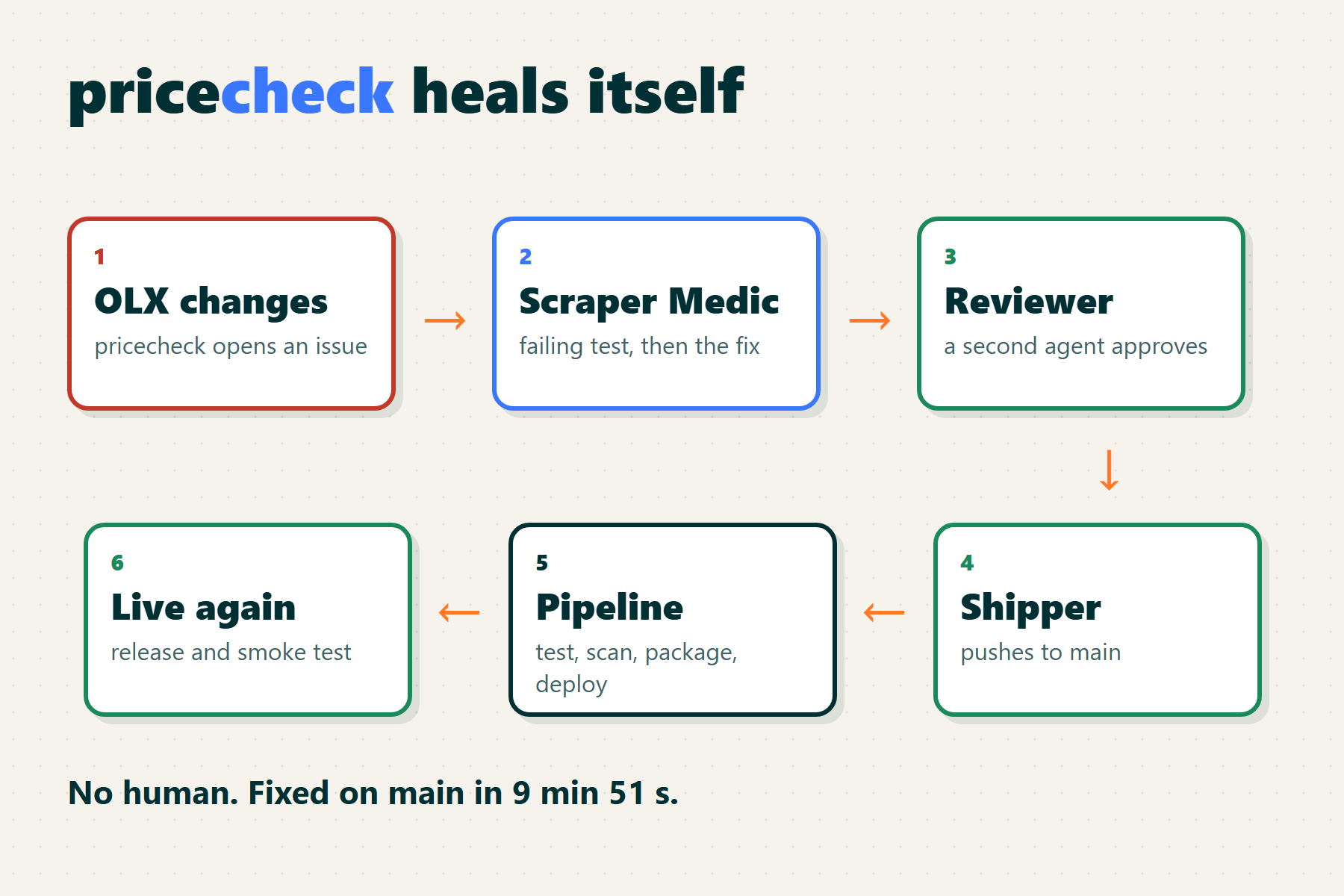
pricecheck now repairs itself on GitLab, from detection to production, with no human in the loop:
- Detect. When I run pricecheck and an OLX page matches no layout it knows,
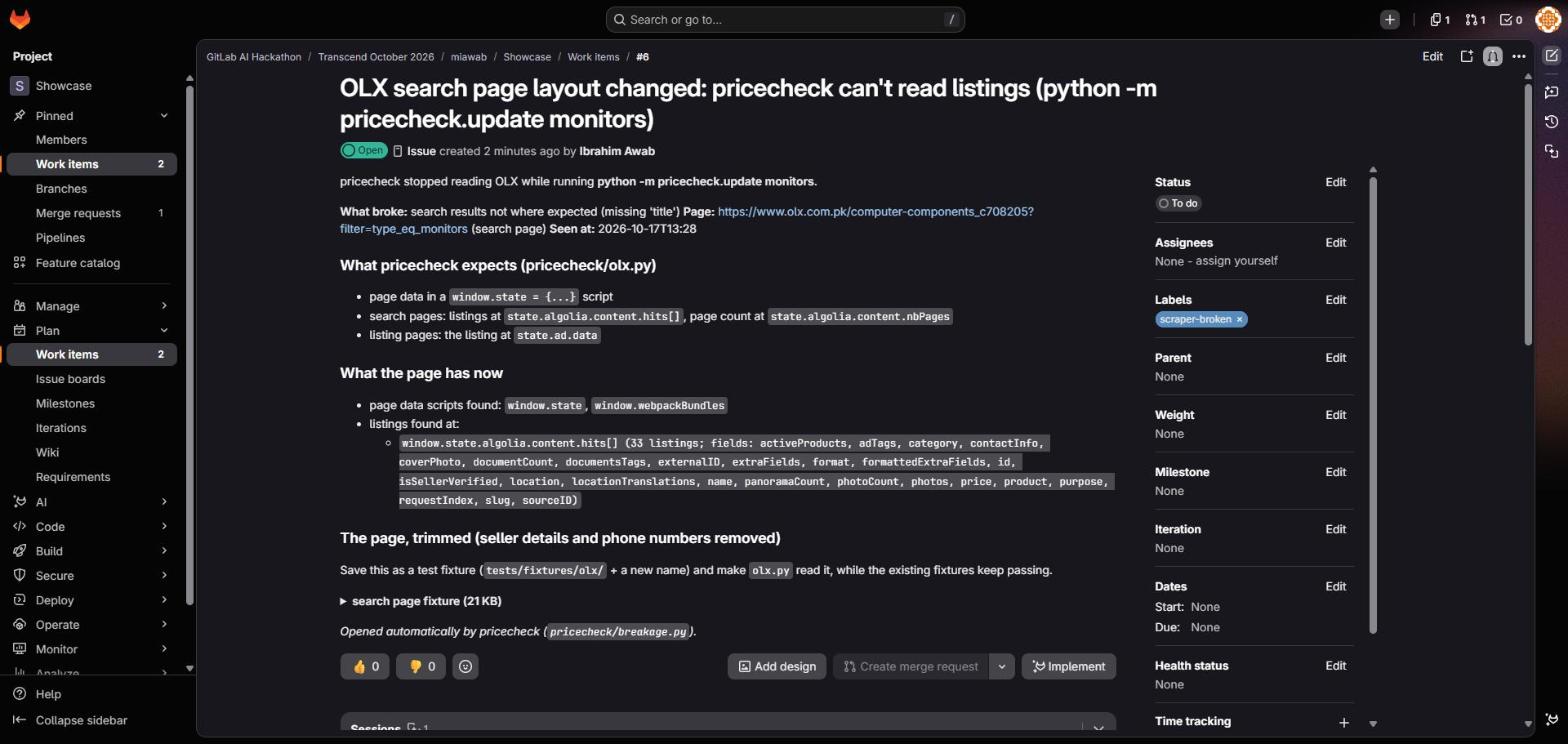
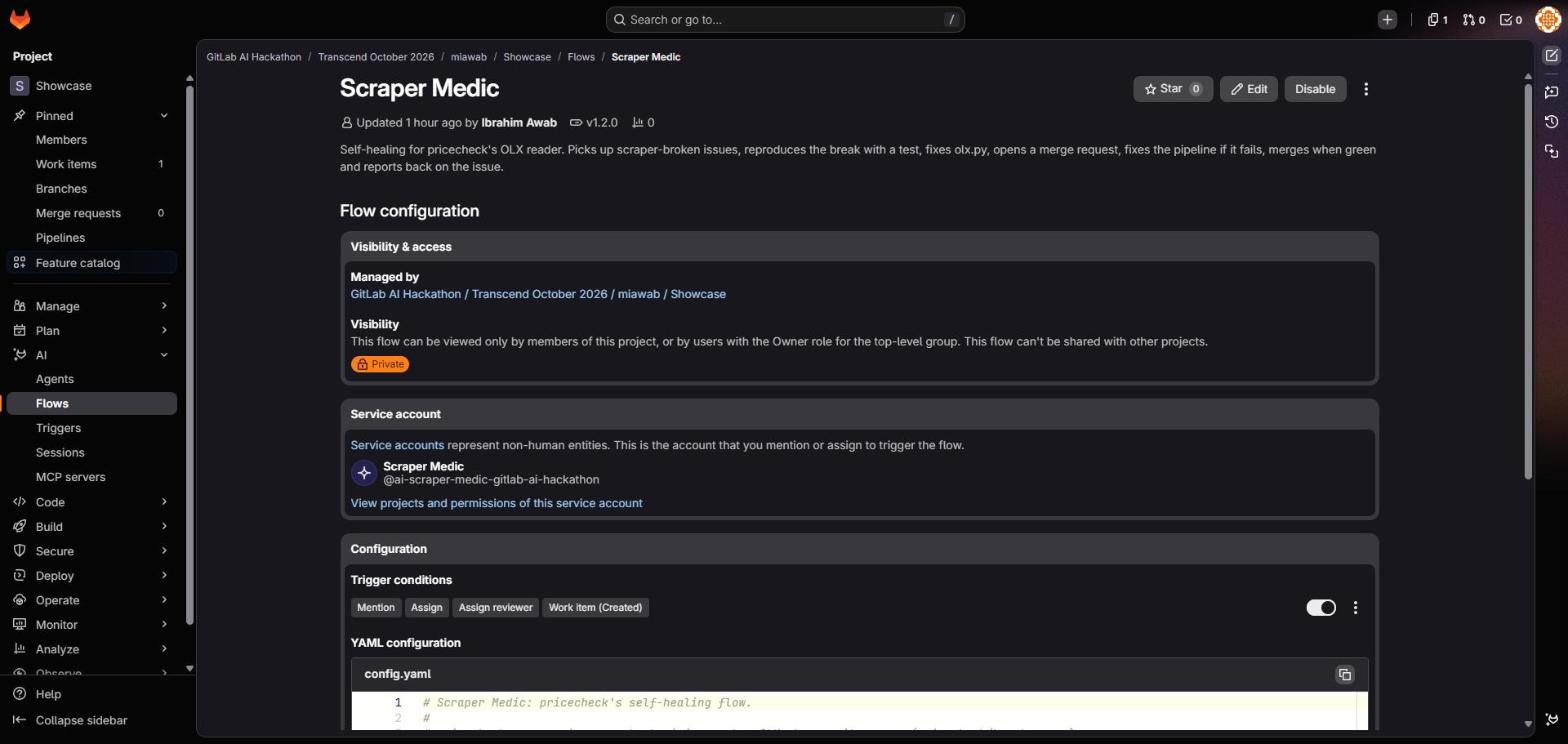
breakage.pysaves a trimmed copy of the page (seller details and phone numbers removed, tested) and opens a GitLab issue labelledscraper-broken, saying exactly where the listings now live, e.g.window.__OLX_STATE__.search.results[]. - Trigger. A flow trigger on work item created starts Scraper Medic, a custom Duo Agent Platform flow with three agents:
- scraper_medic reads the issue, saves the page as a test fixture, writes a failing test that reproduces the break, fixes
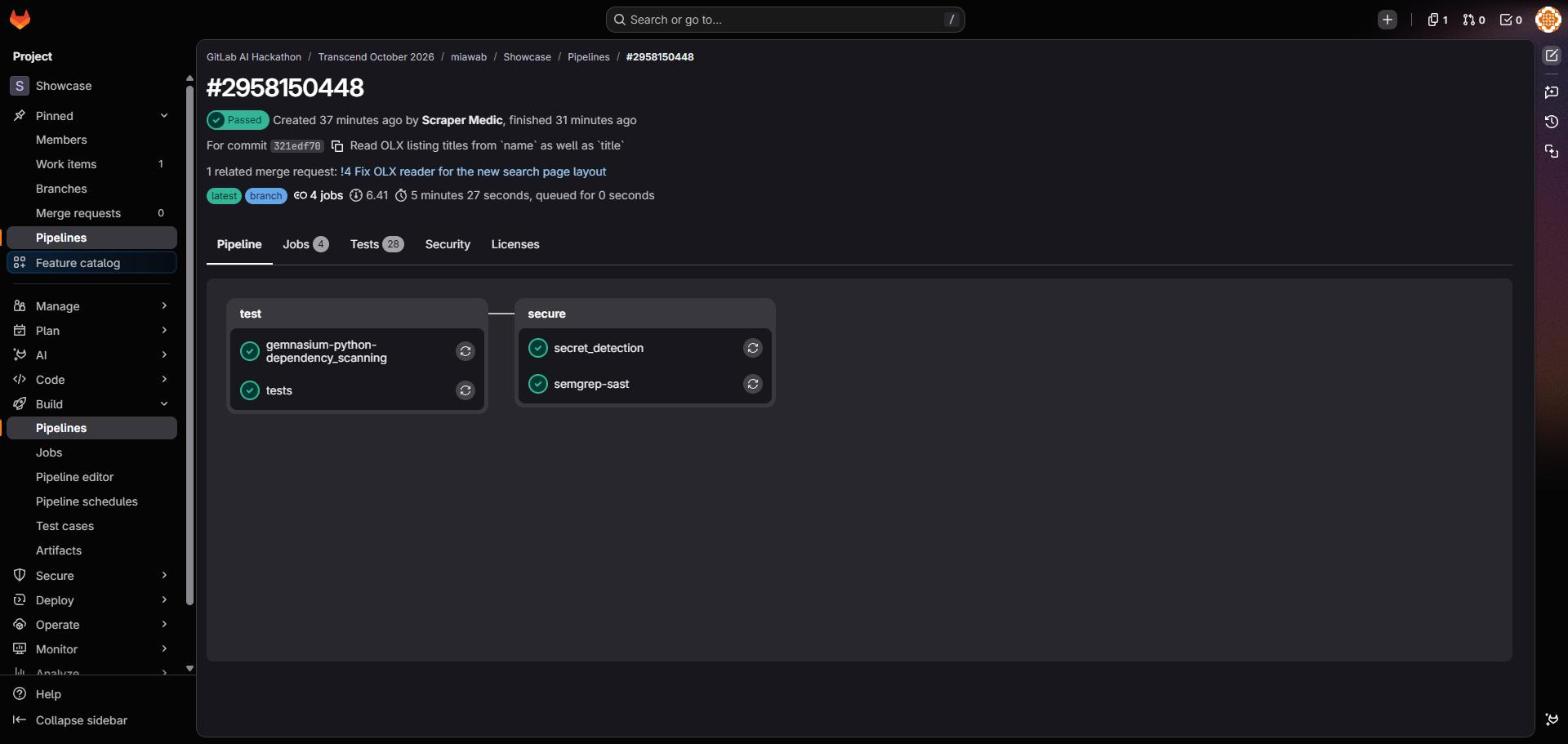
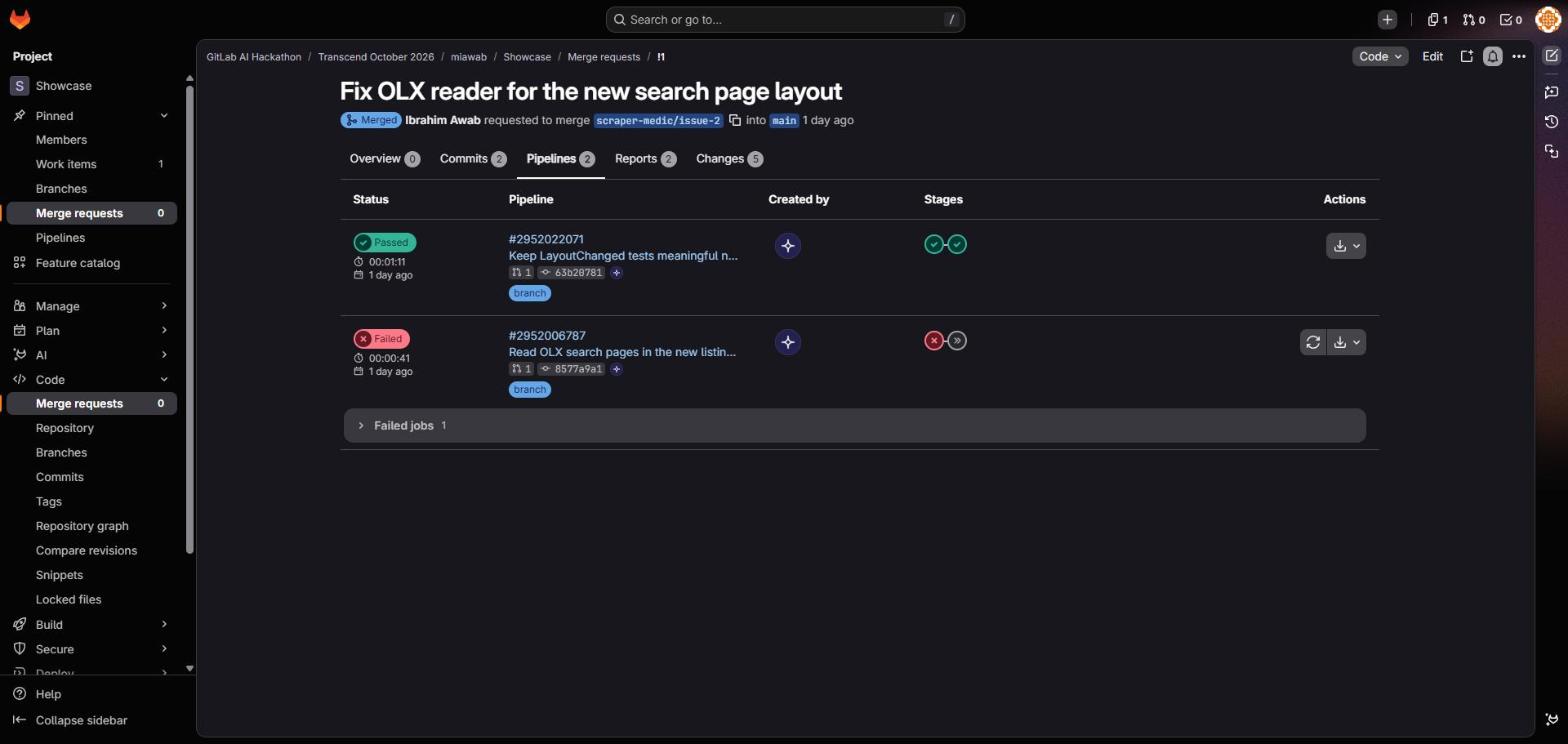
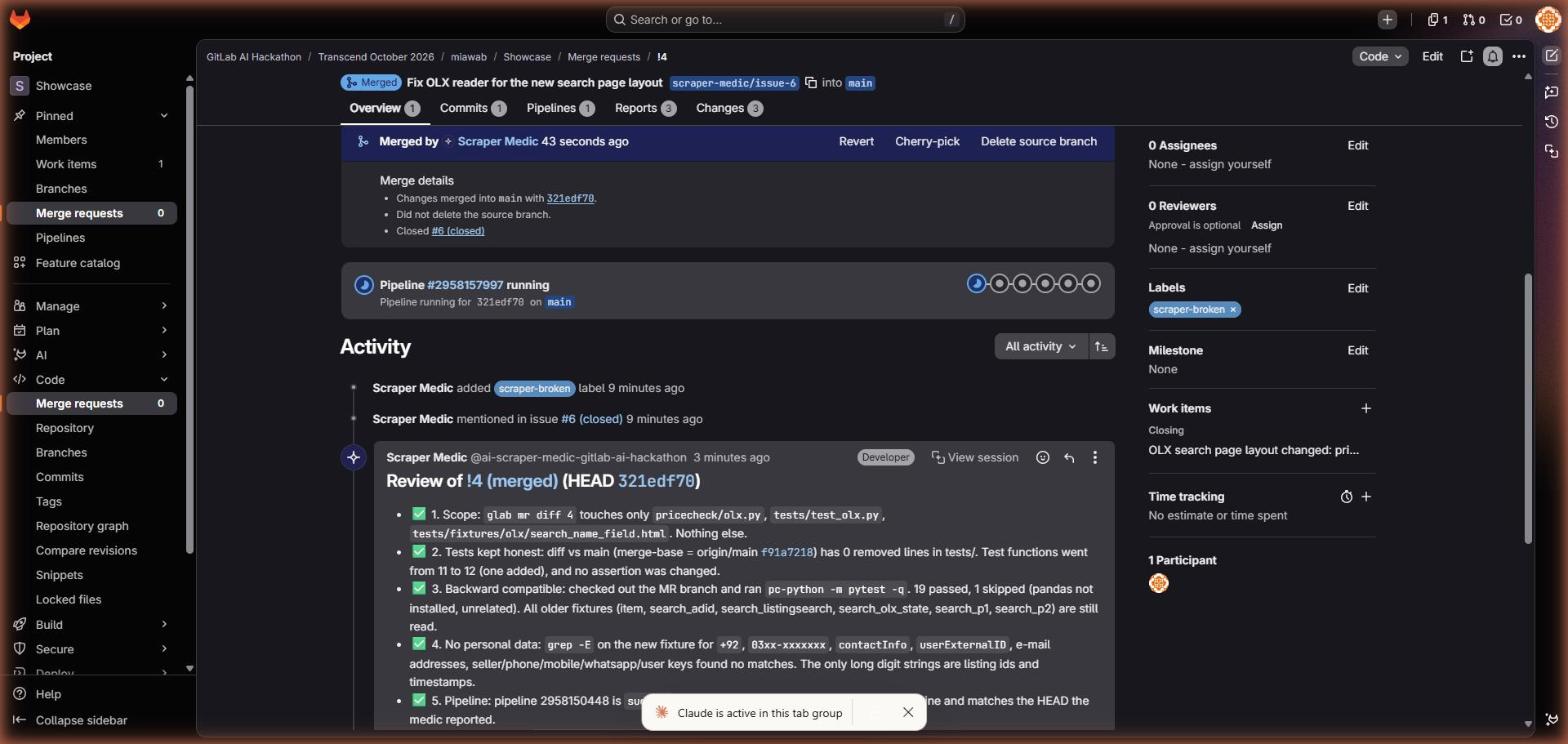
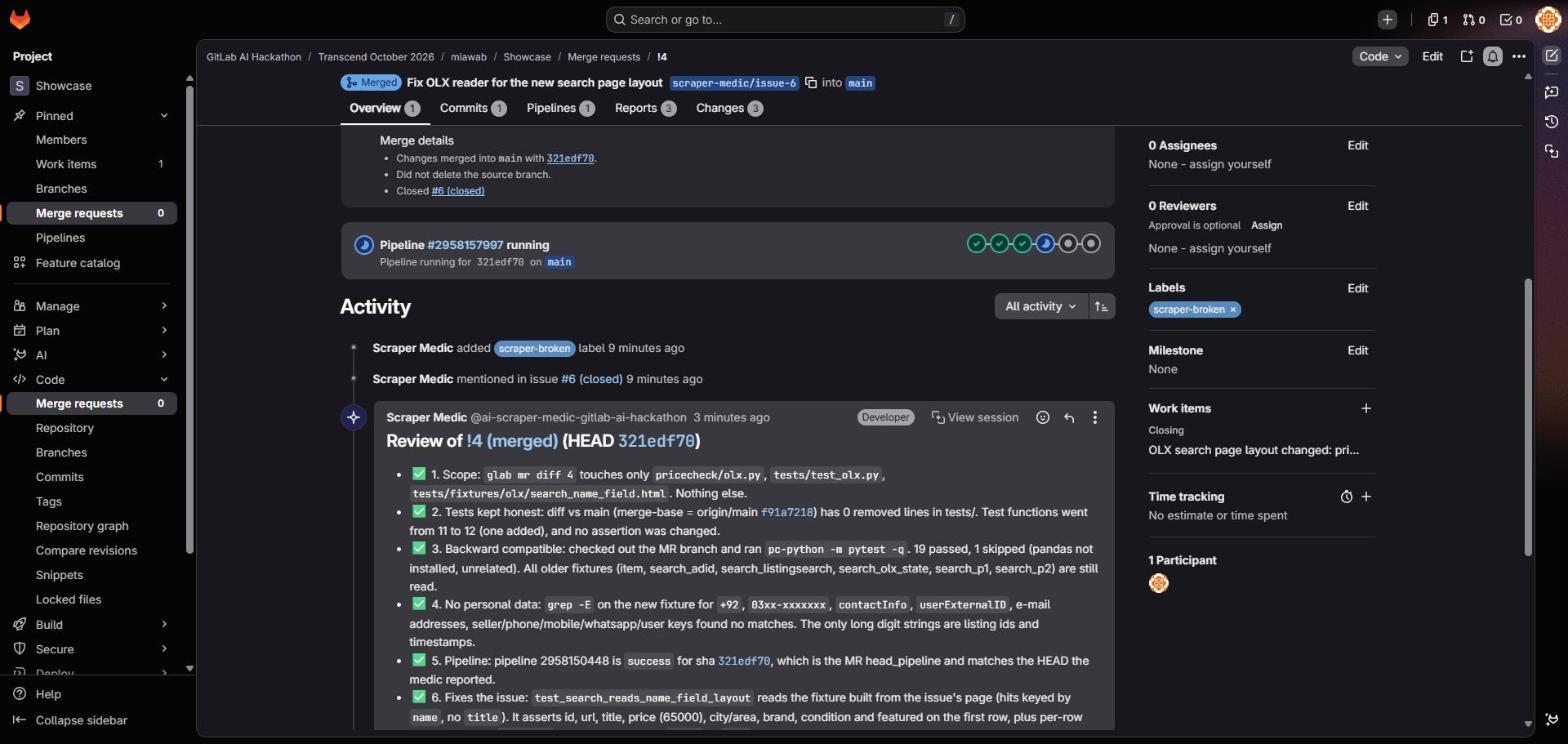
olx.pyto read the new layout and every old one, opens a merge request and watches its pipeline. If a job fails, it reads the log, fixes the real cause and pushes again. It may not weaken a test. - reviewer is an independent agent that didn't write the fix. It checks scope, that no test was deleted or loosened, that all older layouts still parse, that the fixture has no personal data, and that the pipeline for the exact commit is green. It posts a checklist with evidence and answers APPROVE or stops and asks a human.
- shipper runs only on APPROVE: it fast-forwards
mainto the approved commit (never a force-push) and posts the report on the issue.
- scraper_medic reads the issue, saves the page as a test fixture, writes a failing test that reproduces the break, fixes
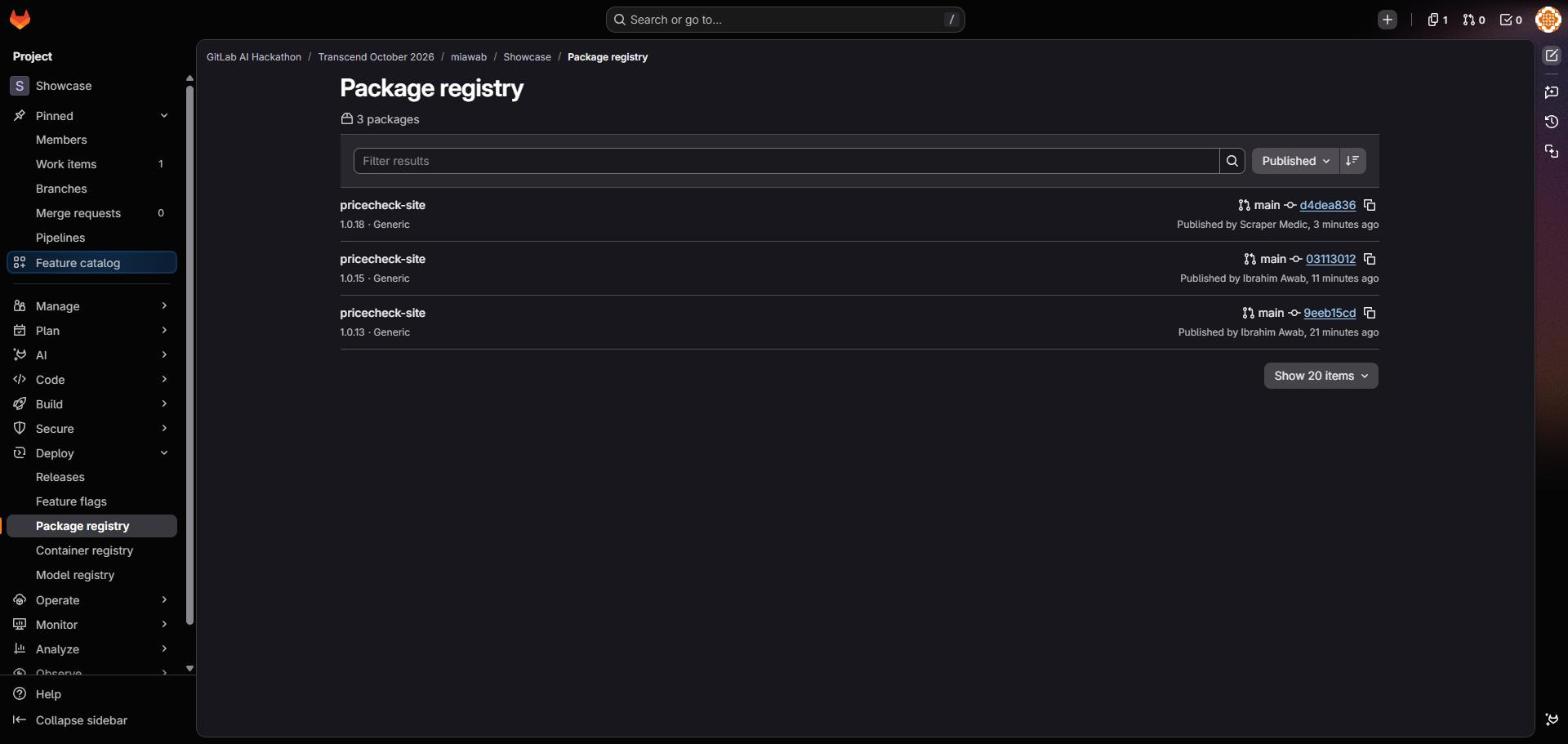
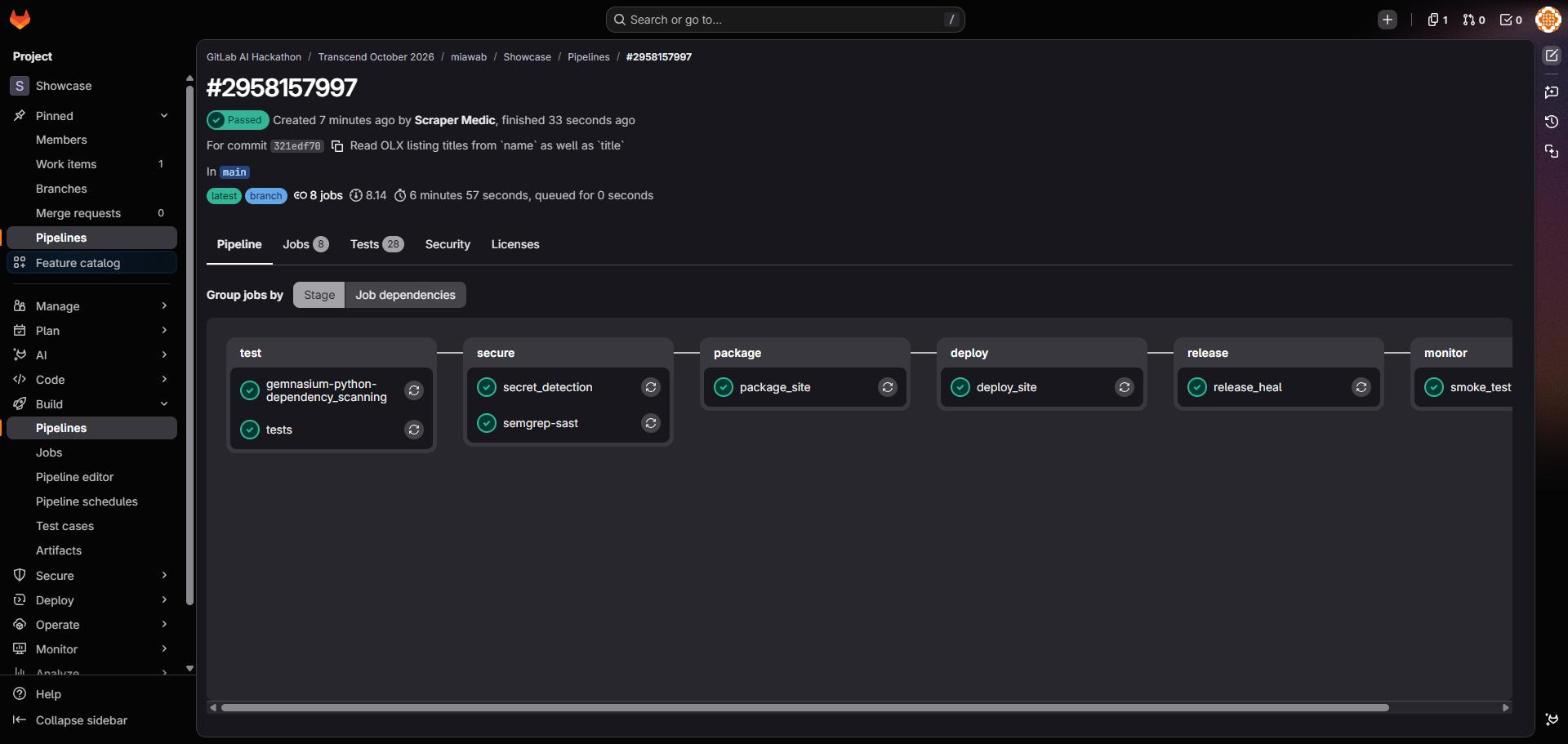
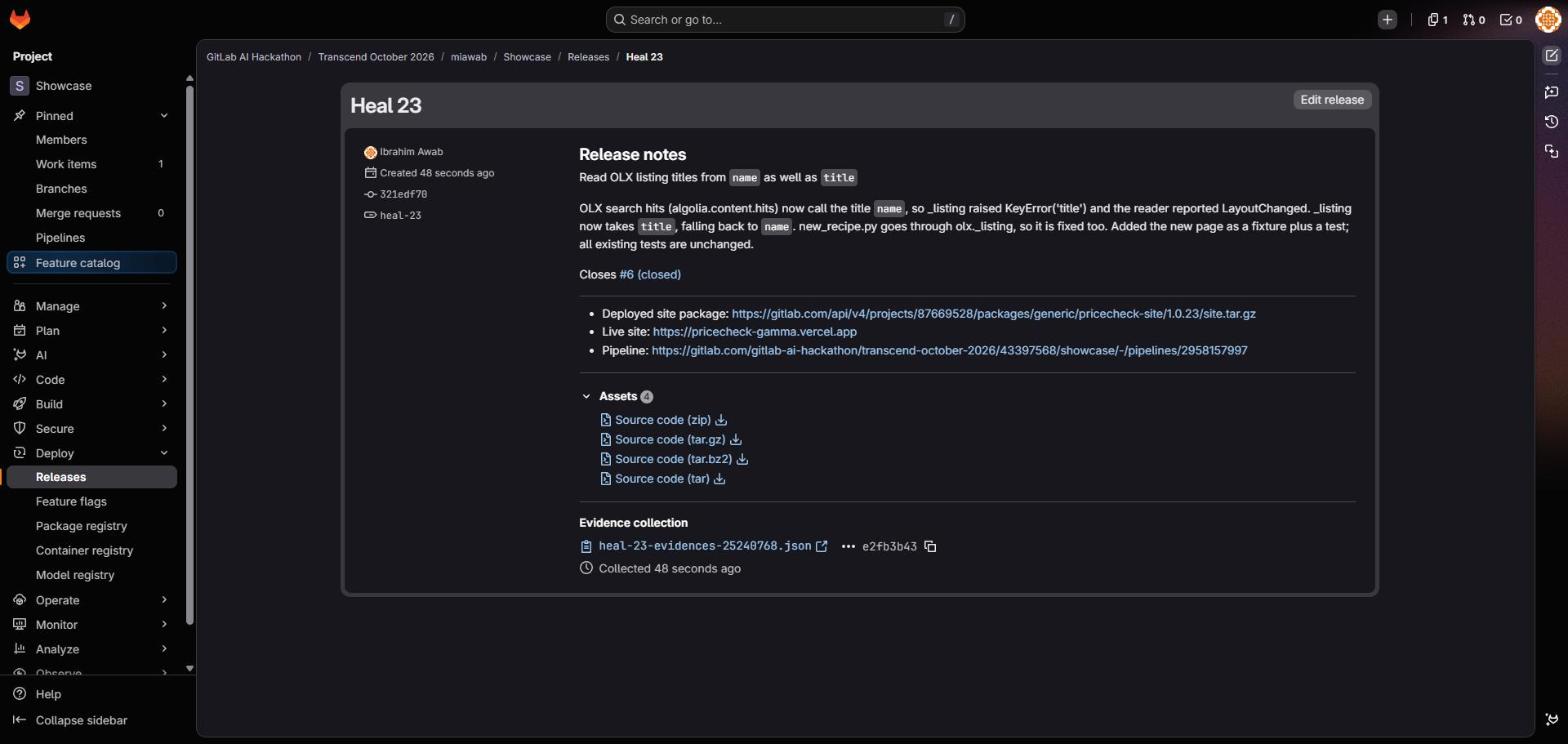
- Ship. The main pipeline then runs tests, SAST, secret detection and dependency scanning, packages the site into the package registry, deploys it, cuts a GitLab release for the heal, and smoke-tests the live site, checking it really serves listings, not just a 200.
Nothing runs on a timer: the loop starts only when pricecheck itself finds OLX changed.
Does it actually work? Four rehearsals
OLX can't be asked to redesign on cue, so rehearsal.py (4 variants) rewrites the real OLX pages the way a redesign might (real listings, data moved). Each rehearsal used a redesign the agents had never seen:
| Rehearsal | Simulated redesign | What happened |
|---|---|---|
| 1 (issue #2) | results moved to listingSearch.page.items |
Fixed in ~5 min. Its first pipeline failed: 2 of my own tests used that layout as their example of an unreadable page. The agent read the log and changed them to a truly unknown layout, keeping every assertion. It couldn't merge: the flow token gets 403 on the merge API. I merged, and taught the flow to ship by fast-forward instead. |
| 2 (issue #3) | page data renamed to window.__OLX_STATE__ |
Fully hands-off: 3m45s from issue to main, pipeline green first try (69 s). |
| 3 (issue #5) | listing id renamed externalID → adId |
First run with the Reviewer: 6/6 checks ✅ with evidence, APPROVE, shipped by the agent in 8m02s (most of it a 5½-minute pipeline). It even avoided a trap: each hit also has a numeric id that is not the listing id. (A first attempt, issue #4, never started: my sandbox setup needed Python 3.10 and the sandbox has 3.9. Fixed.) |
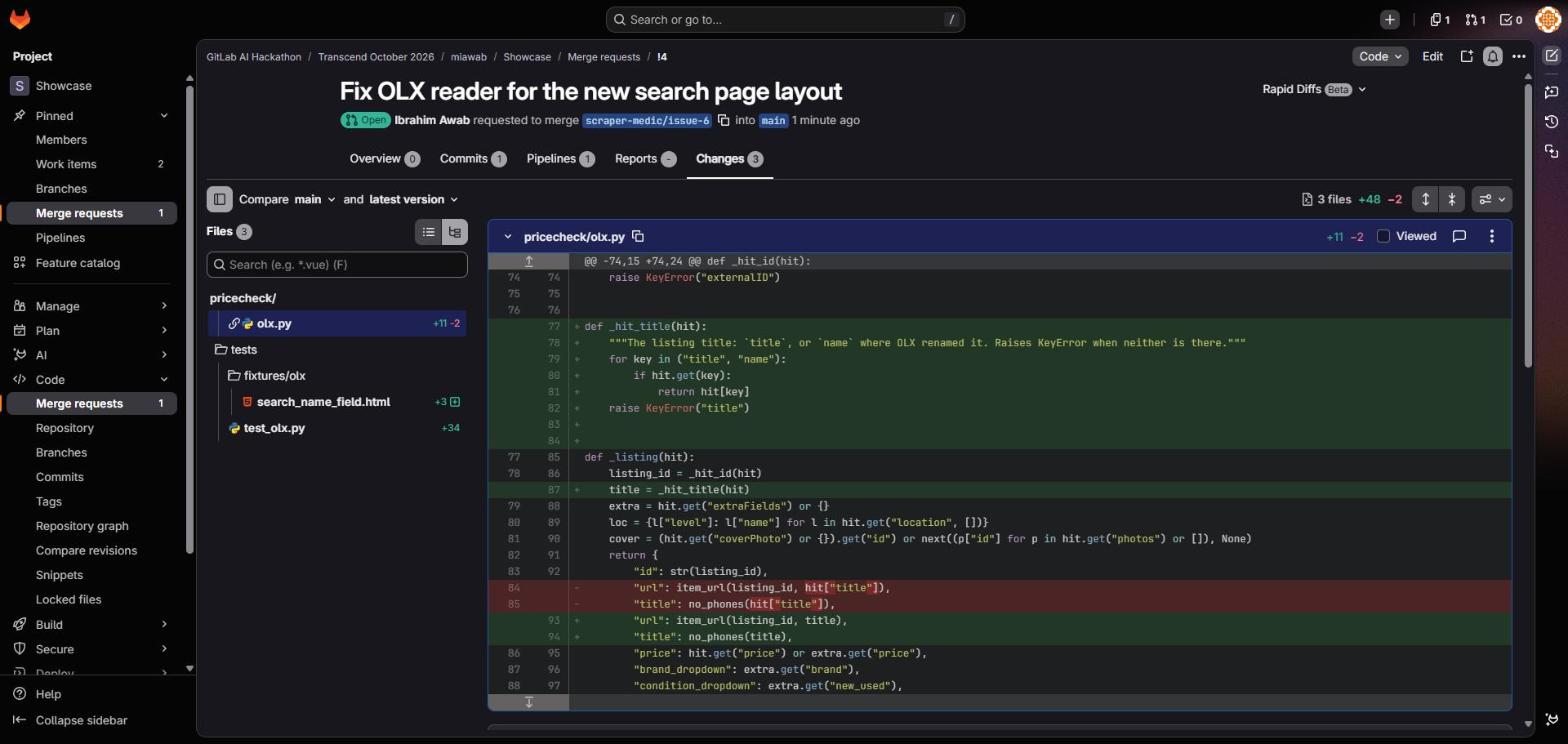
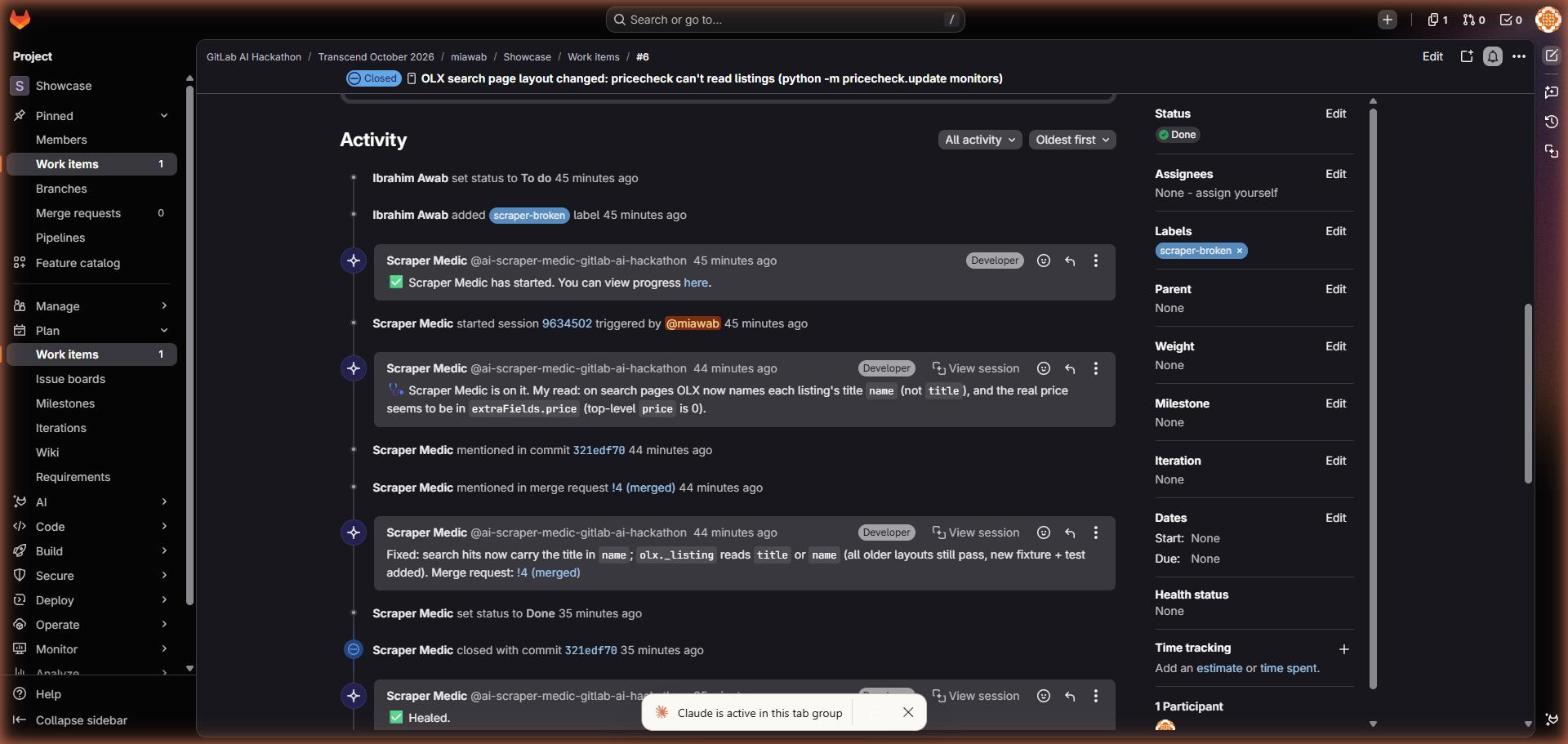
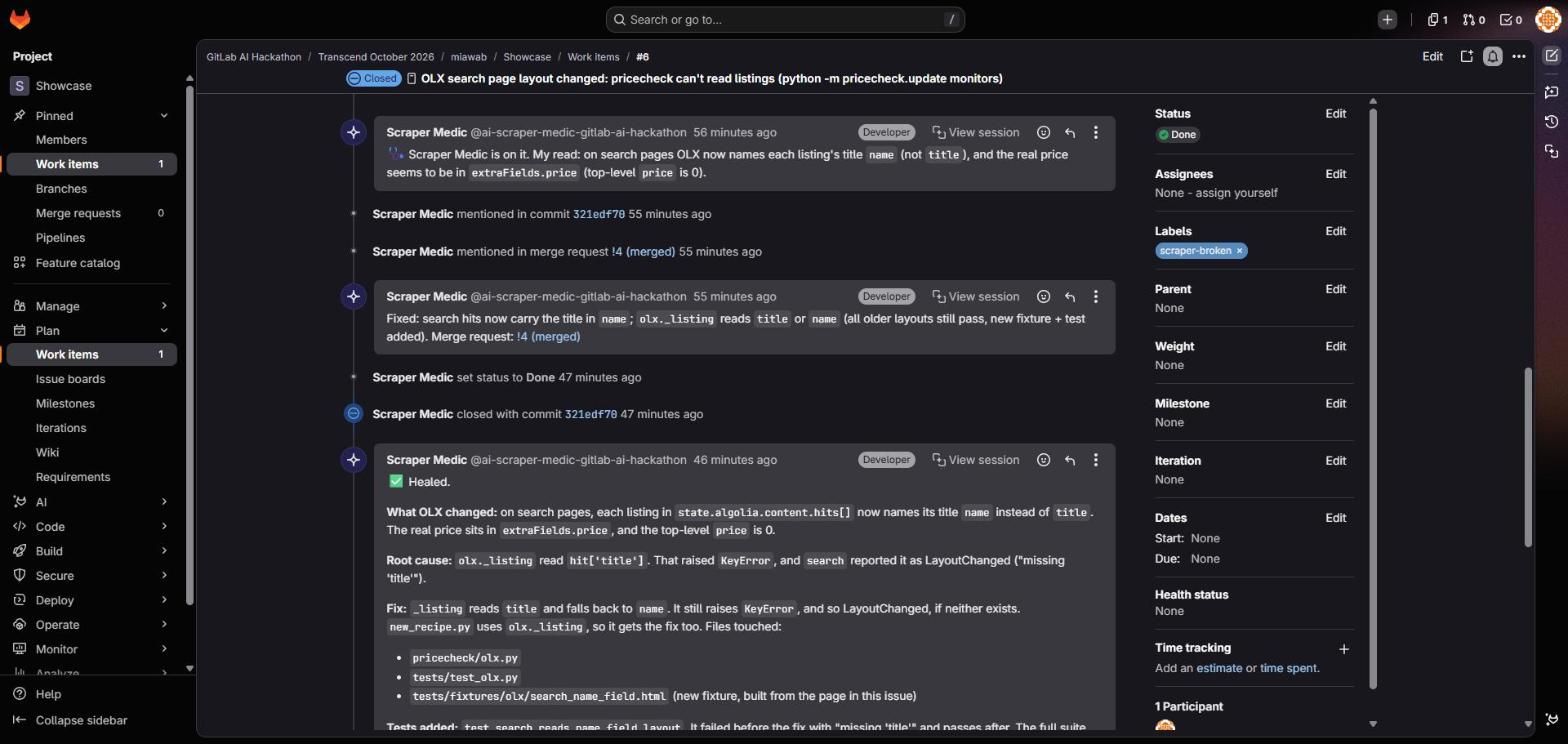
| 4, the recorded take (issue #6) | listing title renamed title → name |
Diagnosis at +0:52, MR at +1:26, pipeline green first try, Reviewer APPROVE at +7:33, shipped to main at +9:51, then the main pipeline tested, packaged, deployed, released ("Heal 23") and smoke-tested the live site: live again at +16:57. This is the run in the video. |
Each fix kept every older layout working. pricecheck went from 0 to 28 tests, 7 OLX layout fixtures, and a live page reads correctly after every heal.
How I built it
- Duo Agent Platform: a custom flow (
.gitlab/duo/flows/scraper-medic.yml, versioned in the repo) with threeAgentComponents and a router that only reaches the shipper onAPPROVE. Triggers: work item created, plus mention/assign for manual runs. Agents useglaband git in the flow sandbox. - Flow environment: the sandbox has no internet and Python 3.9, so
agent-config.ymlunpacks pure-Python wheels for pytest 8, requests, sentry-sdk and tomli bundled in the repo. The agents run the real test suite before pushing. - CI/CD:
.gitlab-ci.ymlwith 6 stages (test, secure, package, deploy, release, monitor), the GitLab SAST, secret and dependency scanning templates, a generic package per main build, a release per heal (only for commits that close an issue), and a Python smoke test against production. - Detection:
olx.pyraises aLayoutChangederror instead of a crypticKeyError.breakage.pyfinds where listing-like objects moved (anything with a title and a price), prunes the page down to those branches (~20 KB), scrubs private keys and phone numbers, and opens the issue with my token. - Monitoring: Sentry already traced every price check; a break is also sent to Sentry with a tag.
Stages covered
Plan (auto-opened, labelled issues; the agents narrate on them), Create (the fix and tests), Verify (pytest in the sandbox and in CI, failing-test-first), Secure (SAST, secret detection, dependency scanning, privacy check in review), Package (site tarball in the package registry), Release (a GitLab release per heal), Configure (flow, triggers and agent environment as code), Monitor (Sentry, live smoke test), Govern (separation of duties: the agent that ships isn't the one that wrote the fix; only an approved commit can ship; every step leaves an audit trail on the issue and MR).
Challenges I ran into
- The flow token can't merge.
glab mr mergereturns 403insufficient_scope. The fix: ship by fast-forwardingmainwith git, which the token can do, and only to the sha the reviewer approved. - Triggers only fire on human actions, so agents can't hand off to other flows. That's why it's one flow with three agents and a router.
- The sandbox: no PyPI and Python 3.9. One rehearsal never started because my bundled pytest needed 3.10. That's now fixed, and setup can no longer block the agent.
- A shell-injection bug in my own pipeline. The first release job passed the commit message to the shell, and a backtick-quoted
idin the agent's commit message actually ran (uid=0(root)…appeared in the release notes). Notes now go through a file withprintf %s, so a message can never execute. Agents write commit messages, so this matters. - Honest gate. I have the Developer role, so I can't enforce "pipelines must succeed". The reviewer and the shipper's "approved sha only" rule are the gate, and I say so.
Accomplishments I'm proud of
A real break-to-production loop with no human: 3m45s. The agents fixed their own pipeline failure without cheating on tests, and a second agent audited the first with evidence. Privacy held up: the fixtures that go into a public repo are scrubbed, and there's a test for that.
What I learned
Write the agent's instructions like a runbook for a careful new teammate: the exact command to poll a pipeline, what "done" looks like, and what it must never do. Every snag in the rehearsals became one line in the flow.
What's next
Run it against OLX's listing pages too (not just search pages); let the reviewer request changes and send the medic back once; deploy to Google Cloud.
Path B: the project I started from, and what I added
Started from: pricecheck as it was on Oct 14, 2026 (https://github.com/miawab/pricecheck, MIT), built as a separate side project for my friend: OLX reader, Gemma extraction, TabPFN pricing, the web page, Sentry tracing. No tests, no CI, no automation, not on GitLab.
Added for this hackathon (all of it): break detection and auto-issues (breakage.py, LayoutChanged), the Scraper Medic flow (3 agents, a router and triggers), the agent environment, the full CI/CD pipeline (6 stages: tests, scans, package, deploy, release, smoke test), 28 tests and 7 fixtures, the simulated redesigns for rehearsals, and the deploy from GitLab to Vercel.
Built With
- claude
- fastapi
- gemma
- gitlab
- gitlab-ci
- gitlab-duo
- glab
- ollama
- pandas
- pytest
- python
- scikit-learn
- sentry
- tabpfn
- vercel

Log in or sign up for Devpost to join the conversation.