-
-
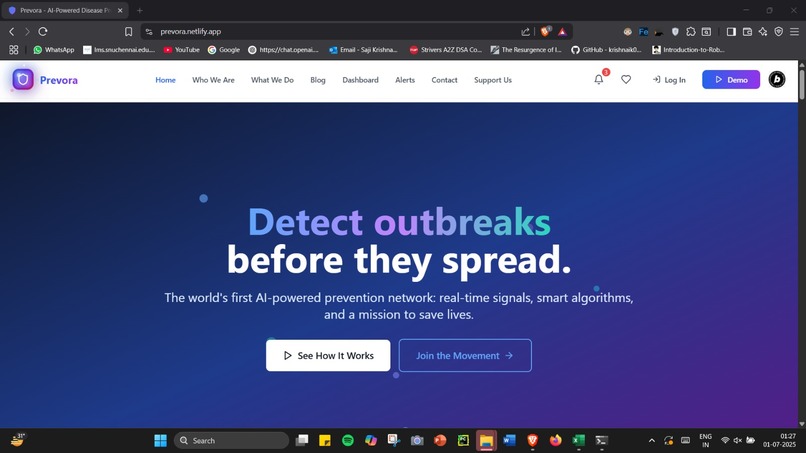
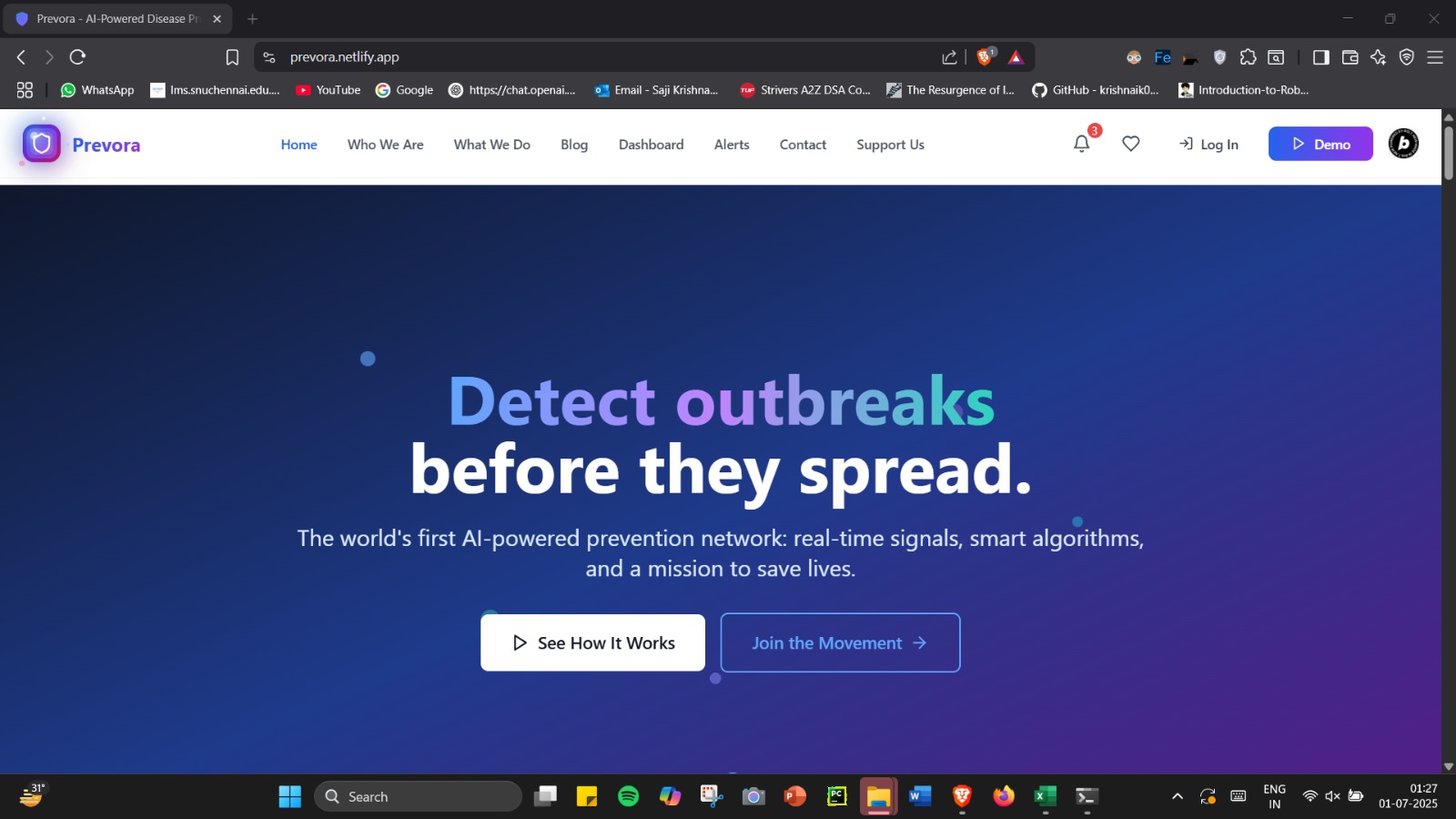
HOme
-
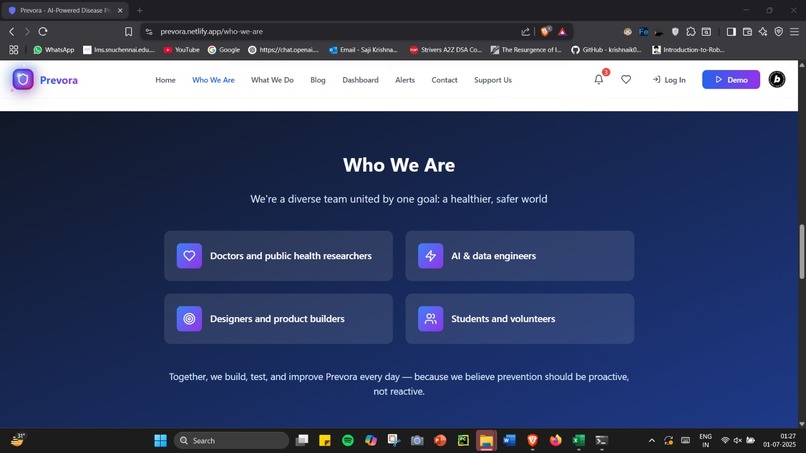
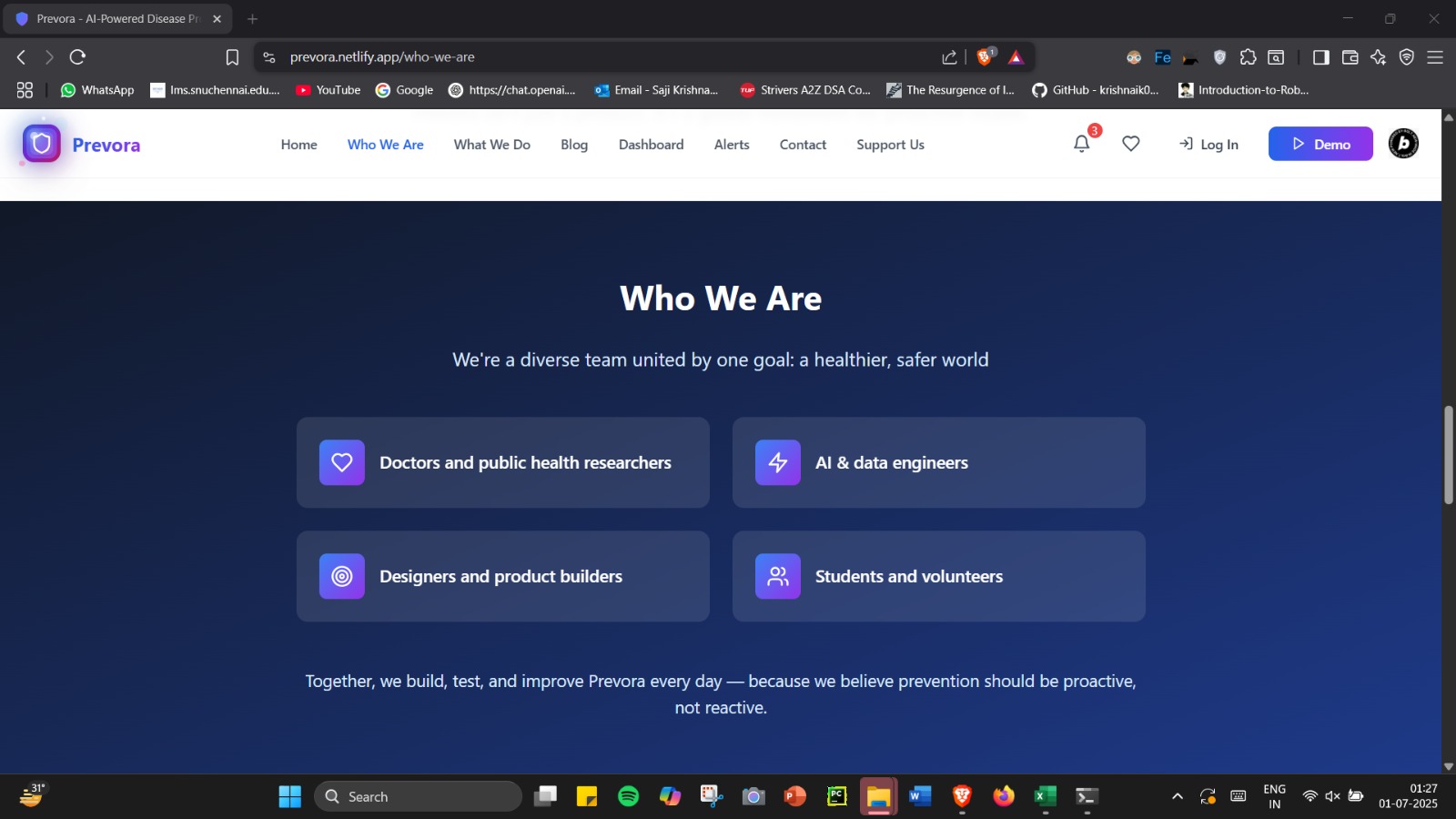
Who we are
-
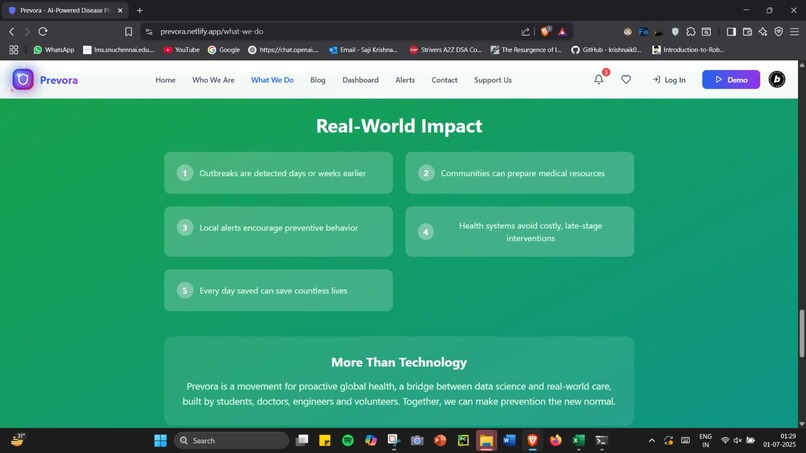
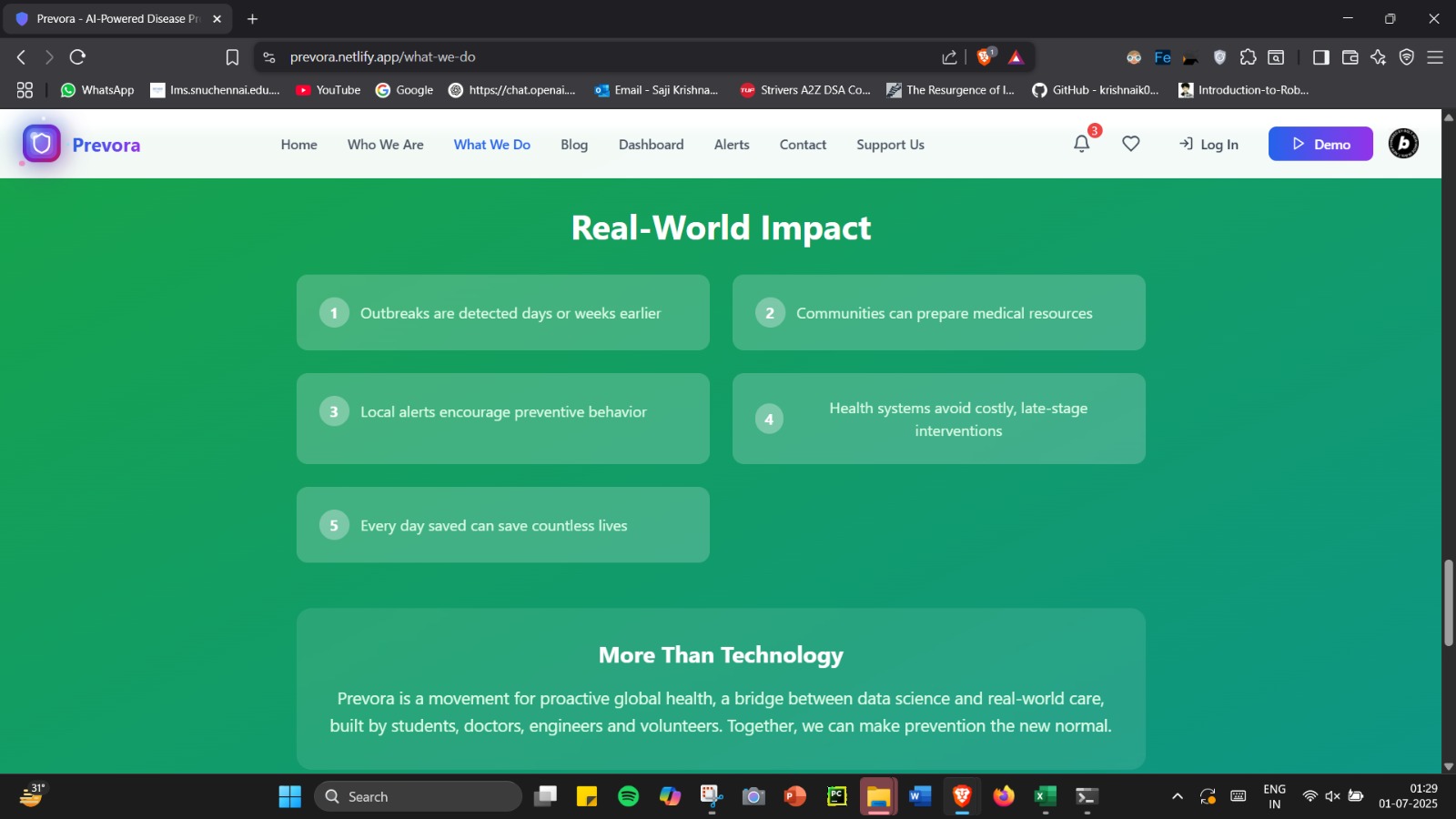
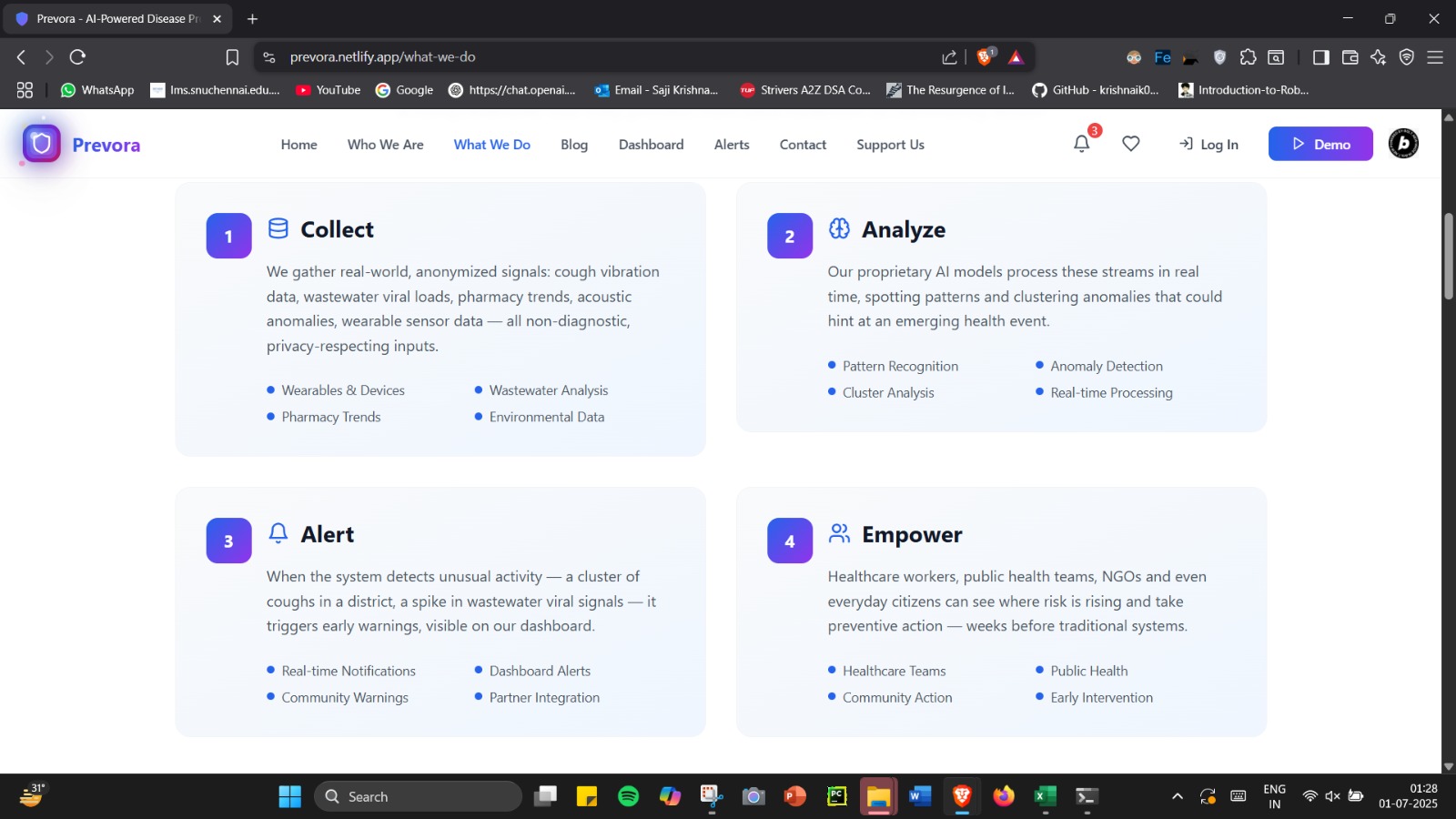
what we do
-
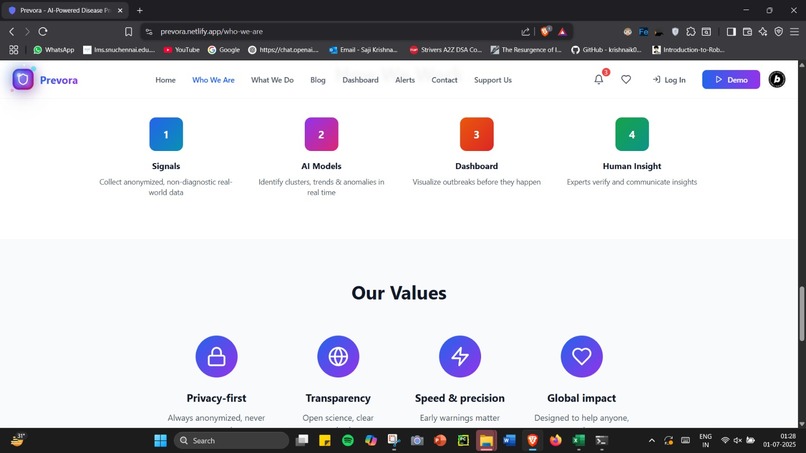
vision
-
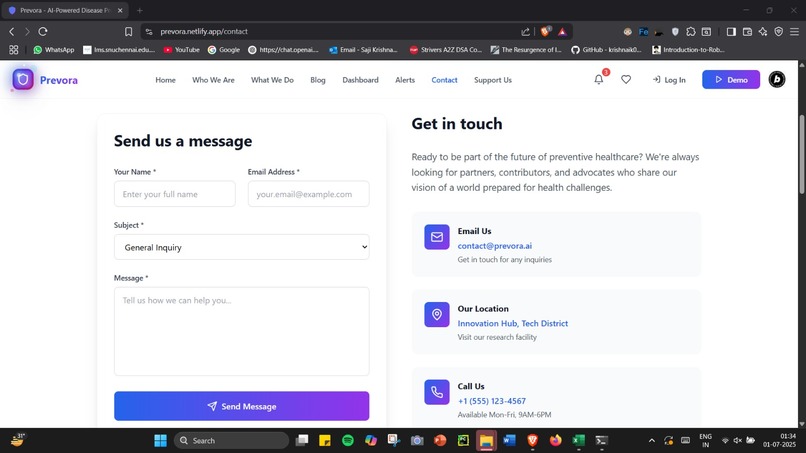
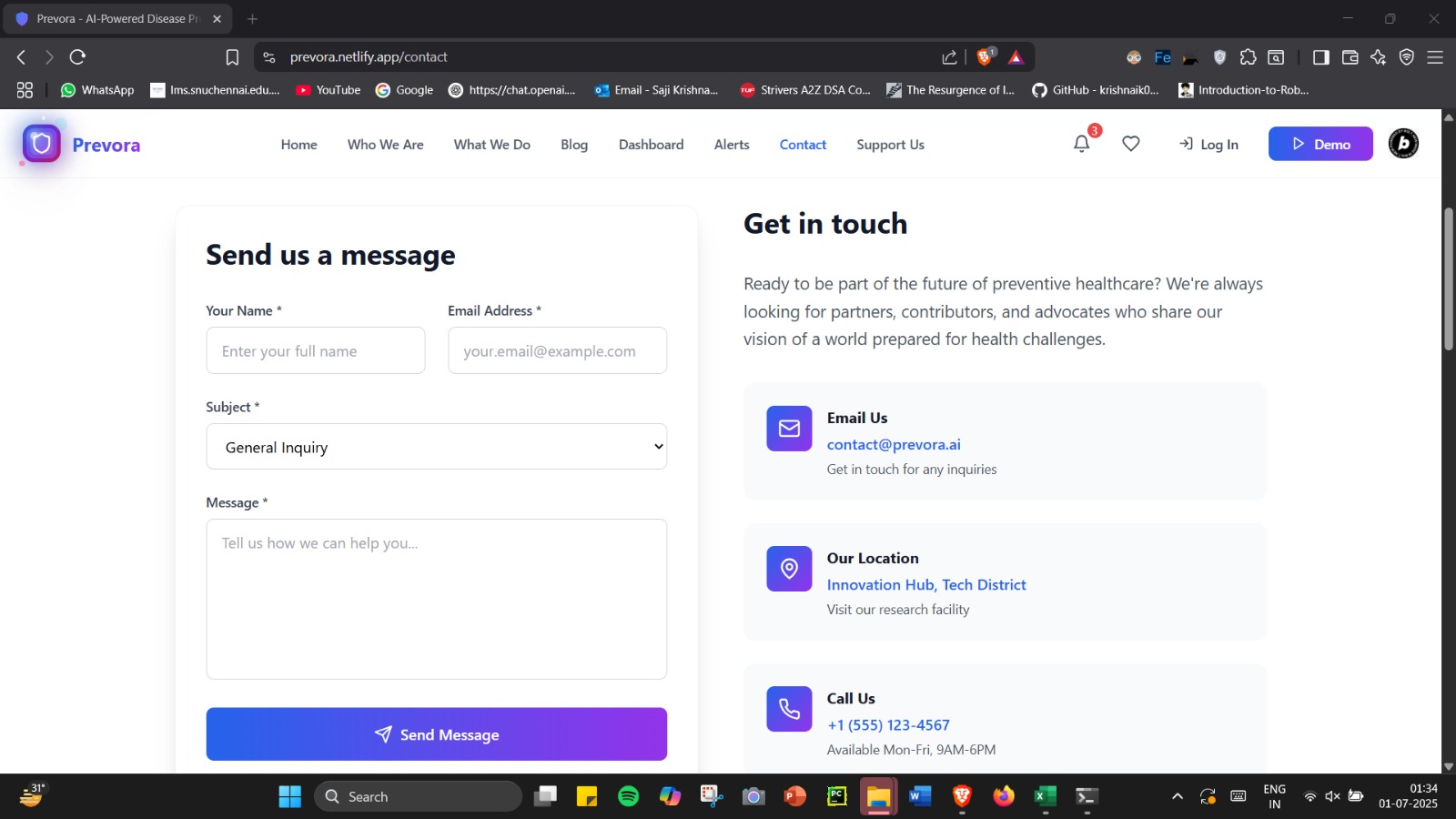
contact page
-
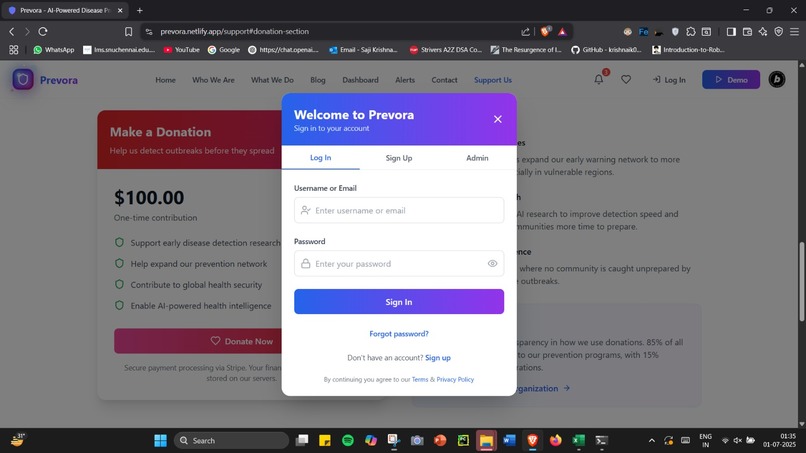
Login page
-
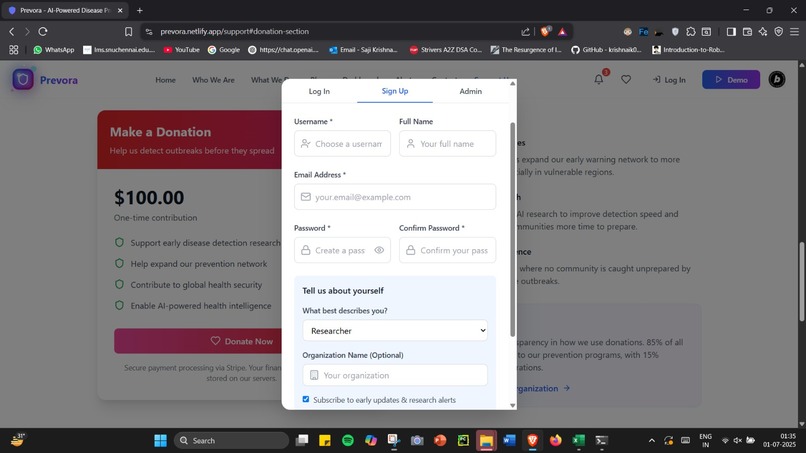
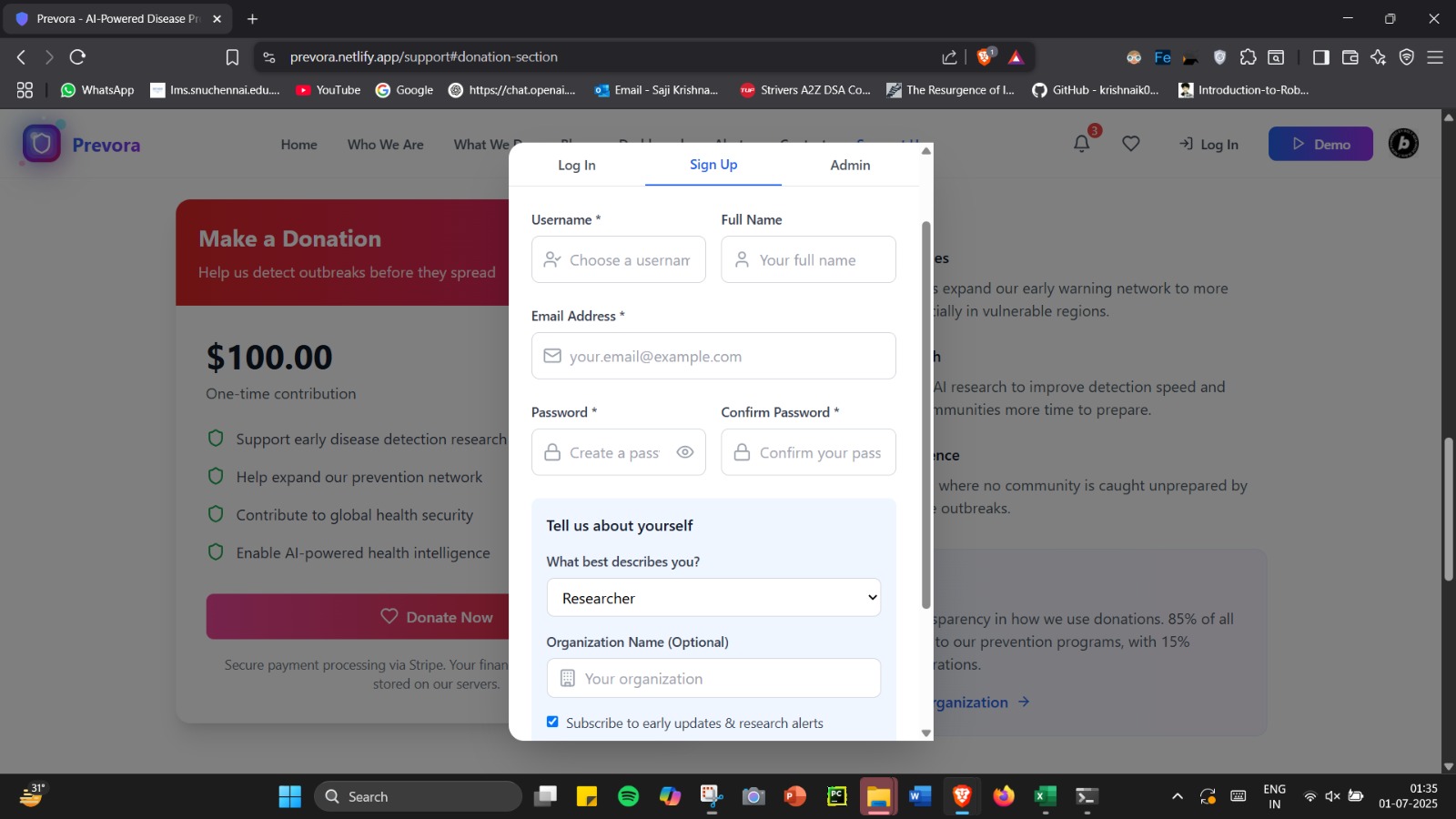
Sign up page
-
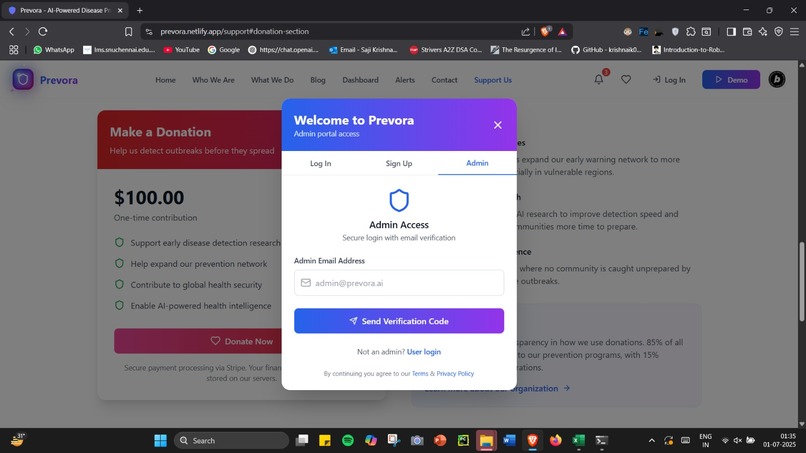
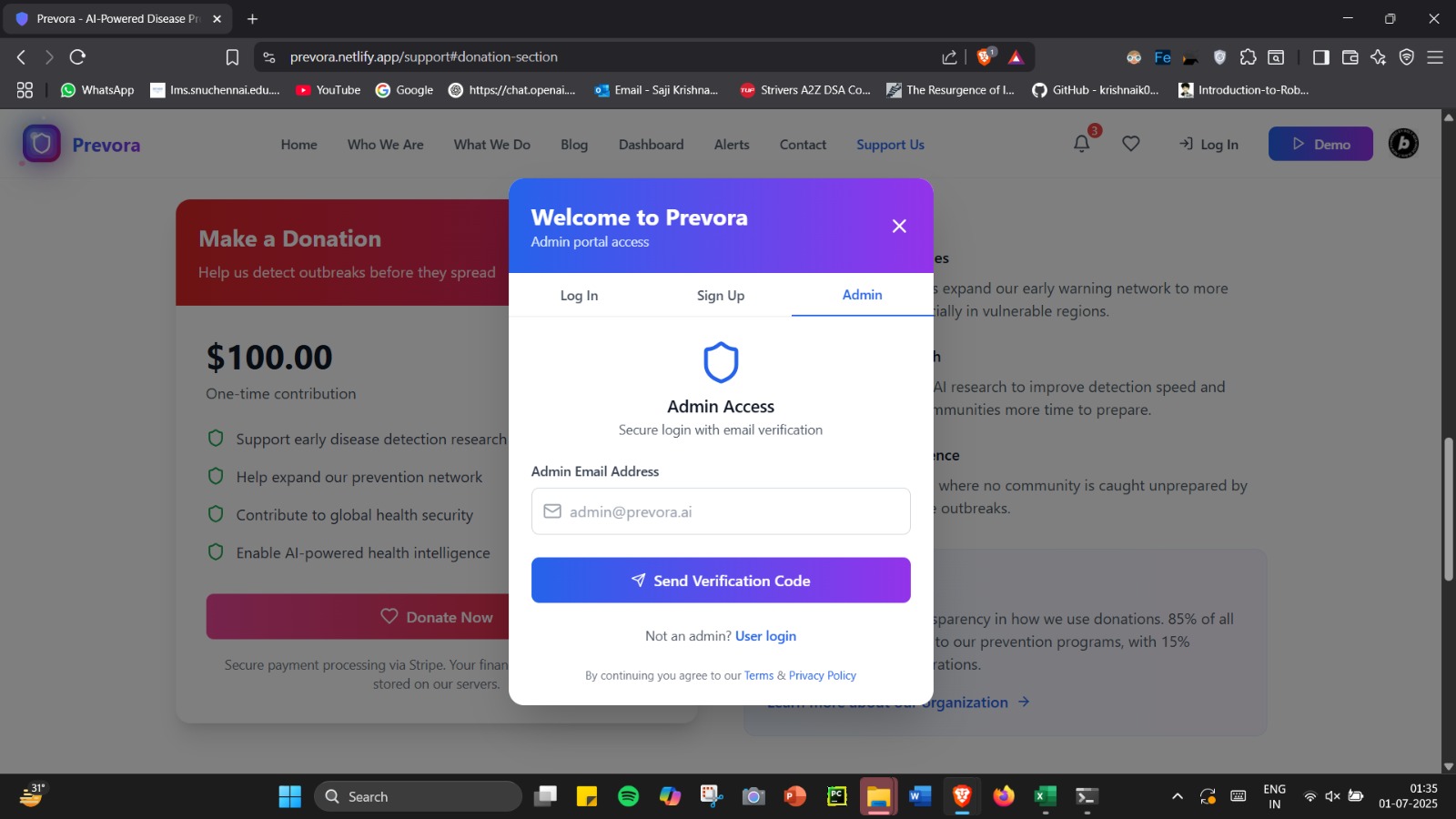
Admin page
-
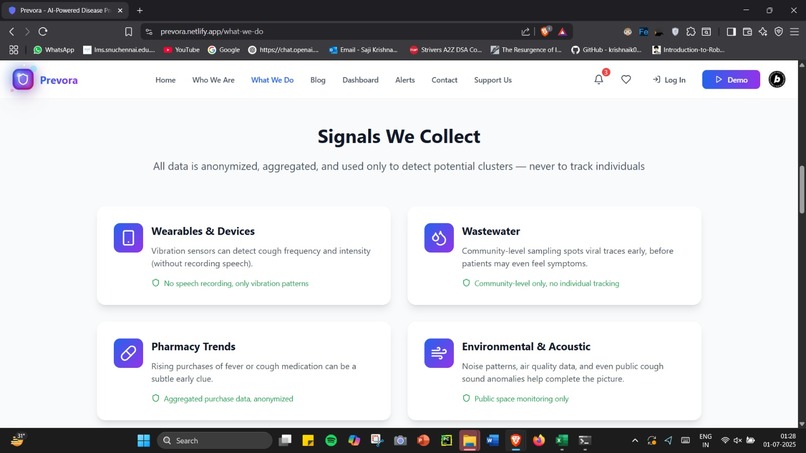
Signals
-
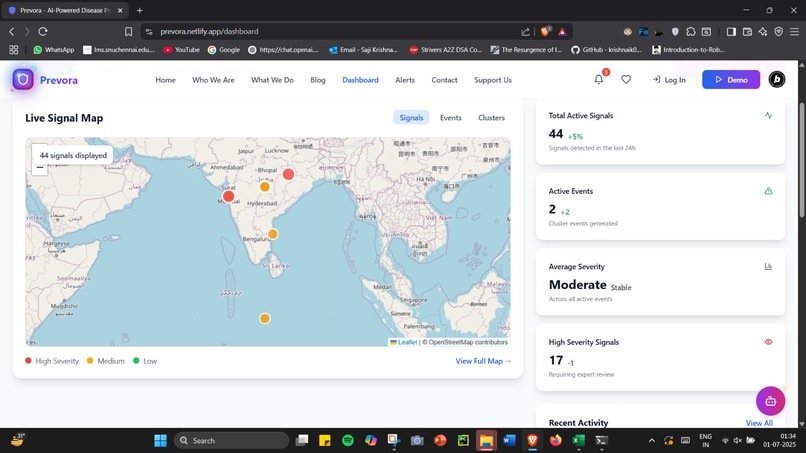
Dashboard
-
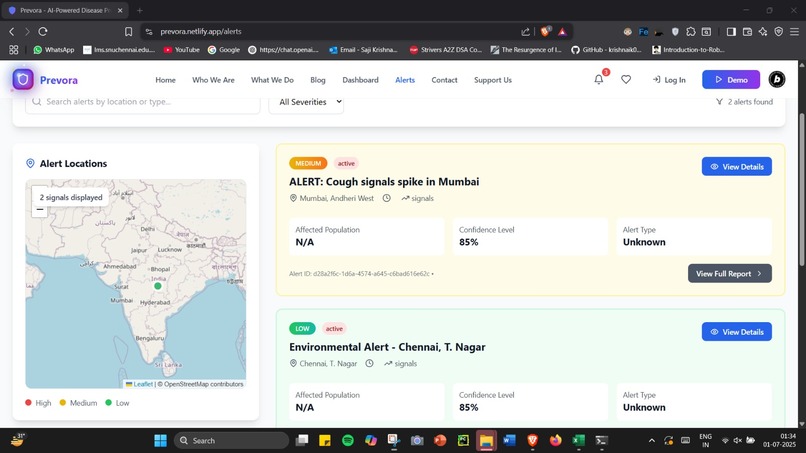
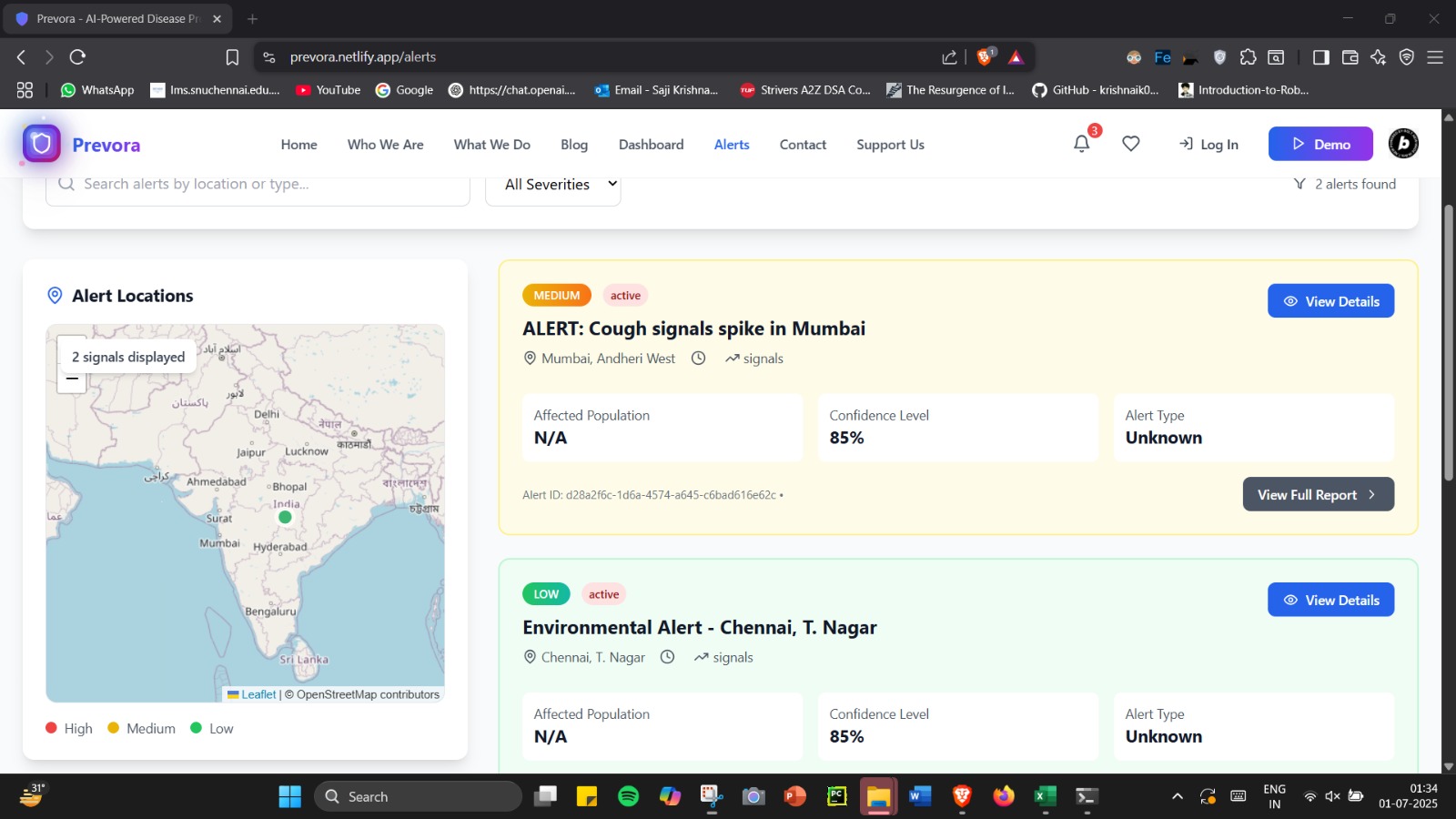
Alerts
-
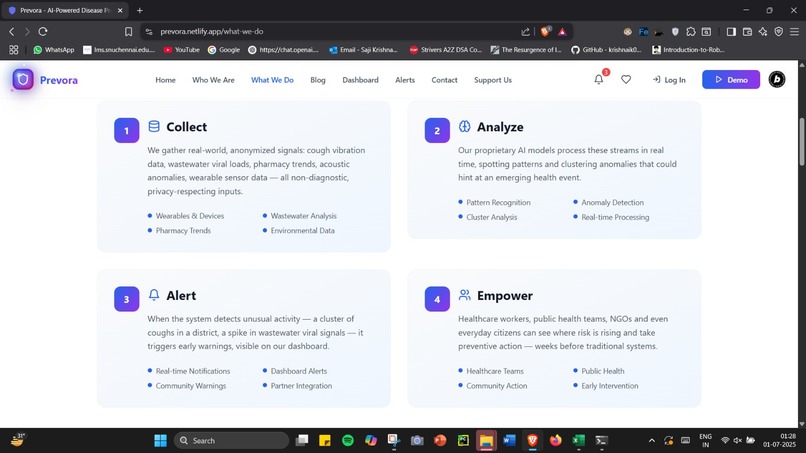
How it works
-
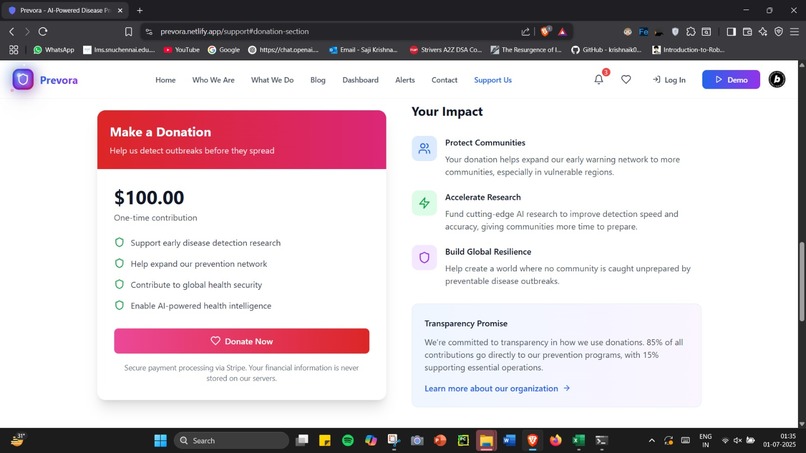
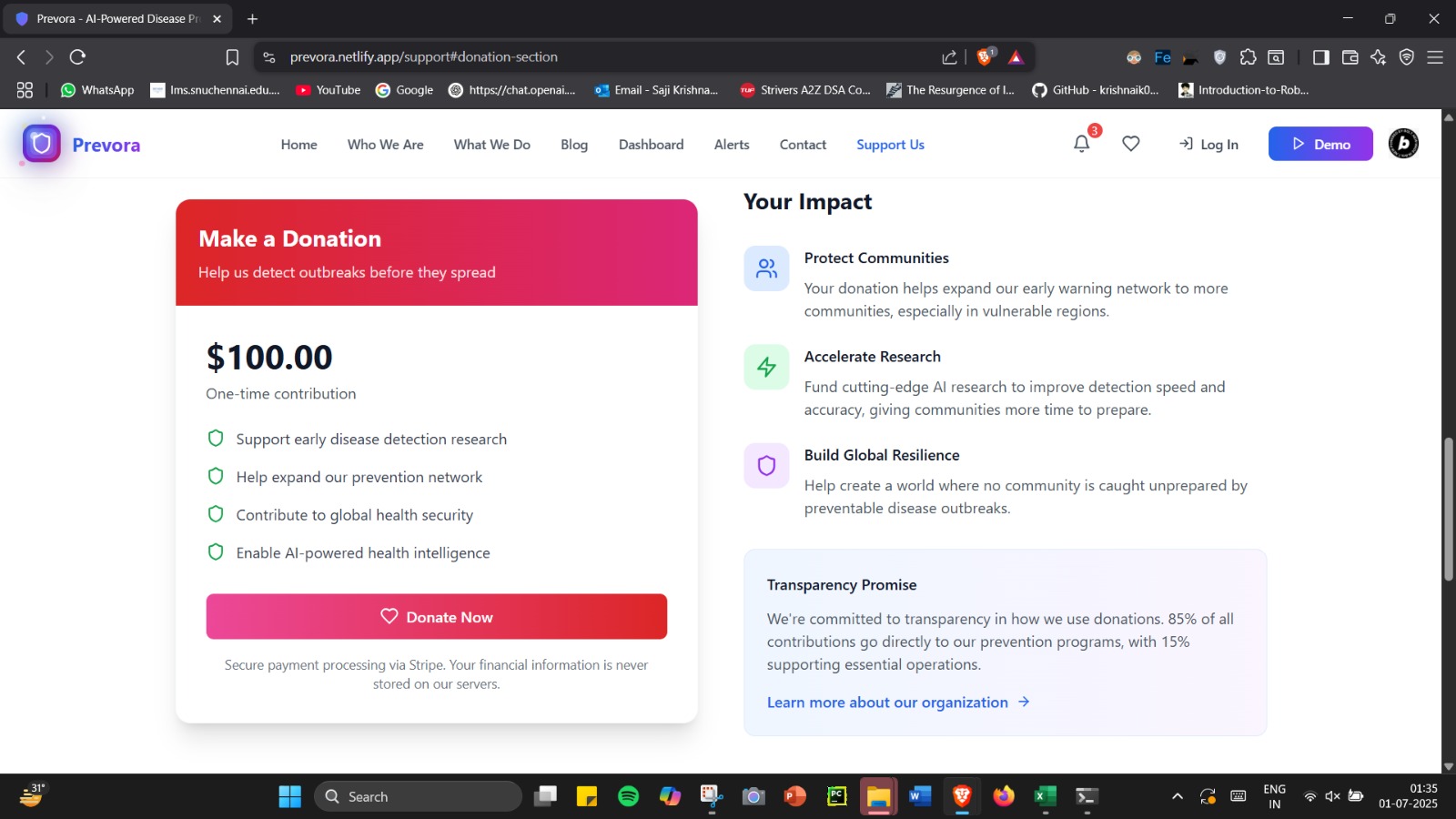
Support(connected to stripe)
-
-
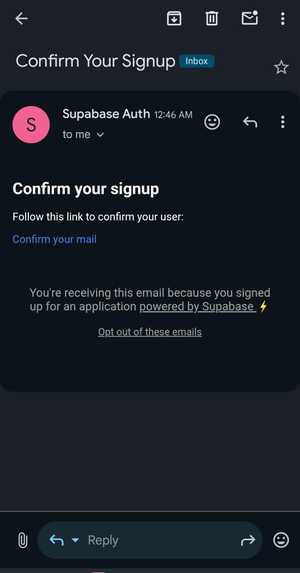
Link for verification sent to mail of user






Inspiration
The COVID-19 pandemic taught us a harsh truth: by the time we know an outbreak is spreading, it’s often too late. We dreamed of a world where communities don’t just react, but predict and prevent - catching hidden signals before disaster. As a team of students passionate about AI, biosignals, and global health, we asked: What if we could turn scattered real-world data into an early warning system for everyone?
That’s how Prevora was born: the world’s first student-built platform to detect, cluster, and visualize pre-diagnostic signals of outbreaks - before they become headlines.
What it does
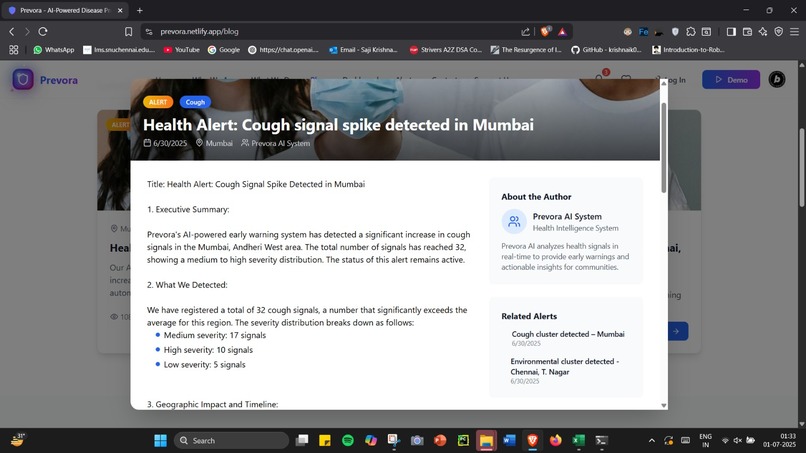
Prevora collects real-time environmental and biomedical signals - like cough acoustics, wastewater viral load, pharmacy sales spikes, and wearable sensor data. Using clustering algorithms and AI agents, it detects unusual patterns and visualizes them on an interactive dashboard and live map. When clusters emerge, Prevora automatically:
1)Generates alert articles in the blog
2)Sends location-based early warnings to users
3)Suggests context-aware health precautions
It’s an AI-driven sentinel to help public health agencies, communities, and researchers see tomorrow’s outbreaks - today.
How we built it
- We made it a point to completely create this software using BOLT only:
- Frontend & UI: Built with Bolt.new, styled in Tailwind CSS, and designed in Figma - inspired by modern health-tech dashboards like BlueDot, WHO dashboards, and creative designs from Dribbble.
- Backend: Used Supabase for authentication and data storage; added Python code (converted as prompts) to automate workflows such as real-time data ingestion, clustering algorithms, and generating timely alerts.
- AI Assistant: Integrated directly via OpenAI API to serve as an intelligent companion for users, helping them navigate features and answer queries.
- Maps: Implemented Leaflet.js to create interactive, live visualizations of signals and events on a clean map interface. Payments- we have connected to stripe using API
Challenges we ran into
- Making sure the project was completely built with Bolt.new and no-code tools — pushing Bolt to its limits to deliver advanced functionality.
- We faced huge struggles connecting Supabase and building clustering / anomaly detection algorithms purely using prompt-driven workflows — spending several days refining and rewriting functional prompts.
- Tried giving a one-time complete prompt of 47 pages to structure the app, which caused extremely long generation times (sometimes nearly an hour to load).
- Handling large backend prompts and database operations, which consumed high token counts (up to ~200k tokens just for database setup and warm-up).
- Designing a user interface that feels both advanced and welcoming — taking inspiration from health-tech but ensuring it remains unique.
- Integrating real-time data streams from multiple signal sources while maintaining high performance and low latency.
- Making sure alerts remain meaningful and actionable (avoiding noisy or redundant notifications).
- Ensuring robust security & privacy around sensitive health and location data, especially given the preventive healthcare focus.
Accomplishments that we're proud of
- This is the first time in our lives we've built a fully functional software product end-to-end — from signup and login, to real-time dashboard and admin panel — and all of it using no-code AI.
- We did it entirely with Bolt.new and prompt engineering, showing the true potential of AI-driven development.
- Built a multi-layer system that combines AI assistants, real-time data signals, and user-generated feedback to create actionable insights.
- Created an emotional and powerful brand that aligns deeply with our mission to prevent outbreaks and protect lives.
- Designed and connected the backend to a modern, clean, and intuitive dashboard UI, inspired by leading health-tech products yet unique to our vision.
- Most importantly, we made something we truly believe could help communities worldwide, empower early detection, and contribute to global preventive health.
What we learned
- Nothing is too easy - we initially thought building with AI prompts would be quick, but it takes time, iteration, and effort to get everything working just right.
- We discovered the art of prompting - only by asking the right questions and being clear in intent can we guide AI to deliver the results we need.
- Small chunks beat big prompts - instead of giving one massive prompt, breaking the build into smaller, well-scoped instructions helped us get faster, better outcomes.
- AI is smarter than us, but emotional connection is ours - we learned to combine AI’s intelligence with human creativity and empathy to design something truly meaningful.
- How to orchestrate AI, automation tools, and live dashboards into one seamless product.
- The importance of clarity and simplicity in visualizing complex health data - so it remains useful and trusted.
- How thoughtful design choices directly influence trust, usability, and adoption in public health tools.
What's next for Prevora
This is just the beginning — and it's thanks to Bolt for opening our eyes to what's possible.
Today, you’ve helped us turn our dreams into code and bring our vision to life.
Next, we plan to:
- Present Prevora at more events and hackathons, to gain visibility and real-world feedback.
- Seek investments and grants, so we can scale our prototypes into a full product.
- Collaborate with research institutions, health-tech partners, and AI labs to enhance our algorithms and data models.
- Establish connections with government agencies and public health officials to pilot Prevora in live environments.
- Keep building - until Prevora becomes a trusted, global early warning system that saves lives and helps prevent the next outbreak or disaster.
Our journey has just begun - and our mission to protect communities around the world will keep driving us forward.
Built With
- supabase


Log in or sign up for Devpost to join the conversation.