-
-
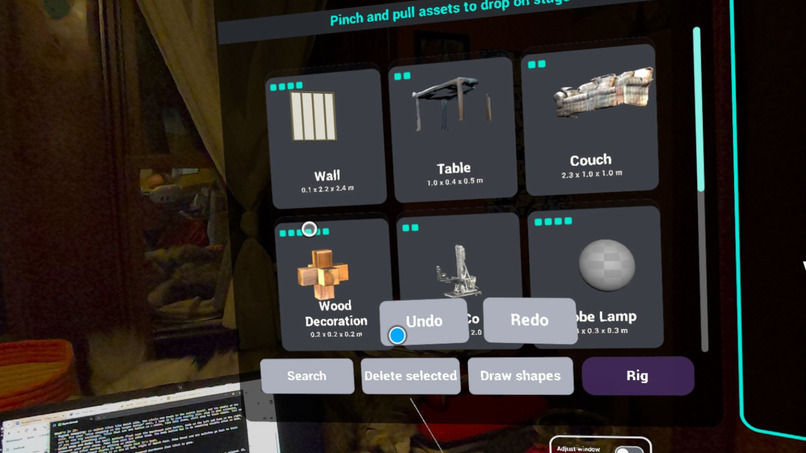
The warehouse of digital twins
-
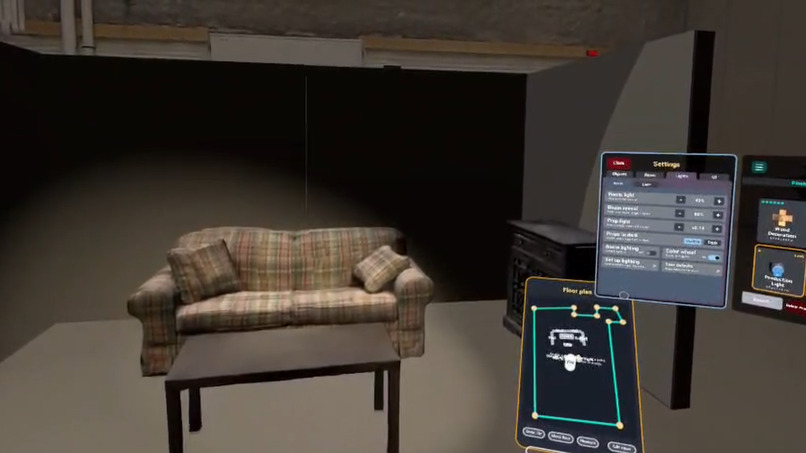
virtual objects on a real stage
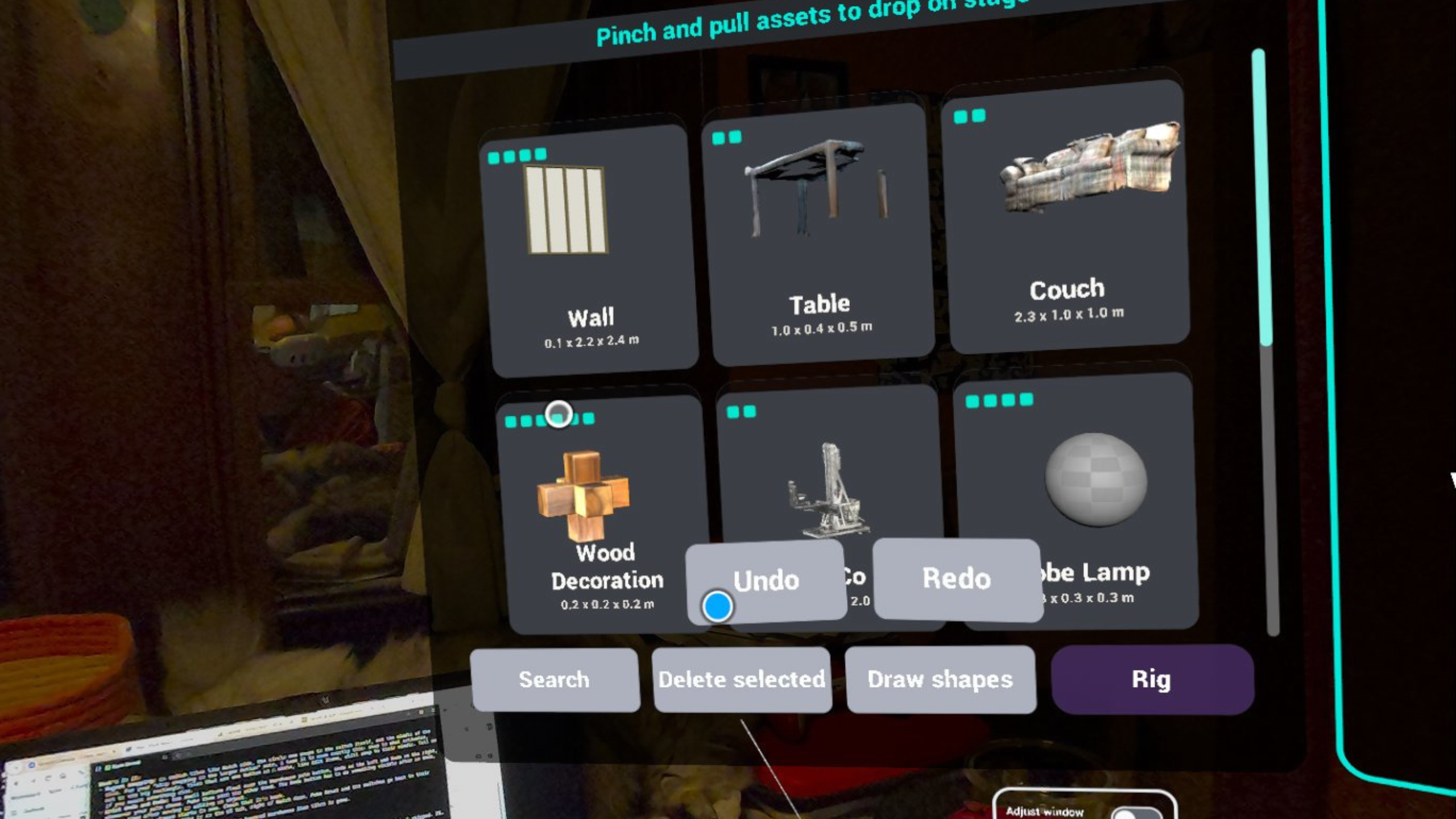
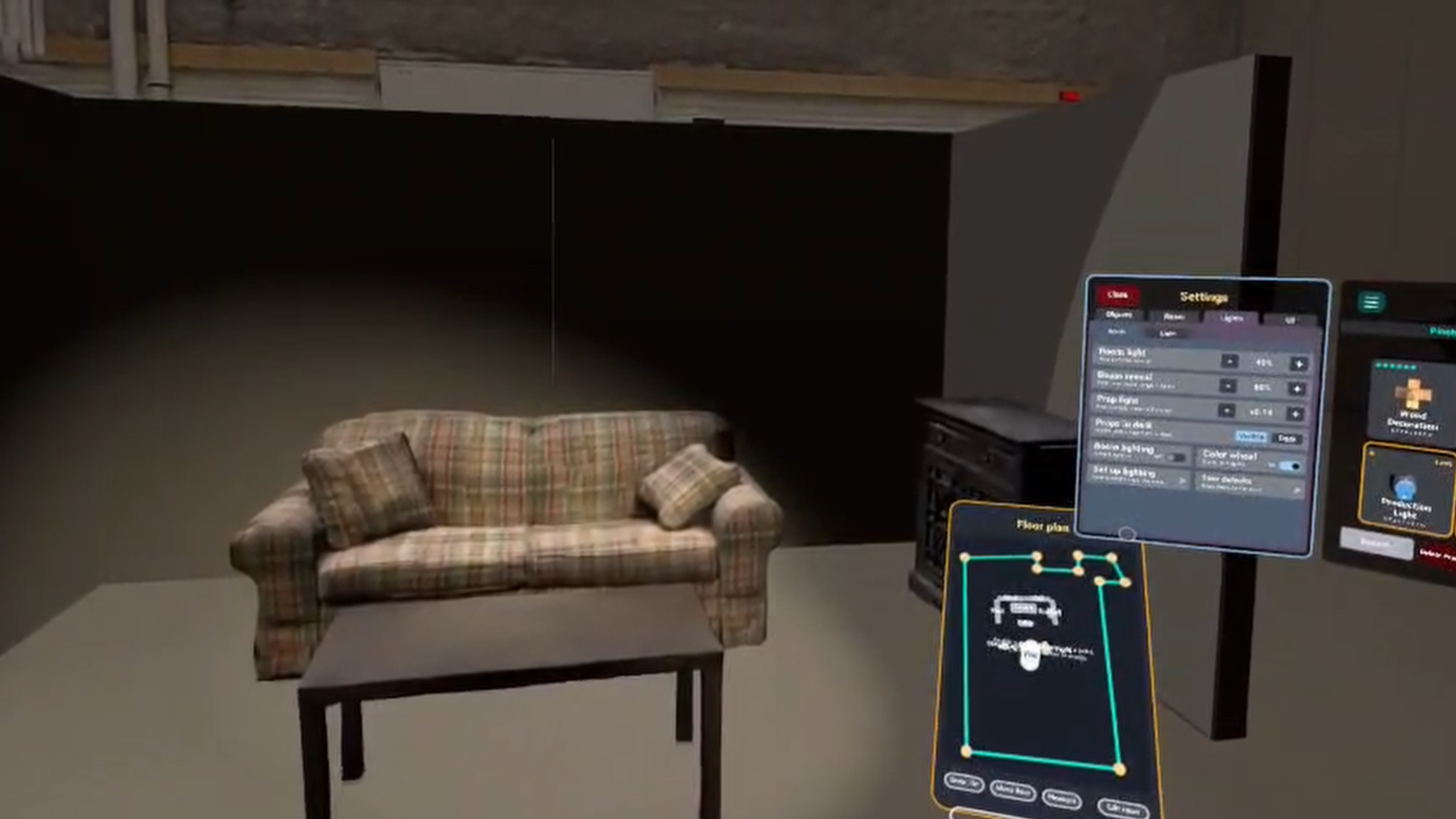
Inspiration - I had worked on a virtual production stage, Synapse in Los Angeles, and we are working on the Jackson Wang video. I saw how they needed to place the stage and fit all of the props and sets and designs and I thought wow that's got to be a lot of work to try and plan all of that out! Then later that year I received the Quest 3 as a gift and I immediately thought that with the quality of the new pass-through video that was miles ahead of the Quest 2, this would be a perfect use for augmented reality and putting virtual stage items on a real stage.
What it does -Previs Live is a program I created for live-action studio sets. It gives production teams a digital warehouse of assets that can be laid out directly on the studio floor, eliminating the need to physically move heavy equipment around to test arrangements. One person could arrange different layouts using the digital twin assets of the studio warehouse. They can lay down either tape or actually bring the physical asset in and place it in the same spot as the virtual asset since all of the twins are physical size accurate. Another big part of this app that I wanted to include was the ability to have stage lighting. Although it is not 100% technically accurate (yet), as a pre-visualization tool it can, at the very least, can give an idea of what the set could look like. The other feature that I wanted to make sure that I had was the ability to rig objects that were imported as fbx's with skeletons. With this, if something needed to move I could make it move. Some of my future plans include adding a timeline to animate movement over time. You'll see at one point for the rigging demonstration we have a big motion control rig that weighs hundreds of pounds. to have that dragged out on stage to see if it fits can make it almost not worth using. with this system you can easily drag it out onto the stage and place it where you want it to be. Another future feature is to be able to print out the layout with the measurements so that placement information can easily be distributed. Another future plan is to be able to have multiple people in the space as well as remote users. Those remote users could have a small scale version of the room on their desk and be able to pinch and pull and move sets around like a miniature. But if you are on set, then you would see those things move in real time and vice versa.
How we built it - Using Unreal Engine 5.8, the meta Quest 3 VR headset, and Claude Code. This was a one person job. I started from a completely blank slate. Now there is a fully working app! I built it with a lot of long evenings. I'm currently submitting this after being up for 24 hrs!
Challenges we ran into - I have created a VR animated experience for marijaye's Swing Animated film. She created the assets and animation, and I put it all into unreal with a lot of help from Tim Stringer and Emily Haldeman as this was my first attempt at learning Unreal. After being more experienced with it now and working with it for virtual production, I have a better grasp at how to use it with an LED Wall. So going back to my roots of creating another VR experience, this time a tool for artists, It was fun to get back into VR again! There were honestly too many setbacks to name and count. But my persistence annoyingly kept me coming back to work out the next problem. I'm so glad I did! I truly feel this tool will be able to benefit those who layout sets for a living.
Accomplishments that we're proud of - signing up! Seriously though, signing up and following through on this app. I love seeing the reactions of people using it and the excitement of the possibilities of it in action.
What we learned - Ai is not liked these days. I admittedly don't like what it is doing to the industry. But at the same time, I think that the potential for incredible advances that can be made with it will be interesting in the future. I have also learned that Vibe coding isn't all it is cracked up to be. It isn't as easy as "make this thing" and walk away to come back and have it all done. There is a lot of work that needs to be done to get the vision out of your head and instruct an inanimate thing to create the work that is living in your head. Sometimes it is successful, but there are many times it isn't.
What's next for Previz Live - The next thing I would like to do is to get multi-user working. I want to be able to have someone working remotely on their table with a small version of the real stage. Then that user could pinch and grab assets and the person on stage would be able to see them move in real-time and vice versa. Then creating a full asset list of objects in our actual warehouse, and have it be used in an actual production.
Built With
- claude
- meta
- quest3
- unreal-engine


