-
-
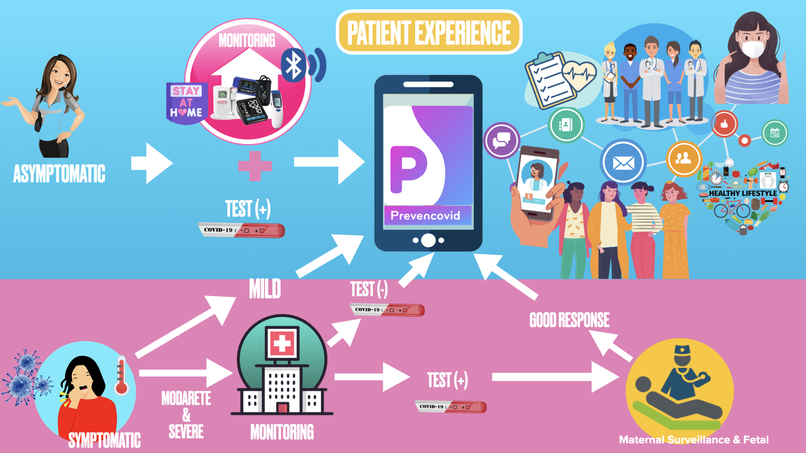
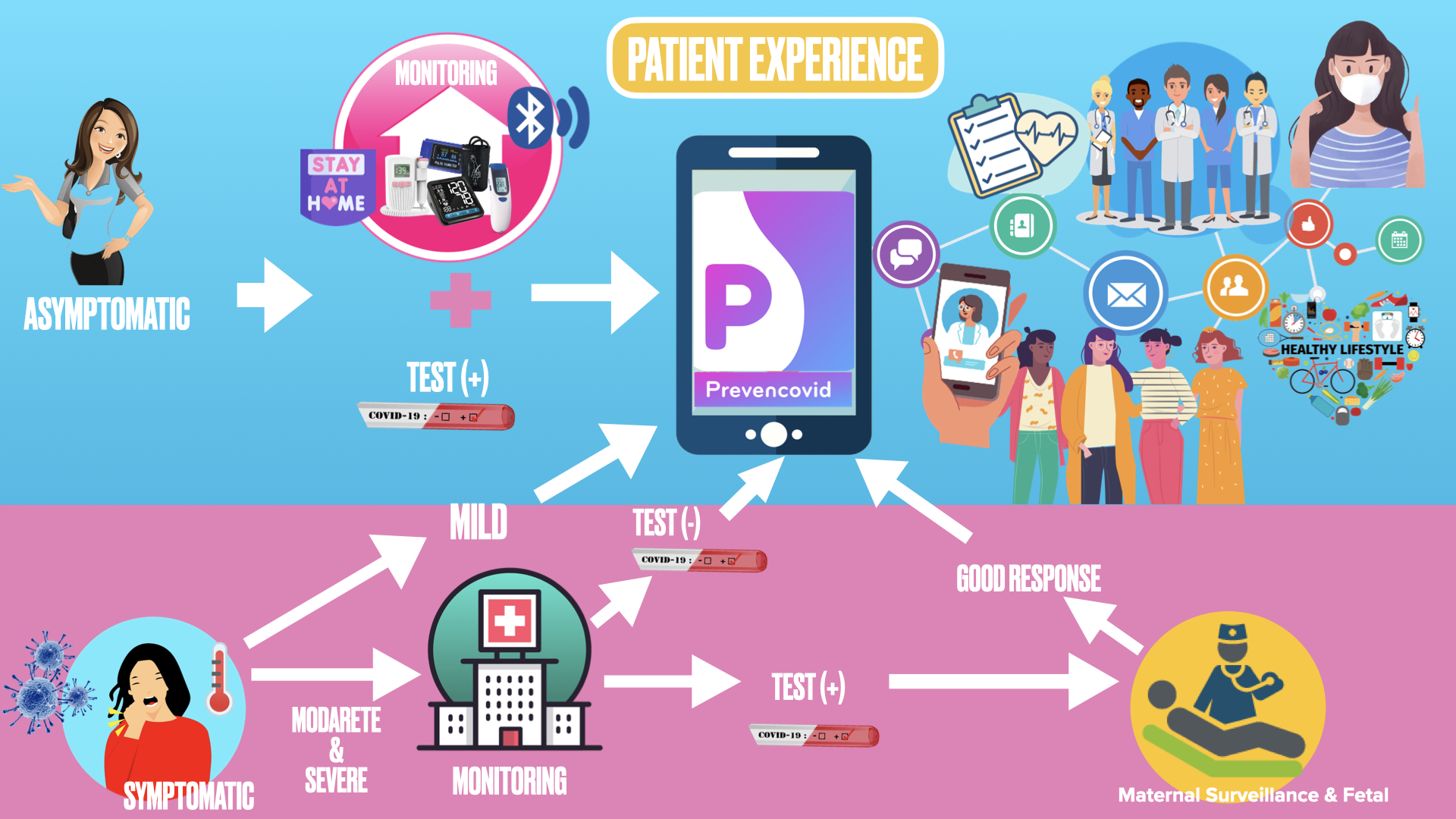
Experience Patient
-
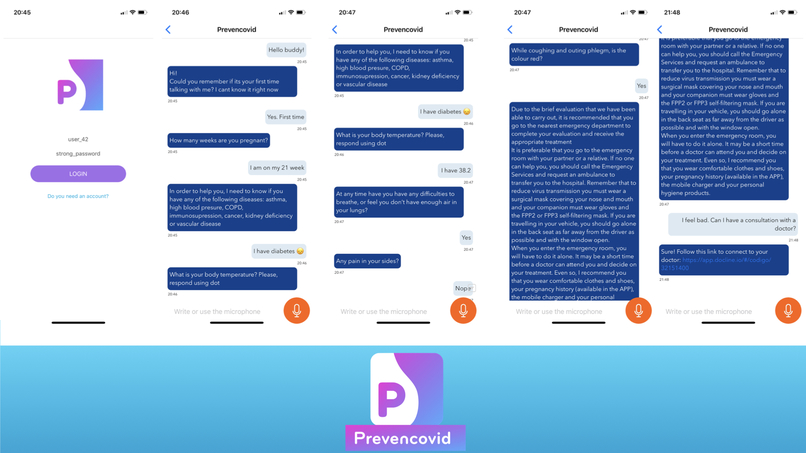
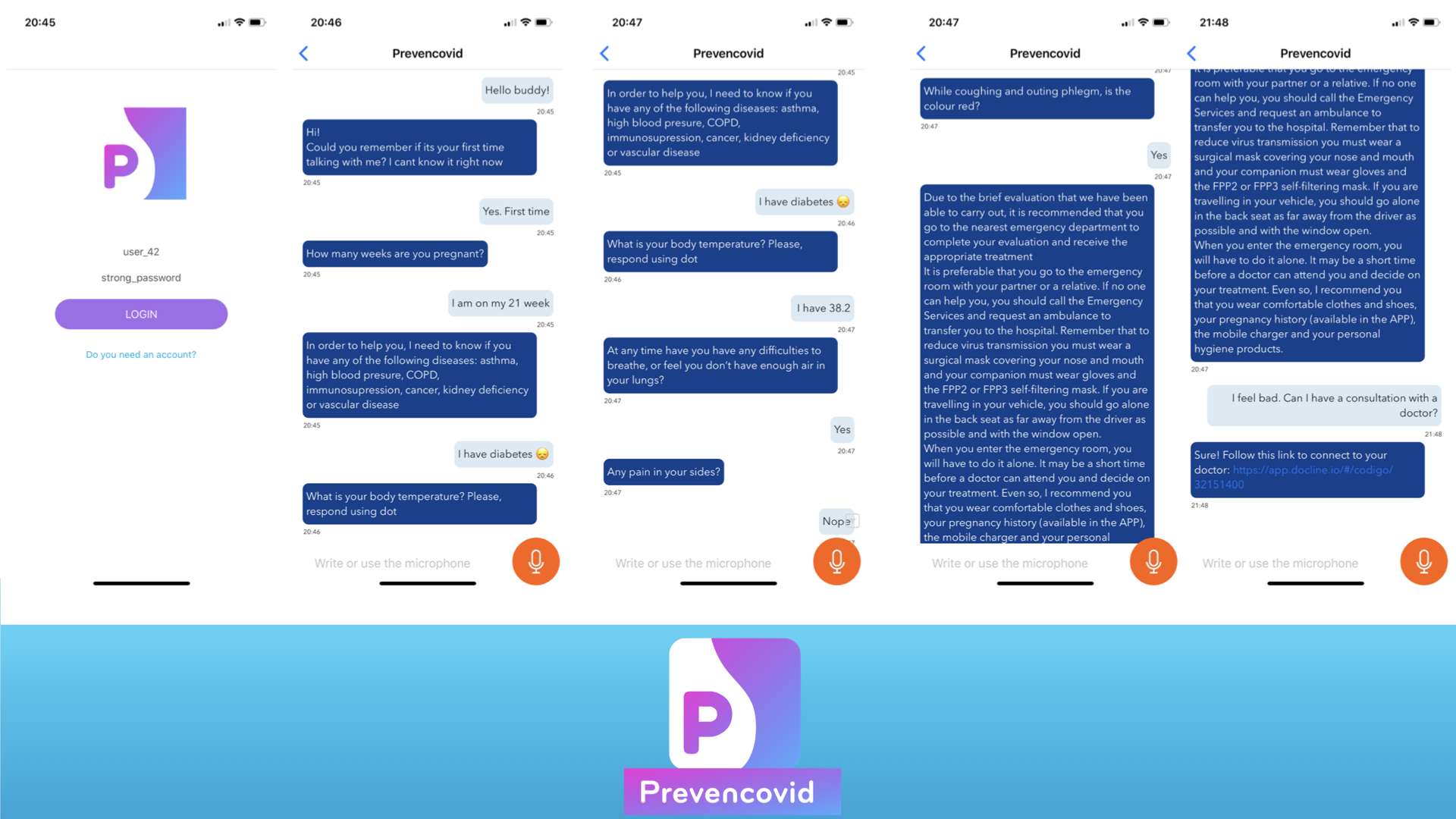
How our solution looks like
-
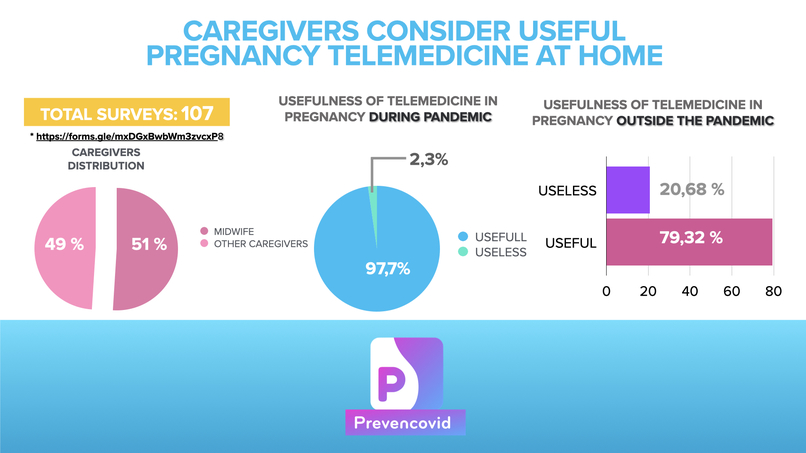
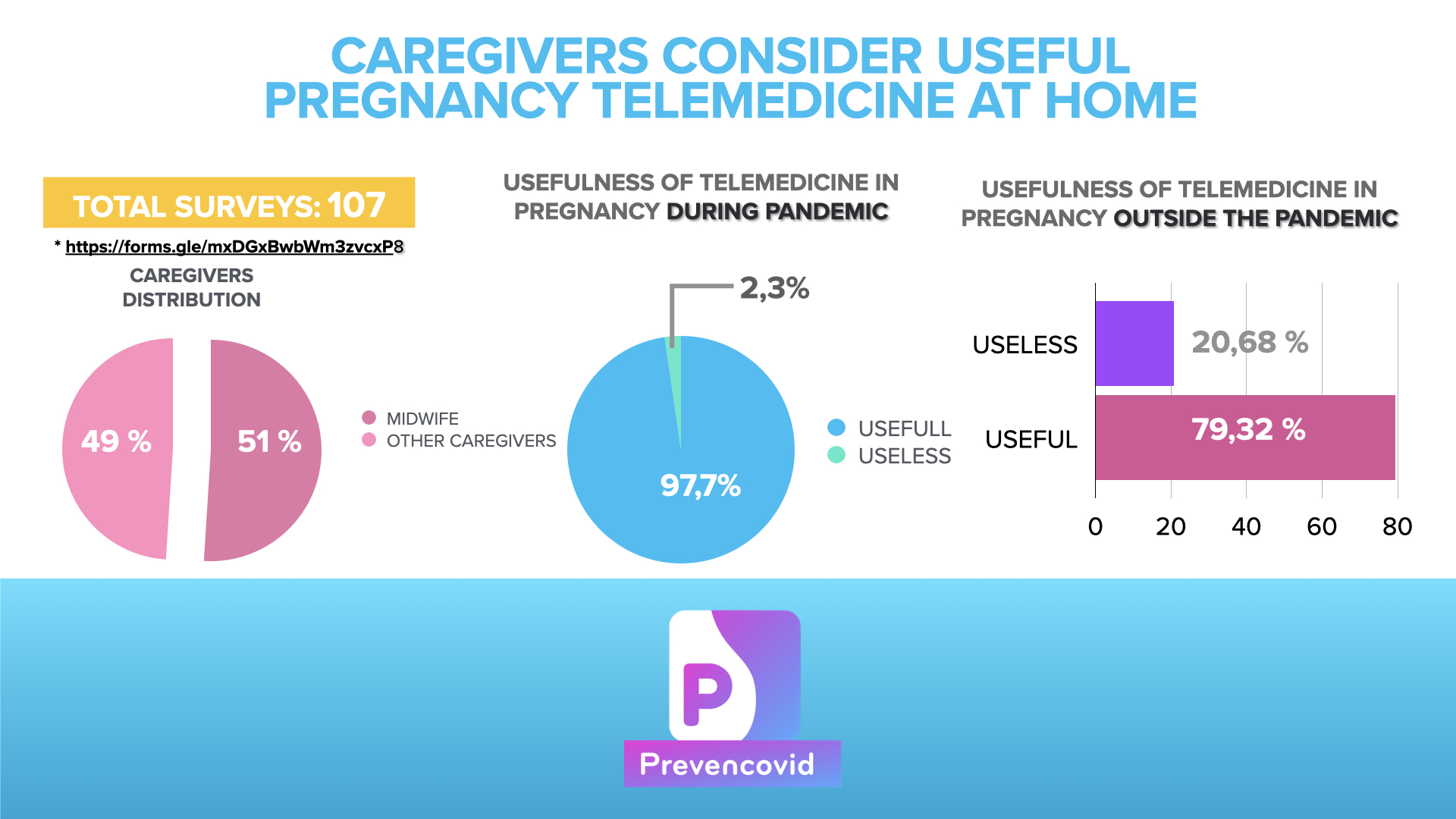
What our caregivers thinks
-
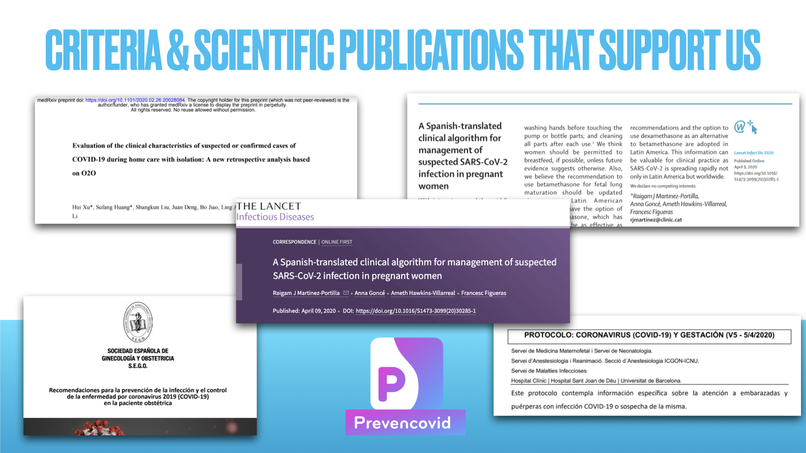
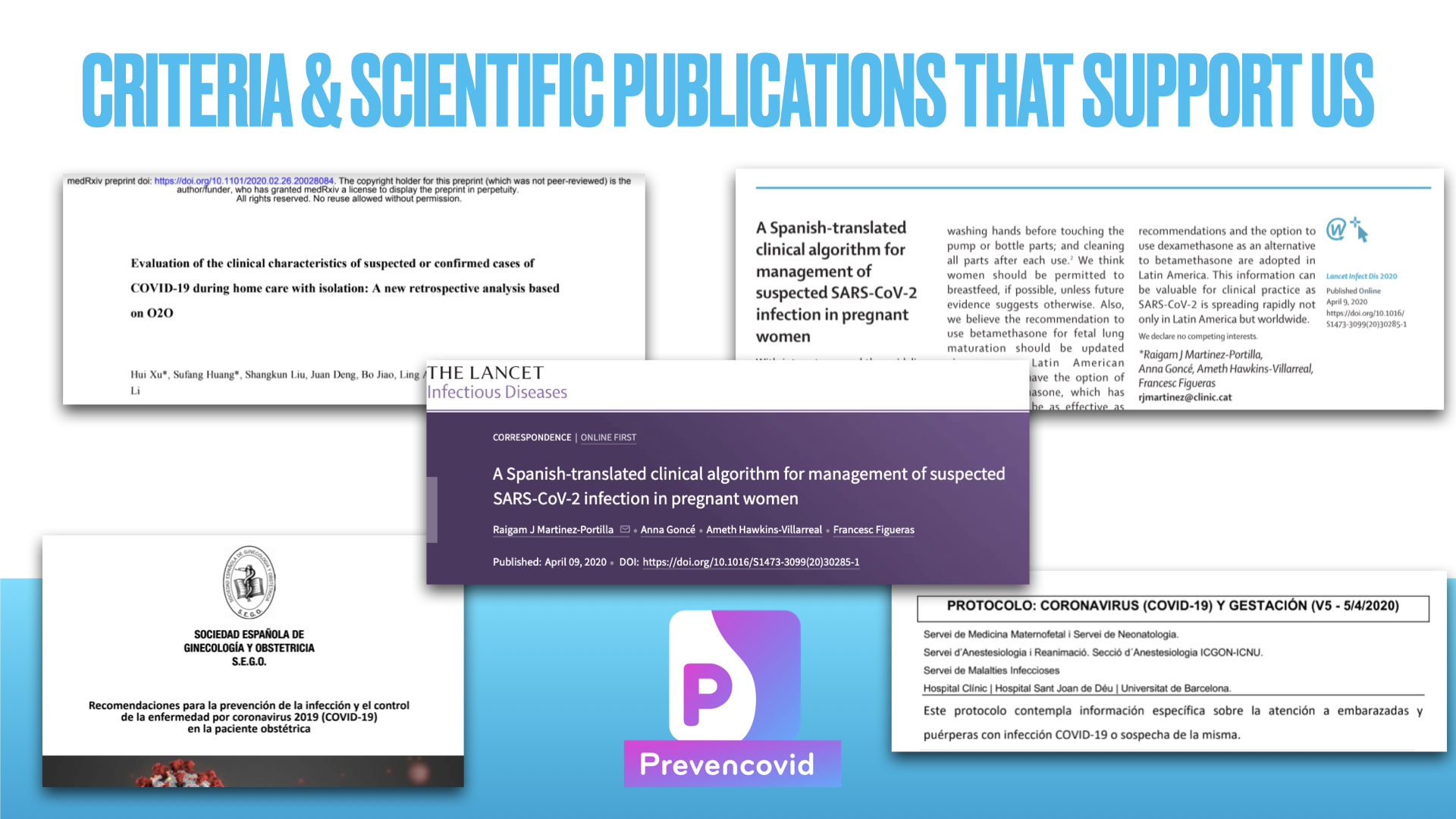
Scientific Basis
-
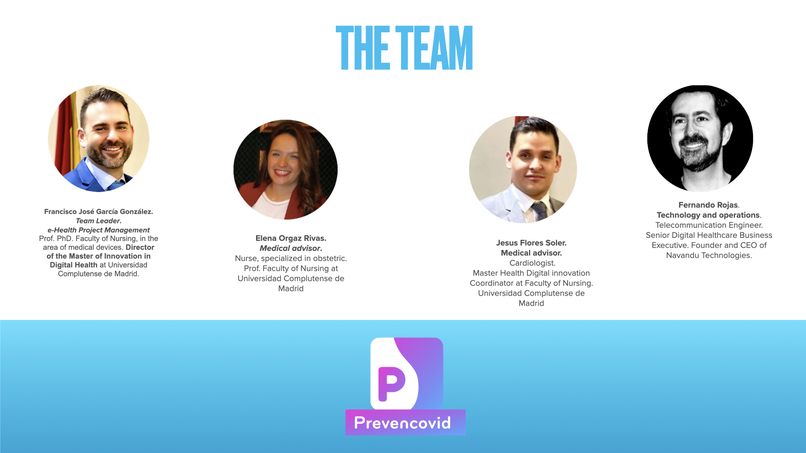
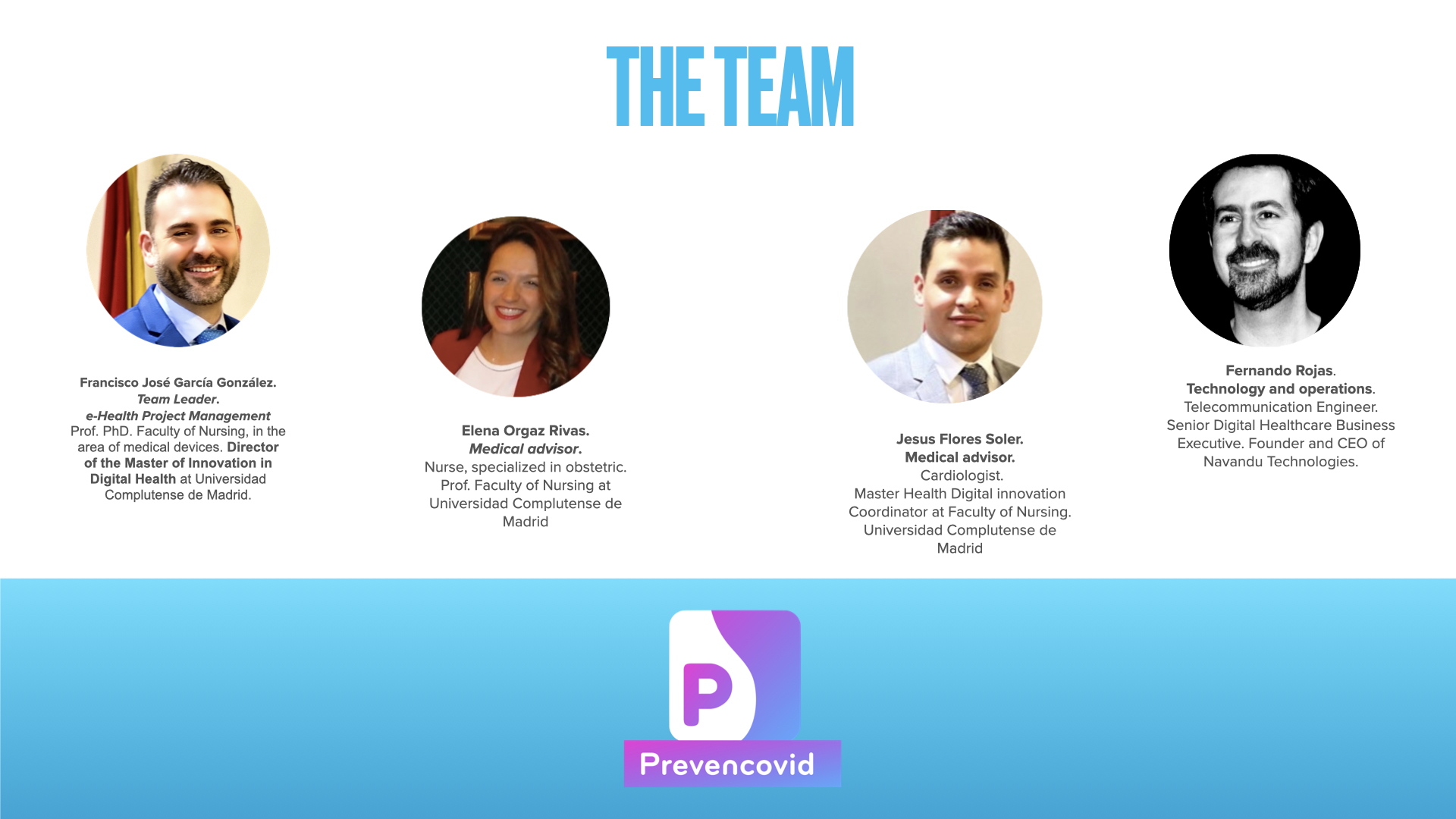
The Team
Inspiration
Pregnant Women are known to experience immunological and physiological changes that can make them more susceptible to viral respiratory infections, incluiding COVID-19. They have a high risk to develope obstetric complications and perinatal adverse outcomes compared to Non-pregnant women. According to the WHO, The consequences of SARS-COV-2 Infection for pregnancies are uncertain. Pregnant women should be self-monitored at home for clinical features of COVID-19. A Telemedicine tool, which allows the monitoring and follow-up cases at Pan-European level is necessary.
What it does
PREVENCOVID (market brand name to be defined) is the home professional care app for pregnant women, where they can receive remote clinical care and self-monitor with the help of a virtual assistant with a chatbot interface. With PREVENCOVID, pregnant women can connect to their healthcare professional, receive remote clinical care with video-consultation, self-monitor and input clinical data from bluetooth devices like a doppler foetal device, and receive constant help through the expert virtual assistant. PREVENCOVID also provides a community where mothers-to-be can connect, share impressions and recommendations, and receive official professional information from midwifes like childbirth classes videos.
Video-consultation will contribute to reduce the number of follow-up visits to the health-centre and hospital, thus preventing eventual infections of pregnant women, and also helping with their confidence because of the opportunity to "see" their doctor or nurse more frequently.
Virtual-assistance is a valuable tool for the pregnant women to: Self check of COVID-19 symptoms
- Receive recommendations depending on the week of pregnancy,
- Provide outcomes (patient reported outcomes like weight, temperature, fetal doppler parameters and even mood), both with manual entry and bluetooth device based entry, and
- Rapid resolution of questions through a qualified and professional knowledge base for pregnancy.
Mothers-to-be community is a service for the pregnant women to connect and access valuable information and recommendations, including help from other pregnant women, documents and videos prepared by healthcare professionals.
How we built it
PREVENCOVID is a mobile app for the pregnant women, and a responsive web application for the healthcare professionas, built on the basis of two core digital infrastructures that are to be integrated:
- Docline(TM): Video-consultation technology
- Lucy(TM): Digital assistant infrastructure
Docline
Docline is a digital health platform designed to supply HCPs with all the digital services needed to run their remote consultation services, including video-consultation, messaging, patient records, documents and even electronic prescription. PREVENCOVID will integrate the DOCLINE video-consultation module within the App so that pregnant women can be attended remotely, both when they have scheduled follow-ups or on demand consultations. Further versions of the app might also include the private messaging module, so that many quick consultations can be resolved through private messages between the user and the HCP. Docline is a WebRTC (Web Real-Time Communication) based platform.
Lucy
Lucy is a full infrastructure with the general purpose to implement digital therapeutic services. What Lucy basically does is the translation of clinical protocols for patients with chronic conditions into chatbot interaction with the patient. Pregnant women go through a process of different stages along their pregnancy where:
- Many recommendations are needed to be pushed on a regular basis
- Many questions arise that can be responded easily without the intervention of the HCP
- Many patient outcomes must be collected for an appropriate follow-up Lucy provides the HCP with a web backend for the implementation of the clinical protocol. The clinical protocol will consist of two core services: push messaging (when the digital assistant sends a message to the patient and eventually waits for an answer -a patient outcome-) and pull messaging (when the patient stars a conversation sending a message). The clinical protocol can also incorporate as many patient test as required (PROs forms, i.e. Patient Reported Outcomes forms). We will implement a customised COVID-19 symptoms check test within the clinical protocol, for the self-checking of the pregnant women.
The backend of Lucy is implemented in Python. The frontend app is native for iOS and Android, but thanks to the Web Service architecture and APIs of the backend, any frontend like general purpose messaging applications -WhatsApp, Telegram, Facebook Messenger...- can also be incorporated.
The mainstream of the interaction of the pregnant women with the app, will reside on the chatbot interface built on the basis of our Lucy template. They can interact both from the chatbot view or a menu option for any task: launch/ask for the video-consultation, send messages, receive and respond to push messages, incorporate data manually or from their bluetooth devices, and access the community forum.
Other technologies
For the full implementation of PREVENCOVID other technologies are to be integrated:
- A communication module to collect clinical and follow-up data of the pregnant women from bluetooth devices.
- The community service is a custom made service that can be based on different commercially available libraries for native development.
- The data will be split into two different data bases: non-personal data on the one side, and sensitive data on the other side. Sensitive data needs special protection in terms of privacy and GDPR compliance. PREVENCOVID will use an external professional service for this purpose, like the European service of chino.io.
- The knowledge base will use different technologies, but mainly a custom made implementation of Elasitcsearch for ingesting and indexing documents and repositories of information once the content is prepared and curated by the healthcare professionals.
Overall Impact
We will work with hospitals that have agreement with the Universidad Complutense de Madrid ( Both Spain and other EU countries). After one year, we will spected to accomplish the following this objectives: 1) Reducing the risk exposure of pregnant women, 2) Improving clinical and laboratory test coordination, 3) Reducing the number of presencial follow-up visits to our health-centers. 4) Allowing to health care professionals to work from home. 5) Preventing and/or detecting of fetal and gyneco-obstetric complications. 6) Integrating our platform with the official health network. 7) Starting to contact and share overseas our project.
After five years, in addition to maintaining the previously detailed objectives, we hope to accomplish: 1) Expanding our hospital network overseas 2) Improving assistance including different medical devices (fetal ECG, fetal Doppler). 3) Obtaining large storage of registry data. 4) Empowering women in their health.
Challenges we ran into
Business and operation challenges
There are many video-consultation services and many apps for pregnant women in the market. There is also an increasing number of COVID-19 sympton checking apps. We are facing our entry in the market with a different approach. Typically all these applications are focused, mainly from a user experience point of view, first on the patient with as much autonomy as possible. PREVENCOVID is obviously designed also as a patient-centric service, but our approach starts with the healthcare professionals, so that they can prescribe the service and get a better influence in the pregnant women. We are building a digital therapeutic service, and a robust platform for the healthcare professionals to conduct their treatments and the follow up of the pregnant women for the convenience of the patients, but at the same time, for the purpose of improving real world clinical data, thus improving and generating more clinical studies.
We will divide our strategy in two phases: (1) Clinical study to prove the results, multi-centric approach in Spain, get certifications as an approved digital therapy for the health system. (2) Look for a distribution agreement with one (or more) pharmaceutical company to distribute the product (the need for a robust and mature commercial network is essential).
The product is defined as a digital therapeutic treatment, that will accompany the pregnant woman all along her pregnancy. In our first market test with HCPs responsible for obstetrics and primary care, we identify a reasonable price of 99€ per treatment. The price could be paid by the pregnant women, or could be reimbursed by the public health service, but the product will always need a clinical prescription.
According to the World Bank figures: The TAM is the number of births in the European Union, more than 4.2 million/year, weighted by the 84% of Internet use. At the above price per treatment that makes a TAM of almost 352M€ in the EU. The SAM takes into account the percentage of people that would be in the mood to go for a digital therapy. Initial estimation is 20%, resulting SAM of 70M€. We still need more analysis to estimate this percentage. The SOM for a 10% of the market in 5 years would result 7M€.
Technology challenges
PREVENCOVID demands for many technologies to be integrated, manages sensitive data of the patients (it is not a wellness app, but a digital therapeutic service), and has to serve both the purpose of helping the pregnant women, preventing them from infectious risks by reducing as much as possible going to the health centre or hospital, and collect valuable data for clinical studies that will contribute to a better knowledge to face against the COVID-19 pandemic with regards to a high sensitive sector of the population.
We face these challenges through the quality of a mix team of clinicians, experienced researches from tier-1 universities and a senior software engineering team with more than 10 years dedicated to the digital health sector. We also count on the basis of robust technologies that compound the core of PREVENCOVID: both Docline platform and Lucy infrastructure provide enough maturity and confidence for the engineering team.
Another significant challenges are:
- Storage and treatment of sensitive data for GDPR compliance
- Communications service to collect data from bluetooth devices (temperature, oxygen saturation, blood pressure, foetal doppler...).
We will face these challenges with convenient partners with European expertise in these areas. We have already agreements with Chino.io.
Regulation and IP
The regulatory objective of our product will be based on the new regulation of medical devices (2017/745 / EU), because this App is considered a medical device, “since it improves people's health and is used to diagnose or aid diagnosis”. Also, due to its risk assessment, this software is classified as Class IIa, so it will need specific requirements from regulatory bodies, in our case the EMA, due to it will be a prescription device by healthcare professionals.
For its free commercialization within the European space, it will need the CE marking, which indicates compliance with regulatory requirements, as well as their corresponding ISO standards, contacting the European Medicine Agency (EMA), since it has a support service for SMEs / Spin-offs. One of the next steps planned for PREVENCOVID will be the creation of spin-offs following national LOU regulations (MEC, 2008).
Besides, we will opt for the regulatory burden as a patent for a medical device, since it is more agile and quicker to market. The PREVENCOVID patent is being processed through our University Results Transfer and Research Office (OTRI) service, for incorporation in the European Patent Office (EPO). Although some functionalities are already patented by the members of the project.
At this time we are in the pre-clinical phase, in which the following steps will go through a clinical phase, manufacturing, marketing and commercial use.
Accomplishments that we're proud of
Creating this project with a multidisciplinary team has been very gratifying. The illusion of having addressed a problem that pregnant women find in this pandemic.
Giving visibility to the WHO nurse / midwife year with this project, and demonstrating that they are not only committed to medical care, but also to the research and development of new technological solutions to improve the lives of patients. We clearly saw this during the Hackathon where, through a survey carried out in just 4 hours, 104 healthcare professionals from ours hospitals validated the need for telemedicine to monitor the pregnant woman as a useful monitoring tool, reducing face-to-face consultations during and after the pandemic.
We have managed to expose a sustainable and scalable business model, which adds value in the development of the medical device and the possible innovative services in the health sector, moreover in this specific area that we have defined: pregnancy.
We respect and promote gender equality by promoting gender balance in the team. So for the future we will seek greater integration of women, including good researchers that we have within our nursing faculty, where more than 80% are women.
What we learned
This hackathon methodology has taught us you can brainstorm and work collectively to achieve common goals.
We have also improved our vision thanks to the recommendations of the mentors, which has meant overcoming the problems and facing new challenges in the future in the development of our idea.
What's next for PREVENCOVID: Pregnancy Via Telemedicine Follow-up in COVID
- MVP development
- Business plan
- Finance searching


Log in or sign up for Devpost to join the conversation.