-
-
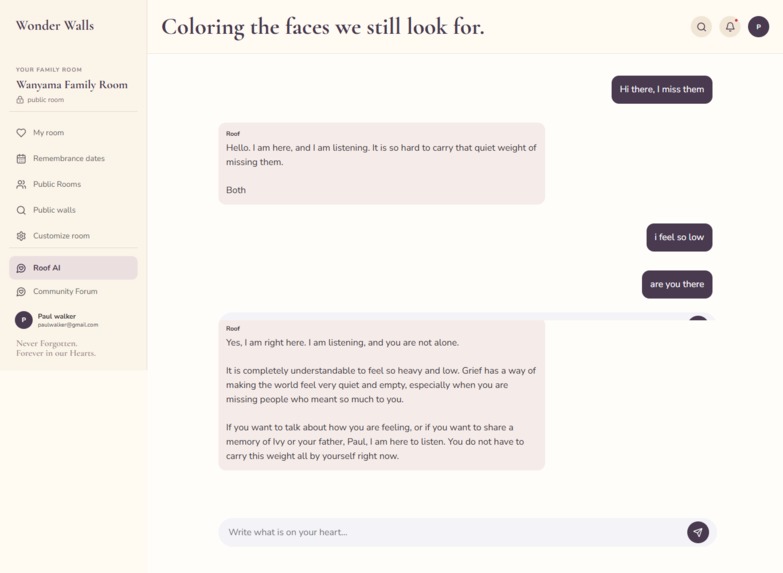
Roof AI
-
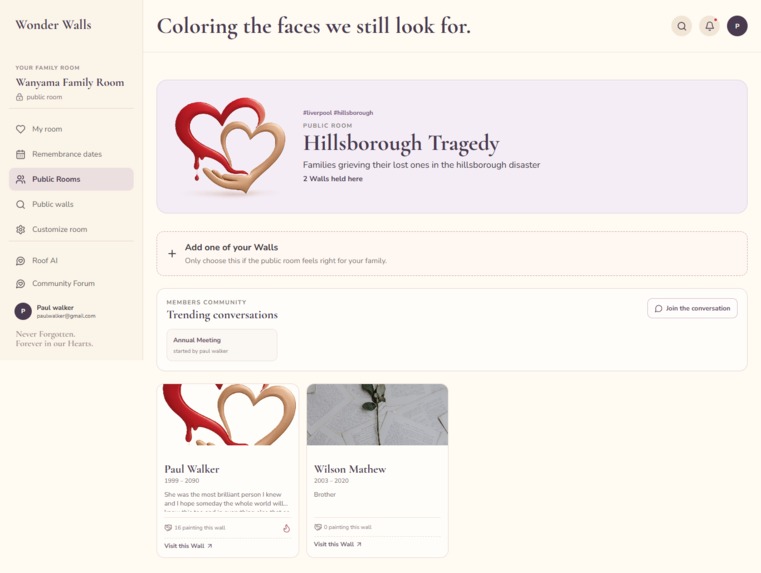
Public Room
-
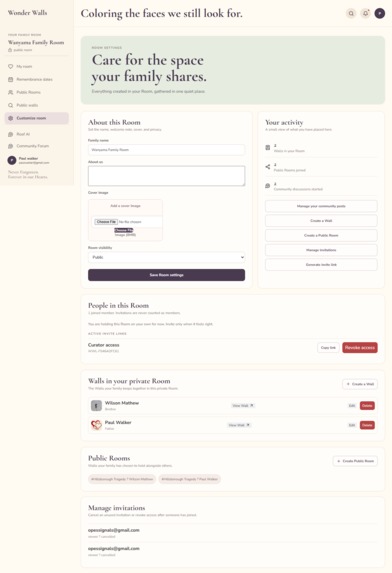
Customize Room
-
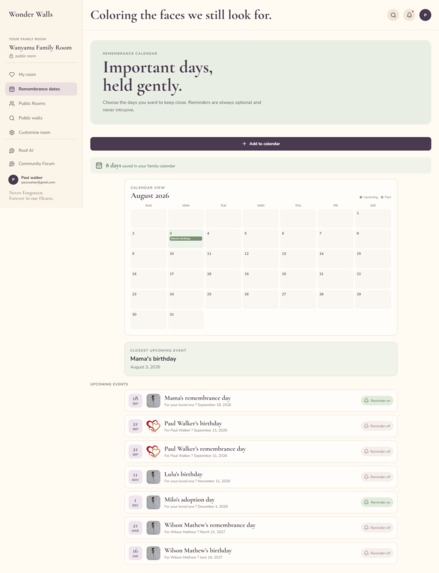
Remembrance Dates
-
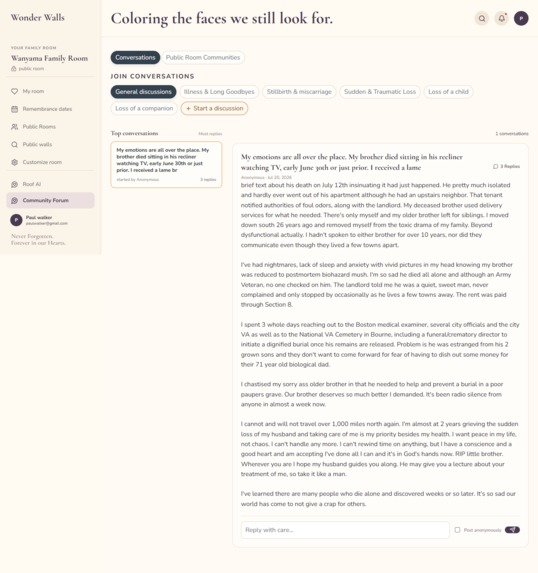
Community Forum
-
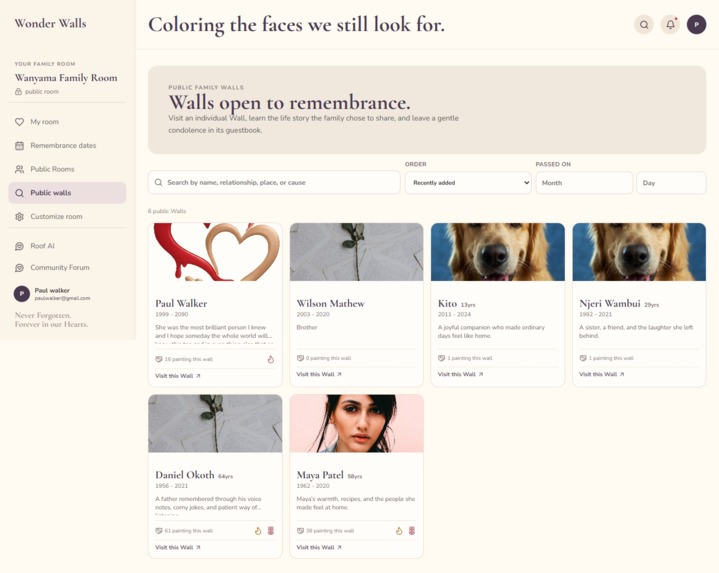
Walls
-
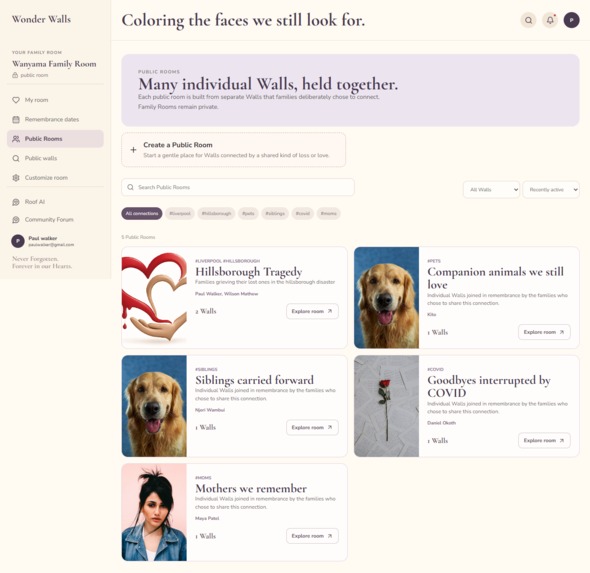
Public Rooms Overview
-
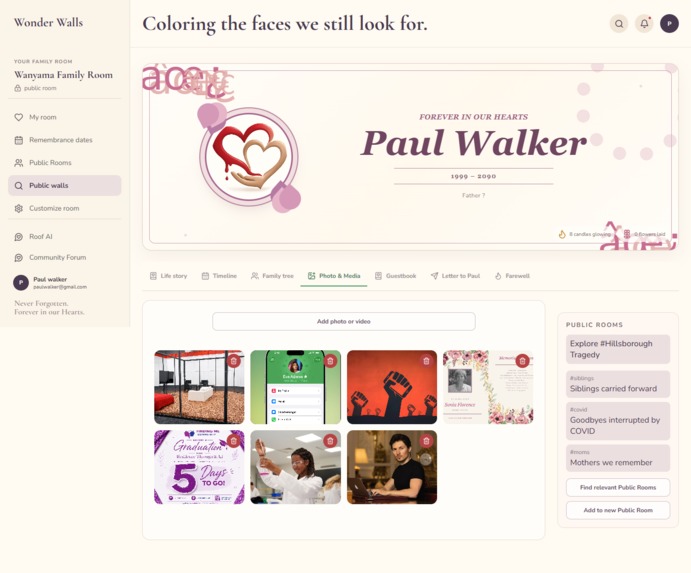
Wall
-
My Room Home
Inspiration
I lost my mom and my small sister and everyday I can't stop thinking about them. I lost my mom during covid and there was travel restrictions so not many people could attend her funeral and even some of my sister too couldn't, she had been sick for a year before then and though it was a long goodbye, people still have things to say, we still get condolences till today cause some dont even know. And also I don't want my sister and I to forget her, also to connect with other people who can relate to our loss, of loosing a mom, a sister, and of someone dying from cancer. These reasons made me build WonderWalls, to color the walls of people we've lost, with crayons of tributes, letter and condolences, and to their families who never stop grieving.
What it does
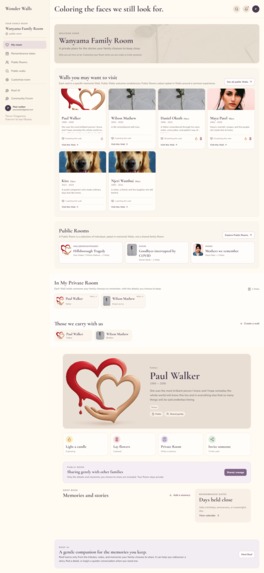
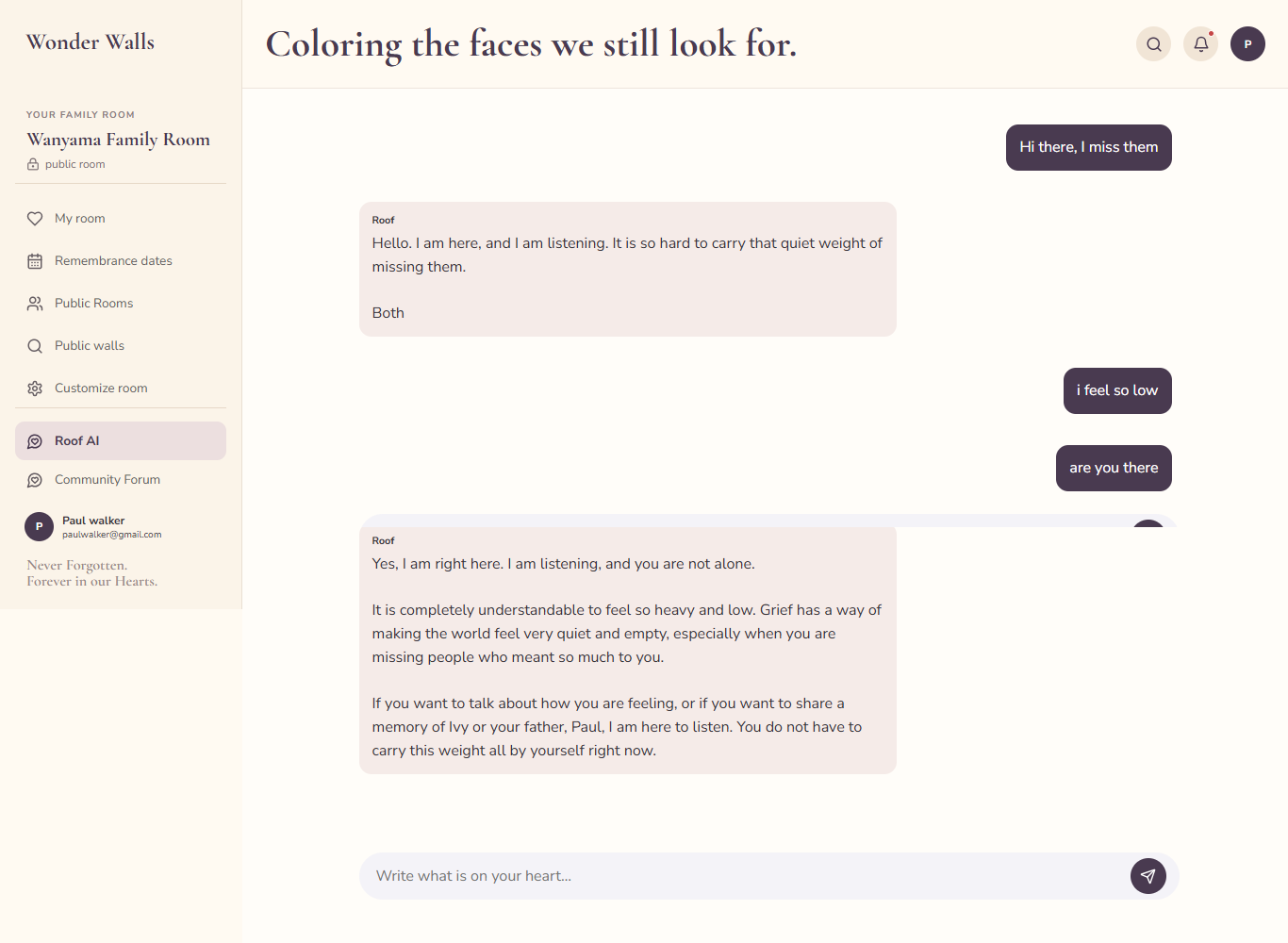
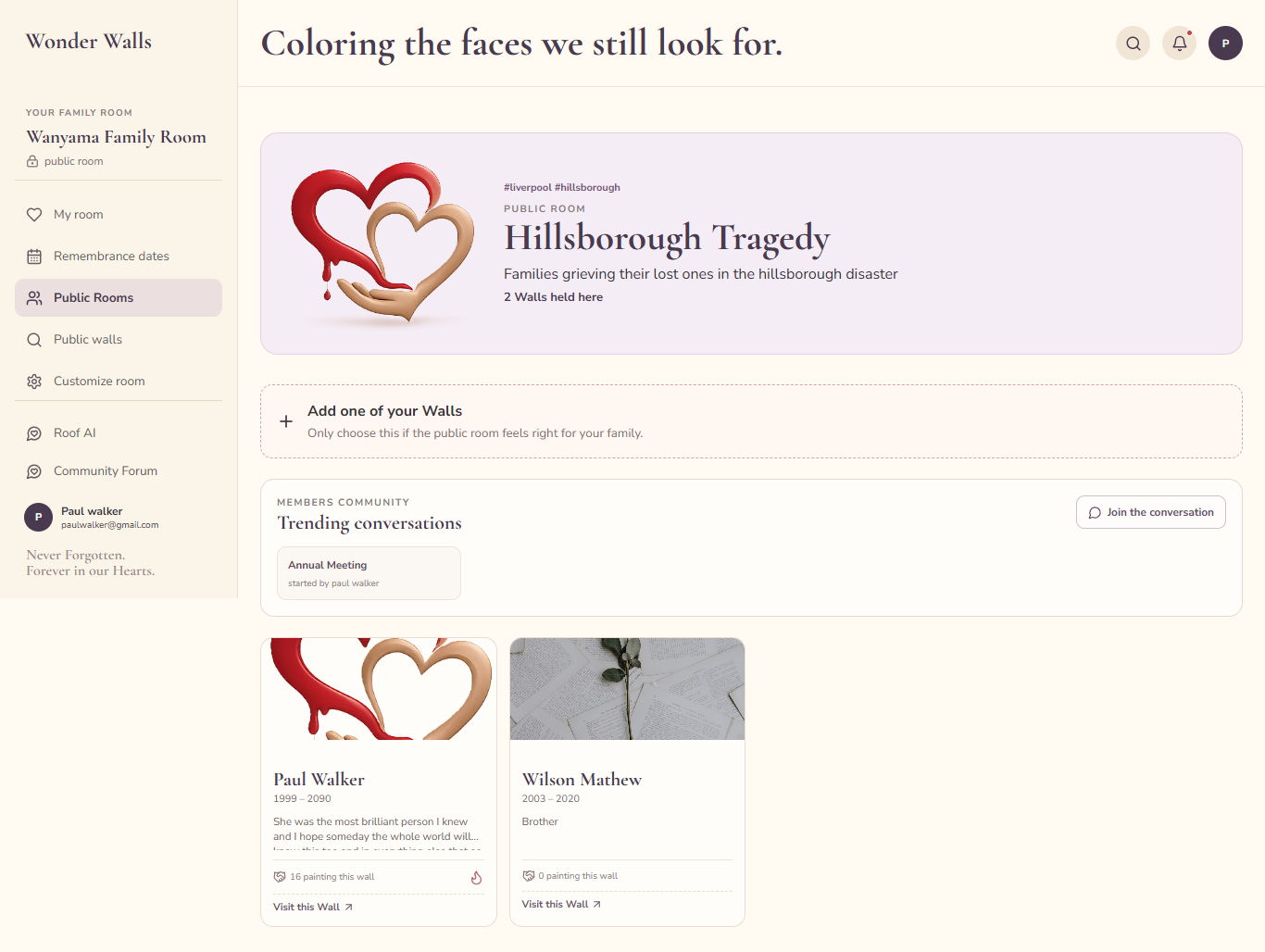
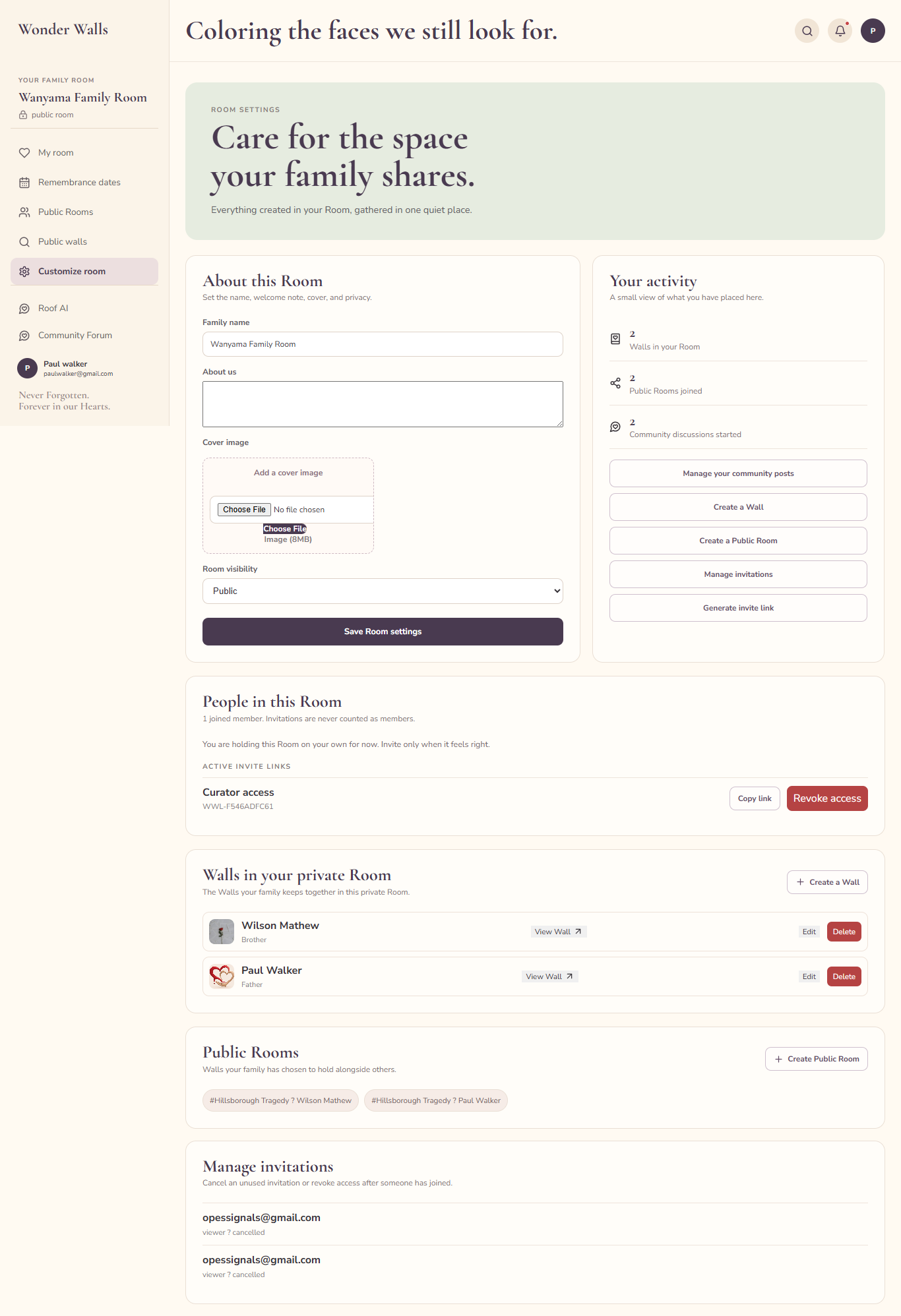
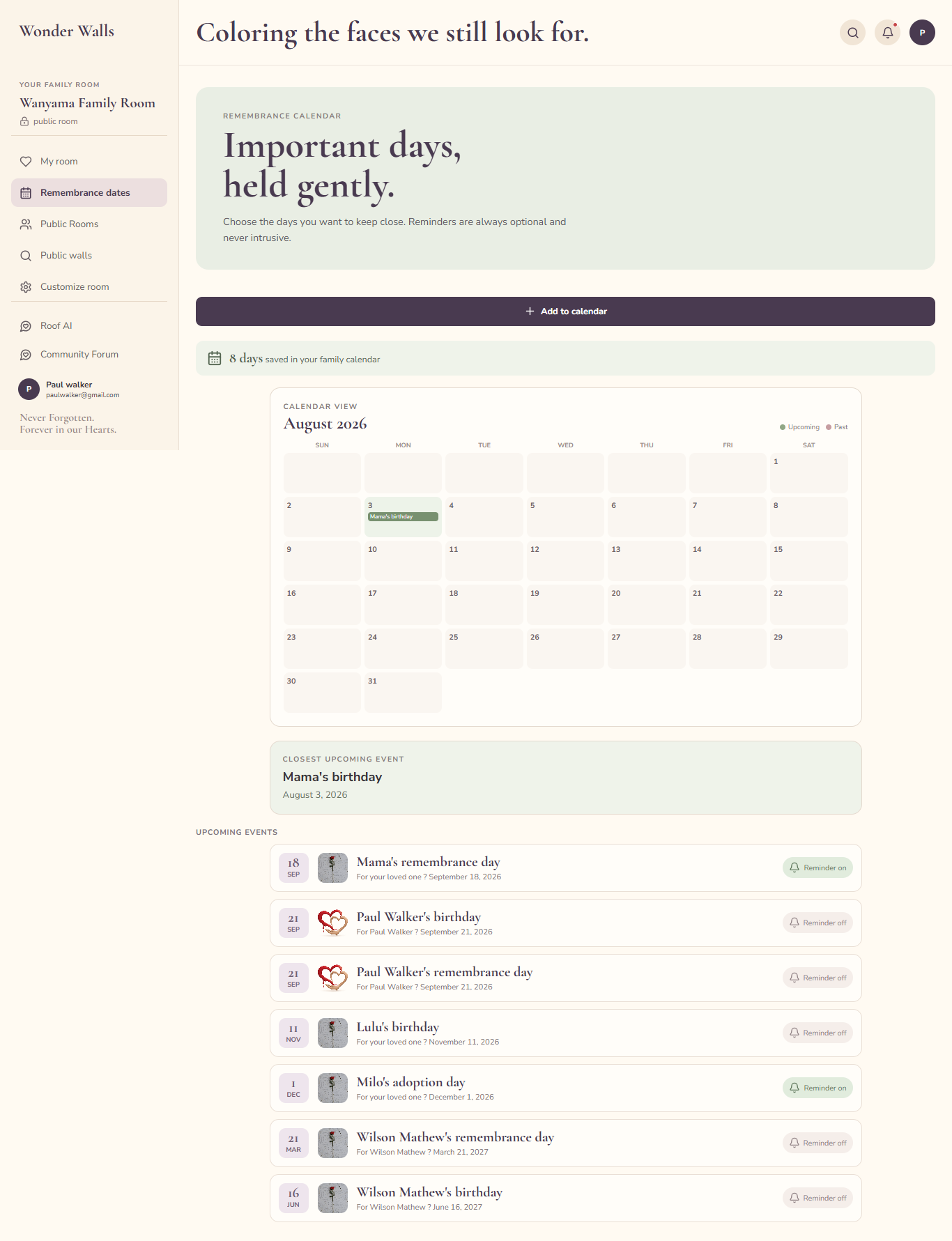
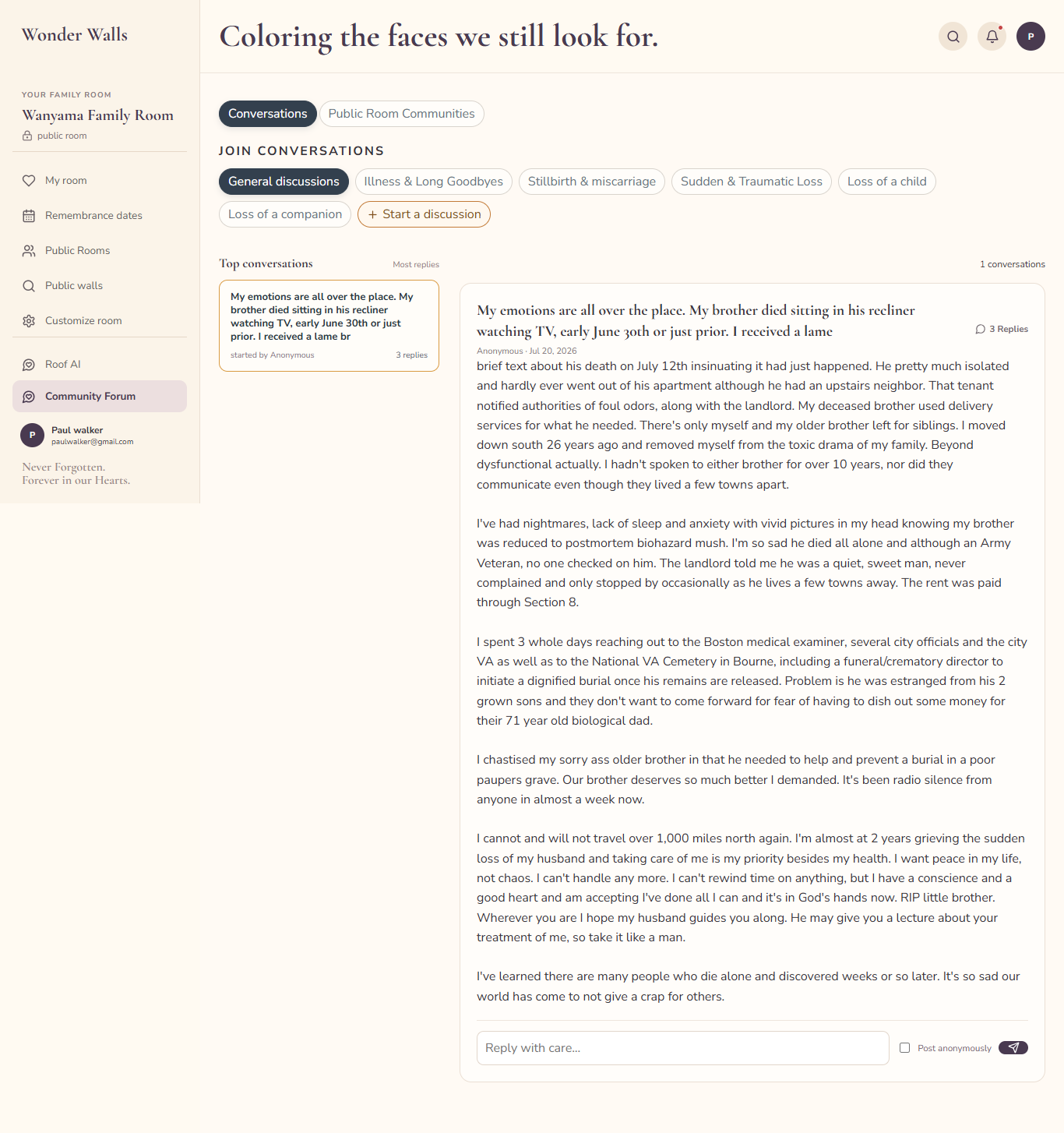
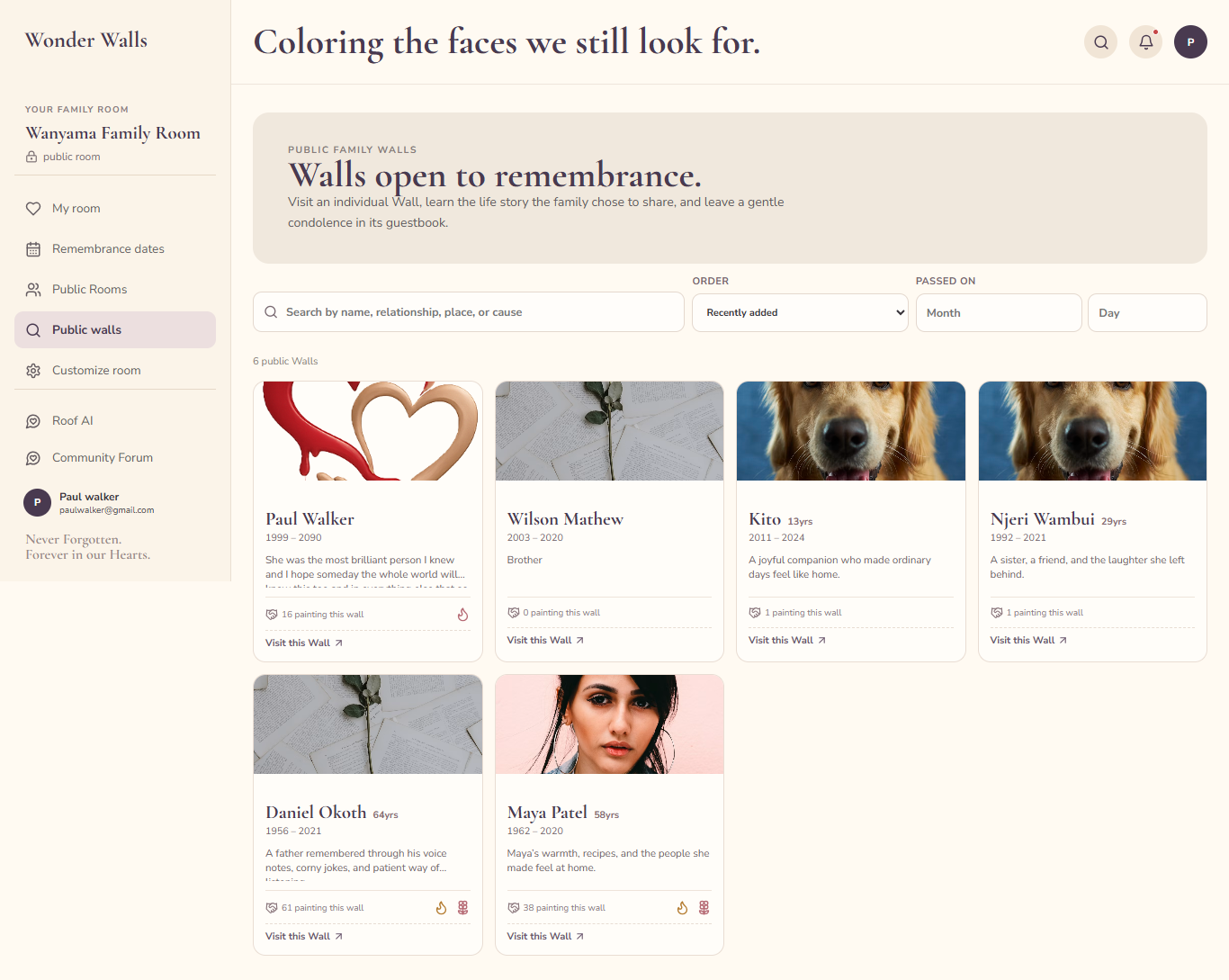
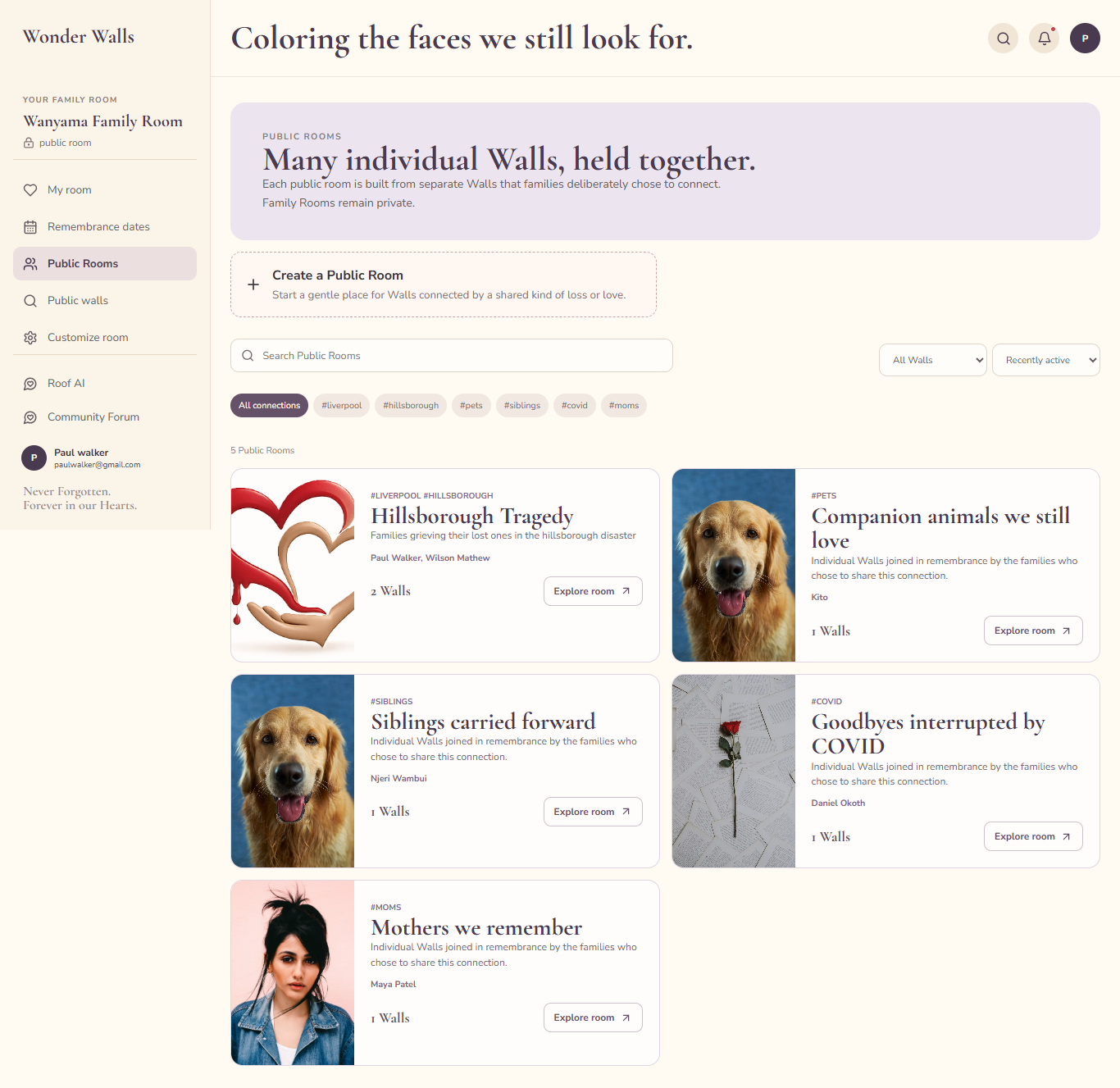
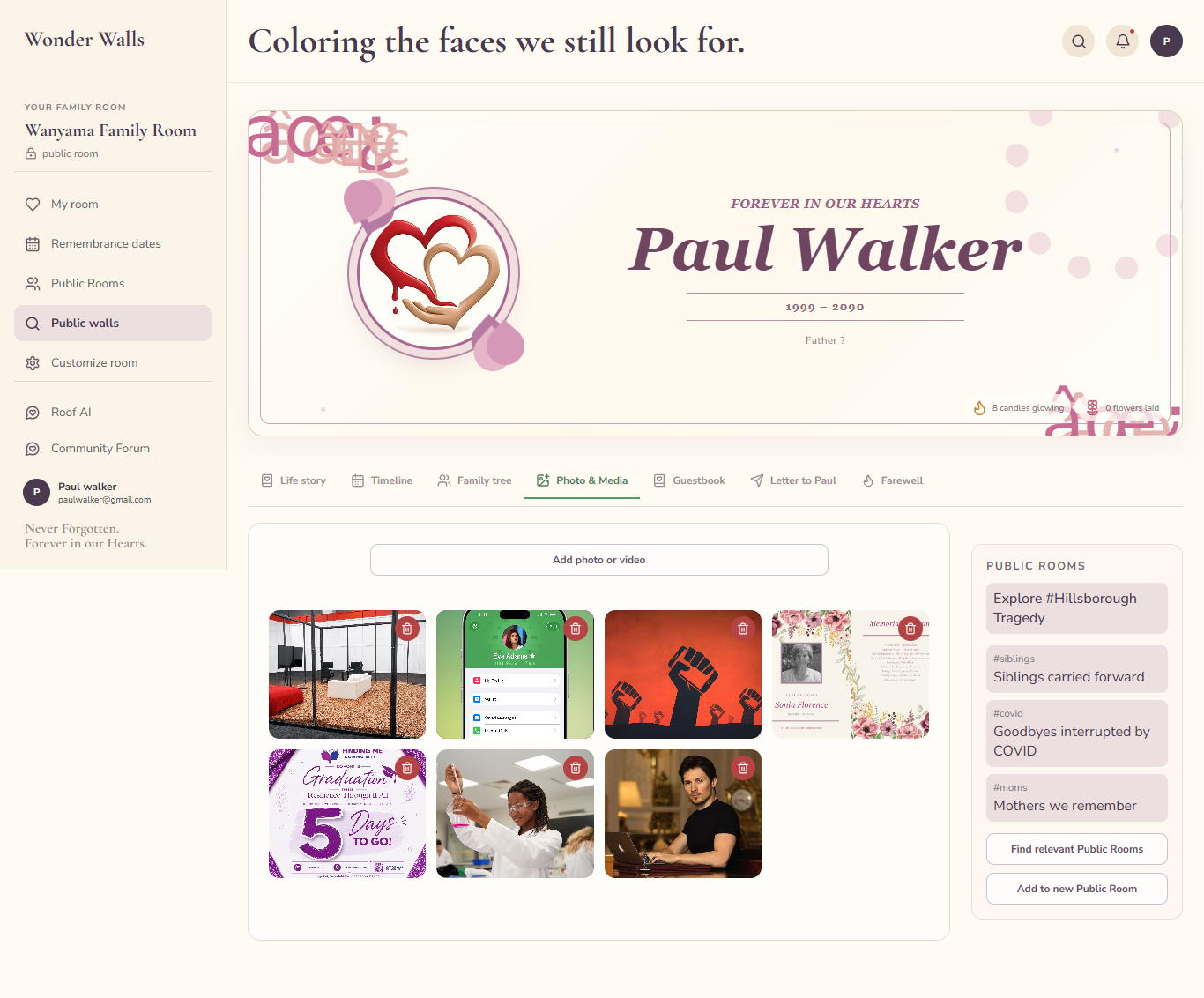
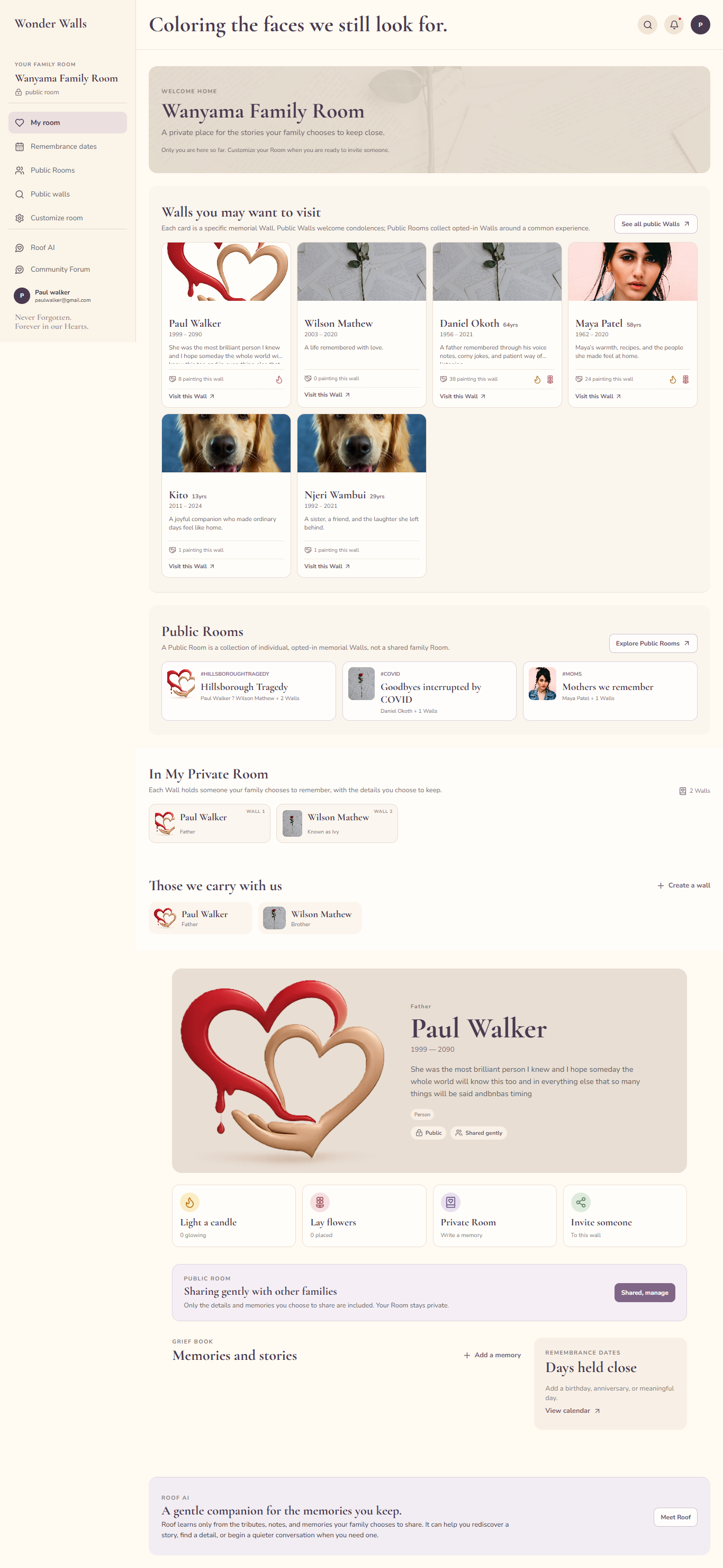
Wonder Walls is a private by default memorial and grief support web application built for families and friends to remember and honor their loved ones together. Each family has a private Room, and inside it they create individual Walls for each person or pet being remembered, complete with photos, videos, life stories, timelines, and family trees. Visitors to a Wall can take part in small rituals of remembrance, like lighting candles, laying flowers, signing a guestbook, or writing private letters to the person being remembered. Families can choose to make specific Walls public so they're discoverable, or join Public Rooms built around shared experiences such as illness, stillbirth, or pet loss, all while their private Room stays hidden. There's also a community forum for grief-related discussion, a calendar that automatically surfaces birthdays and passing dates, and a notification system for Wall activity and replies. A standout feature is Roof AI, a private conversational companion that draws on a family's own memorial content to support quiet reflection. Under the hood, the app runs on Next.js and Supabase, with UploadThing handling media and row-level security keeping private data protected.
How we built it
I built Wonder Walls end to end using Codex 5.6 Terra, from the initial ideation of the concept through to final deployment on Vercel. The frontend was developed in Next.js and TypeScript , giving us fast routing and a responsive layout that works cleanly across desktop and mobile. Supabase handles authentication, including Google sign-in, along with the core database and row-level security policies that keep private Room and Wall data locked down to authenticated, invited users only. Media uploads like photos, videos, and voice notes are managed through UploadThing, while Roof AI is powered by Gemini and scoped to each family's own memorial content for private, contextual reflection. Migrations were used to build out the invite-link system, notification logic, community forum structure, and access control, and once the app was stable, it was deployed and hosted on Vercel for production.
Challenges we ran into
One of the biggest challenges was balancing sensitivity with functionality, since every feature, from notifications to the guestbook, had to feel warm and respectful rather than transactional, which meant a lot of rethinking wording, flows, and visual tone even after something technically worked. Privacy was another major challenge, because getting row-level security right across Rooms, Walls, invite links, and roles meant constantly testing edge cases to make sure private family content never leaked into public Walls or Public Rooms by accident. Building without a traditional engineering background also meant facing real technical unknowns, especially around authentication, database migrations, and structuring something as interconnected as Rooms, Walls, and community features, but Codex actually eliminated most of the usual trial and error by testing its own code and rebuilding it when something broke, which meant I could move forward with confidence instead of getting stuck debugging things I didn't fully understand. On a personal level, it was also emotionally challenging to build a platform about grief while still processing the loss of my mom and sister myself, since I was designing something meant to help others hold their grief while also holding my own.
Accomplishments that we're proud of
The accomplishment I'm proudest of is personal before it's technical. I built Wonder Walls as a place to honor my mom and my sister, somewhere their memory could live with real depth instead of fading into old photo folders, and in doing that I ended up creating something other grieving families could use too, with Public Rooms that let people going through illness, stillbirth, or pet loss find each other and not feel so alone in it. On top of that, I'm proud that I was able to build this at all. I'm not a traditional engineer, but by using Codex from ideation all the way through hosting on Vercel, I was able to turn a deeply personal idea into a real, working platform, which pushed me to grow far beyond what I thought my technical limits were.
What we learned
What I've learned building Wonder Walls is that grief needs to be designed for with real care, not just built as a feature set. Small details, like the difference between a clinical notification and a gentle one, or how a Wall's language can either comfort someone or feel cold, turned out to matter just as much as the technical architecture behind them. I also learned that privacy has to come first by default, since people are trusting the platform with some of the most vulnerable parts of their lives, like letters to a parent or memories of a sibling, so every decision around Rooms, roles, and access had to be built with that trust in mind from the start. On the technical side, going from ideation to a fully hosted product on Vercel using Codex taught me that not having a traditional engineering background isn't the barrier it once was. With the right tools, a clear enough vision, and patience through the messy parts of building something new, it's possible to bring something deeply personal into the world as a real, working product that other people can actually use and feel something from.
What's next for Wonder Walls
What's next for Wonder Walls is expanding beyond the web app into native mobile applications for iOS and Android, so families can light a candle, write a letter, or check in on a Wall right from their phone, with notifications that feel immediate rather than something you have to remember to check. Beyond that, I want to build a 3D cemetery mapping feature tied to real locations, so people can visually place and explore memorials the way you would walk through an actual cemetery, making the experience of visiting a loved one's Wall feel more grounded and physical instead of just scrolling through a page. The goal is for someone to feel like they're truly standing somewhere meaningful, even from across the world, and for families who share a Public Room around a similar loss to feel geographically and emotionally closer to each other, not just connected through text and photos. Altogether, these next steps are about making remembrance feel less like using an app and more like being present with the people and places that matter.
Built With
- chatgpt
- codex
- css3
- gemini
- github
- javascript
- nextjs
- recordly
- resend
- sql
- supabase
- typescript
- uploadthing
- vercel
- vs-code

Log in or sign up for Devpost to join the conversation.