-
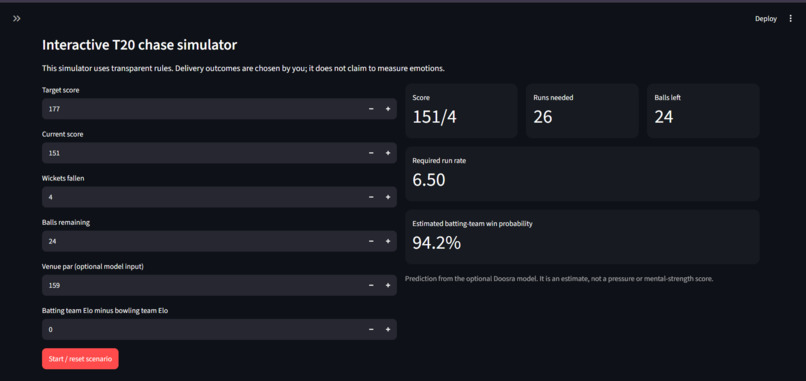
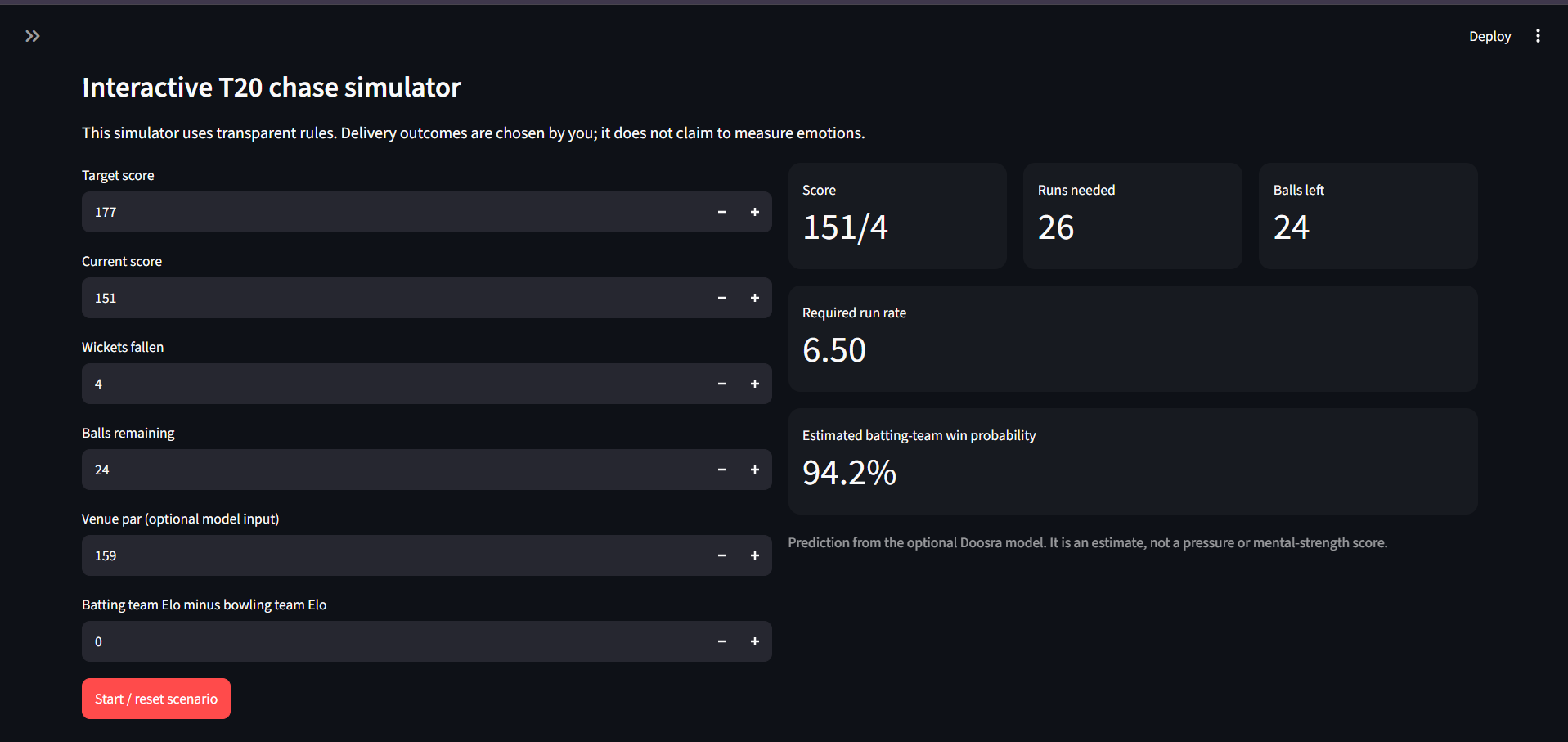
pressure simulator for respective player
-
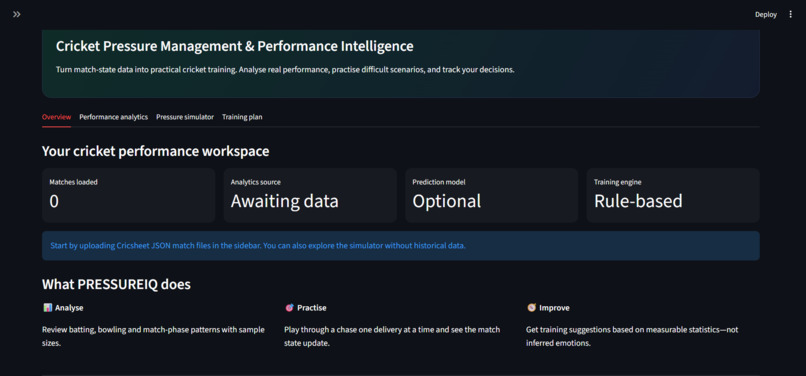
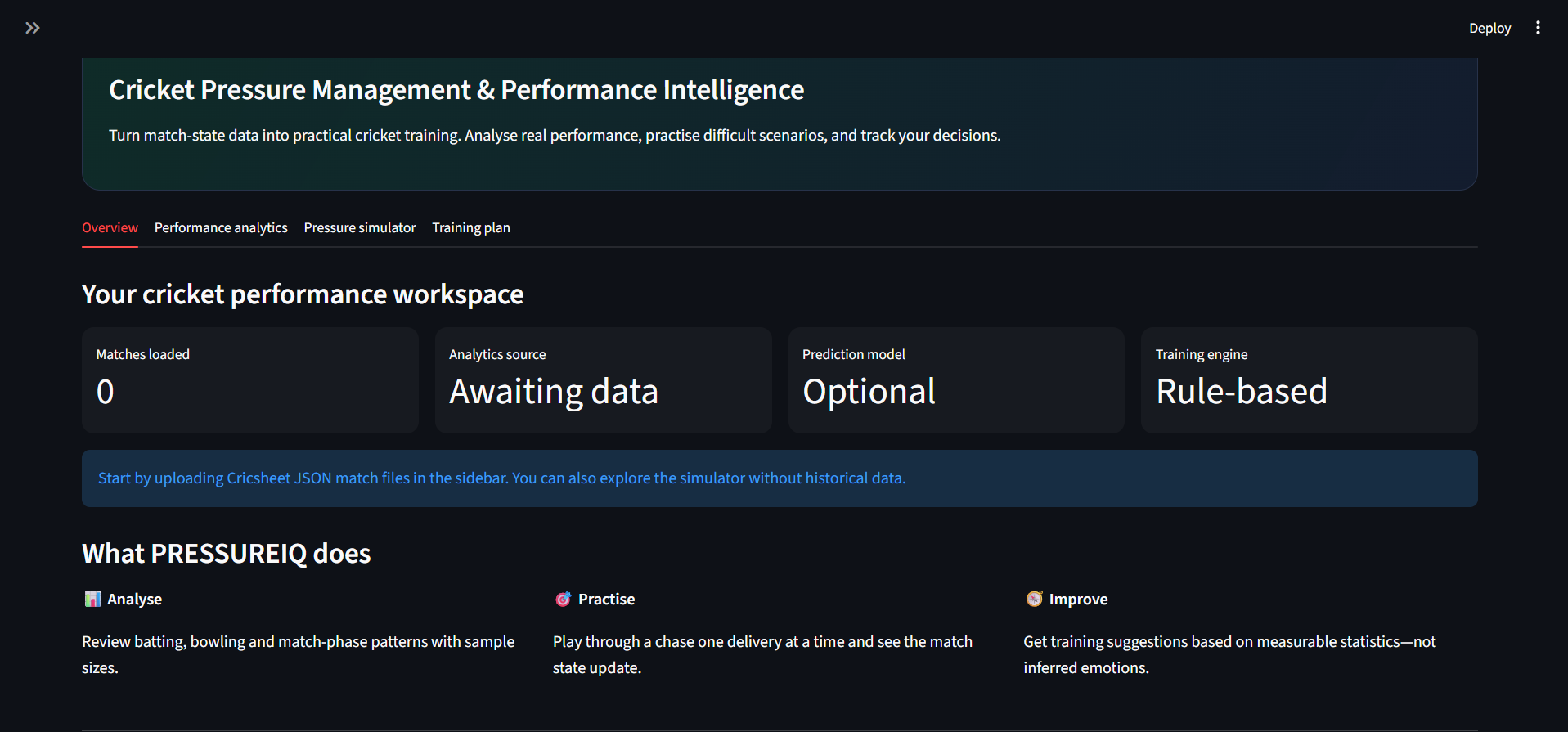
dashboard
-
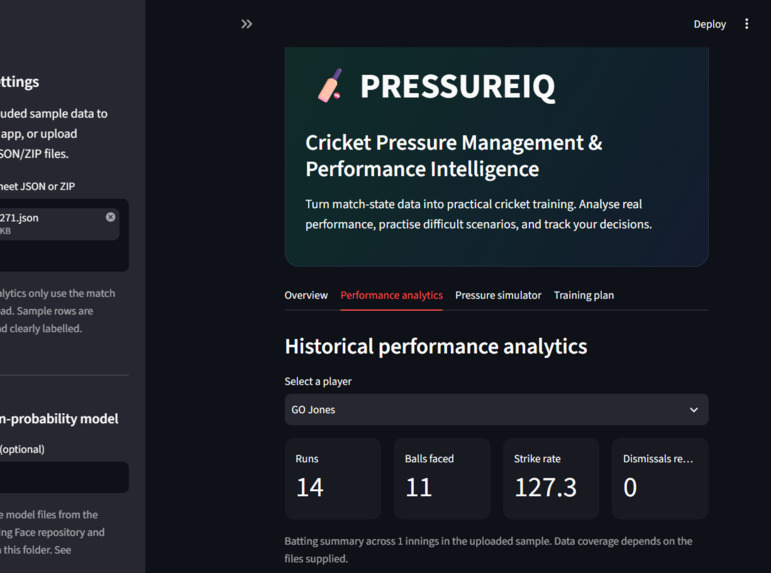
-
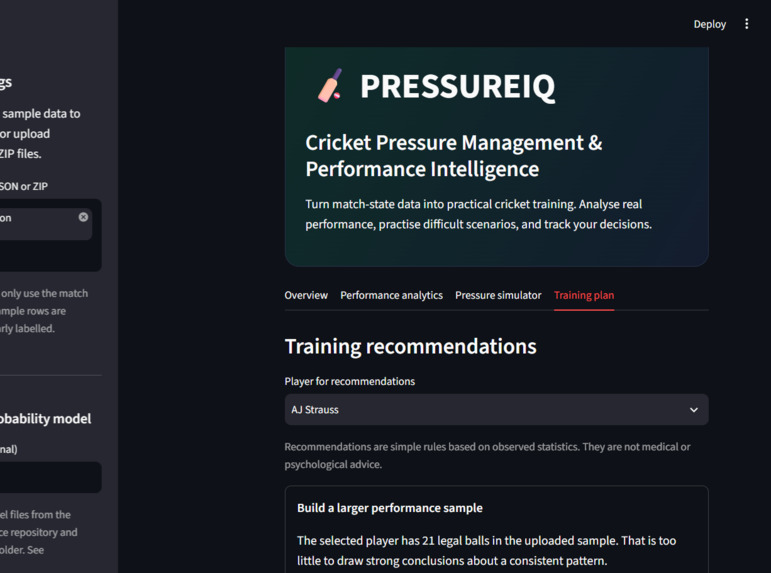
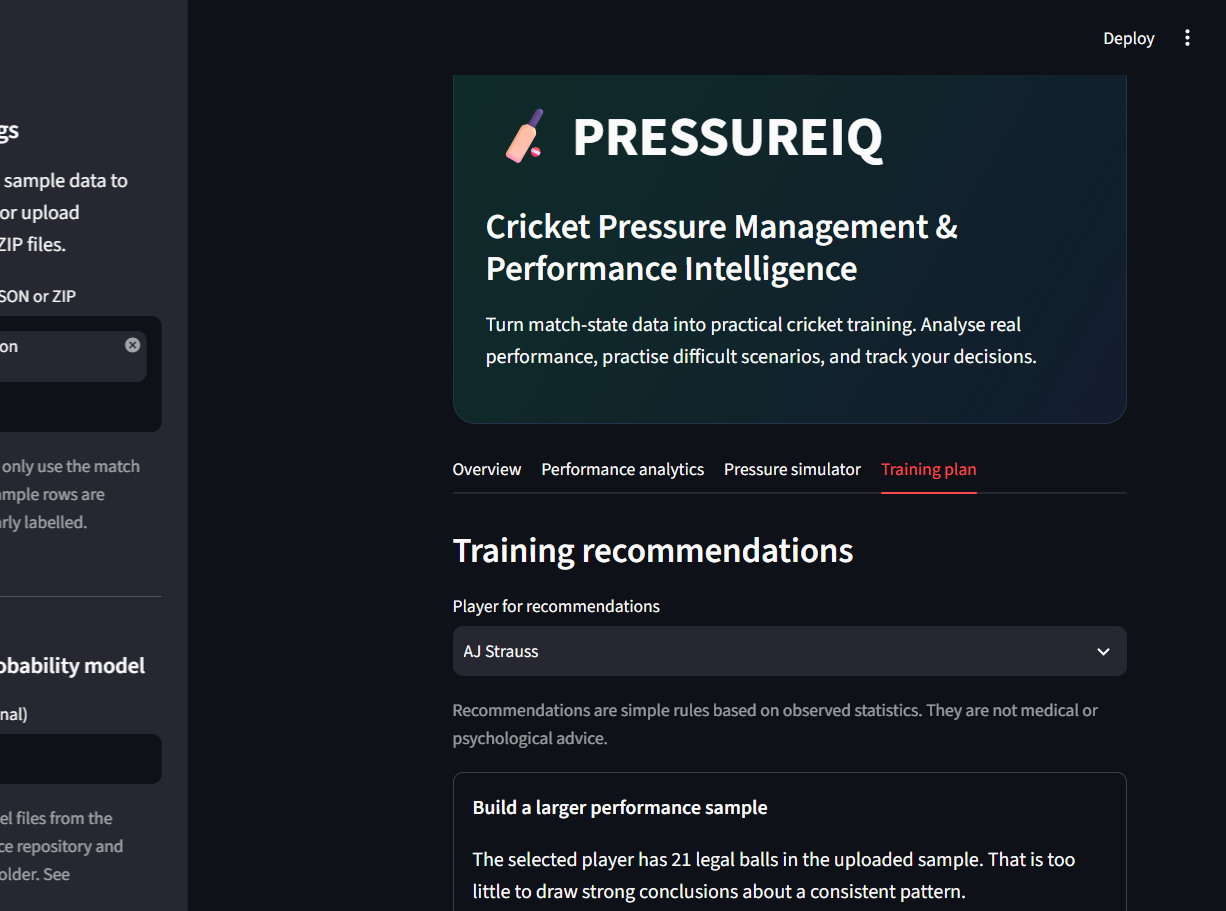
training plan for respective player
Inspiration
Cricket matches can change dramatically in just a few deliveries. A batter chasing a difficult target, a bowler defending runs in the final over, or a team losing wickets at a crucial moment must make decisions under pressure.
We wanted to explore how cricket data could help players better understand these situations and prepare for them. This inspired us to build PRESSUREIQ, a cricket analytics platform that combines performance analysis, match-situation simulation, win probability estimation, and personalized practice recommendations.
Our goal is to make cricket analytics more actionable—not just showing players what happened, but helping them explore what they could do differently next time.
What it does
PRESSUREIQ: Cricket Analytics helps players explore their performance and practice challenging match situations through four key features:
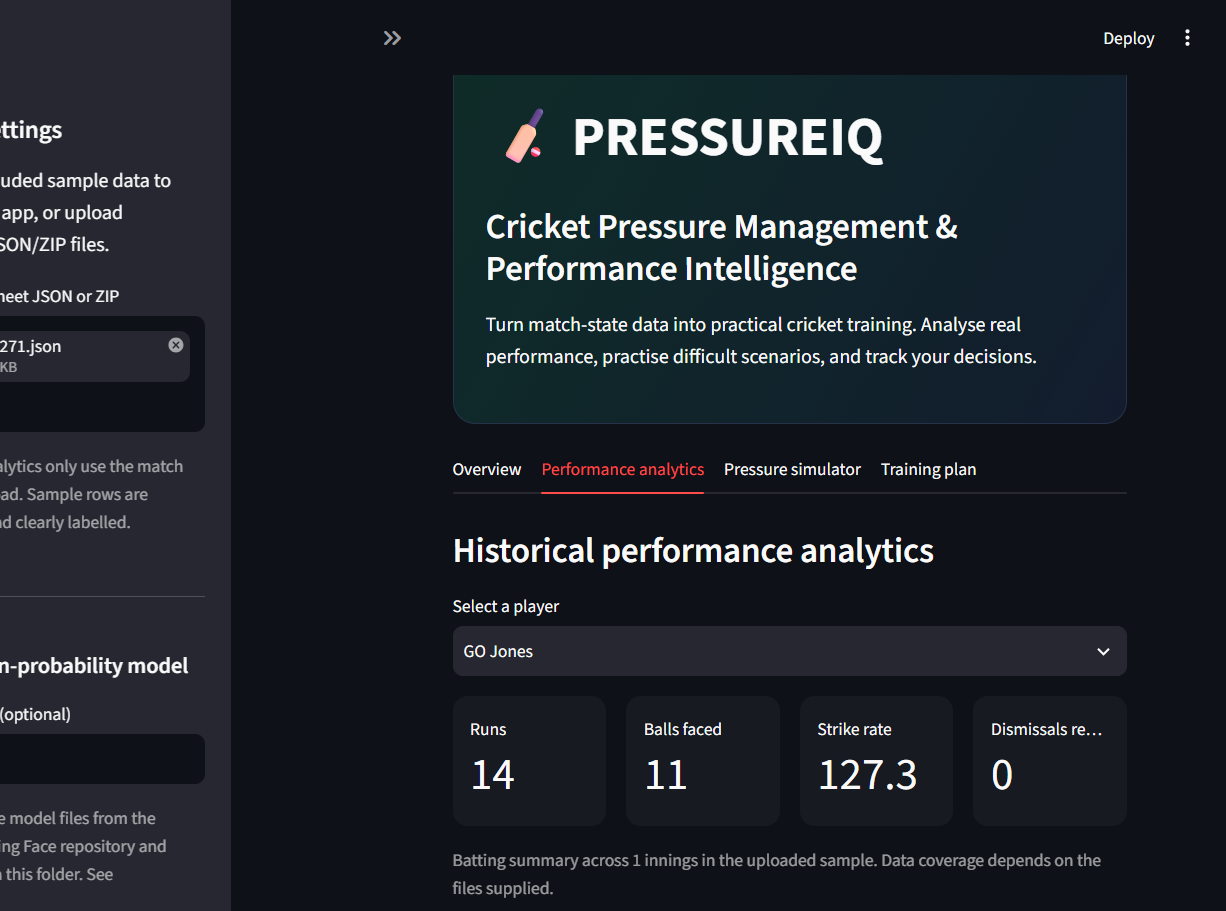
- Performance Analytics: Analyze batting performance, strike rate, wickets, and match phases using available cricket match data.
- Pressure Simulator: Simulate challenging scenarios such as final-over defenses and target chases, allowing players to explore different delivery outcomes and match situations.
- Win Probability Estimation: Use a compatible pretrained cricket win-probability model to estimate the likelihood of winning from a given match state, when the model is configured.
- Personalized Training Recommendations: Generate practical, rule-based suggestions based on observed performance patterns and simulated outcomes.
- Practice History: Record simulation attempts and review results to support structured practice.
PRESSUREIQ distinguishes historical match statistics from simulated outcomes and model-based predictions. It is designed to support cricket learning and decision-making, not to directly measure a player's emotions or mental state.
How we built it
We designed PRESSUREIQ as a lightweight, Python-based application focused on accessible cricket analytics and interactive practice.
Our technology stack includes:
- Python for application logic and analytics.
- Pandas and NumPy for data processing and numerical calculations.
- Streamlit for the interactive dashboard and user interface.
- Plotly for visualizing performance trends and match statistics.
- Cricsheet data as the intended source of historical ball-by-ball cricket data.
- A pretrained win-probability model as an optional component for match-state predictions.
- Rule-based logic for generating training recommendations and supporting pressure simulations.
The application is organized into separate modules for data loading, analytics, simulation, recommendations, and win probability estimation. This modular approach makes it easier to test individual components and extend the platform in the future.
Challenges we ran into
One of our biggest challenges was bringing different cricket analytics components together into a simple, understandable workflow.
We had to consider how to process ball-by-ball data, calculate useful performance statistics, represent match situations accurately, and keep simulated outcomes separate from historical results.
Integrating a pretrained win-probability model also introduced practical challenges, including locating the required model files, managing file paths, and configuring the model correctly in the local Python environment.
Another challenge was avoiding misleading conclusions. Match statistics and win probabilities can provide useful context, but they cannot independently explain a player's psychological state or guarantee future performance.
Accomplishments that we're proud of
We are proud to have developed a focused concept that connects cricket performance analytics with practical scenario-based training.
Our key accomplishments include:
- Designing a modular application structure for cricket data processing and analytics.
- Building a pressure-simulation approach that allows users to explore different match situations.
- Separating observed statistics, simulated results, and model-based predictions.
- Creating a framework for turning performance patterns into practical training recommendations.
- Establishing a foundation that can be extended with additional datasets, models, and player-specific analytics.
PRESSUREIQ represents our effort to move beyond static scorecards and explore how sports data can support more informed and structured practice.
What we learned
Through this project, we learned that useful sports analytics involves more than calculating statistics or adding a machine-learning model. The data must be interpreted in context, the assumptions must be clear, and the results must be understandable to the people using them.
We also learned the importance of validating data-processing logic, managing external model dependencies, and distinguishing between historical evidence, simulated scenarios, and predictions.
Most importantly, we learned that analytics is most valuable when it helps users ask better questions, explore alternatives, and identify specific areas for improvement.
What's next for PRESSUREIQ: Cricket Analytics
We plan to develop PRESSUREIQ into a more comprehensive cricket performance and training platform.
Our next steps include:
- Expanding historical ball-by-ball data coverage across formats and competitions.
- Improving the pressure simulator with more realistic match rules and configurable scenarios.
- Integrating and validating pretrained win-probability models for supported match formats.
- Adding player profiles and longitudinal performance tracking.
- Improving recommendations using historical performance patterns and practice results.
- Exploring player-specific scenario generation and more detailed batting and bowling analysis.
- Refining the dashboard to make insights easier for players, coaches, and analysts to understand.
Our long-term vision is to make cricket analytics more interactive and actionable, helping players prepare for crucial moments through data-informed practice and better match awareness.

Log in or sign up for Devpost to join the conversation.