Inspiration
I built PRESSURE around a simple observation: a message does not have to be an obvious scam to influence someone's decision. Some messages create urgency, secrecy, fear, guilt, or financial pressure that can make people act before they have time to think. Existing tools often focus on deciding whether something is a scam. I wanted to approach the problem differently by helping people understand how a message is applying pressure. That led me to PRESSURE, an AI tool designed to help people pause and evaluate digital messages before acting on them.
What it does
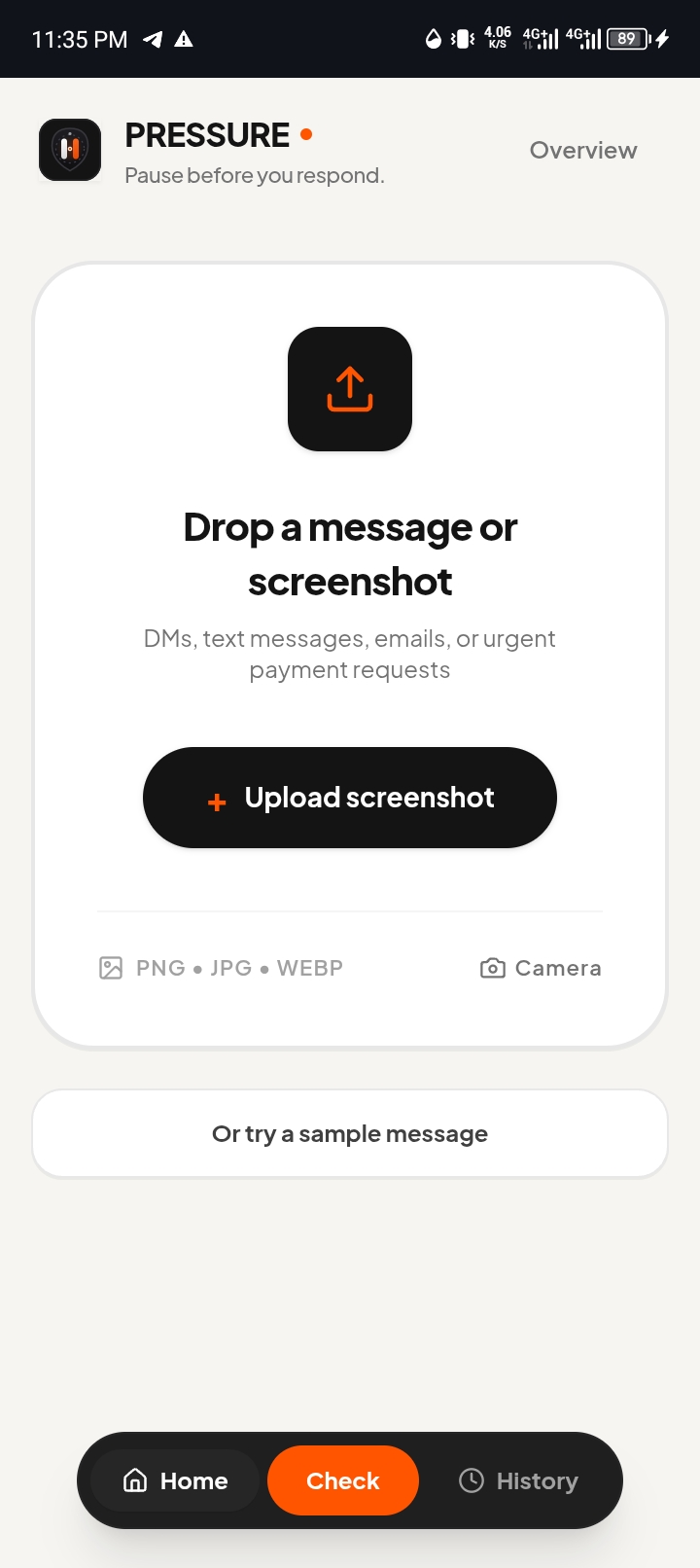
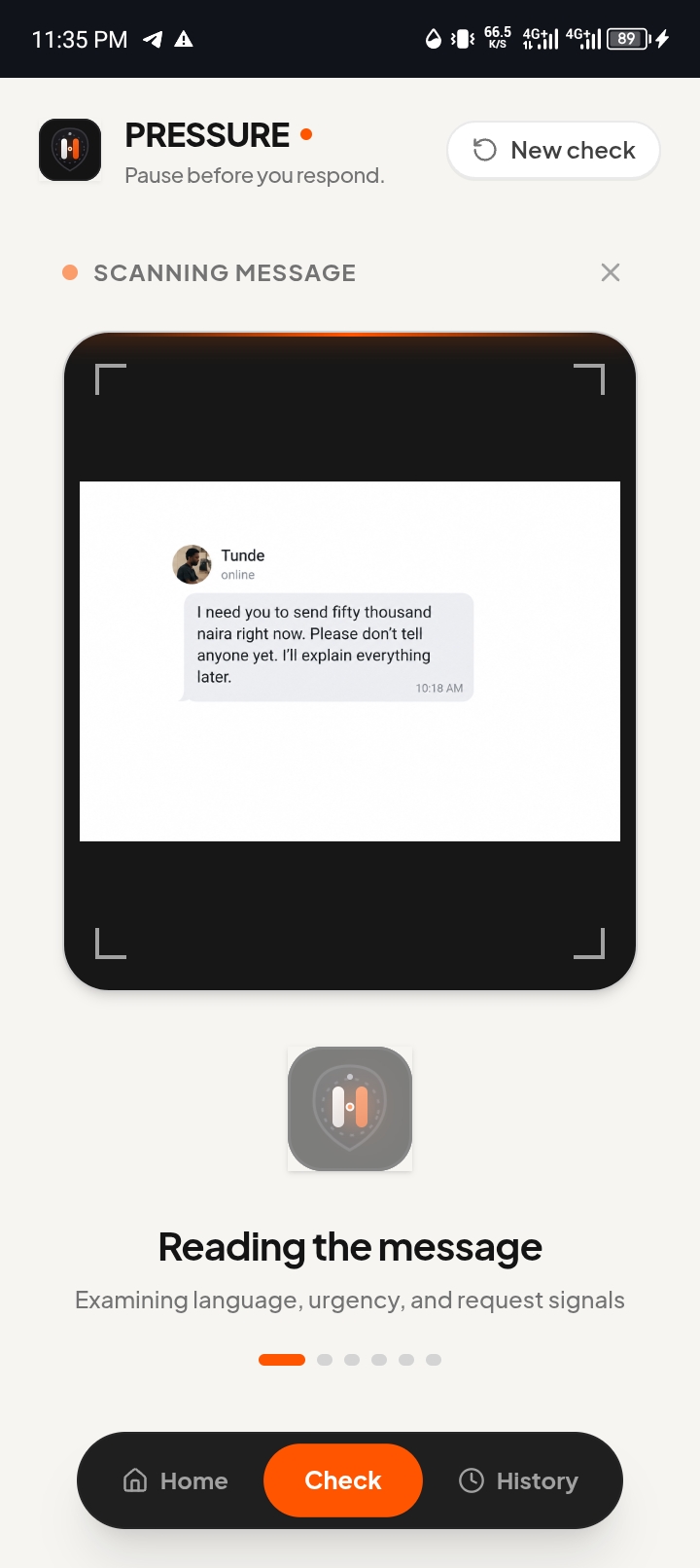
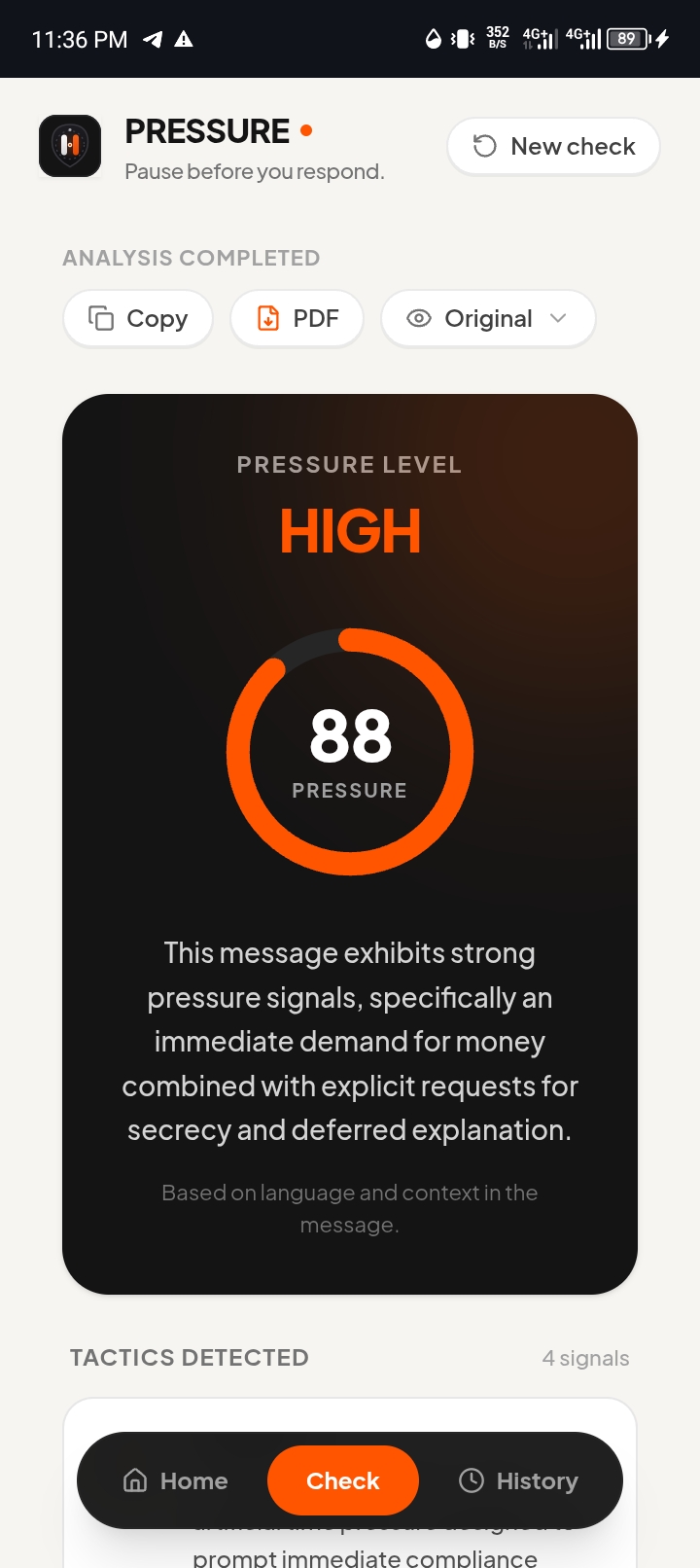
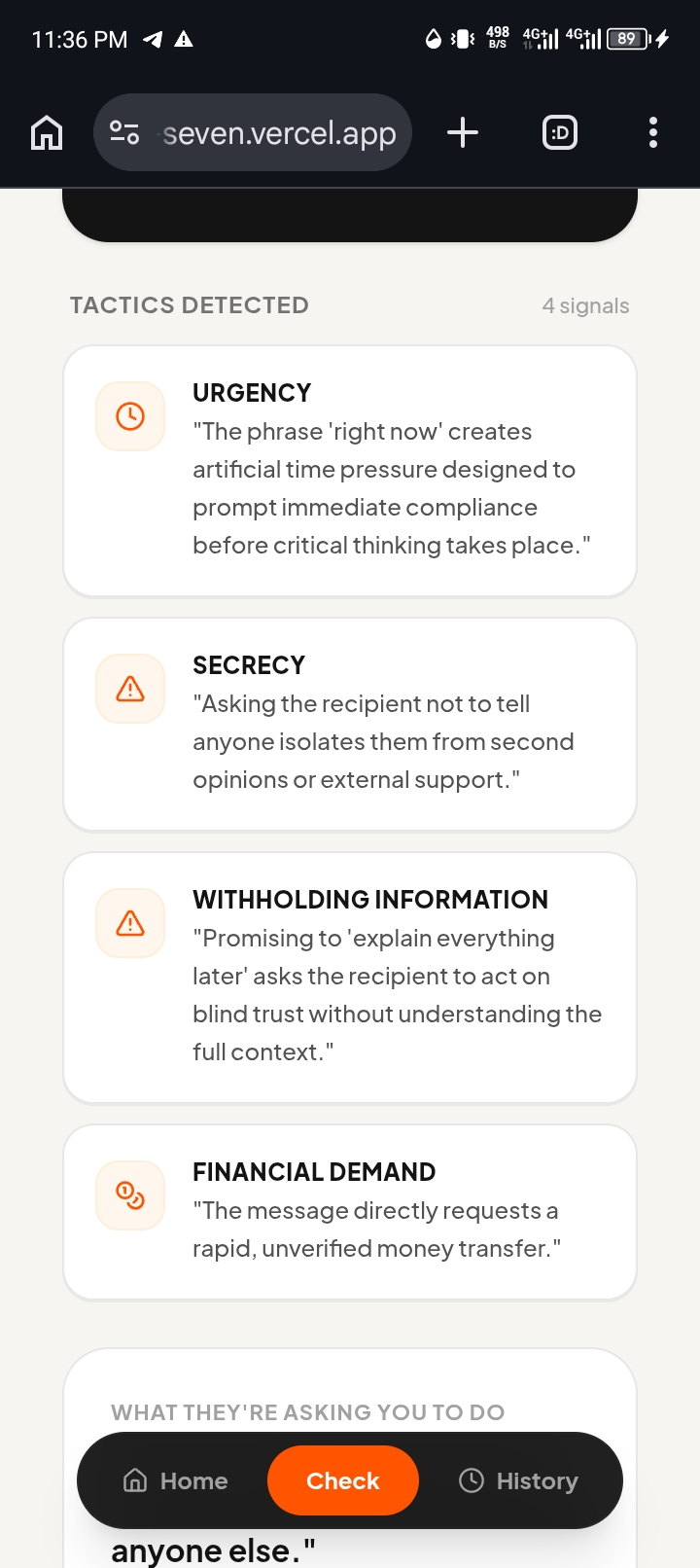
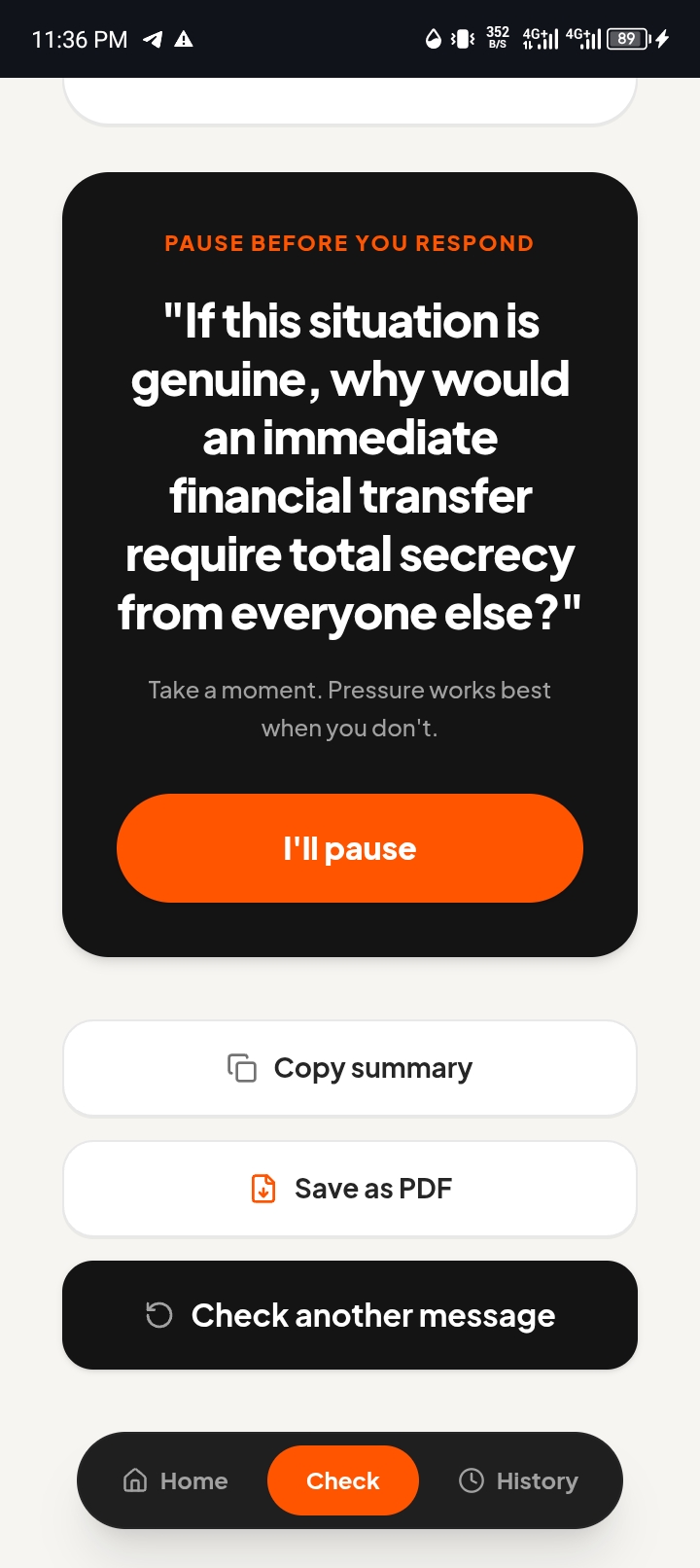
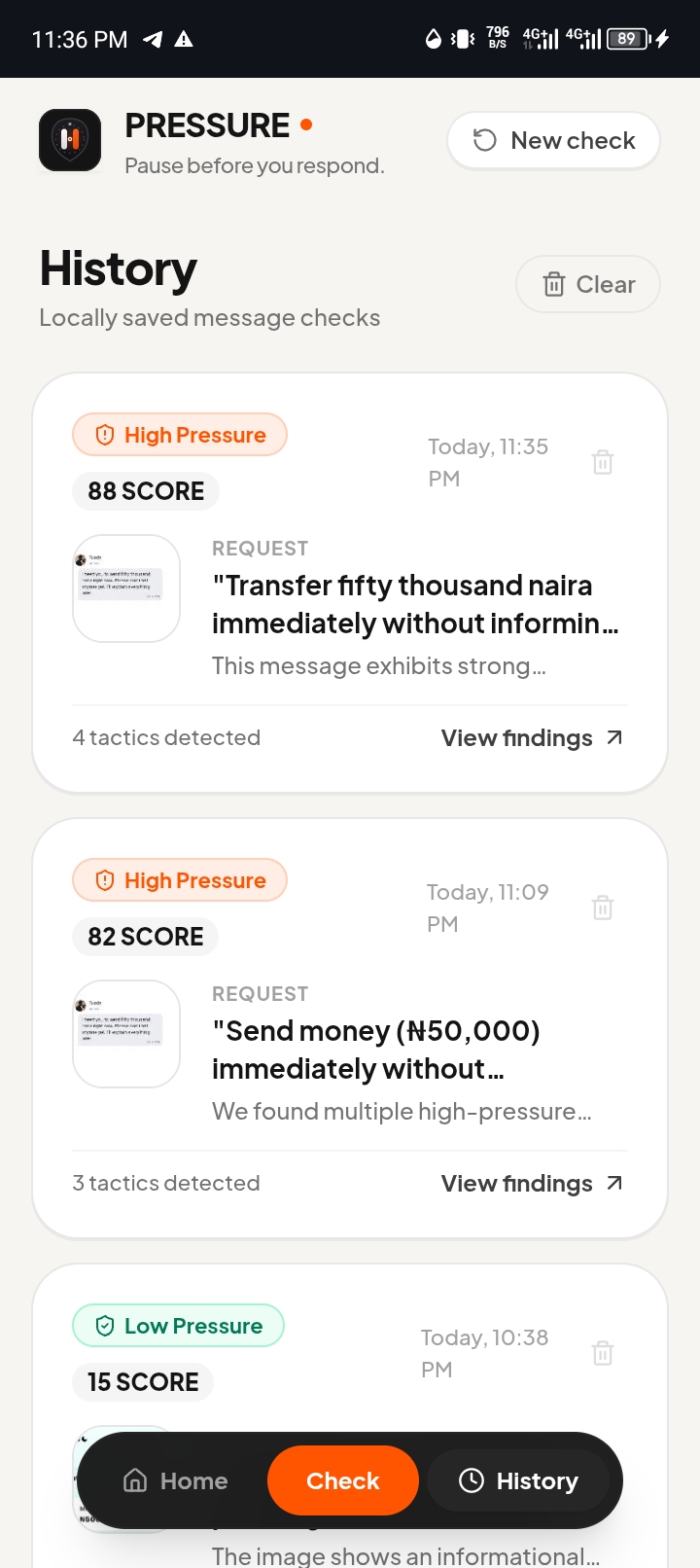
PRESSURE analyzes screenshots of digital messages and identifies pressure and manipulation signals in the visible language and context. I designed the analysis to identify signals such as urgency, secrecy, financial pressure, emotional pressure, authority pressure, and other patterns that may deserve closer attention. The result includes a pressure level, the specific tactics detected, an explanation of why those signals matter, the request being made, and a recommended next step. PRESSURE also provides a Pause Question, giving the user a simple question to consider before responding. It does not claim to know someone's intentions or label someone as malicious. It focuses on observable signals and encourages independent verification. I also added saved analyses, history, and PDF export so users can keep and review their results.
How we built it
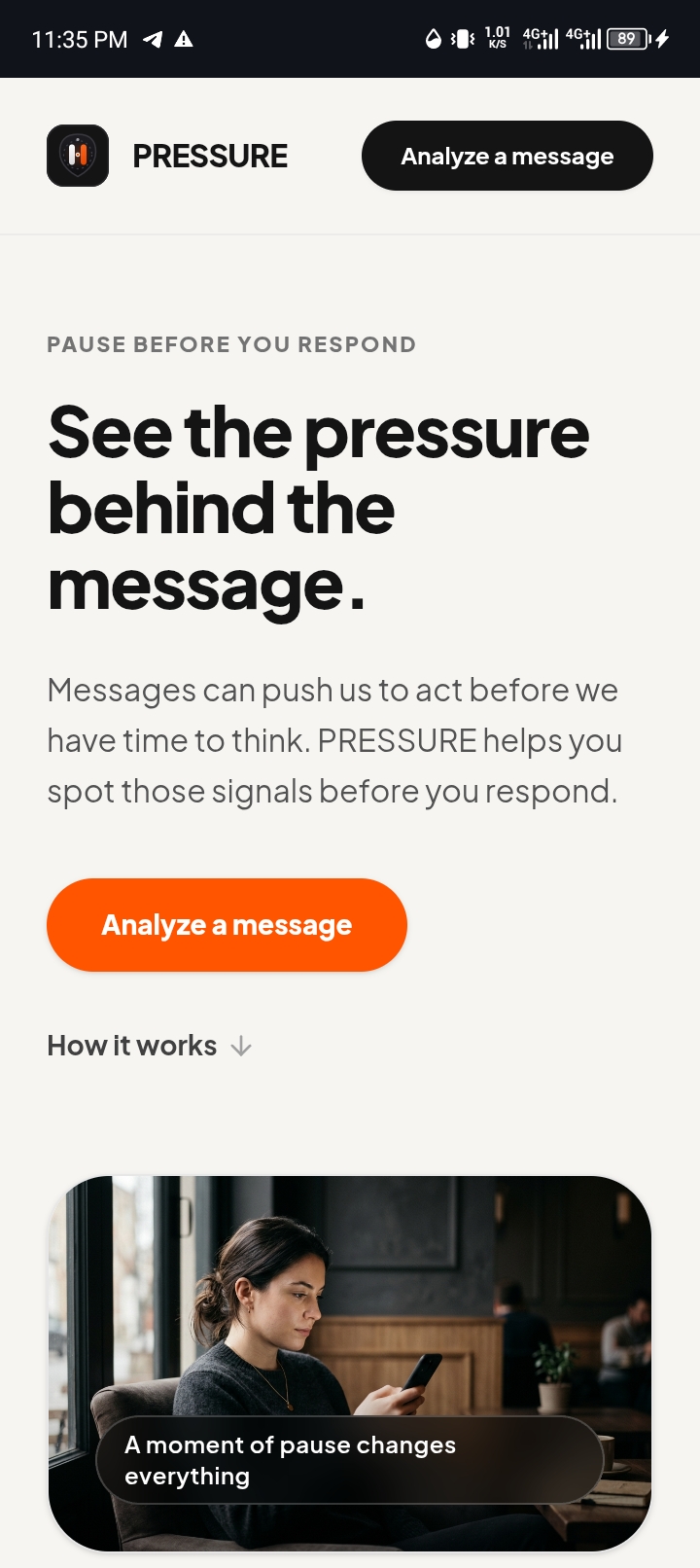
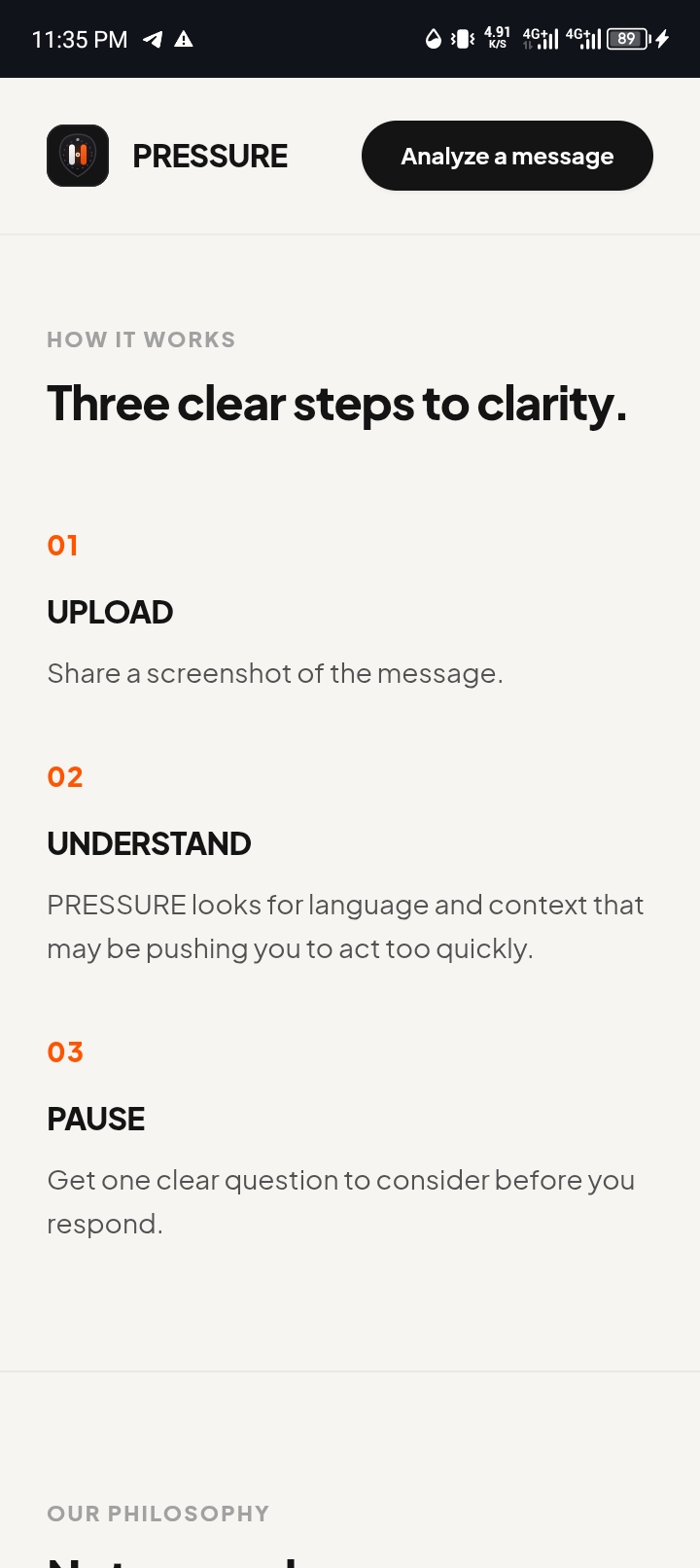
I built PRESSURE as a web application using Google AI Studio and Gemini's multimodal capabilities. The core workflow allows a user to provide a screenshot, send it for analysis, and receive a structured response containing the pressure level, detected tactics, explanation, recommended action, and Pause Question. I designed the AI behavior to distinguish between ordinary urgency and combinations of signals that may indicate manipulation. I also structured the output so the application can present the analysis consistently rather than displaying an unstructured AI response. I built the interface around a simple flow: upload, analyze, understand, and pause. I also added a landing page, consent flow, privacy policy, terms and conditions, analysis history, and PDF export to make the application usable beyond a single demonstration.
Challenges we ran into
The biggest technical challenge was making the AI analysis useful without turning PRESSURE into a system that simply labels messages as dangerous. A message can contain urgency without being manipulative, so I had to design the analysis around combinations of observable signals and their context. I also had to make the AI distinguish between what a message explicitly says and what I might infer about the sender's intentions. Another challenge was presenting AI analysis in a way that is understandable at a glance. I focused on structured results, clear explanations, and a specific recommended action rather than overwhelming the user with an AI-generated paragraph.
Accomplishments that we're proud of
I am proud that I turned the original idea into a functional application with a complete user flow. The most important part for me is the distinction between detecting pressure and judging intent. PRESSURE does not tell a user that someone is definitely a scammer or manipulator. It shows the signals that deserve attention and gives the user a reason to slow down. I am also proud of the Pause Question concept. Instead of ending the interaction with a warning, PRESSURE gives the user a practical question that can interrupt an impulsive decision. I built the experience around a real use case rather than making AI the product itself.
What we learned
I learned that building a useful AI application requires more than connecting a model to an interface. The way an AI system frames its output matters just as much as the analysis itself. I had to think carefully about uncertainty, evidence, user trust, and how to avoid presenting an inference as a fact. I also learned that a strong AI product can sometimes be more valuable when it helps a person make a better decision rather than making the decision for them. PRESSURE reinforced that idea for me: AI can provide the context, while the final decision remains with the person.
What's next for Pressure
I want to expand PRESSURE beyond individual screenshot analysis. I would like to support more communication formats, improve contextual analysis, and make the explanations more personalized without compromising clarity. I also want to explore patterns across multiple messages rather than analyzing only one message at a time. This could help identify pressure that develops gradually across a conversation. Longer term, I see PRESSURE becoming a broader decision-support layer for digital communication that helps people recognize pressure before it turns into an irreversible decision.
Built With
- css
- google-gemini
- html
- javascript
- react
- typescript
- vercel
- vite


Log in or sign up for Devpost to join the conversation.