-
-
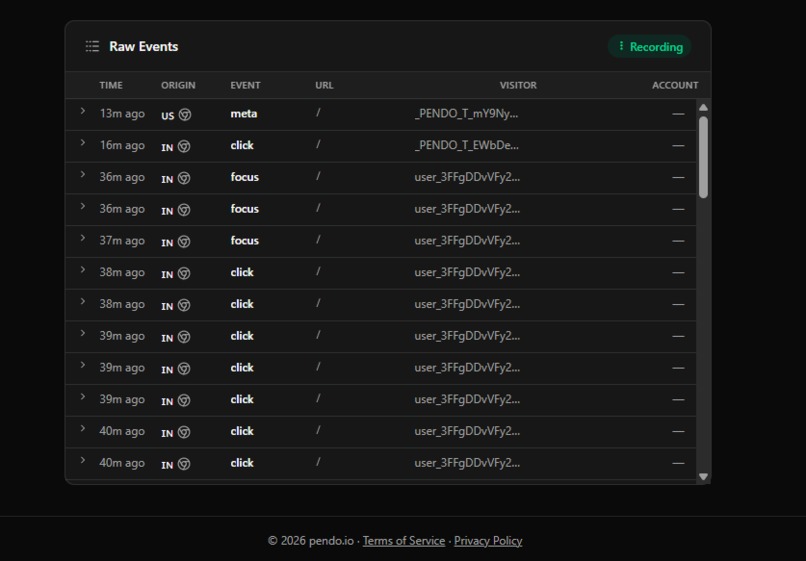
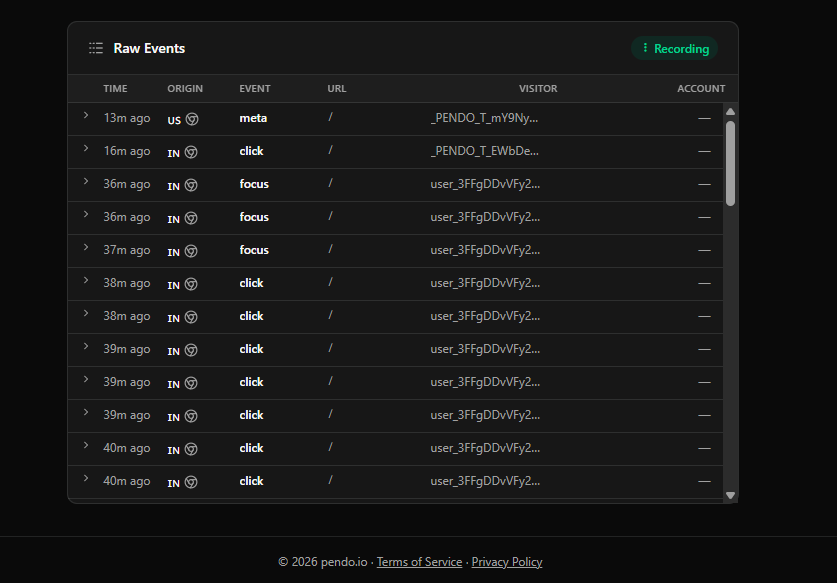
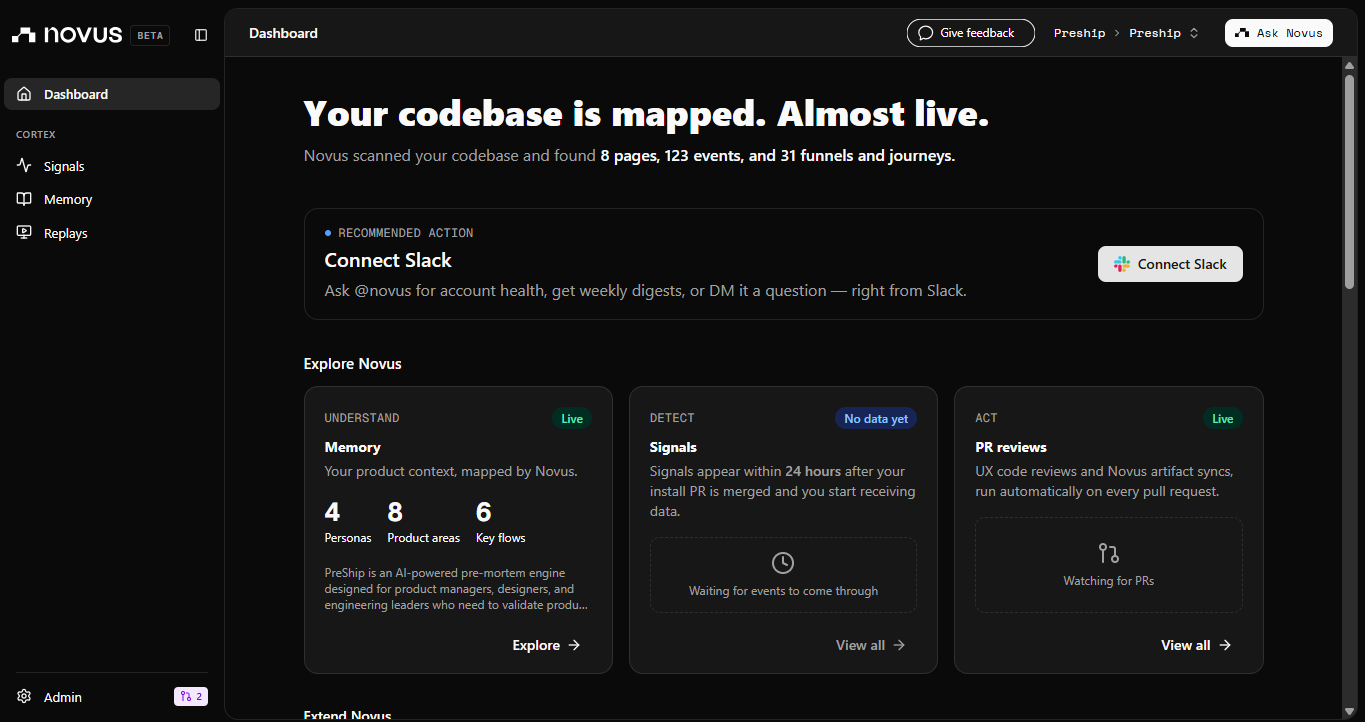
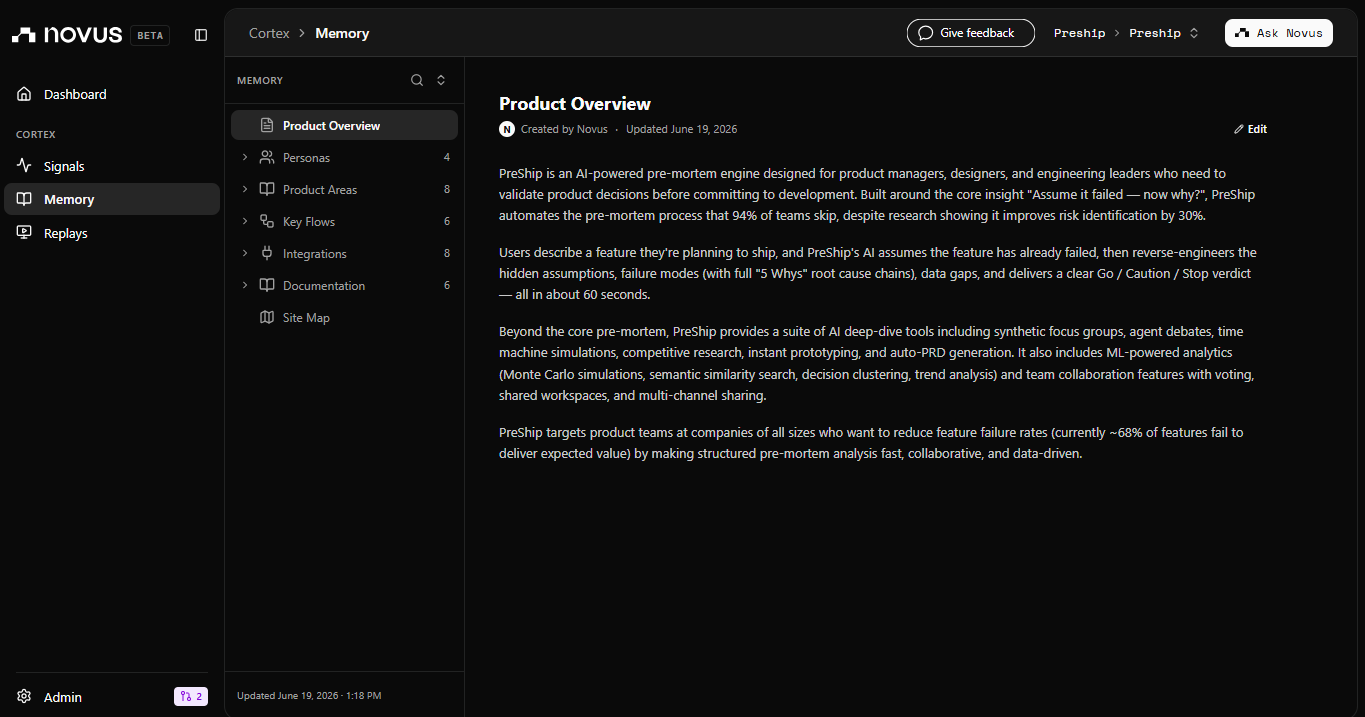
Novus.ai Dashboard
-
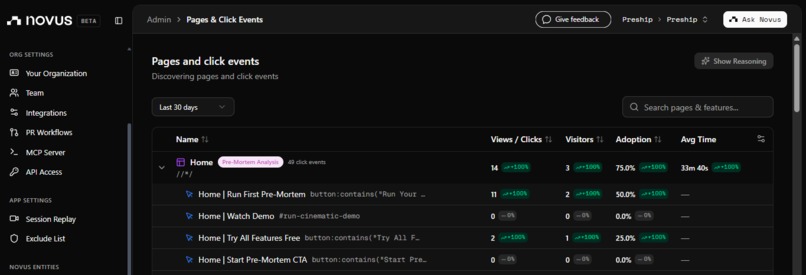
Novus.ai Dashboard
-
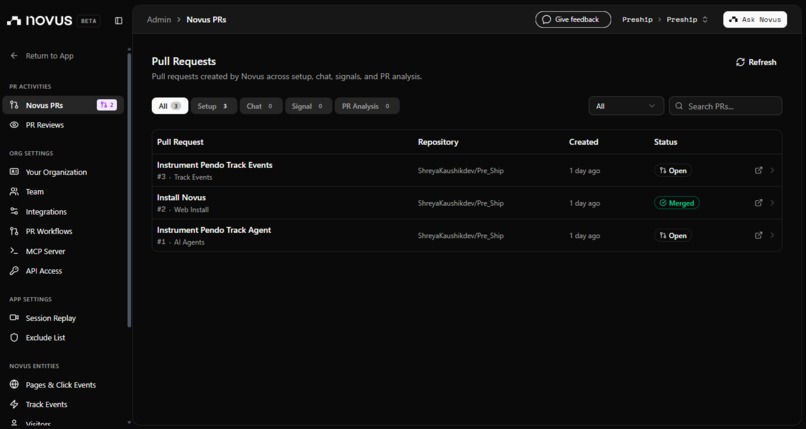
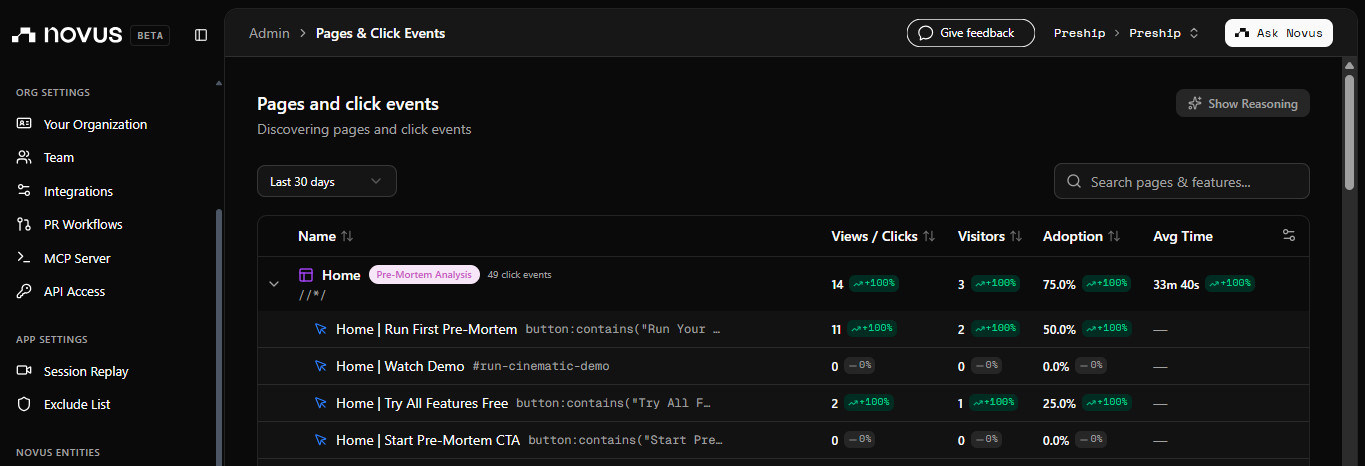
Novus.ai Dashboard
-
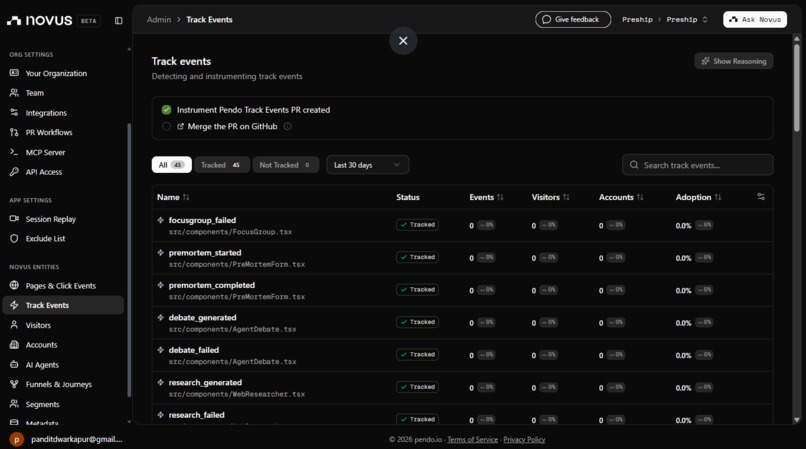
Novus.ai Dashboard
-
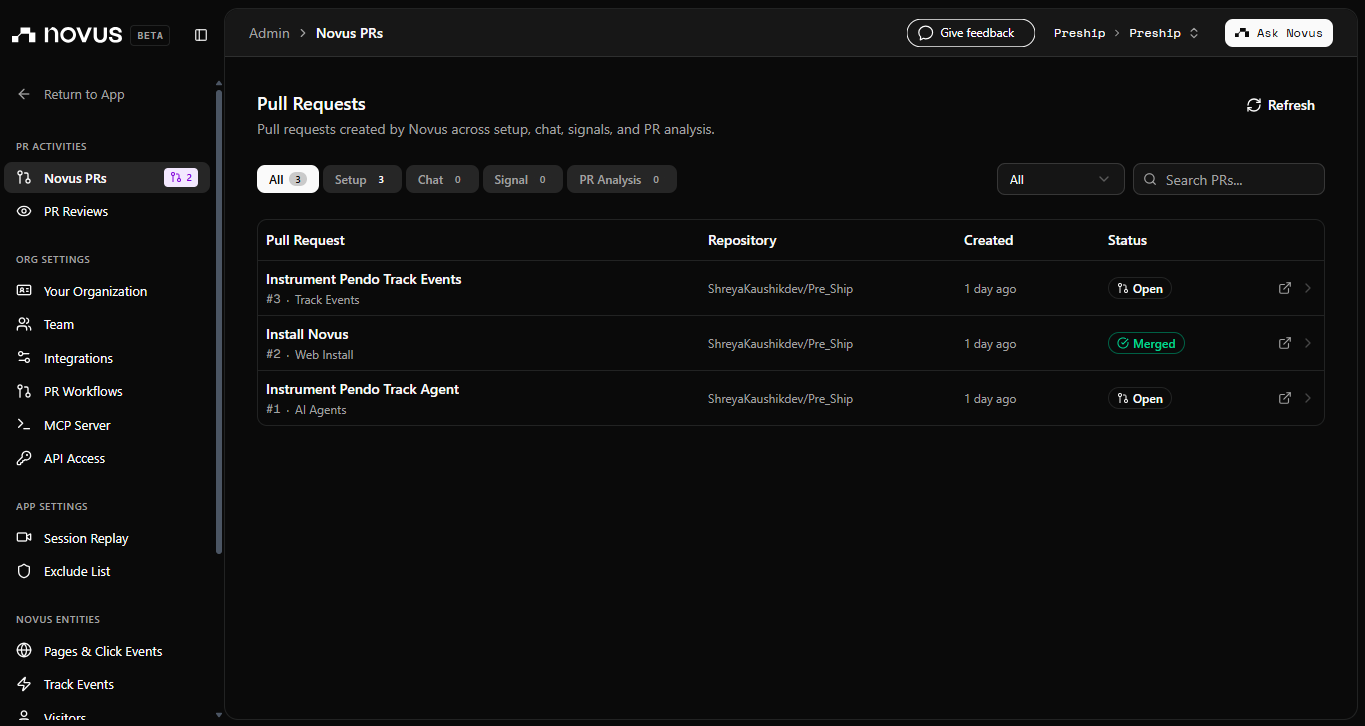
Novus.ai Dashboard
-
Novus.ai Dashboard
-
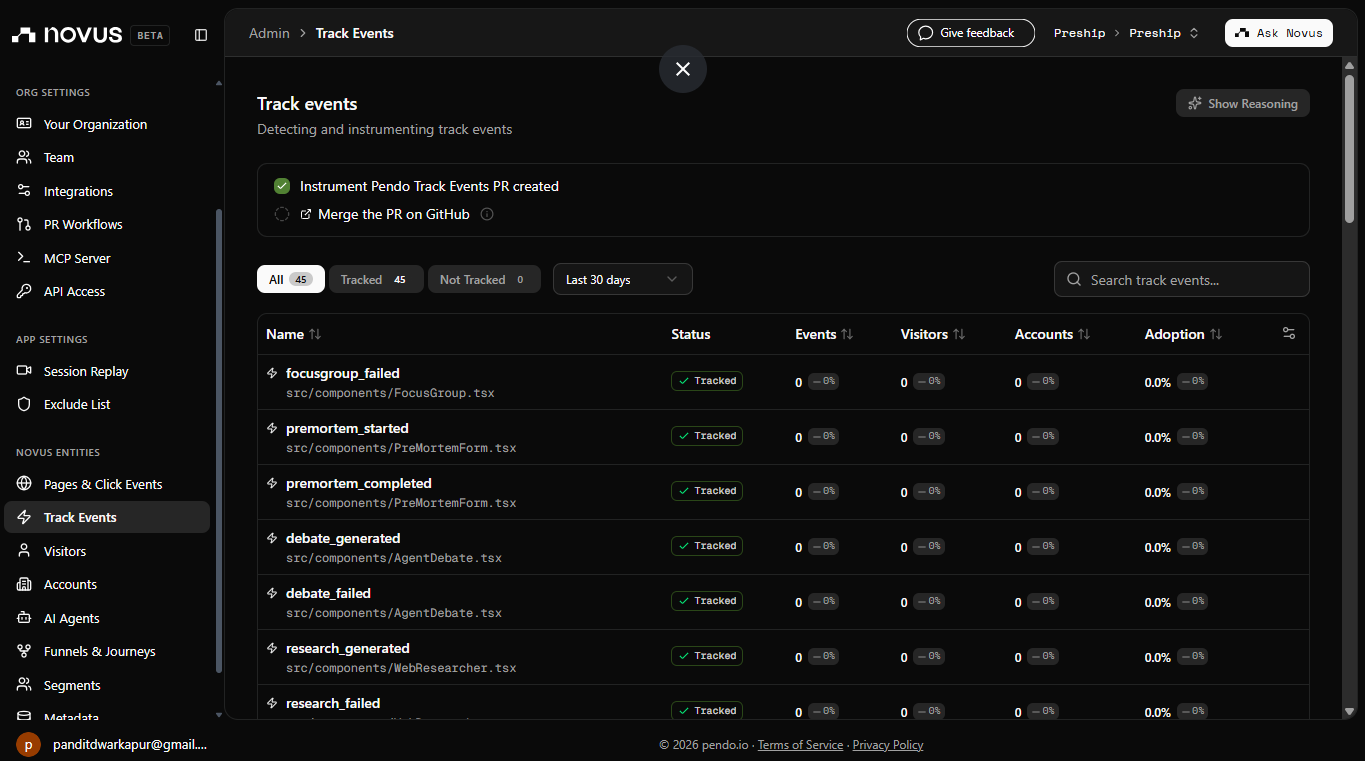
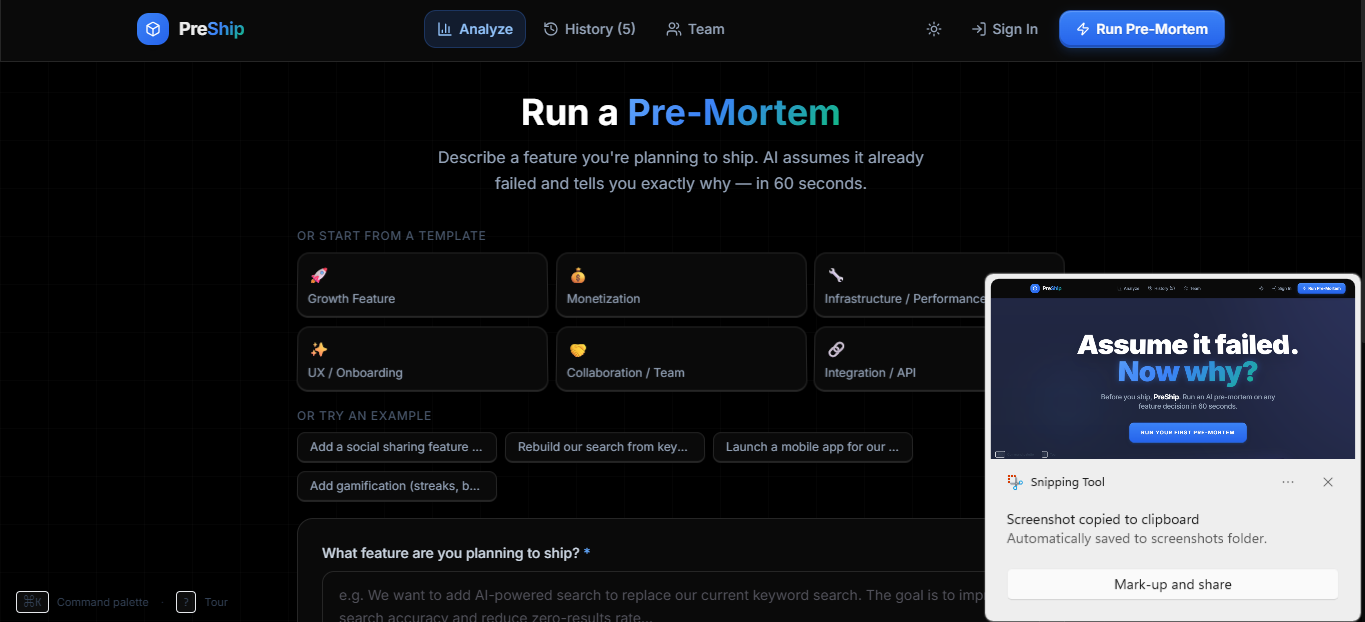
PreShip DashBoard
-
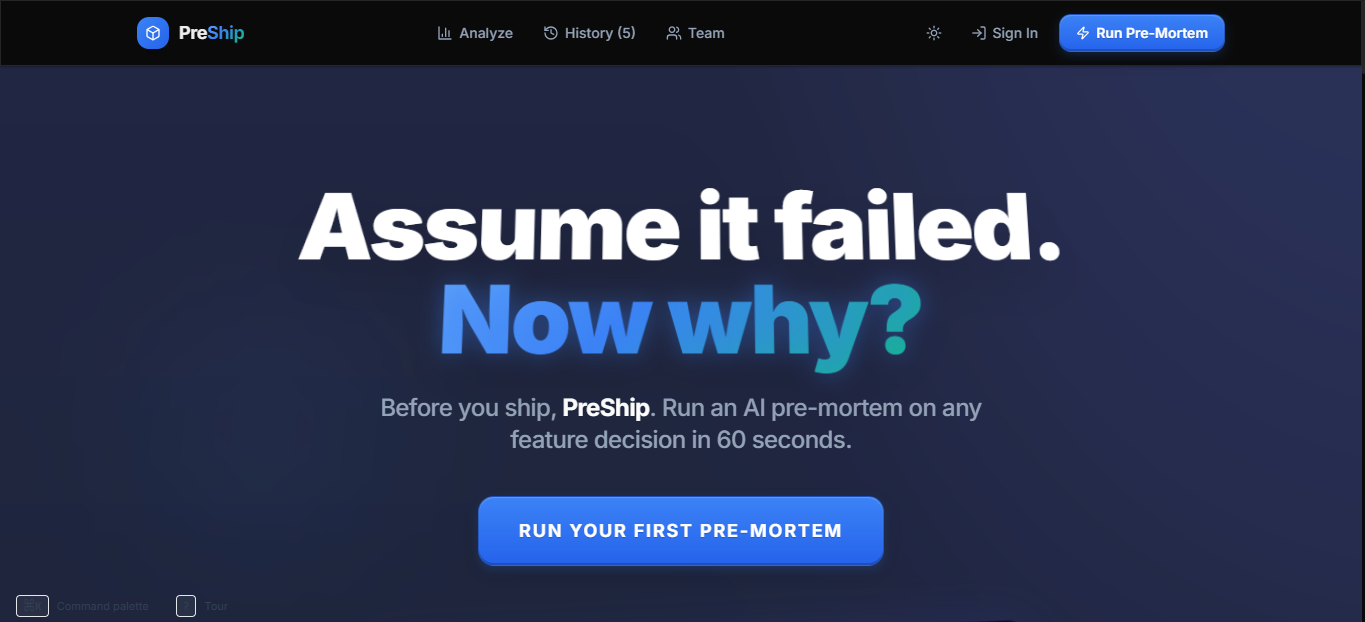
PreShip DashBoard
Inspiration
In software development, the mantra is often "fail fast." But failing fast is still expensive. Teams routinely spend 2-to-4-week sprints building a feature, only to realize post-launch that the architecture was flawed, the database couldn't handle the load, or the user didn't actually want it. We realized that while humans are great at building, we are terrible at predicting our own blindspots.
We asked ourselves: What if you could simulate the entire lifecycle of a product feature—including the team arguments, the architectural failures, and the launch timeline—before writing a single line of code? Thus, Pre-Ship was born.
What it does
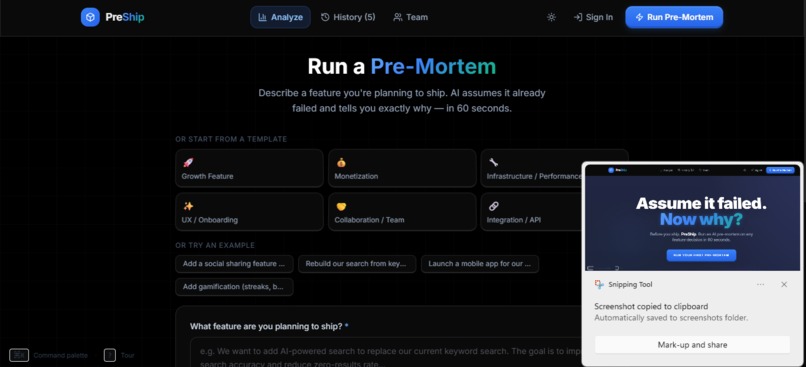
Pre-Ship is an AI-powered product simulation engine designed for product managers and engineering leads. You simply input a feature idea, your target audience, and your architectural constraints. From there, Pre-Ship:
Spawns a Virtual Team: It generates dynamic AI personas (like a cynical senior engineer and a growth-focused PM) who actively debate the trade-offs of your feature in real-time. Generates a Pre-Mortem: It analyzes your codebase and constraints to predict exactly how and why your feature will fail (e.g., "REST polling will crash the DB at 50 concurrent users"). Devil's Advocate Stress-Test: It aggressively attacks your core assumptions to find edge-cases. Risk Timeline Predictor: It forecasts the exact week of your launch phase when critical failures are most likely to hit. Auto-Generates a Project Plan: Finally, it pivots your architecture and autonomously generates a complete, JIRA-ready agile sprint plan (Epics, Stories, and Spikes) specifically designed to mitigate the discovered risks.
How we built it
We built Pre-Ship as a modern, high-performance web application:
Frontend: Next.js (App Router), React, and Tailwind CSS for a sleek, dark-mode, highly interactive UI. Backend & Auth: Next.js API Routes, Clerk for seamless authentication, and MongoDB for persistent data storage. AI Infrastructure: We utilized the OpenAI SDK powered by highly capable reasoning models (MiniMax-M3 and gpt-oss-20b) via MegaLLM and TokenRouter. High Availability: To handle the massive payload of multi-agent debates, we built a custom fetch interceptor in Node.js that intelligently load-balances requests and rotates seamlessly across 12 different API keys to bypass rate limits.
Challenges we ran into
Handling advanced AI reasoning models proved incredibly challenging. Because models like MiniMax-M3 output their internal "thinking" process inside tags before generating JSON, our API routes initially crashed when trying to parse the responses.
Furthermore, when generating massive, detailed agile sprint plans, the models would exhaust their output token limits, resulting in truncated, invalid JSON arrays (Unterminated string in JSON). We solved this by engineering a custom, indestructible extractJson parser that automatically strips reasoning blocks and auto-repairs truncated JSON payloads on the fly to ensure the application never crashes.
Accomplishments that we're proud of
We successfully built a true multi-agent system where different AI personas don't just output static text, but actually "listen" and react to the constraints of the project. We're incredibly proud of our custom LLM routing architecture that keeps the app running lightning-fast without ever throwing a 500 error due to rate limits.
What we learned
We learned that prompting an AI to "write a feature plan" produces generic garbage. But prompting an AI to "act as a cynical engineer trying to find a reason NOT to build this" produces incredibly deep, actionable architectural insights. By structuring the AI into adversarial roles, the output quality skyrocketed.
What's next for PreShip
We want to bring the product team literally together. Our next major feature is implementing real-time collaborative cursors (via Liveblocks or WebSockets) so that an entire team of PMs, designers, and engineers can sit in the same Pre-Ship dashboard and watch the AI simulation unfold together in real-time.
Built With
- clerk
- minimax
- mongodb
- next.js
- openai
- react
- tailwind-css
- typescript


Log in or sign up for Devpost to join the conversation.