-
-
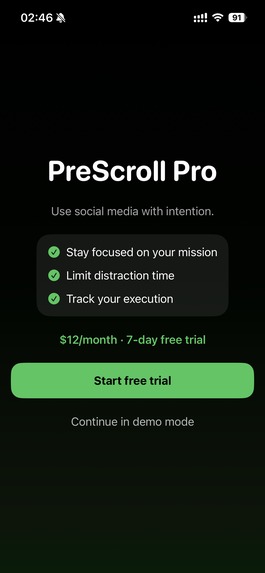
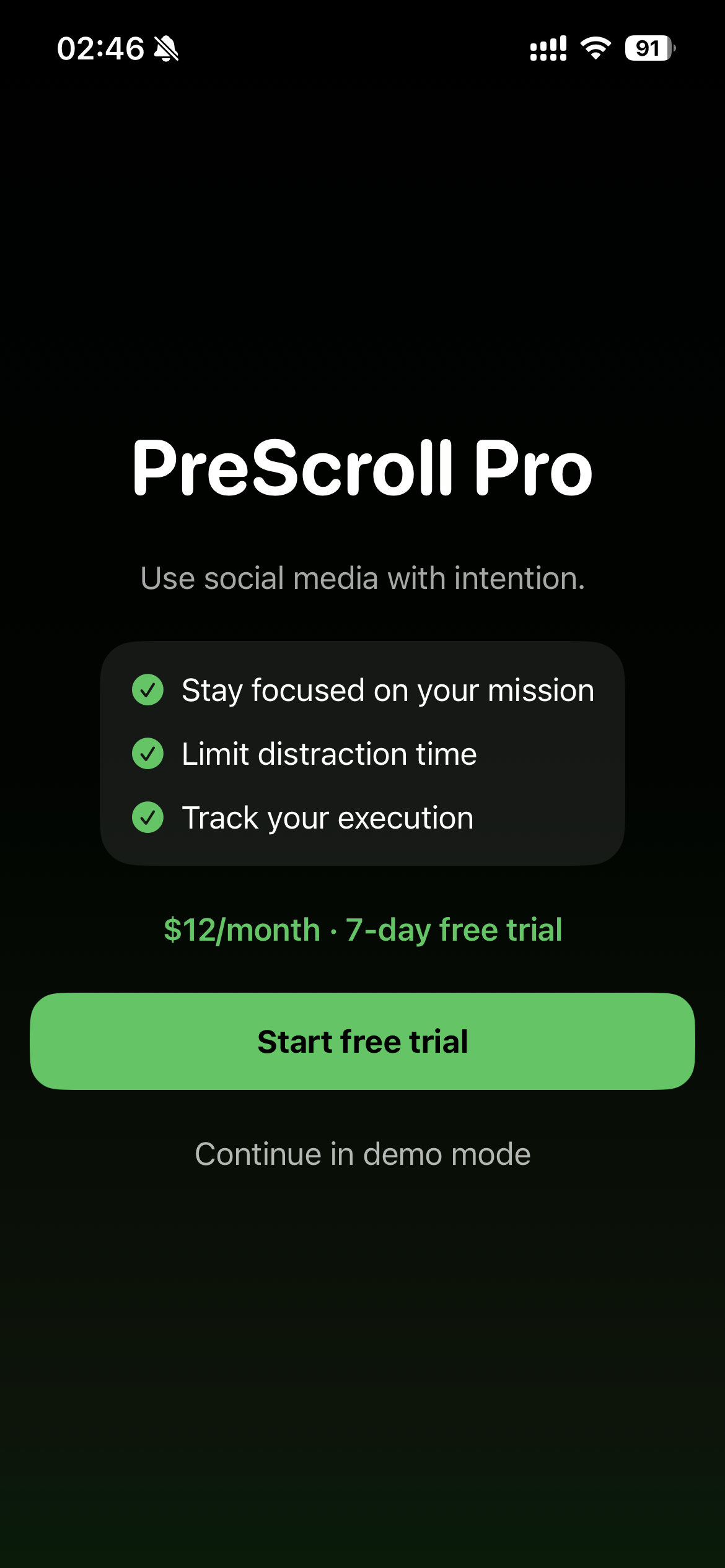
stripe integration
-
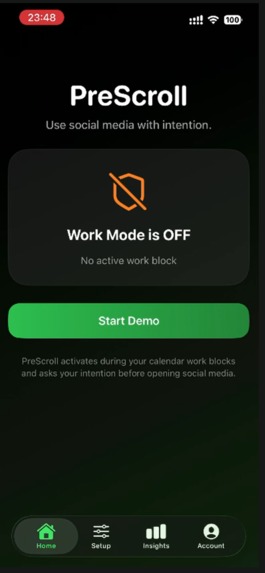
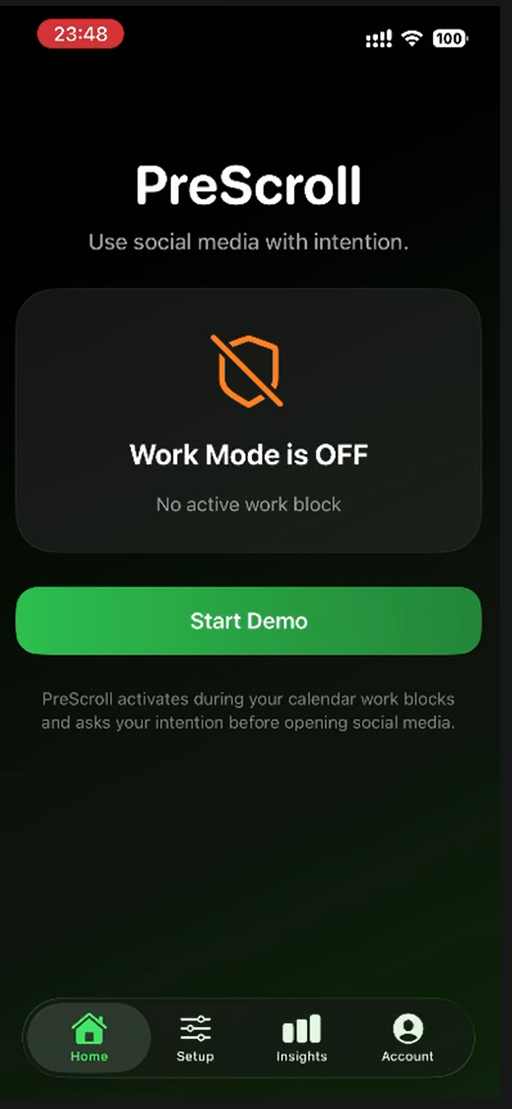
demo mode
-
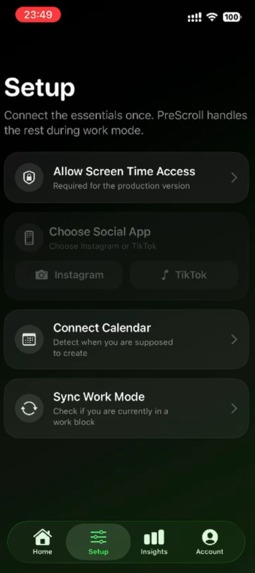
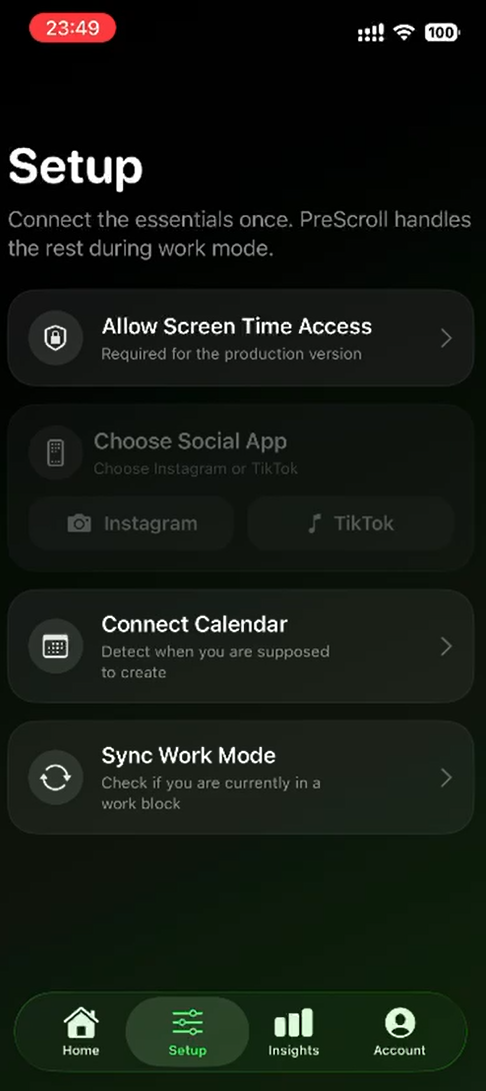
calendar synchronization + choose social media. apps blocked during work time ask for profesional time on it
-
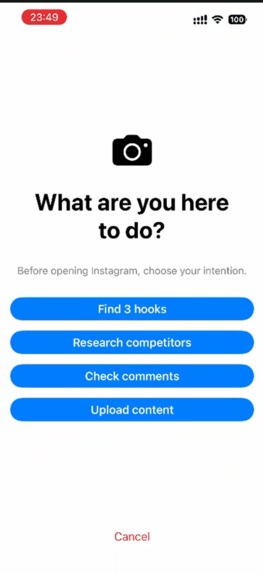
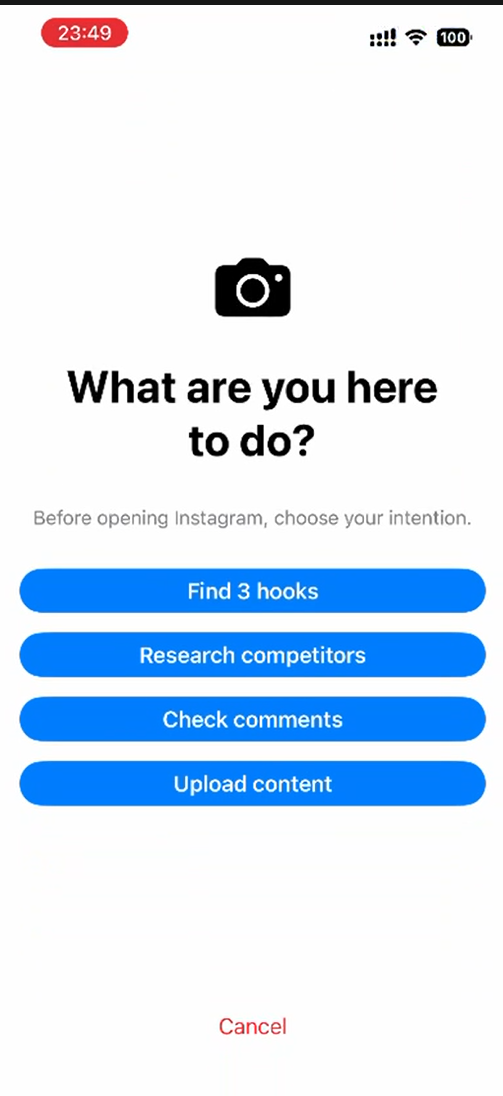
what task do you wan to achieve during this shift?
-
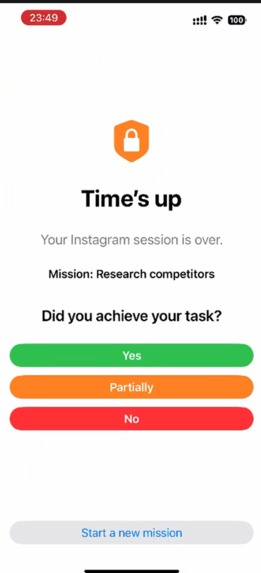
task completed "
-
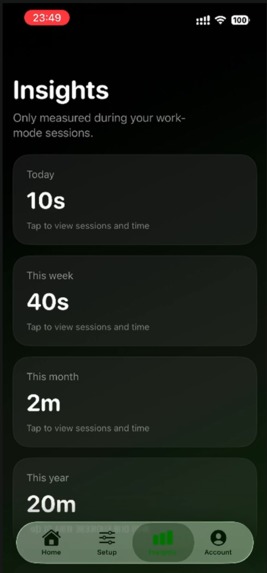
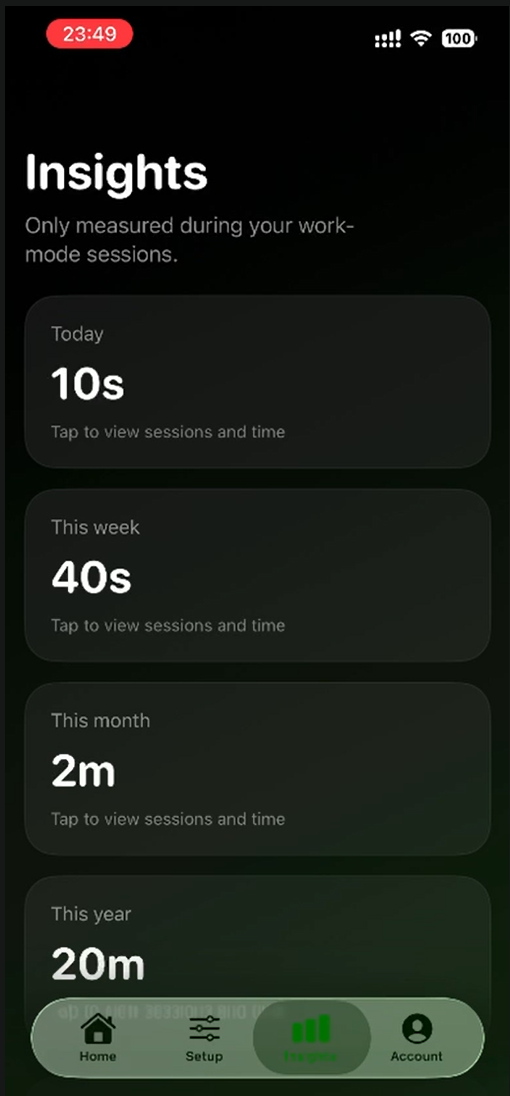
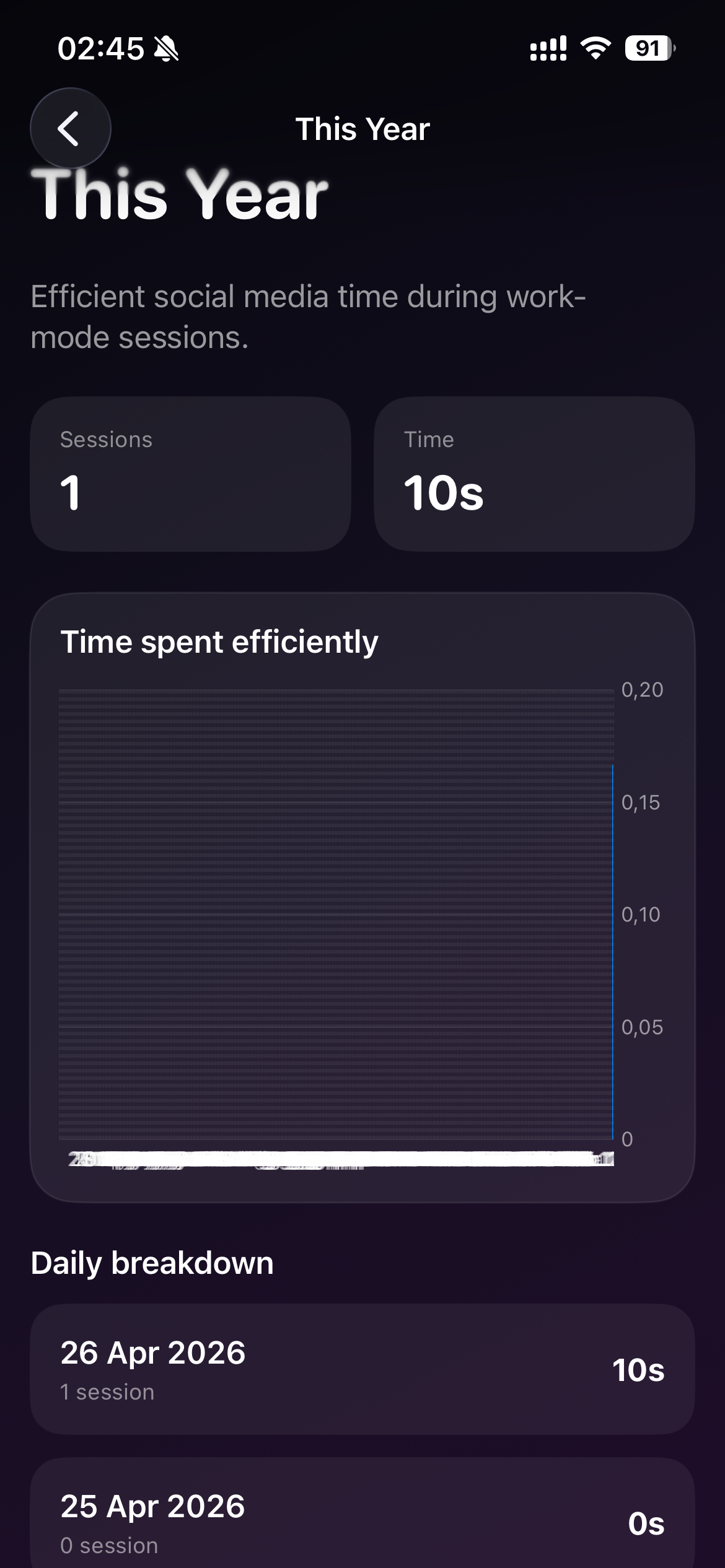
insight + analysis
-
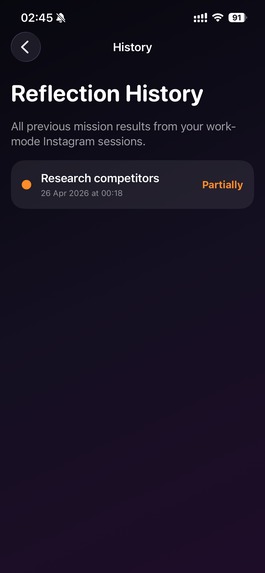
-
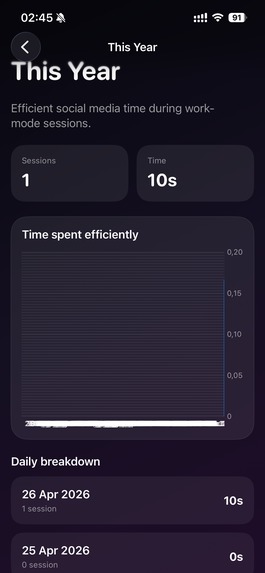
screen time analysis
Inspiration
I was happy to tell my girlfriend that I had been reducing my time on social media, and she told me she wished she could do the same. But she works in marketing and she is a content creator so she actually needs to be on Instagram and TikTok to stay on top of trends.
At first, I saw it as an excuse. But the more I thought about it, the more I realized she was right and that many creators face the same problem.
They don’t want to scroll, but their work requires them to be there.
During the hackathon, working with my teammate who studies psychology, we told him about my concerns and he answered that he knows significant research on “implementation intentions”, the idea that defining a clear action before starting a task significantly improves success.
That’s when it clicked.
There’s a gap between how people intend to use social media and how they actually use it, and that’s what led to PreScroll.
What it does
PreScroll helps creators use social media with intention instead of distraction.
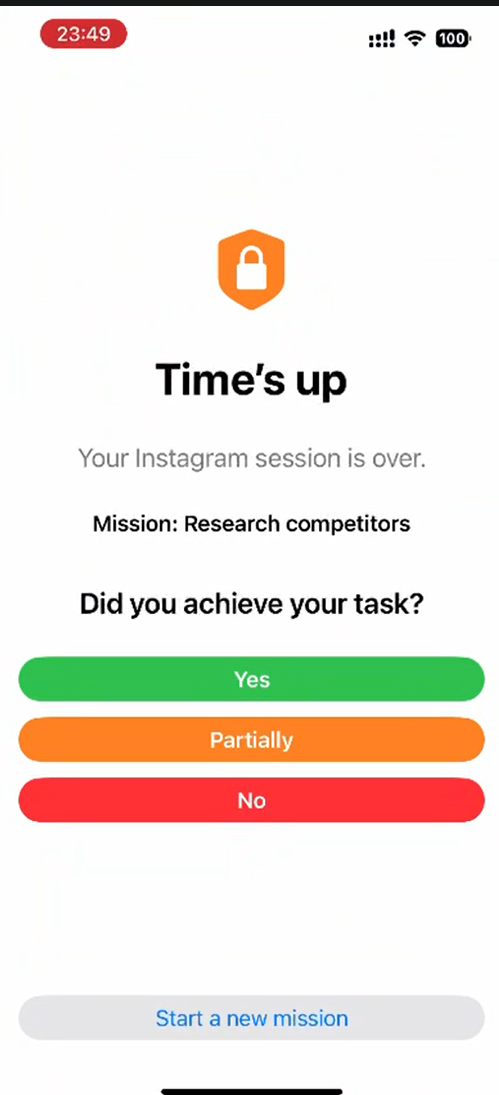
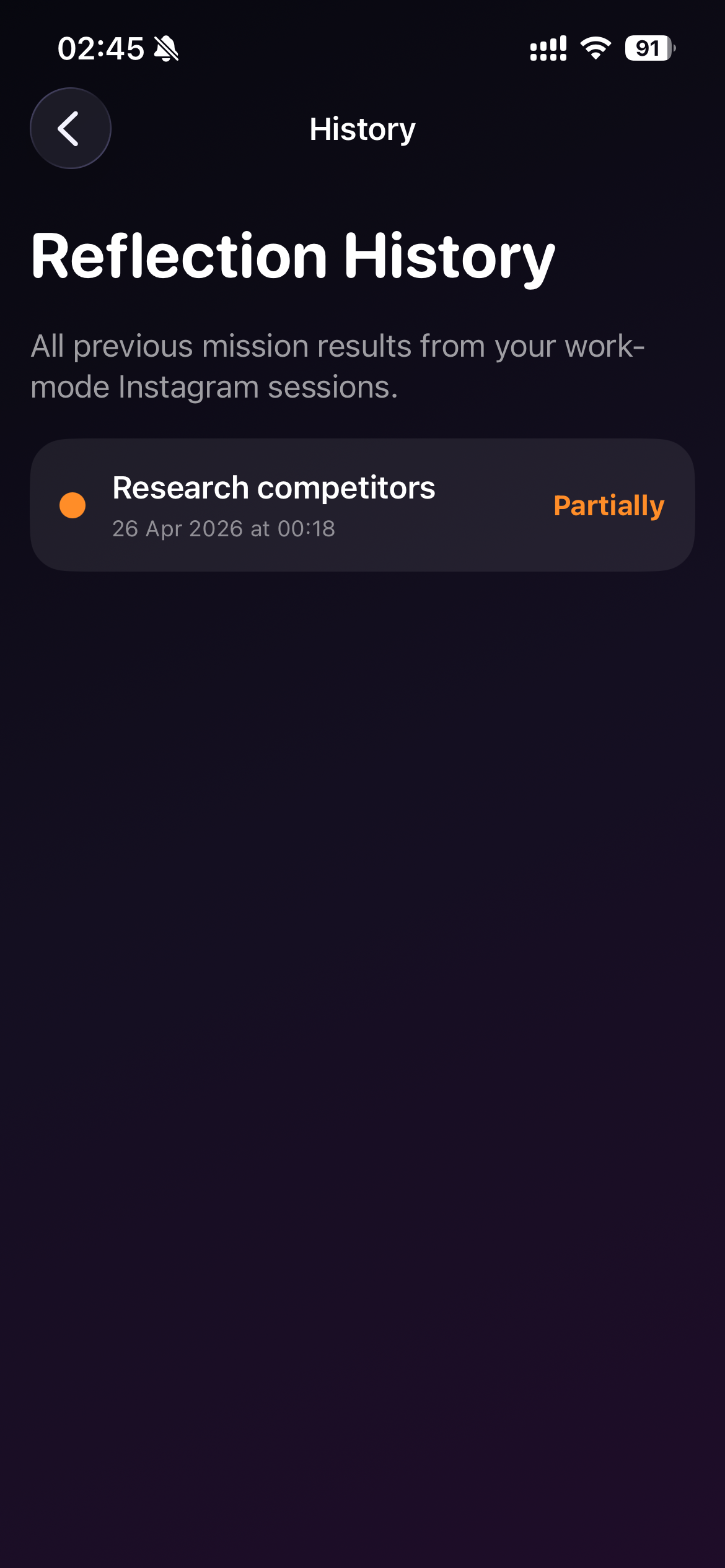
Before opening apps like Instagram or TikTok, users are prompted to choose a specific goal. Their session is time-limited, and at the end, they reflect on whether they actually achieved what they set out to do.
Instead of blocking access, PreScroll transforms social media into a structured tool for productivity.
How we built it
We built PreScroll as a mobile app using SwiftUI, focusing first on creating a smooth and realistic user experience.
We designed the full flow: signing in, selecting a social platform, simulating a phone home screen, intercepting the user before opening Instagram or TikTok, then guiding them through a mission, a timer, and a reflection step.
For the backend, we used Supabase to handle authentication and store user data like reflections and sessions. We also connected Stripe through a simple web interface to manage subscriptions.
For the hackathon, we built a demo version that simulates the behavior of intercepting apps. But in a real production version, we would use Apple’s Screen Time APIs (Family Controls and Managed Settings), which allow apps to detect usage and display a custom “shield” screen before opening selected apps.
This would let us replace the simulation with a real system-level intervention — meaning the app could actually intercept Instagram or TikTok in real time and trigger the PreScroll experience.
Overall, we focused on building something simple, functional, and close to a real product, rather than just a concept.
Challenges we ran into
Voici une version plus simple, naturelle et humaine 👇
One of our main challenges was making everything flow smoothly inside the app. Managing things like login, the paywall, and different screens popping up at the right time was more complex than we expected.
We also ran into issues when trying to open apps like Instagram or TikTok and making sure the experience felt seamless from start to finish.
Finally, a big challenge was designing something that feels natural. We didn’t want to block users or frustrate them, the goal was to guide their behavior without making the experience feel restrictive.
Accomplishments that we're proud of
We’re especially proud of what we achieved as a team.
We came into this hackathon with very different backgrounds, electrical engineering, mathematics, and psychology, not exactly a typical “hackathon team.” But that diversity ended up being our biggest strength.
In a short amount of time, we were able to combine technical skills with real behavioral insights to build something that goes beyond just an app.
We didn’t just build a product, we built a solution to a real problem that we see every day.
We truly believe PreScroll has the potential to change the way content creators use social media, and help them move from constant distraction to intentional creation.
What we learned
We learned that in when creating a business, if you try to speak to everyone, you end up speaking to no one.
We had a lot of original ideas, but struggled to narrow them down for a specific target audience. One thing from Sajid Hussain's talk early in the event stuck with us: find a person first, then solve their problem. Not the other way around.
That is when we went back through our ideas and committed to PreScroll.
What's next for PreScroll
We’re definitely not stopping here. This started as a hackathon project, but the more we worked on it, the more we realized this is a real problem and weare the solution.
The next step is that we want real users. We’re lucky to be surrounded by content creators, so we’re going to let them use PreScroll for free and just watch what happens. How they use it, when they drop off, what actually helps them, and what doesn’t.
We don’t want to guess so we want to learn from real behavior.
From there, we’ll keep improving the app based on their feedback. Making it smoother because the goal is not to force discipline but to make intentional use of social media feel easy.
On the technical side, we want to move from a demo to a real product. That means integrating Apple’s system-level tool. We’ll also focus on making the app more stable and secure as we grow.
But honestly, the most important part is this: we’re going to keep building, testing, and improving until this becomes something creators actually rely on.
Because if we get this right, PreScroll could genuinely change how people use social media. AND NOT BY BLOCKING IT. but by helping them use it with intention.
Built With
- chatgpt
- claude
- codex
- lovable
- manusai
- stripe
- supabase
- swiftui

Log in or sign up for Devpost to join the conversation.