-
-
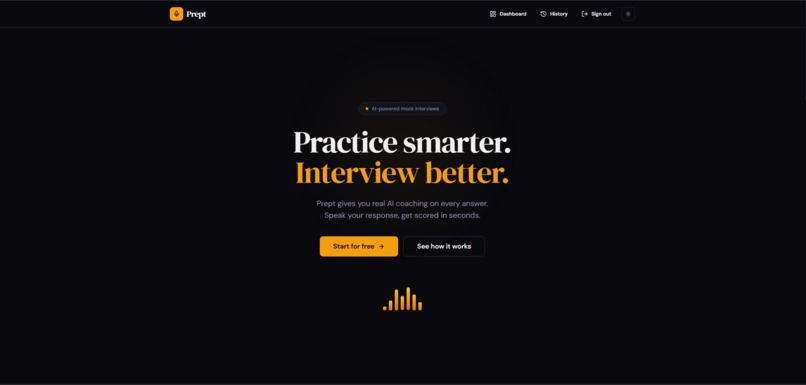
Landing
-
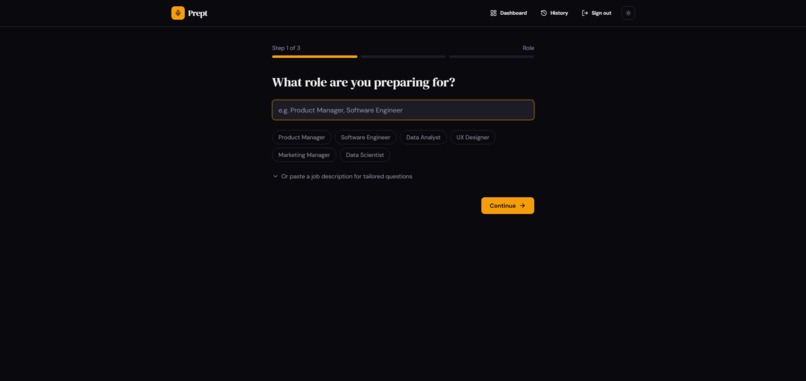
New Session
-
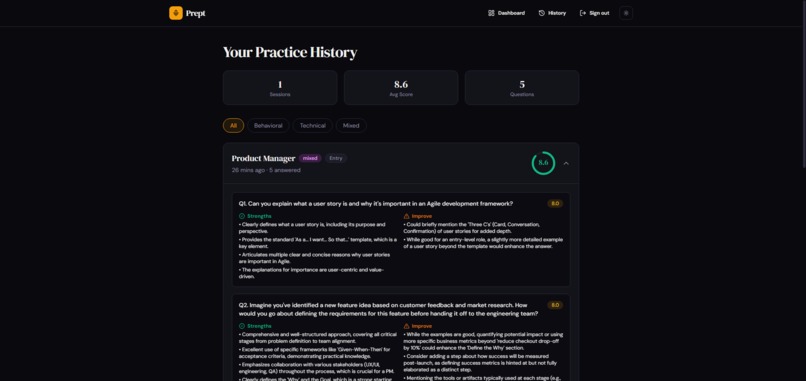
History
-
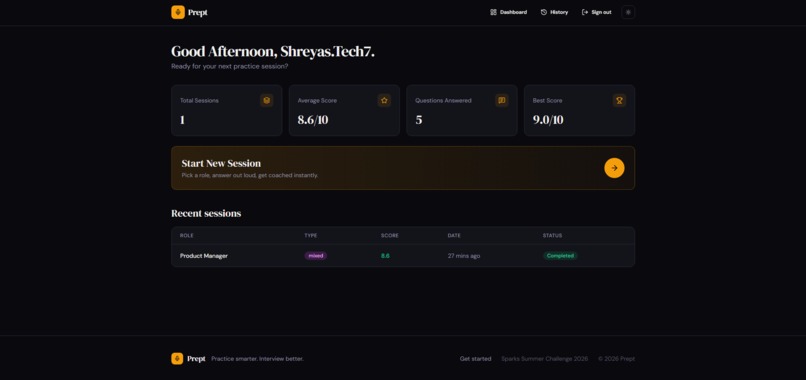
Dashboard
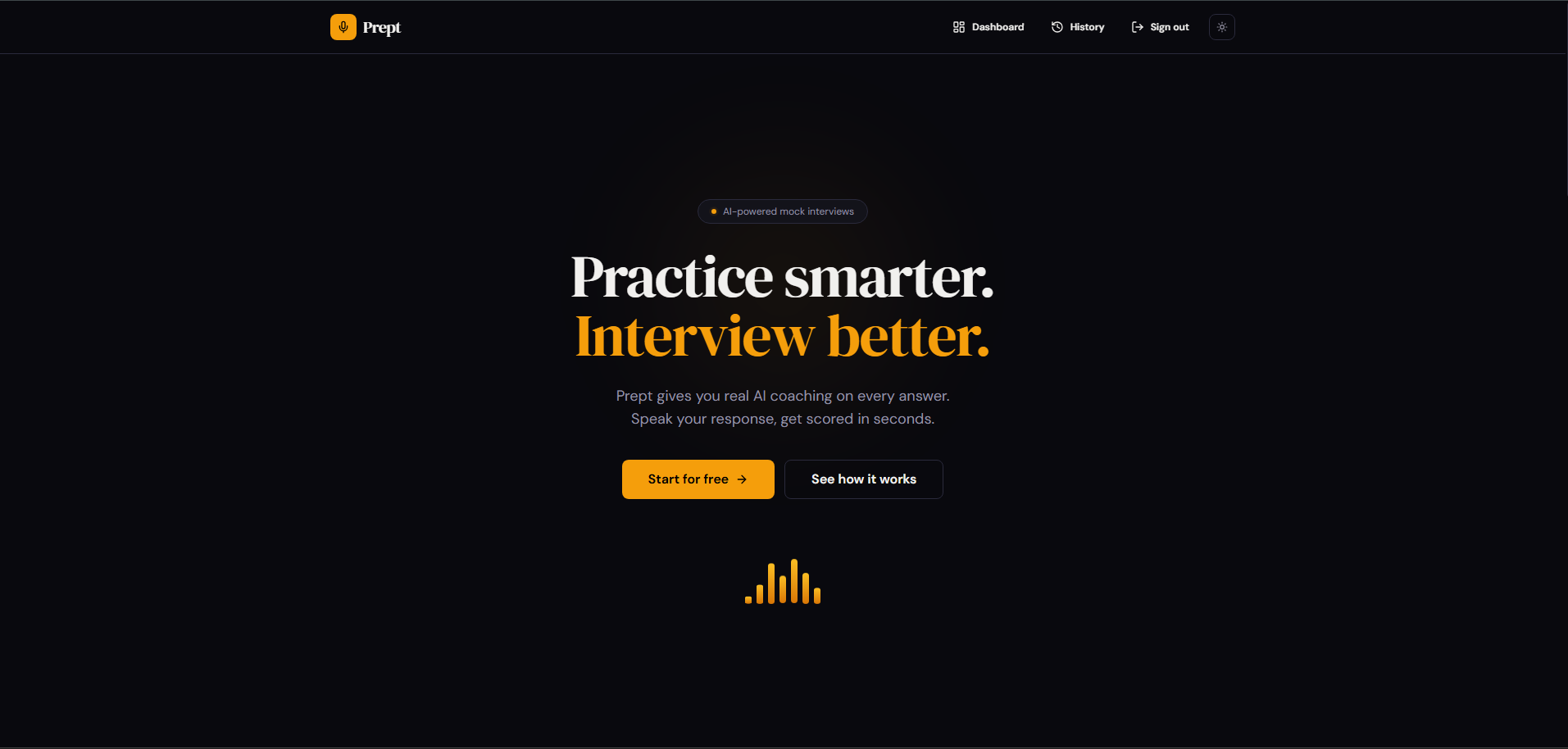
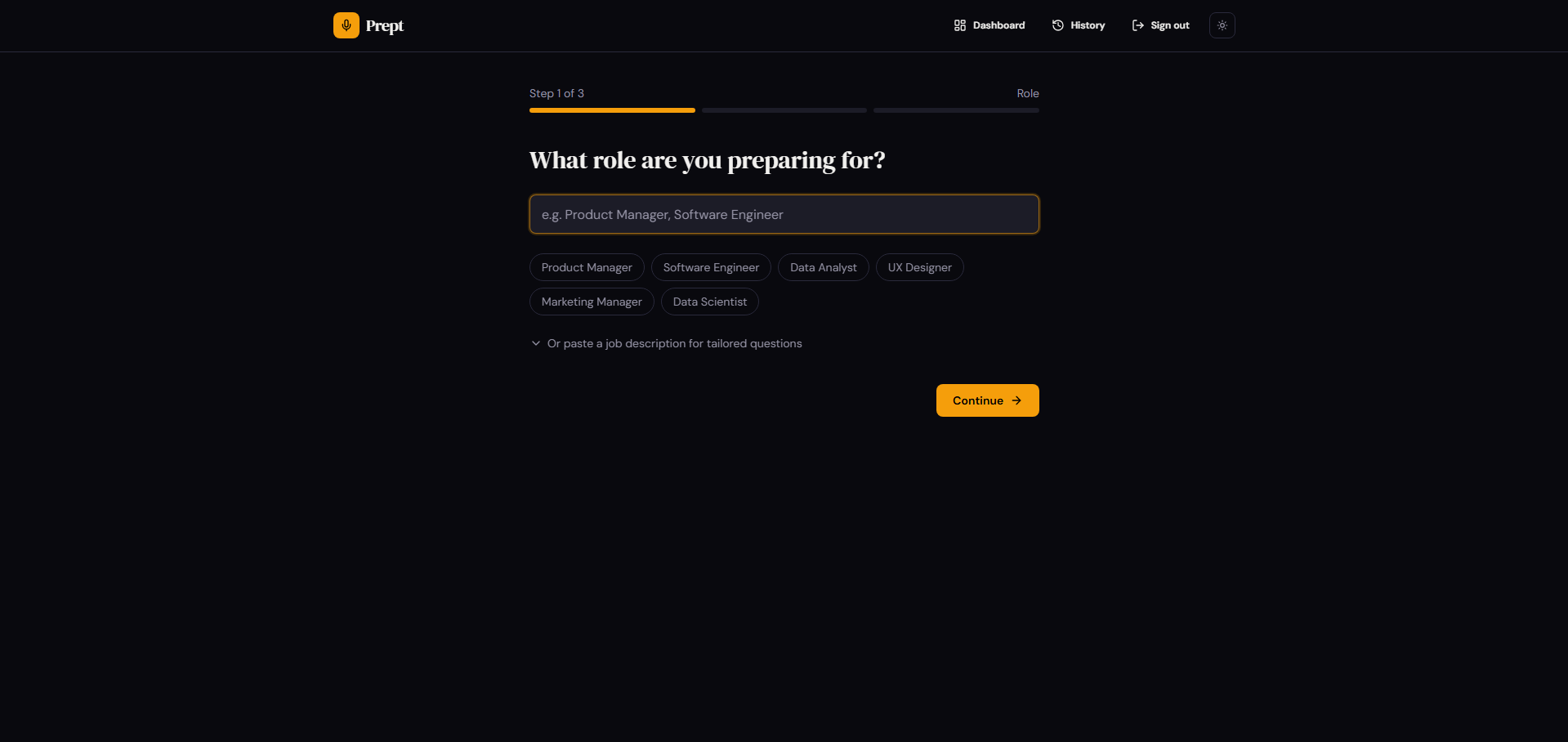
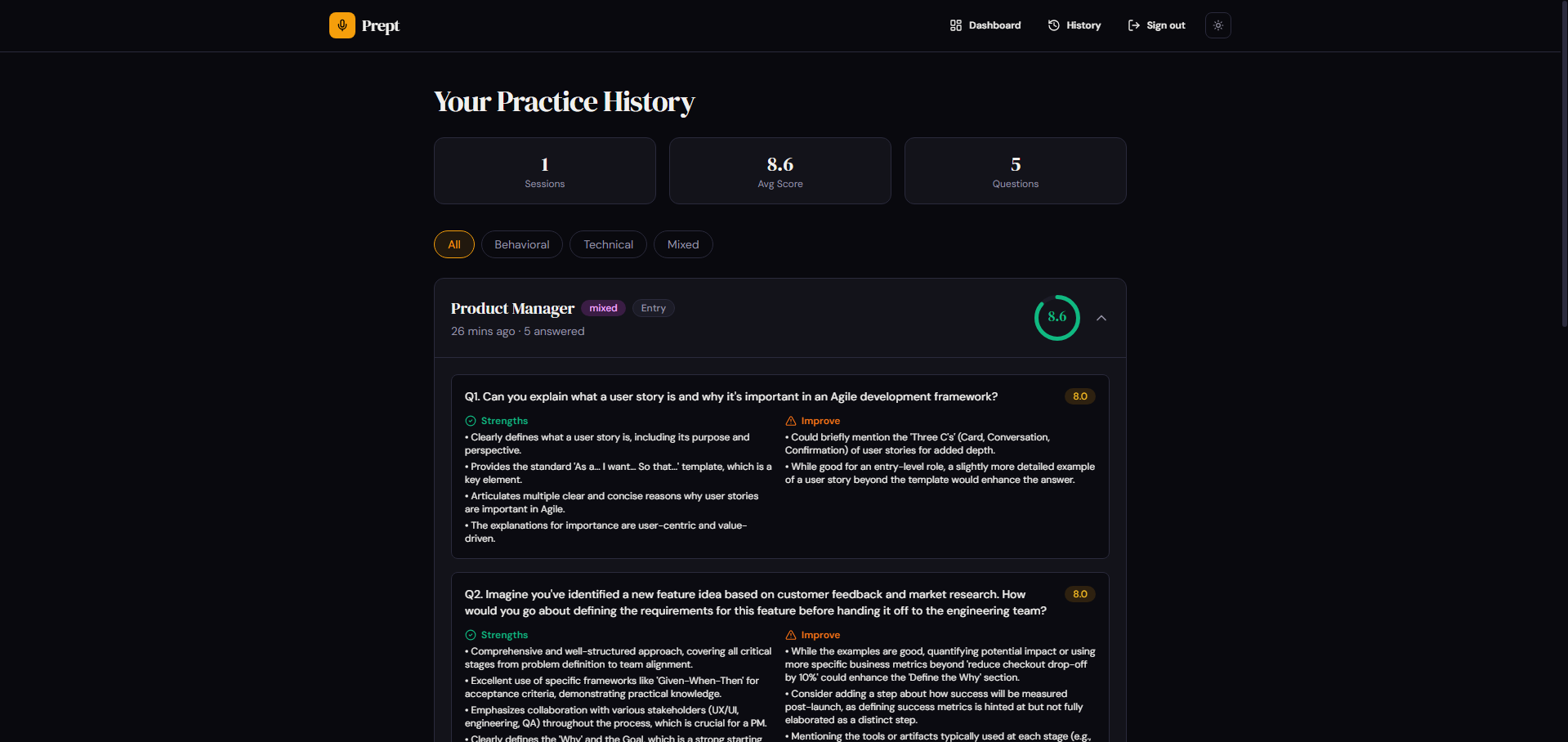
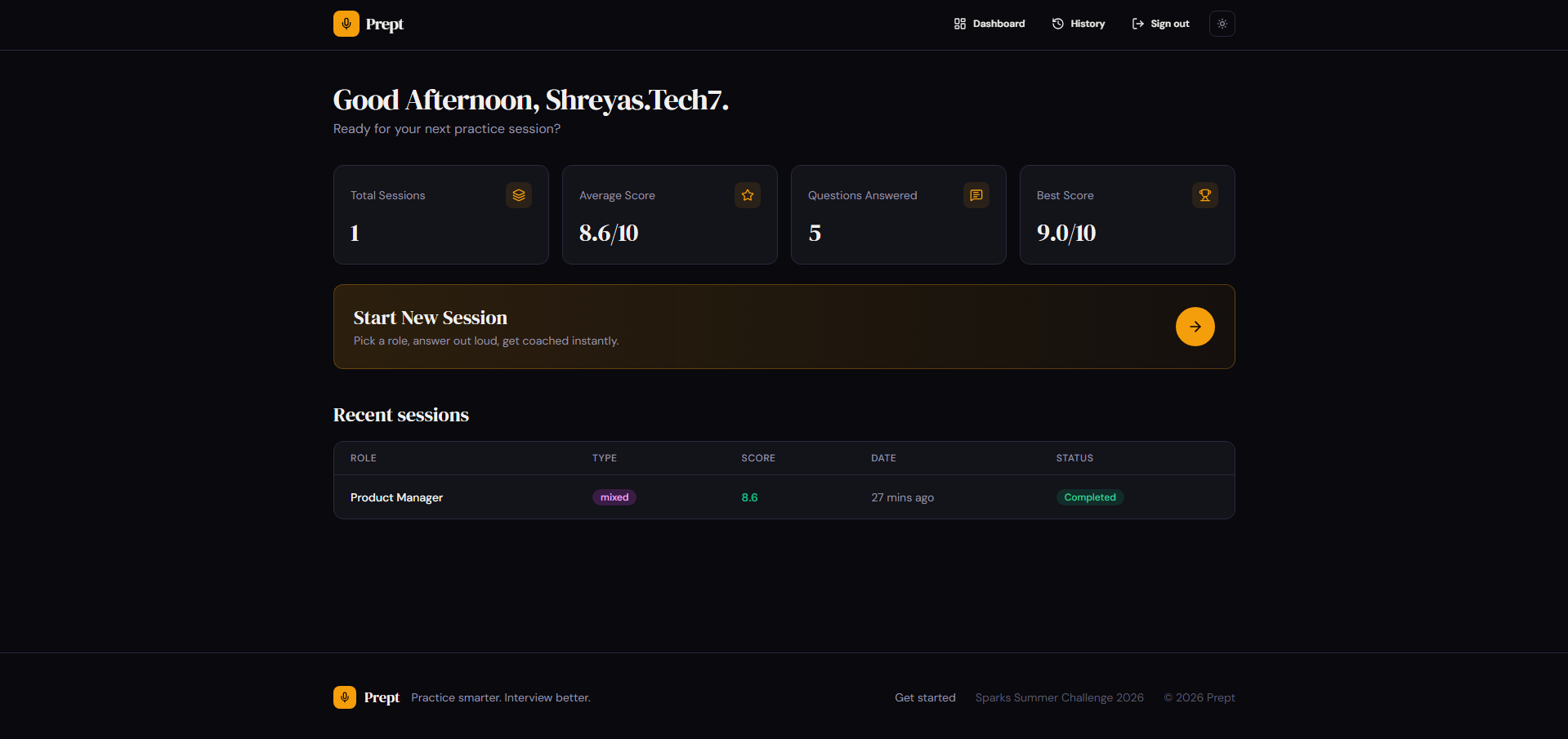
Inspiration
Interview prep is expensive and inaccessible — mock interview services and coaching cost hundreds of dollars, and most students only get feedback from friends or family who aren't trained to give it. We wanted to build something that gave anyone, for free, the experience of a real interview: someone (or something) actually listening to you talk, and telling you honestly how you did. Practicing out loud, in real time, is what actually builds confidence — reading tips on a blog doesn't.
What it does
Prept is an AI-powered interview coach that runs mock interviews entirely in the browser. It listens to your spoken answers using the Web Speech API, sends the transcript to Claude for analysis, and gives you structured feedback — clarity, pacing, filler words, structure (like STAR method usage), and content quality — right after each answer. Sessions and feedback history are saved so you can track improvement over time.
How we built it
- Speech capture: the Web Speech API handles real-time speech-to-text directly in the browser, so there's no audio upload or transcription service needed.
- Feedback engine: transcribed answers are sent to Claude Haiku, prompted to evaluate responses against interview best practices and return structured, actionable feedback rather than generic praise.
- Backend: Supabase handles auth, session storage, and persisting interview history and feedback so users can look back at past sessions.
- Frontend: a clean, low-friction UI so a user can go from landing on the page to doing a full mock interview in under a minute — no signup friction, no setup.
Challenges we ran into
- The Web Speech API's browser support and accuracy are inconsistent — getting reliable transcription across different browsers and dealing with pauses, filler words, and accents took real tuning.
- Prompting Claude to give feedback that's specific and useful rather than vague ("great job!") required iterating on the prompt structure a lot — we had to explicitly ask for structured critique tied to interview frameworks, not just a summary.
- Balancing latency: real interview practice needs to feel conversational, so keeping the transcribe → analyze → respond loop fast (hence Haiku over a larger model) was a constant tradeoff between speed and depth of feedback.
Accomplishments that we're proud of
Getting a full working loop — speak, transcribe, analyze, get feedback, save session — built and functional within the hackathon timeframe, with a UI simple enough that someone could use it with zero instructions.
What we learned
How much prompt design matters for getting genuinely useful, non-generic feedback out of an LLM, and how finicky browser-native speech APIs are compared to using a dedicated speech-to-text service.
What's next for Prept
- Support for role-specific interview question sets (technical, behavioral, case-based)
- Video-based feedback (body language, eye contact) in addition to speech
- Multi-turn interviews that adapt follow-up questions based on the answer just given, rather than a fixed question list
Built With
- javascript
- next.js
- postgresql
- react
- supabase
- tailwindcss
- typescript
- vercel
- webspeechapi

Log in or sign up for Devpost to join the conversation.