-
-
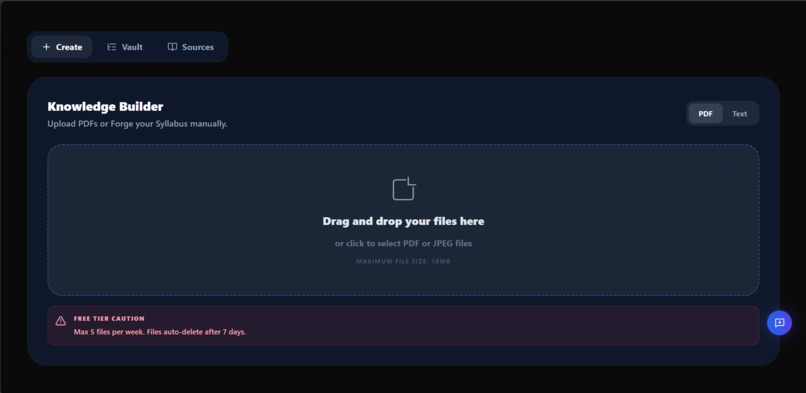
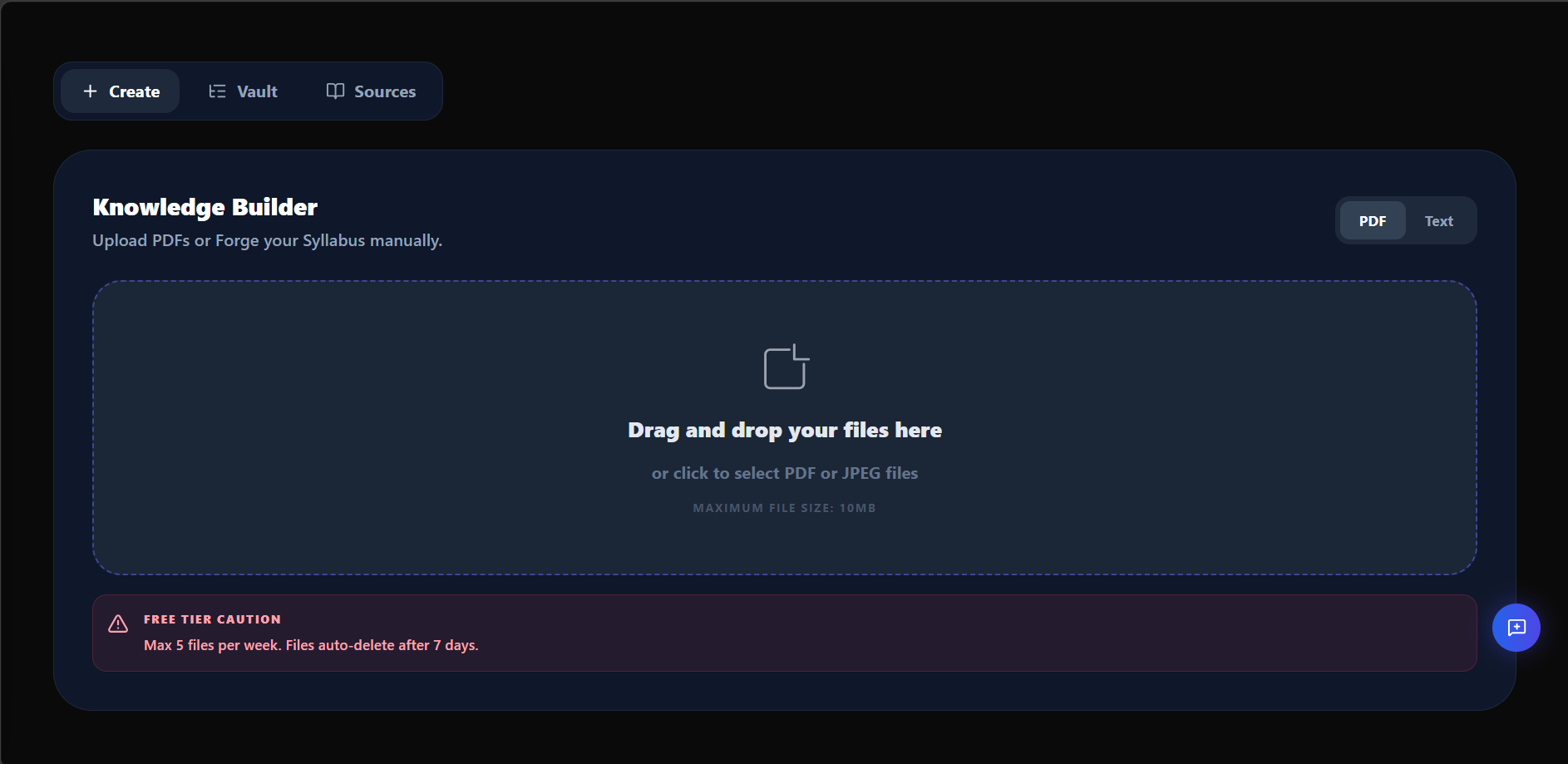
Sources Upload section
-
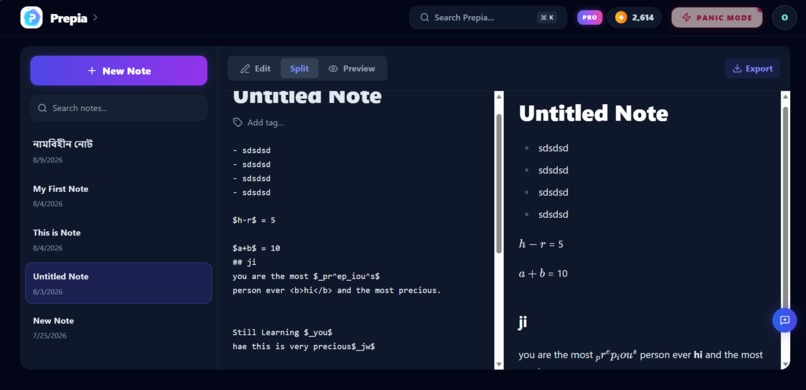
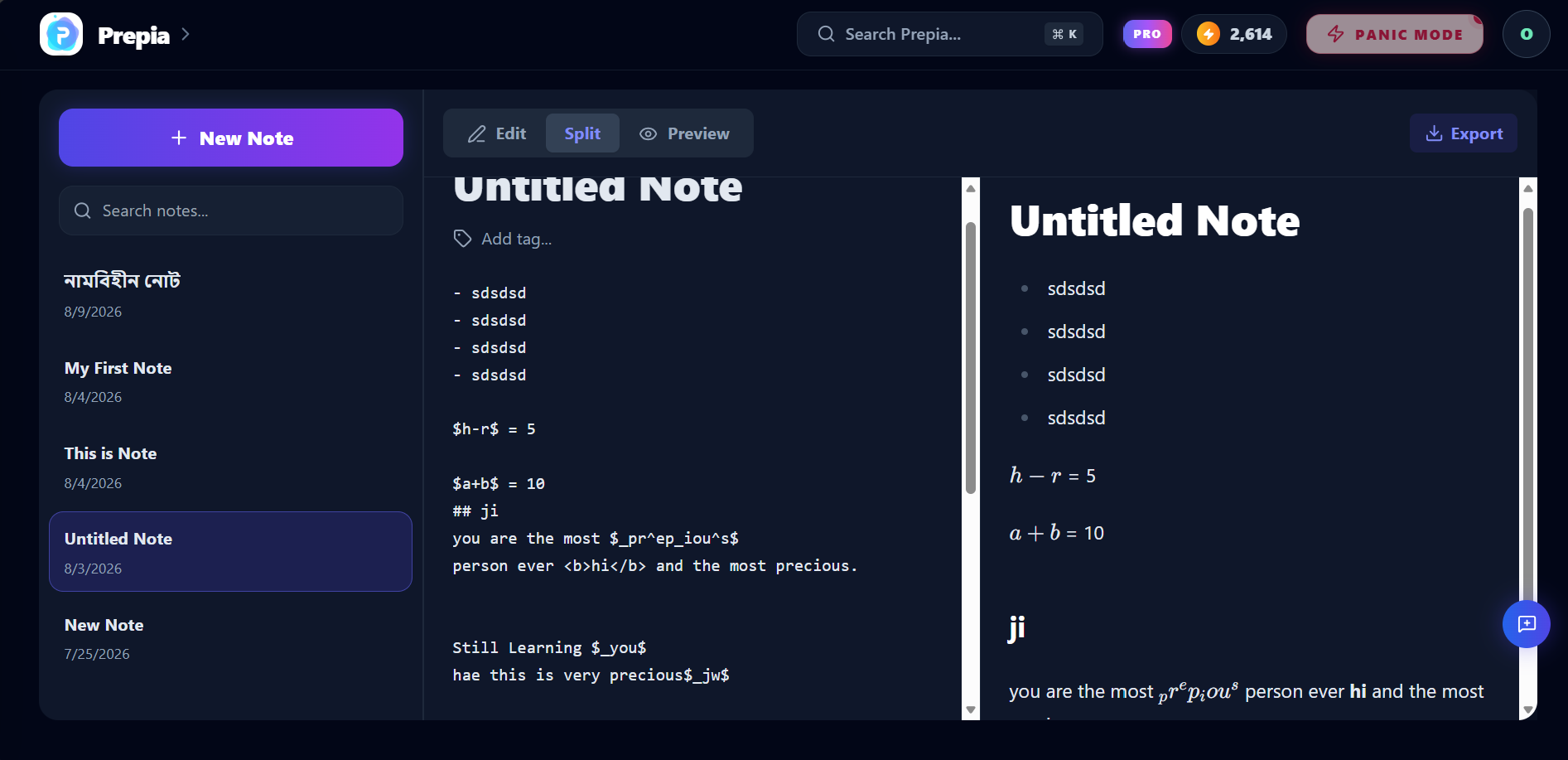
AI note Workspace
-
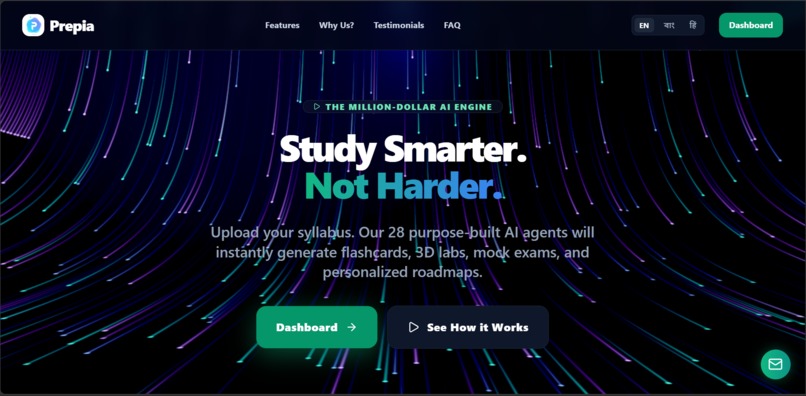
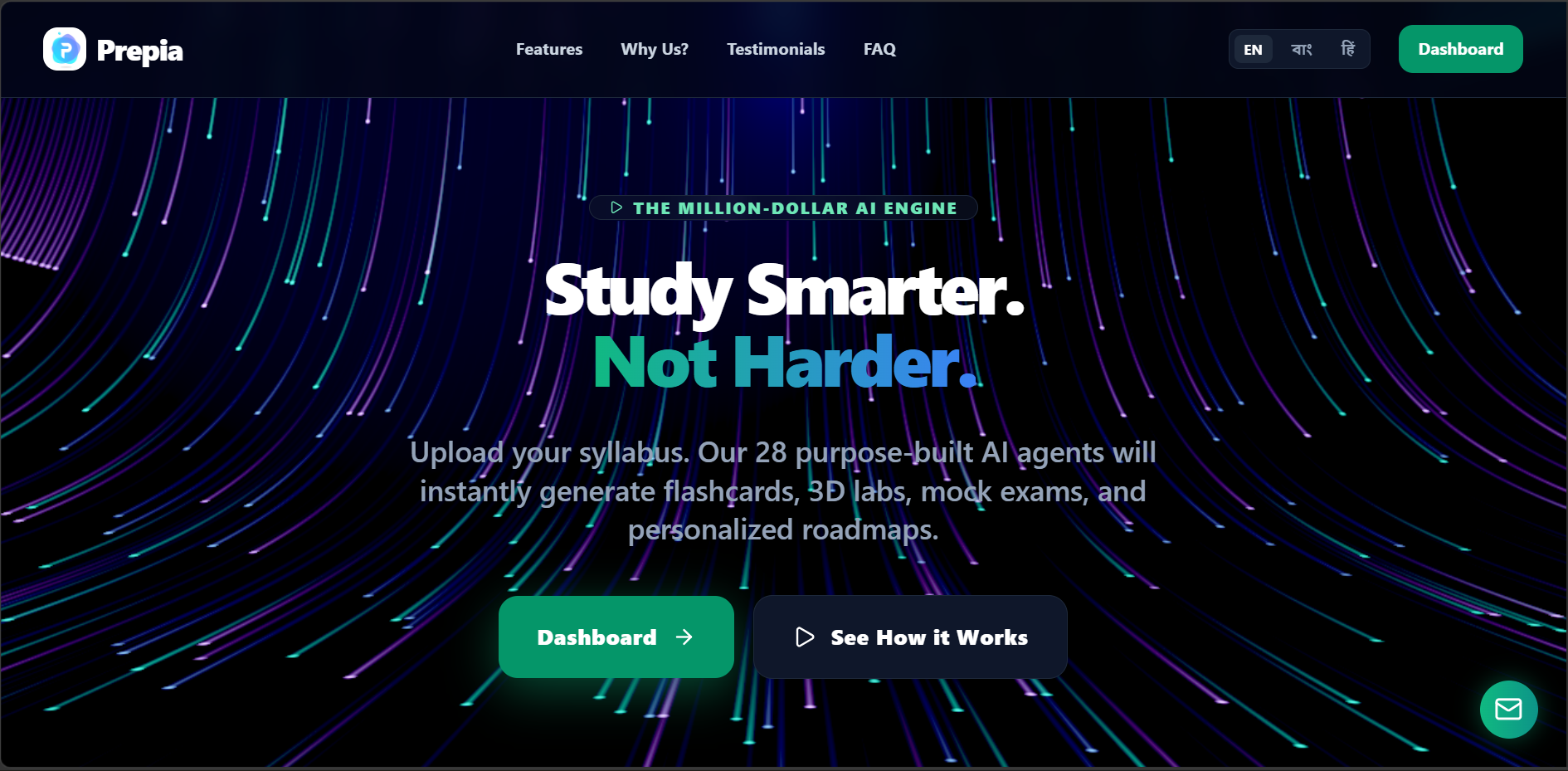
Landing Page
-
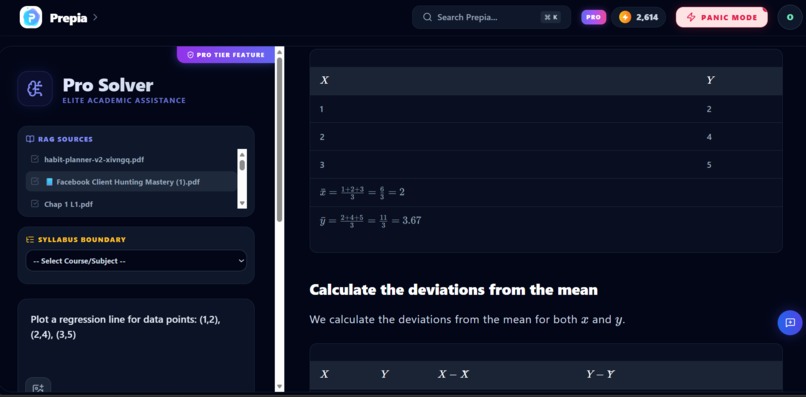
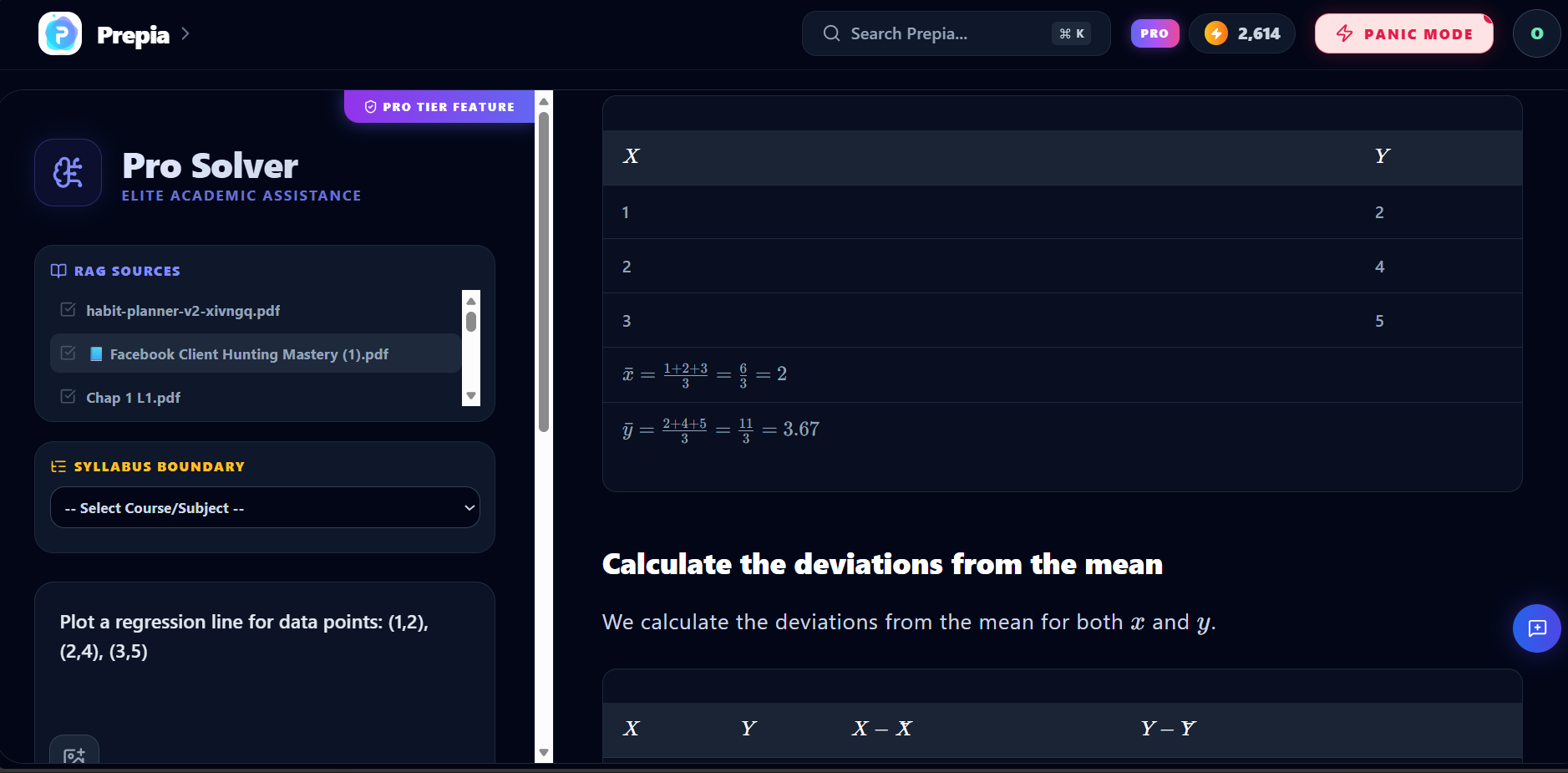
Pro solver
-
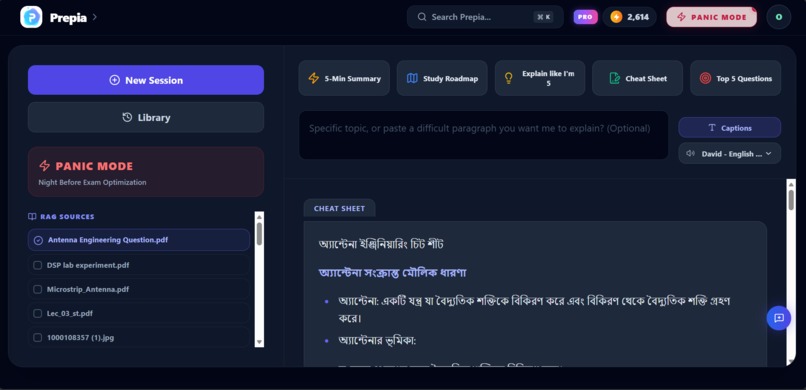
Night before Exam
-
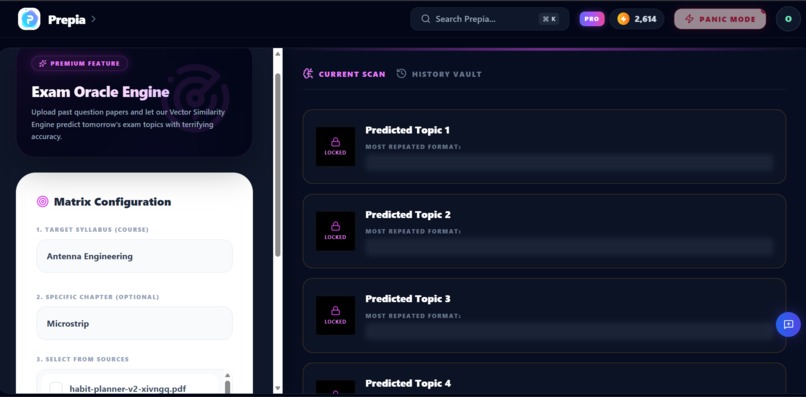
Exam Oracle
-
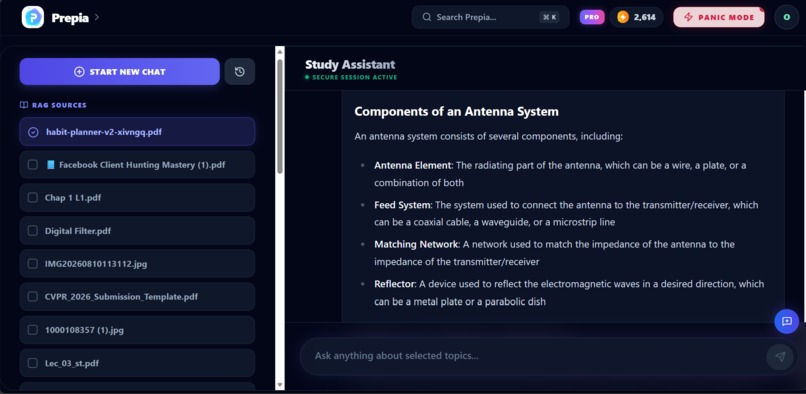
AI chat
-
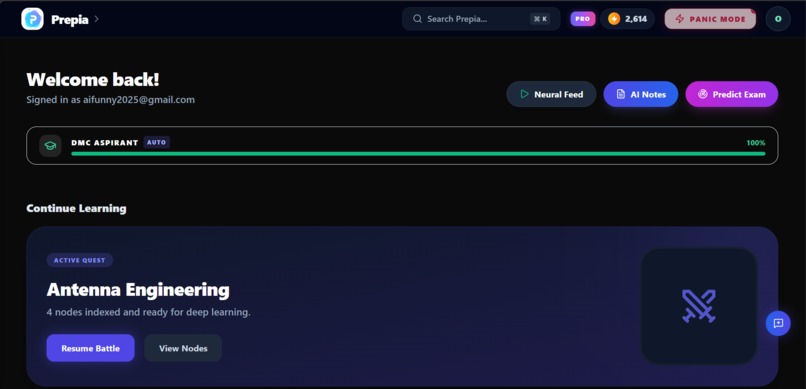
Dashboard
-
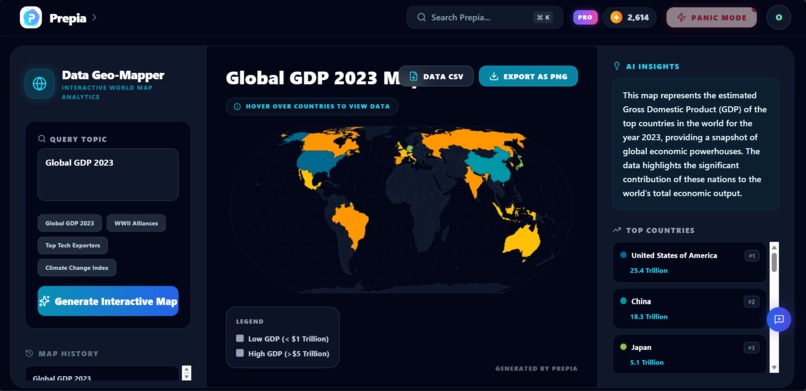
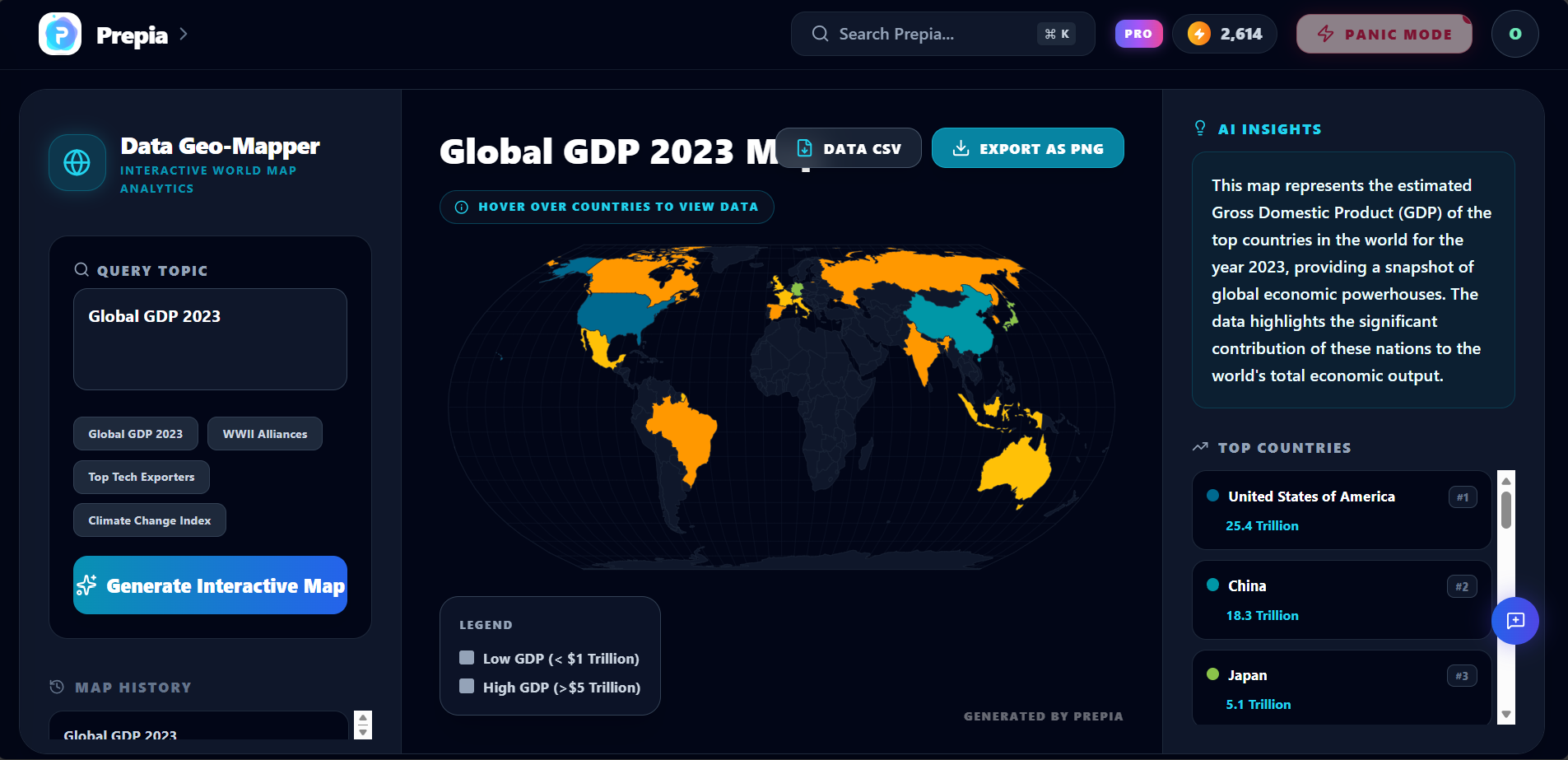
Geo Mapper
-
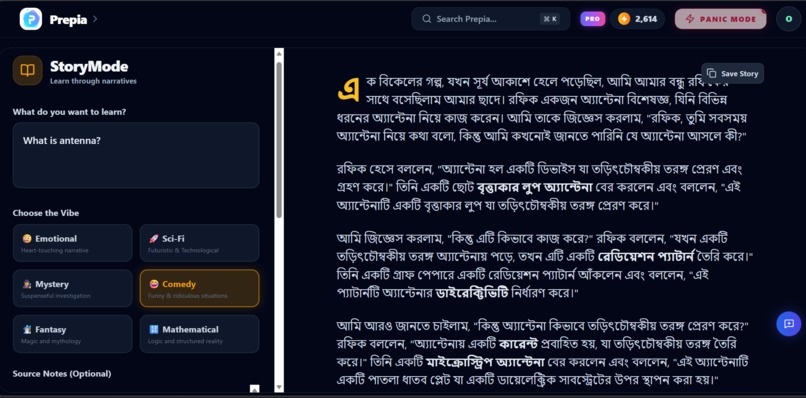
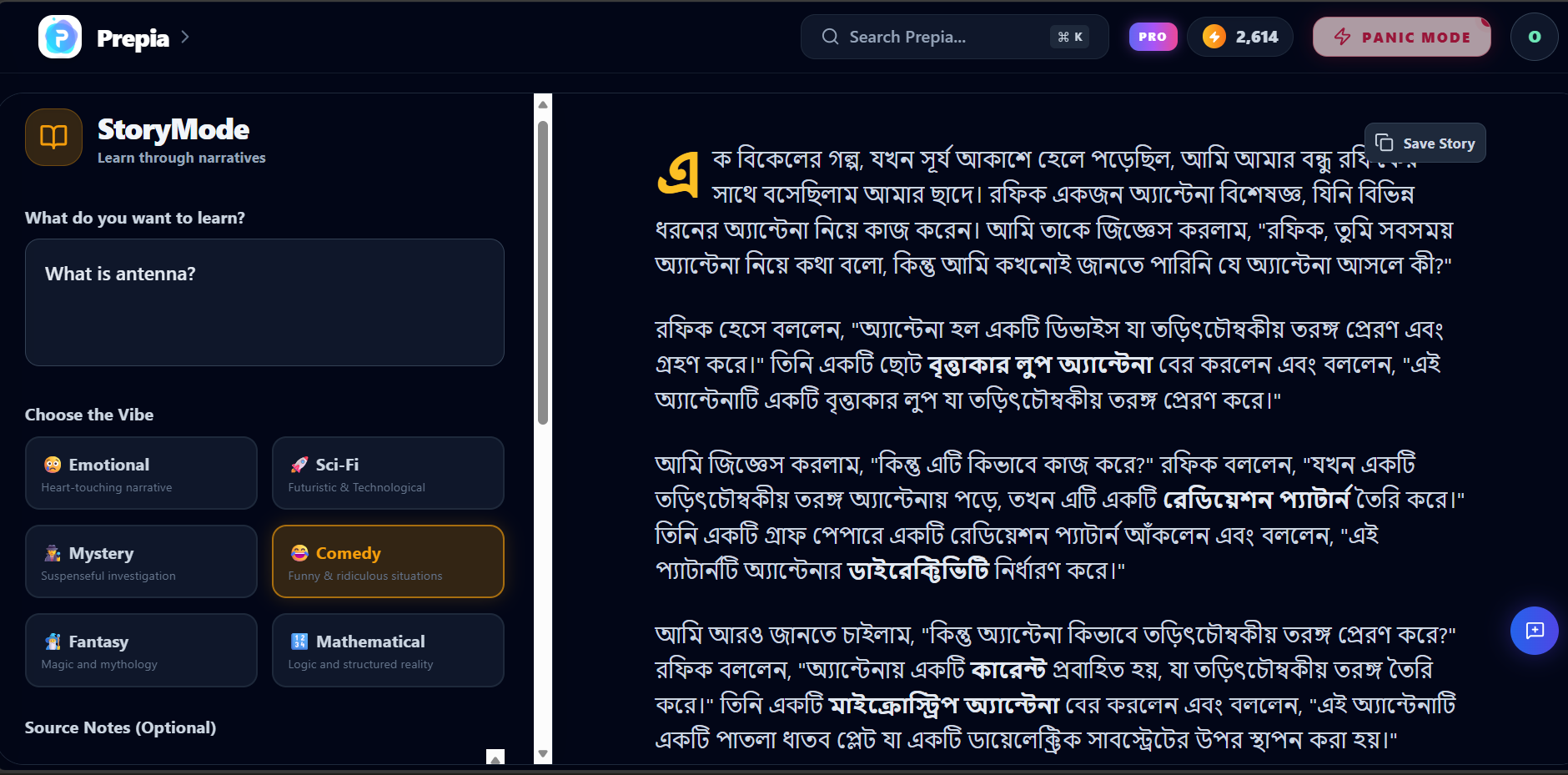
Story mode
-
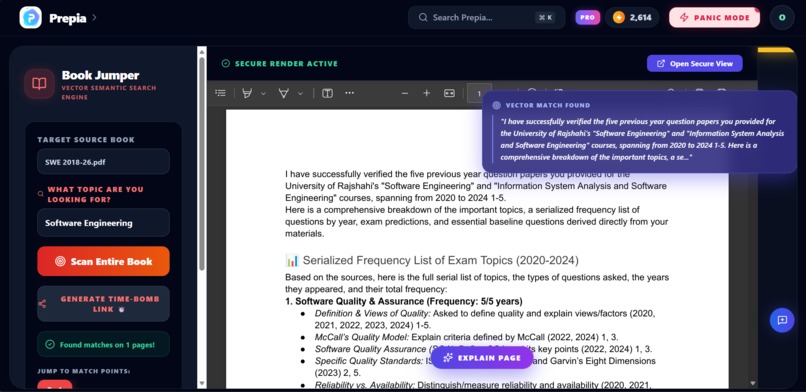
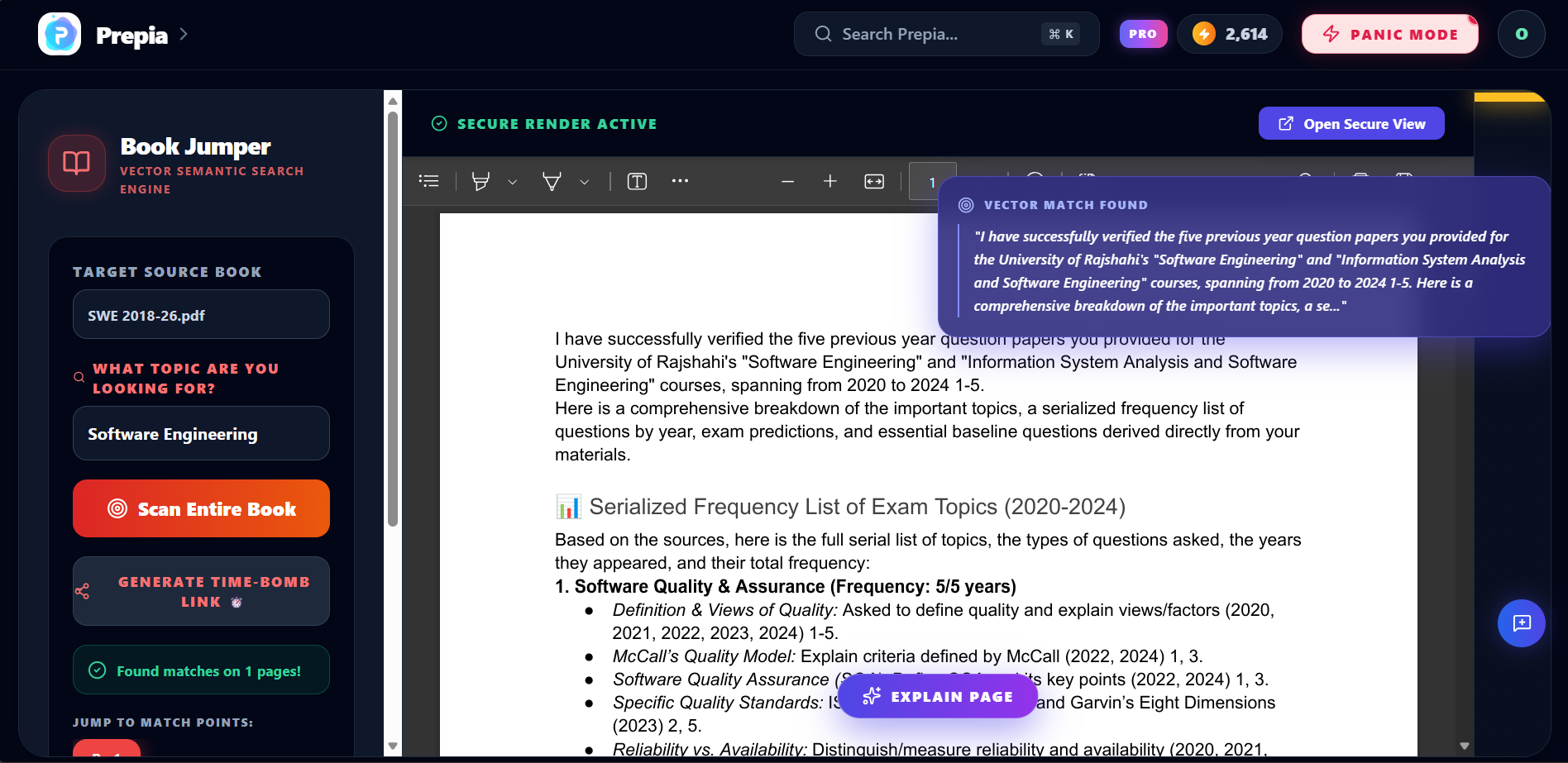
Book Jumper Feature
-
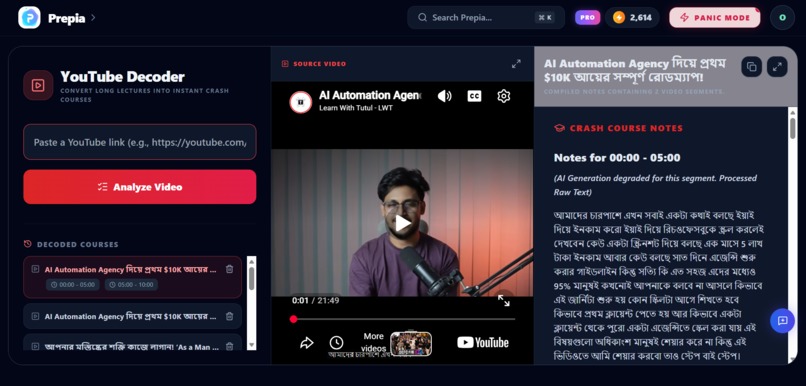
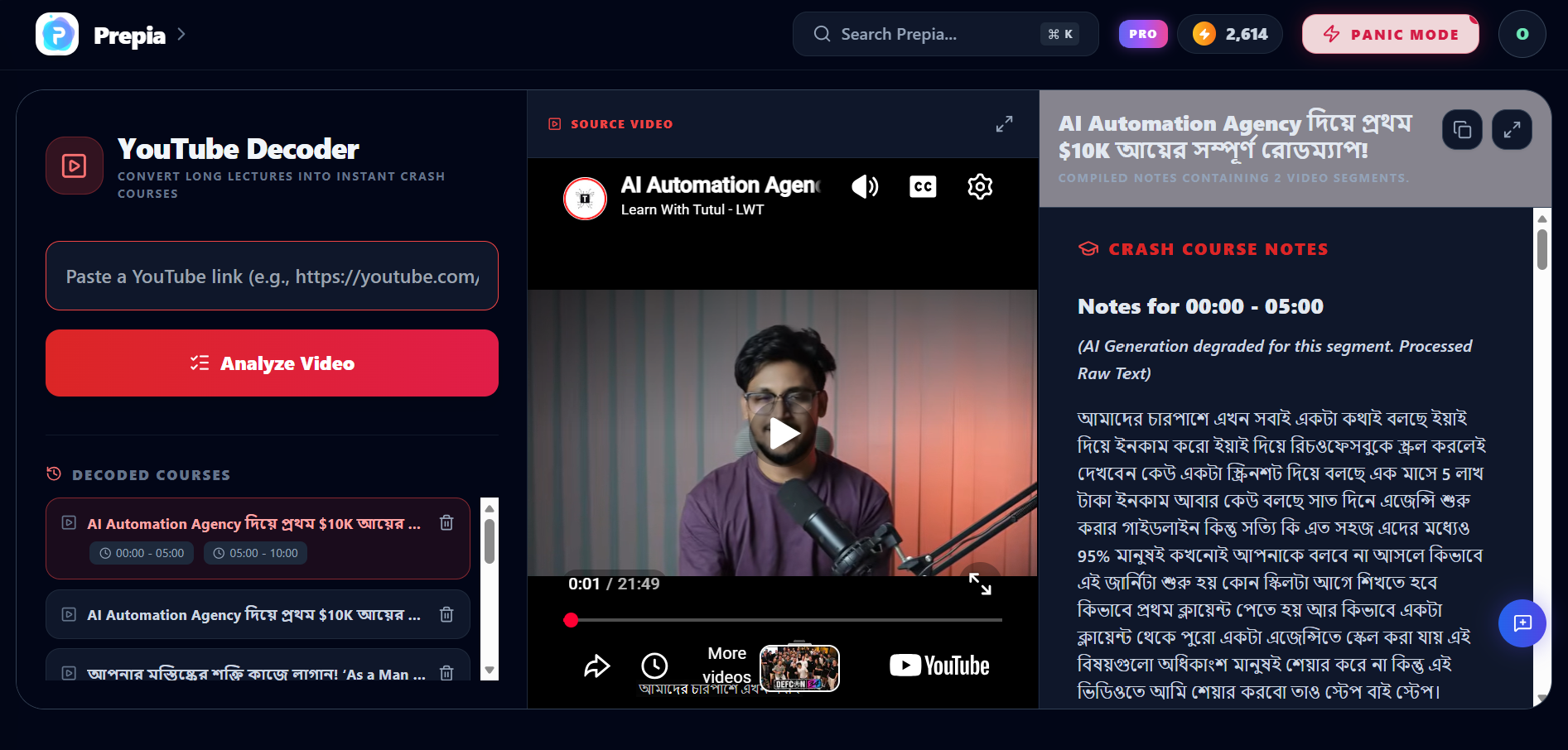
Youtube decoder
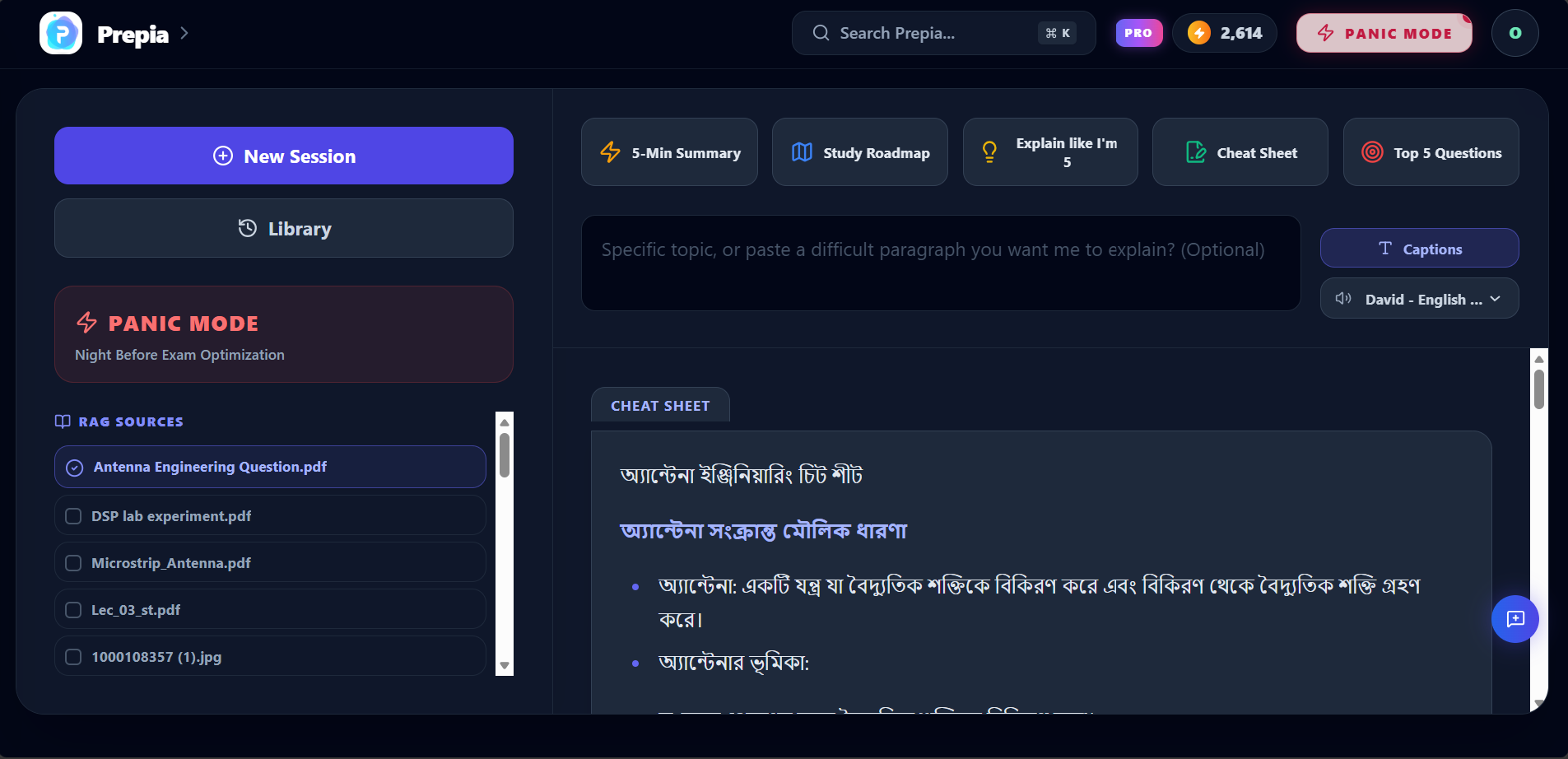
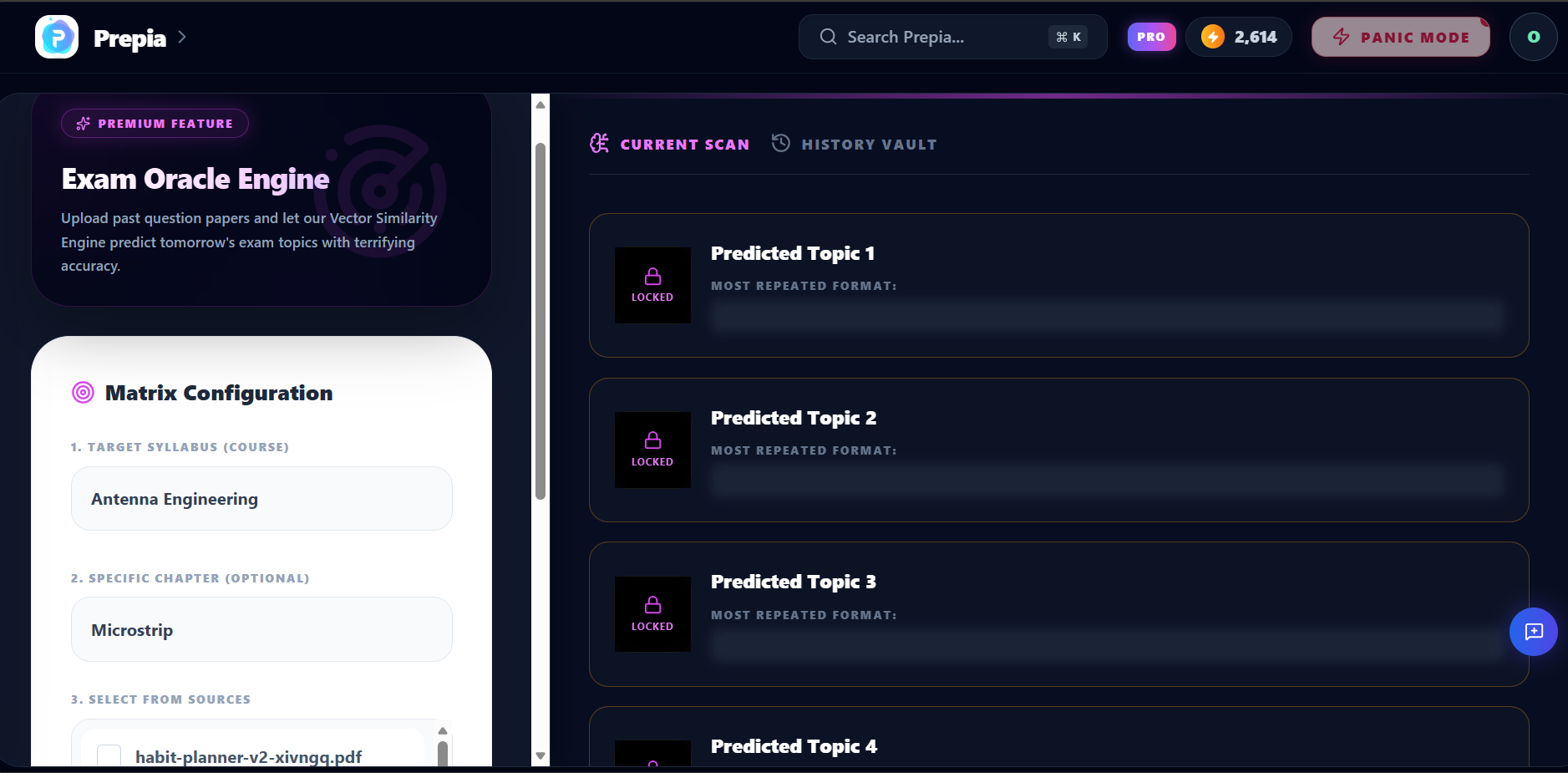
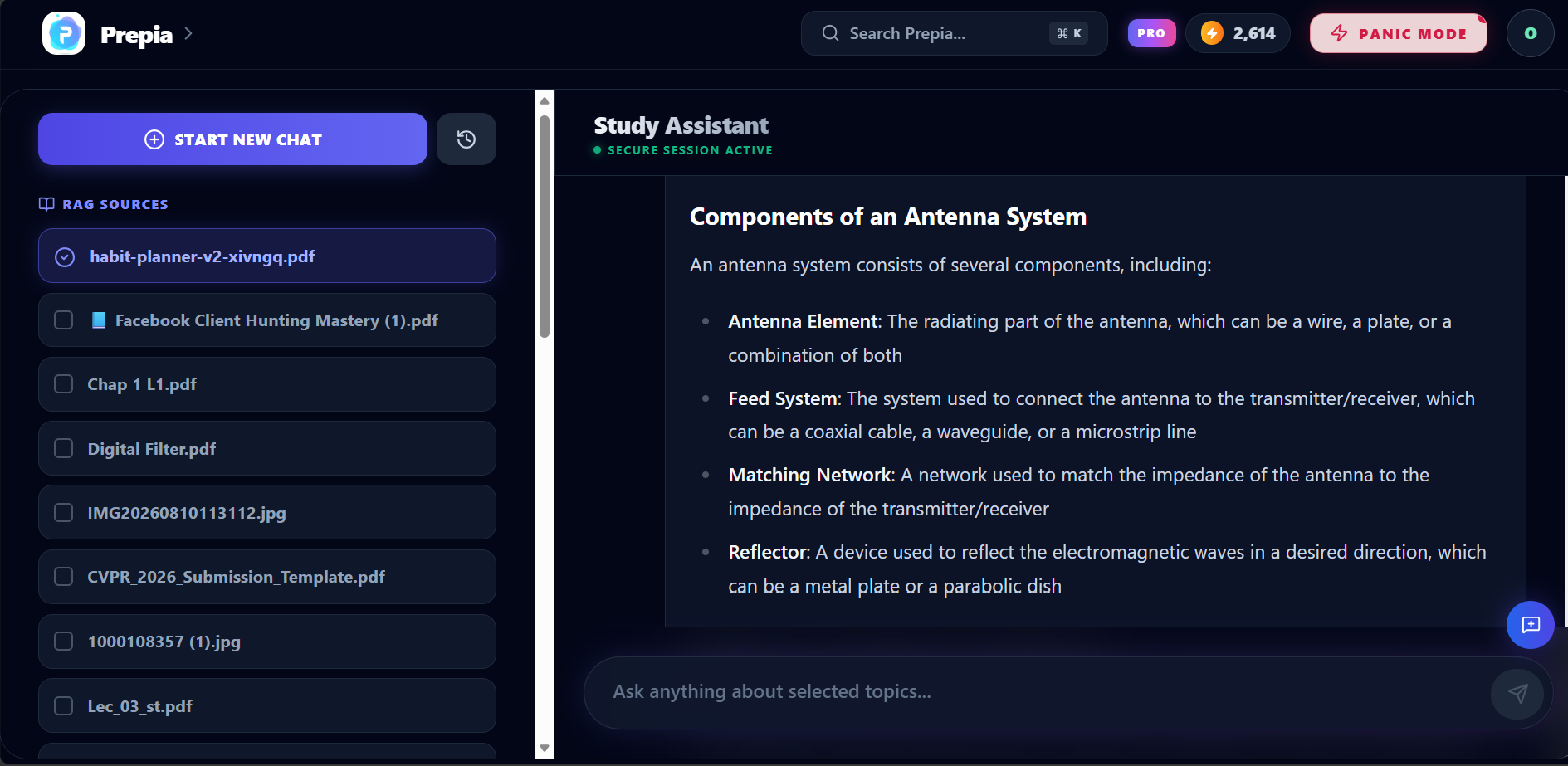
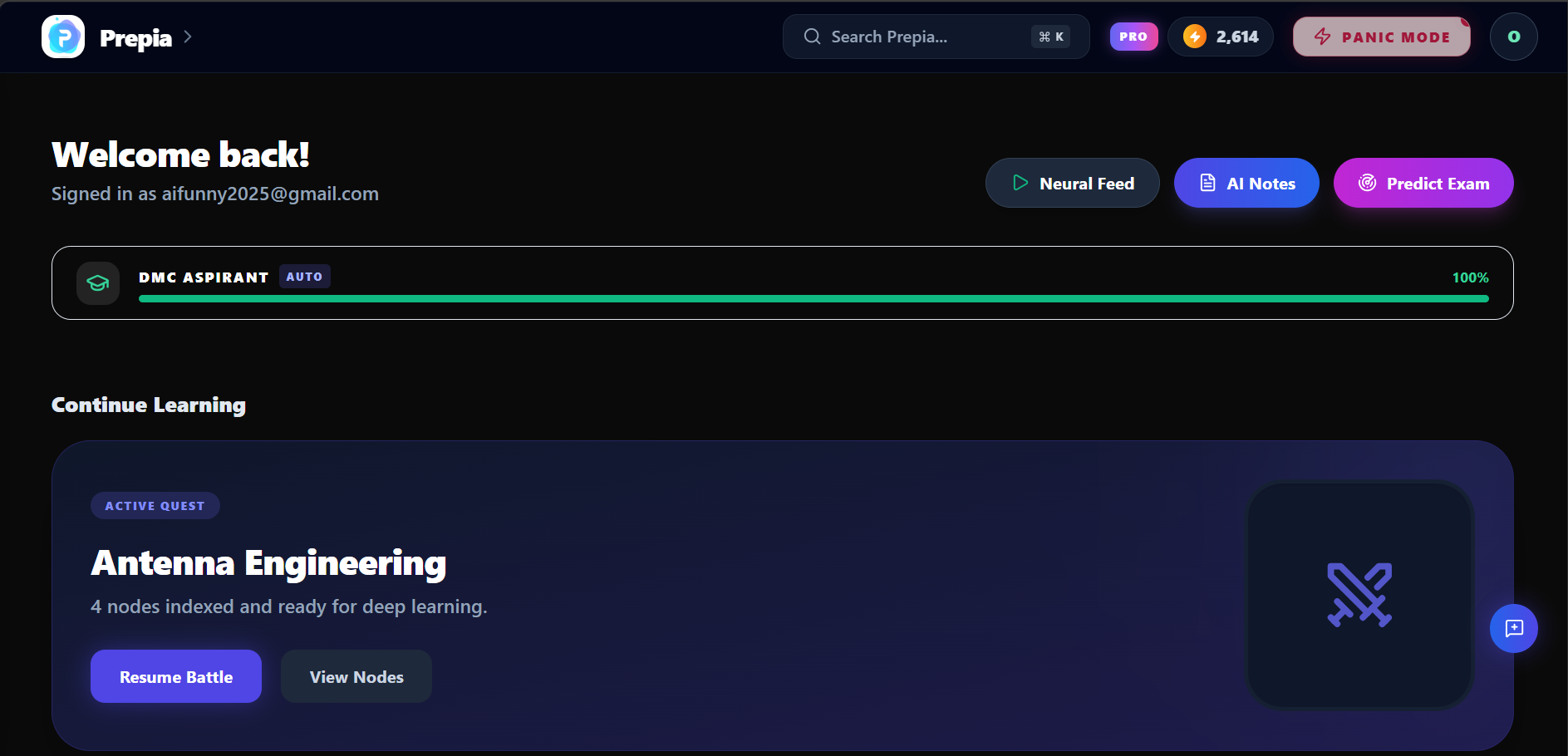
The Problem
Students already have their study materials, but turning those materials into an effective study workflow is still fragmented and time-consuming. A PDF may contain hundreds of pages, yet students often have to manually search for concepts, create notes, make flashcards, prepare questions, and decide what to study next.
Existing AI chat tools can answer questions, but they are not necessarily built around the complete study workflow or consistently grounded in a student's own learning materials.
What We Built
Prepia is an AI-powered personalized study platform that transforms a student's own learning materials into an interactive study environment.
Students can upload PDFs and other study materials, ask questions about their content, generate quizzes and flashcards, summarize material, and use AI-powered learning tools to prepare for exams.
The core idea is simple: instead of giving students another generic chatbot, Prepia turns the material they already have into personalized learning experiences.
How AI Is Used
Gemini API is integrated into Prepia's deployed AI workflow for LLM-powered learning tasks. Uploaded study materials can be processed and retrieved as contextual information so that AI responses remain relevant to the student's own content.
Prepia also uses an AI routing and fallback architecture to balance capability, availability, latency, and API cost across different workloads. Instead of sending every request to the most expensive model, the system can select a more appropriate model based on the task and current availability.
The resulting architecture combines document processing, retrieval, AI generation, caching, quota protection, and model routing into a production-oriented learning pipeline.
Key Features
- AI-powered Q&A grounded in uploaded study materials
- PDF and document-based learning
- Image and image-based document understanding for Pro users
- AI-generated quizzes
- Flashcard generation
- Summarization and concept understanding
- Personalized exam preparation
- Retrieval-based contextual answers
- AI model routing and fallback
- Caching for lower latency and reduced API cost
- Multiple learning tools built around the same study material
How We Built It
Prepia was built as a full-stack SaaS application.
The frontend uses Next.js, React, TypeScript, and Tailwind CSS. The backend is built with Node.js, Express, and TypeScript. Supabase is used for application data, authentication, storage/database capabilities, and vector-related workloads, while Redis is used for caching.
The AI layer integrates multiple model providers, including Gemini, and uses routing and fallback logic to select an appropriate model depending on the task, availability, latency requirements, and cost.
For retrieval-based workflows, the system combines semantic/vector retrieval with additional retrieval signals before providing relevant context to the AI generation layer.
Challenges
One of the biggest challenges was making an AI study platform practical under real-world resource constraints.
Large documents can create high processing costs, AI APIs have rate limits, and sending every request to a powerful model can become expensive. We therefore focused on model routing, caching, retrieval, quota protection, and efficient document processing rather than treating every request as an expensive AI generation task.
Another challenge was keeping answers useful while grounding them in the student's own material. This led us to build the learning workflow around document retrieval and contextual AI generation rather than relying only on generic model knowledge.
What We Learned
Building Prepia taught us that creating an AI application is not only about selecting a powerful model. The surrounding engineering—retrieval, caching, routing, rate-limit handling, document processing, observability, and product design—has a major impact on whether an AI product can actually work reliably for users.
We also learned the value of launching early and collecting feedback from real students instead of waiting until every feature was perfect.
Traction
Prepia was launched shortly before this submission and has already reached 61 users and 4 Pro users, generating BDT 1,696 in actual customer revenue.
Customer acquisition has been entirely organic so far. We have used Facebook, LinkedIn, YouTube, and direct outreach, with no paid advertising.
What's Next
We plan to continue improving document understanding, retrieval quality, personalization, learning analytics, and the range of AI-powered study workflows while keeping the platform affordable and efficient for students.
Built With
- ai
- azure
- cloud
- css
- deepseek
- docker
- education
- express.js
- gemini
- generative
- groq
- next.js
- node.js
- pgvector
- postgresql
- rag
- react
- redis
- saas
- supabase
- tailwind
- technology
- typescript

Log in or sign up for Devpost to join the conversation.