-
-
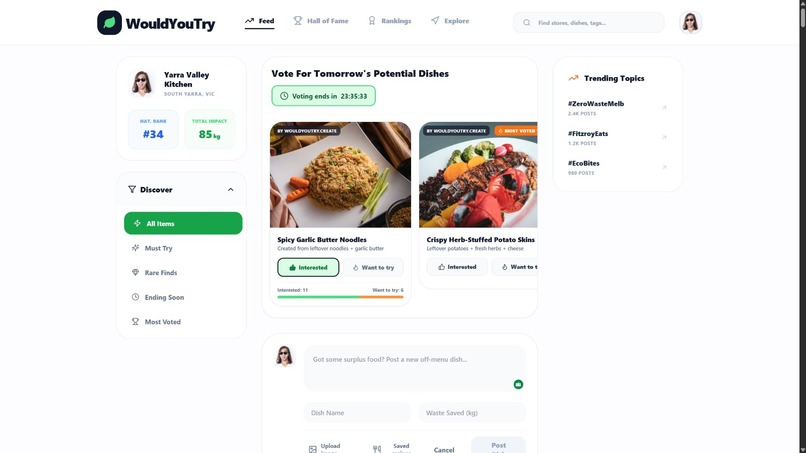
WouldYouTry homepage
-
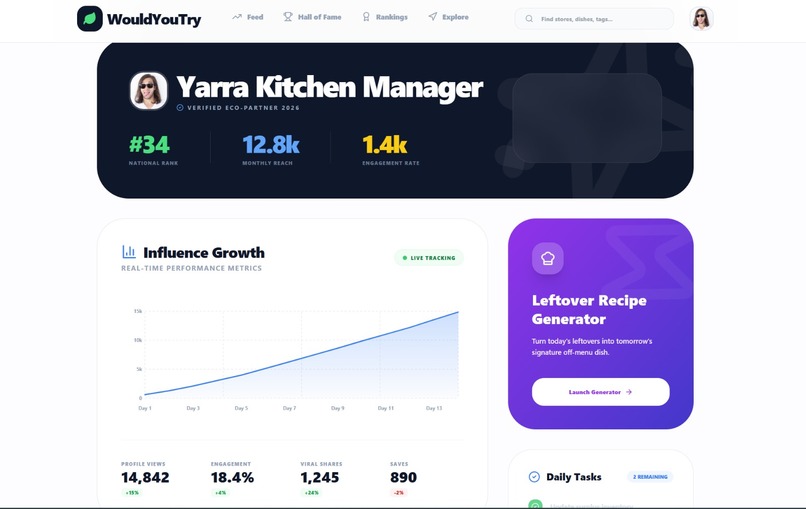
WouldYouTry dashboard
-
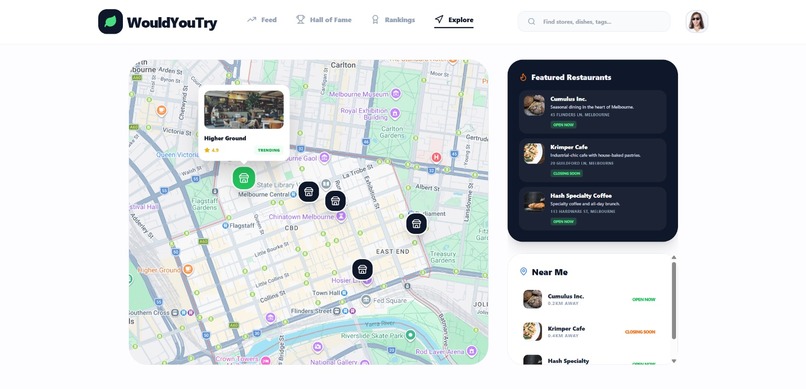
Explore nearby brunch places
-
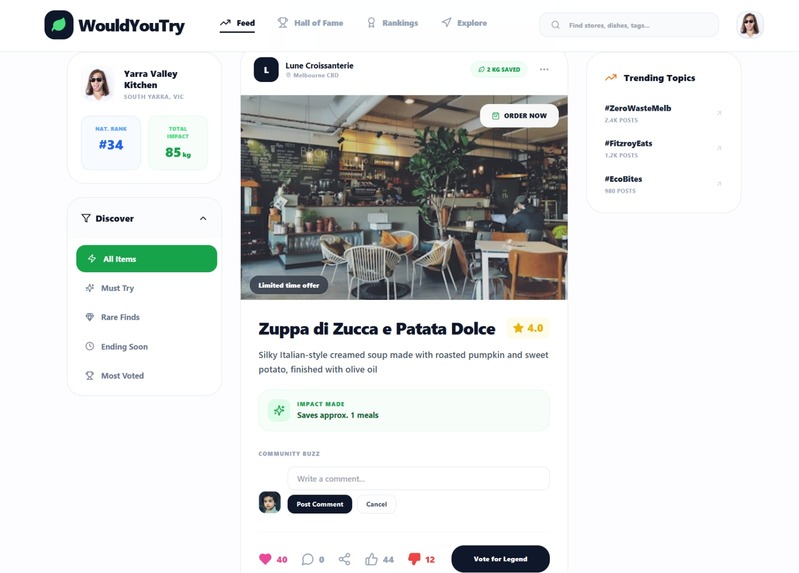
Sample post
-
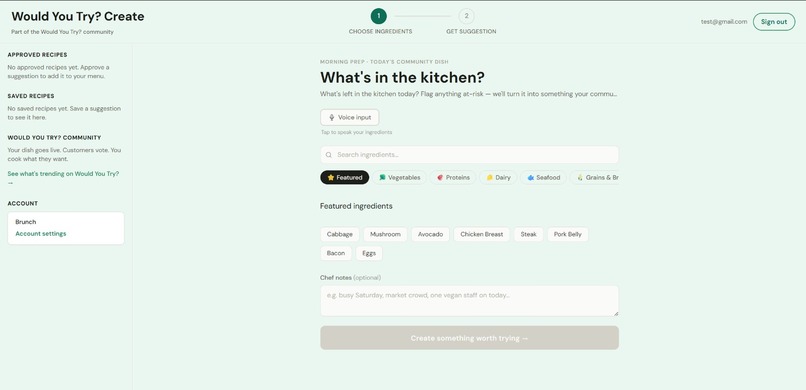
WouldYouTry.Create homepage
-
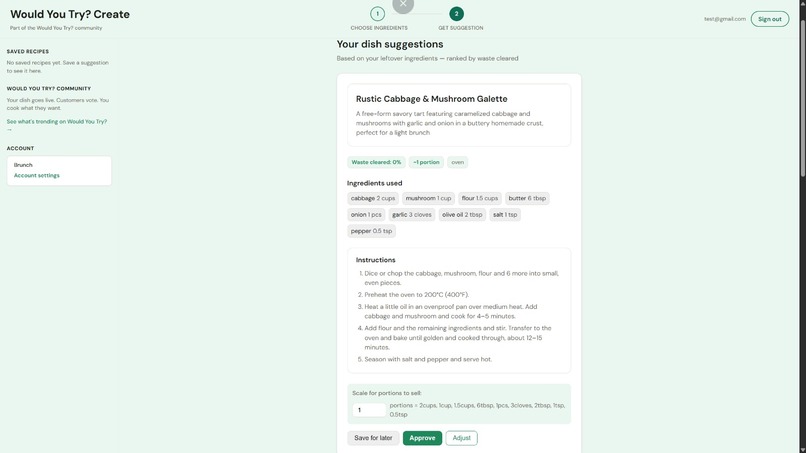
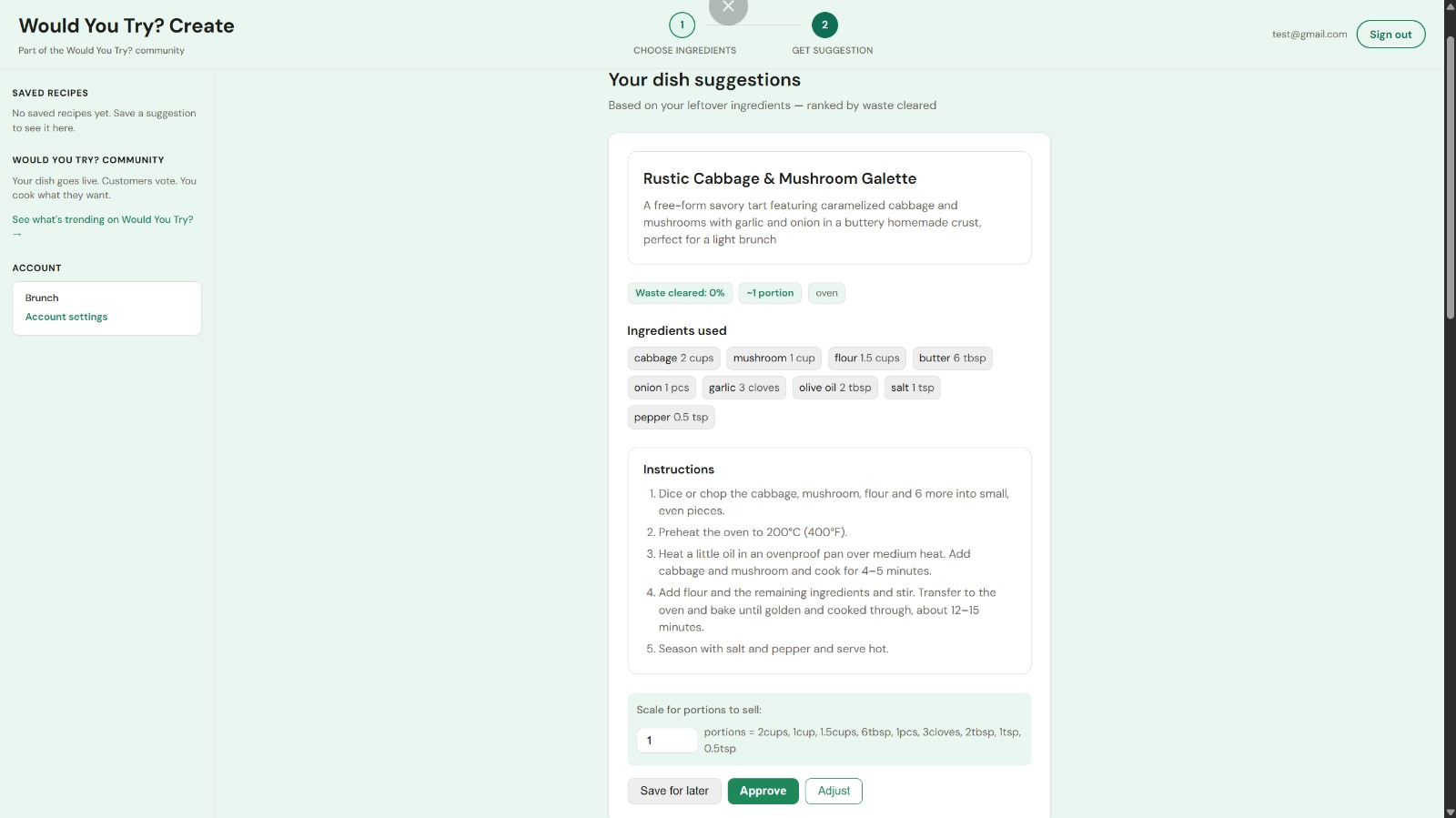
AI generated dish suggestions
-
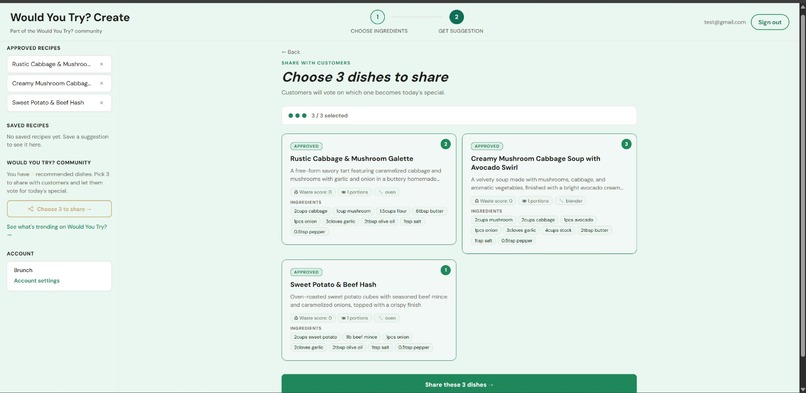
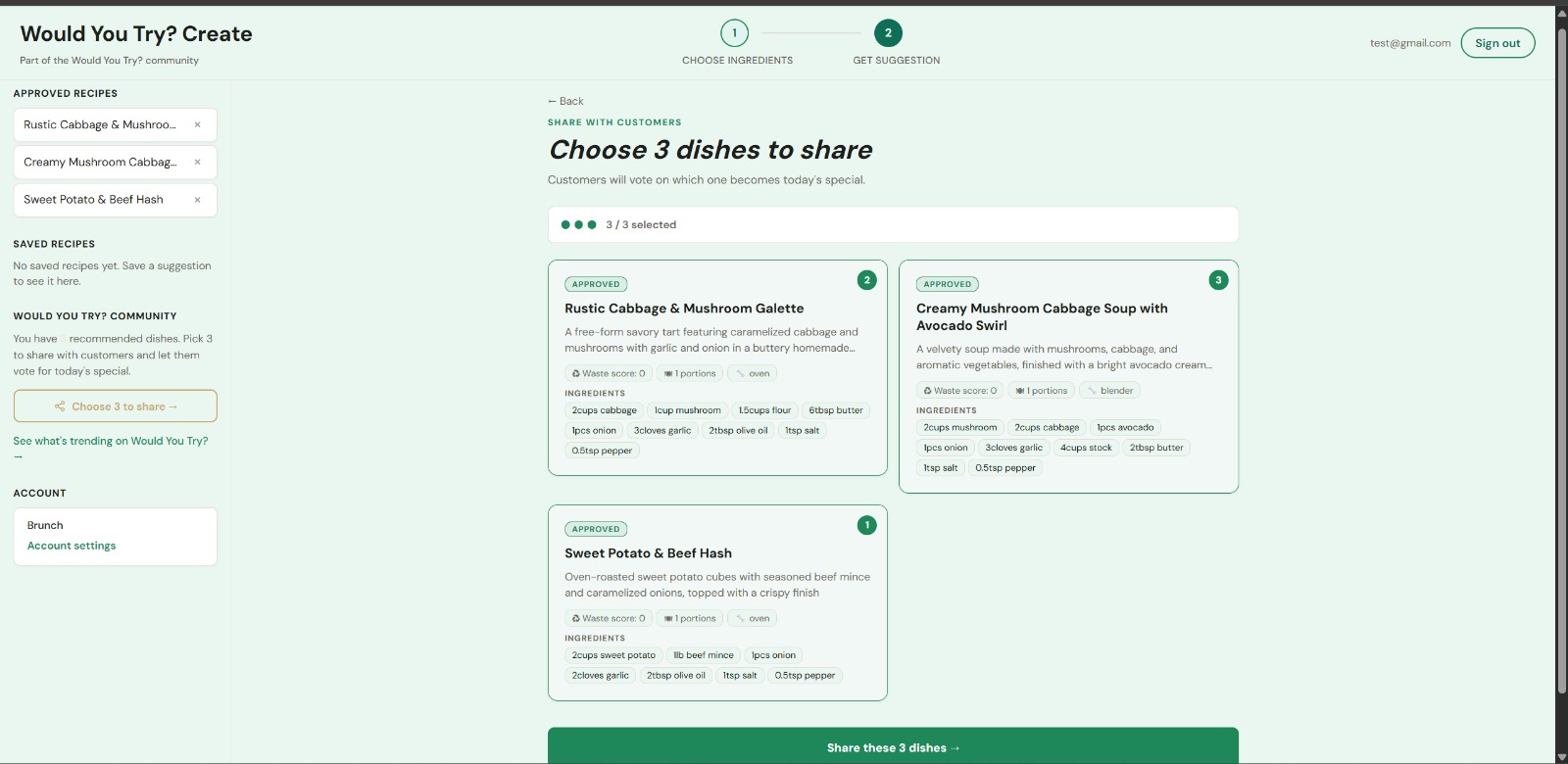
Share approved dishes to social platform
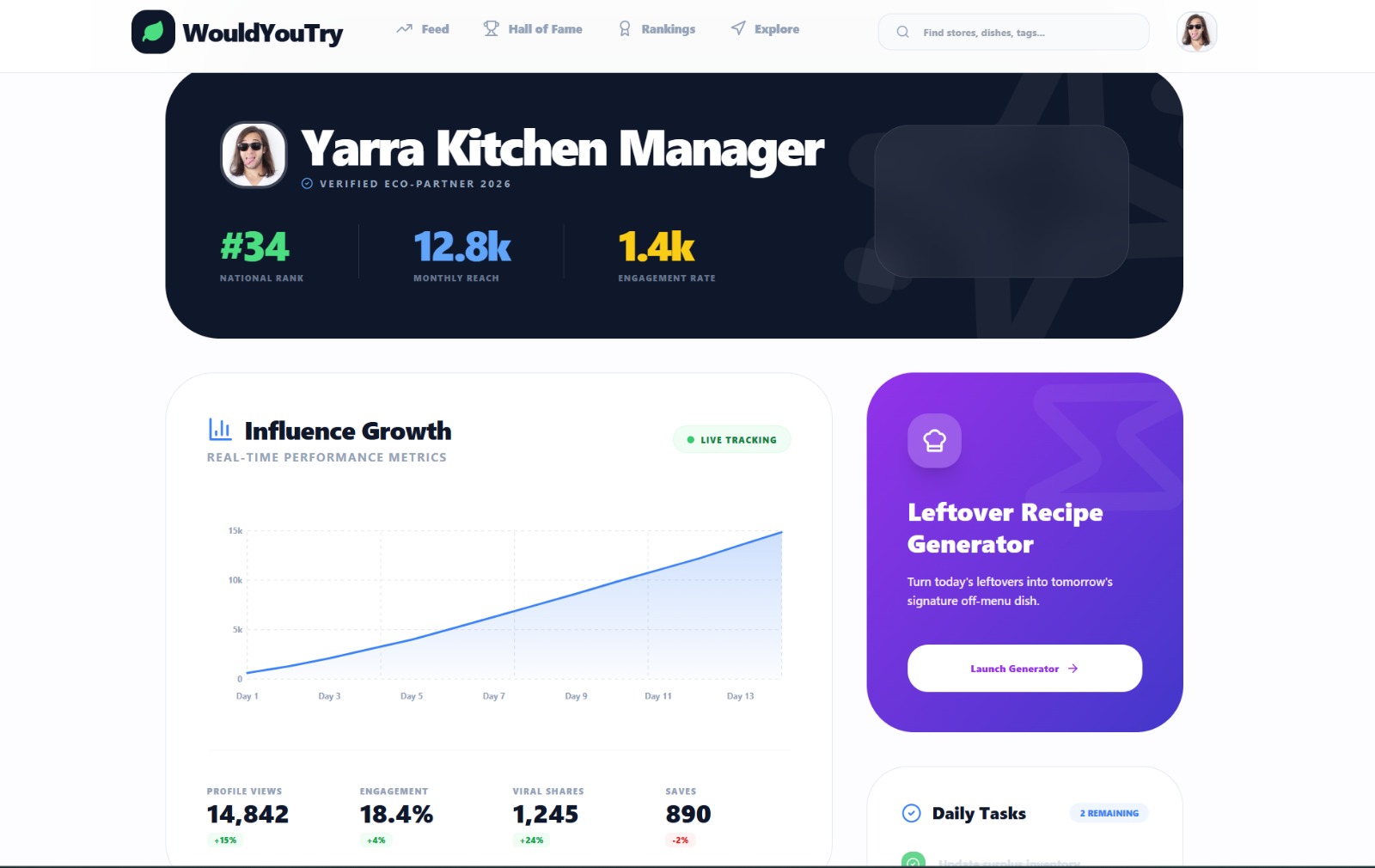
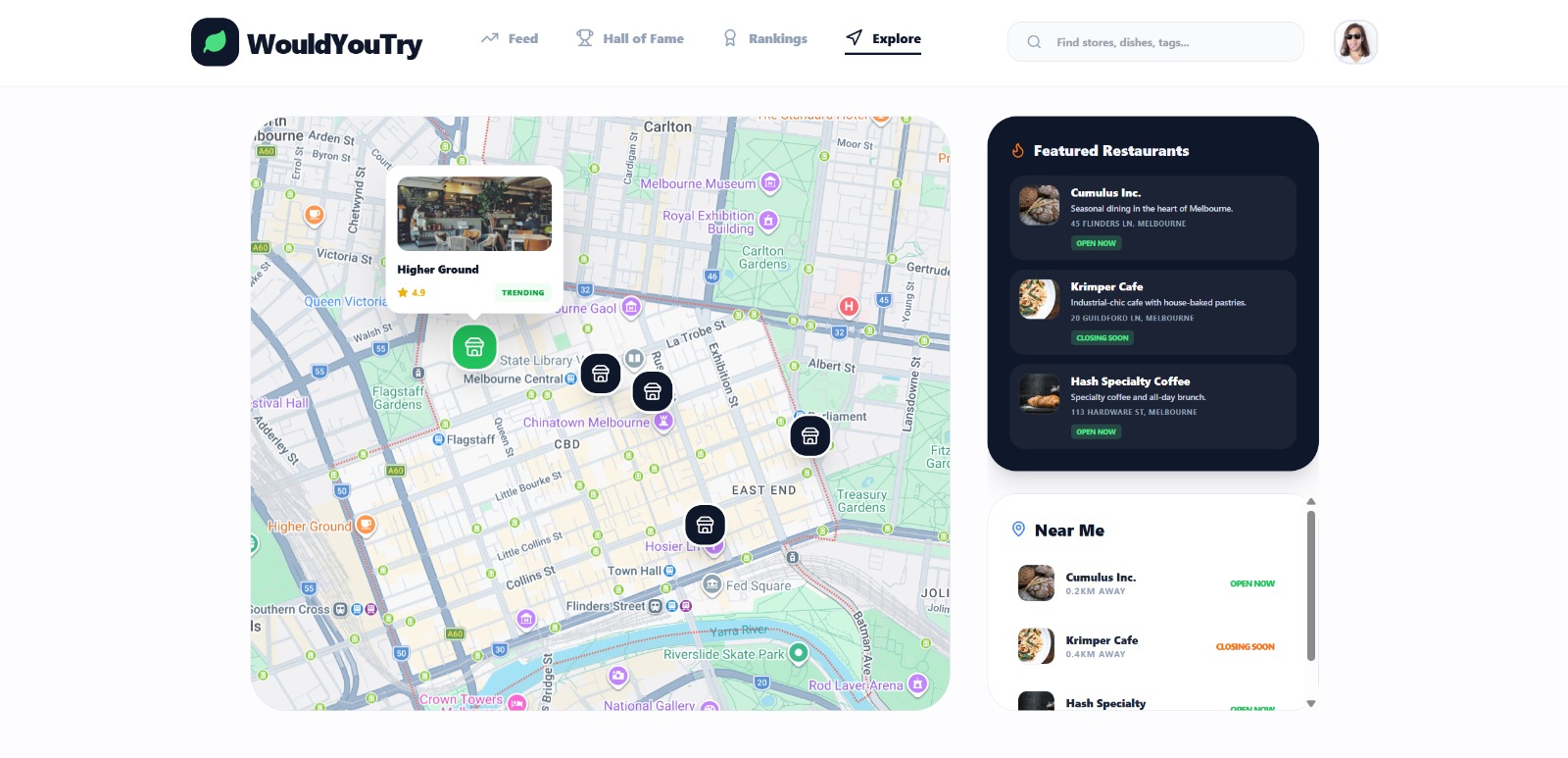
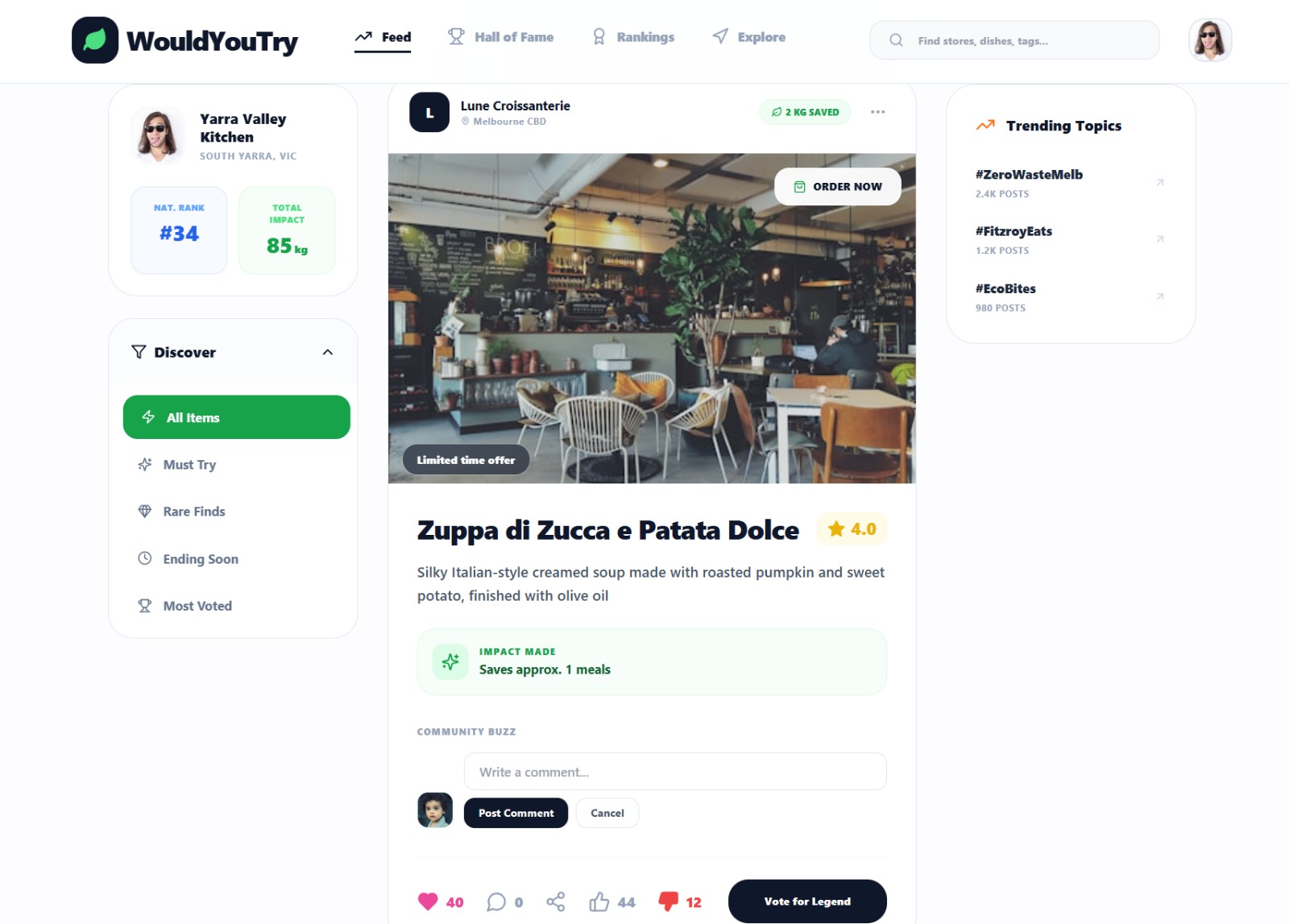
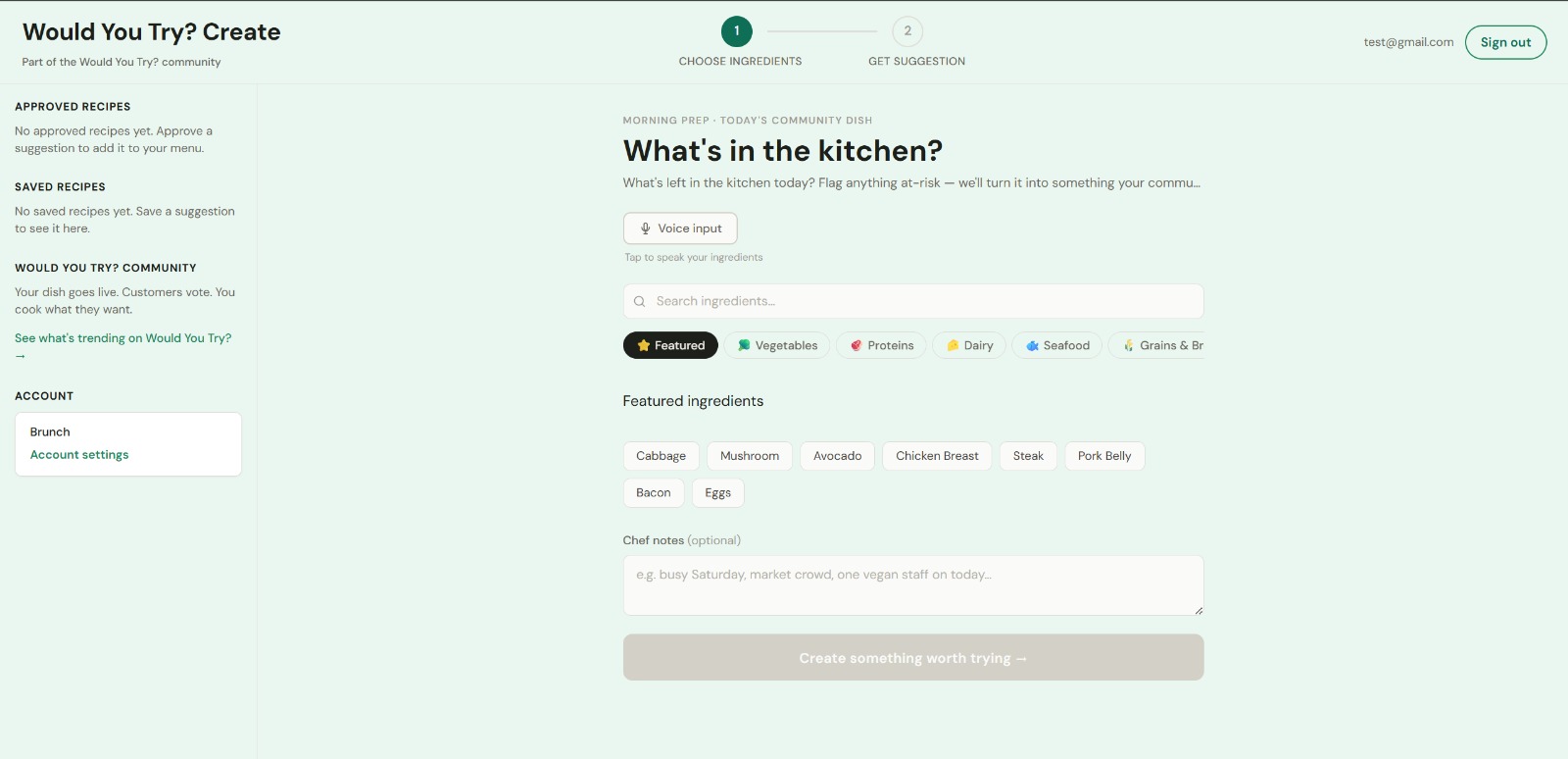
Inspiration
Many brunch cafés serve very similar menus because creating new dishes is risky and costly. At the same time, kitchens often have leftover ingredients that end up going unused or wasted. We were inspired by this gap between food waste and lack of menu innovation.
Our idea was to help brunch owners turn leftover ingredients into creative, on-brand dishes using AI. At the same time, we wanted to connect cafés with their customers through a social platform where people can react to dishes, leave comments, and vote on what they would like to see on the menu next.
By combining AI-powered recipe generation with community feedback, we aim to help cafés reduce waste, experiment with new ideas more confidently, and involve customers in shaping the menu.
What it does
Our project is a two-part platform designed to help brunch cafés reduce food waste while encouraging menu creativity.
The first app is an AI-powered recipe generator for brunch owners. After signing up and entering their current menu, owners can select leftover ingredients from their kitchen and input quantities. The system then generates new recipe ideas that match the café’s menu style. Each suggestion includes a dish description, ingredients used, cooking instructions, and portion scaling. Owners can save or approve these recipes if they decide to prepare them.
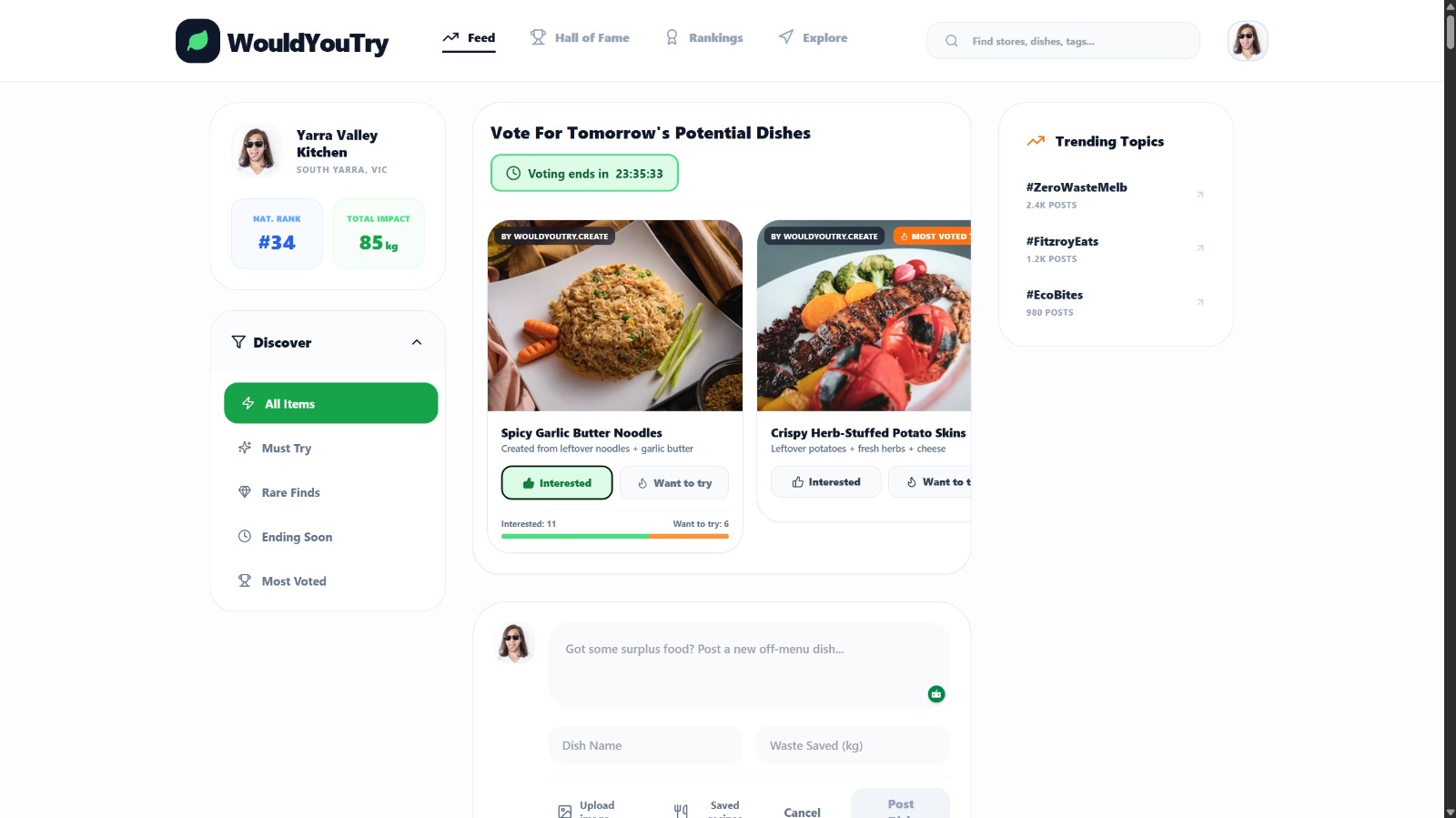
Approved recipes can then be synced to the second app, a social platform where brunch owners can create posts about dishes they have made. Customers can view these posts, react with thumbs up or down, leave comments, and heart posts to increase their popularity. The platform also includes a voting section where users can vote on approved dishes that cafés may prepare the next day.
Together, the system helps cafés turn leftovers into new dishes, test ideas with customers, and build community engagement around their menu.
How we built it
We built WouldYouTry as two connected web applications: an AI-powered dish creation platform for brunch owners and a social platform for customer interaction. Together, these applications create a complete workflow that allows cafés to turn leftover ingredients into new dishes and gather feedback from customers.
The management app, WouldYouTry.Create, allows café owners to input their current menu during sign-up so the system can understand the restaurant’s style and typical dishes. Owners can then select leftover ingredients from a predefined ingredient list, adjust quantities and units, and add notes about ingredients that may be at risk of being wasted. Using this information, an AI model generates recipe suggestions that match the café’s menu style and available ingredients. Each suggestion includes a dish description, ingredients used, cooking instructions, and portion scaling. Owners can save suggestions for later, adjust them, or approve them directly.
Approved recipes are then synced to the WouldYouTry social platform, where brunch owners can create posts about dishes they have prepared. Posts can include an image, the generated recipe, and additional details. Customers on the platform can react with thumbs up or thumbs down, heart posts to increase their popularity, leave comments, and vote on dishes they would like cafés to prepare the next day.
Technology Stack:
WouldYouTry (Social Platform)
- TypeScript, HTML, CSS, JavaScript, and React for the front-end interface
- Supabase for the database and backend services
The system acts as a social media, like platform where customers can interact with dishes posted by cafés and provide feedback to chefs.
WouldYouTry.Create (AI Dish Creation Platform)
- TypeScript, Vite, and React for the front-end interface
- Supabase for database storage and synchronization
- Web Speech API for speech recognition and text-to-speech input
- GLM-5 by Z.ai API for AI-powered food and recipe recommendations
The system receives available leftover ingredients as input through text or speech, generates possible menu ideas using AI, and gives chefs the ability to evaluate and share those ideas with customers.
Challenges we ran into
One of the main challenges we faced was the AI generation speed. Since the recipe suggestions require processing the restaurant’s menu context and the selected leftover ingredients, the AI sometimes took longer than expected to generate a response. This forced us to adjust how we structured prompts and outputs so that the suggestions could still be generated quickly enough for a smooth user experience during the demo.
Another challenge was that our project idea evolved during the hackathon. Initially, we focused only on the AI tool that generates new dishes from leftover ingredients. However, midway through Saturday we realised that while AI suggestions help create dishes, cafés still need a way to validate whether customers would actually be interested in them. This led us to expand the project and add a social platform where brunch owners can post approved dishes and gather reactions, comments, and votes from the community.
Although this pivot required us to rethink parts of the system and adjust our development plan, it ultimately strengthened the project by connecting food waste reduction, menu creativity, and customer feedback in one ecosystem.
Accomplishments that we're proud of
One accomplishment we are particularly proud of is successfully building a working connection between two different applications: the AI recipe generator and the social platform. Approved recipes generated from leftover ingredients can be synced directly into the social platform, allowing brunch owners to easily turn AI suggestions into posts that customers can interact with. This creates a complete flow from leftover ingredients to community feedback.
We are also proud of designing a system that not only generates recipe ideas but makes them practical and usable for cafés. The AI suggestions include detailed information such as ingredients used, cooking steps, portions, and waste cleared, making the output more than just a concept but something that could realistically be prepared in a kitchen.
Another accomplishment is the social engagement features we added to the platform. Customers can react to dishes, leave comments, and vote on what they would like cafés to prepare next. This helps brunch owners understand customer interest before committing to new dishes, while also promoting creativity and reducing food waste.
Finally, this was the first time our team had worked together, yet we were still able to collaborate effectively, adapt our idea during the hackathon, and complete the project within the limited time. Successfully finishing the project as a new team is something we are very proud of.
What we learned
One of the biggest lessons we learned during this hackathon is that clear communication is crucial when working in a team, especially when developing a project under time pressure. During the development process, some team members initially had different understandings of how the social media platform was supposed to work. This led to a short delay while we clarified the idea and aligned everyone on the same design and functionality.
Through this experience, we realised how important it is to regularly check in, explain ideas clearly, and make sure everyone shares the same understanding of the project goals. Once we clarified the concept, our development process became much smoother and more efficient.
We also learned how to adapt quickly and iterate on ideas during a hackathon, especially when our project evolved midway through the event. Overall, the experience helped us improve our teamwork, communication, and ability to build and adjust a project in a limited timeframe.
What's next for WouldYouTry
The next step for WouldYouTry is to further develop the platform so it can be used by real brunch cafés and customers. We plan to improve the AI system so it can generate recipe suggestions faster and provide more personalised results based on each café’s menu style, ingredient availability, and customer preferences.
We would also like to expand the social platform by adding features such as better recommendation systems, trending dishes, and improved voting mechanisms so customers can more easily discover and support dishes they are interested in. This would help cafés understand demand and make more informed decisions about what to add to their menu.
In the future, WouldYouTry could also integrate with restaurant inventory or POS systems to automatically detect leftover ingredients and generate suggestions in real time. By continuing to develop these features, the platform could become a practical tool for helping cafés reduce food waste, experiment with new dishes, and build stronger connections with their customers.
Built With
- css
- gen-ai
- glm
- html
- javascript
- sql
- supabase
- typescript
- vite
- z.ai


Log in or sign up for Devpost to join the conversation.