-
-
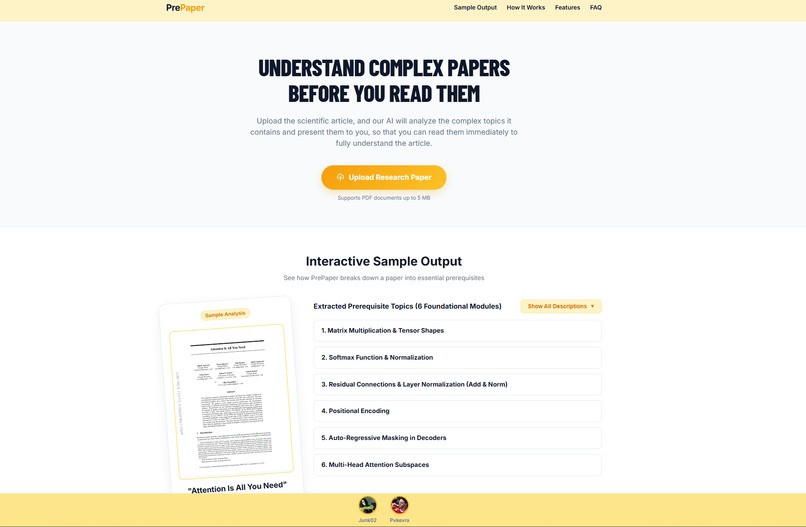
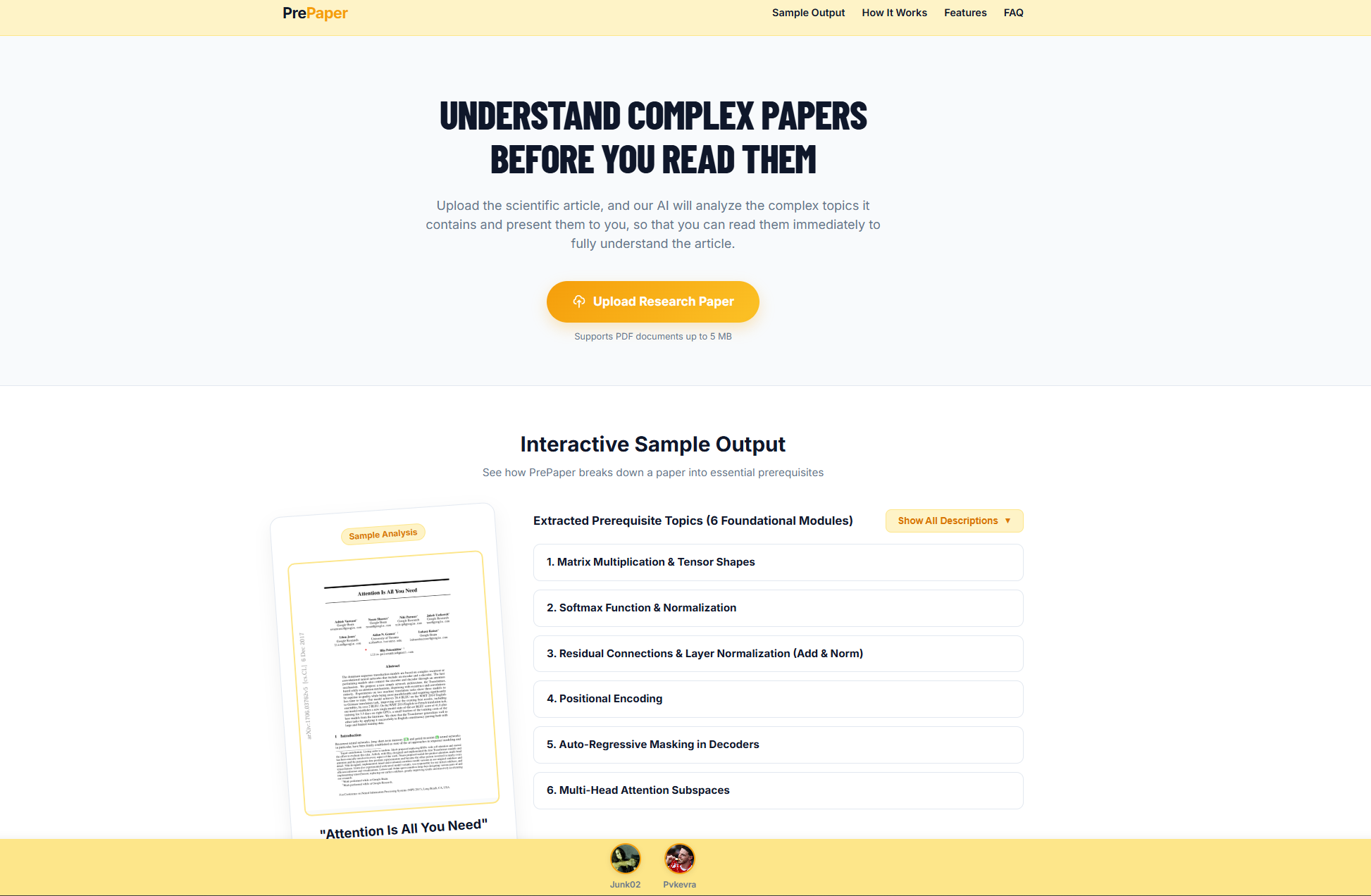
main page 1
-
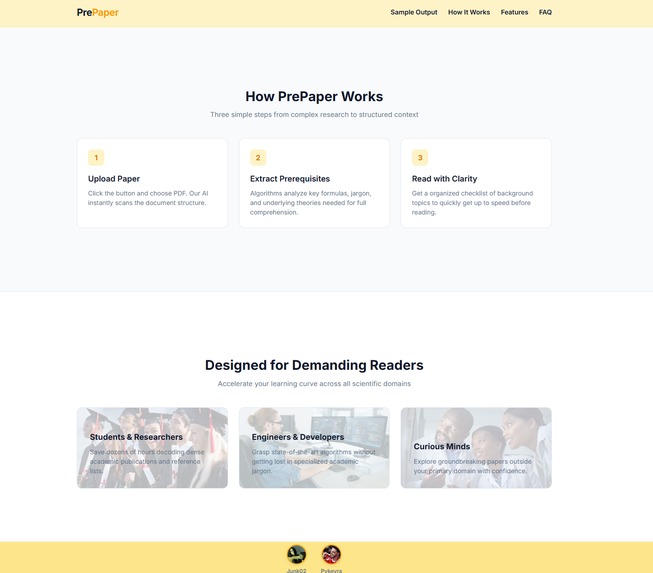
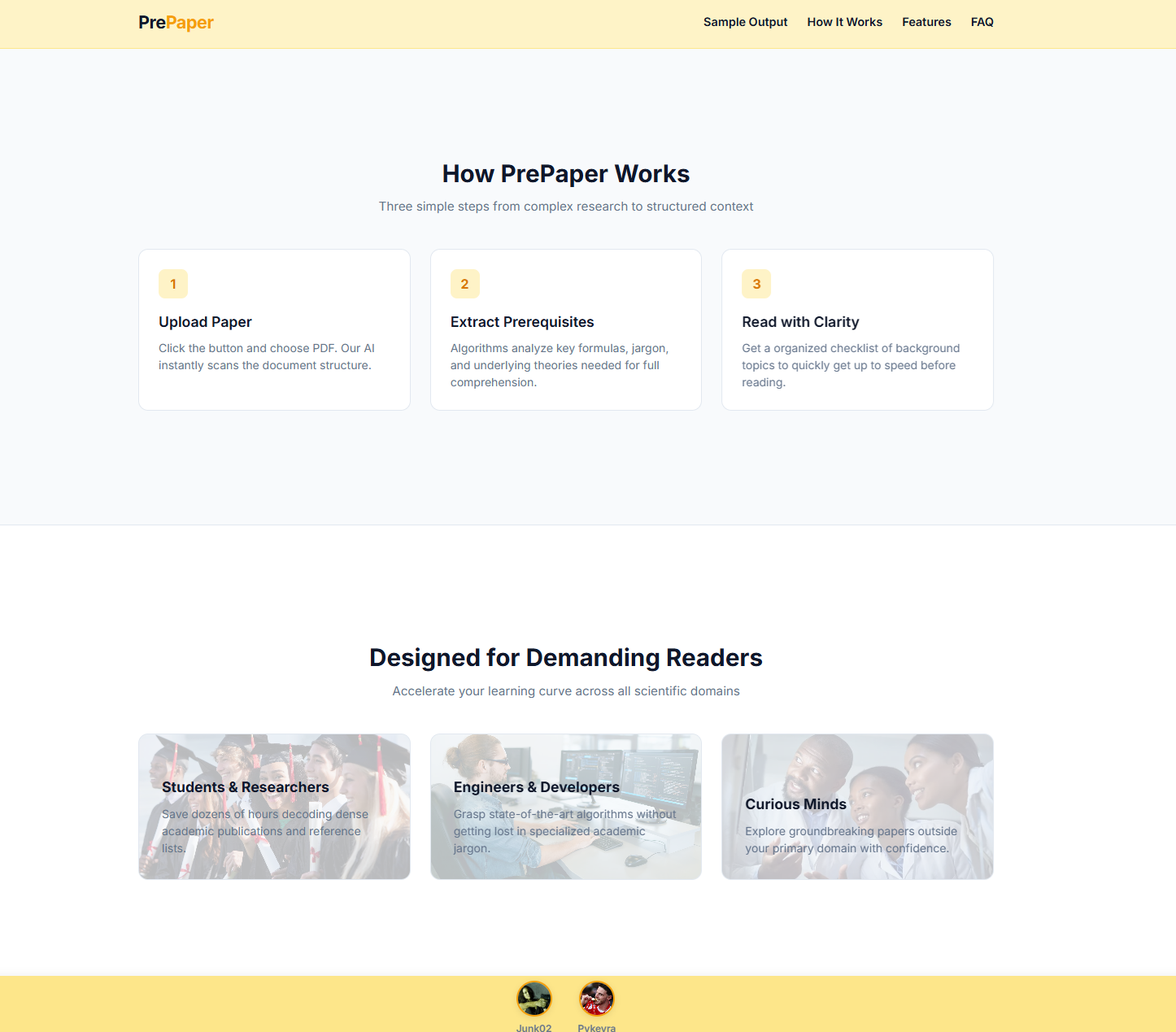
main page 2
-
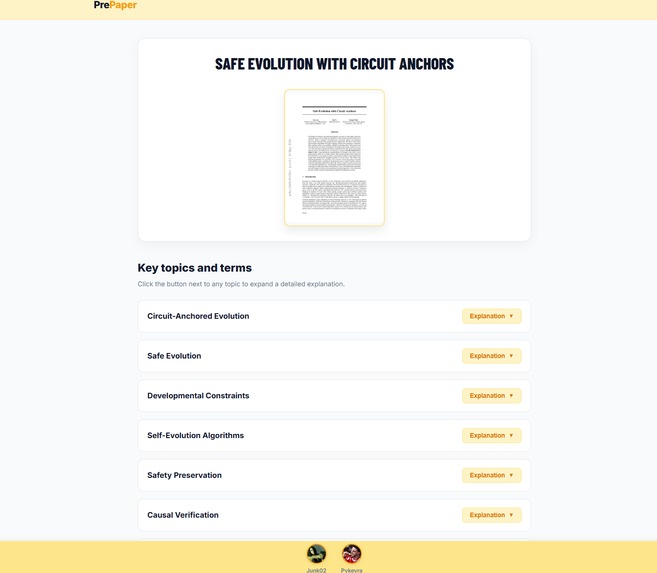
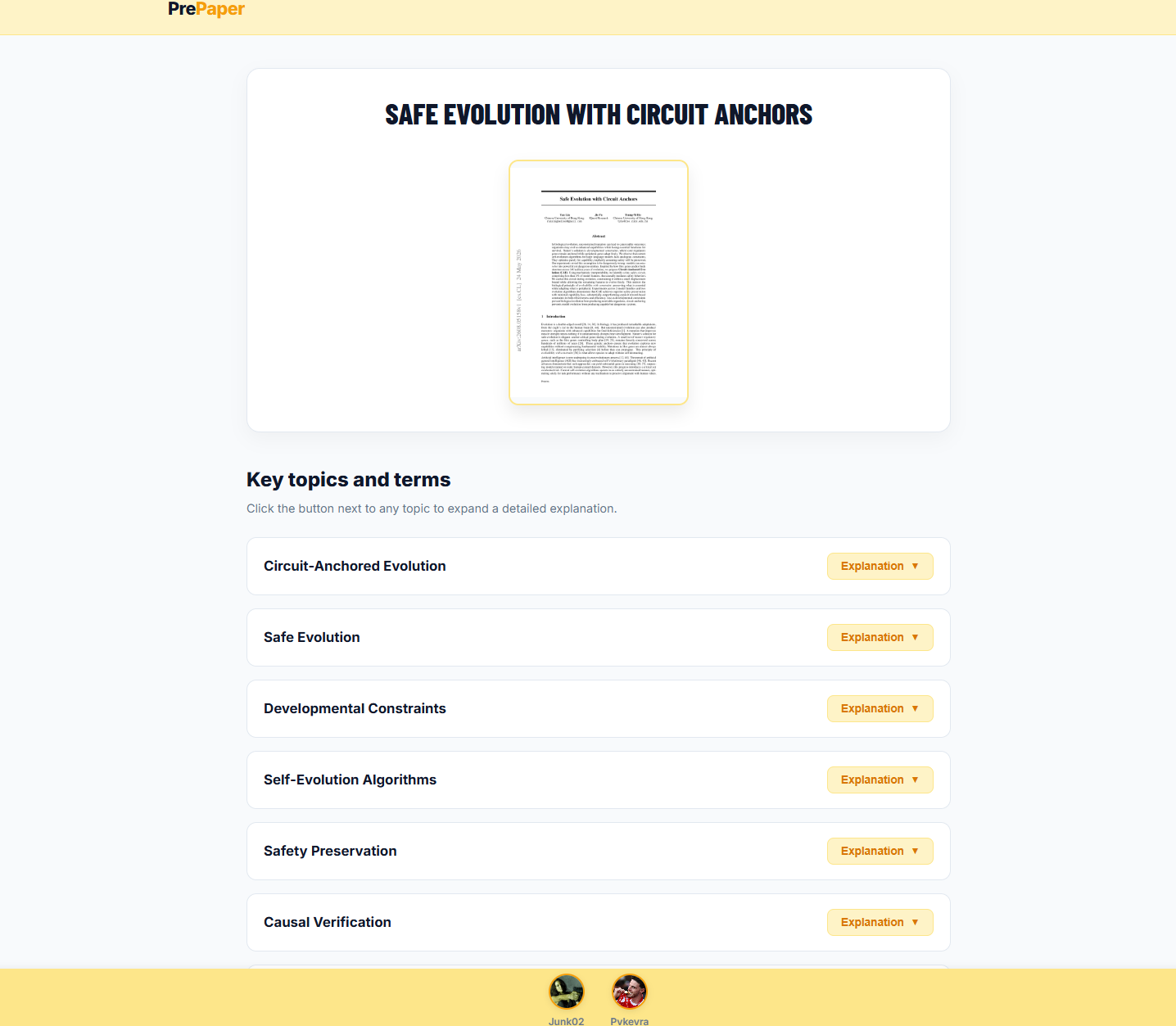
example of an analyzed paper
-
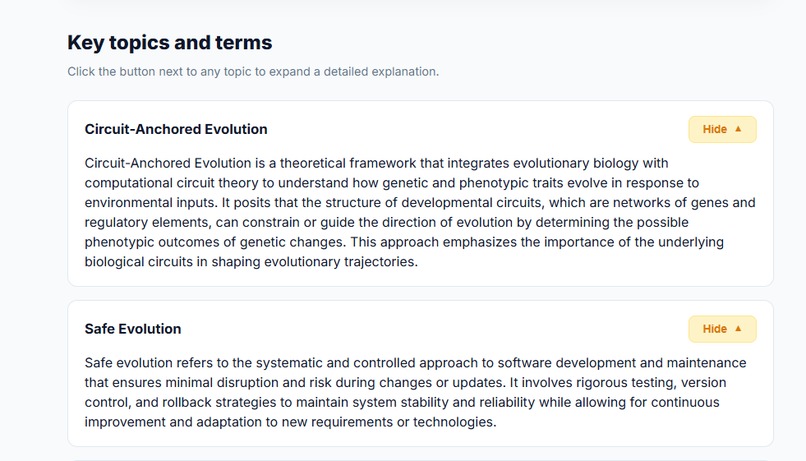
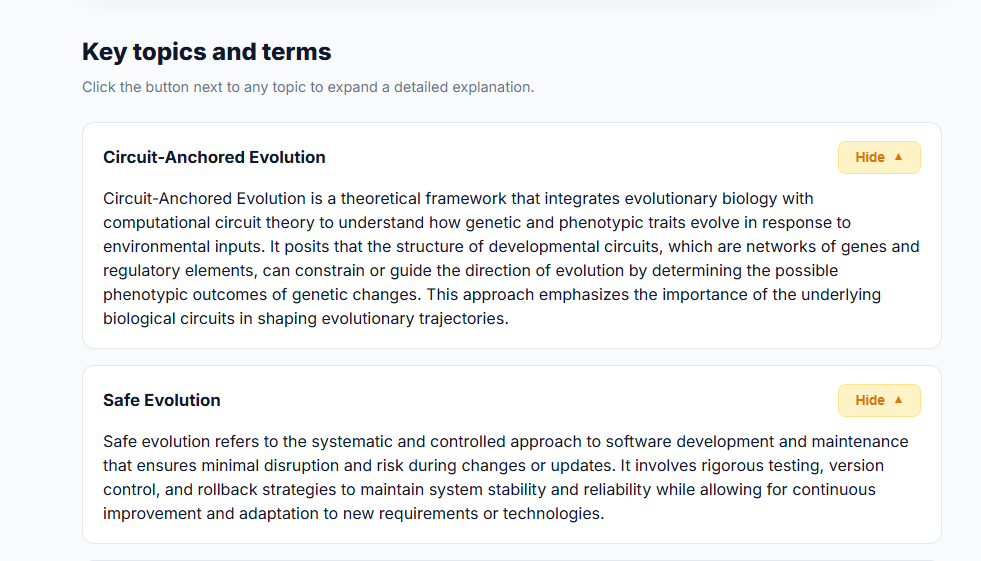
example of an explained topic
Inspiration
In the age of AI reading a paper might be harder than you thought. Modern life nukes your attention span, AI tools throw information at you faster than you can process it, and opening a dense PDF after a long day feels wearing We wanted to make papers approachable again — not by simplifying them, but by giving people the conceptual “entry point” they’re missing.
What it does
PrePaper takes any scientific PDF and instantly builds a personalized “concept map” for you. It extracts the core topics, merges them into a clean list, and generates clear explanations for each — basically a mini‑course that teaches you the ideas behind the paper before you read it. Instead of diving blind into 20 pages of jargon, you start with a guided overview that makes the whole paper understandable.
How we built it
We built a full backend pipeline that:
- extracts and cleans the paper’s text
- splits it into meaningful chunks
- analyzes each chunk with AI to find key concepts
- merges overlapping topics into a coherent list
- generates human‑friendly explanations for every topic
On the frontend, we designed a clean interface where users upload a PDF and instantly get a structured, readable breakdown of the paper’s conceptual landscape.
Challenges we ran into
- Getting consistent topic extraction across wildly different papers
- Merging similar concepts without losing nuance
- Keeping the explanations accurate, not oversimplified
- Handling large PDFs efficiently
- Making the frontend feel smooth while the backend does heavy processing
Accomplishments that we're proud of
- We built a complete end‑to‑end system in a very short time
- The topic explanations feel genuinely helpful, not generic
- The interface is simple enough for anyone to use
- The pipeline handles real scientific papers surprisingly well
- We created something that actually improves learning, not just automates tasks
What we learned
Throughout building PrePaper, we realized that scientific papers themselves aren’t the real obstacle — it’s the entry point that’s hard. Once you understand the core ideas, the rest becomes surprisingly manageable. We also learned how much good UX matters, even in AI‑heavy tools; the experience around the model is just as important as the model’s output. Finally, we learned the classic hackathon truth: everything is chaotic, nothing goes as planned, but building something genuinely useful makes the chaos worth it.
What's next for PrePaper
Looking ahead, we want PrePaper to evolve from a concept extractor into a full learning companion. One of the first steps is adding visual concept maps, so users can see how ideas connect. We also want to make the interface more interactive — for example, letting users click a topic and instantly jump to the exact section in the paper where it appears.
Another direction is generating prerequisite knowledge lists, giving readers a quick “what you should know before reading” overview. We plan to expand to multiple languages and eventually turn PrePaper into a tool that students, researchers, and curious learners can rely on whenever they face a complex paper and want a guided, friendly way in.
Built With
- css3
- fastapi
- featherlessai
- html5
- javascript
- python

Log in or sign up for Devpost to join the conversation.