-
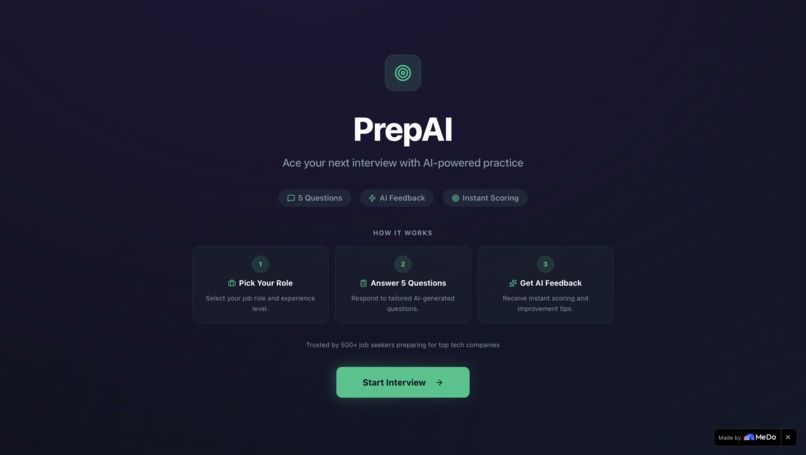
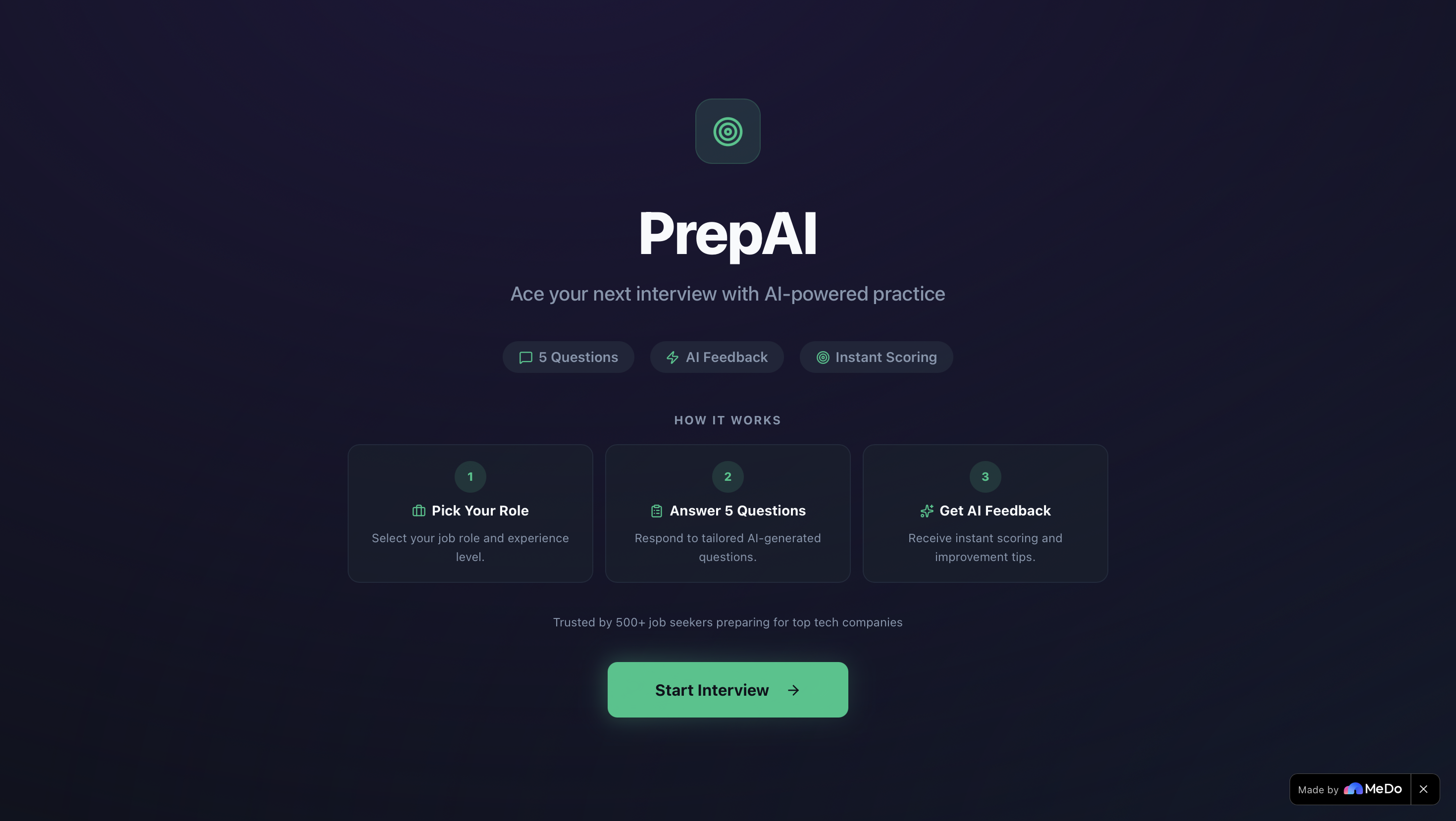
Landing Page
-
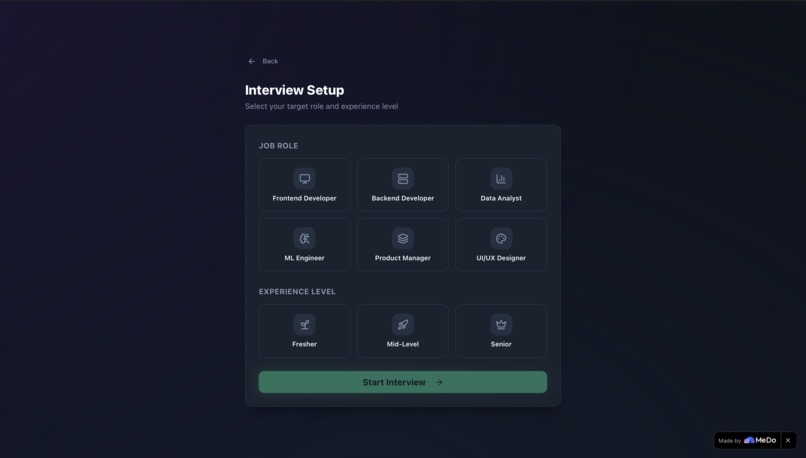
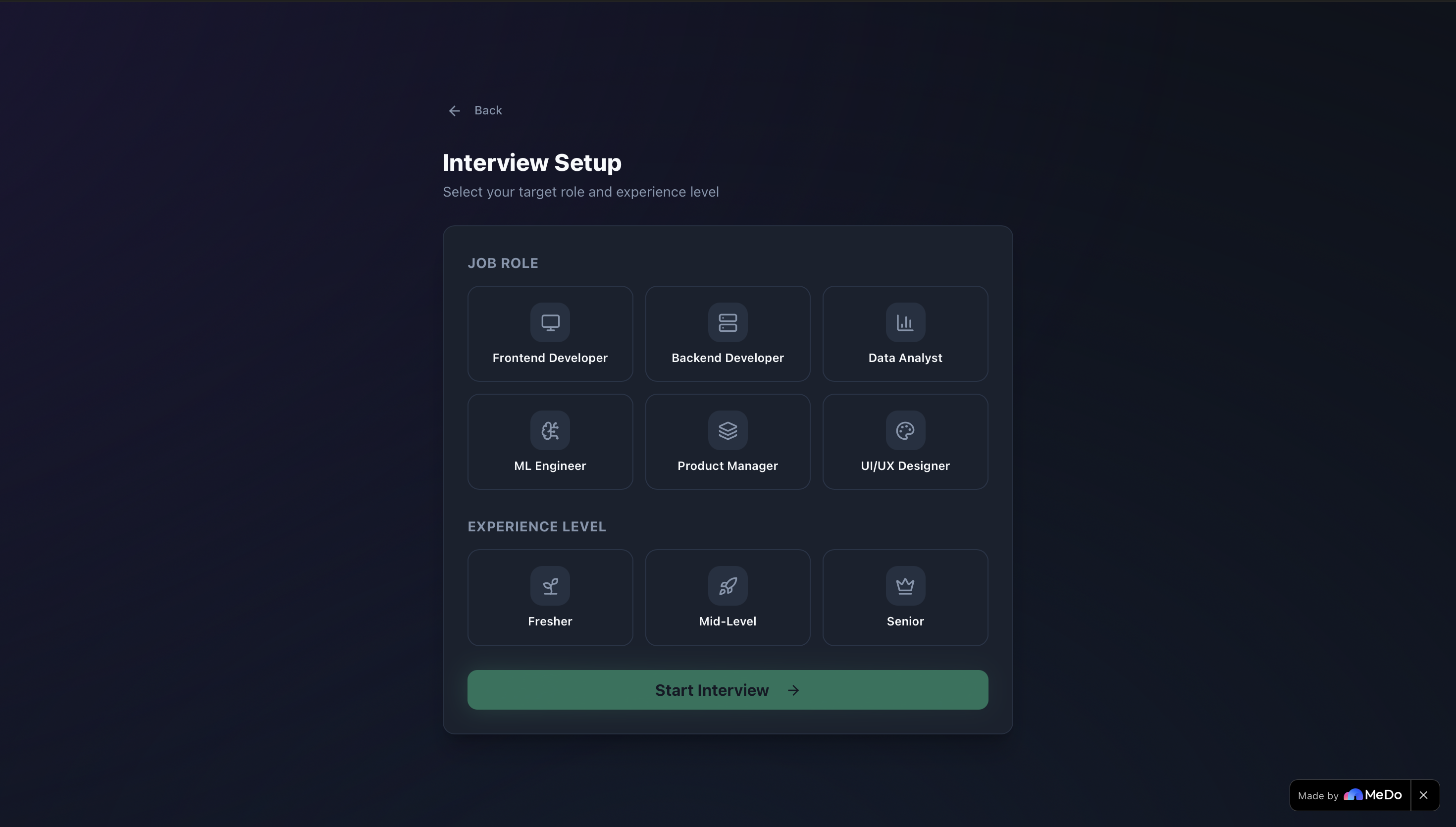
Interview Setup Page
-
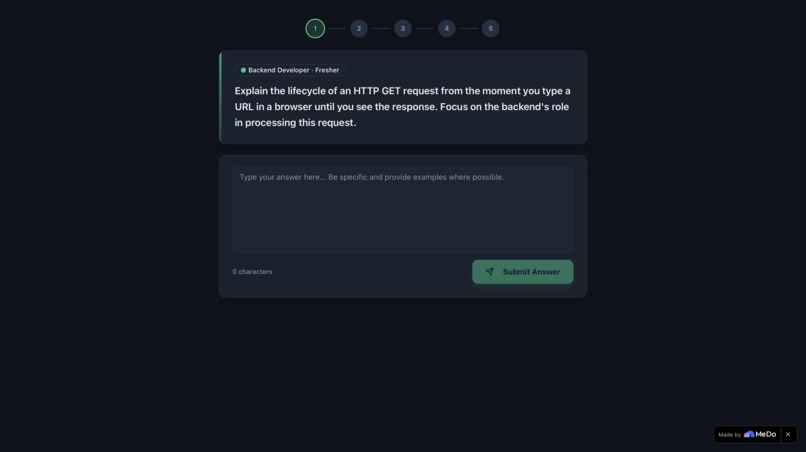
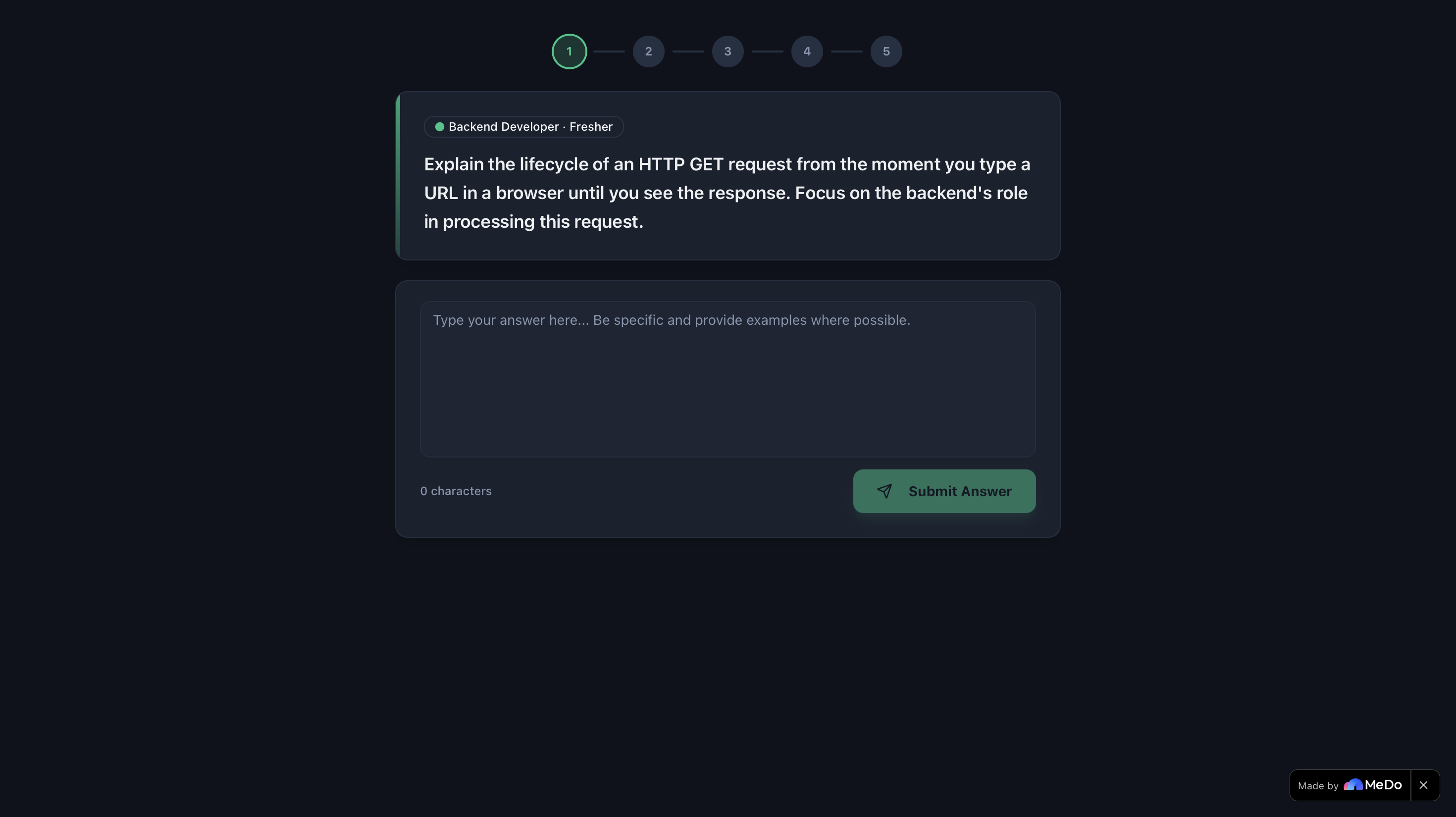
Interview Question for a Backend Fresher
Inspiration
As a final-year Electronics and Communcations student actively preparing for technical interviews, I felt the pain of not having a personalized, on-demand way to practice. Most platforms either give you leetcode-style problems or generic HR questions — none of them simulate the actual back-and-forth of a real technical interview with role-specific questions and instant constructive feedback. I wanted to build something that felt like having a senior engineer sitting across from you, asking you the right questions for your target role and actually telling you what you missed.
What it does
PrepAI is an AI-powered mock interview coach that helps job seekers practice for real technical interviews. Users select their target role and experience level, then answer 5 AI-generated questions tailored to that profile. After each answer, the app provides an instant score out of 10, highlights what was strong, what was missing, and shows a model answer. The session ends with a full summary — overall score, per-question breakdown with color-coded badges, and personalized Strengths and Focus Areas. Built entirely using MeDo's natural language app builder. I used iterative conversation prompts to progressively build the full-stack app — starting with the core interview flow, then refining AI feedback quality, UI design, and the session summary screen. MeDo's ability to generate both frontend and backend logic from natural language made it possible to build and deploy a working product in hours. The standout feature MeDo generated was the dynamic feedback engine that adapts questions and scoring based on both role and seniority level selected.
How we built it
I built PrepAI entirely using MeDo, Baidu's no-code AI app builder.
The build happened in layers through iterative natural language prompts:
- Core flow first — I described the full interview flow: role + experience selection, 5 questions, per-answer AI feedback, session summary
- AI intelligence — I prompted MeDo to make questions adapt based on both the selected role and seniority level (Fresher vs Senior questions are meaningfully different)
- Feedback structure — I refined the feedback panel to always return three clearly labeled sections: What You Did Well, What Was Missing, Model Answer
- Session summary — The final screen shows a circular score dial, a per-question breakdown table with color-coded score badges, and a Strengths vs Focus Areas card
No backend code was written manually. MeDo handled data flow, AI API calls, and frontend rendering — I focused entirely on product thinking and prompt engineering.
Challenges we ran into
Getting AI feedback quality right was the hardest part. The first version returned vague, overly generous scores — most answers were getting 8/10 regardless of quality. I had to carefully re-prompt to make the scoring strict and the feedback specific rather than generic encouragement.
Text parsing edge cases — Early on, the Strengths section in the summary was occasionally splitting a single sentence across multiple bullet points, making it look broken. I caught this during testing and fixed it through a targeted prompt before submission.
Staying within a limited credit budget — I had a fixed number of MeDo credits, which forced me to think carefully before each prompt. Instead of making small incremental changes, I bundled multiple improvements into single well-structured prompts. This constraint actually made me a better prompt engineer.
What we learned
- How to use MeDo's natural language app builder to go from idea to deployed full-stack app in hours — without writing a single line of code manually
- How to structure AI prompts so the feedback engine produces role-aware, seniority-aware questions rather than generic ones
- That iterative conversation-based building (describe → preview → refine) is surprisingly powerful for shipping fast
- The importance of UX clarity in AI apps — structured feedback panels (What You Did Well / What Was Missing / Model Answer) are far more useful than a wall of AI text
Built With
- ai/llm
- medo
- prompt-engineering
- rest


Log in or sign up for Devpost to join the conversation.