-
-
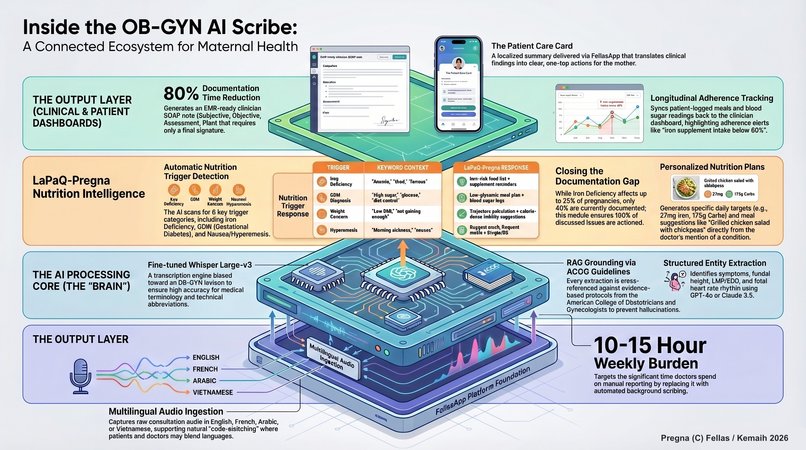
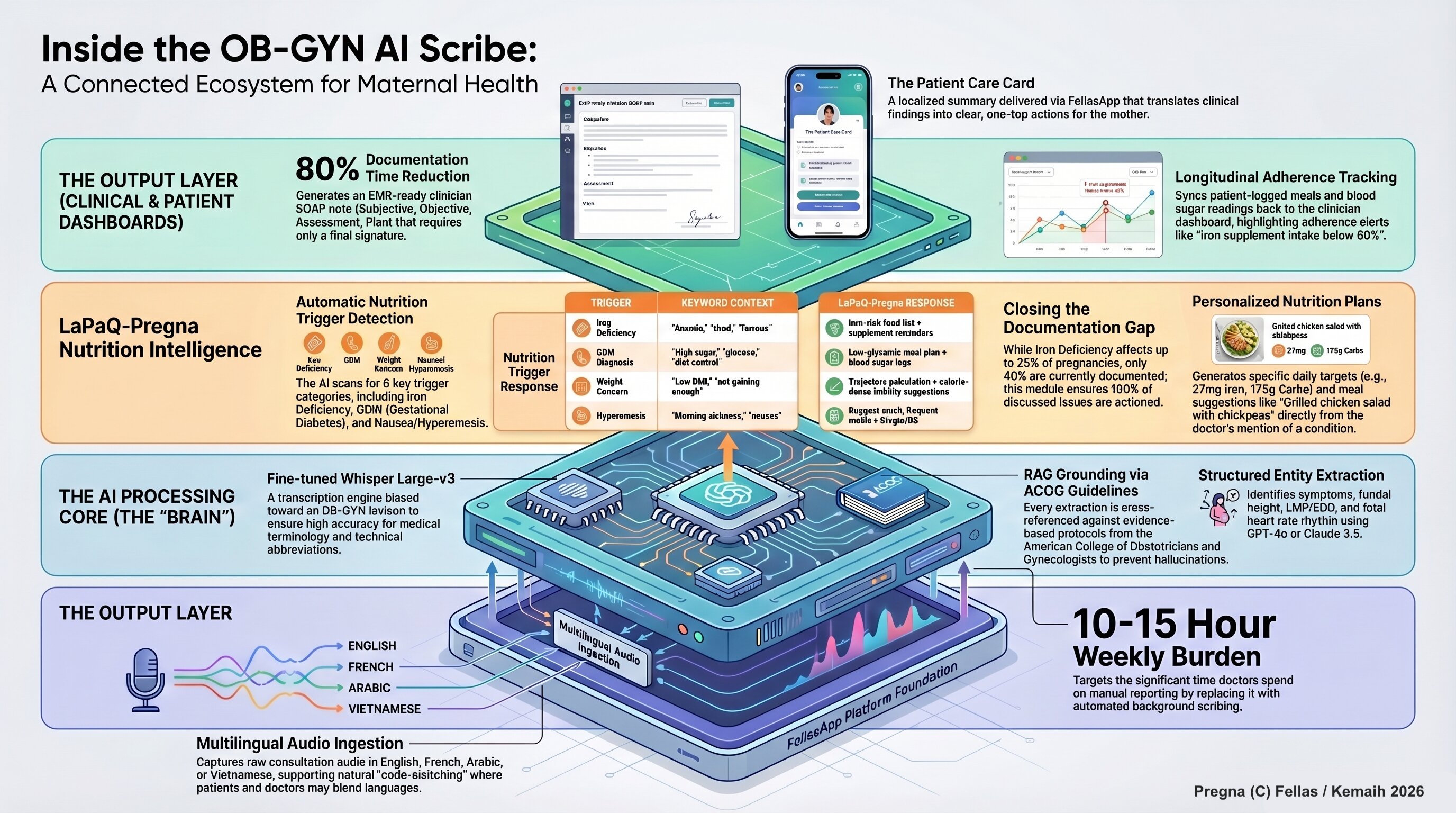
Infographic for Pregna
-
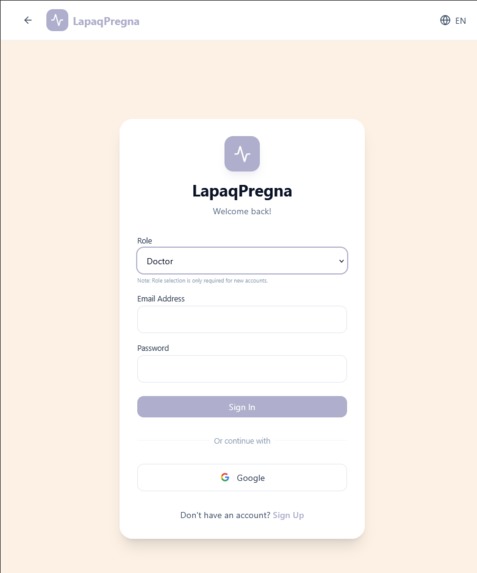
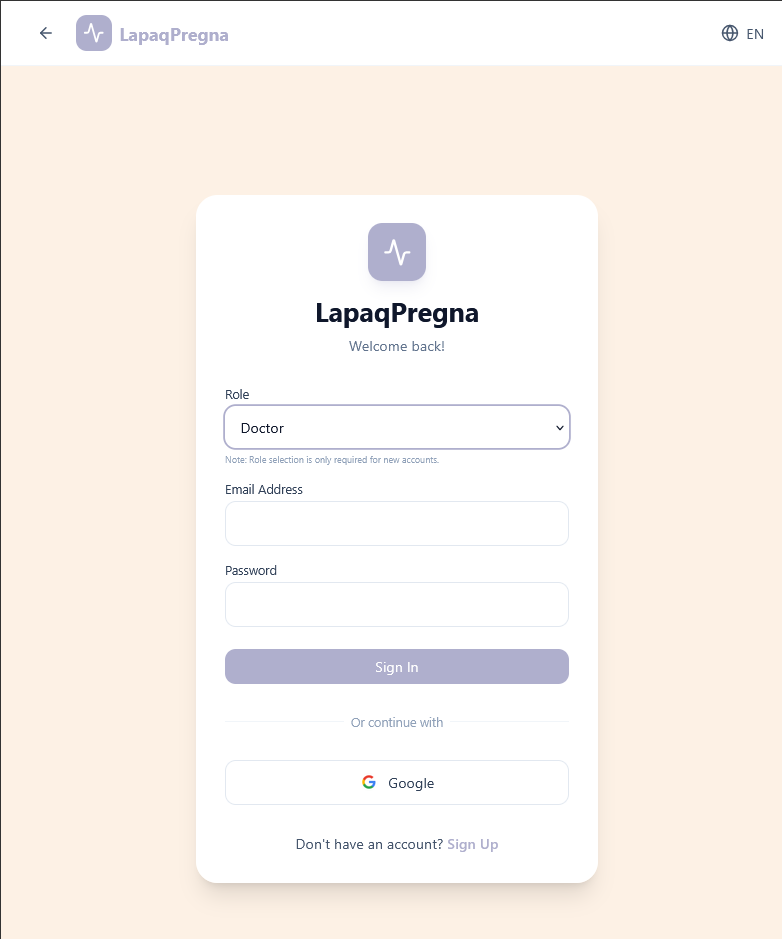
Login page
-
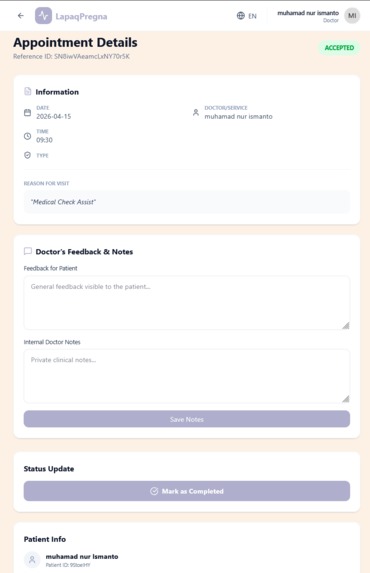
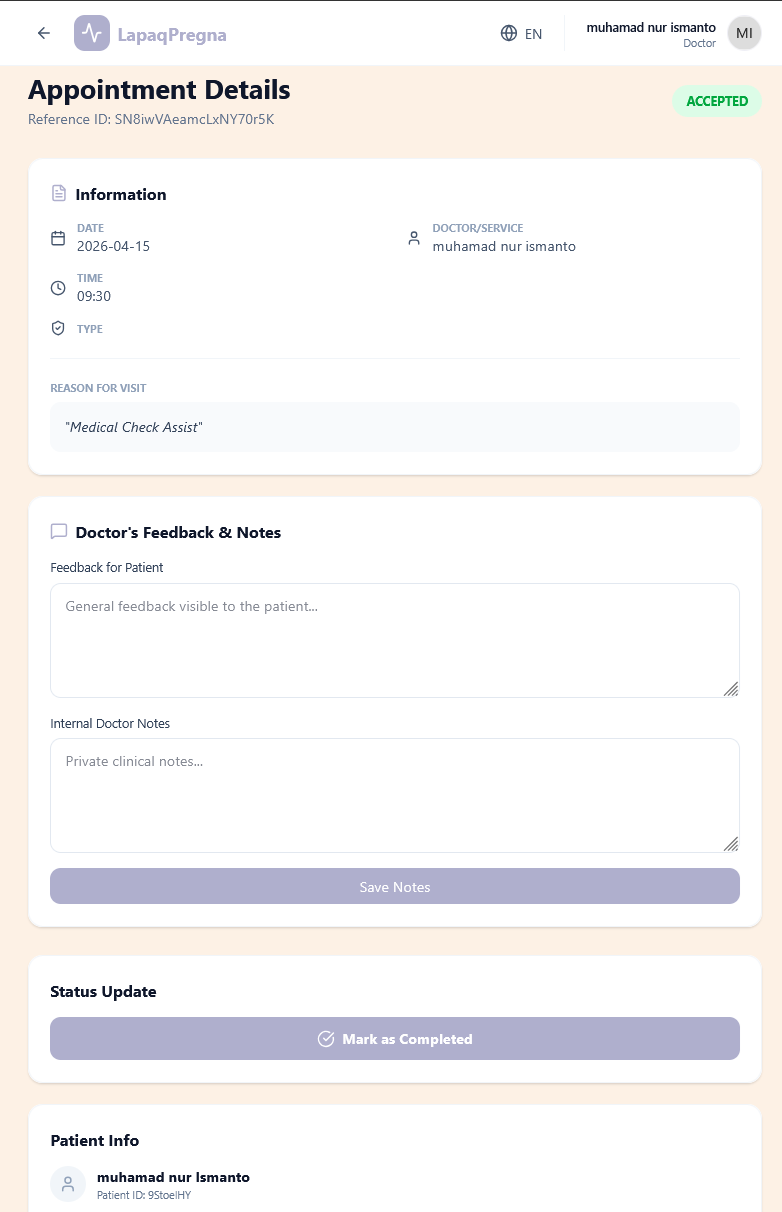
Doctor appointmentpage
-
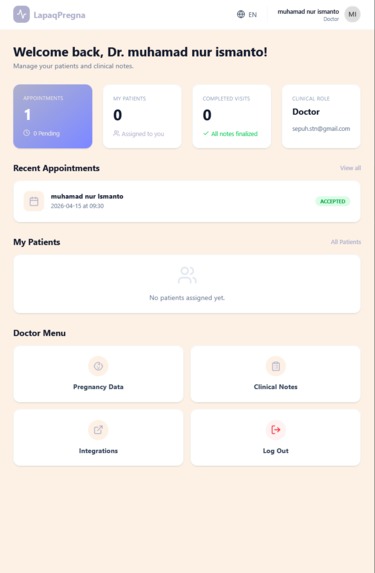
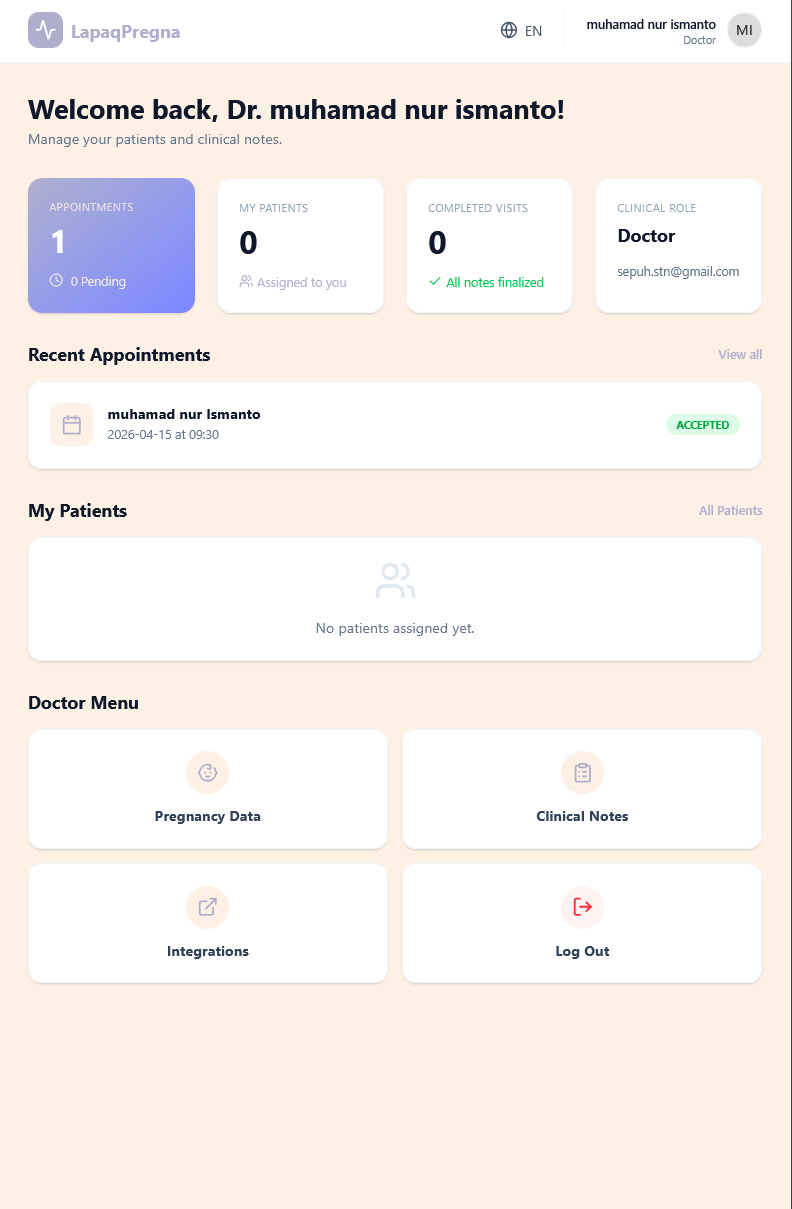
Doctor dashboard
-
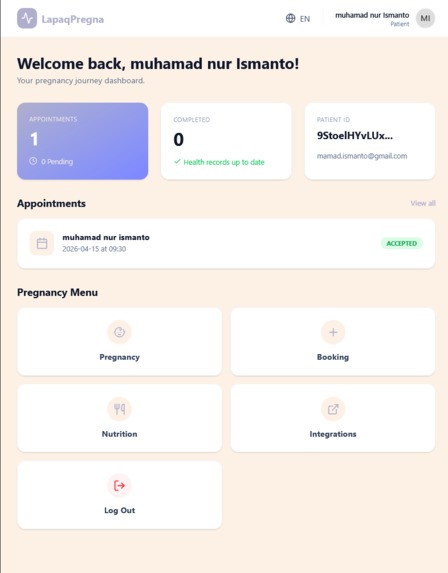
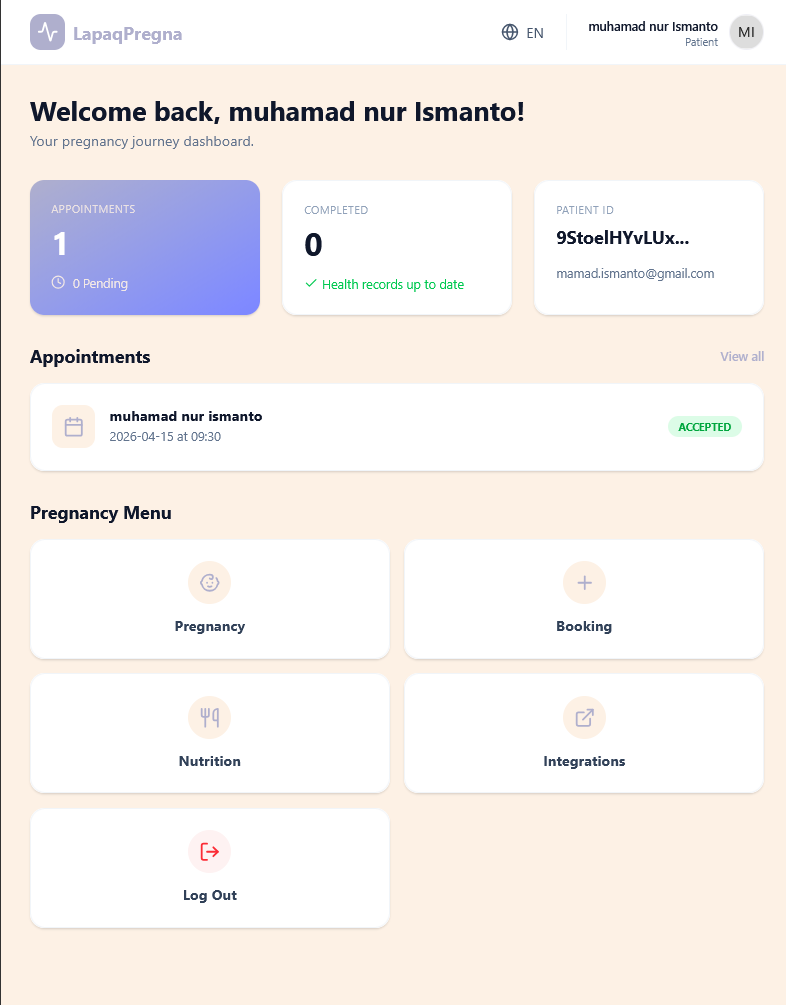
Patient Dashboard
-
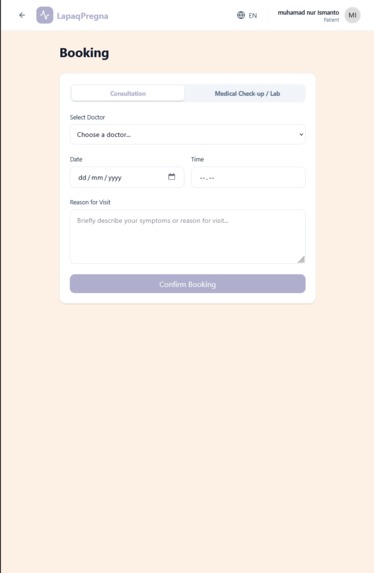
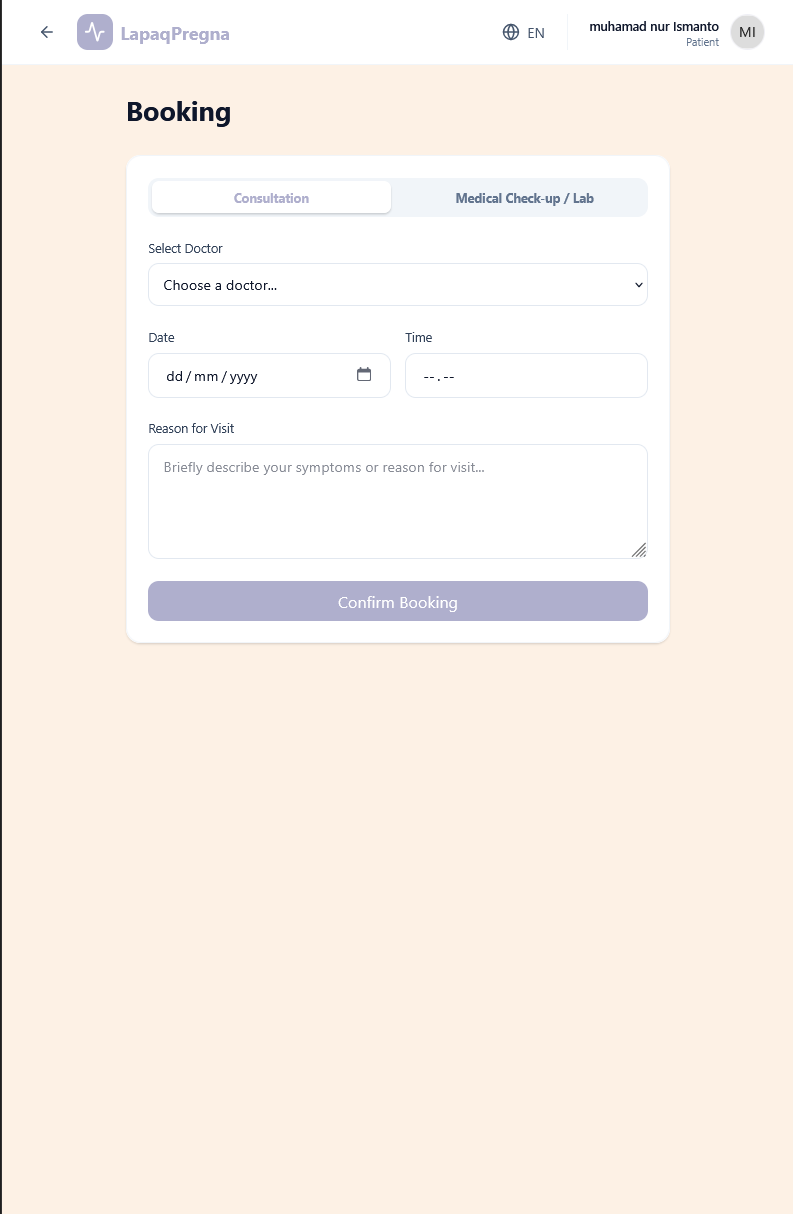
Patient Booking Form
-
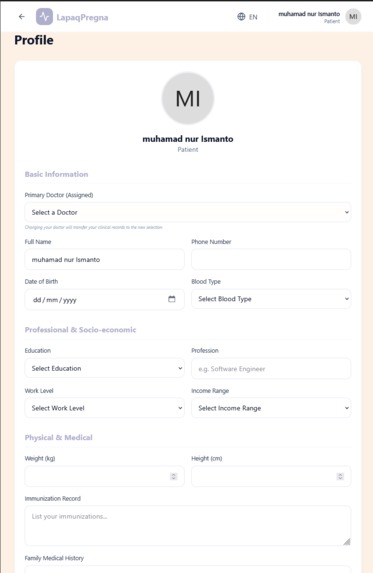
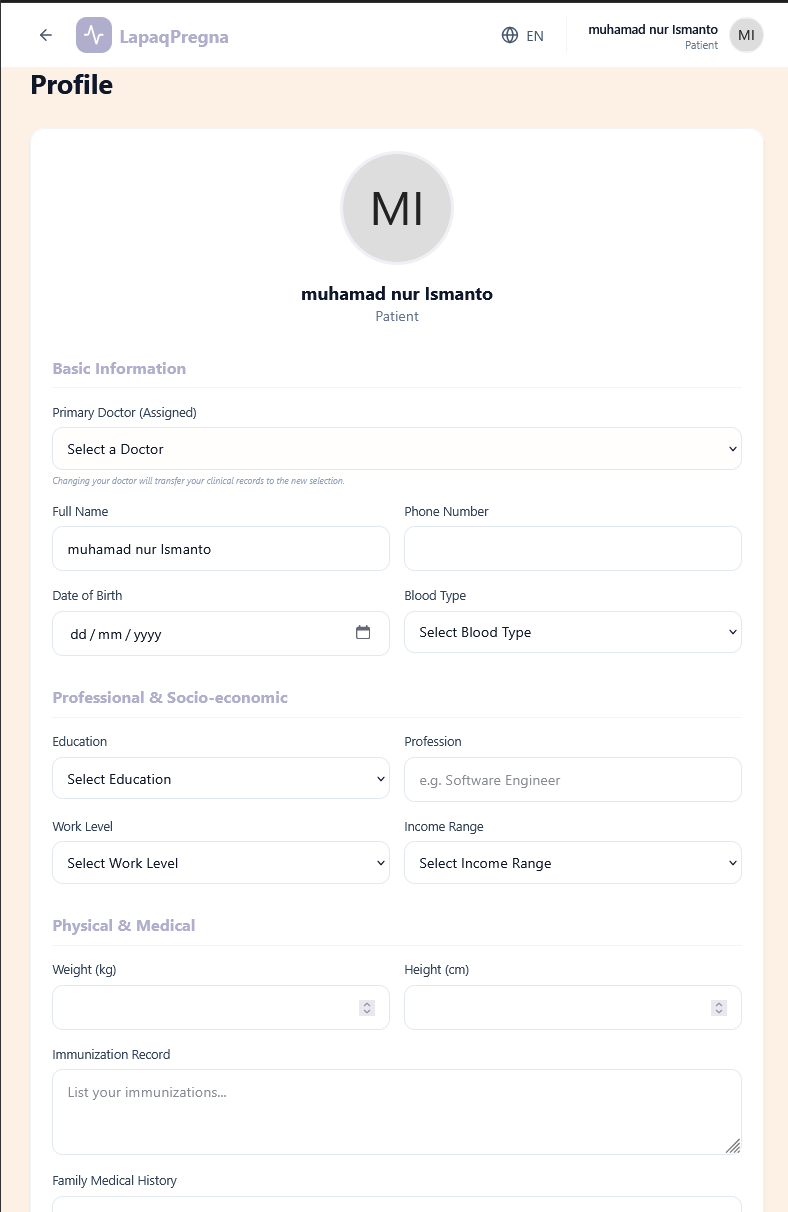
Patient Profile
-
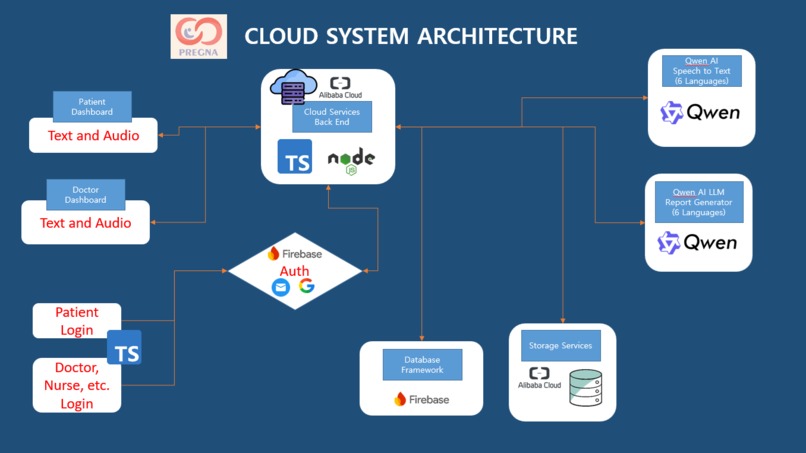
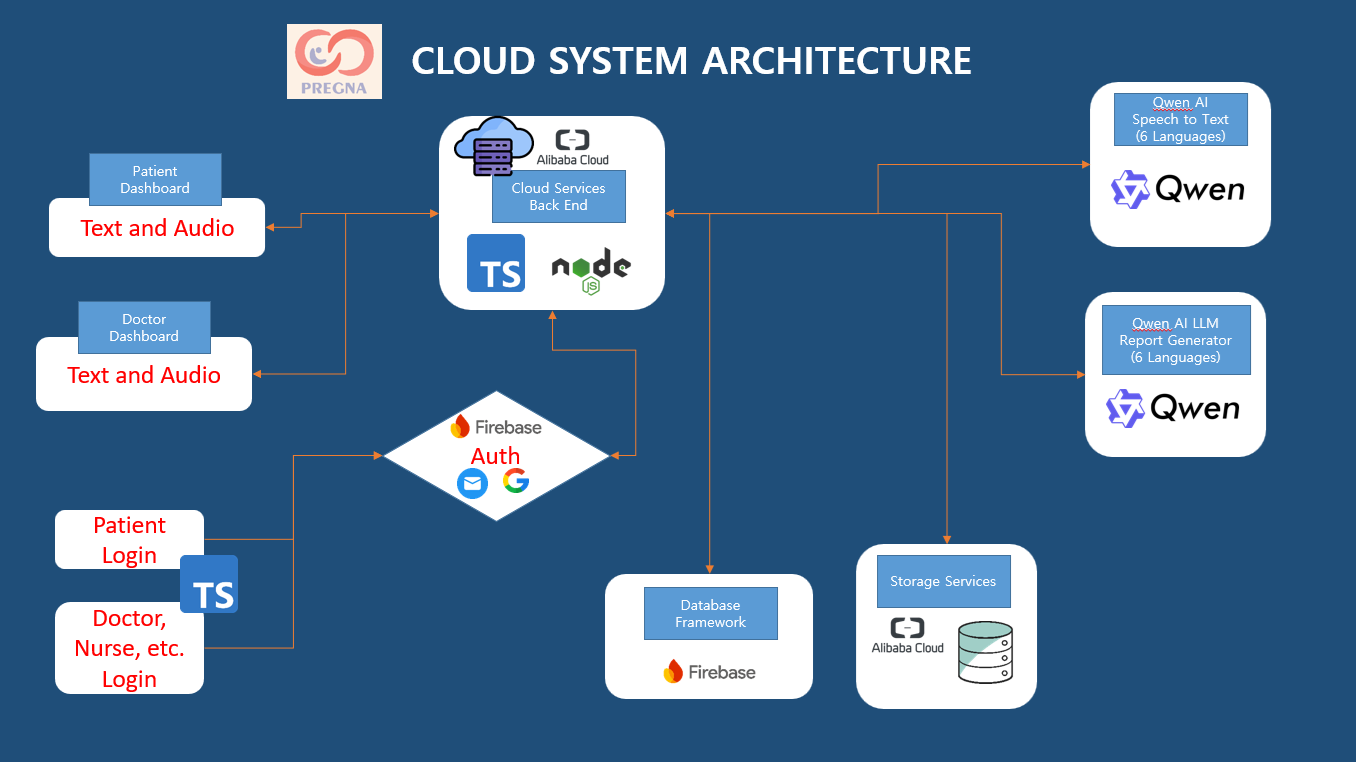
Project Architecture
Inspiration
The deck revealed a painful truth: nutrition discussions happen verbally during prenatal visits but rarely survive into actionable daily care. O&G specialists lose hours on documentation, while mothers walk away without personalized, trackable nutrition plans. We saw an opportunity to bridge this gap by embedding intelligence directly into the Fellas ecosystem, where patients already are, and partnering with LaPaQ for nutrition intelligence.
What it does
Pregna transforms a single O&G consultation into dual outputs: (1) EMR-ready SOAP notes with OB-GYN-specific lexicon (LMP, EDD, G/P), and (2) automated multilingual nutrition plans pushed via FellasApp. It detects dietary gaps, triggers evidence-based LaPaQ-Pregna meal suggestions, and tracks daily adherence all while code-switching across EN/FR/AR/VN/MY/ID/TH.
How we build it
# Pregna core logic (simplified)
class PregnaEngine
  def process_consultation(audio_input)
    scribe_note = obgyn_scribe.transcribe(audio_input)
    nutrition_plan = lapaq_trigger.plan(scribe_note.keywords)
    push_to_fellasapp(patient_id, nutrition_plan)
    export_to_emr(scribe_note)
  end"
We leveraged the FellasApp [https://fellas.id] SDK (OAuth, S3 APIs, custom module SDK, native UI) as our foundation. The OB-GYN AI Scribe uses speech-to-text and translation model (via Qwen2.5-Omni or Qwen3-ASR models) with RAG grounding against ACOG protocols. LaPaQ [https://lapaq.app] acts as the trigger engine, listening for contextual keywords (e.g., "anemia," "gestational diabetes") to generate personalized, trackable nutrition plans. The dual-view UX serves clinicians (editable SOAP notes, one-click EMR export) and patients (native-language Care Cards, daily trackers).
Challenges we ran into
Hallucination risk: Solved with RAG guardrails cross-referencing ACOG evidence.
Code-switching complexity: Real consultations blend languages; we trained our model for seamless EN/FR/AR/VN/MY/ID/TH transitions.
Nutrition gap detection: Defining the trigger lexicon required iterative testing with O&G specialists.
Patient safety filtering: Sentiment analysis removes speculative language to prevent maternal anxiety.
Accomplishments that we're proud of
Saving 10 hours per clinician per week in documentation time.
Creating the first AI scribe that doesn't stop at notes, it extends care into the mother's daily kitchen.
Native integration with FellasApp and LapaqApp (white-label ready) rather than building yet another standalone SaaS.
Multilingual, culturally localized meal plans that mothers actually use.
What we learned
Domain specialization beats general AI. A general scribe understands "BP," but an OB-GYN scribe understands that rising BP + weight gain trends flag preeclampsia risk. We also learned that trend analysis, automatically comparing current vitals to visit history is as critical as transcription. Finally, patient-facing language must be filtered for anxiety: "possible risk" becomes "let's monitor together."
What's next for Pregna
Scaling from OB-GYN to Pediatrics, Cardiology, and Diabetes care.
Deeper LaPaQ integration for real-time grocery lists and recipe recommendations.
Clinic analytics dashboard for screening compliance and outcome trends.
Expanding code-switching to additional languages (e.g., Mandarin, Malay, Indonesian, Thai, Tagalog).
White-labeling the module for hospital groups and telehealth platforms.## Inspiration
Built With
- cloud
- css3
- firebase
- html5
- lapaq.app
- node.js
- qwen
- typescript
- vercel


Log in or sign up for Devpost to join the conversation.