-
-
Project Check
-
Questions
-
Home
-
Novus
-
Summary
-
Summary 2
Inspiration
AI tools have made it incredibly easy to start building. That is exciting, but it also creates a new problem: it is now easier to build the wrong thing faster.
Preflight came from that tension. Before opening Cursor, Lovable, Bolt, Replit, or any other building tool, I wanted a quick way to pause and ask: what am I assuming, what is still unproven, and what should I validate before spending time on the build?
What it does
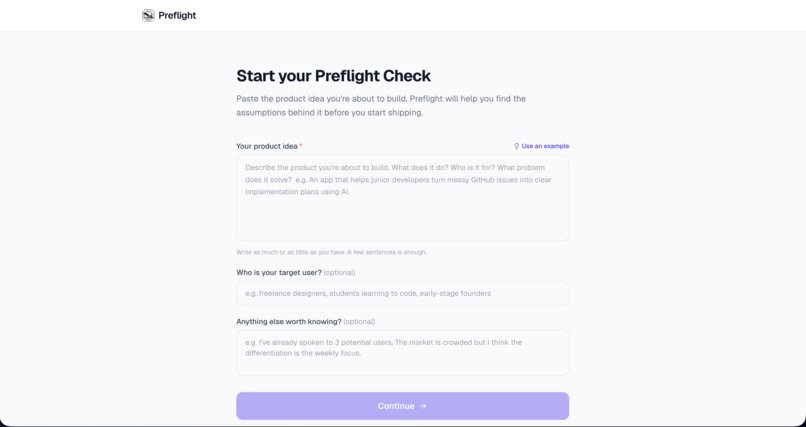
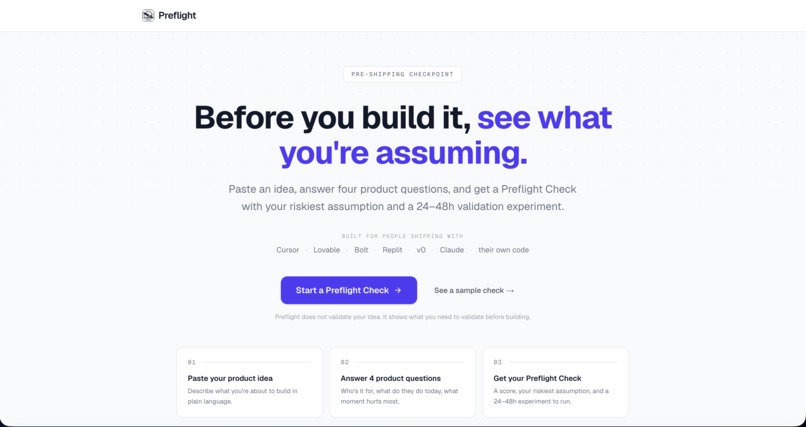
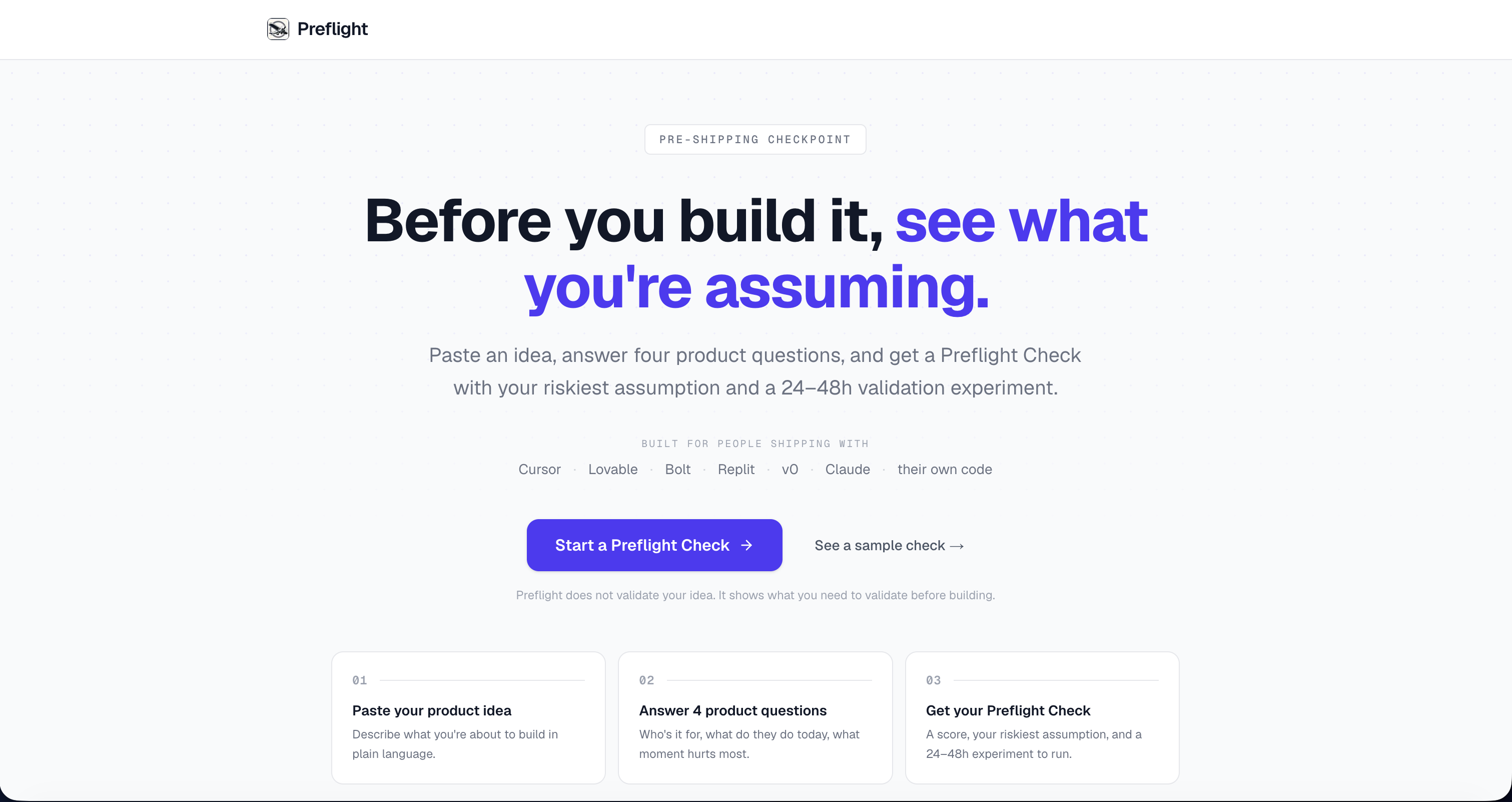
Preflight is a pre-shipping checkpoint for AI builders.
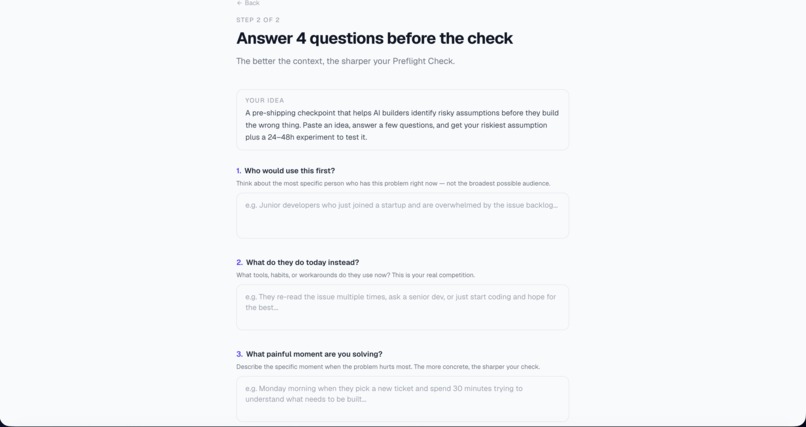
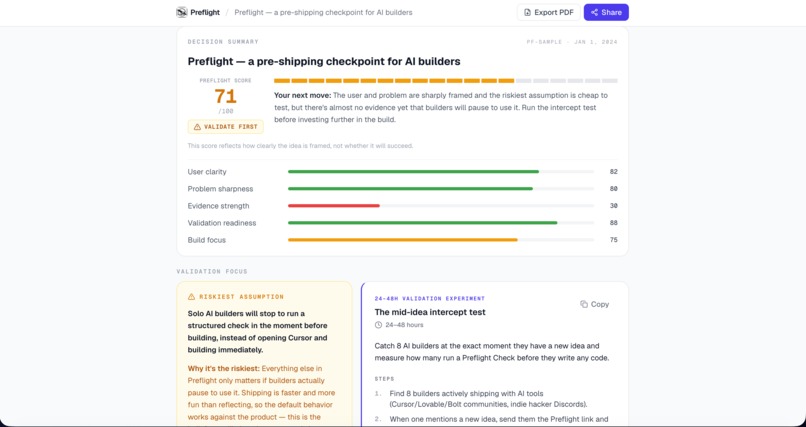
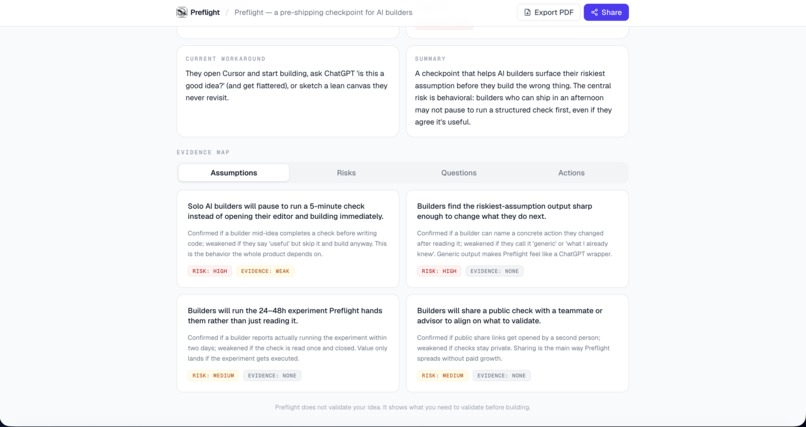
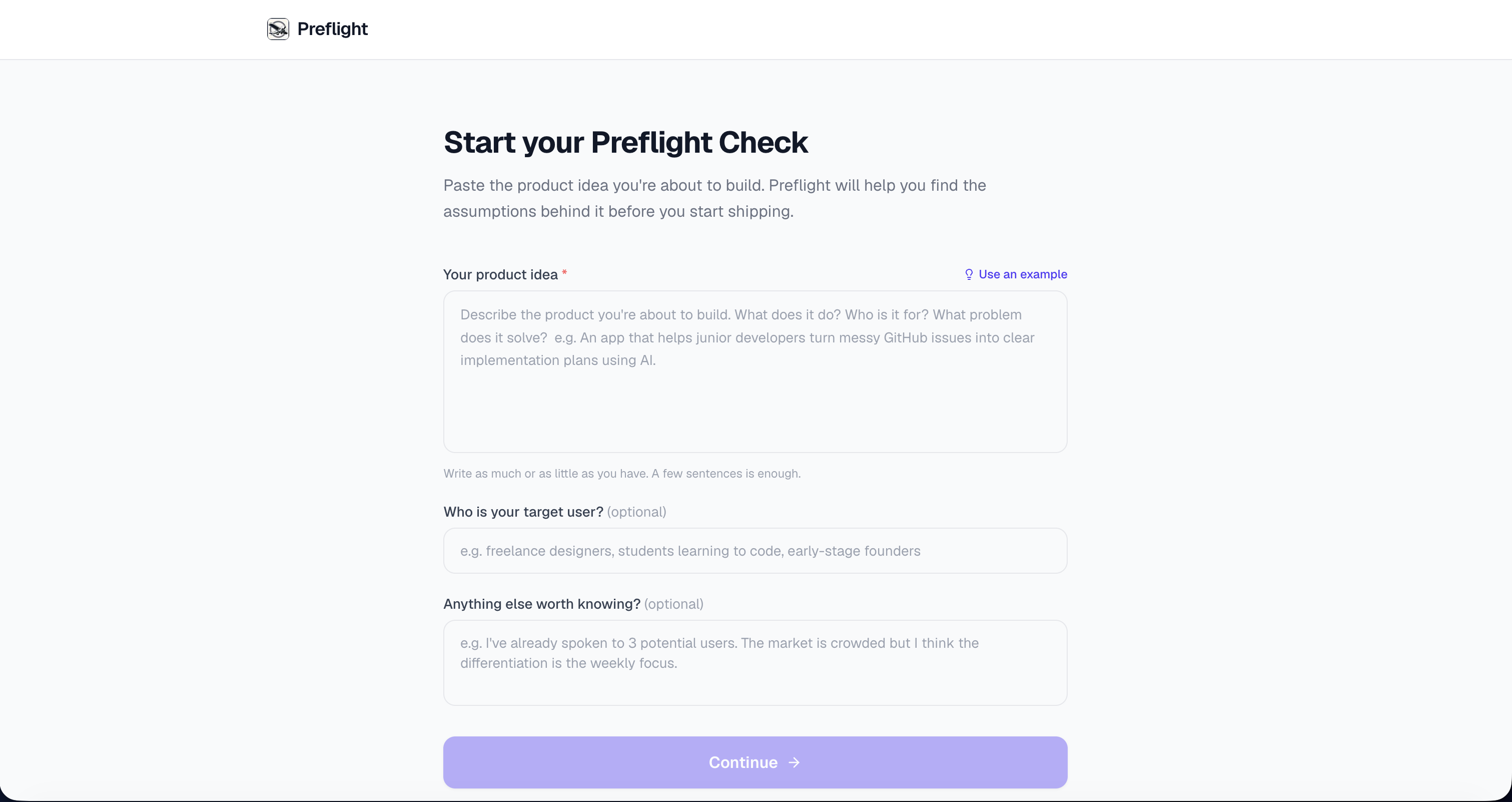
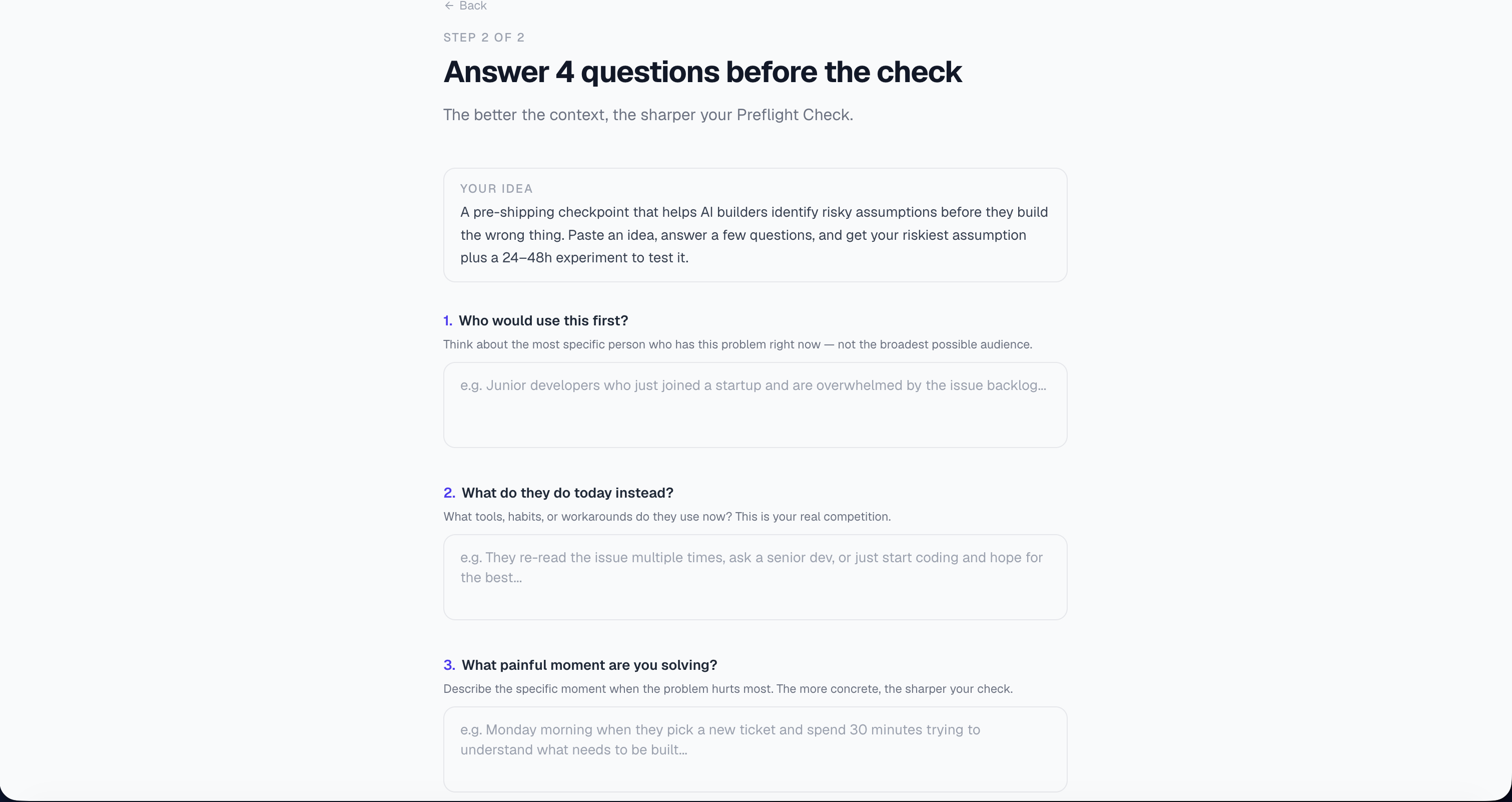
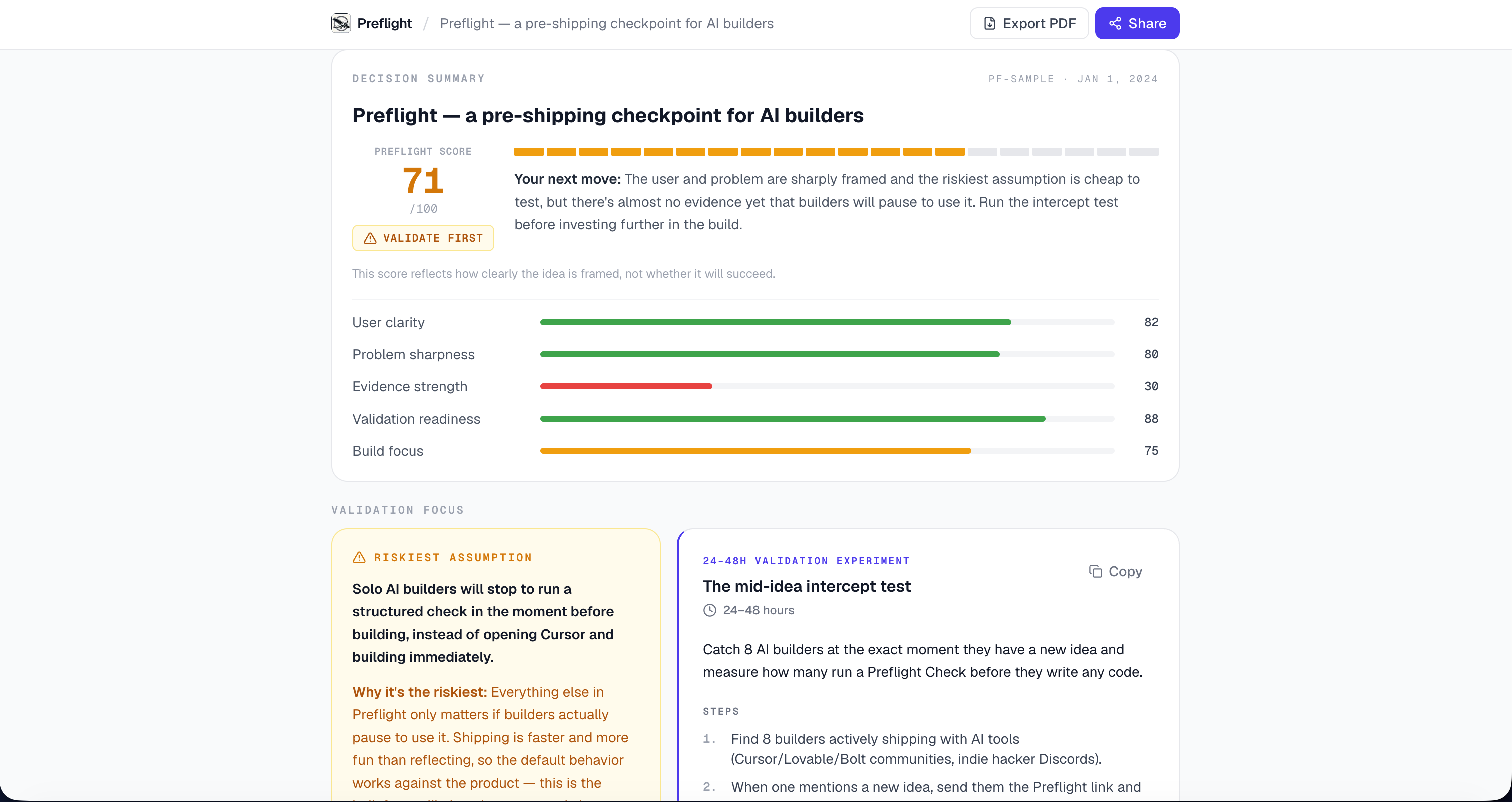
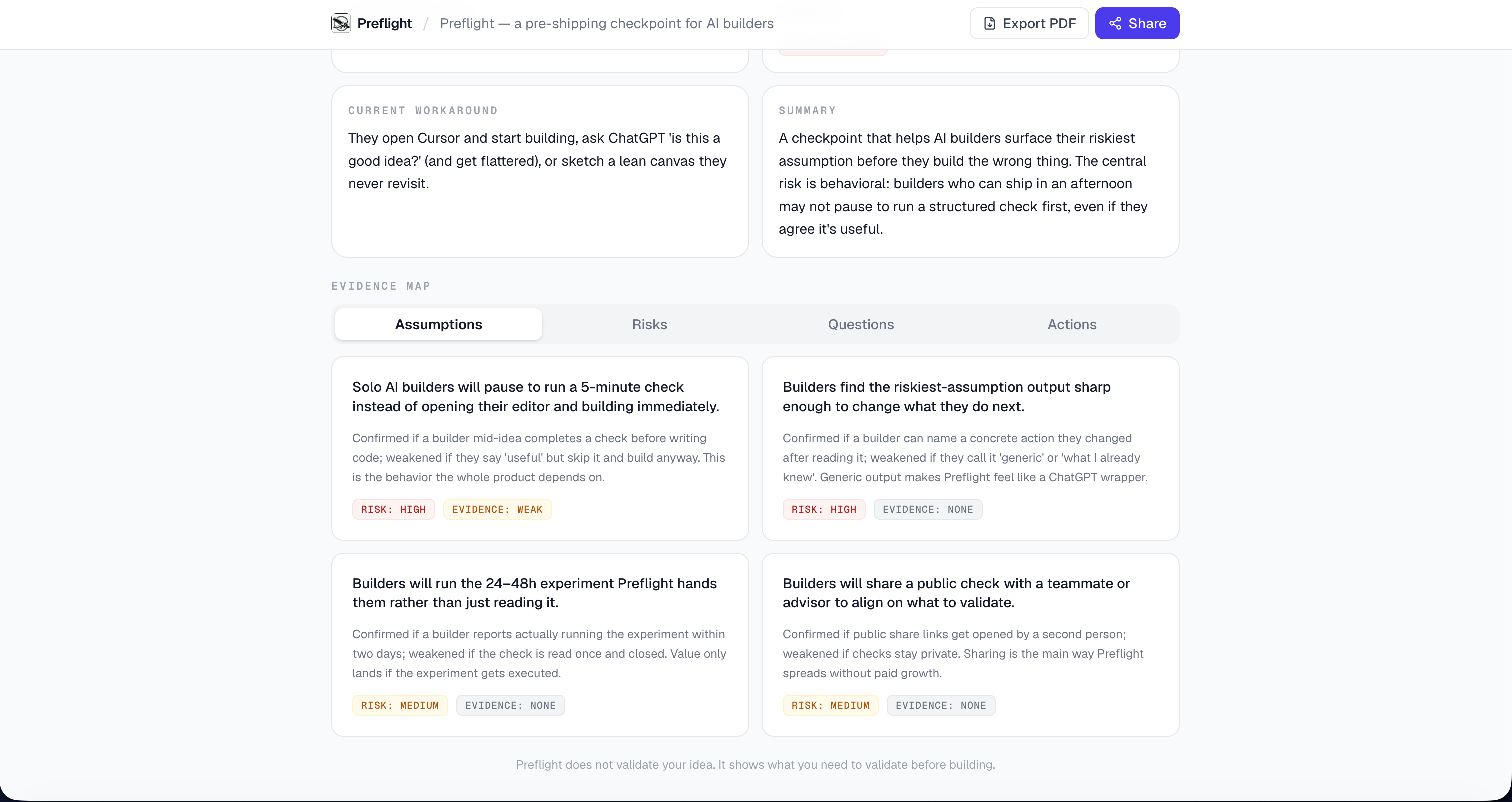
You paste a rough product idea, answer four focused product questions, and get a structured Preflight Check. The check shows your Preflight Score, riskiest assumption, a 24–48h validation experiment, a success signal, a context snapshot, and an evidence map with assumptions, risks, questions, and next actions.
It does not try to predict whether an idea will succeed. It simply helps you see what still needs evidence before you build.
You can also export the check as a PDF or publish a public share page.
How I built it
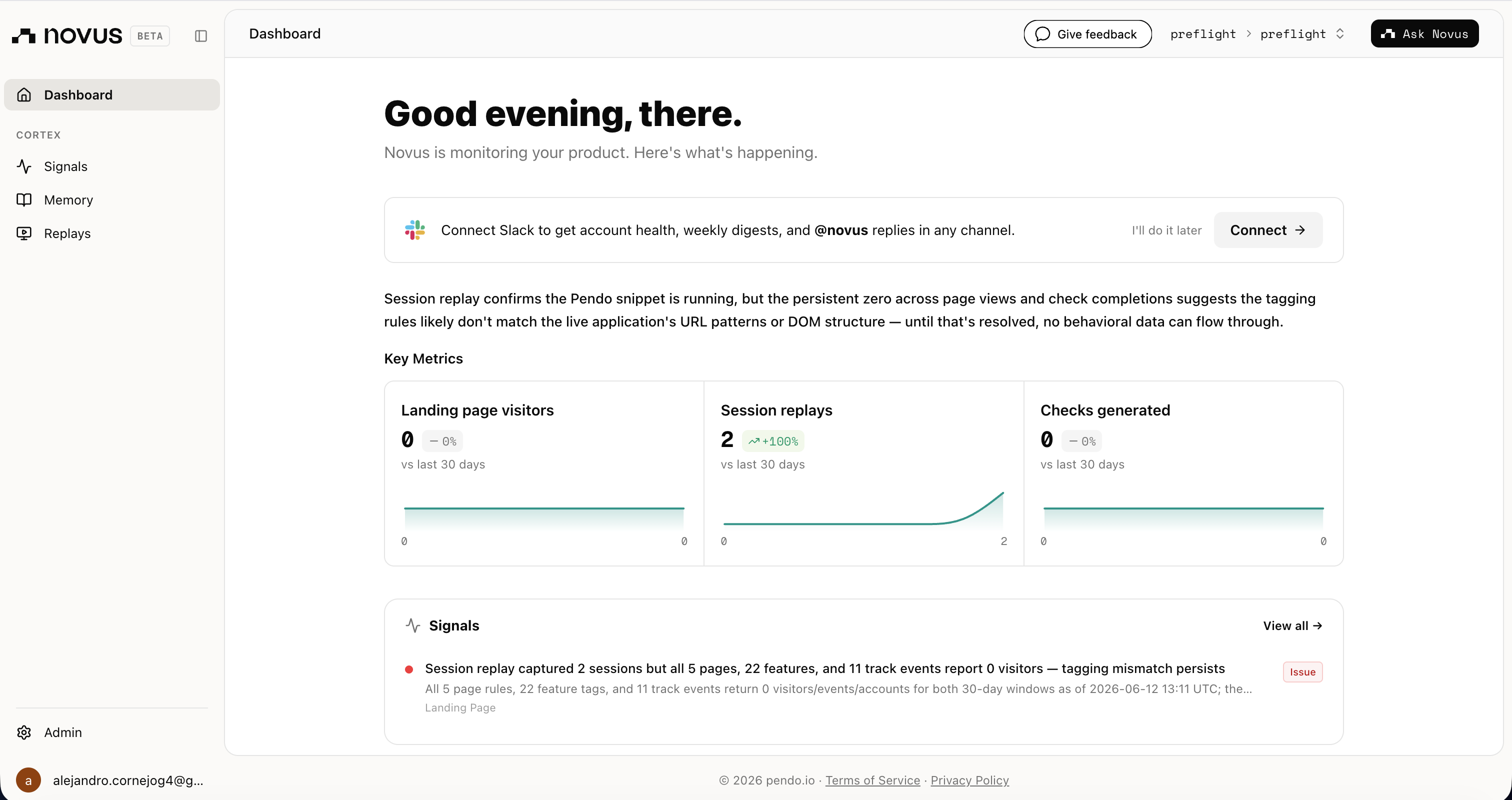
I built Preflight with Next.js, TypeScript, Tailwind, Supabase, an AI API for structured analysis, Novus/Pendo for product analytics, and Vercel for deployment.
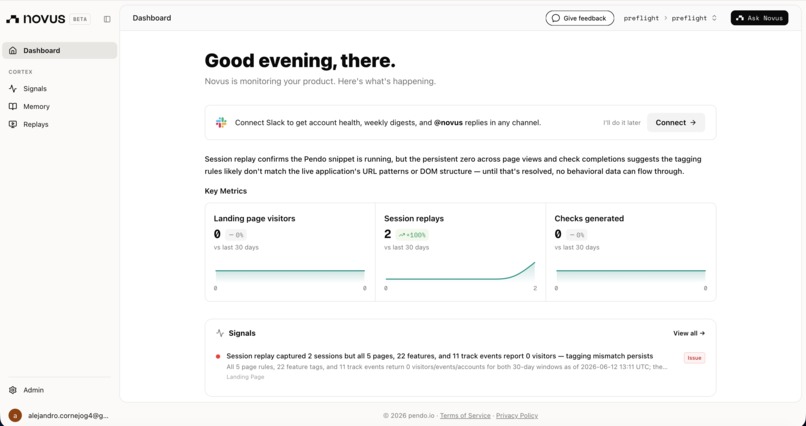
Supabase stores the ideas, answers, generated checks, edits, and public share states. The AI analysis returns a structured result instead of a chat response, so the product feels more like a decision artifact than a conversation. Novus/Pendo is installed to monitor sessions and key product events such as idea submission, check generation, PDF export, and public sharing.
Challenges I ran into
The biggest challenge was making Preflight feel like a real product, not just an AI wrapper.
To avoid that, I focused on a clear workflow, persistent checks, editable results, public sharing, PDF export, and a fixed product-thinking structure. I also refined the scoring language so the Preflight Score reflects how clearly the idea is framed, not whether the idea is “good” or “bad.”
Another challenge was making the AI output practical. The result needed to be specific, falsifiable, and useful within 24–48 hours, not just generic product advice.
Accomplishments that I'm proud of
I shipped a working product with a public URL, real persistence, AI-generated structured checks, public share pages, PDF export, and Novus/Pendo installed.
I am especially proud of the “Preflight on Preflight” sample check, because it uses the product on itself. Preflight’s own riskiest assumption is whether AI builders will actually pause before building.
What I learned
I learned that shipping faster does not remove the need for product thinking. It makes it more important.
When the cost of building drops, the cost of choosing the wrong thing to build becomes easier to ignore. Preflight tries to make that moment visible before the work starts.
I also learned that even a small product feels much more real when it has a clear flow, persistent artifacts, shareable outputs, and usage tracking from day one.
What's next for Preflight
The next step is closing the validation loop. After users run their 24–48h experiment, they should be able to record what happened and get a clearer next move.
I would also like to improve the public share pages, add stronger examples, and explore lightweight workflows for founders, product managers, and solo AI builders.
Built With
- ai-api
- next.js
- novus/pendo
- supabase
- tailwind-css
- typescript
- vercel

Log in or sign up for Devpost to join the conversation.