-
-
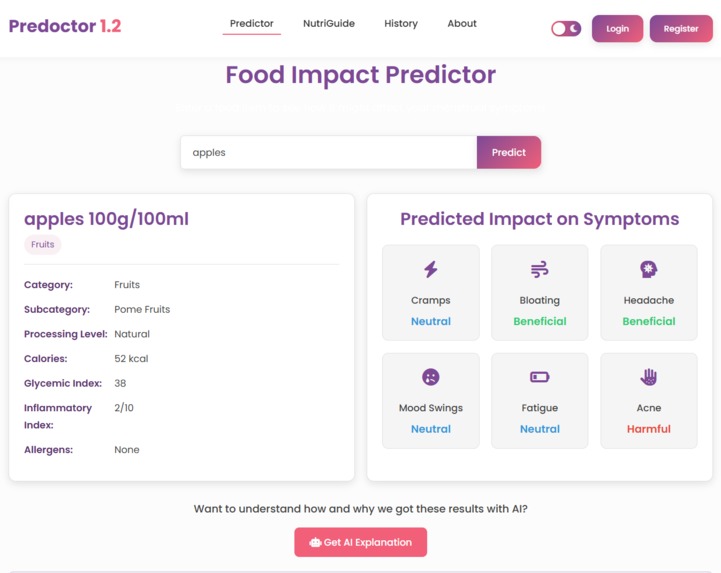
food predictions
-
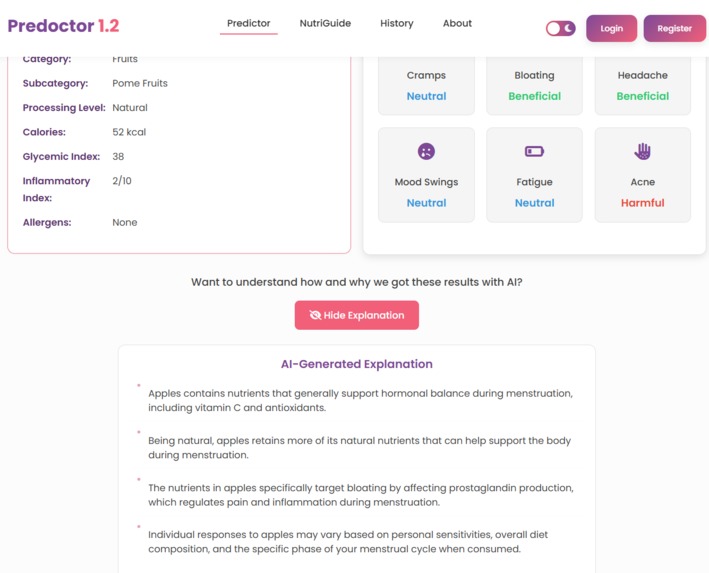
ai explanation
-
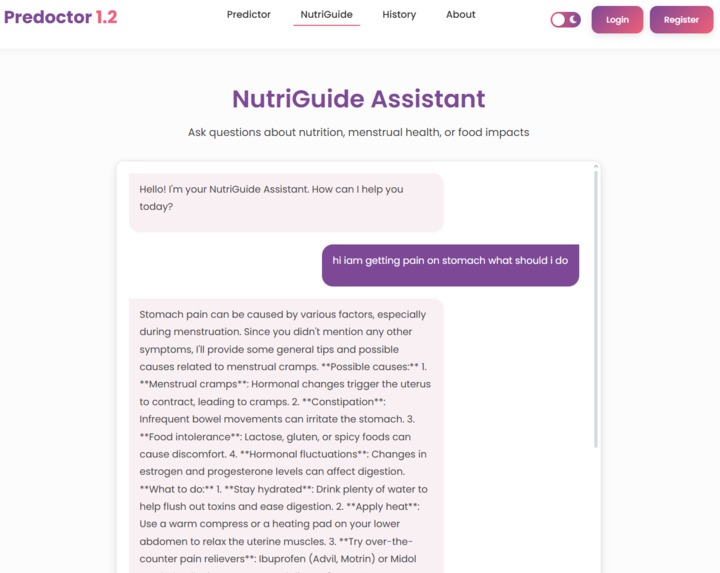
ai chat assistant
Inspiration
The inspiration for Predoctor came from the need to understand how different foods impact menstrual symptoms, which can significantly affect the quality of life for many individuals. By combining AI technology with nutritional science, we aimed to create an application that empowers users to make informed dietary choices to alleviate menstrual discomfort.
What it does
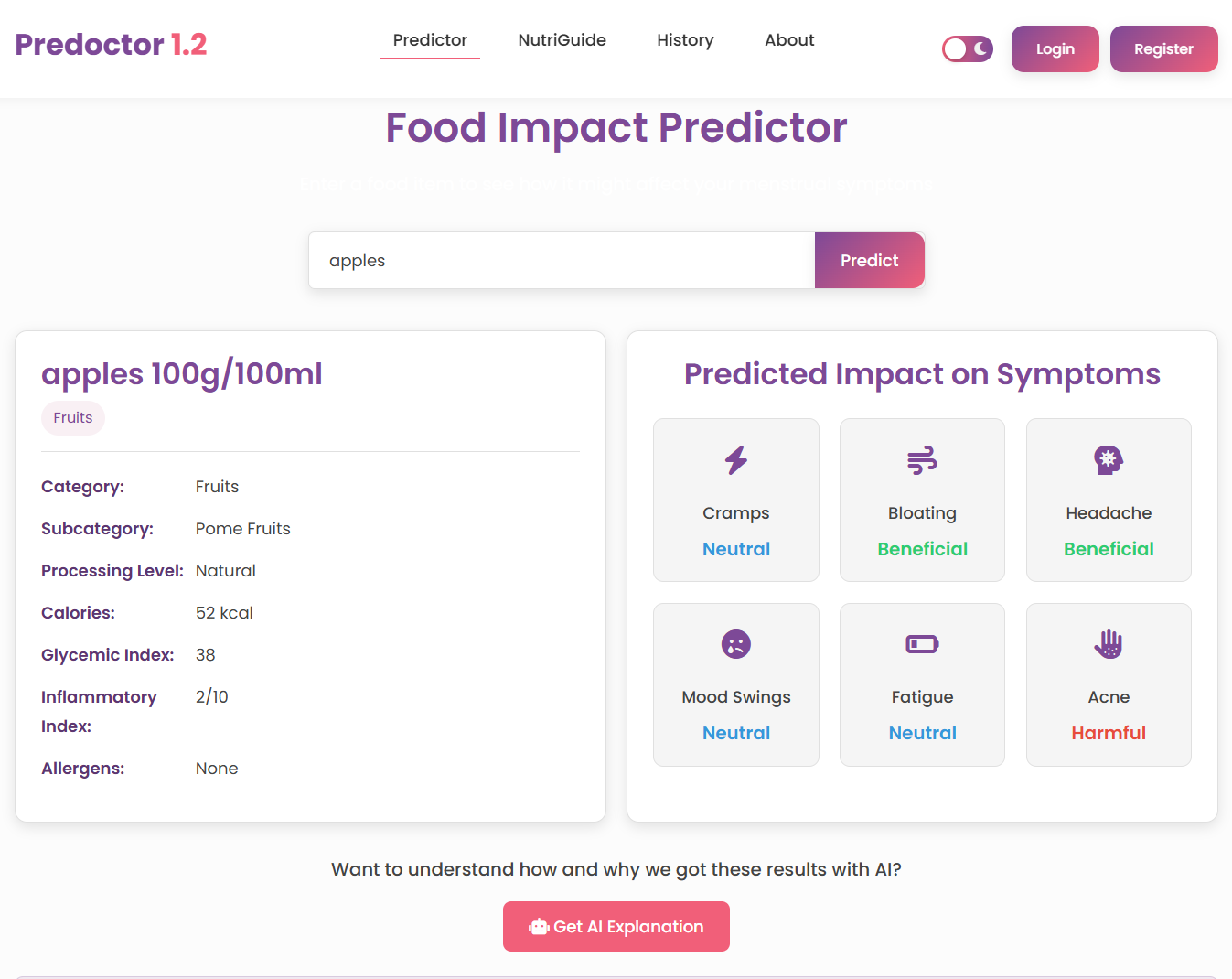
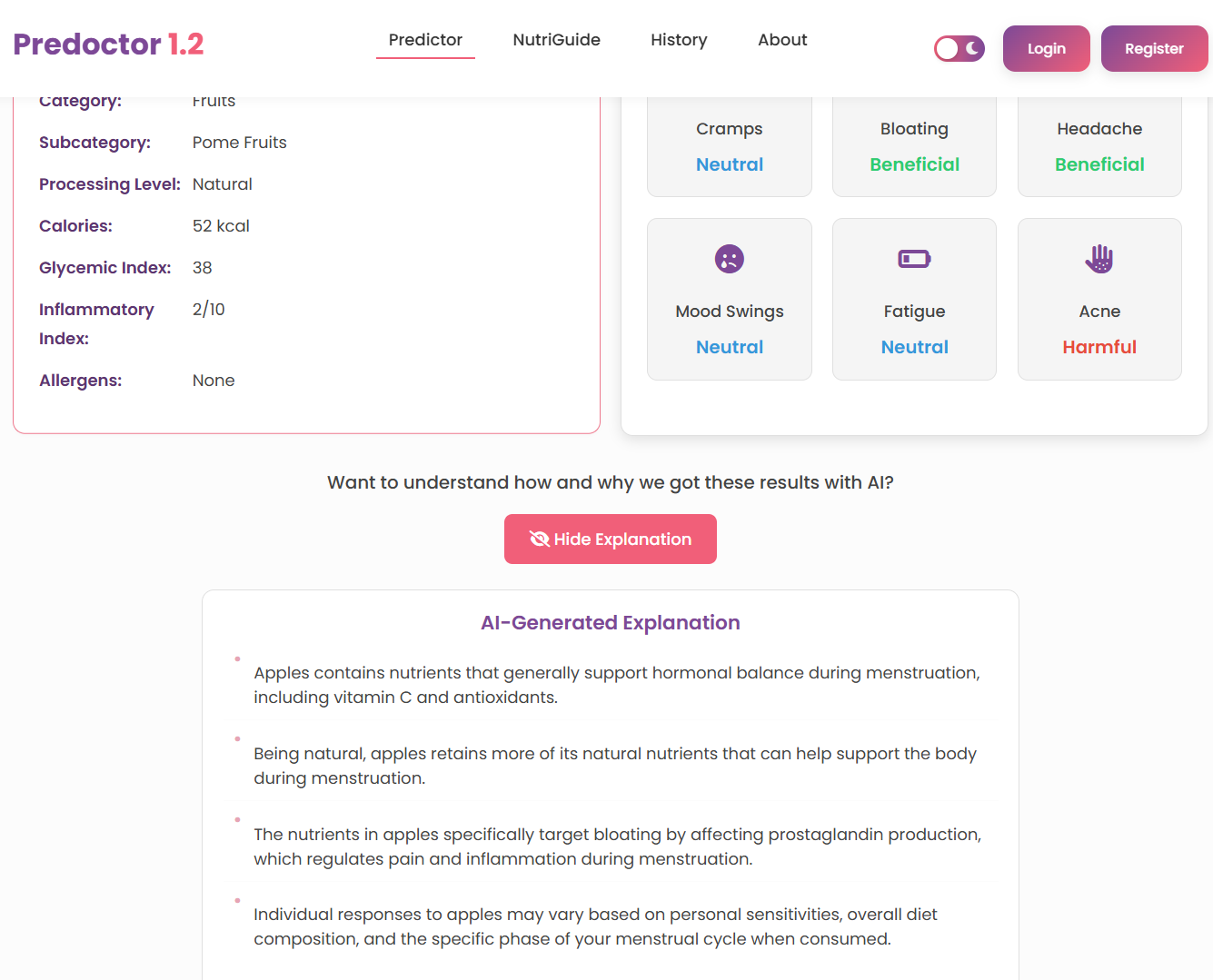
Predoctor is an AI-powered application that predicts how various foods affect menstrual symptoms such as cramps, bloating, headaches, mood swings, fatigue, and acne. Users can enter any food item and receive predictions on its potential impact on these symptoms. The application features:
- AI-powered predictions using machine learning models.
- Nutritional analysis through integration with Groq's LLM API.
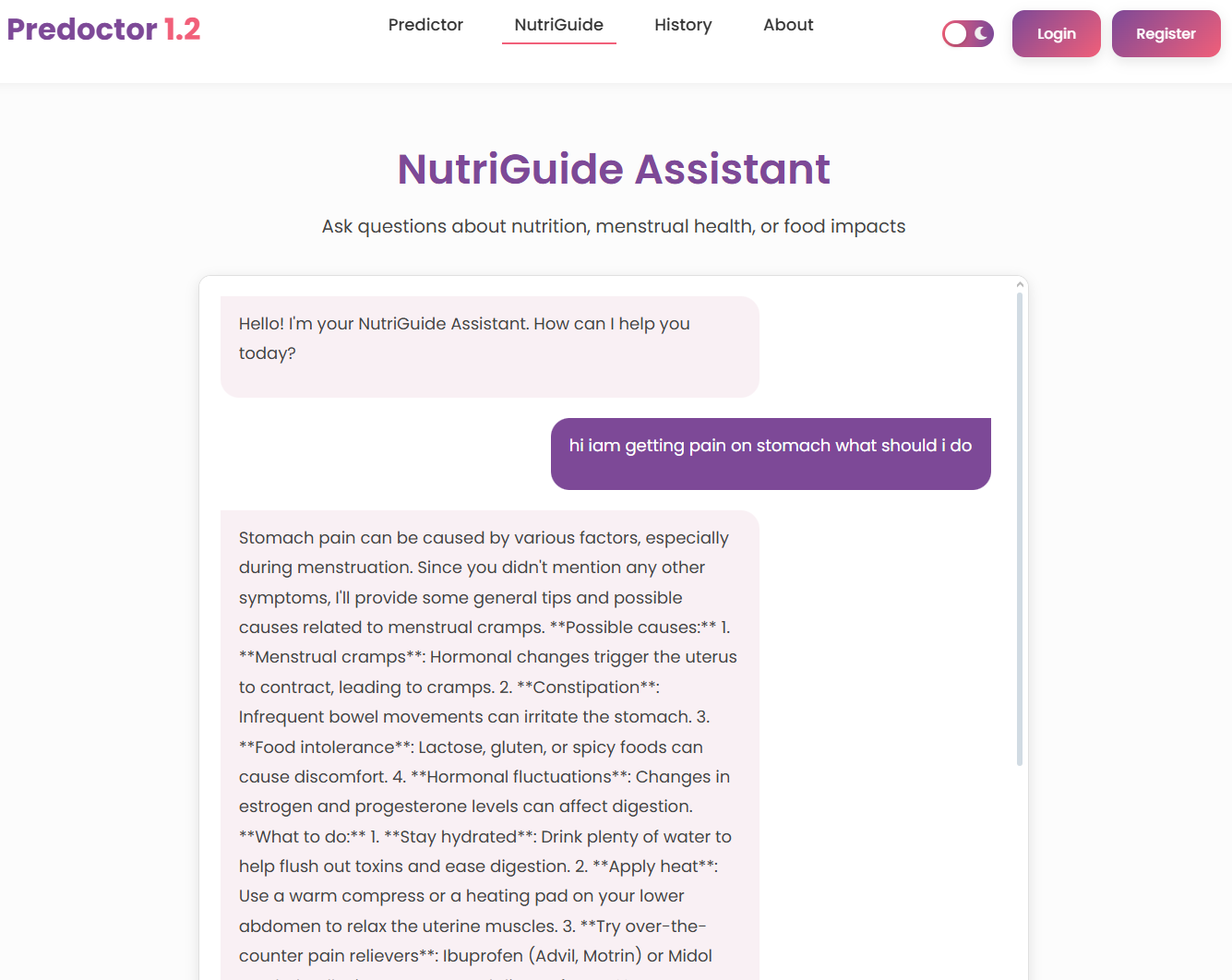
- An interactive chatbot for personalized nutrition and health inquiries.
- A history tracking feature for previous predictions.
How i built it
The application was built using a combination of technologies:
- Backend: Flask framework for handling server-side logic and API requests.
- Frontend: HTML5, CSS3, and JavaScript for creating a responsive and interactive user interface.
- Machine Learning: Utilized libraries such as scikit-learn, pandas, and numpy to build and train models based on a comprehensive dataset of food attributes and their effects.
- AI Integration: Incorporated Groq's LLM API for advanced nutritional analysis and chatbot functionality.
- Data Visualization: Used matplotlib and seaborn for visualizing model performance and predictions.
Challenges we ran into
During the development of Predoctor, we faced several challenges:
- Ensuring the accuracy of the predictions required extensive testing and validation of multiple machine learning models.
- Integrating the Groq API for real-time nutritional analysis posed issues with API key management and connectivity.
- Designing a user-friendly interface that effectively communicates complex information in an understandable manner.
Accomplishments that we're proud of
We are proud of several key accomplishments:
- Successfully training multiple machine learning models and selecting the best performing model based on accuracy metrics.
- Creating an interactive chatbot that enhances user engagement and provides personalized responses.
- Developing a modern, responsive UI that improves user experience and accessibility.
What we learned
Throughout the development process, we learned valuable lessons, including:
- The importance of data quality and preprocessing in building effective machine learning models.
- The complexities involved in API integration and the need for robust error handling.
- How to effectively communicate technical information to non-technical users through intuitive design.
What's next for PREDOCTOR
Looking ahead, we plan to:
- Expand the dataset to include more food items and their effects to improve prediction accuracy.
- Enhance the AI chatbot functionality with more advanced natural language processing capabilities.
- Explore potential partnerships with nutritionists and health professionals to validate our predictions and provide expert insights.
- Investigate deployment options to make the application available on various platforms, including mobile.
Built With
- api
- css3
- flask
- groq
- html5
- javascript
- llm
- matplotlib
- numpy
- pandas
- python
- scikit-learn
- seaborn
- sqlite

Log in or sign up for Devpost to join the conversation.