-
-

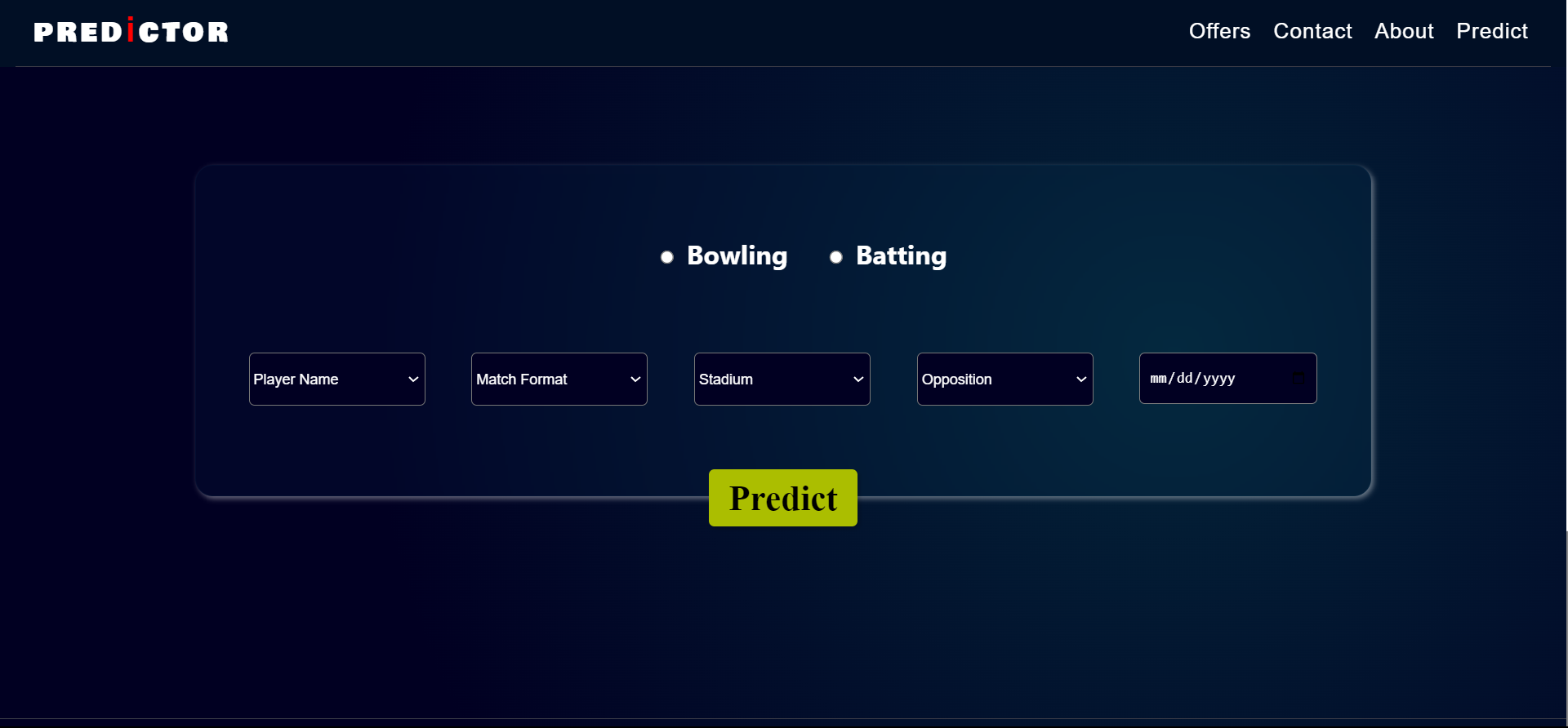
This is our landing page.
-
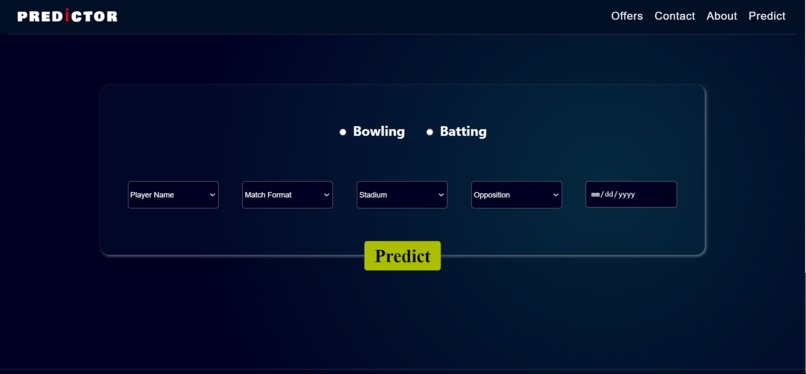
On this page we need to select the player whose score we want to predict.
-
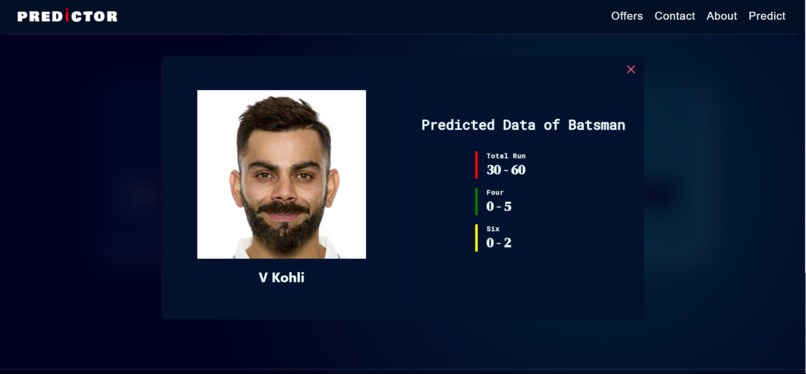
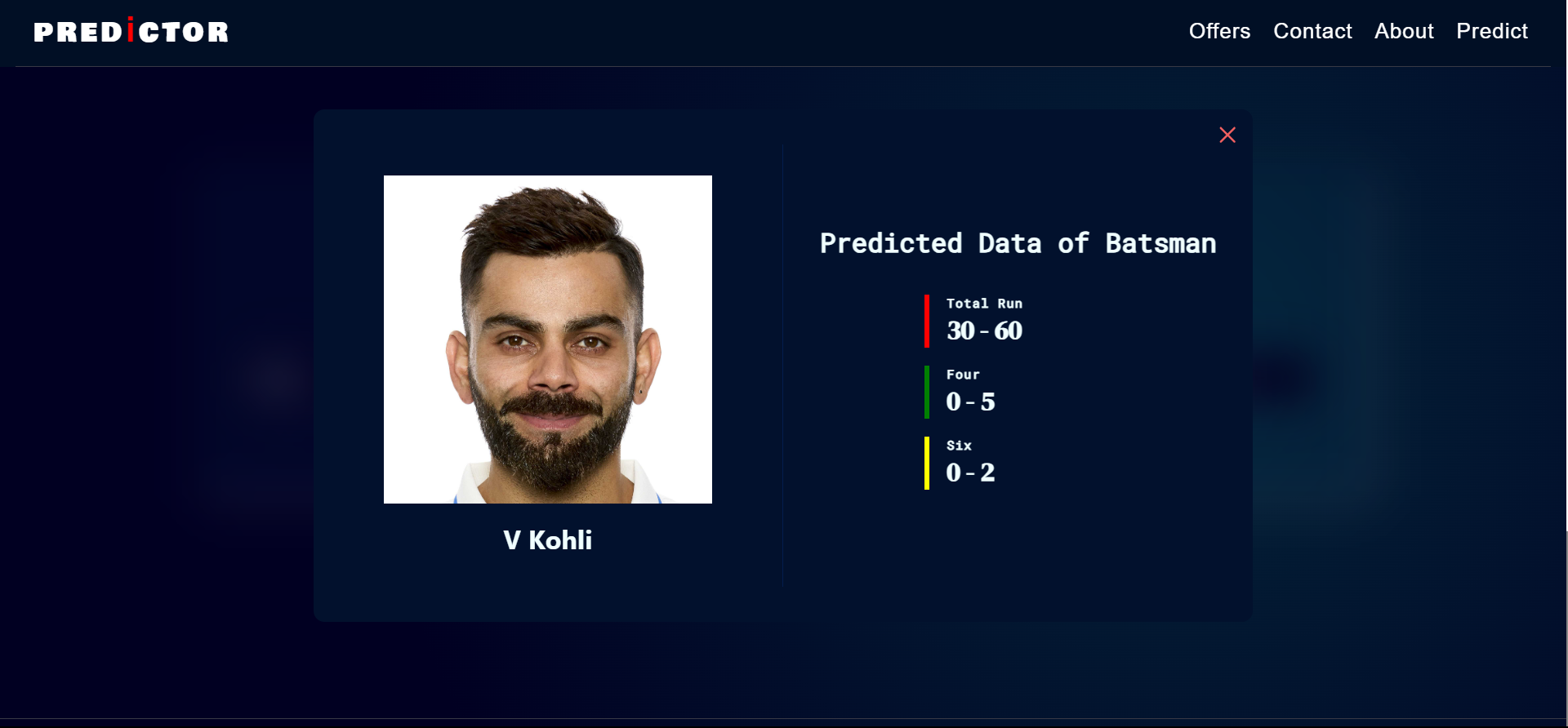
We will get selected player score on this page.
-
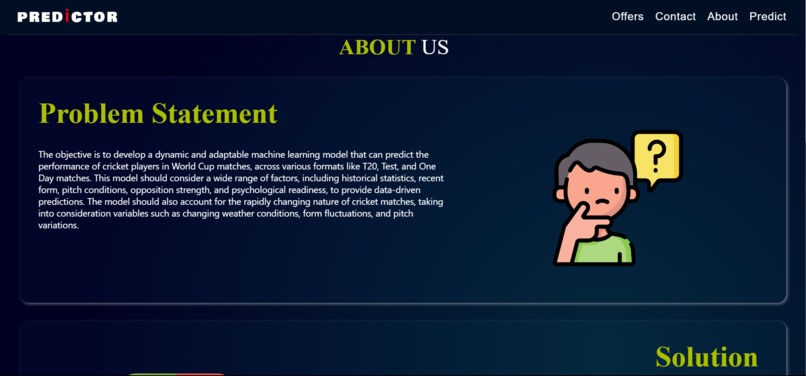
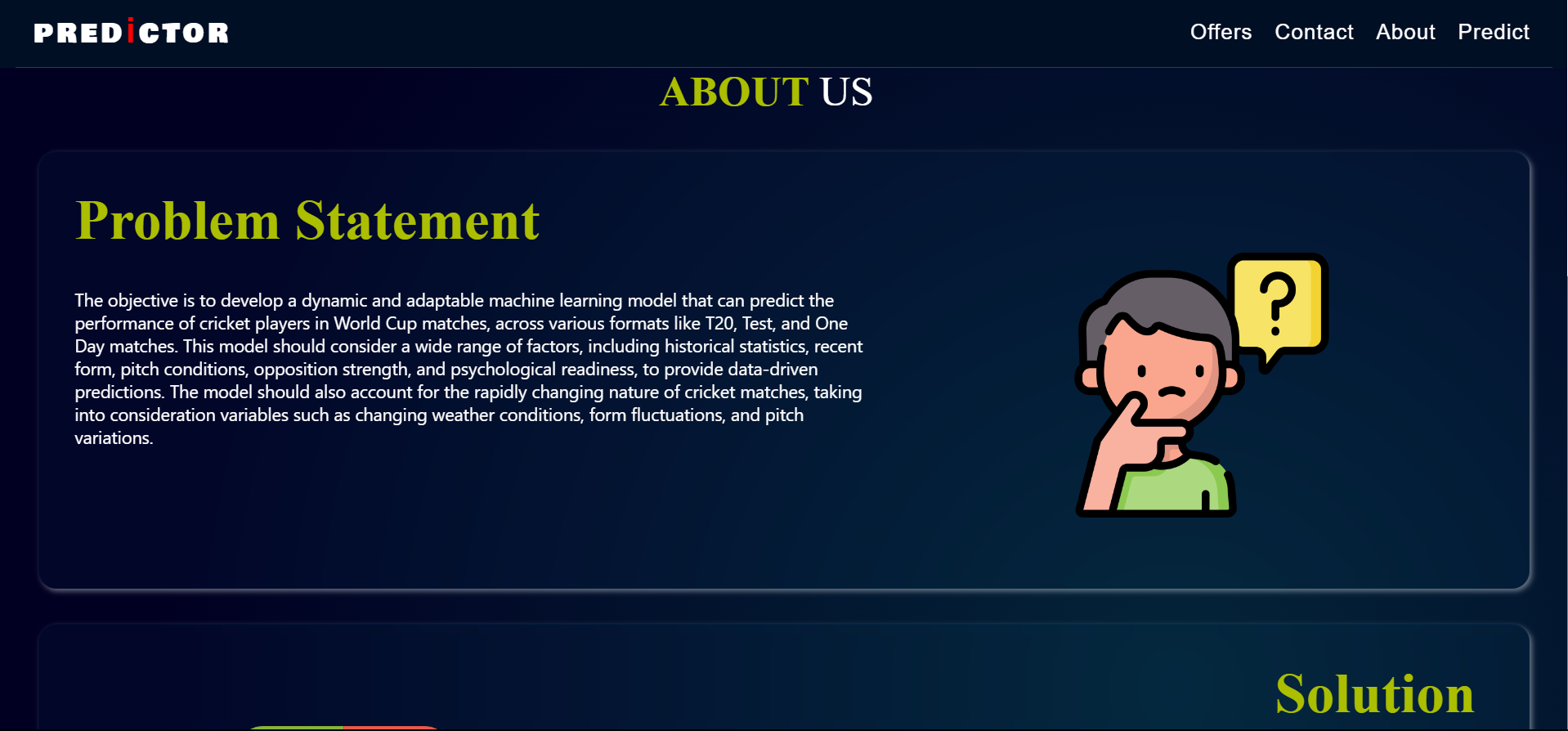
This is about page where we have explained the problem statement, solution and teams.

Inspiration
The project was inspired by the desire to provide cricket fans, team strategists, and enthusiasts with data-driven insights into player performance. By leveraging machine learning and real-time weather data, the application aims to predict how batsmen and bowlers might perform in upcoming matches, enabling users to make informed decisions.
What it does
The application predicts a batsman's or bowler's performance in upcoming cricket matches, forecasting metrics such as runs scored, boundaries hit (4s, 6s), runs conceded by bowlers, and wickets taken. It uses historical player records and real-time weather data to generate these predictions, helping users gain valuable insights for upcoming matches.
How we built it
The project is built around a machine learning model trained on historical player data, including batting and bowling statistics across various match formats (T20, Test, and One Day). The model incorporates player form, opposition strength, pitch conditions, and weather data. The application is built using ReactJS for the frontend and deployed on Vercel for a serverless and scalable experience. Real-time weather data is integrated via APIs to enhance prediction accuracy.
Challenges we ran into
One of the main challenges was ensuring the accuracy of predictions by incorporating a wide range of features (150+ for each player type). Another challenge was integrating real-time weather data in a way that dynamically influences the predictions without compromising performance. Balancing the complexity of the machine learning model with the need for a responsive and user-friendly interface also required careful consideration.
Accomplishments that we're proud of
We are proud of successfully developing a machine learning model that provides accurate and insightful predictions for cricket matches. The integration of real-time weather data adds a unique dimension to the predictions, making the application even more valuable. Deploying the application on Vercel and ensuring a smooth, intuitive user experience with ReactJS is another accomplishment we are proud of.
What we learned
Throughout the project, we learned the importance of feature engineering in developing accurate machine learning models. We also gained valuable experience in integrating external APIs and building serverless applications. Additionally, we learned how to optimize a ReactJS frontend for a responsive and user-friendly experience.
What's next for Predictor - Cricket Score
The next steps include enhancing the model with more data, including player injury records and more granular weather data. We also plan to expand the application to cover more match formats and potentially include predictions for entire teams or match outcomes. Enhancing the user interface with more detailed analytics and visualizations is also on the roadmap.


Log in or sign up for Devpost to join the conversation.