-
-
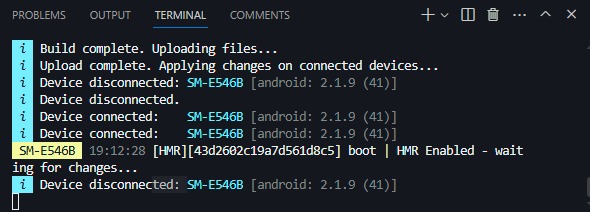
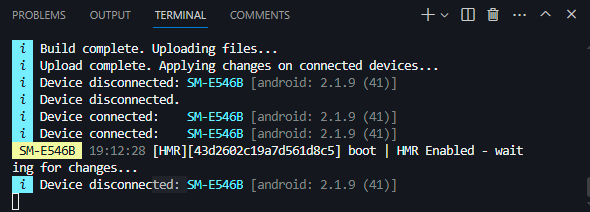
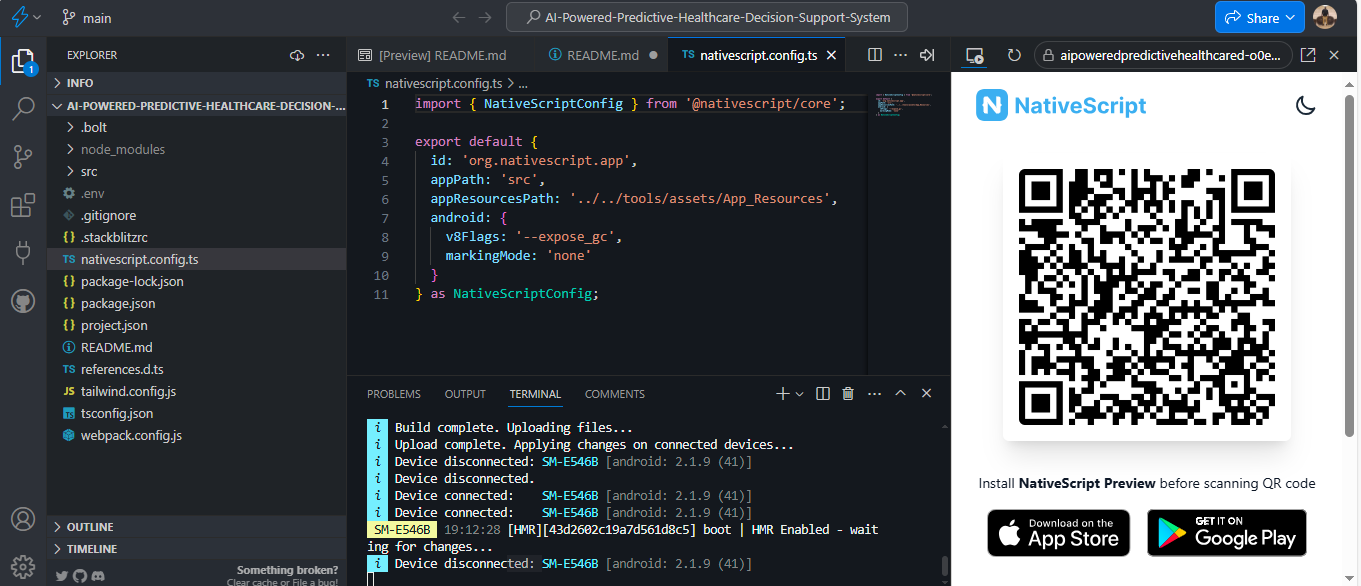
patient device will connect, admin will handle this
-
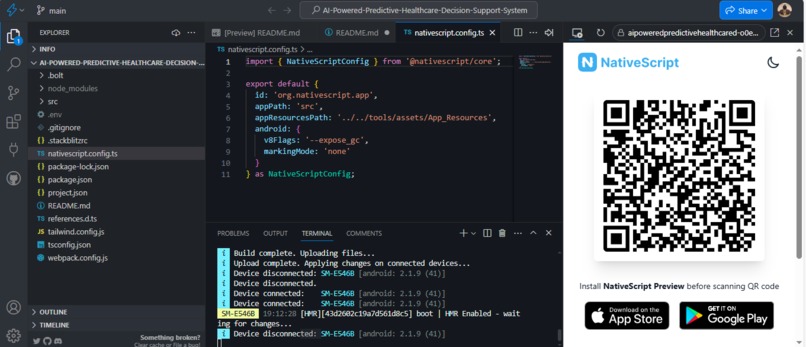
index
-
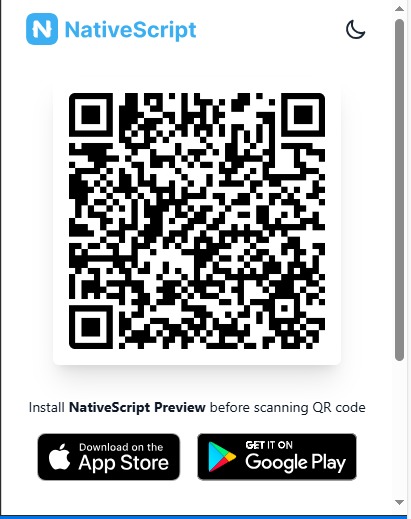
need to scan their mobile by qr code to connect and upload their report
Predictive Diagnostics for Smarter Healthcare Decisions
Inspiration
The healthcare industry faces challenges in early diagnosis, which often leads to delays in treatment and better outcomes. Inspired by the need to improve diagnostic decision-making, we wanted to create an AI-powered system that leverages predictive analytics and machine learning to assist healthcare professionals in making timely and accurate diagnoses. This app integrates with existing healthcare systems using SMART on FHIR standards, ensuring interoperability with modern healthcare technologies.
What it does
Our Predictive Diagnostics app uses AI and machine learning to analyze patient data and generate actionable insights that improve decision-making in healthcare. The app supports real-time predictions, classifications, and recommendations, providing healthcare professionals with evidence-based guidance for faster and more accurate diagnosis. By integrating with SMART on FHIR standards, it works seamlessly across healthcare systems, enhancing patient care without disrupting existing workflows.
How we built it
The app is built using React for the frontend, ensuring an interactive and responsive user experience. We used Node.js and Python to handle AI computations and integrate with FHIR data, which enables smooth communication with healthcare systems. The machine learning models were developed using Python libraries such as TensorFlow and Scikit-learn to predict outcomes based on patient data. The app is fully integrated with SMART on FHIR standards, ensuring compliance and compatibility with electronic health records (EHRs).
Challenges we ran into
- FHIR Data Integration: One of the biggest challenges was ensuring the app could read and process patient data in the FHIR format. Understanding the intricacies of FHIR and integrating it into our app took time and required thorough testing.
- Data Accuracy: We needed high-quality, structured datasets for training the machine learning models. Collecting and cleaning the data to ensure its relevance and accuracy was a crucial and time-consuming task.
- Real-Time Predictions: Optimizing the AI models to deliver real-time predictions while maintaining performance was a challenge. Balancing the need for accuracy and speed was critical in creating a smooth user experience.
Accomplishments that we're proud of
- Successfully built a fully functional AI-powered predictive diagnostics system that integrates seamlessly with SMART on FHIR standards.
- Developed machine learning models that provide valuable predictions and recommendations, improving the decision-making process for healthcare professionals.
- Published and tested the app using the MeldRx platform, ensuring it meets healthcare interoperability standards and can be used in real-world healthcare systems.
What we learned
- FHIR Standards: Gained a deeper understanding of healthcare interoperability and the significance of FHIR standards in connecting disparate healthcare systems.
- Machine Learning in Healthcare: Learned how to apply AI and machine learning techniques to real-world healthcare data, improving the diagnostic process.
- Developing Healthcare Apps: Understood the challenges of developing healthcare applications, particularly regarding data privacy, security, and compliance with healthcare regulations.
What's next for Predictive Diagnostics for Smarter Healthcare Decisions
- Continuous Improvement: We plan to continue training and refining our machine learning models to improve the accuracy and reliability of predictions.
- User Feedback: Collect feedback from healthcare professionals to make user-centered improvements to the app's functionality and user interface.
- Scalability: Expand the app’s capabilities to support more healthcare use cases and integrate additional healthcare systems for wider adoption.
Built With
- api
- backend
- data-integration
- database
- deployment
- frontend
- meachine-learning


Log in or sign up for Devpost to join the conversation.