-
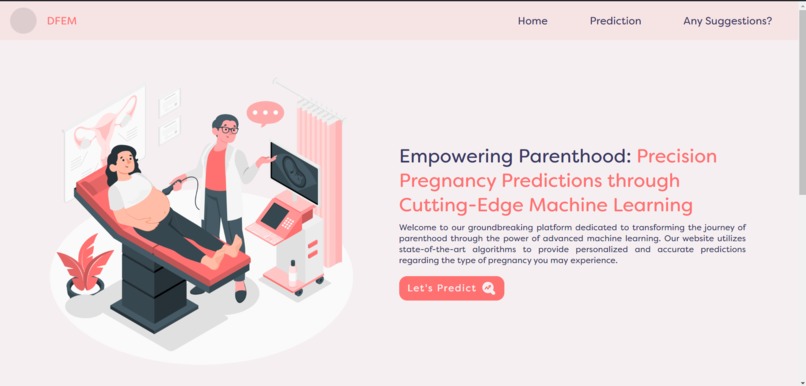
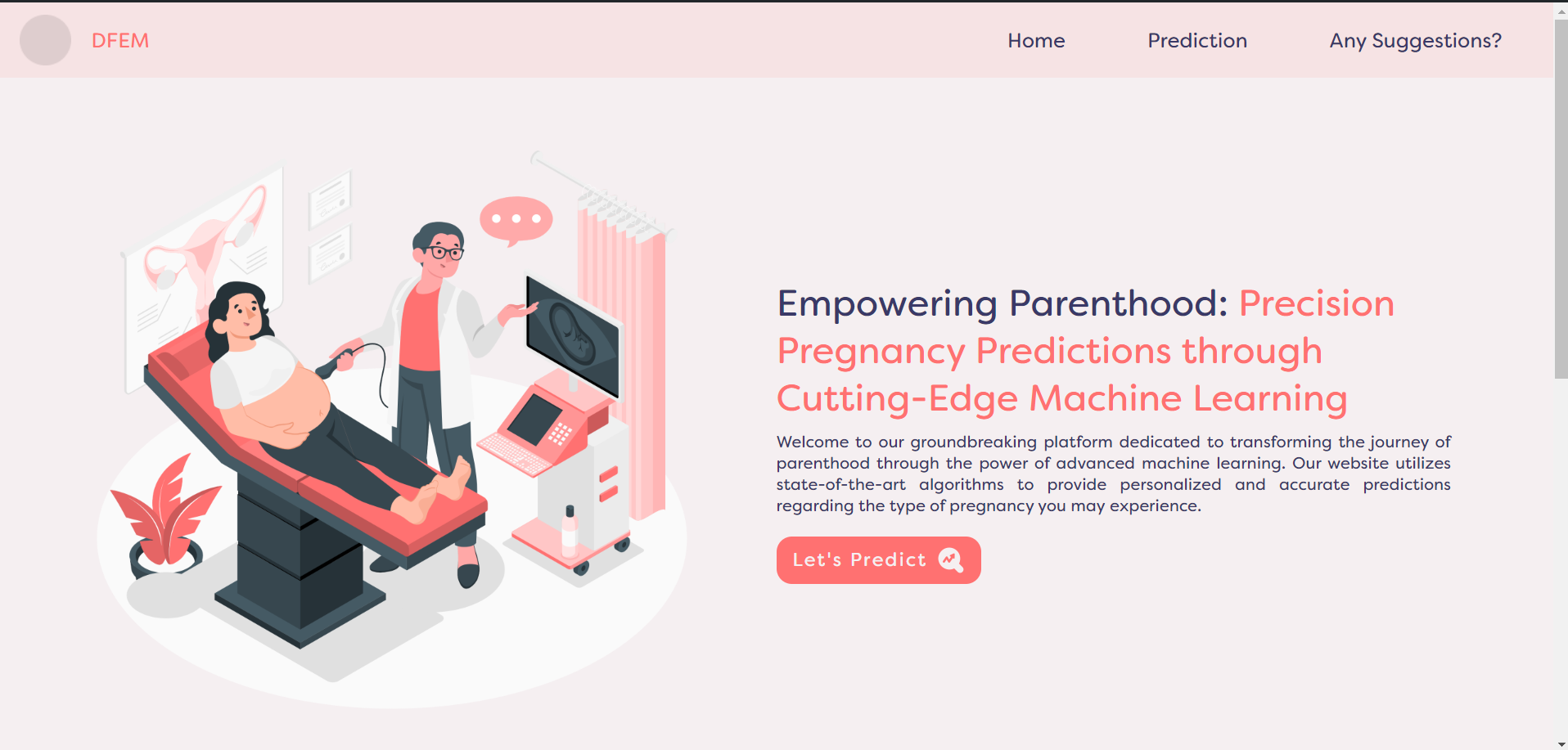
this is the hom. this gives overview about the website
-
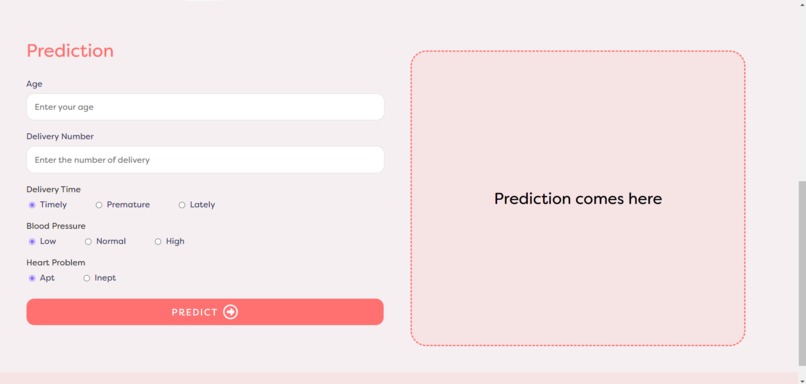
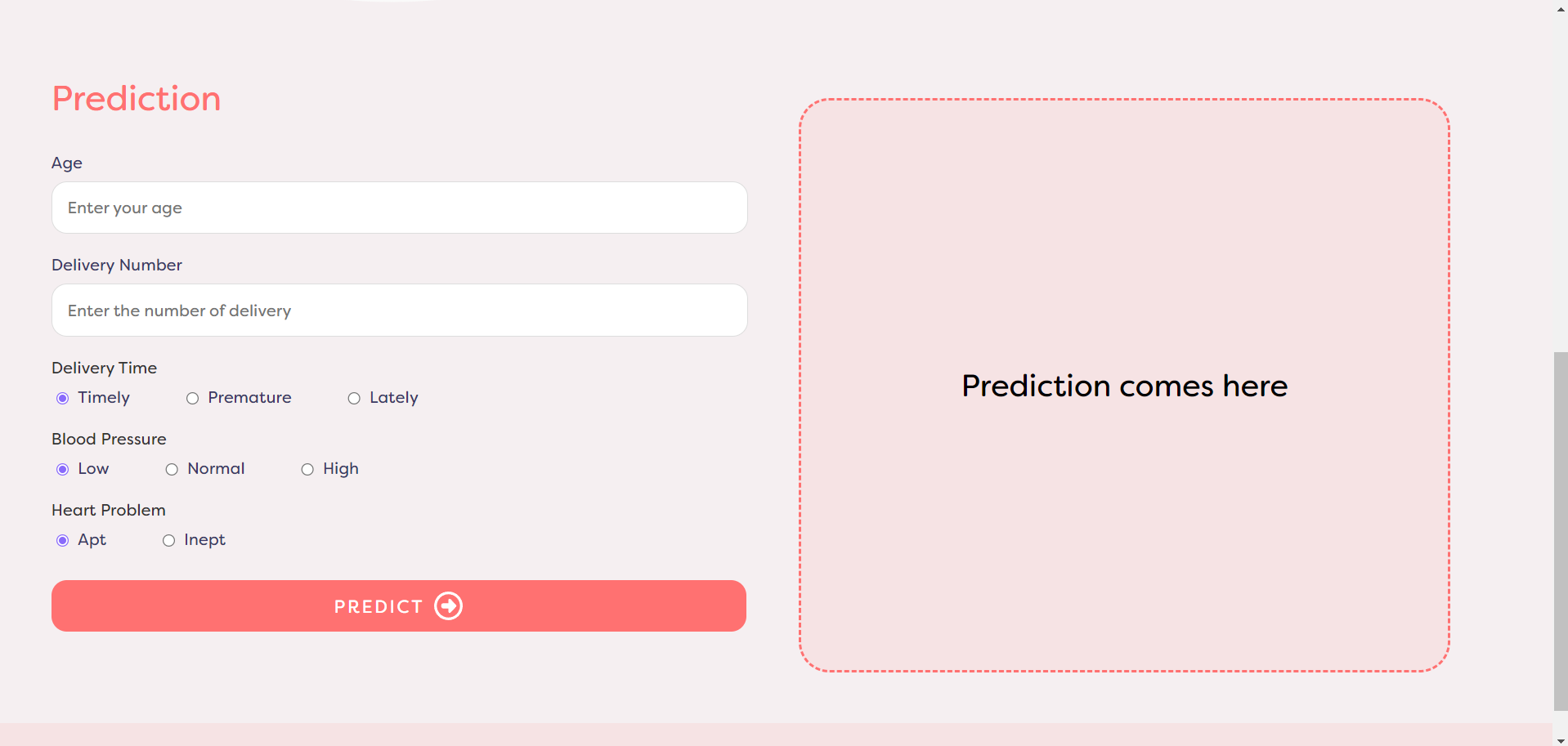
this page is dedicated to get the input from the user.
-
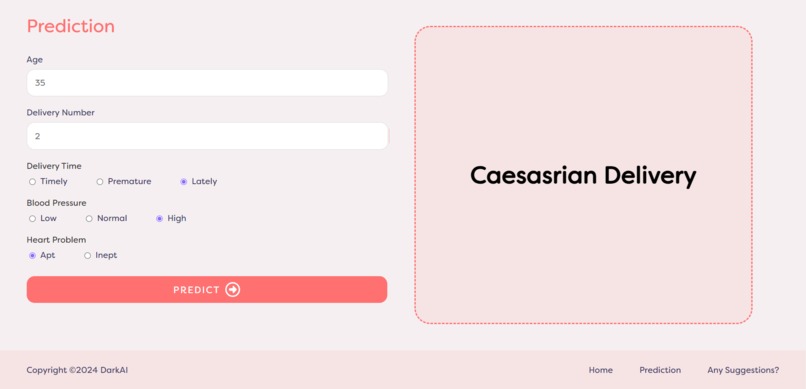
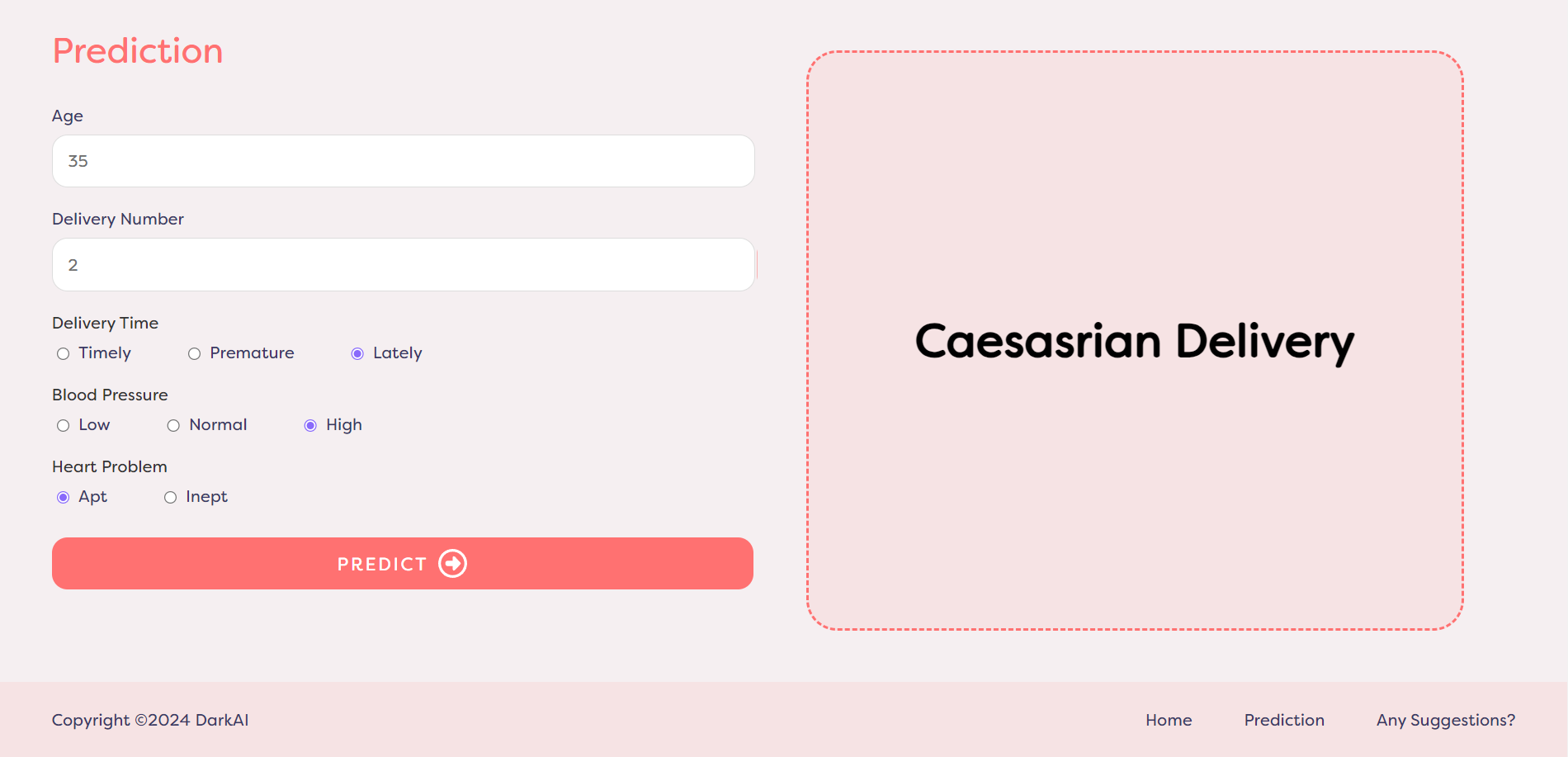
this page gives the output as Caesarian delivery
-
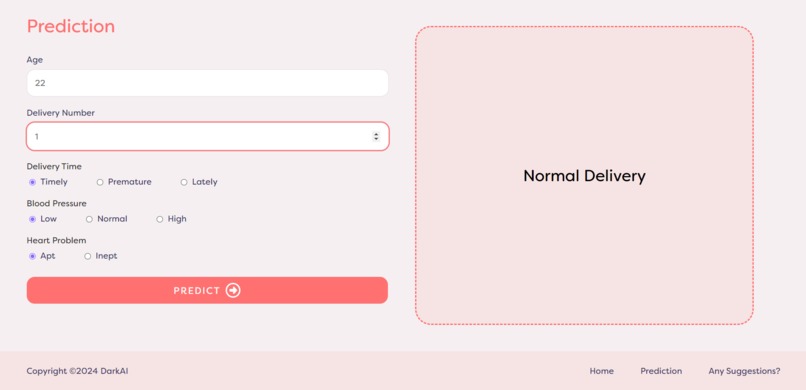
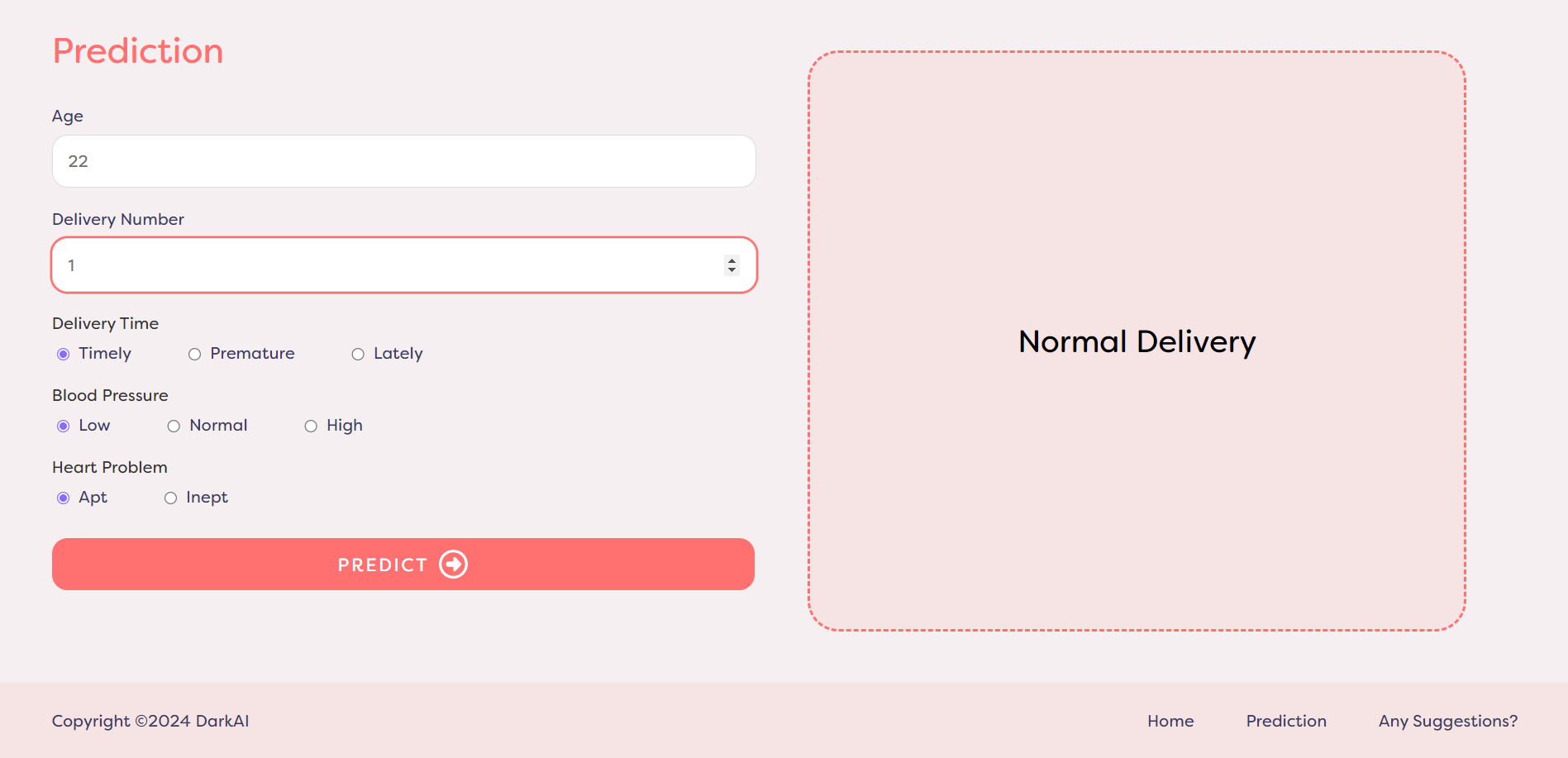
this page gives the output as normal delivery
Inspiration
Our motivation comes from the urgent need to use machine learning to improve care for mothers. We saw the opportunity to improve the accuracy and personalization of the childbirth prediction process for expectant mothers.
What it does
Our study predicts whether a delivery will be normal or via cesarean section using Support Vector Machine methods. Our system serves as an essential resource for maternity hospitals by integrating critical factors like the mother's delivery history, blood pressure, delivery time classification, age, and medical advice. It makes it easier to monitor a mother's and a fetus's health in real time, which empowers medical practitioners to make decisions that will make childbirth safer.
How we built it
The project was built through a collaborative effort, combining expertise in machine learning, healthcare, and data science. We utilized Python for coding, scikit-learn for implementing Support Vector Machine algorithms,falsk for deployement and azure, and integrated various datasets containing relevant parameters crucial for accurate predictions.
Challenges we ran into
Navigating the complexities of healthcare data, ensuring data privacy, and fine-tuning the machine learning model posed significant challenges. Additionally, incorporating real-world medical recommendations into the algorithm while maintaining interpretability required a careful balance.
Accomplishments that we're proud of
We are proud to have successfully developed a robust model that integrates seamlessly into maternity hospitals. The accuracy of our predictions and the real-time monitoring capabilities have exceeded our expectations. Seeing the potential impact on improving maternal care is a significant accomplishment for our team.
What we learned
Through this project, we deepened our understanding of the intricate relationship between healthcare and machine learning. We gained valuable insights into the challenges of working with sensitive medical data and the importance of collaboration between data scientists and healthcare professionals for effective solutions.
What's next for Prediction of ceasarian or normal delivery using ML
Moving forward, we aim to enhance the model's scalability and deploy it in a real-world healthcare setting. Collaboration with medical professionals for further refinement, continuous monitoring of model performance, and integration with electronic health record systems are key steps for the project's future. We aspire to contribute to the evolution of maternal care through innovative applications of machine learning and data science.

Log in or sign up for Devpost to join the conversation.