Inspiration
Toronto’s transit delays disrupt daily life and commuters are often frustrated, especially for delays with lengthy and uncertain wait times. We were thinking, what if we could predict delays - especially those over 20 minutes - and turn the wait into an opportunity?
There was an anecdote about a German transit system that sought to reduce customer dissatisfaction with train delays. Instead of just cutting delays or increasing speeds—which is more costly and complex—they improved the passenger experience, making waits feel shorter and more pleasant.
Our model helps the TTC alert commuters and nearby businesses to delays over 20 minutes, suggesting cafes, restaurants, and shops to commuters within a 5-minute walk. Instead of just waiting in the rain, commuters can discover new spots, and businesses gain new customers. This would be akin to turning lemons into lemonade.
What it does
Our model predicts which bus, streetcar, and subway stops are likely to experience a delay of over 20 minutes.
How we built it
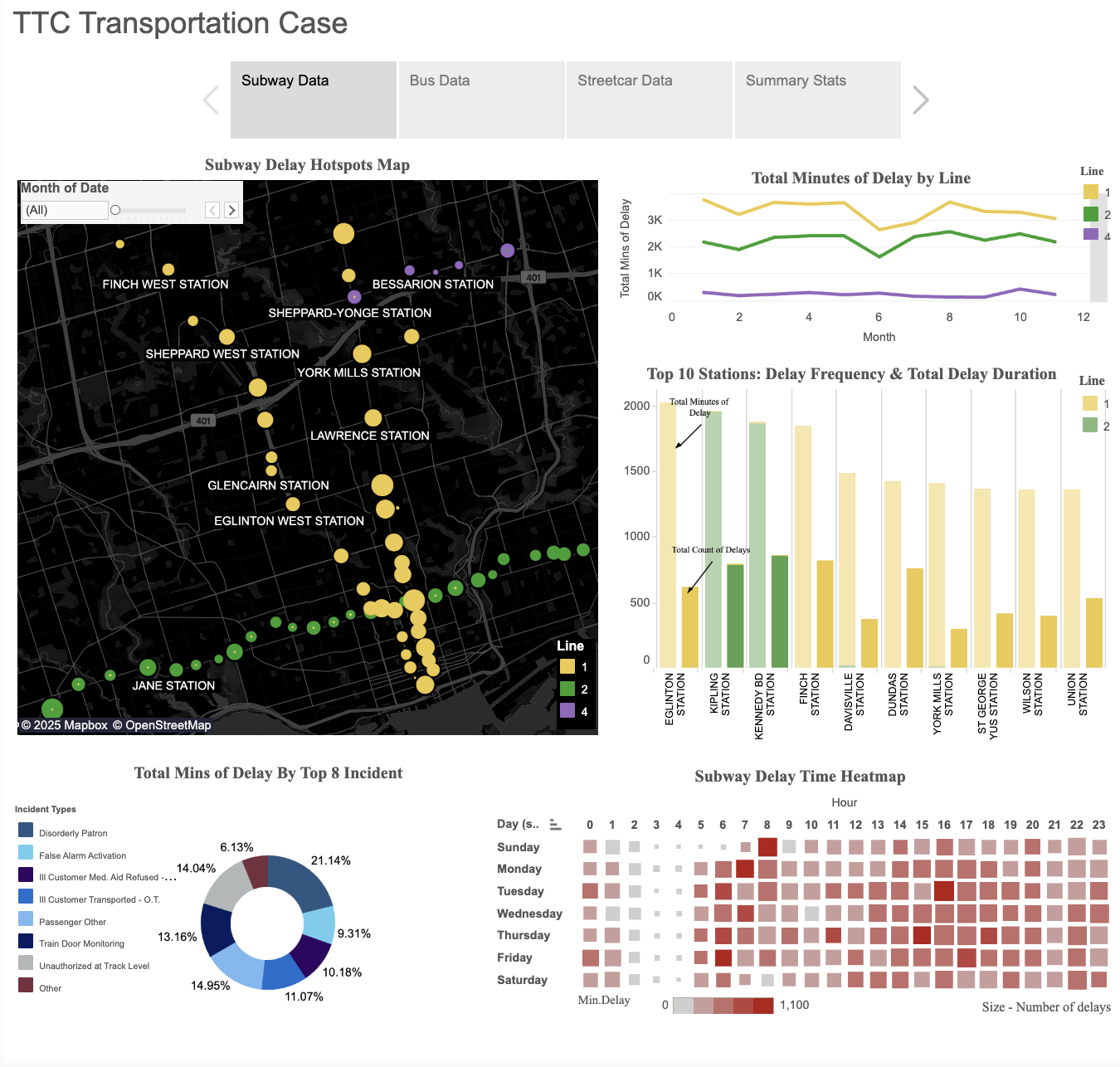
We used Python to clean the data and to program a random forest model to predict future delays, and Tableau to create interactive visualizations. ChatGPT was also used to help throughout the process.
Challenges we ran into
Combining Weather data into our dataset.
Accomplishments that we're proud of
We were able to use Random Forest Regression, something we have never used before
What we learned
How to work as a team!
Built With
- chatgpt
- powerpoint
- python
- tableau


Log in or sign up for Devpost to join the conversation.