-
-
Model building
Inspiration
Crime is a big problem. It negatively impacts one’s life and other health outcomes. It impacts
innocent people, and there are several factors that have led to crime rate increase across United States. The inspiration comes from wanting to do something about this threat to civic society.
What it does
Predicting crime useful to adjust policing policies, allocate funding for Policies, and in general for city planning. Our model serves to try to accurately predict crime in the United States using the crime data pulled from various cities.
How we built it
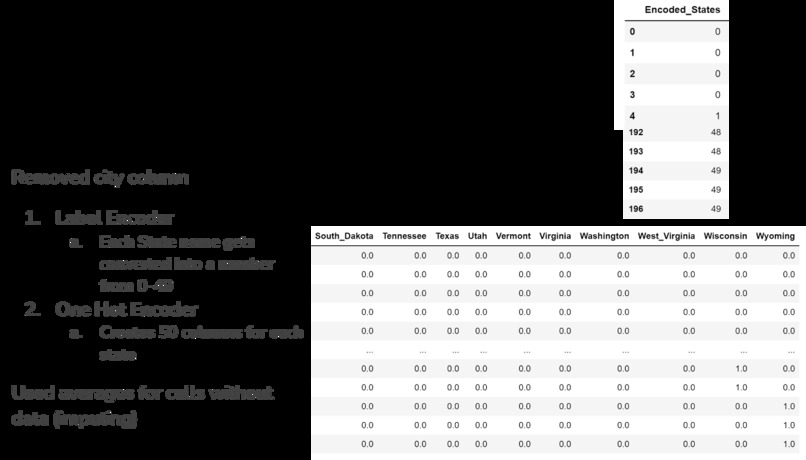
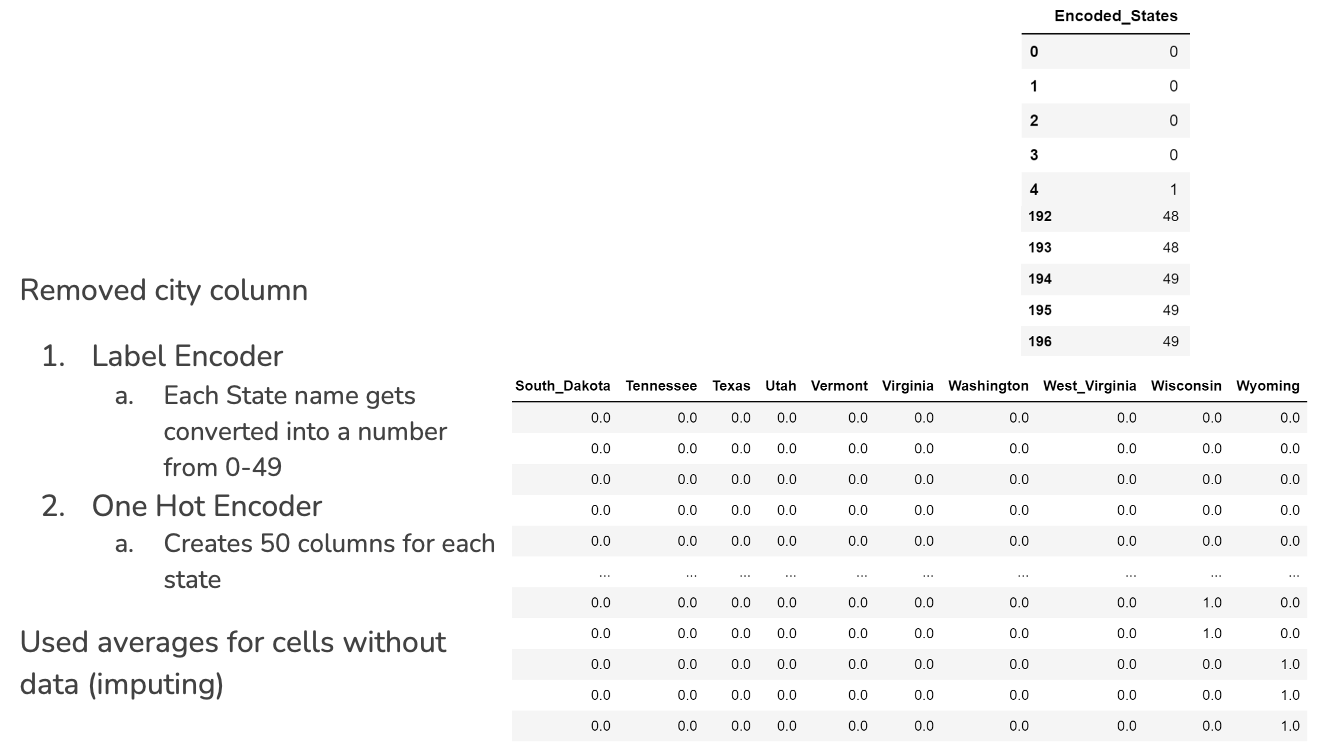
Collected data, Analyzed data and cleaned it, build feature vectors, trained models, analyzed results, optimized the model, and build an app. Data From About 200 Cities from publicly available data sources Data Collection Features: Crime Rate (H: >=40, M, L: <23.80) Race Median Household Income % Democrats, % Republicans Population Density (per mi²) Employment Rate Education Rate (College) Disabilities Homelessness Rate (%) Police Count Per 10k People Average Age Stress Score From sources such as the US Census and other websites. Accuracy score: 59% Improvements in progress: Collecting more data (200-300 more cities) Feature selection Different algorithms (XGBoost, neural networks)
After using our model to predict the crime rates for the rest of our data, our model achieved an accuracy of 59%, and we are currently in the process of increasing that value. Due to limited time, our model has lots of factors that have yet to be fine tuned in order to raise our accuracy. First, we can collect more data as we currently only have data for 200 cities and we’re are looking to increase our dataset by at least 200-300 more cities. Also, we can improve our dataset by adjusting our feature selection, which means experimenting with adding different features like high school education, the distribution of different job types, or whether a city’s population has increased or decreased in recent years, to name a few. Finally, we will test our data on different algorithms including XGBoost and neural networks to see if our model can achieve a higher accuracy score. When all this is complete, our model will have a stronger dataset and will be used to predict crime rate for different cities in the US with even greater accuracy.
Here is our current model’s feature importances. These scores are generated based on the importance of each feature in our current model’s prediction process. In the future, after we collect more data, we can use the importance score to give insight on which features we should consider removing or keeping in order to refine our dataset. Currently, our top five features are median household income, the police count per population, the percentage of black population, percentage of the population with disabilities, and the percentage of white population. It’s important to note that the more accurate our model is, the more trustworthy the feature importance scores are, so these scores and the order of importance may change upon future testing.
Challenges we ran into
Model accuracy and data cleansing presented several challenges. We did not have adequate compute capacity in house so we leverage the cloud environment to run multiple parallel jobs. The app building had to be halted due to various security and privacy restrictions with using PII information, and anonymizing data for use with actual crimes data from a local civic body.
Accomplishments that we're proud of
Donating the project to local police cybercrimes division for use in their investigations. San Jose Police Department, Frank Carrubba, in Crime Data Intelligence. An interesting article out of this was: https://sanjosespotlight.com/egd-what-is-predictive-policing-and-why-is-it-dangerous/
What we learned
Predicting crime, although a much needed intelligence is a boon to fight crime, but its applicability in civil society requires a lot of thought and work on regulations to not infringe on other's freedom rights granted by the constitution of the United States. Being proactive does have its side effects and can be dangerous in real life scenarios as outlined in this article: https://sanjosespotlight.com/egd-what-is-predictive-policing-and-why-is-it-dangerous/.
What's next for Predicting Crime in cities
Work to secure an internship in San Jose Police department over the summer to further enhance the efficacy of this model and technique, and work in the Crim Data Intelligence division to help with actual implementation of this and similar work for their benefit.
