-
-
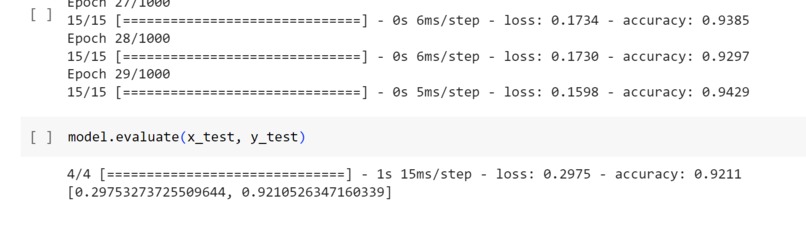
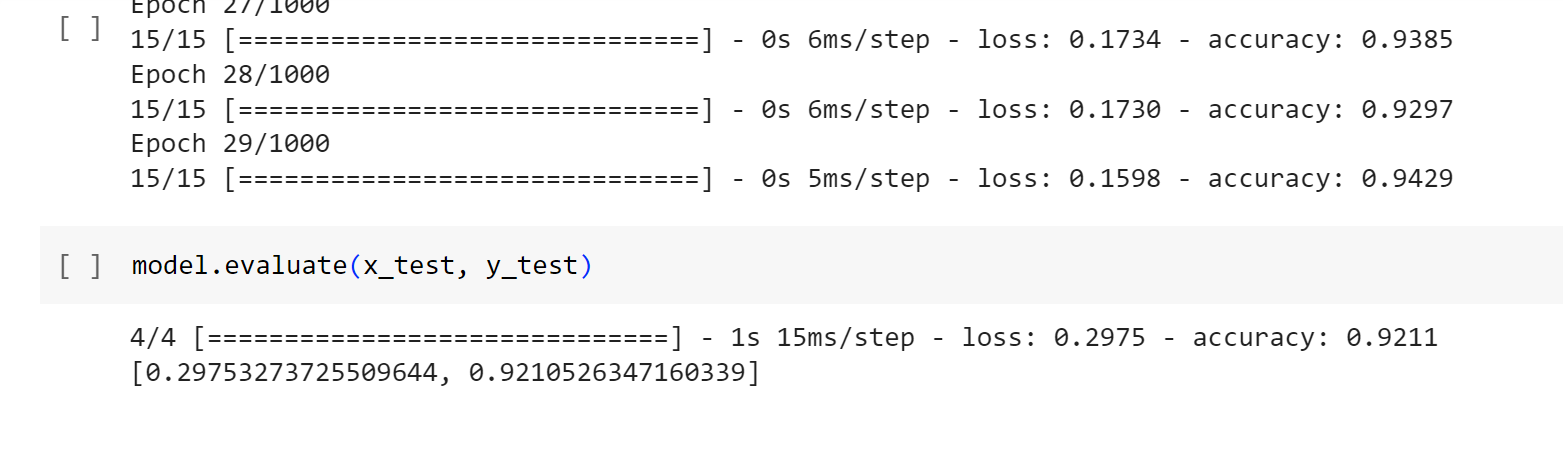
92.11% Accuracy
Inspiration
My project is deeply rooted in my determination to make a meaningful impact on women's health, particularly in the realm of breast cancer detection. Witnessing the emotional and physical toll that breast cancer takes on individuals and their families has ignited a fervent passion within me. The alarming statistics and stories of delayed diagnoses drove me to harness the potential of machine learning to pioneer change. By creating a predictive model that identifies malignancy with exceptional accuracy, I aim to contribute to early interventions and improved outcomes.
What it does
For decades, tumor classification has predominantly relied on histopathological analysis, where pathologists painstakingly inspect biopsy samples under microscopes to discern crucial tumor attributes. Despite being the gold standard, this method is marred by subjectivity, vulnerable to the pathologist's experience, and prone to inter-observer variability. Recognizing these limitations, my project tackles this challenge head-on by leveraging artificial intelligence. By training machine learning algorithms on extensive datasets, the AI can learn intricate patterns and nuances that might elude human perception. This technology operates devoid of personal biases and consistently applies its acquired knowledge to classify tumors. By significantly reducing subjectivity and inter-observer discrepancies, my project aims to enhance the accuracy and reliability of tumor diagnosis, empowering healthcare professionals with a potent tool that complements their expertise and ensures more consistent and precise outcomes for patients.
How we built it
The algorithm worked with a comprehensive breast cancer dataset comprising 570 samples, each representing a breast tumor with multiple pertinent tumor characteristics. These characteristics encompass essential features such as radius mean, texture mean, perimeter mean, area mean, smoothness mean, compactness mean, concavity mean, concave points mean, symmetry mean, and fractal dimension mean. Furthermore, the dataset includes standard error measurements for these tumor characteristics, along with the "worst" or largest mean values for each feature. These data were then preprocessed and split into input features and target labels. Employing TensorFlow and Keras libraries, I engineered a sequential neural network architecture. The network comprised layers of densely connected neurons, each activated by the sigmoid function, tailored for binary classification. With the 'adam' optimizer and 'binary_crossentropy' loss function, the model was primed for training. Iterating through 1000 epochs, the AI learned to discern intricate patterns indicative of malignancy. Rigorous evaluation on a separate test dataset validated the model's proficiency. The culmination of data preprocessing, neural network design, and iterative training underpins a powerful tool poised to revolutionize breast cancer detection through objective and accurate predictions.
Challenges we ran into
During the development of our project, I grappled with addressing class imbalance within the dataset, given that benign cases often outnumber malignant cases. Mitigating this imbalance without introducing bias into the model was a delicate process. Moreover, training the model for a sufficient number of epochs while avoiding overtraining was a fine line to tread.
Accomplishments that we're proud of
One accomplishment I am particularly proud of is the meticulous cleaning of the dataset. Transforming raw data into a well-structured and usable format demanded a keen eye for detail and persistence. I devoted considerable time to addressing missing values, outliers, and inconsistencies, ensuring the integrity and reliability of the information fed into the model.
What we learned
Through this project, I've gained invaluable insights and experiences that have greatly enriched my understanding of both machine learning and the medical domain. I've learned the intricacies of data preprocessing, realizing the critical role it plays in model performance. Dealing with class imbalance taught me the importance of maintaining fairness and ethical considerations in AI applications.
What's next for Predicting Breast Cancer Malignancy with AI
With our successful breast cancer prediction model as a foundation, the path ahead is promising and full of opportunities. We can explore collaborations with medical institutions for validation and real-world deployment, ensuring our AI's efficacy in clinical settings. This could involve refining the model's interpretability to gain the trust of healthcare professionals.

Log in or sign up for Devpost to join the conversation.