Paper

Click Here for Bitcoin (paper)!

Inspiration

Fraud detection in transactional data

What it does

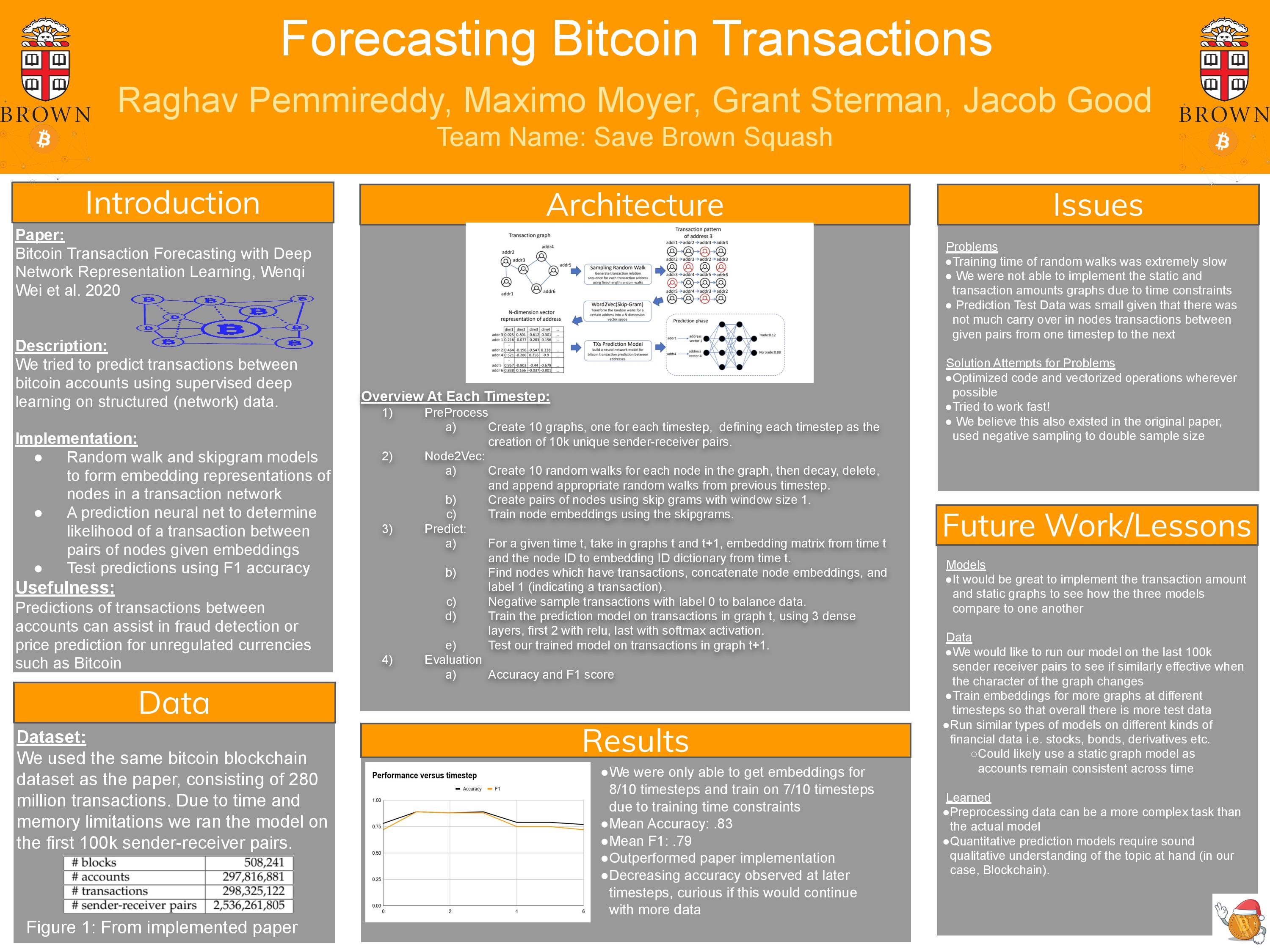
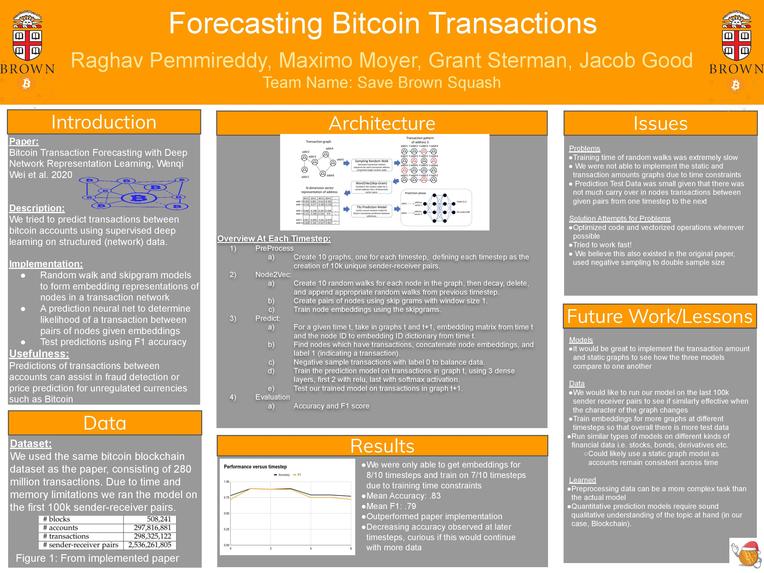
Predicts whether two cryptocurrency accounts should or should not have a transaction

How I built it

Using tensorflow and python applied on public transactional blockchain data.

Challenges I ran into

Significant pre-processing constraints and unclear sampling implementations in the paper.

Accomplishments that I'm proud of

High predictive accuracy despite very long training time.

What I learned

The end to end pipeline of deep learning project work.

What's next for Predicting Bitcoin Transactions using DL

Explorations of other training techniques.

Built With

Share this project:

Updates

posted an update

Our project is an implementation of this paper:https://arxiv.org/pdf/2007.07993.pdf. We are using bitcoin transaction data to predict transactions between accounts. We chose this paper because it is an exploding currency and we are curious to use the transactional data given to see if we can predict outcomes. Such results could have interesting implications for fraud detection or predicting price dynamics. This is a structured prediction problem as we know the labels of all transactions and we are trying to train a model to classify them.
We expected that our preprocessing would be the most difficult segment of the project and we hit a roadblock early into this process. Because the raw data from the paper is so big, we spent a lot of time parsing the data and transforming it into edges of the graph. The large size of the data also made it challenging to create our edges in a reasonable time; we spent a bit of time making our edge-creation script more efficient.
As of now, we are able to work with edges from the data and are in the process of creating our graphs.We aim to be able to build and test the model soon. We are pleased that we are finished with parsing the data, which is what we expected would be the toughest and most time consuming.
From here, we will finish our preprocessing of turning the edges into graphs and then move on to creating the network. We do not expect that the rest of preprocessing will take very long so we should be able to spend a considerable amount of time working on the network and establishing sound architecture. We are not too far behind schedule and we’ll be caught up once we finish preprocessing and start creating the network so we will not change anything in our approach at the moment.

Log in or sign up for Devpost to join the conversation.