Inspiration
What it does
How we built it
Challenges we ran into
Accomplishments that we're proud of
What we learned
PredictAI — Making Data Intelligence More Accessible
Inspiration
PredictAI began with a problem I encountered during my own journey of exploring universities and preparing for college applications.
While researching universities, programmes, opportunities and admission requirements, I found myself dealing with large amounts of information spread across documents, datasets and different sources. I became curious about how artificial intelligence could make the process of understanding, organising and analysing information more efficient.
That curiosity developed into a larger idea: What if multiple AI-powered analytical capabilities could exist within one integrated platform rather than requiring users to switch between different tools?
This became the foundation of PredictAI.
What We Built
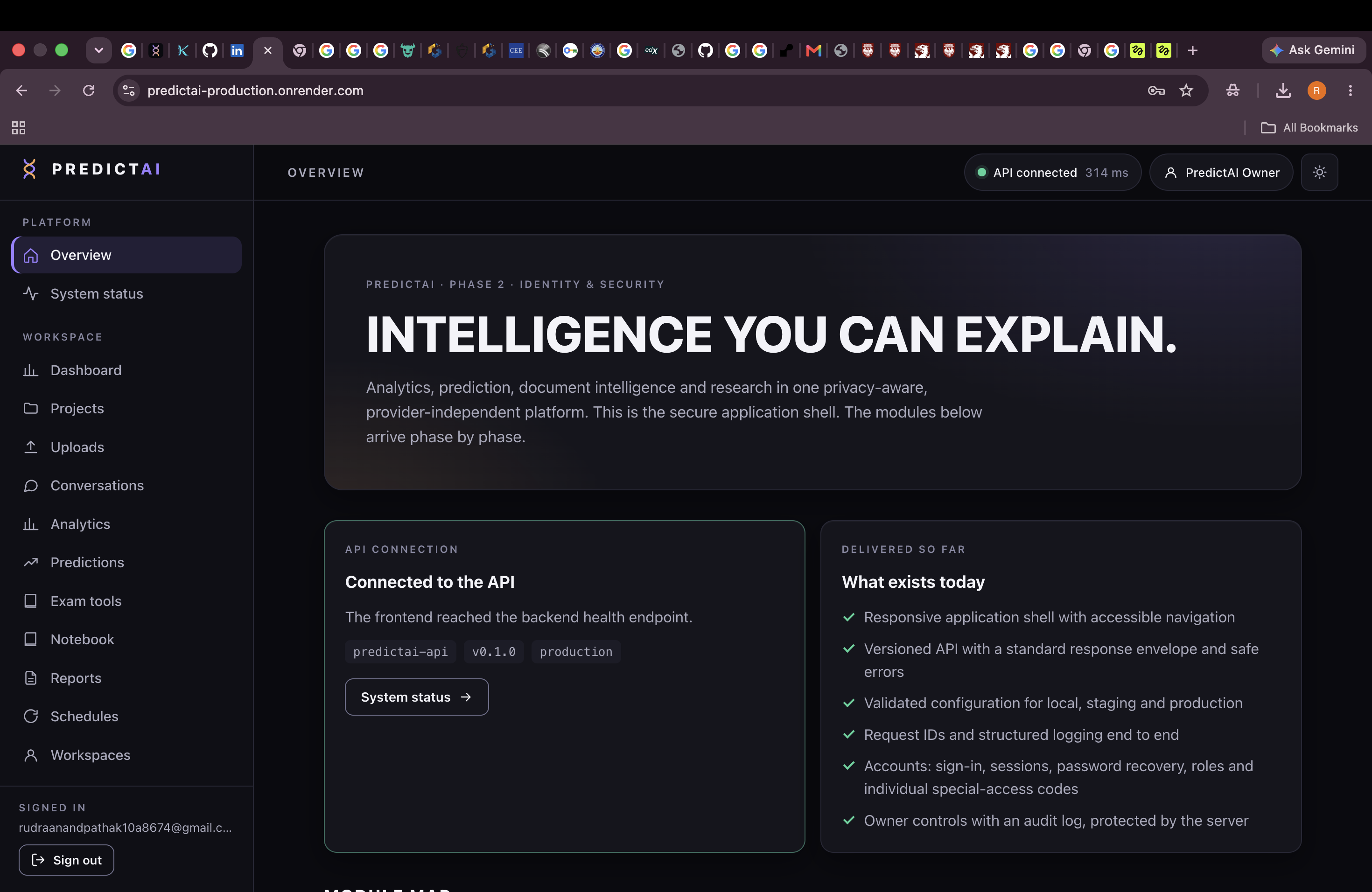
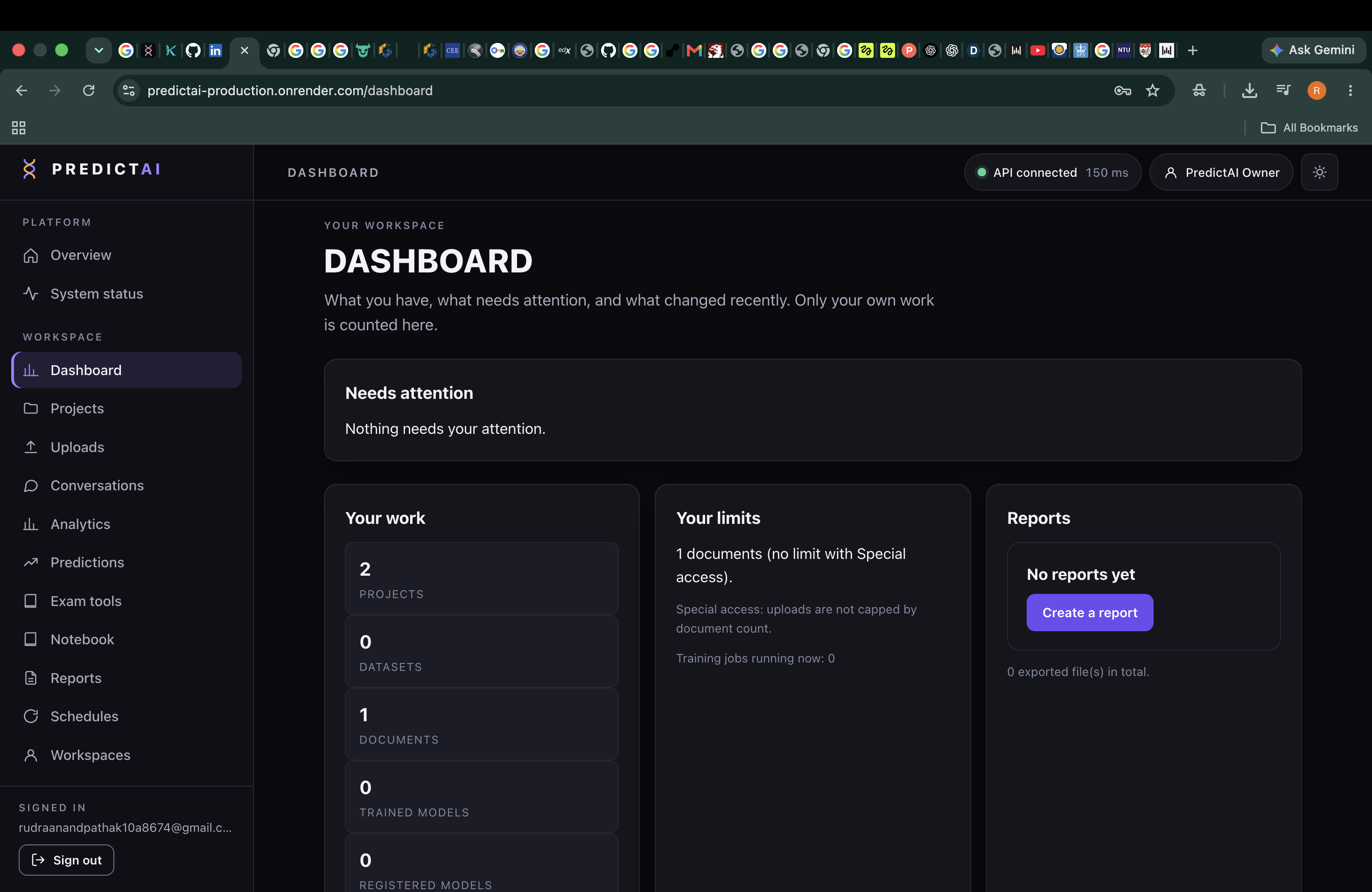
PredictAI is an integrated AI-powered platform designed to bring document intelligence, data analytics, automated machine learning, predictive modelling, model evaluation, explainable AI and research intelligence together.
Its core capabilities include:
- Document Intelligence: Extracting and analysing information from uploaded documents.
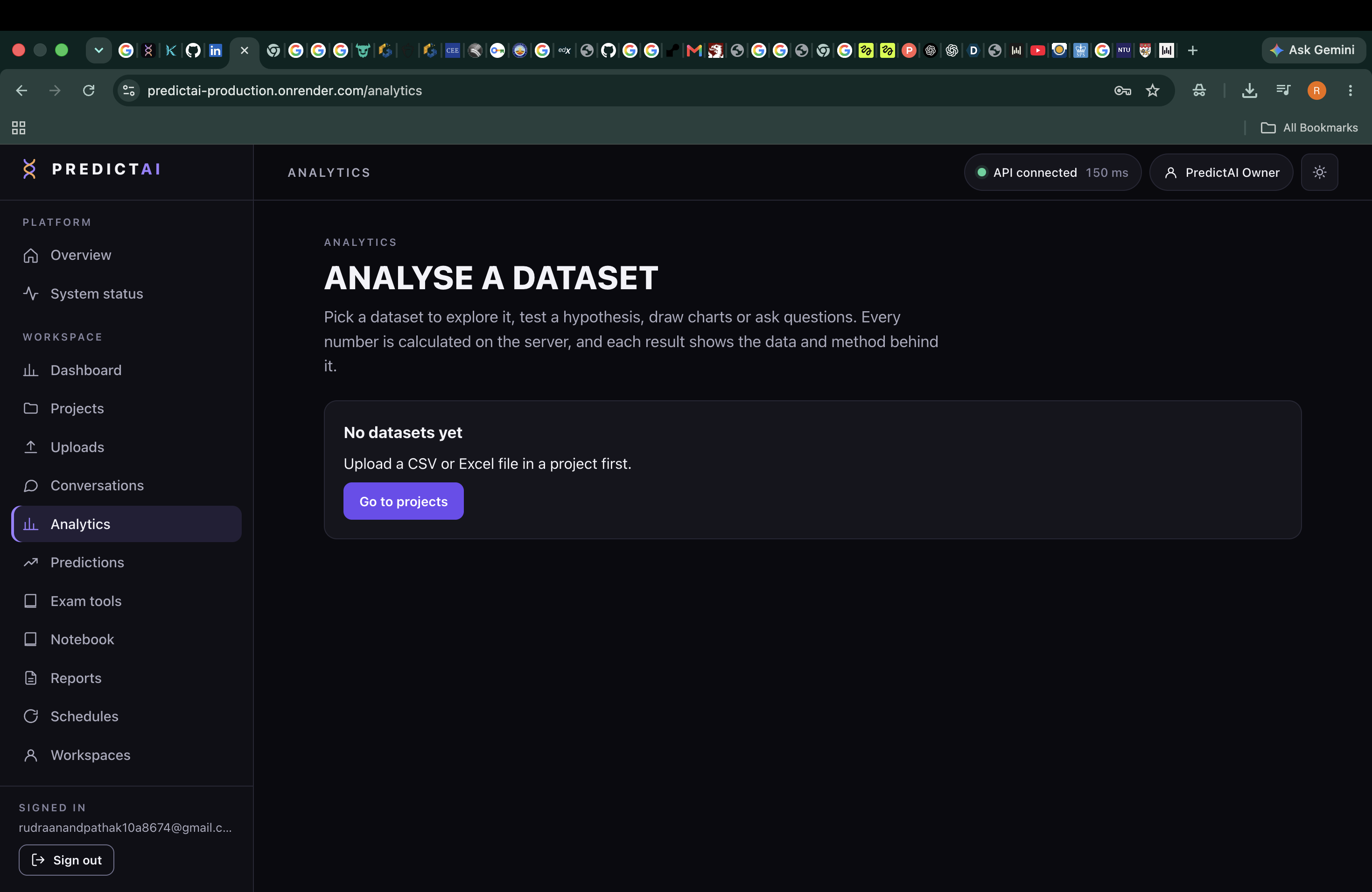
- Data Analytics: Exploring datasets, identifying patterns and generating visualisations.
- Automated Machine Learning: Streamlining the process of building predictive models.
- Predictive Modelling: Using machine learning to identify patterns and generate predictions.
- Model Evaluation: Assessing model performance through relevant evaluation metrics.
- Explainable AI: Making model outputs and predictions easier to understand.
- Research Intelligence: Supporting research and information-discovery workflows.
The broader objective is to make advanced analytical capabilities more accessible through a unified interface.
How We Built It
PredictAI evolved through multiple development stages rather than being created as a single application.
The initial implementation focused on document processing, dataset analysis and analytical workflows. As the project expanded, I worked on integrating machine learning capabilities, model evaluation, visualisation and AI-powered assistance.
The technology stack includes Python, Streamlit in the initial application, modern frontend technologies, backend services, machine learning libraries and cloud infrastructure.
The development process involved:
- Designing the core application architecture.
- Implementing document and dataset processing.
- Integrating machine learning workflows.
- Developing predictive modelling and evaluation capabilities.
- Building explainability and research-oriented features.
- Implementing user accounts and access management.
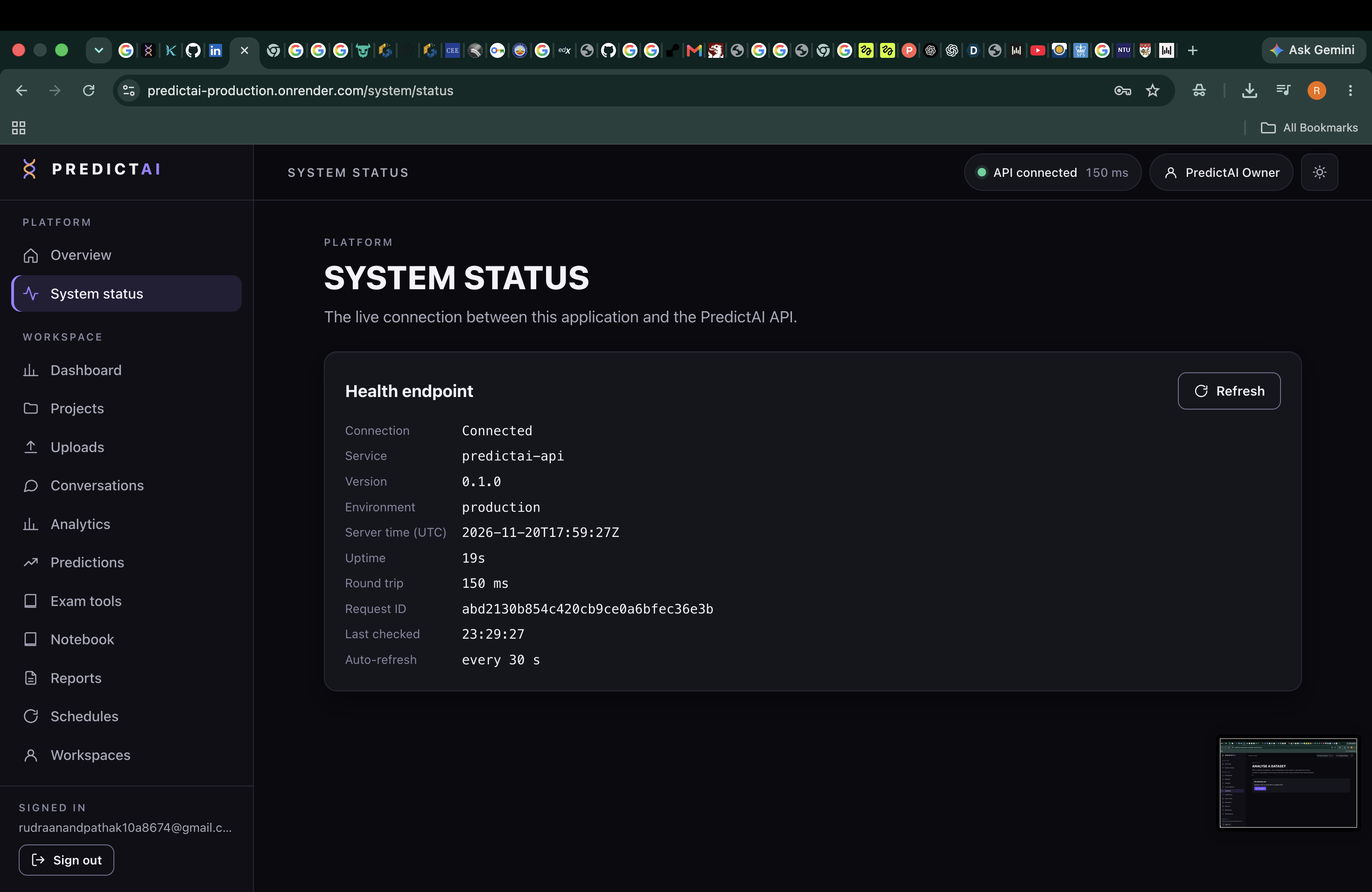
- Deploying the application and testing its cloud infrastructure.
- Continuously refining the platform based on testing and identified issues.
Challenges We Faced
Building PredictAI presented several technical challenges.
System integration: Bringing document processing, analytics, machine learning and research capabilities into one platform required careful architectural decisions.
Model reliability: Producing predictions is not enough. Understanding model performance, evaluating limitations and communicating results are equally important.
Infrastructure and deployment: Moving from local development to cloud deployment introduced challenges involving storage, backend communication, configuration and reliability.
User experience: Advanced analytical workflows can become overwhelming. Designing an interface that makes these capabilities approachable required continuous refinement.
Scope management: The project gradually expanded beyond its original purpose. Managing its growing feature set while maintaining a coherent architecture became an important learning experience.
What I Learned
Developing PredictAI has taught me that building an AI product involves much more than integrating a machine learning model.
I gained practical experience in:
- Full-stack software development.
- Machine learning and predictive analytics.
- Data processing and visualisation.
- AI integration and explainability.
- Database and cloud infrastructure.
- Application architecture and deployment.
- Debugging, testing and iterative development.
Most importantly, I learned how to turn an initial idea into a complex technical project through experimentation, persistence and continuous improvement.
Current Status and Future Direction
PredictAI is currently in its testing phase. Its features are being tested, refined and improved, and the platform is not being presented as a finished product.
The next stage focuses on improving reliability, strengthening model evaluation, expanding explainable AI capabilities and making the overall experience more intuitive.
PredictAI started as a personal curiosity during my college-application journey. It has evolved into an ambitious attempt to make research, analytics and predictive intelligence more accessible through one platform.
What's next for PredictAI
Built With
- apis
- css
- data
- fastapi
- github
- html
- javascript
- json
- matplotlib
- numpy
- ollama
- pandas
- postgresql
- qwen
- react
- rest
- scikit-learn
- scipy
- visualization
