Inspiration
What it does
How we built it
Challenges we ran into
Accomplishments that we're proud of
What we learned
What's next for PredictAI
About PredictAI
Inspiration
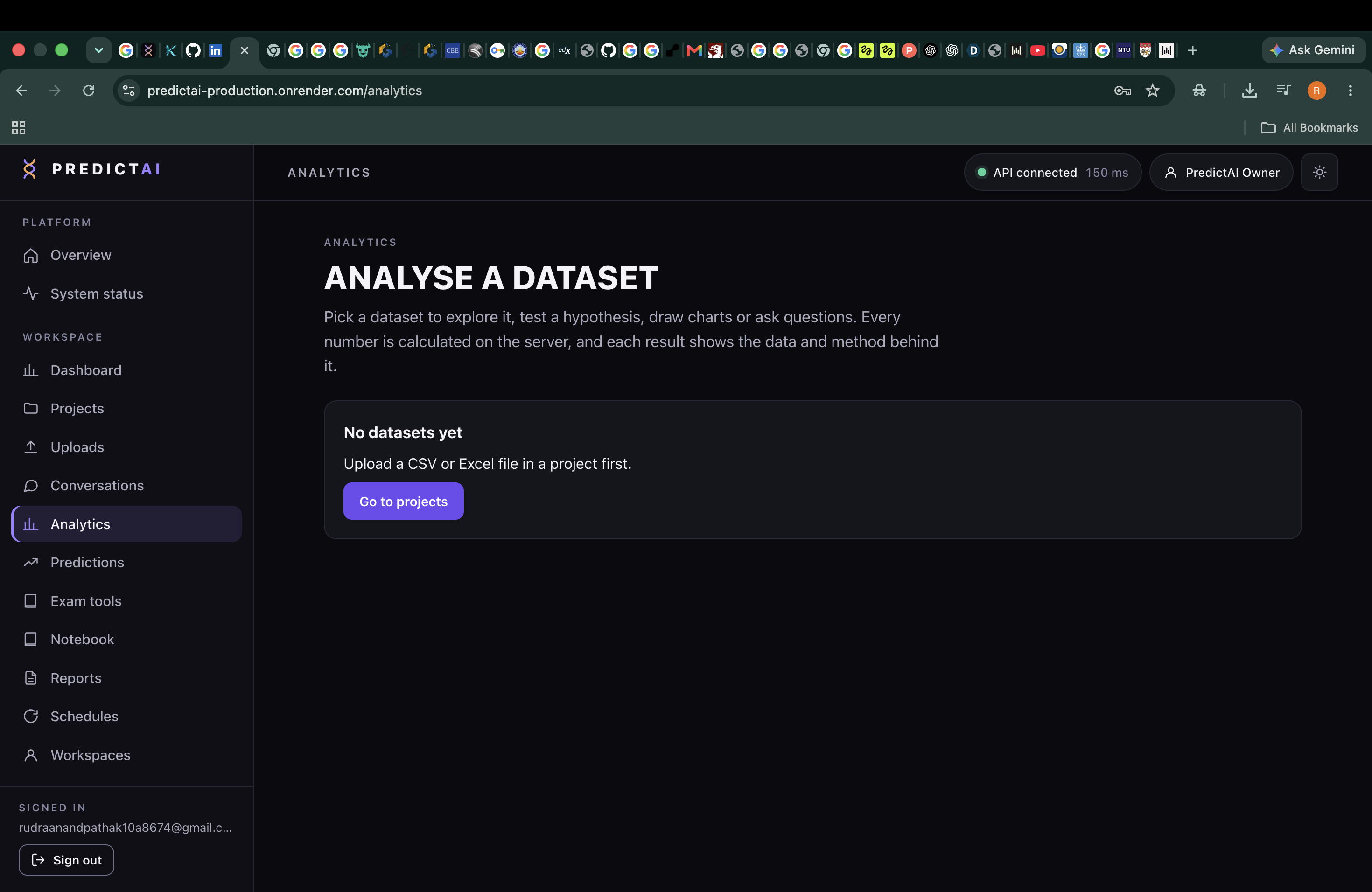
Data is everywhere, but extracting meaningful insights from it is not always easy. Students, researchers, and professionals often work with large datasets and documents but lack the technical expertise or tools required to analyse them effectively.
This inspired me to build PredictAI, an AI-powered data analysis platform designed to make data analytics, machine learning, and predictive modelling more accessible.
My vision was simple: create a platform where users could upload their data, understand it, discover patterns, build predictive models, and generate meaningful reports without needing extensive programming knowledge.
What It Does
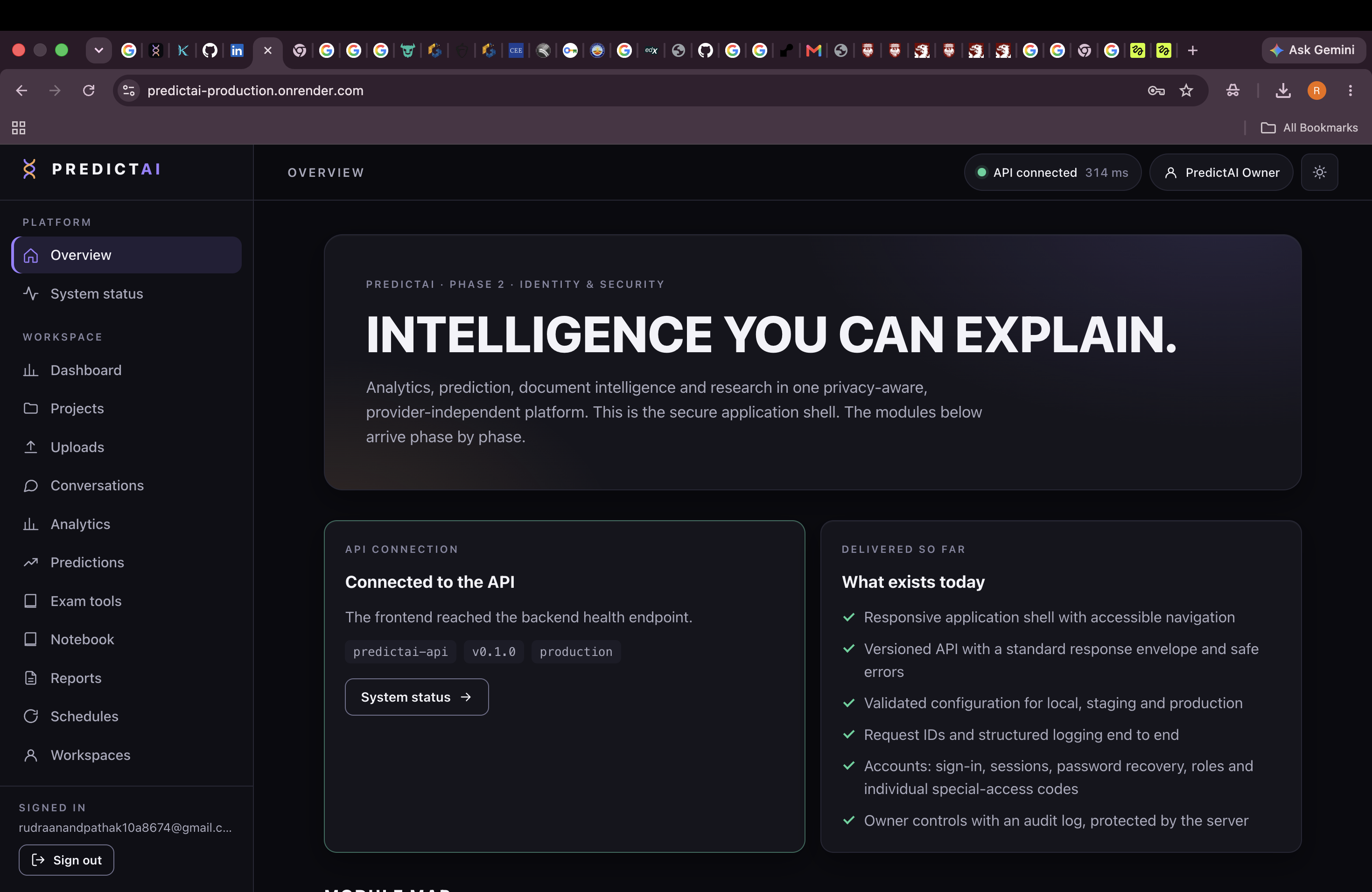
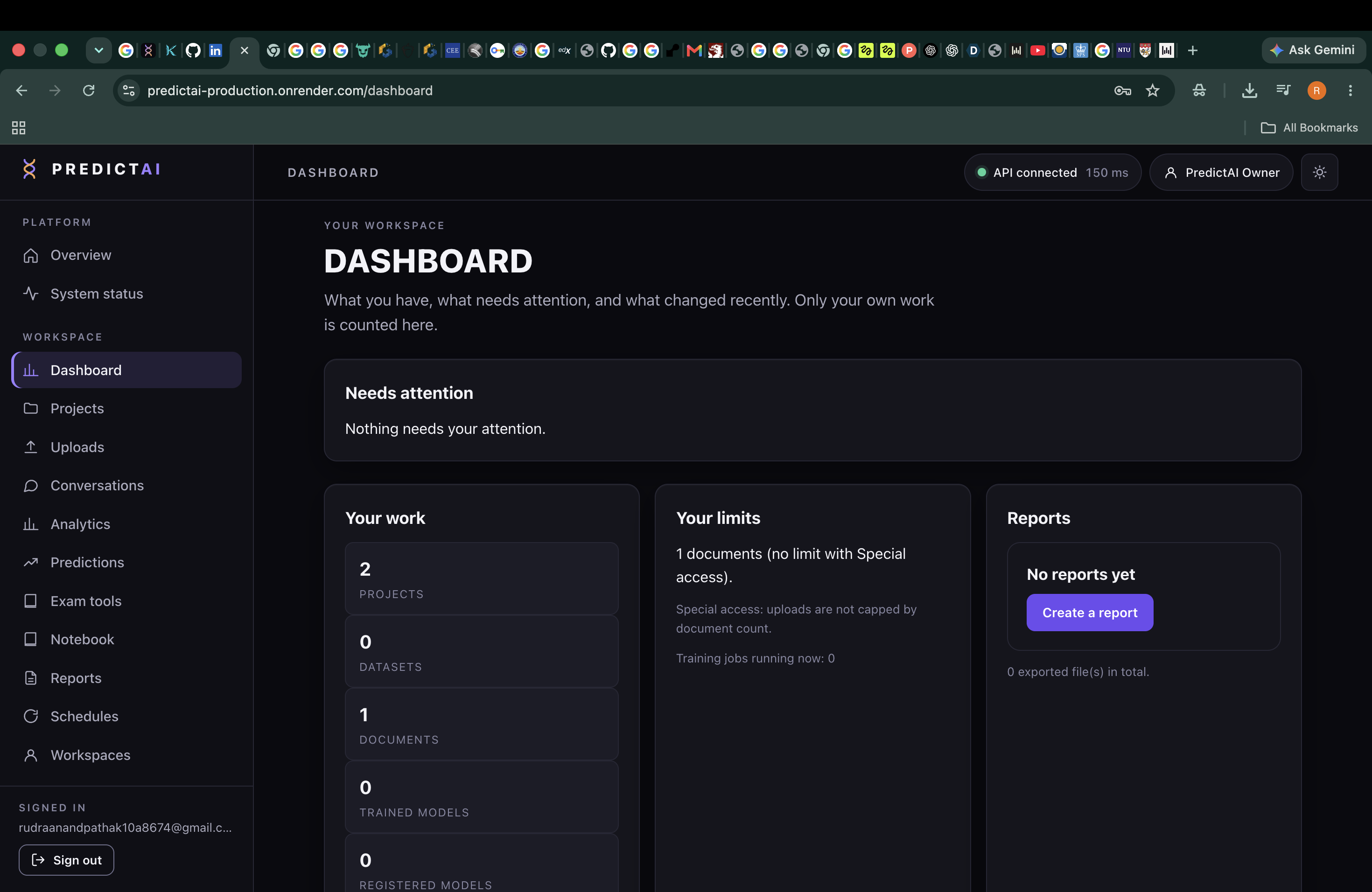
PredictAI is an intelligent data analysis platform that transforms raw information into actionable insights.
Its key capabilities include:
- Multi-format Document Analysis: Upload and analyse files in formats such as CSV, XLSX, PDF, and DOCX.
- Automated Exploratory Data Analysis: Understand datasets through statistical summaries, visualisations, and pattern identification.
- AutoML Integration: Automatically build and evaluate machine learning models.
- Model Evaluation: Assess predictive performance using relevant evaluation metrics.
- AI-Powered Assistance: Interact with an AI assistant to understand datasets, ask questions, and explore analytical results.
- Explainable AI (XAI): Work towards making model predictions and analytical decisions more understandable.
- Report Generation: Generate structured analytical reports for easier interpretation and sharing.
How I Built It
PredictAI was developed through an iterative, phase-based development process.
I started by building the core platform using Python and Streamlit, focusing on document uploads, data processing, and exploratory data analysis.
As the project evolved, I integrated additional capabilities:
- Built document-reading and data-processing modules.
- Integrated statistical analysis and visualisation using Pandas, SciPy, and Matplotlib.
- Implemented automated machine learning workflows using Scikit-learn.
- Added model evaluation capabilities to assess the reliability of predictions.
- Developed an AI-assisted analytical experience.
- Worked on improving the platform's architecture, user experience, and accessibility.
The project gradually evolved from a basic document-analysis application into a more comprehensive AI-powered analytics platform.
Challenges I Faced
Building PredictAI independently came with several challenges.
- Handling Different File Formats: Making different document types readable and ensuring that their contents could be processed correctly.
- Data Quality: Handling missing values, inconsistent data, and datasets with different structures.
- Model Reliability: Understanding why a model performs well on certain metrics but struggles with others, particularly when dealing with imbalanced datasets.
- Integration: Connecting multiple analytical components into one coherent application.
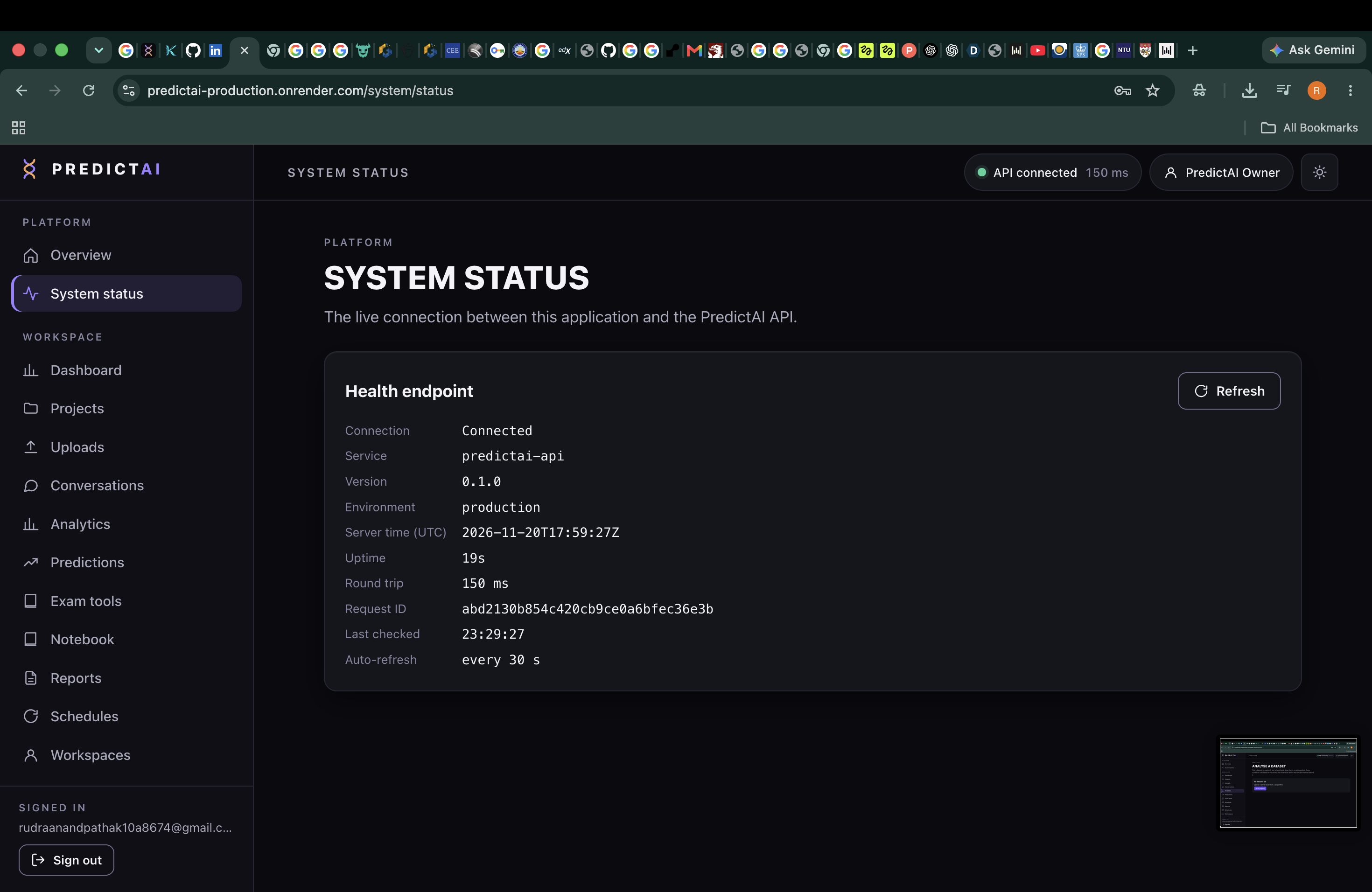
- Deployment: Managing dependencies, server configurations, and compatibility issues while preparing the platform for real-world use.
- Accessibility: Making advanced analytical concepts understandable to users without a technical background.
Each challenge helped me understand that building an AI platform involves much more than simply integrating machine learning models. Reliability, interpretability, usability, and thoughtful engineering are equally important.
What I Learned
Developing PredictAI has been an important learning experience.
I strengthened my understanding of Python, machine learning, data preprocessing, statistical analysis, model evaluation, and application development.
More importantly, I learned how to approach a large technical project systematically, break it into manageable phases, debug complex issues, and continuously improve a product based on its limitations.
I also realised that a successful AI tool should not simply produce predictions. It should help people understand the reasoning behind those predictions.
What's Next?
PredictAI is an evolving project, and there is much more I want to accomplish.
My future goals include improving explainable AI, developing more advanced AI-driven analytical capabilities, strengthening model evaluation, expanding report generation, and introducing a robust account and access-control system.
Ultimately, I want PredictAI to become a platform that bridges the gap between complex data science and everyday decision-making.
PredictAI is built around one belief: data should not just be collected; it should be understood.
Built With
- automated-machine-learning-(automl)
- cloudflare
- cloudflare-r2
- css
- explainable-ai-(xai)
- generative-ai
- git
- github
- html
- javascript
- large-language-models-(llms)
- machine-learning
- matplotlib
- natural-language-processing-(nlp)
- numpy
- ollama
- pandas
- python
- rest-apis
- scikit-learn
- scipy
- streamlit
