-
-
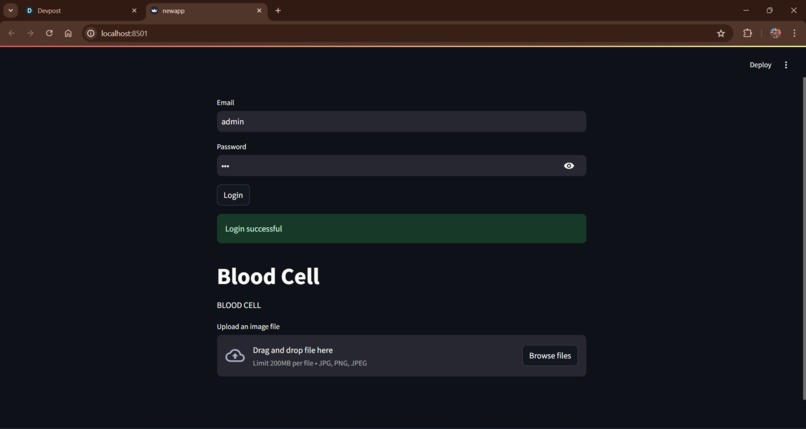
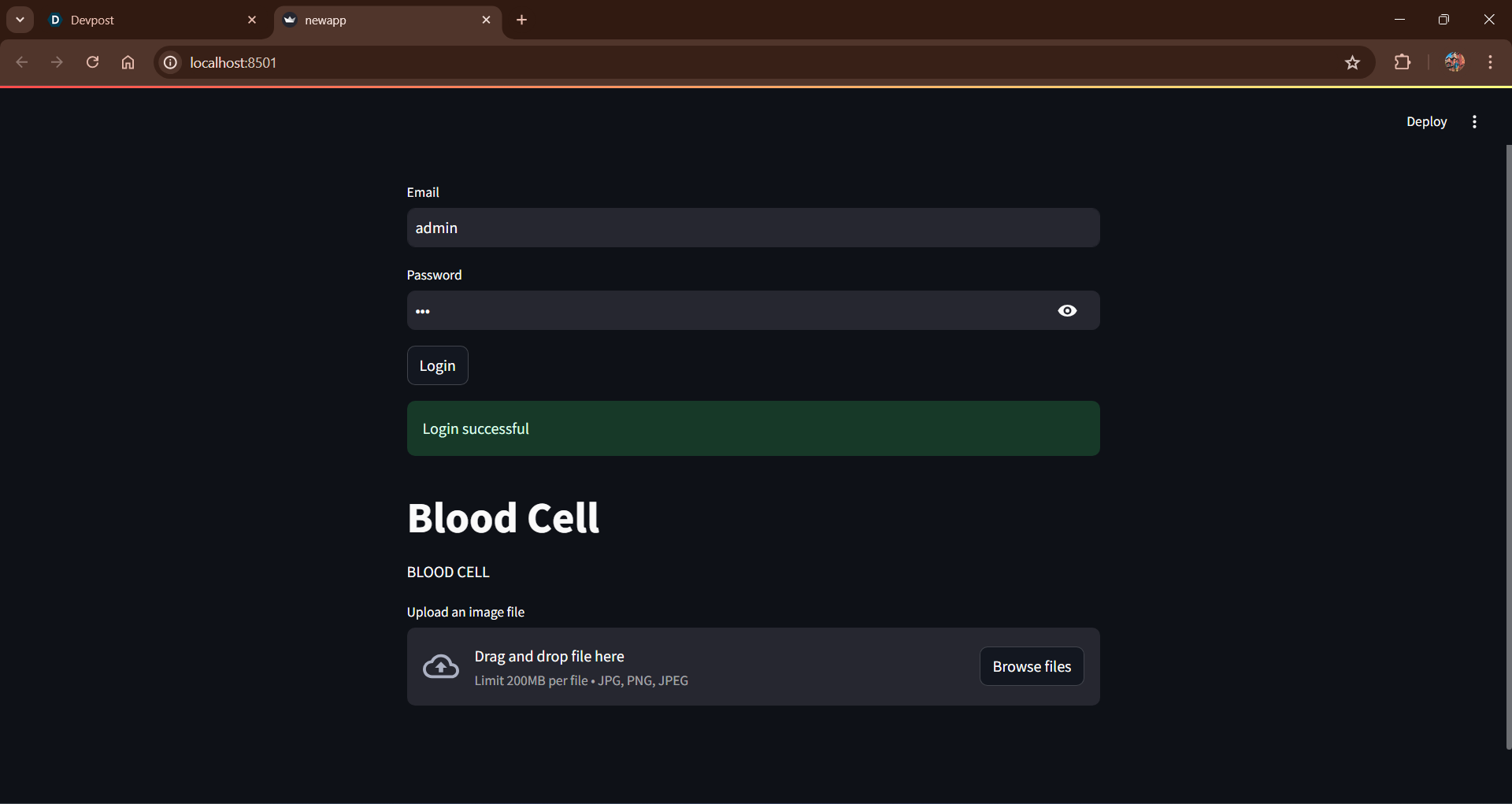
This is the UI
-
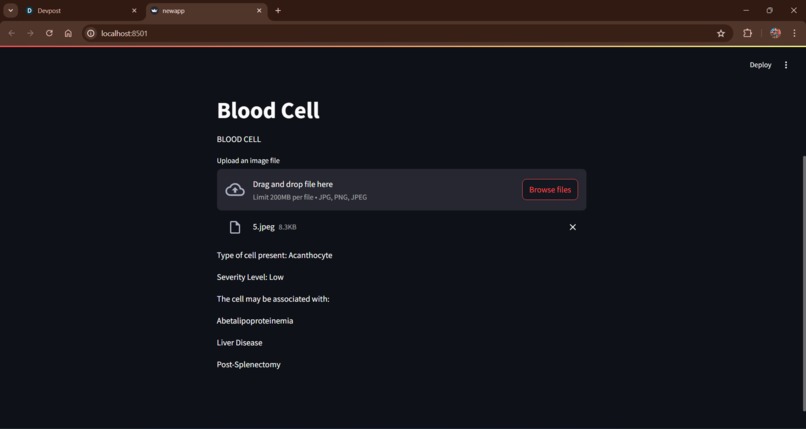
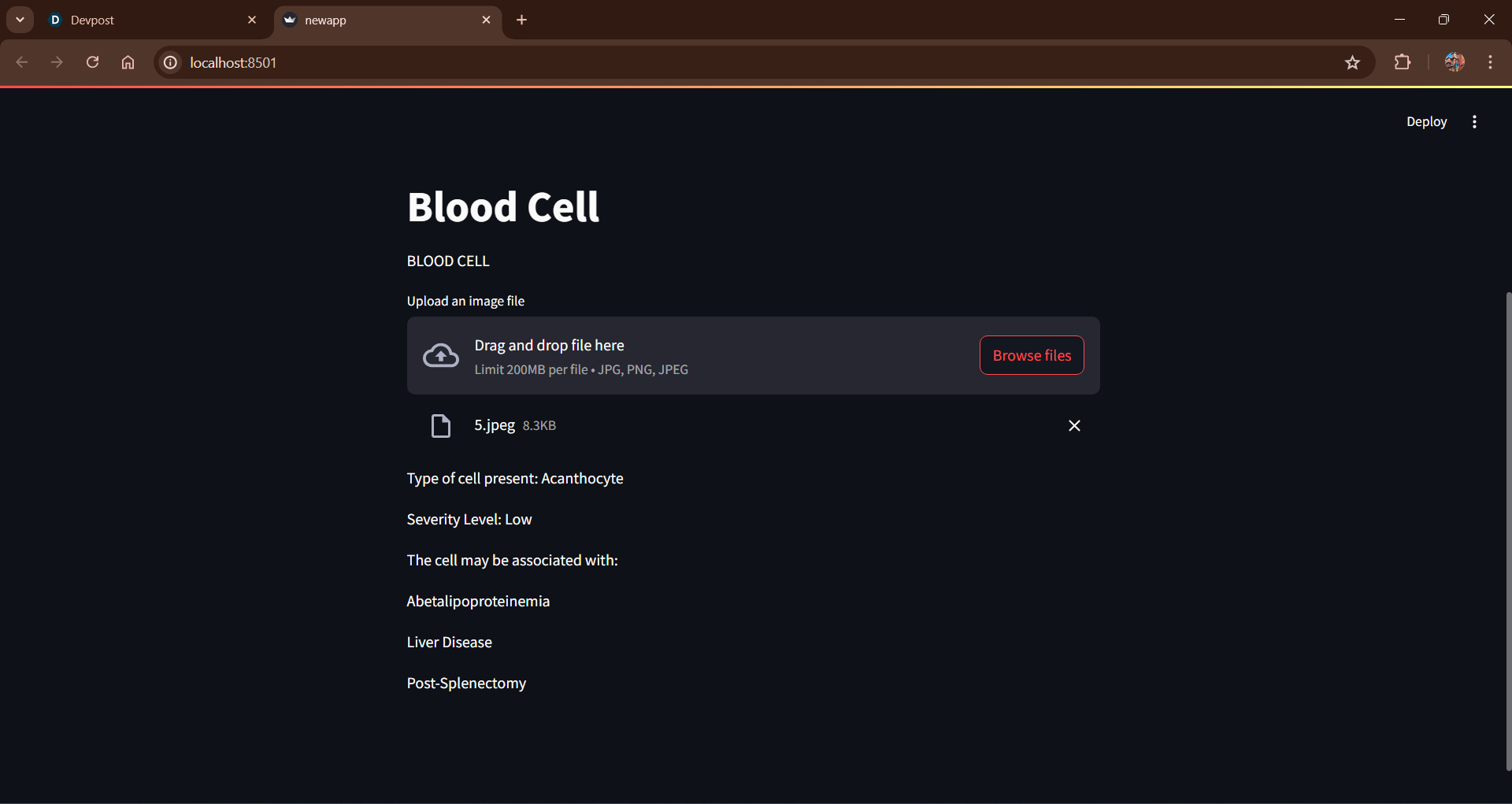
This is how it shows the results
Inspiration Blood cell segmentation plays a crucial role in hematological analysis and disease detection. With RBC poikilocytosis being a key indicator of various disorders, developing an advanced segmentation model enhances diagnostic precision, aiding medical professionals in faster and more accurate assessments.
What it does Our project focuses on precise blood cell segmentation using advanced image processing and RCNN (Region-Based Convolutional Neural Networks). It identifies and categorizes red blood cell abnormalities, including poikilocytosis, and integrates a severity assessment feature to provide deeper insights into disease progression.
How we built it Data Collection & Preprocessing: We curated a dataset of blood smear images, applied necessary augmentations, and performed normalization.
Model Development: Implemented an RCNN-based segmentation model, fine-tuned for detecting RBC shapes and abnormalities.
Severity Analysis: Integrated an evaluation metric to classify severity based on segmented abnormalities.
Streamlit Integration: Developed an interactive Streamlit app for easy visualization and analysis, incorporating authentication and secure access.
Backend & Storage: Used MongoDB for storing processed data and historical results, with a structured API for efficient data retrieval.
Challenges we ran into Data Quality & Labeling: Obtaining high-quality labeled datasets for RBC abnormalities was challenging.
Model Accuracy & Performance: Ensuring high segmentation accuracy while maintaining computational efficiency required extensive fine-tuning.
Authentication & Security: Implementing secure authentication in the Streamlit app with proper redirect URL handling was complex.
Integration of Severity Assessment: Defining a robust severity metric that aligns with medical standards posed a challenge.
Accomplishments that we're proud of Successfully implemented an RCNN-based segmentation model with high accuracy.
Integrated a severity assessment feature for improved diagnostic insights.
Developed an interactive, user-friendly Streamlit app for analysis.
Ensured smooth authentication handling, making the app secure and accessible.
What we learned Deepened understanding of image segmentation techniques, especially in medical imaging.
Gained hands-on experience in RCNN fine-tuning and optimization.
Improved skills in authentication mechanisms and secure application development.
Learned how to integrate multiple components (AI models, databases, and frontend) into a seamless workflow.
What's next for Advanced Blood Cell Segmentation for Precise Diagnosis Enhancing Model Robustness: Improving segmentation accuracy by incorporating transformer-based models.
Expanding Dataset: Collecting more diverse blood smear images for better generalization.
Real-time Processing: Optimizing the model for real-time analysis in clinical settings.
Mobile & Cloud Deployment: Extending the application to mobile platforms and integrating cloud-based processing for scalability.
Collaboration with Medical Experts: Validating results with hematologists to ensure clinical reliability and effectiveness.
Built With
- python
- streamlit

Log in or sign up for Devpost to join the conversation.