Inspiration
Prior authorization is one of those problems that sounds bureaucratic until you watch it happen to a patient. A doctor spends 13 hours a week on it — not because they don't know medicine, but because they don't know what a specific insurer wants in a specific form on a specific day. 1 in 5 requests get denied. Most of those denials were preventable. The information existed. Nobody caught the gap in time.
We kept coming back to one question: what if you knew what was missing before you submitted?
What it does
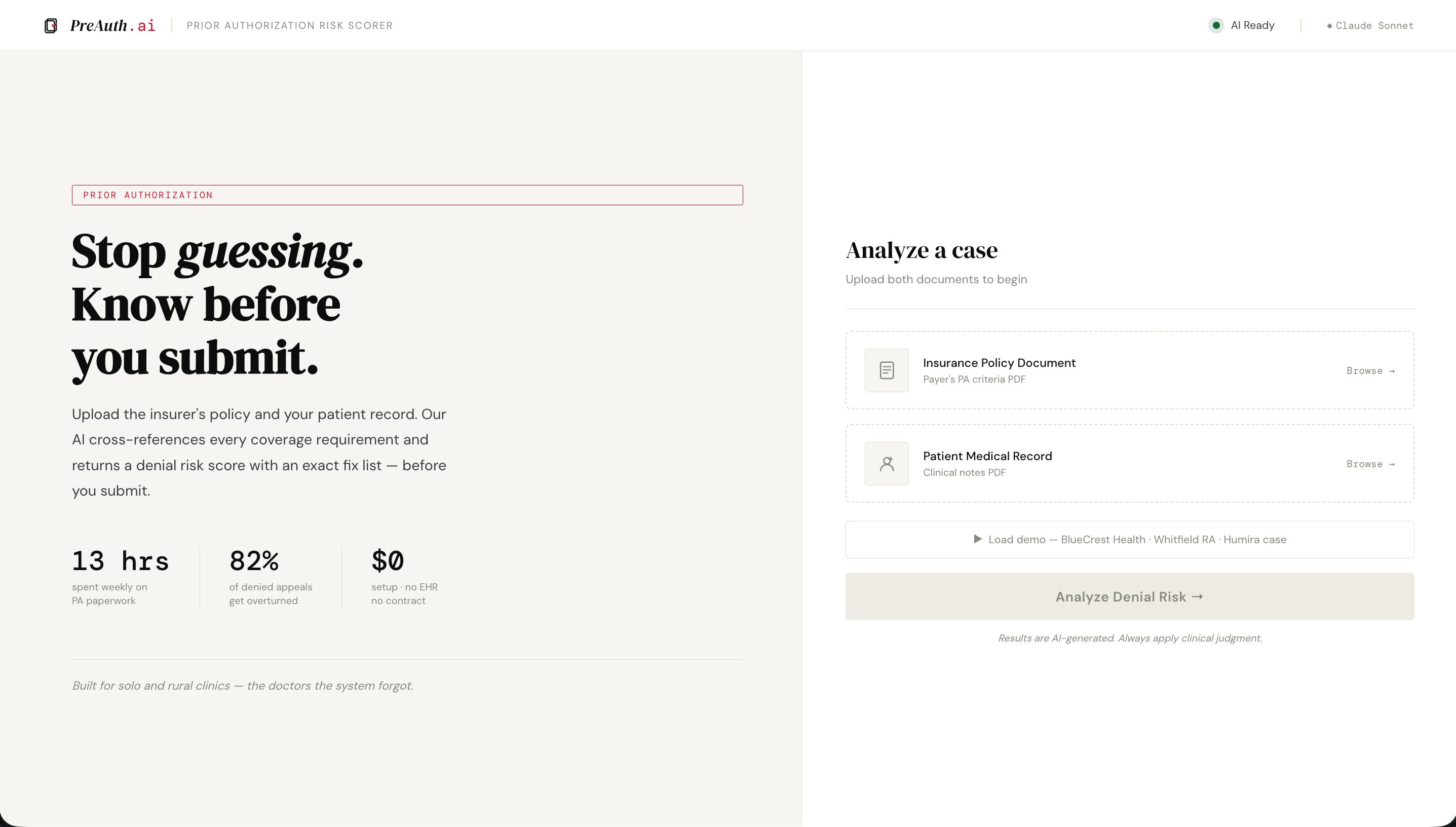
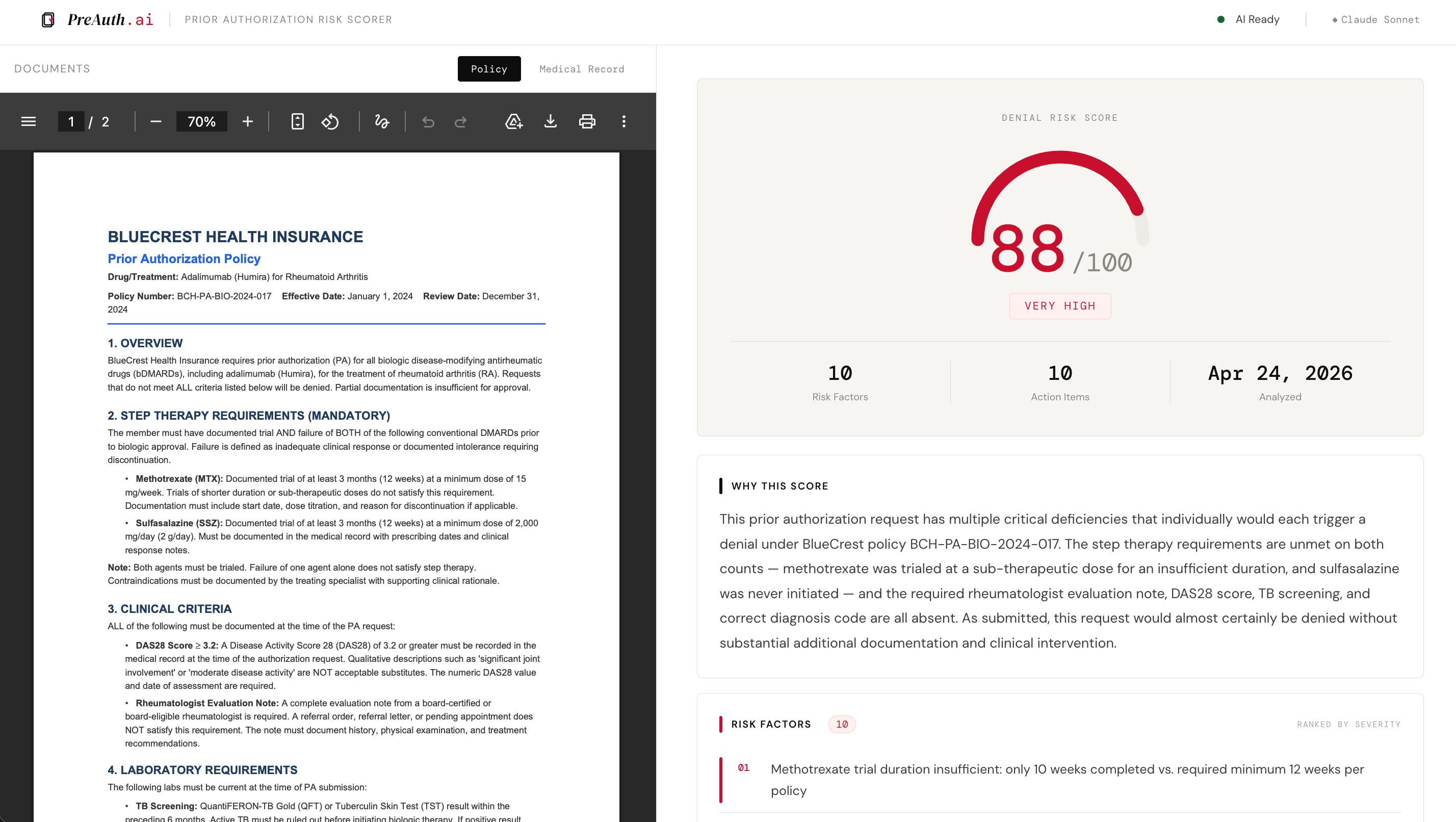
Upload two PDFs — the insurer's prior authorization policy and the patient's medical record. PreAuth.ai reads both, cross-references every requirement, and returns a 0–100 denial risk score with a plain-English breakdown of exactly what's missing and how to fix it.
No EHR integration. No enterprise contract. No IT department. Just a browser and two files.
How we built it
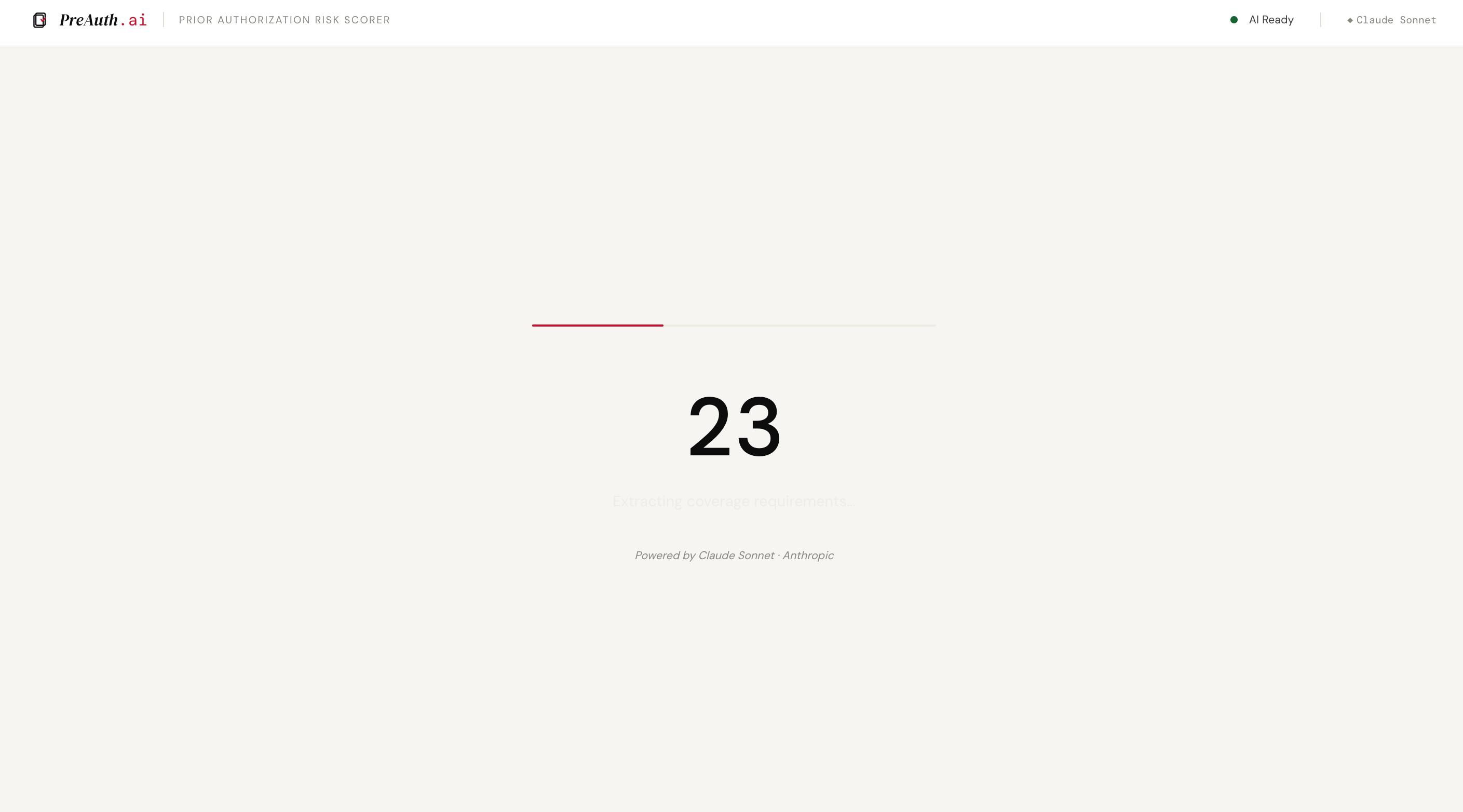
The core is a two-document prompt to Claude. We feed in the policy PDF and the patient record PDF together, then ask Claude to act as a prior authorization specialist: identify every requirement in the policy, check each one against the record, flag what's missing, explain why it matters, and score the overall denial risk.
The front end is intentionally minimal — a file upload interface that works in any browser. We wanted zero friction for the clinics that need this most: solo practices, rural hospitals, community health centers. Places where the IT team is one person or nobody.
What's next for PreAuth.ai
- Real-time policy updates. Right now you upload the policy yourself — we want to pull current payer policies automatically so the comparison is always against the latest version.
- Launch this in rural areas backed by VC funding.
Built With
- claude
- promptengineering

Log in or sign up for Devpost to join the conversation.