Inspiration
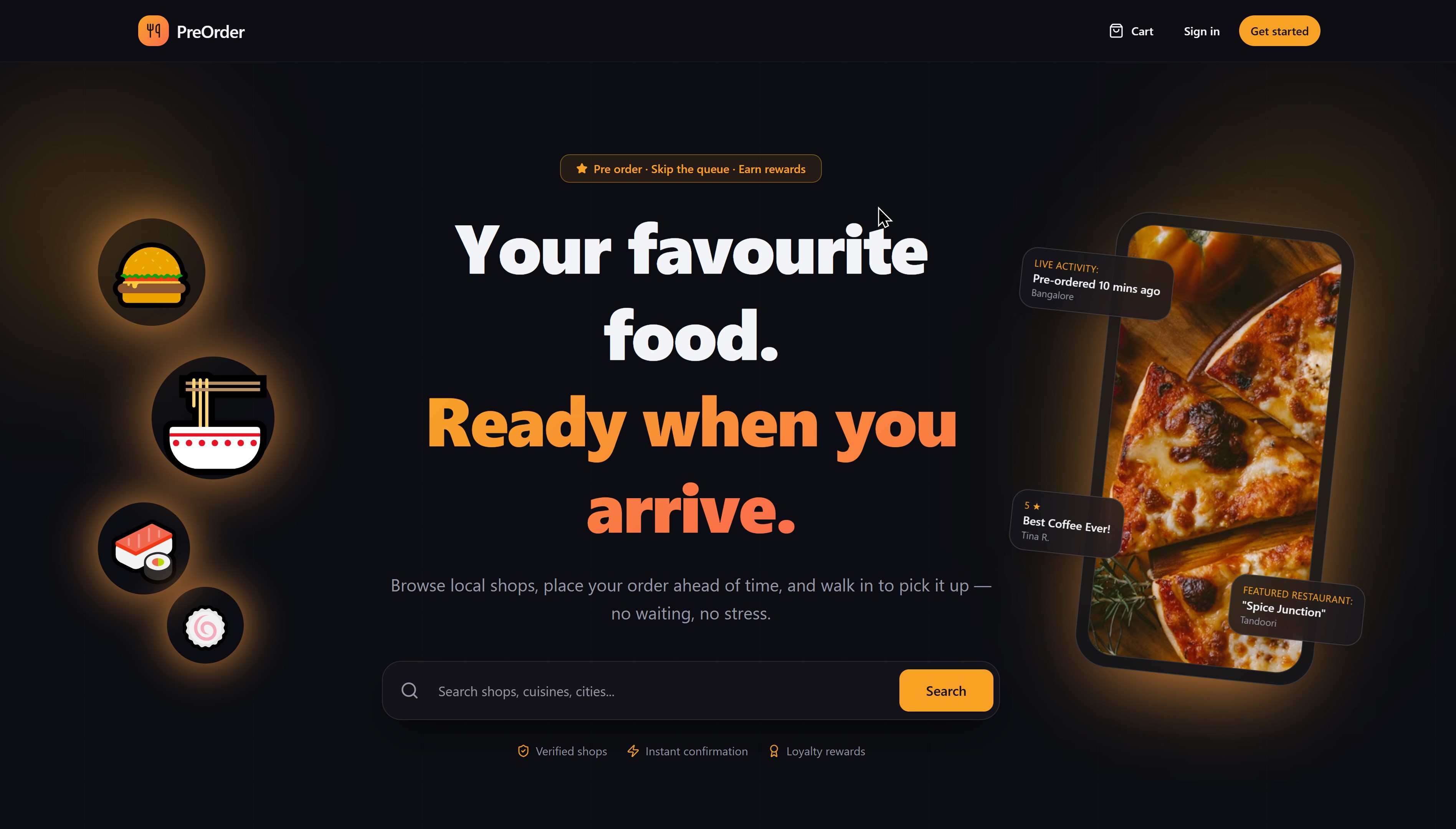
Many restaurants struggle with long queues, inefficient order management, and peak-hour congestion. Customers often waste time waiting for their food, while restaurants face operational challenges during busy periods.
Pre-Order Food was built to solve this problem by allowing customers to schedule orders in advance while giving restaurants a centralized platform to manage menus, orders, payments, and analytics efficiently.
What it does
Pre-Order Food is a cloud-native food pre-ordering platform that enables customers to browse restaurants, schedule orders, make payments, and track their orders.
The platform includes:
- Role-based access control for Customers, Shop Owners, and Administrators
- Menu and restaurant management
- Order scheduling and tracking
- JWT authentication and authorization
- Payment simulation
- Redis caching for improved performance
- Background task processing
- Analytics and reporting APIs
- Audit logging for critical actions
- API documentation with OpenAPI/Swagger
How we built it
The backend was built using:
- FastAPI
- PostgreSQL
- SQLAlchemy ORM
- Redis
- Docker
- AWS
- GitHub Actions CI/CD
The application follows a modular architecture with separate layers for authentication, business logic, database operations, and API endpoints.
Redis was integrated for caching frequently accessed data, while Docker simplified deployment and environment consistency.
Challenges we ran into
Some of the biggest challenges included:
- Designing scalable database schemas
- Managing authentication and authorization across multiple user roles
- Optimizing database performance through indexing and query optimization
- Implementing caching strategies using Redis
- Automating deployment pipelines
- Maintaining clean and modular project architecture as the project grew
Accomplishments that we're proud of
- Built a production-style backend architecture
- Developed numerous REST API endpoints across multiple business domains
- Implemented authentication, authorization, caching, analytics, and monitoring features
- Successfully deployed the application to the cloud
- Created a scalable foundation that can support future growth
What we learned
This project reinforced the importance of:
- System design
- Database optimization
- API security
- Cloud deployment
- Automation through CI/CD
- Building maintainable software architectures
What's next
Future improvements include:
- Real payment gateway integration
- Real-time order tracking using WebSockets
- Mobile application integration
- Enhanced analytics dashboards
- Recommendation and personalization features
- Multi-restaurant marketplace support
Built With
- actions
- alembic
- amazon-web-services
- api
- docker
- fastapi
- github
- jwt
- linux
- oauth2
- openapi
- postgresql
- pydantic
- python
- redis
- rest
- sqlalchemy
- swagger

Log in or sign up for Devpost to join the conversation.