Inspiration
The increasing frequency and intensity of hurricanes and other natural calamities inspired us to build a system that could provide timely and accurate predictions, helping communities prepare and respond more effectively. We wanted to leverage machine learning and real-time data tracking to create a tool that can forecast not just hurricanes but a variety of topological disturbances like cyclones, gale winds, and more.
What it does
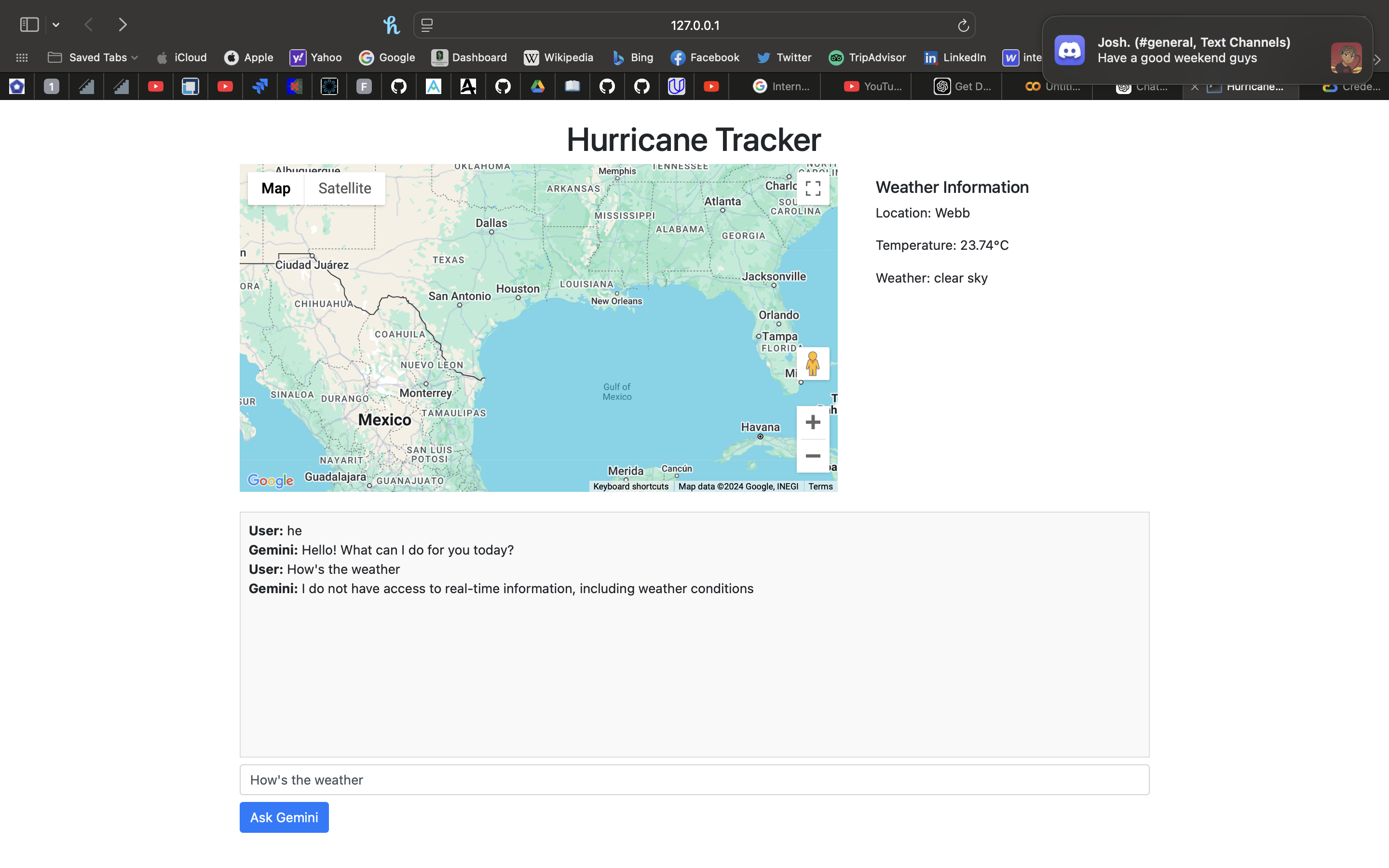
The system predicts and tracks hurricane activities and other weather-related disturbances in real time, using machine learning to analyze data such as wind speed, pressure, and proximity to land. It provides early warnings and alerts, allowing at-risk regions to prepare for potential disasters. The tool also includes bot assistance, which delivers real-time notifications and updates to users.
How we built it
We used data from NOAA, IBTrACS, and the NCDC Storm Events Database, combined with real-time data from APIs like Google Earth. Machine learning models like Random Forest were used to predict weather disturbances. We integrated the system with Flask for a web-based interface and APIs for real-time updates. The entire model was built with Python, leveraging libraries like pandas, scikit-learn, and geopy for data processing and analysis.
Challenges we ran into
One of the biggest challenges was dealing with inconsistencies and missing data in historical datasets. Integrating real-time data with older datasets required significant preprocessing. Managing large datasets and ensuring efficient data manipulation without performance bottlenecks was another hurdle. Additionally, handling class imbalances in multi-class prediction proved to be challenging for some machine learning models.
Accomplishments that we're proud of
We successfully built a robust prediction system that can forecast not only hurricanes but a wide range of weather disturbances. Achieving high model accuracy and recall, especially for minority classes, was a significant accomplishment. Integrating real-time data and creating a user-friendly alert system with bot assistance is another feature we’re proud of.
What we learned
We learned how to efficiently handle and manipulate large, complex datasets, as well as how to tackle class imbalance issues in multi-class prediction. Our team gained valuable experience in integrating machine learning models into real-time systems and ensuring that predictions remain accurate and up-to-date.
What's next for Pre-Hurricane Alarm
We plan to expand the system’s capabilities to cover more geographic regions and incorporate additional types of environmental data, such as satellite imagery and ocean temperature data. We also aim to enhance the bot assistance feature, making it more interactive and responsive to user needs.


Log in or sign up for Devpost to join the conversation.