-
-
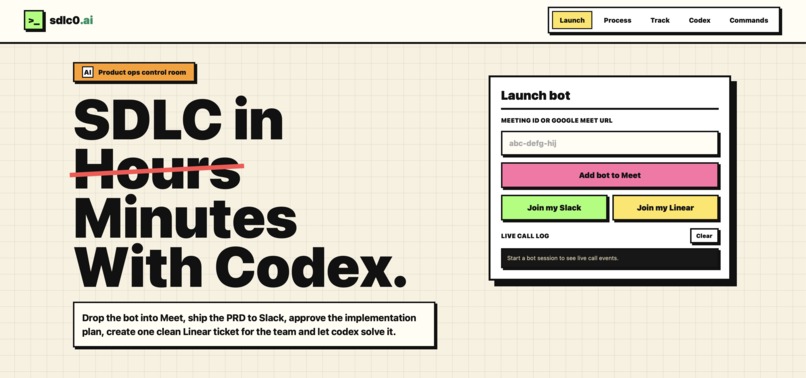
hero section
-
-
-
-
-
Inspiration
We built sdlc0.ai because product conversations move faster than product systems.
A meeting usually contains everything needed to start building: user pain, scope, edge cases, tradeoffs, deadlines, and open questions. But after the call, someone still has to write the PRD, post updates, create tickets, sync GitHub, brief engineers, track work, and keep everyone aligned.
We wanted to collapse that gap.
The idea was simple: if a product meeting already contains the source of truth, then the SDLC should begin directly from the meeting.
What it does
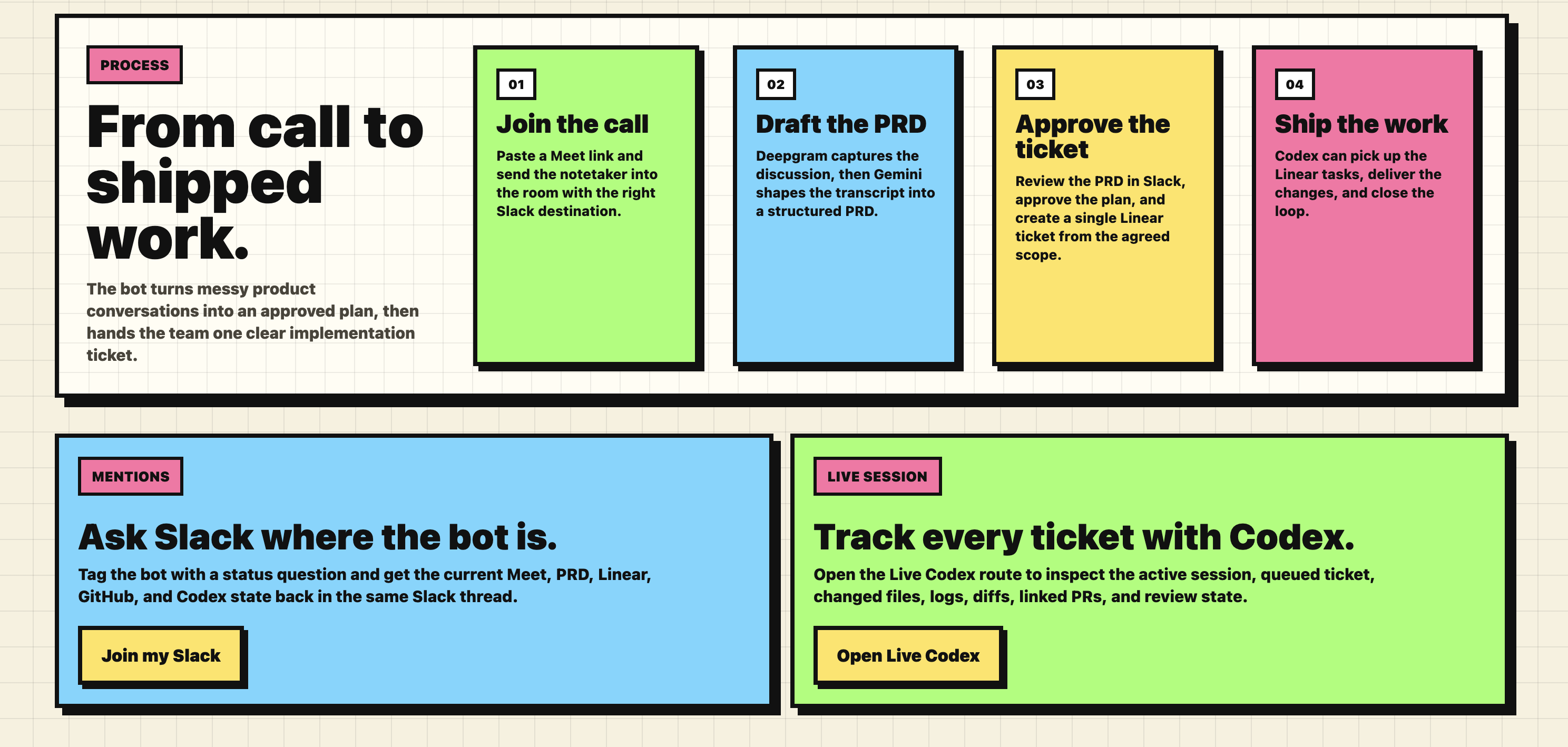
sdlc0.ai is an automated product-to-code pipeline.
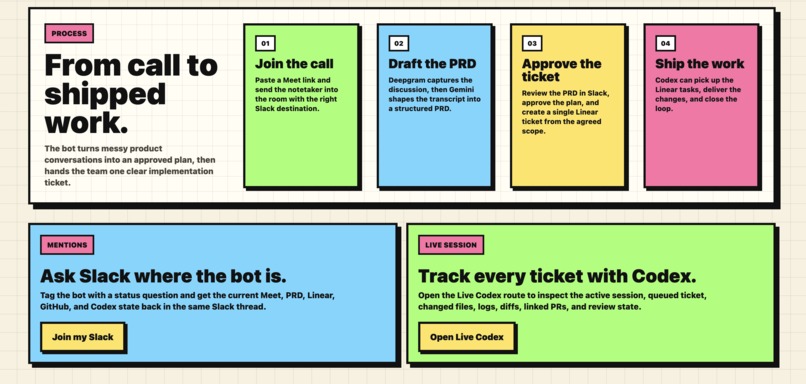
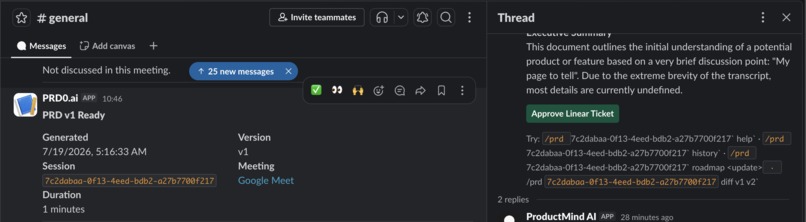
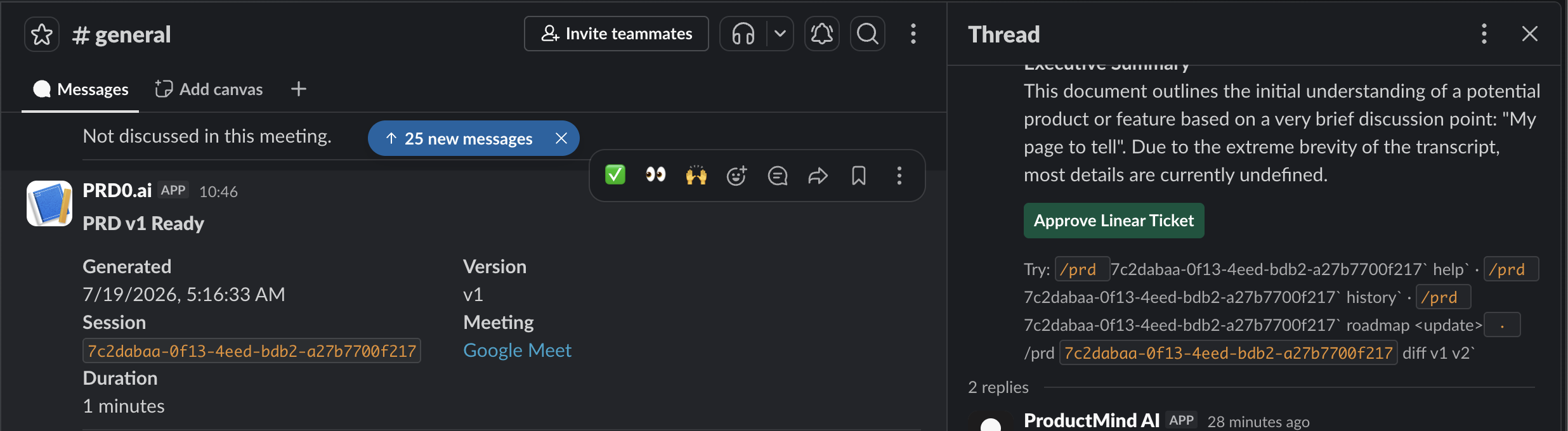
A user adds the bot to a Google Meet call. The bot records and transcribes the meeting, generates a structured PRD using OpenAI, and posts a clean, formatted PRD to Slack.
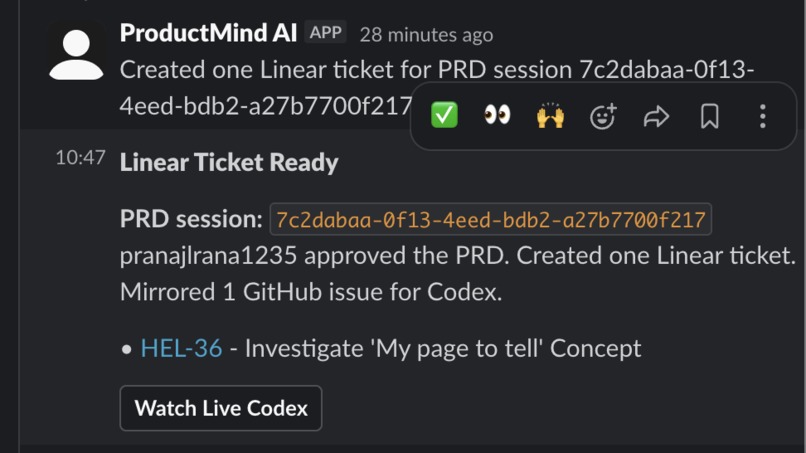
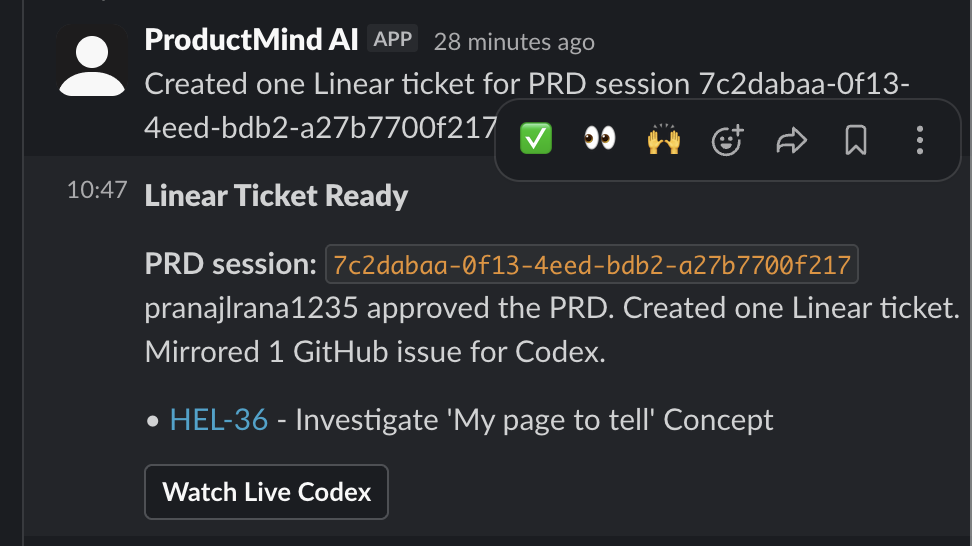
From Slack, the team can approve the PRD. Once approved, sdlc0.ai:
- Creates exactly one Linear ticket
- Mirrors it to a GitHub Issue
- Starts a Codex-powered coding agent
- Codex makes code changes in the configured repository
- Opens a Pull Request
- Posts the PR back to Slack for review
Default demo repository:
PRANJALRANA11/vision-frontend
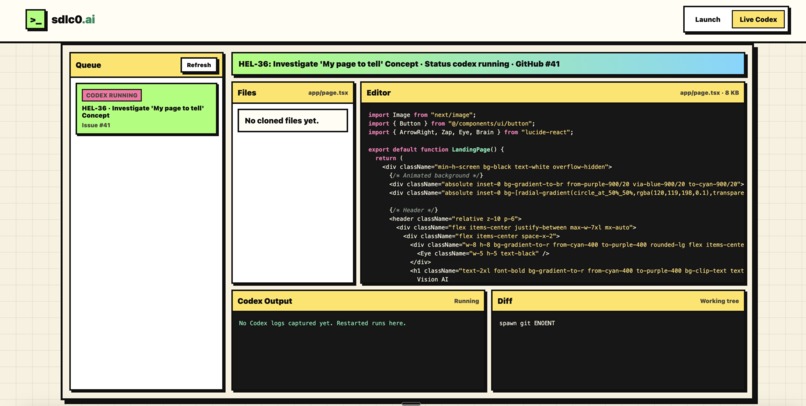
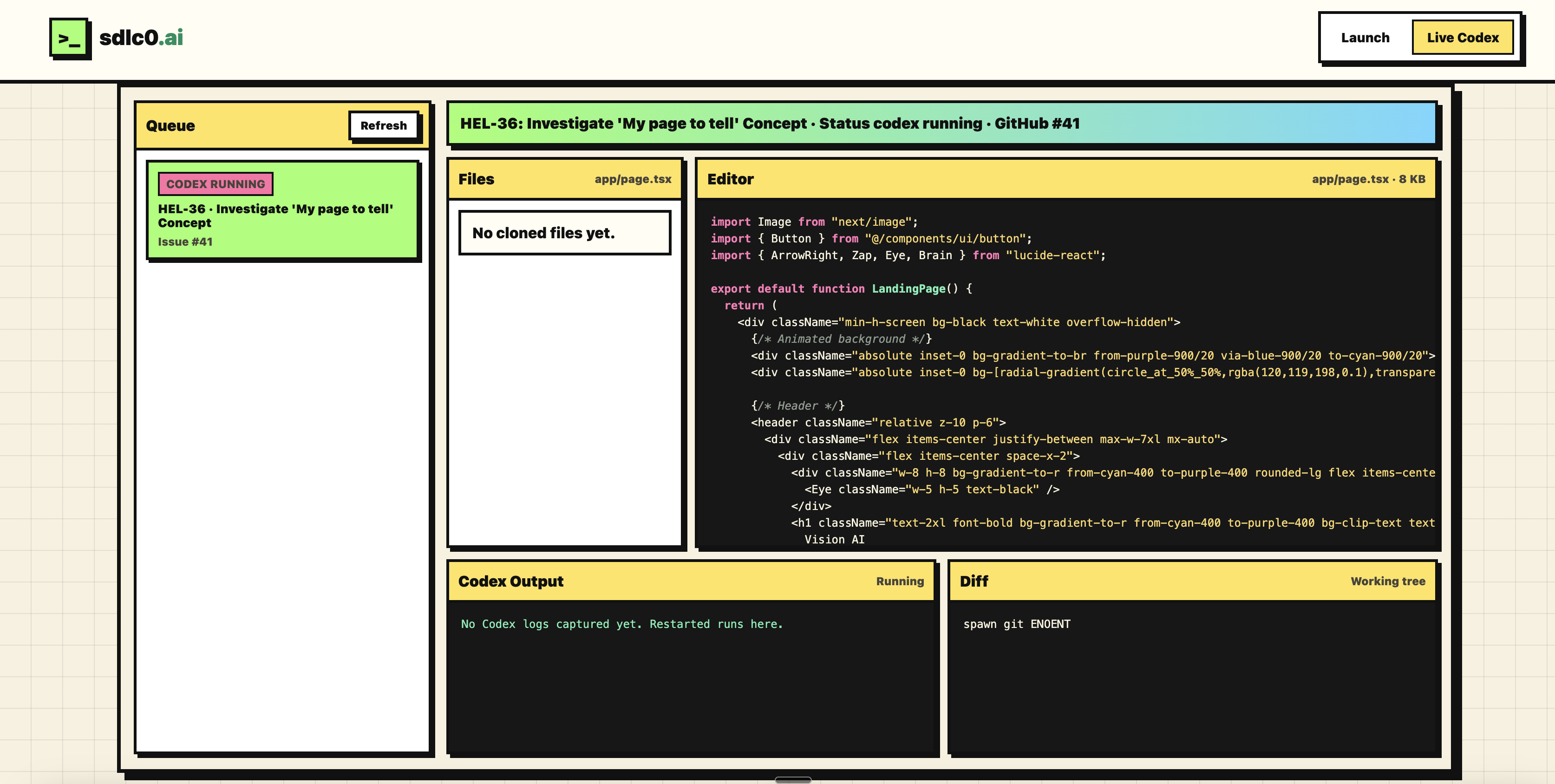
The system also includes a Live Codex dashboard where users can monitor:
- Current coding progress
- Files being modified
- Execution logs
- Git diffs
- Pull request status
How we built it
We built sdlc0.ai as a long-running TypeScript backend because the Google Meet bot needs to remain connected throughout an entire meeting.
Core Stack
- Node.js + TypeScript — Backend services
- Playwright — Google Meet automation
- Deepgram — Speech-to-text transcription
- OpenAI Responses API — PRD generation, Q&A, roadmap updates, and Linear ticket generation
- PostgreSQL — Persistent sessions, transcripts, PRDs, tickets, and history
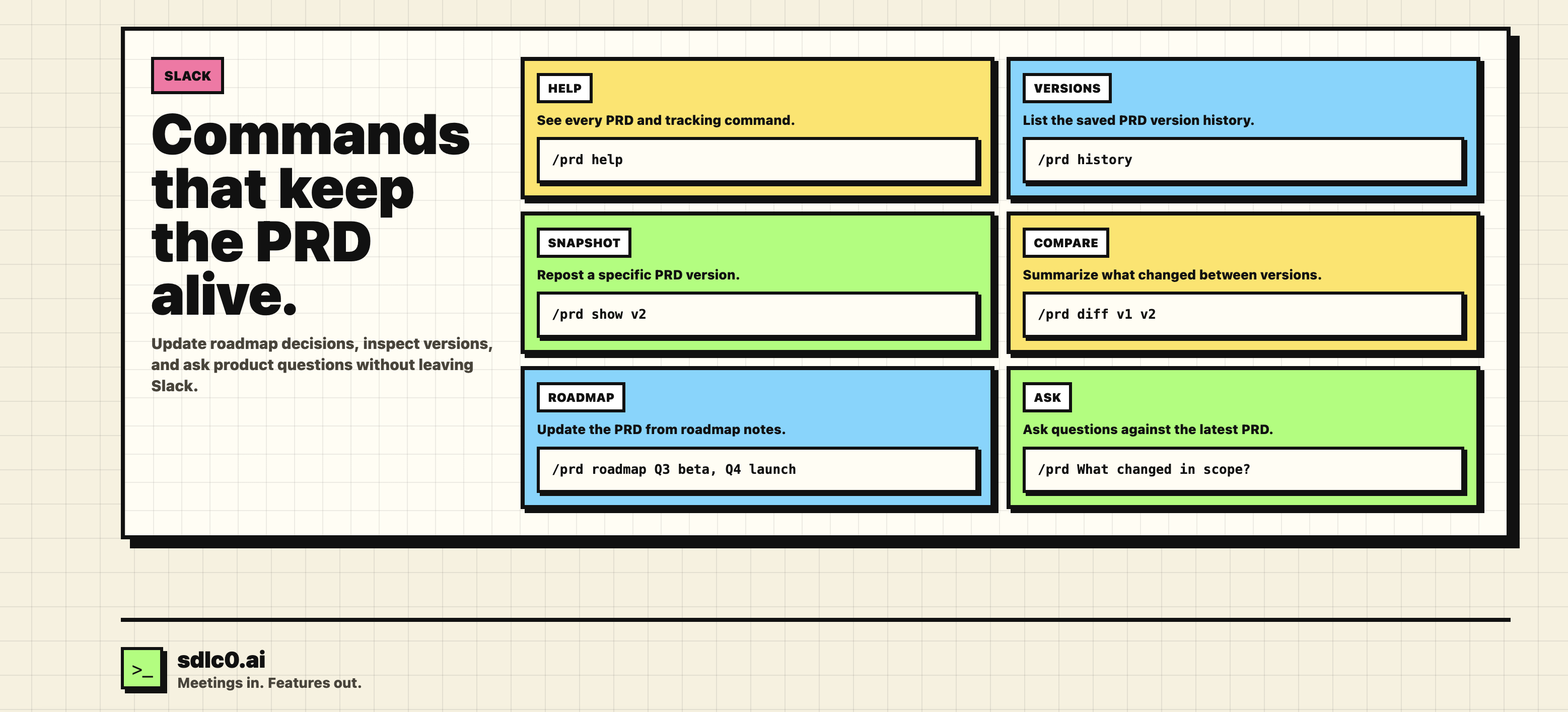
- Slack — PRD delivery, approvals, commands, and status updates
- Linear — Product management
- GitHub — Issues and Pull Requests
- Codex CLI — Autonomous coding agent
- Render + Docker — Production deployment
End-to-End Flow
Google Meet
      │
      ▼
Deepgram Transcript
      │
      ▼
OpenAI PRD Generation
      │
      ▼
Slack Approval
      │
      ▼
Linear Ticket
      │
      ▼
GitHub Issue
      │
      ▼
Codex Code Generation
      │
      ▼
Pull Request
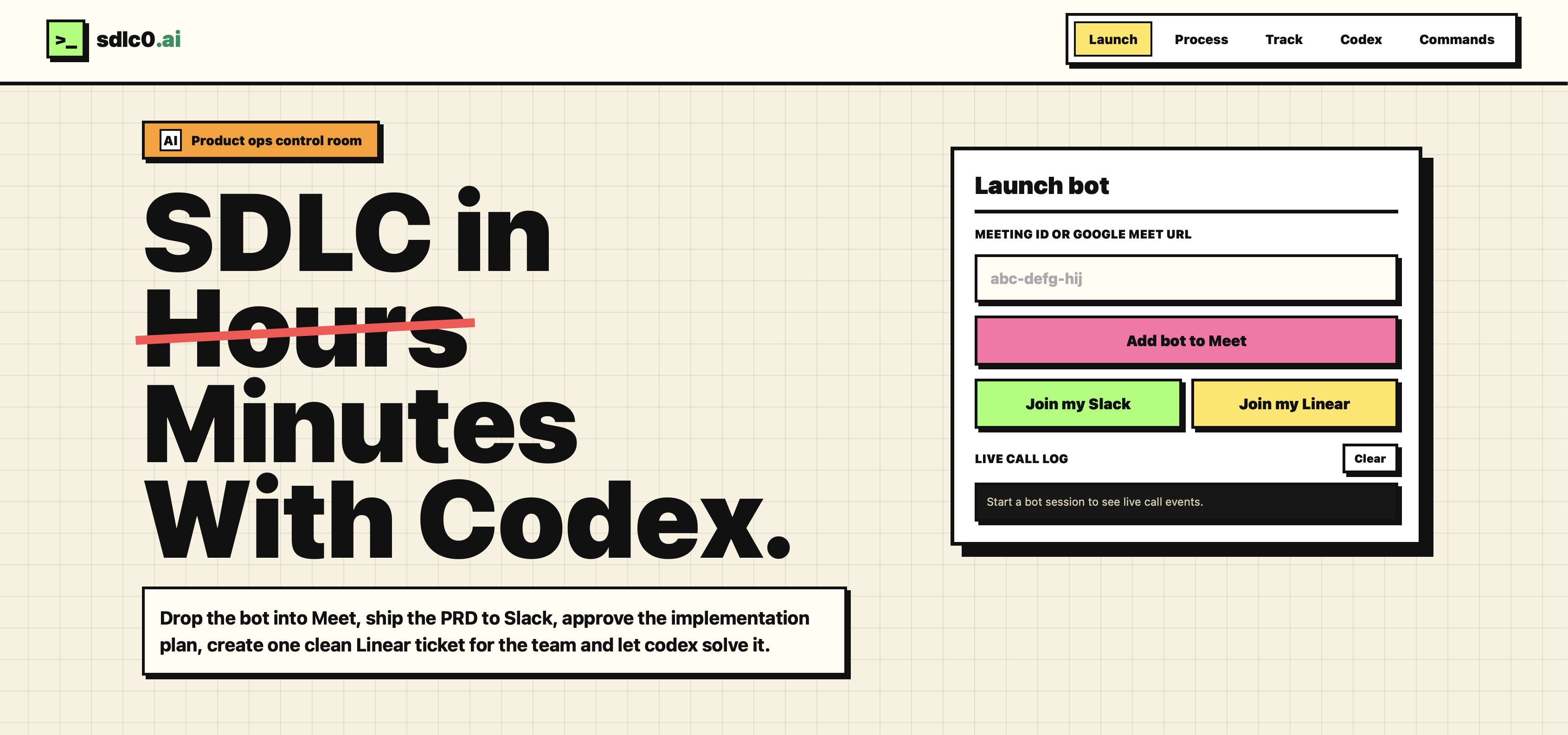
We also built a neobrutalist frontend where users can:
- Launch meeting bots
- Connect Slack and Linear
- View live execution logs
- Monitor Live Codex sessions
Challenges we ran into
The biggest challenge was making the workflow truly end-to-end.
Google Meet Automation
Automating Google Meet with Playwright required handling:
- Joining meetings reliably
- Camera and microphone prompts
- Muted state management
- Audio capture
- Detecting when meetings end
Slack Integrations
Slack introduced multiple integration challenges.
Incoming webhooks worked well for posting PRDs, but interactive approval buttons required:
- Slack interactivity endpoints
- Request signing verification
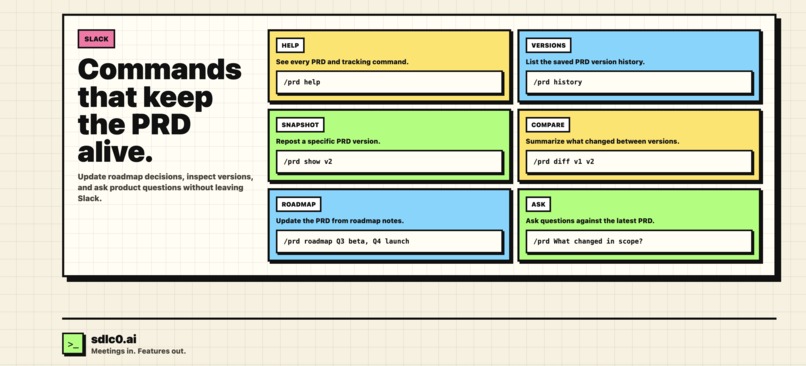
- Slash commands
- App mentions
- Threaded replies
- Status updates
Each workflow required different handling.
Codex Automation
Running Codex inside Render required solving several infrastructure problems:
- Hosted authentication
- GitHub token-based cloning and pushing
- Git commit identity
- Sandbox permissions
- Live execution logging
We also needed Codex to operate as a completely unattended worker instead of pausing for additional user input.
Product Scope
Initially, a single PRD could generate multiple Linear tickets.
We simplified the workflow by enforcing a strict invariant:
1 PRD
   ↓
1 Linear Ticket
   ↓
1 GitHub Issue
This made the system significantly easier to reason about and demonstrate.
Accomplishments that we're proud of
We're proud that sdlc0.ai is a fully working agentic SDLC pipeline, not just a prototype.
Today it can:
- Join real Google Meet calls
- Generate real PRDs
- Post directly to Slack
- Create Linear tickets
- Mirror work into GitHub
- Launch a coding agent
- Open Pull Requests automatically
Highlights include:
- Slack approval workflow
- PRD version history
- Roadmap-aware PRD updates
- Live Codex session tracking
- One-click progression from PRD approval to implementation
- Neobrutalist product experience
- Stateful architecture backed by PostgreSQL
- Fully deployable Render service
The result feels like having a Product Manager, Engineering Manager, and Junior Software Engineer working together in a single system.
What we learned
Building agentic software is far less about a single powerful model call and much more about reliable orchestration.
The difficult problems were:
- State management
- Identity
- Permissions
- Retries
- User trust
- Continuous UI feedback
We also learned that Slack is an excellent control surface for AI agents.
Since teams already make product decisions there, embedding:
- PRD approvals
- Product discussions
- Roadmap updates
- PR reviews
directly into Slack created a workflow that felt natural.
Another important lesson was that coding agents require strong context and strong constraints.
Vague tickets produce vague implementations.
The quality of generated code improved substantially once Codex received:
- Rich PRD context
- Linked GitHub Issues
- Linked Linear tickets
- Repository state
- Explicit unattended-agent instructions
What's next for sdlc0.ai
Our next goal is to make sdlc0.ai more collaborative and production-ready.
Planned improvements include:
- Better speaker identification
- Richer PRD templates for different product types
- Multi-ticket planning mode
- Human-in-the-loop editing before ticket creation
- Better Codex test reporting
- Automatic preview deployments
- Jira integration
- Notion integration
- GitHub Projects integration
- Team dashboards for meetings, PRDs, tickets, and releases
- Stronger repository access controls for Codex
Vision
Our long-term vision is to make software development feel continuous:
Conversation
      ↓
Decision
      ↓
PRD
      ↓
Ticket
      ↓
Code
      ↓
Review
      ↓
Shipped
sdlc0.ai is our first step toward making that vision a reality.
Built With
- codex
- linear
- node.js
- openai
- playwright
- postgresql
- slack

Log in or sign up for Devpost to join the conversation.