
Inspiration
Businesses generate large amounts of data every day, but turning that data into meaningful business decisions remains a challenge. Many startups, small businesses, and founders cannot afford dedicated data analyst teams or spend hours manually analyzing spreadsheets.
This inspired me to build PRANIX AI, with a vision to make intelligent data analysis accessible, practical, and easier for everyone.
I don't want to build just another AI chatbot that waits for prompts. I want to build an AI agent that can understand data, plan its analysis, use appropriate tools, investigate findings, validate results, and deliver actionable insights with minimal human intervention.
My ultimate goal is to bring the capabilities of a professional data analyst into an intelligent workspace that helps businesses make faster, evidence-based decisions.
What it does
PRANIX AI is an AI-powered data intelligence platform designed to transform Excel and CSV datasets into understandable insights and business recommendations.
Its intended analytical workflow includes:
- Data Understanding: Inspect datasets, identify data types, and assess data quality.
- Data Cleaning: Identify missing values, duplicates, and inconsistencies.
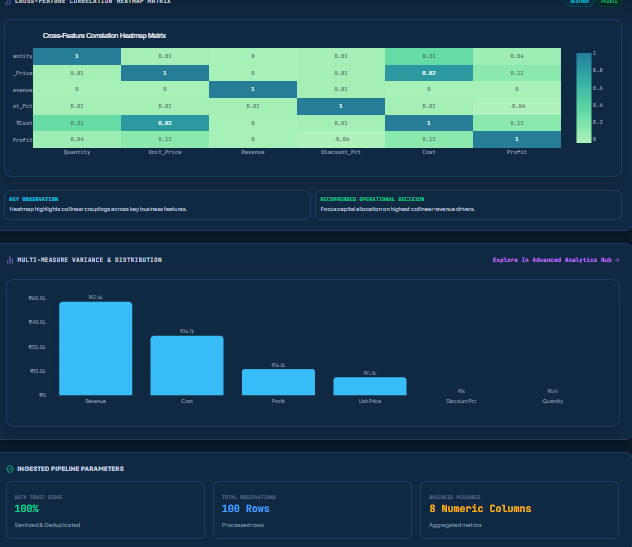
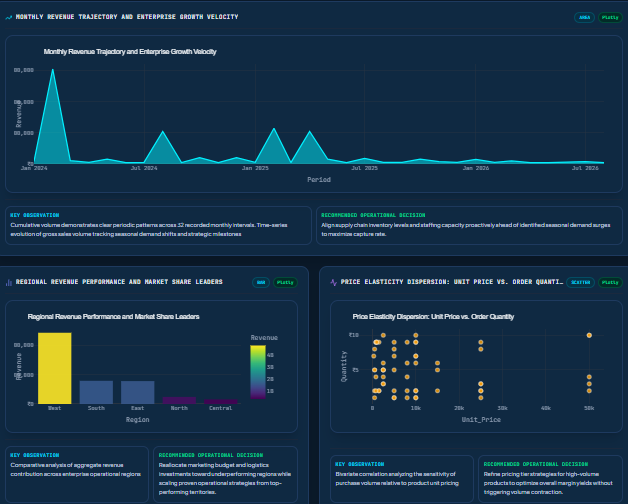
- Exploratory Analysis: Discover trends, patterns, relationships, and anomalies.
- AI-Powered Insights: Explain analytical findings in natural language.
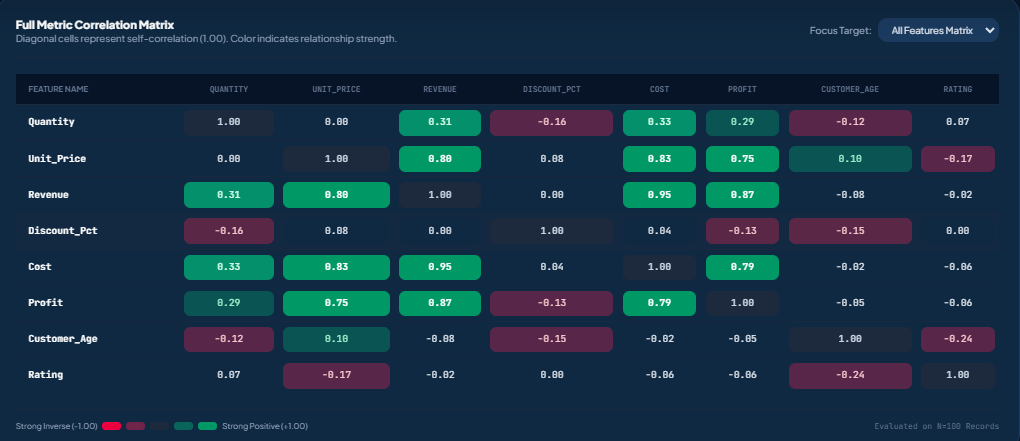
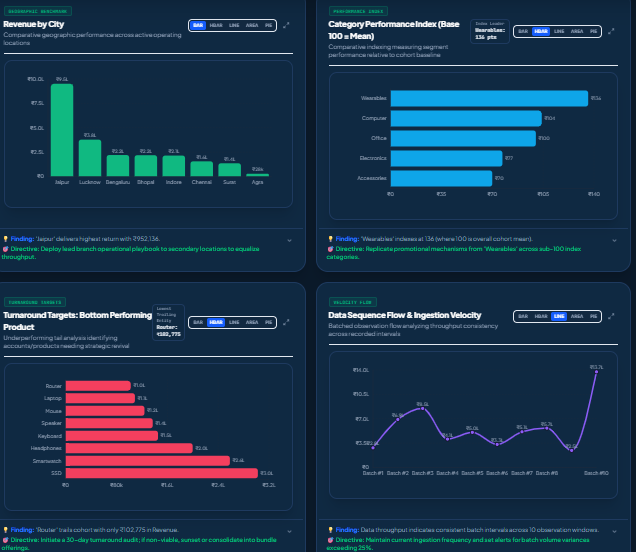
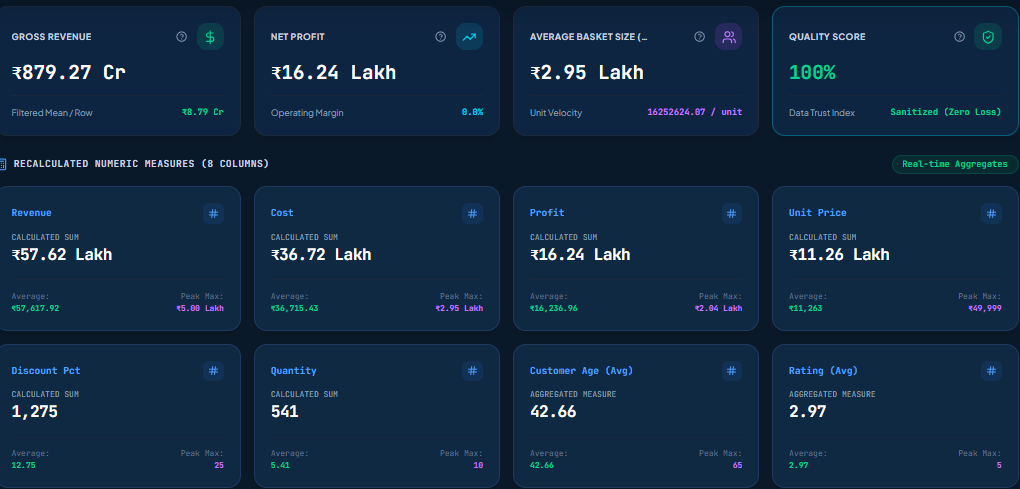
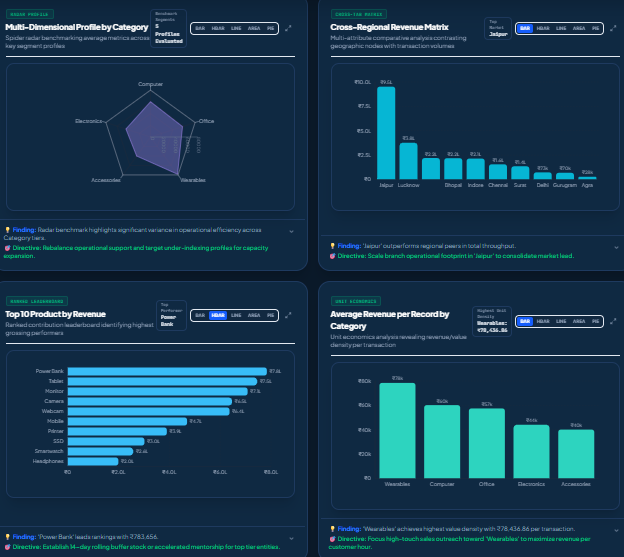
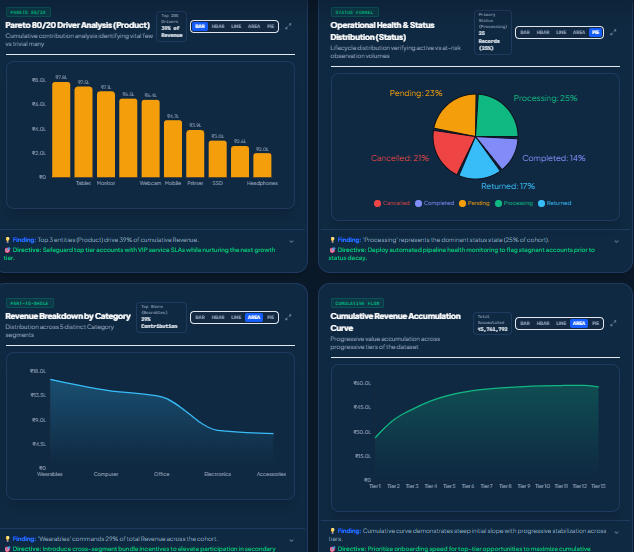
- Business Intelligence: Present important metrics and findings through visualizations and reports.
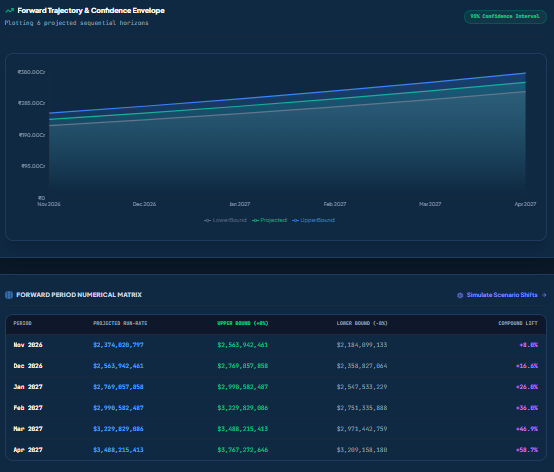
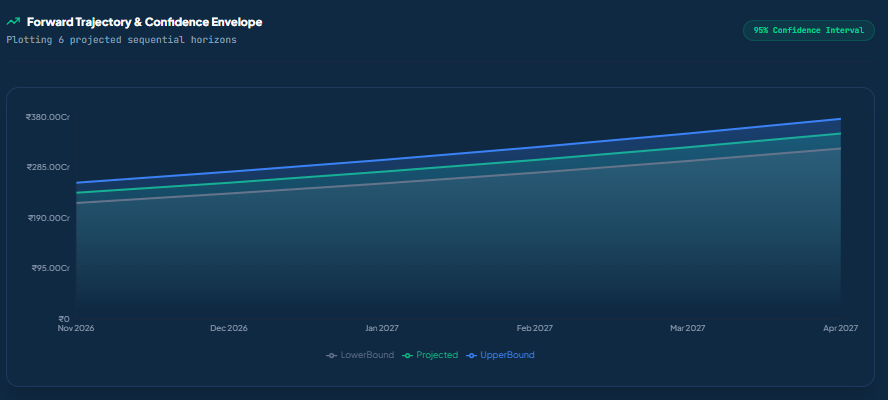
- Forecasting and Opportunity Discovery: Help explore potential future trends and business opportunities when sufficient data is available.
- Actionable Recommendations: Translate findings into practical next steps.
The long-term vision is to make the experience as simple as uploading a dataset and receiving a structured business briefing, without requiring users to write SQL queries or Python code.
The exact capabilities available depend on the current implementation of the platform.
How we built it
PRANIX AI is being developed around the idea that reliable computation and AI reasoning should work together.
The technical approach combines a web-based user interface, data-processing tools, analytical logic, and a language model for interpreting results and communicating insights.
The intended architecture separates numerical computation from natural-language generation. Data-processing tools perform calculations, while the AI layer helps interpret findings, organize investigations, and explain results in business-friendly language.
The development approach focuses on a structured analytical workflow:
- Inspect and understand the uploaded dataset.
- Determine suitable analytical methods.
- Execute calculations using appropriate data-processing tools.
- Investigate meaningful patterns and unexpected results.
- Validate numerical findings against the underlying data.
- Generate understandable insights and recommendations.
The objective is to create a system that is not only intelligent, but also transparent, reliable, and useful in real business scenarios.
Challenges we ran into
One of the biggest challenges is making AI useful for real-world datasets, which often contain missing values, inconsistent formats, duplicate records, and unexpected patterns.
Another challenge is ensuring that AI-generated explanations remain consistent with actual analytical results. A convincing answer is not necessarily a correct answer, especially when business decisions depend on the numbers.
We also face the challenge of moving beyond a conventional chatbot toward an agent that can plan tasks, select tools, investigate findings, and validate its work.
Balancing autonomy, accuracy, performance, and simplicity is an ongoing part of the development process. These challenges have reinforced the importance of evidence-based analysis, structured workflows, and careful testing.
Accomplishments that we're proud of
We are proud to be building toward a product that addresses a real problem: helping people turn raw business data into meaningful insights without requiring advanced technical skills.
The most important accomplishment is establishing a clear product vision around autonomous data analysis rather than simple question-and-answer interactions.
We are also focused on an architecture in which data-processing tools provide the analytical foundation and AI helps interpret and communicate the results.
Our goal is to make professional-style analytical workflows more accessible to founders, startups, and small businesses that need better insights but may not have dedicated data teams.
Every development milestone brings us closer to making data analysis simpler, more understandable, and more actionable.
What we learned
We learned that building a useful AI agent requires much more than connecting a language model to an application.
Reliable agents need appropriate tools, structured reasoning, validation mechanisms, clear limitations, and well-designed workflows.
We also learned that data quality is fundamental to analytical accuracy. If the underlying data is incomplete or misleading, even an advanced AI system can produce unreliable conclusions.
Most importantly, we learned that AI should support human decision-making rather than encourage blind trust. The system must communicate what the data shows, explain uncertainty, and avoid presenting unsupported assumptions as facts.
These lessons are shaping our approach to building PRANIX AI as a responsible and practical data intelligence platform.
What's next for PRANIX AI
Our next goal is to evolve PRANIX AI from an AI-assisted analytics platform into a more autonomous AI data analyst.
We aim to develop an agent that can:
- Understand business objectives and datasets with minimal guidance.
- Automatically plan and execute multi-step analytical workflows.
- Investigate anomalies and potential root causes.
- Monitor business performance and highlight important changes.
- Identify potential risks, opportunities, and emerging trends.
- Generate executive briefings and evidence-backed recommendations.
- Support natural conversations in English, Hindi, and Hinglish.
- Keep humans involved in important decisions and provide transparent explanations.
Over time, we envision PRANIX AI becoming a dependable AI analyst that helps businesses move from raw data to insights, and from insights to informed action.
Our mission is simple: Make intelligent data analysis accessible to every business, and turn AI from a tool that merely answers questions into an agent that helps get meaningful work done.

Log in or sign up for Devpost to join the conversation.