-
-
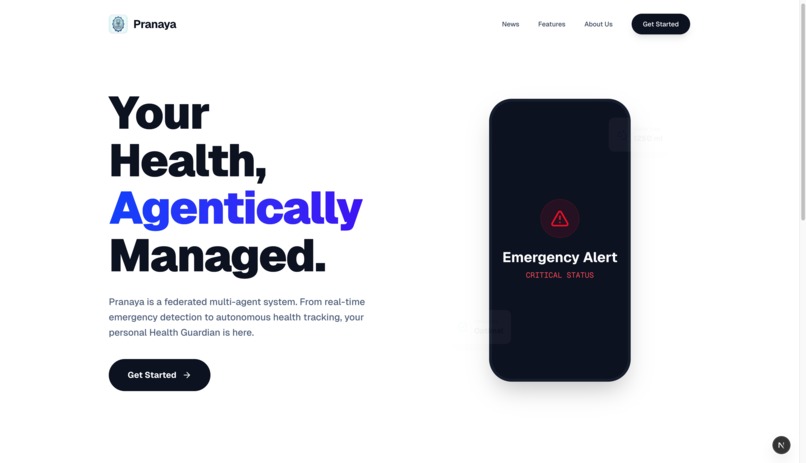
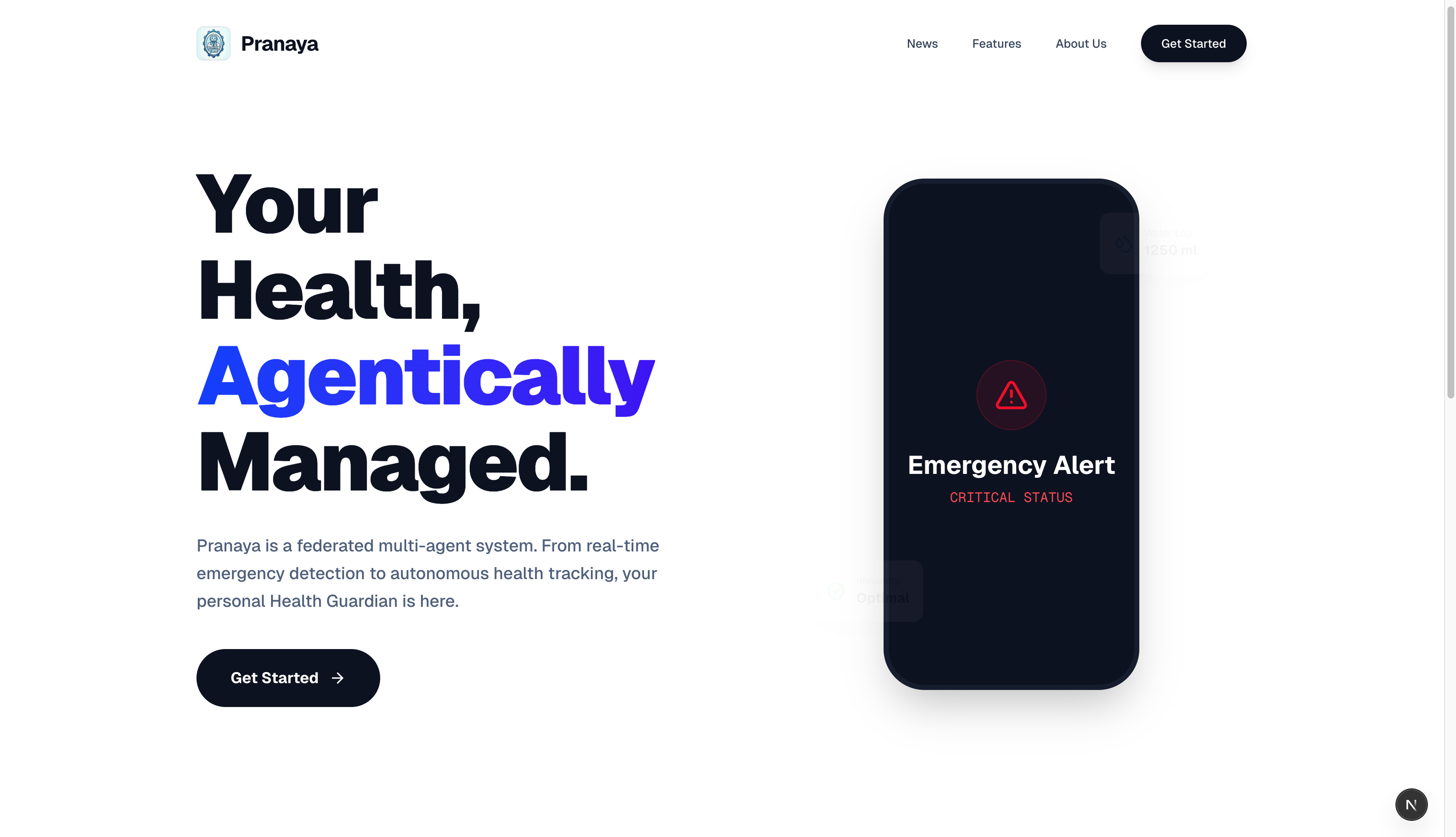
Home Page
-
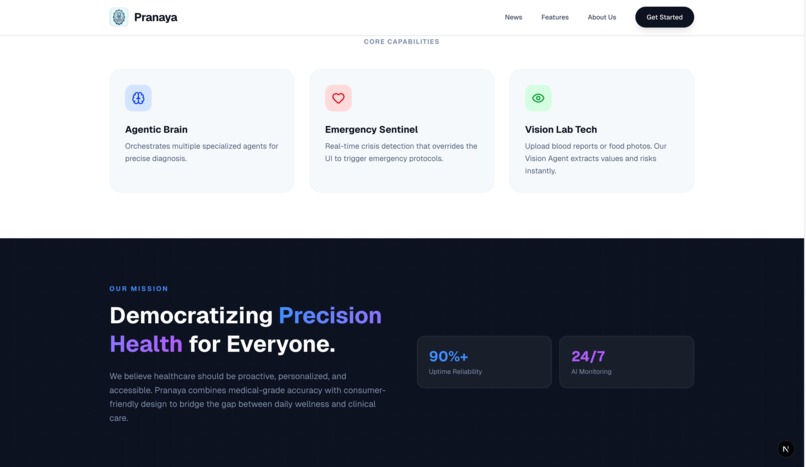
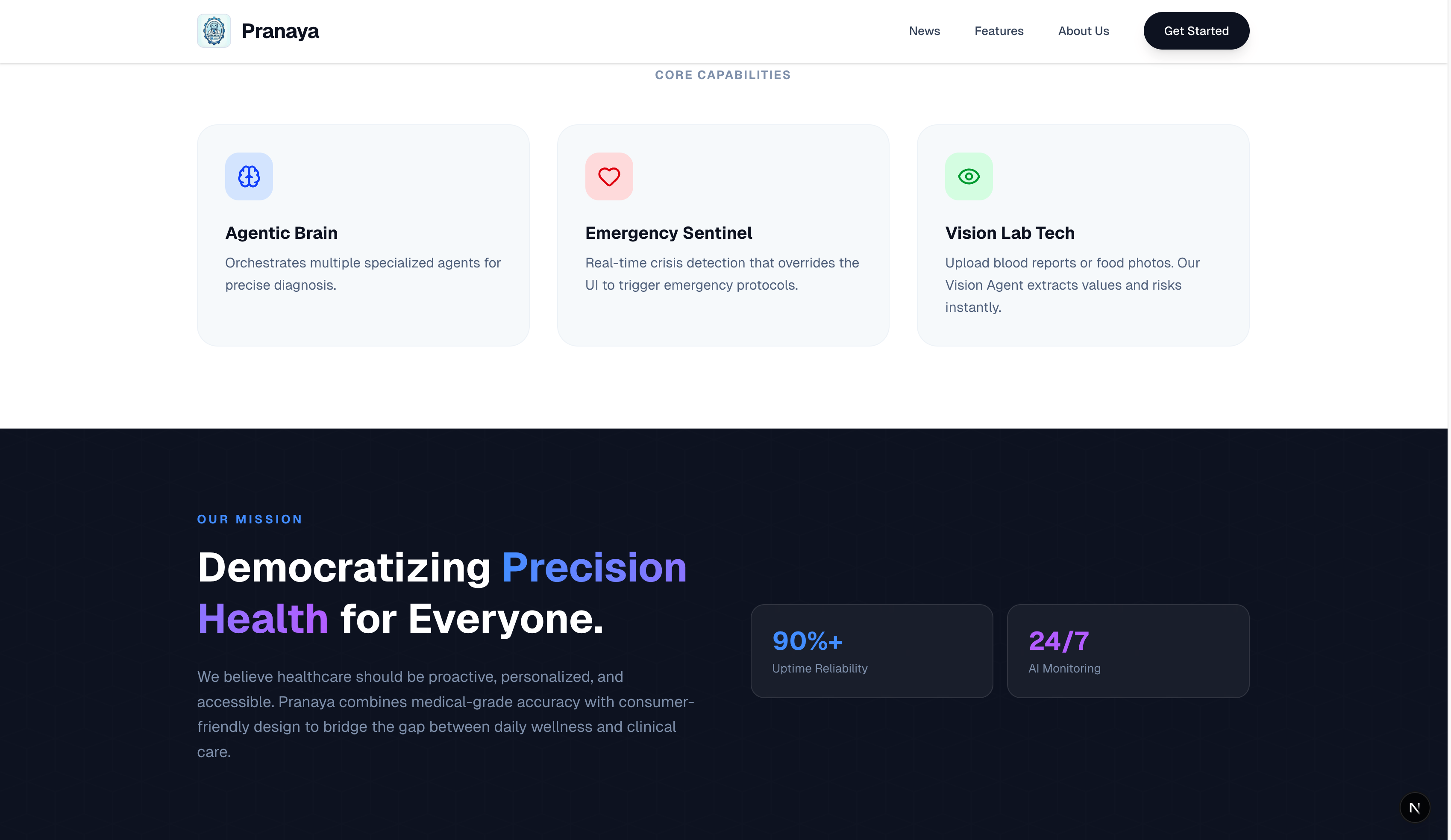
Home Page with Features and About us page
-
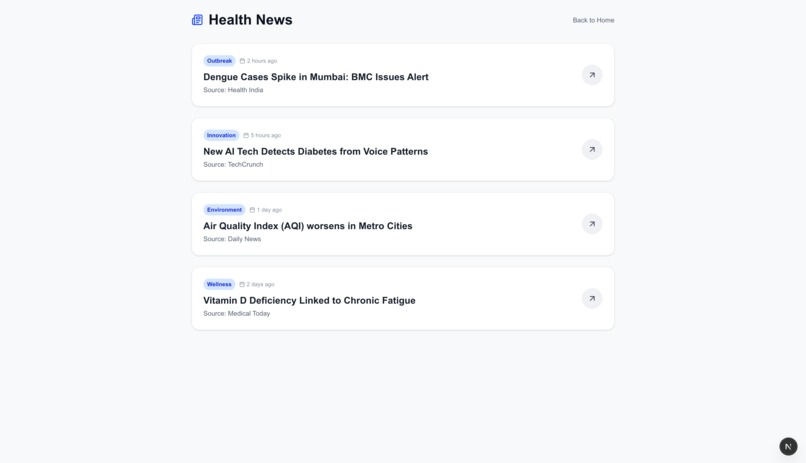
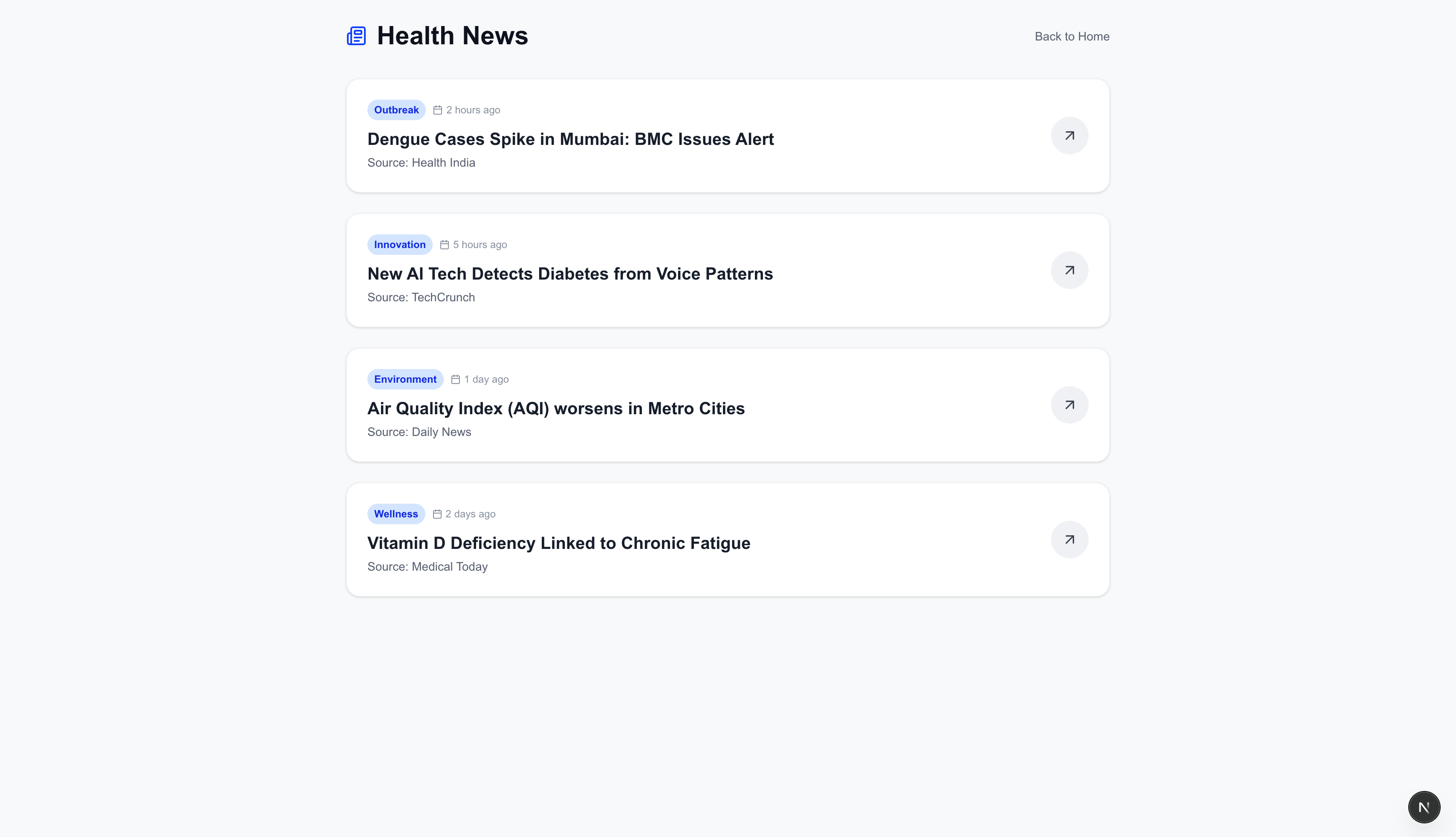
News Page
-
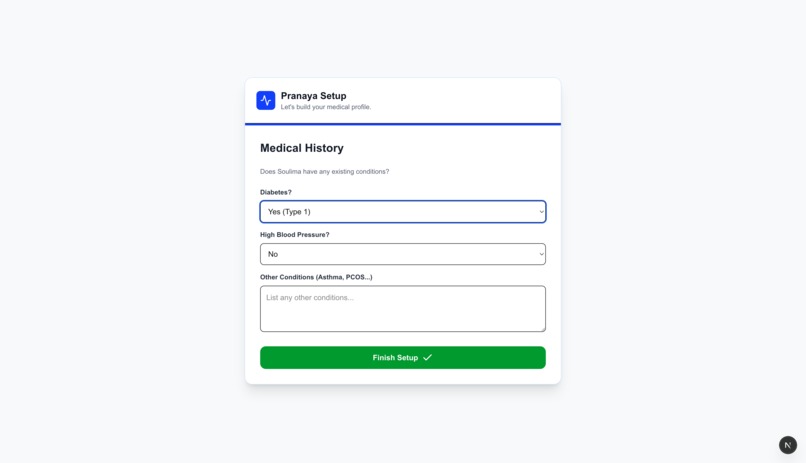
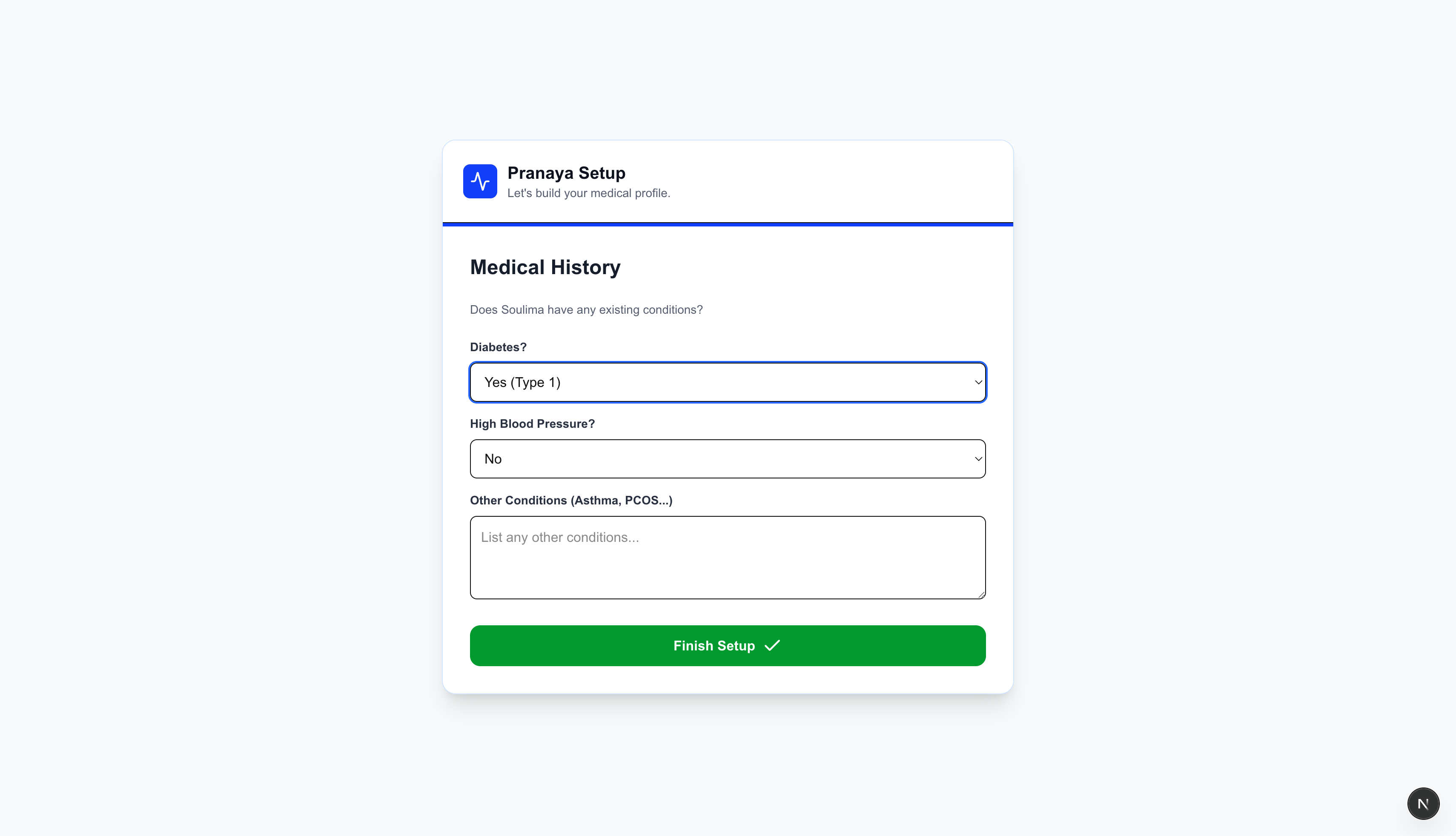
Patient details who is suffering from Diabetes Type1
-
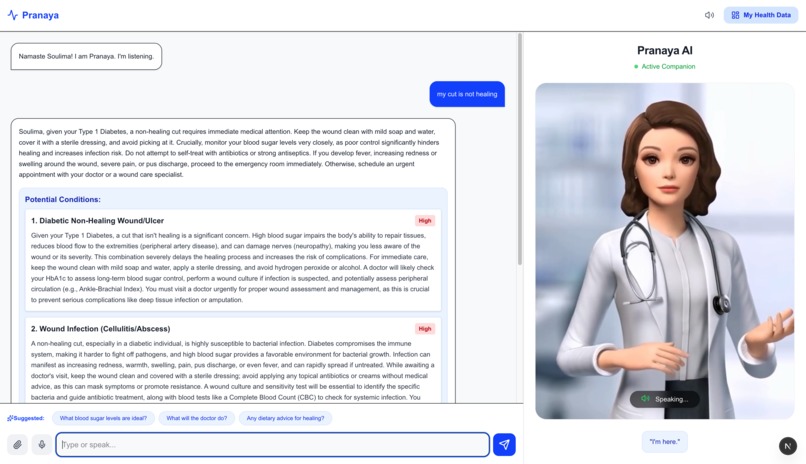
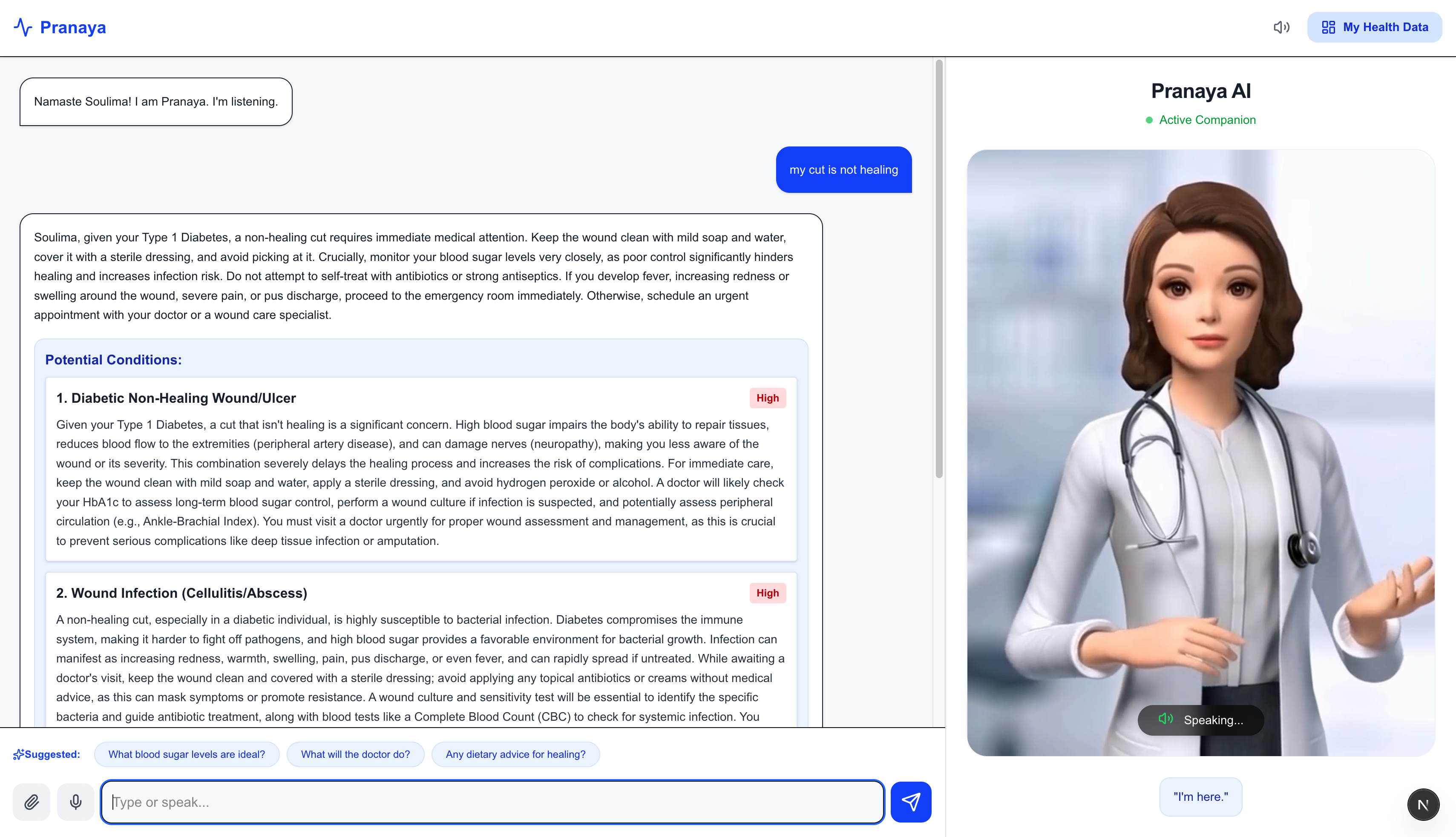
Diagnosis by Pranaya considering patient has Type 1 Diabetes
-
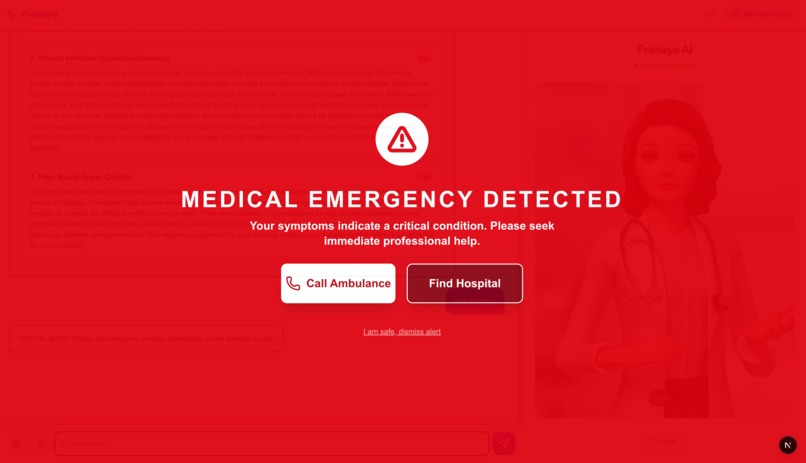
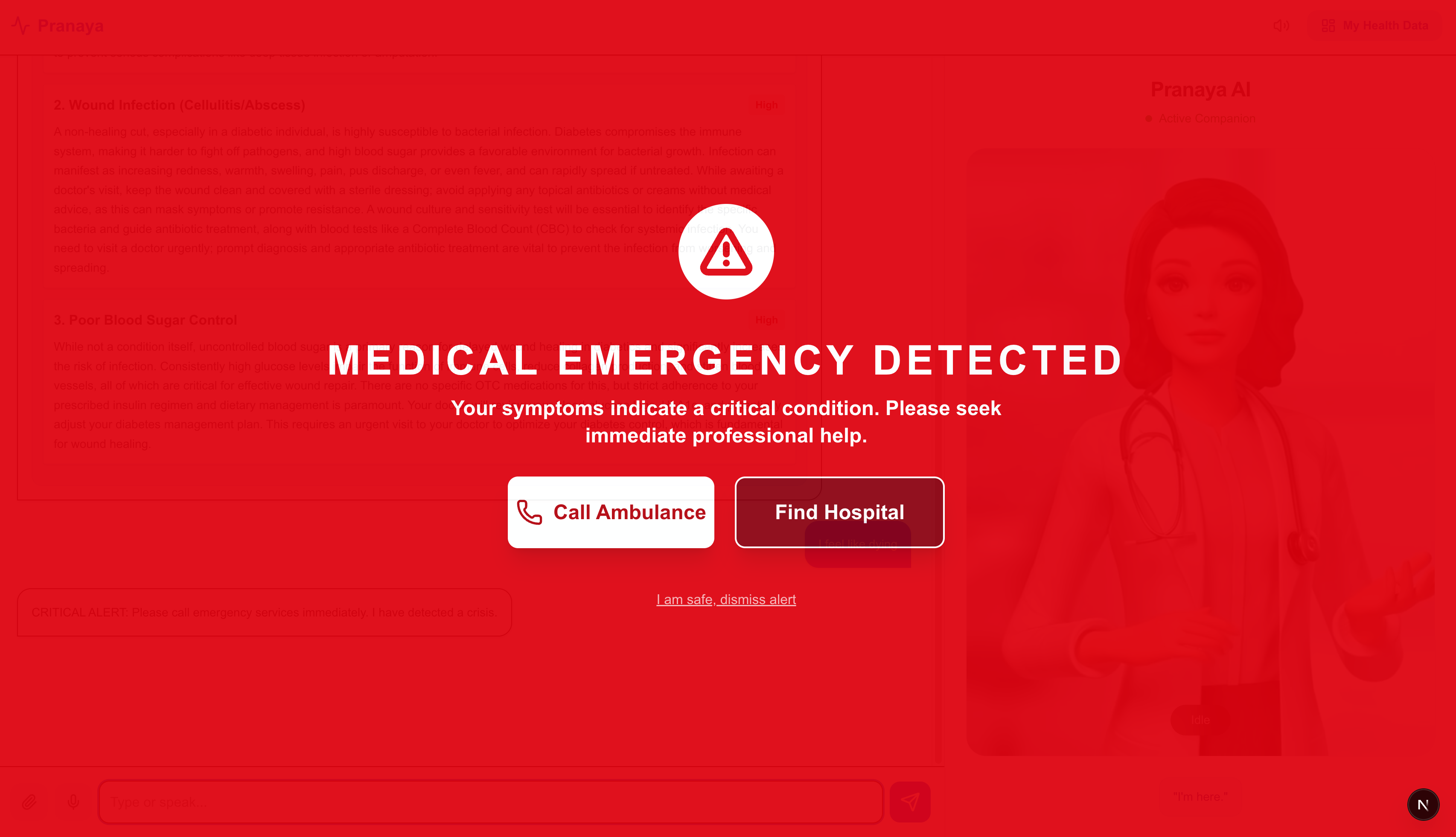
Emergency alert when the patient logs "I feel like dying"
Inspiration
Healthcare is reactive. Most tools only show up when someone already feels sick. They forget medical history, ignore daily habits, and respond the same way to everyone. We wanted to build an intelligent health companion that could track wellness every day, remember user context, and act proactively during emergencies — not just chat after something goes wrong.
What it does
Pranaya is an agentic AI health companion that:
- Triages symptoms intelligently using a Diagnosis Agent
- Tracks water, vaccines, medicines through natural language logging
- Monitors emergency keywords such as stroke or suicide risks in real-time
- Remembers chronic health conditions and personal context
- Provides proactive health guidance based on continuous monitoring
It transforms a simple chatbot into a health operating system.
How I built it
We designed a multi-agent architecture powered by:
- FastAPI → backend orchestrator and API server
- LangChain → routing and memory management between agents
- Gemini API → core clinical reasoning and function calling
- Next.js & Tailwind CSS → modern and responsive frontend
- Zustand → persistent frontend state for trackers and profiles
- Cloud Run → scalable deployment of backend services
Each agent specializes in one task and cooperates automatically through orchestrated flows.
Challenges we ran into
- Ensuring agents don't conflict by enforcing strict routing logic
- Making emergency detection run in parallel to reduce response time
- Token and context limits when injecting medical history
- Managing memory so the model remains context-aware without hallucinating
- Deploying a stable, production-grade architecture as students
Every solved challenge taught us something new about building safe AI for healthcare.
Accomplishments
- Built a real agentic system — not just an LLM chat UI
- Enabled automatic health tracking using function calling
- Designed an emergency sentinel to detect high-risk cases
- Created a personalized and proactive care experience
- Successfully deployed cloud microservices with stateful AI workflows
What I learned
I learned how real-world AI systems need:
- Orchestration and guardrails — not just prompts
- Memory and context to deliver safe medical reasoning
- Fast decision paths for emergencies
- Deployable architectures beyond the notebook
I also gained strong hands-on skills with cloud deployment and multi-agent development.
What's next for Pranaya — AI Health Companion
- Add RAG with medical knowledge bases for grounded clinical accuracy
- Build long-running reminder agents for medicines and therapy
- Integrate secure user authentication + encrypted health profiles
- Expand multimodal abilities using Gemini Vision tools
- Conduct small user tests for early feedback and safety evaluation
Pranaya aims to evolve into a robust, accessible proactive health platform for everyone.


Log in or sign up for Devpost to join the conversation.