-
-
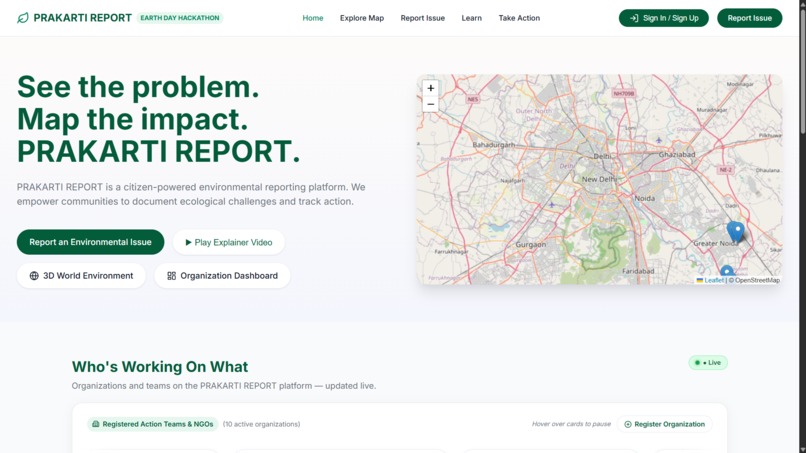
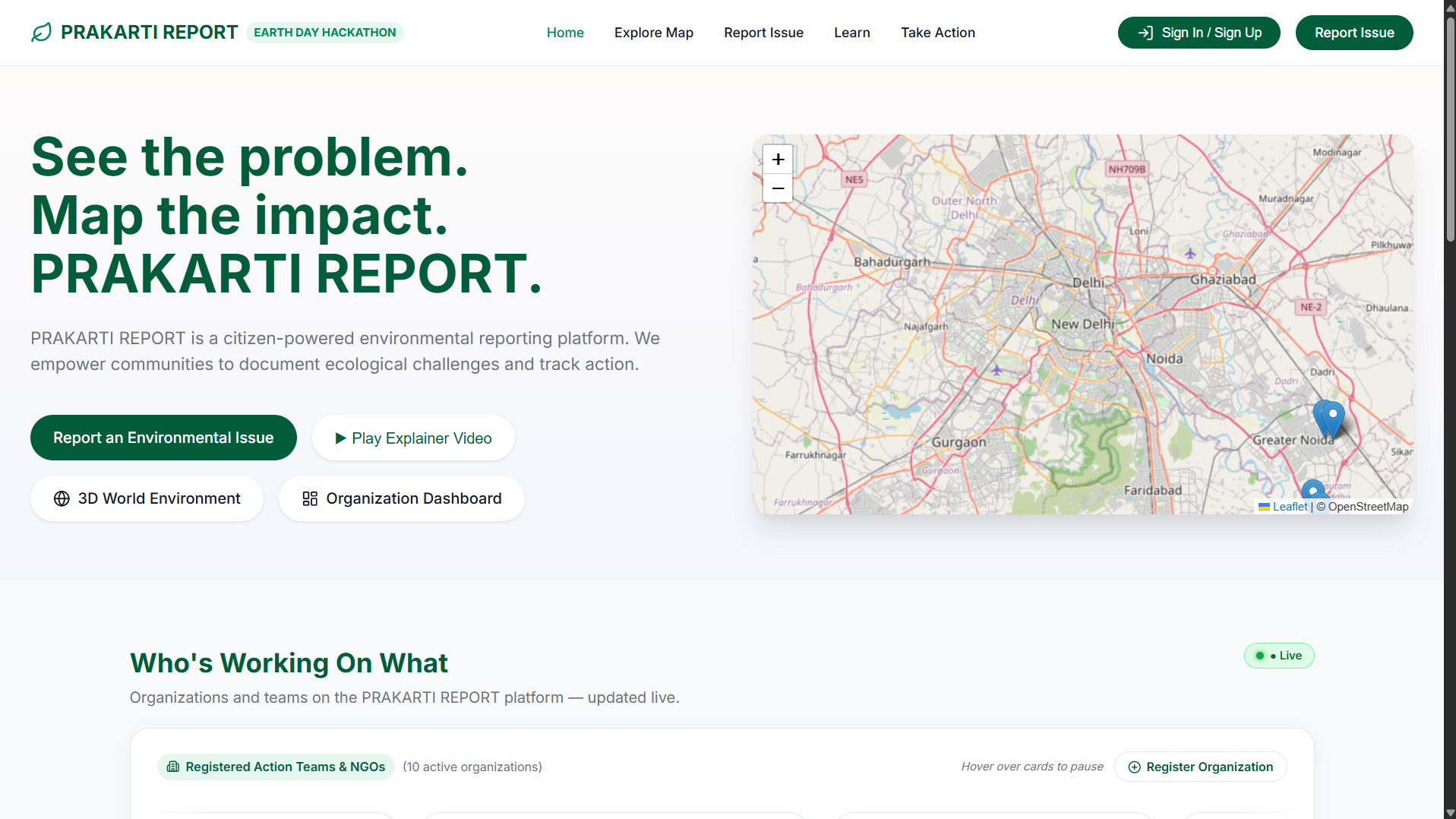
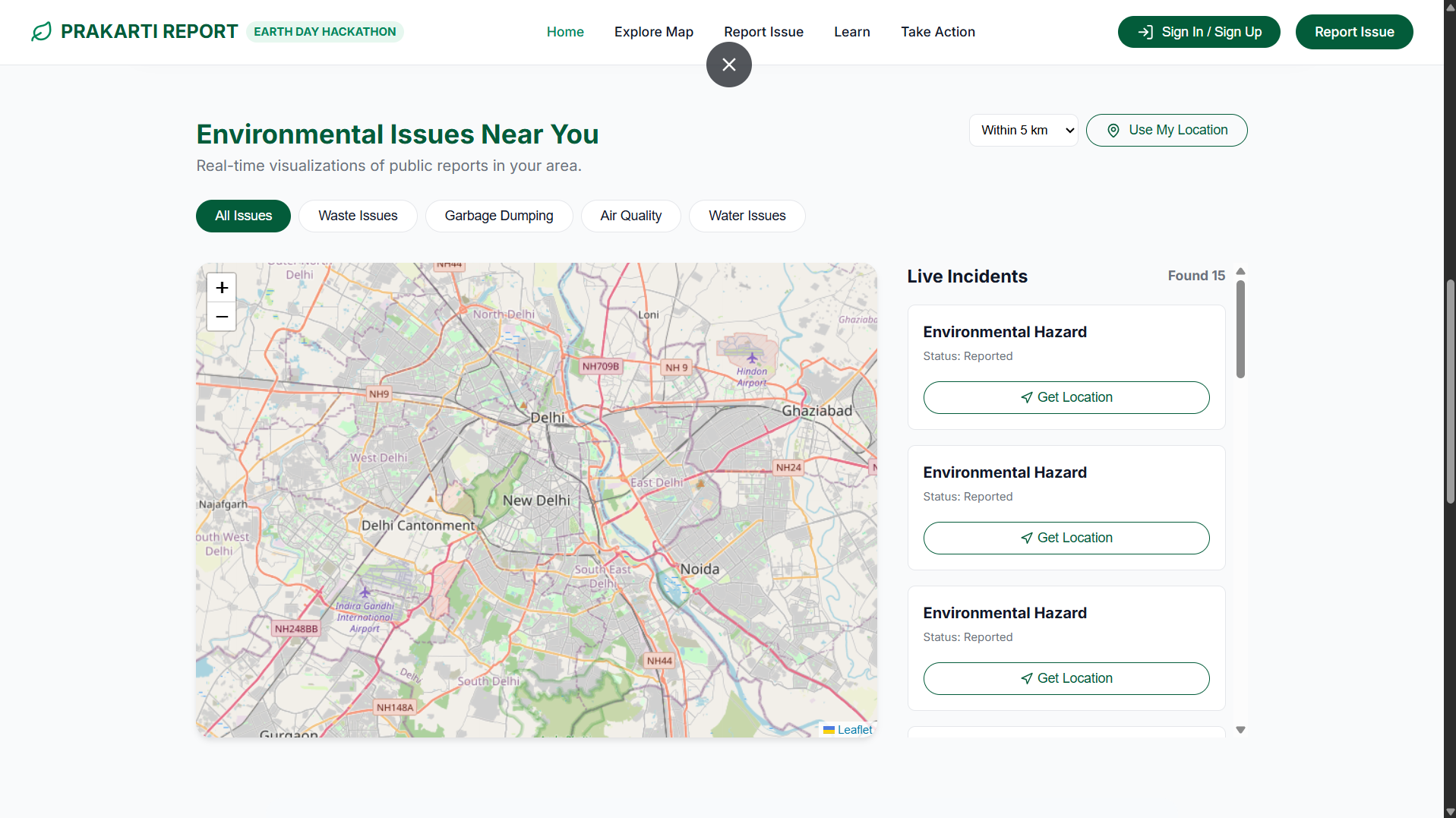
Homepage
-
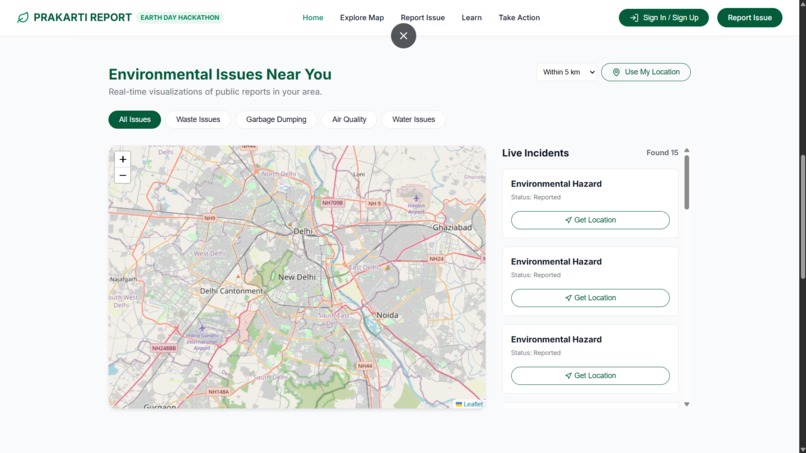
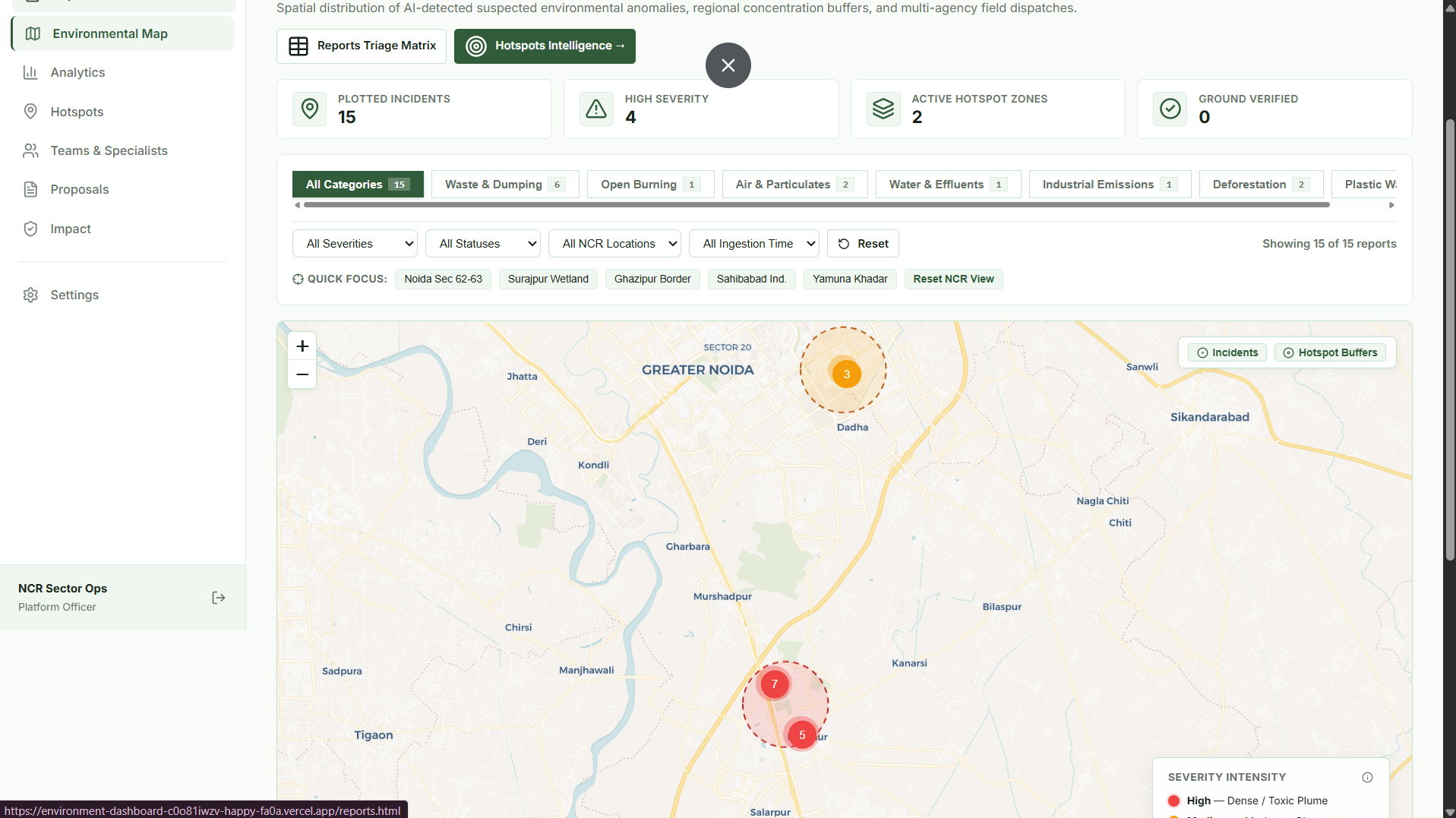
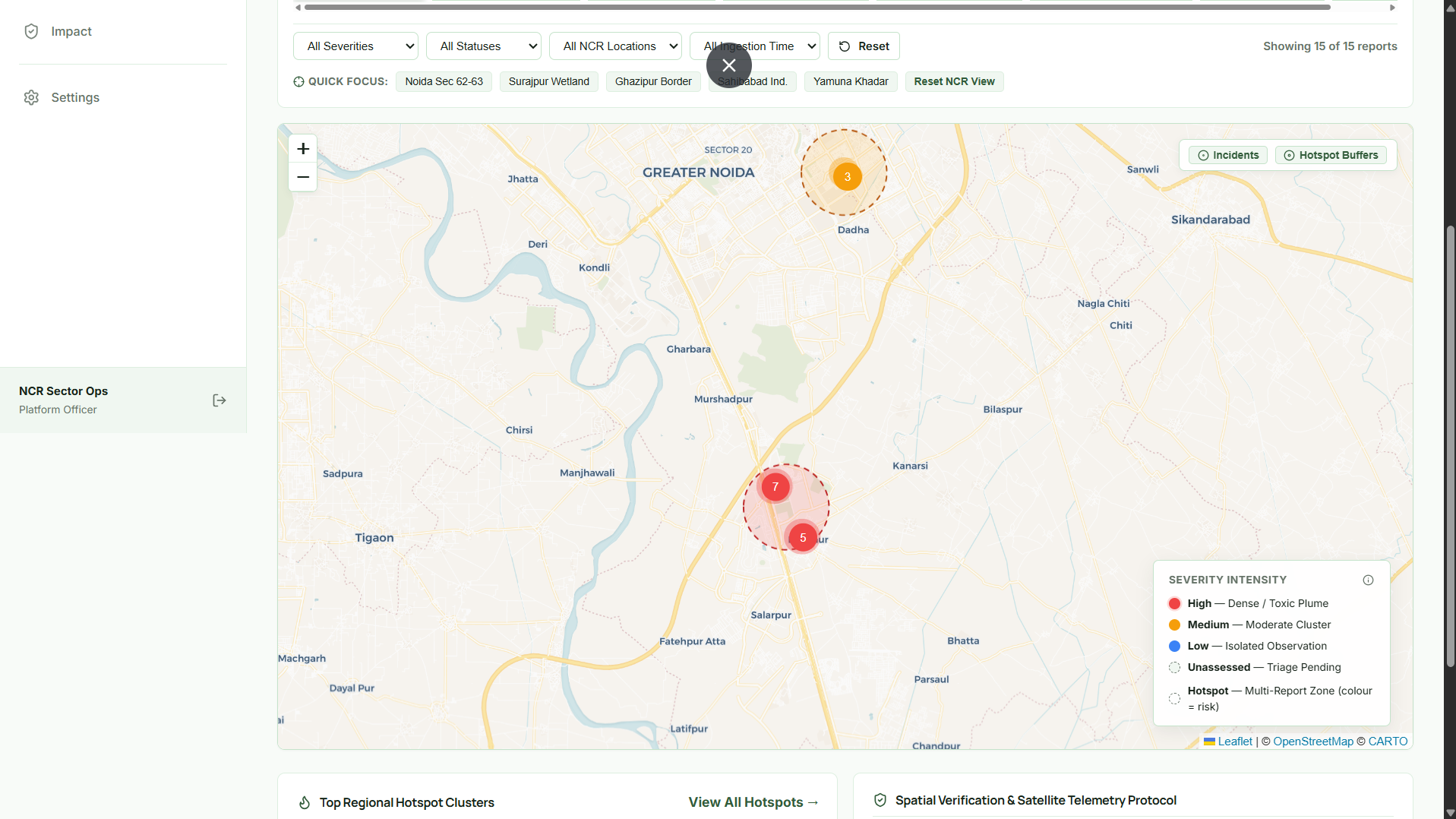
Near By Environmental Issues On Map
-
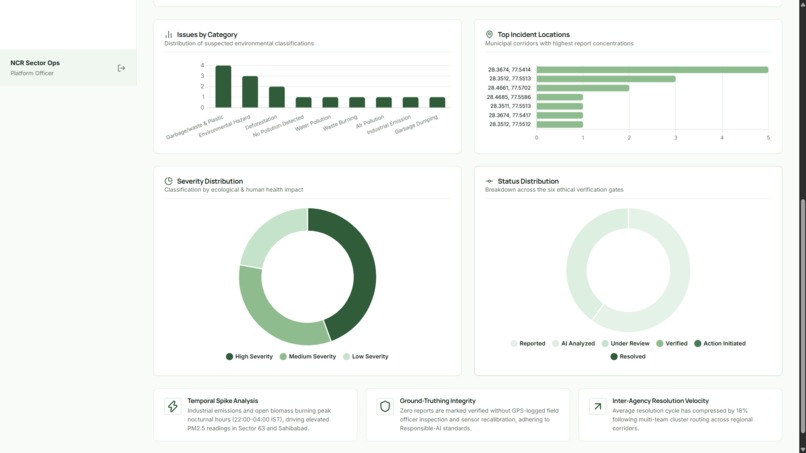
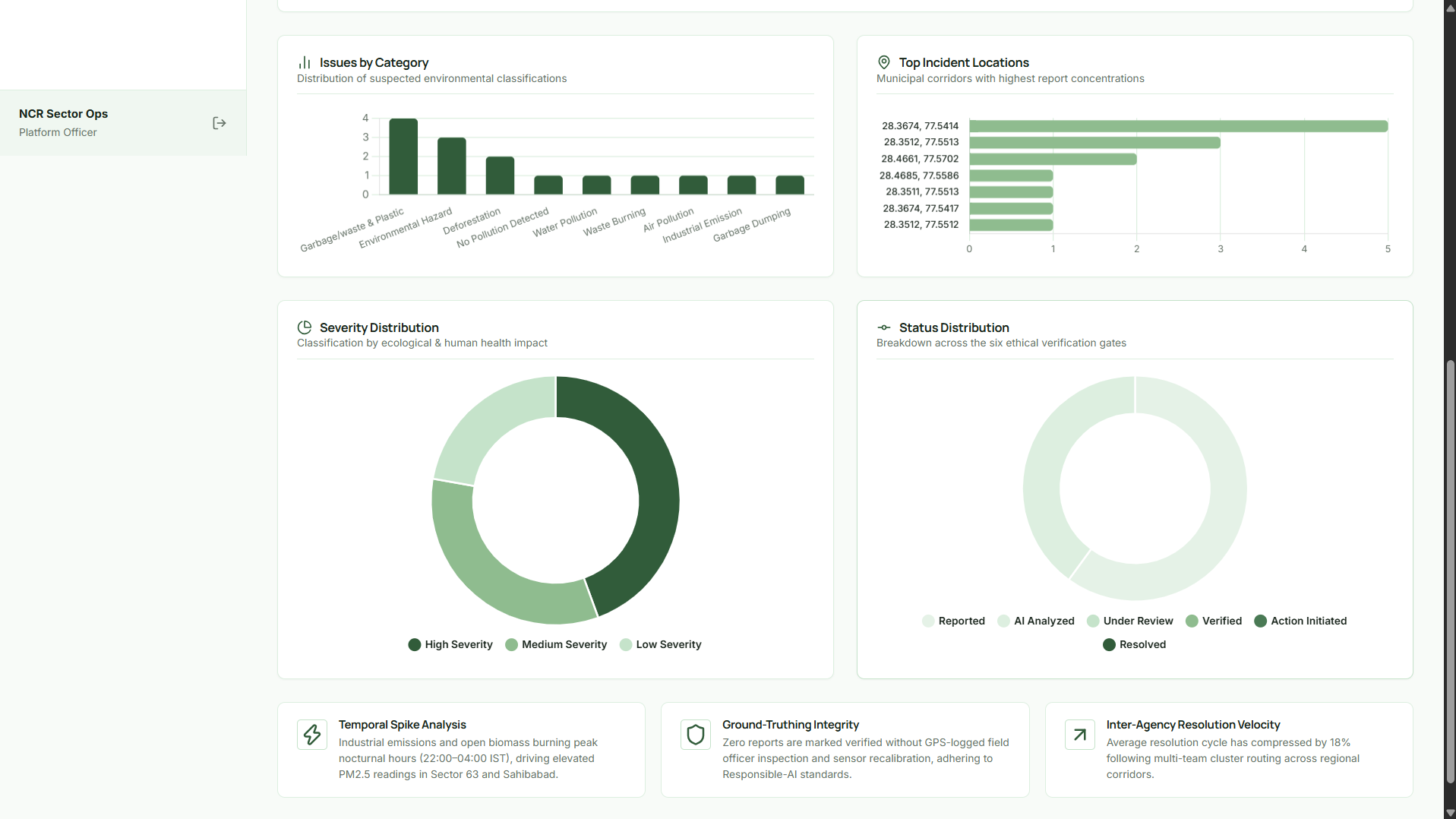
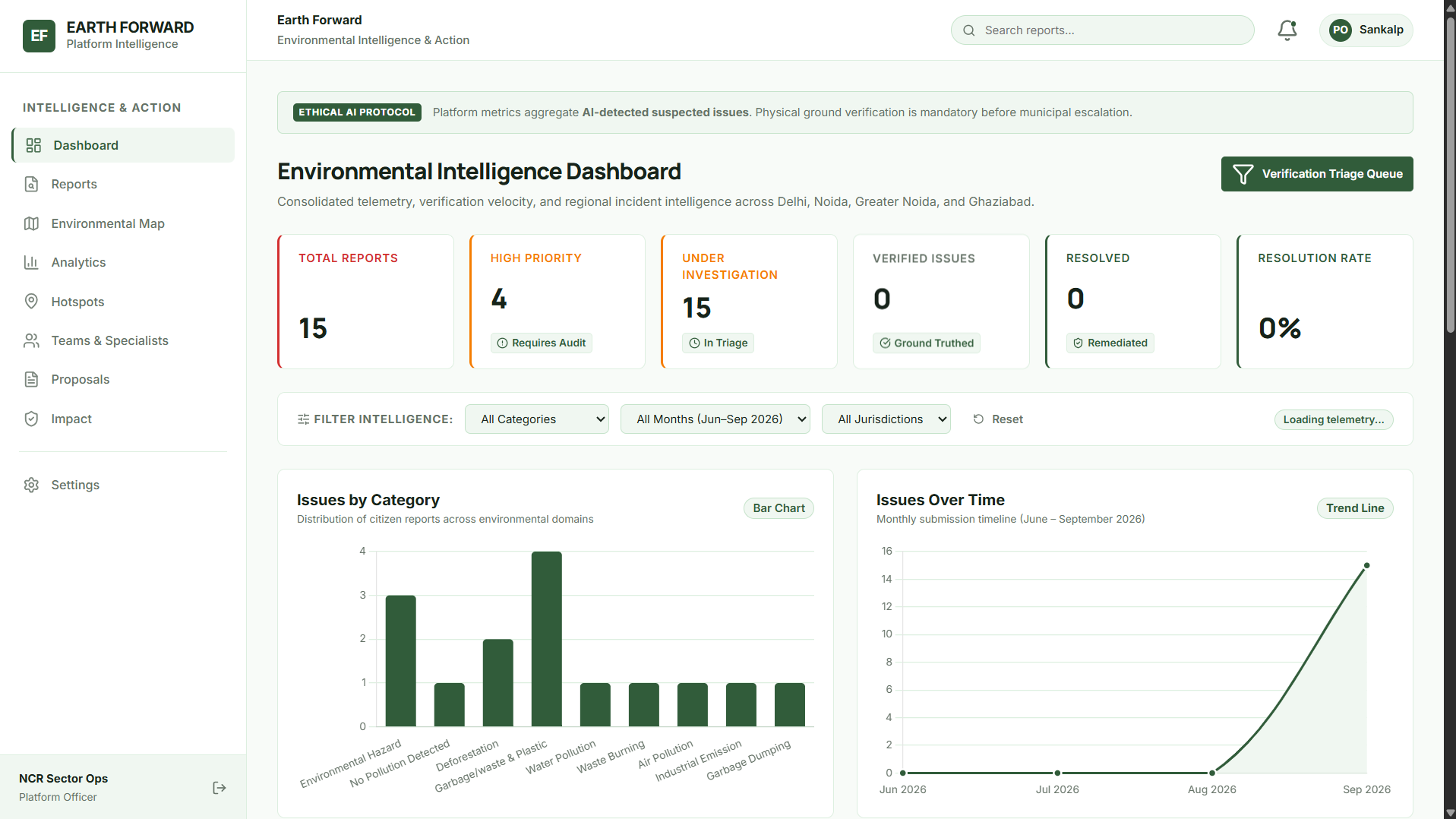
Visualization Of Reports
-
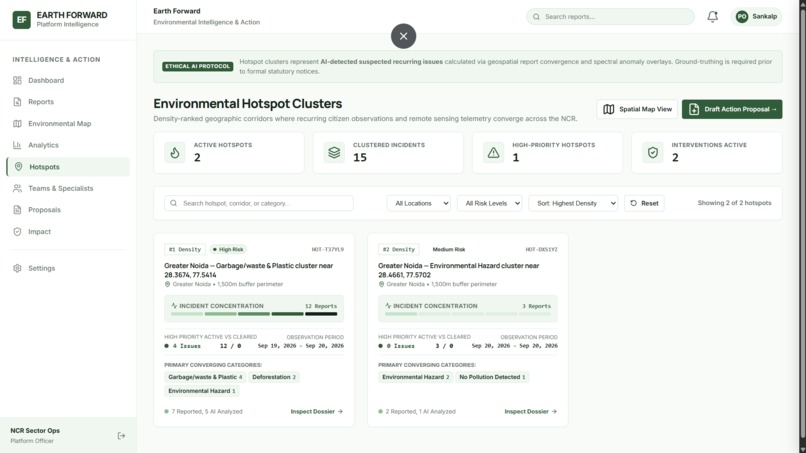
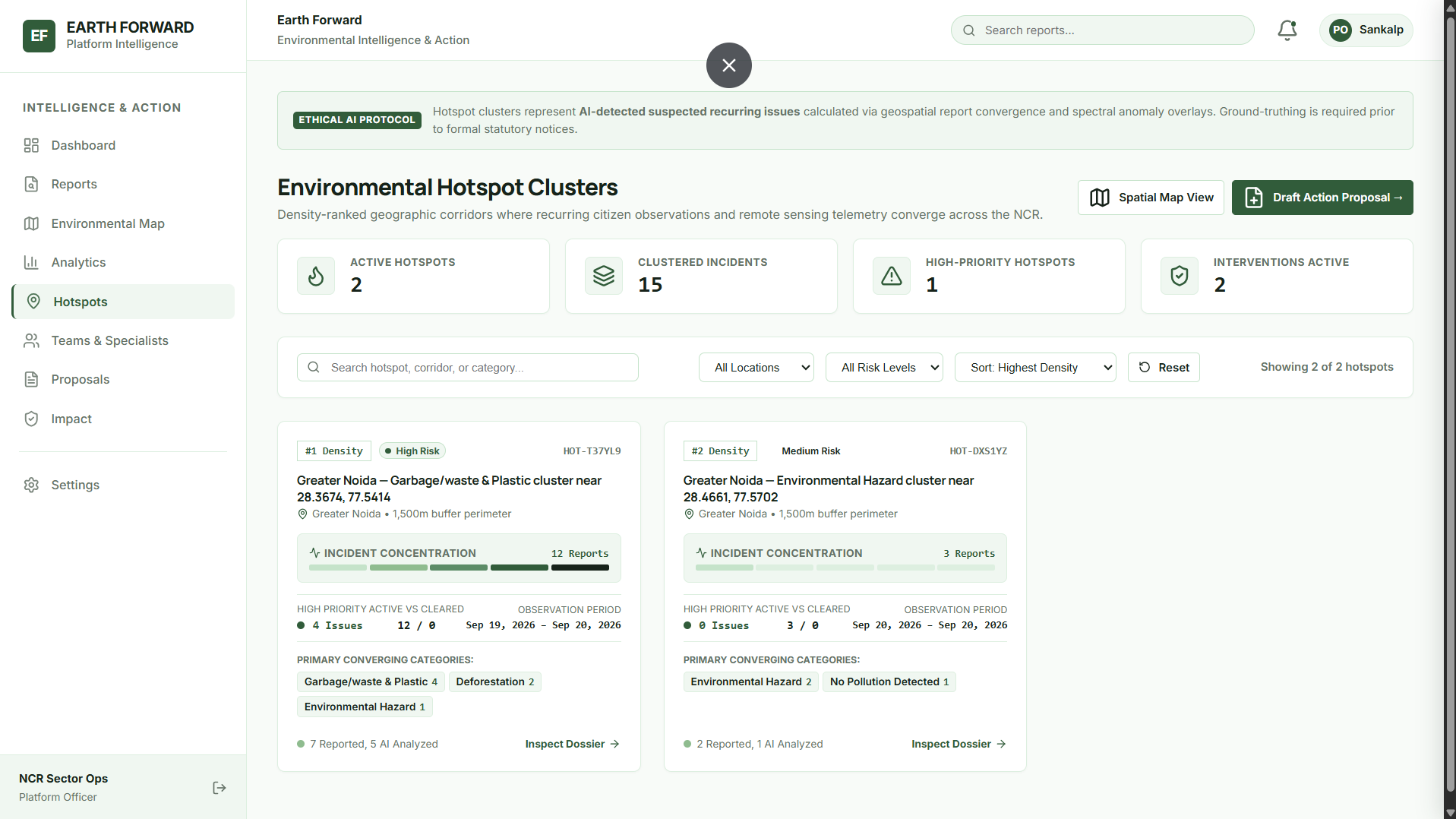
Hotspots_Information
-
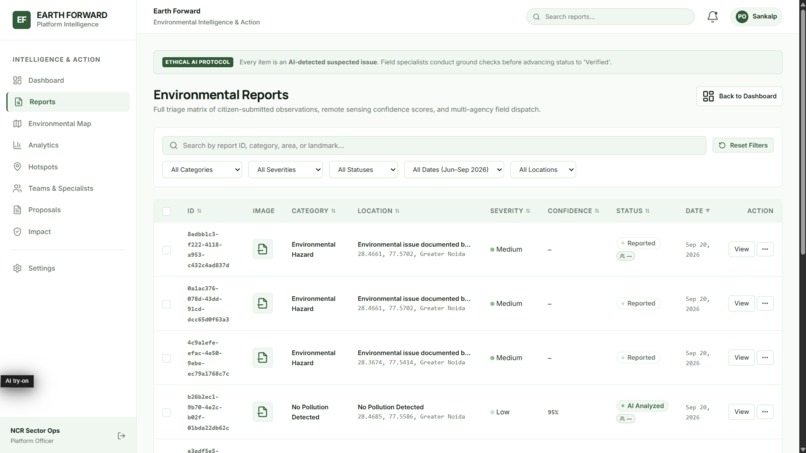
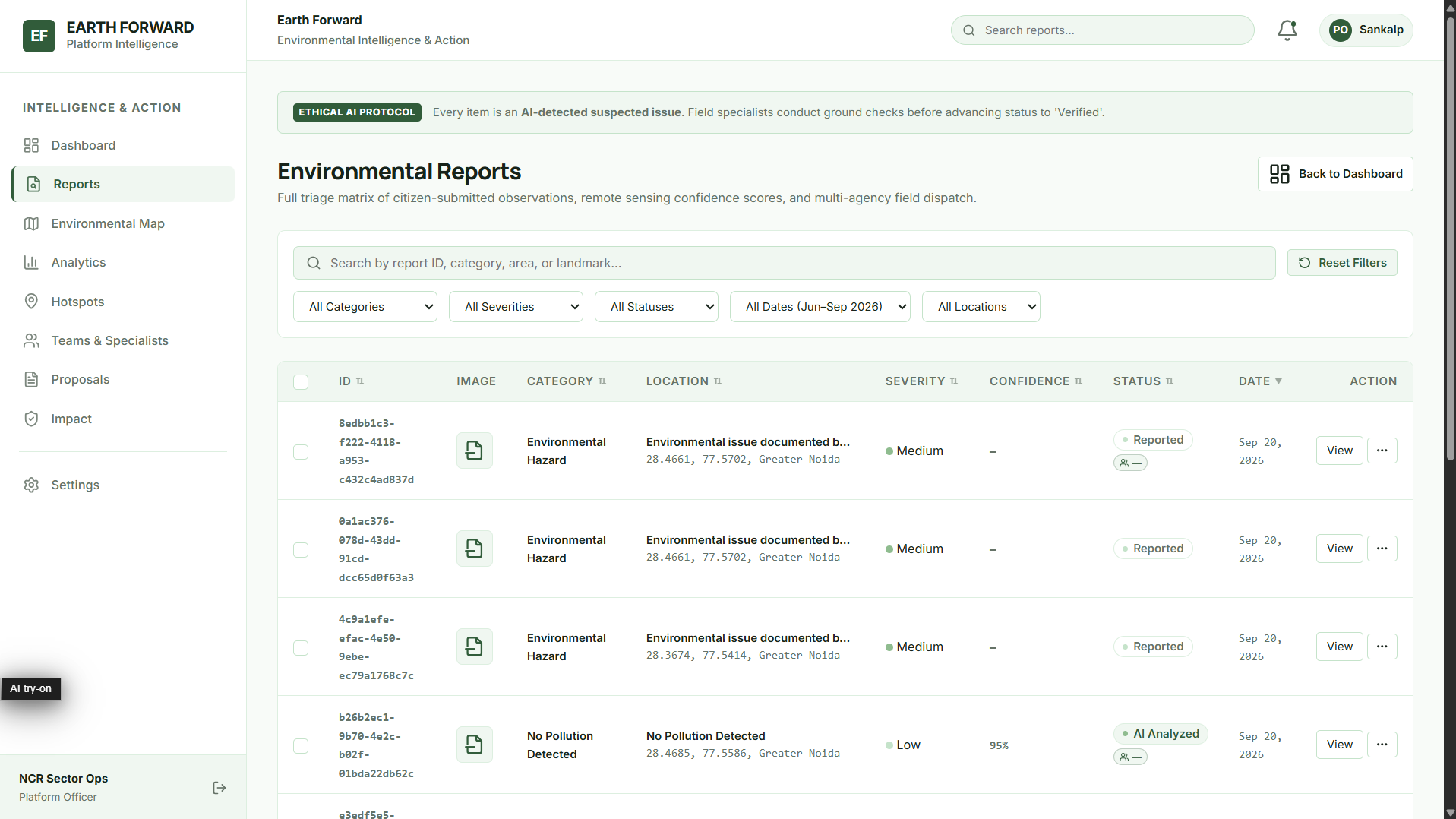
Reported By Users
-
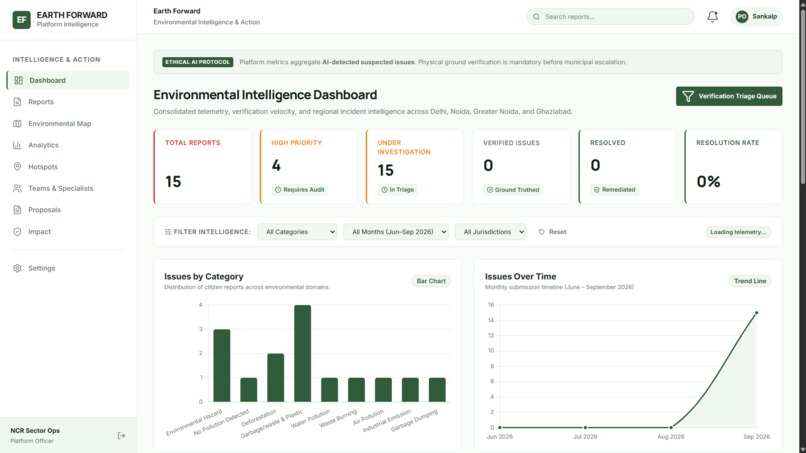
Organizations Dashboard
-
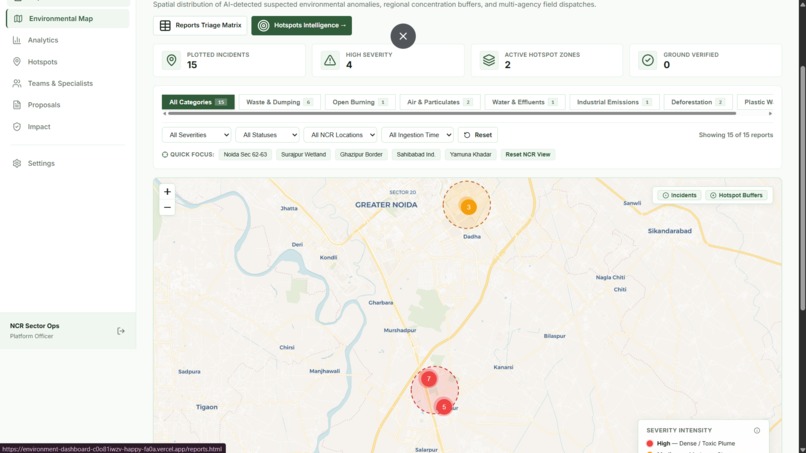
Hotspots With Major Issues
-
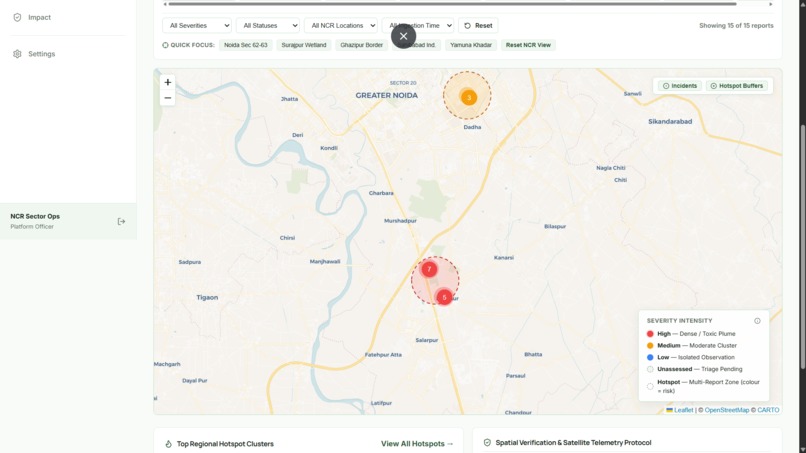
Hotspots On Map
-
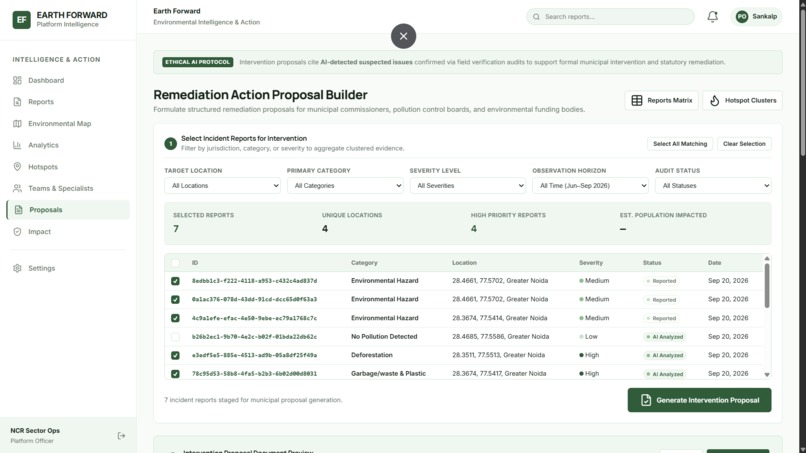
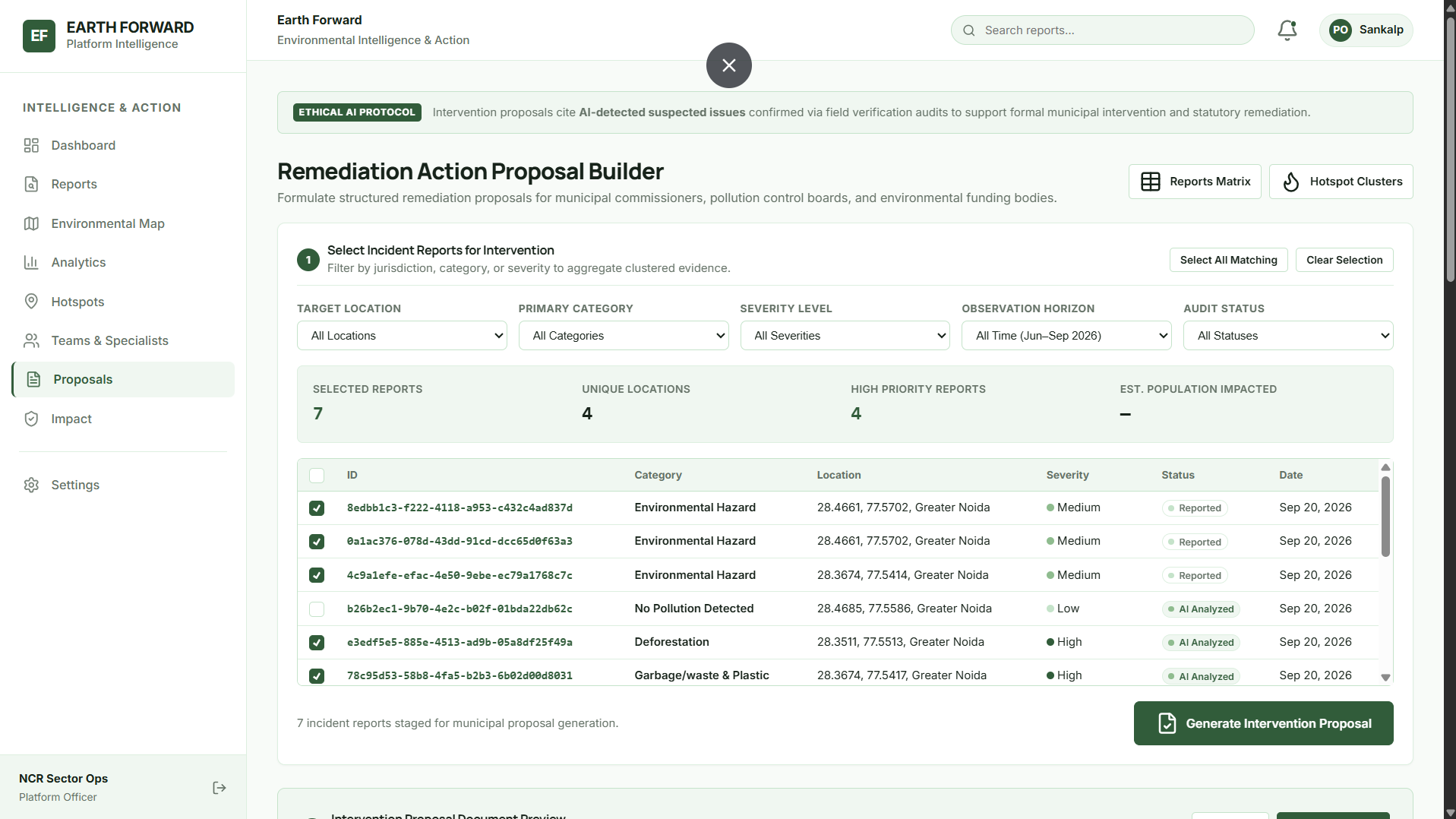
Automatic_Proposal_Generator
-
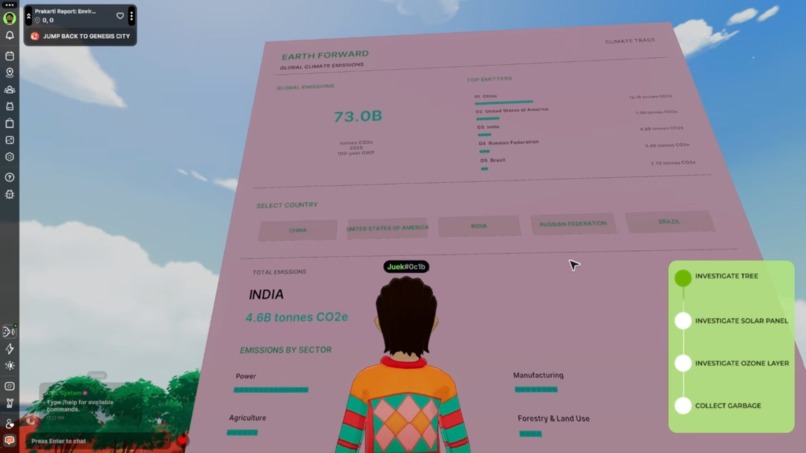
Metaverse_Education_Platform
-
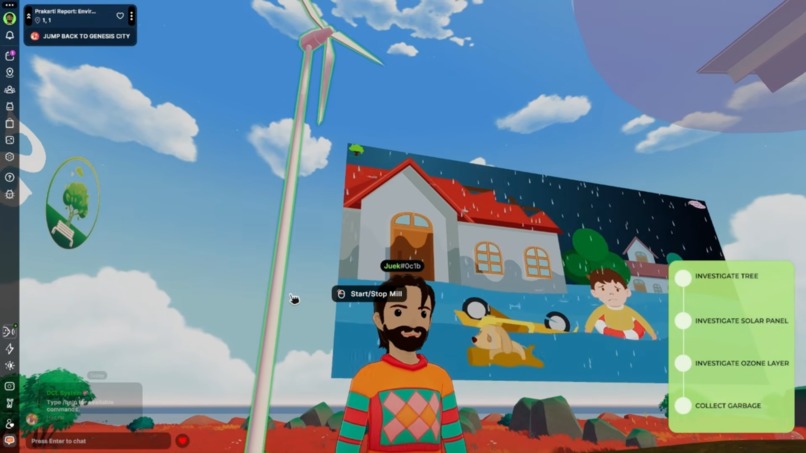
Educating_Future_Generation_About_Environmental_Issues
Inspiration
We started with a simple observation: environmental problems are easy to notice, but often difficult to report, understand, and act upon.
People see garbage being dumped, waste being burned, polluted areas, blocked drains, and other environmental issues around them. However, many of these problems never get reported because people don't know where to report them or don't want to go through a complicated process.
While developing the project, we also connected with Sankalp India, an organization working on social and environmental initiatives. Their experience helped us understand that the challenge isn't only identifying environmental problems. Organizations also need reliable information about what happened, where it happened, and what the issue looks like.
This led us to build Prakarti Report around a simple idea:
If you see an environmental problem, just take a photo and report it. Let AI help with the rest.
But we also wanted to address the problem from another direction: education and awareness.
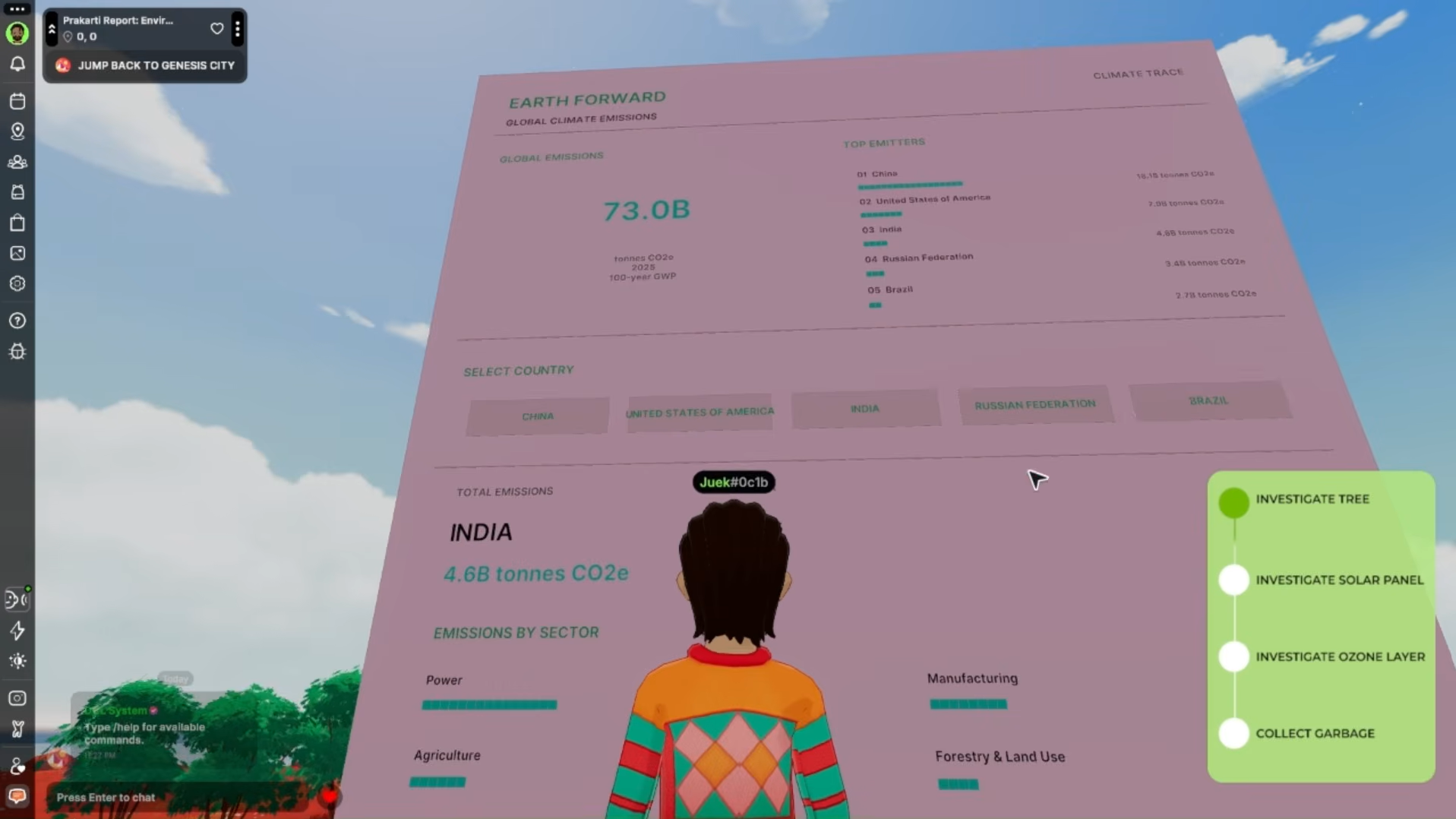
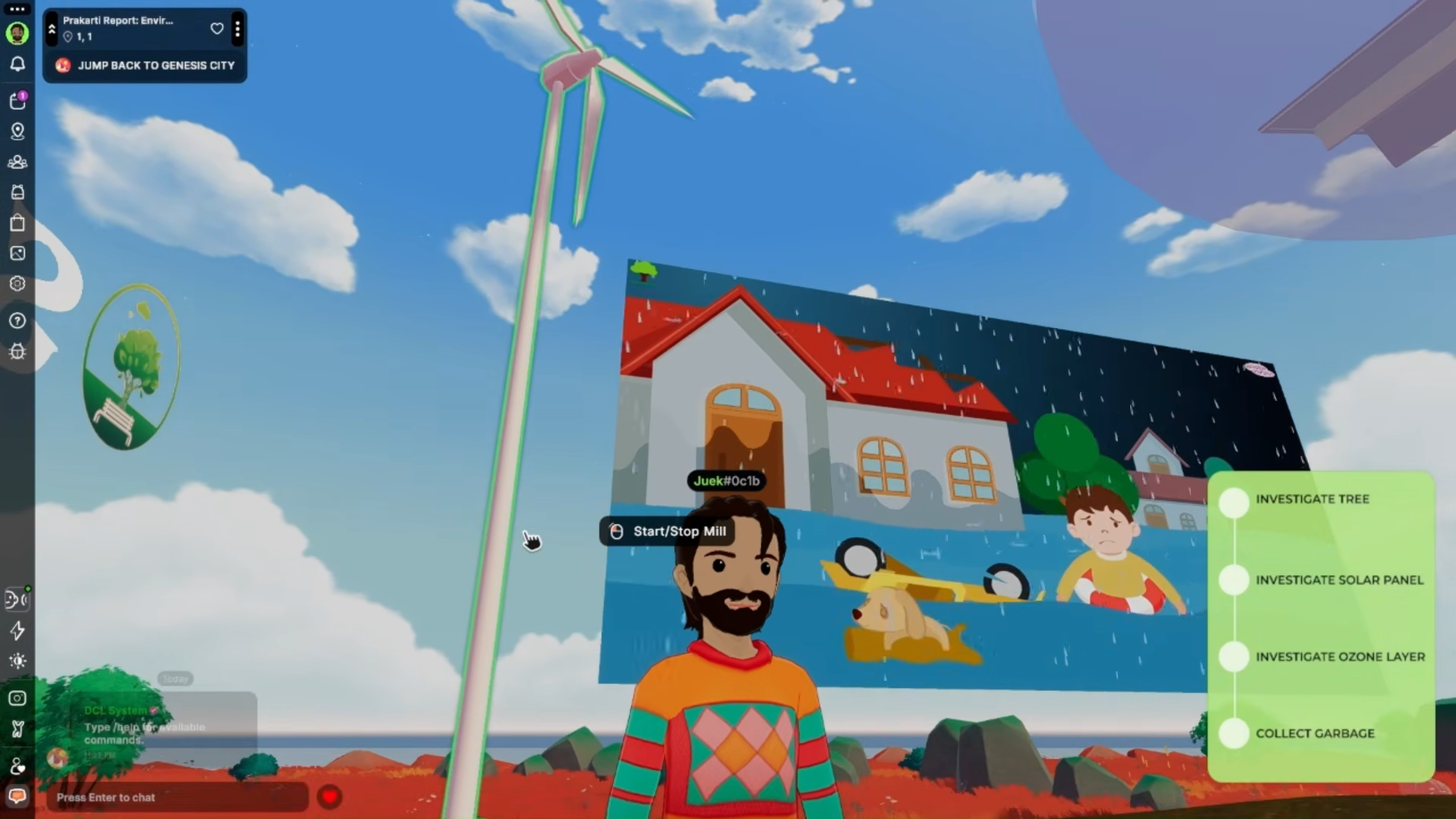
Reporting existing problems is important, but preparing the next generation to understand environmental issues and make better decisions can have a much longer-term impact. That's why our project also includes a metaverse-based environmental education platform, where students can learn about environmental problems, their consequences, and possible solutions through interactive experiences.
What it does
Prakarti Report combines environmental reporting with environmental education.
Environmental Reporting
A user can open the platform, log in, and click Report Issue. They can take a photo of an environmental problem such as:
- Garbage dumping
- Waste burning
- Pollution
- Drainage problems
- Improper waste disposal
- Other visible environmental issues
With the user's permission, the platform captures their location so the report is connected to the place where the issue was observed.
After submission, AI analyzes the photograph and helps identify the environmental issue. The information is then organized into a structured report that can be useful to organizations.
Environmental Education
Alongside the reporting system, we are building a metaverse education experience for students.
The idea is to make environmental education more interactive than simply reading about pollution, climate change, waste management, or conservation in a textbook.
Students can explore virtual environments, learn about environmental problems, understand their causes and consequences, and discover practical solutions through interactive experiences.
This gives Prakarti Report two connected sides:
Report today's environmental problems → Educate tomorrow's generation to prevent them.
How we built it
We built Prakarti Report as a mobile-friendly web platform because environmental issues are usually reported from the location where they are actually observed.
The reporting workflow is intentionally simple:
Open Website → Log In → Take Photo → Allow Location → Submit → AI Analysis → Environmental Report
The frontend handles the reporting experience, camera interaction, authentication, and location permissions.
For the AI component, we created an image-analysis pipeline that processes the submitted photograph and identifies the type of environmental issue visible in it. This reduces the amount of information a user has to manually enter.
Location data is attached to the report, with the user's permission, so organizations can understand where the issue occurred.
For the educational component, we are creating a 3D/metaverse environment where students can learn about environmental issues through interactive scenes rather than only conventional educational material.
We also incorporated feedback from Sankalp India while developing the project. Their perspective helped us think about how the reporting system could be useful beyond a hackathon prototype and how organizations could potentially use the information collected through it.
Challenges we ran into
One of our biggest challenges was making AI useful without making the application complicated.
It was tempting to focus entirely on the AI model, but we realized that the user experience is just as important. If someone has to fill out a long form before reporting an issue, they may simply stop. We therefore designed the workflow around something people already know how to do: take a photograph.
Environmental image classification was another challenge. Real-world photographs are unpredictable. Different lighting conditions, camera quality, distances, and multiple objects in the same image can make it difficult to determine exactly what environmental problem is being shown.
Location handling was another important part of the project. We wanted reports to contain accurate location information while still ensuring that location access is explicitly granted by the user.
We also faced the challenge of connecting AI output to something genuinely useful. An AI prediction alone isn't enough. The result needs to become structured information that an organization can understand and potentially act upon.
For the education side, the challenge was different: we wanted the metaverse experience to be educational rather than simply a virtual world. Every interactive element needs to have a clear learning purpose.
Accomplishments that we're proud of
We're proud that we were able to bring together AI, environmental reporting, and immersive education into one project.
The reporting workflow works as an end-to-end experience—from capturing an environmental issue on a phone to using AI to analyze it and creating a structured report.
We're particularly proud of the feedback we received from Sankalp India. Their experience helped us validate the problem from the perspective of an organization that actually works with social and environmental initiatives.
We're also proud of the direction we're taking with environmental education. Instead of only asking people to solve today's environmental problems, we want to help students understand those problems early and develop environmental awareness through interactive learning.
The combination of these two ideas is what makes the project meaningful to us:
Technology can help us respond to environmental problems today while education can help prepare people to prevent them tomorrow.
What we learned
The biggest lesson we learned was that building an AI product is not just about building an AI model.
The model is one part of a much larger system. The user experience, data collection, location accuracy, report structure, and the way organizations consume the information are equally important.
We also learned how valuable it is to get feedback from people who actually work with the problem. Our discussions with Sankalp India helped us think beyond a technical demonstration and consider how the system could fit into a real environmental workflow.
Building the metaverse education component also taught us that immersive technology works best when it supports a clear purpose. A virtual environment becomes much more useful when students can interact with it, understand consequences, and learn through experience.
Most importantly, we learned that environmental technology doesn't have to focus on just one point in time. We can use technology to help communities report problems today while using education to prepare future generations for the challenges ahead.
What's next for Prakarti Report
Our next goal is to expand Prakarti Report into a complete environmental ecosystem.
For the reporting side, we want to add:
- Environmental issue heatmaps
- Organization dashboards
- Duplicate report detection
- AI-based severity estimation
- Community verification
- Report status tracking
- Historical environmental data
- Analytics for recurring environmental problems
- Improved AI models for different environmental issues
For the education side, we want to expand the metaverse into a larger learning environment where students can explore topics such as:
- Waste management
- Air and water pollution
- Climate change
- Deforestation
- Biodiversity
- Renewable energy
- Sustainable cities
- Conservation
We envision students being able to enter virtual environments, see the consequences of environmental decisions, and experiment with possible solutions.
Ultimately, Prakarti Report is about connecting two timelines:
Helping communities report environmental problems today, while preparing the next generation to understand and solve them tomorrow.
See it. Report it. Learn from it. Build a greener tomorrow.
Built With
- carto
- css
- dclsdk7
- fastapi
- gemini
- gps-explorer
- html
- javascript
- leaflet.js
- postgresql
- python
- react
- supabase
- typescript


Log in or sign up for Devpost to join the conversation.