Inspiration
Most AI tutors today can answer from anywhere on the internet. While powerful, this creates serious problems in classrooms:
- Students receive unverified or off-syllabus answers
- AI may be confident but incorrect
- Teachers have no visibility into where students struggle
We wanted to build an AI tutor that behaves like a real classroom assistant — one that teaches only from approved material and helps teachers understand student learning gaps.
Pragyanta Tutor was inspired by the need for trustworthy, controlled, and measurable AI in education, where correctness and alignment matter more than open-ended knowledge.
What it does
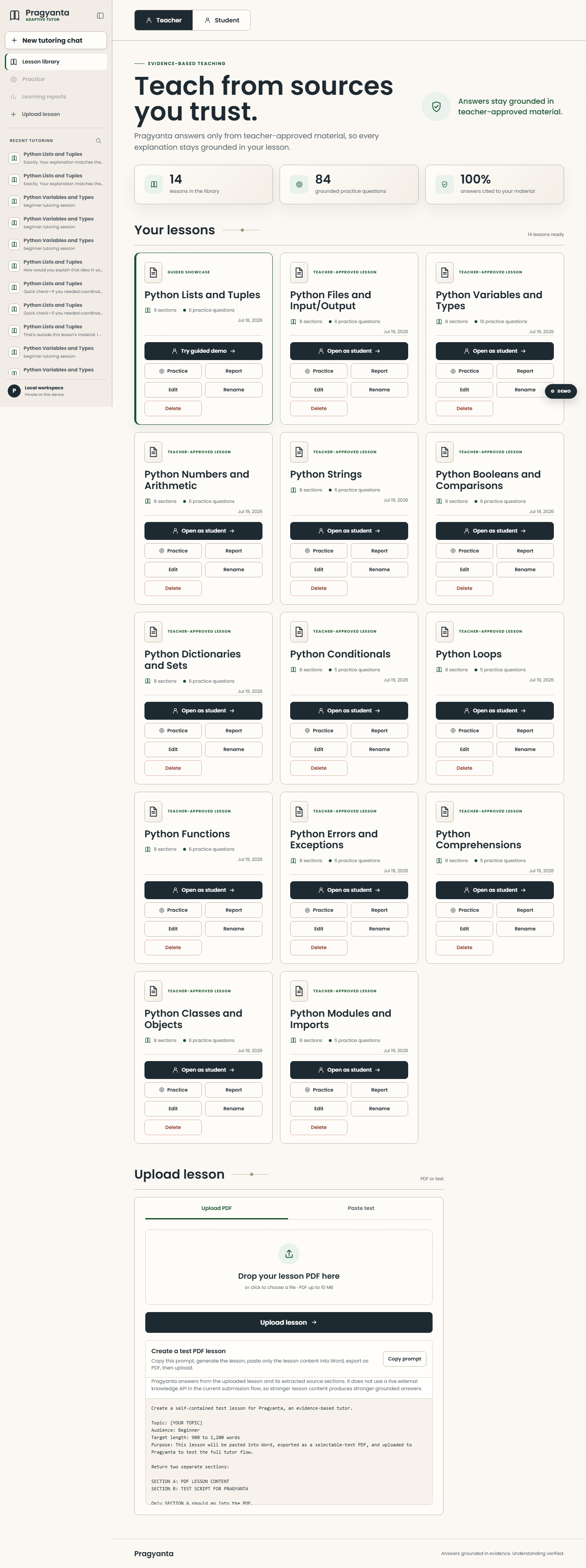
Pragyanta Tutor is an evidence-based adaptive tutor that answers only from teacher-approved lesson material.
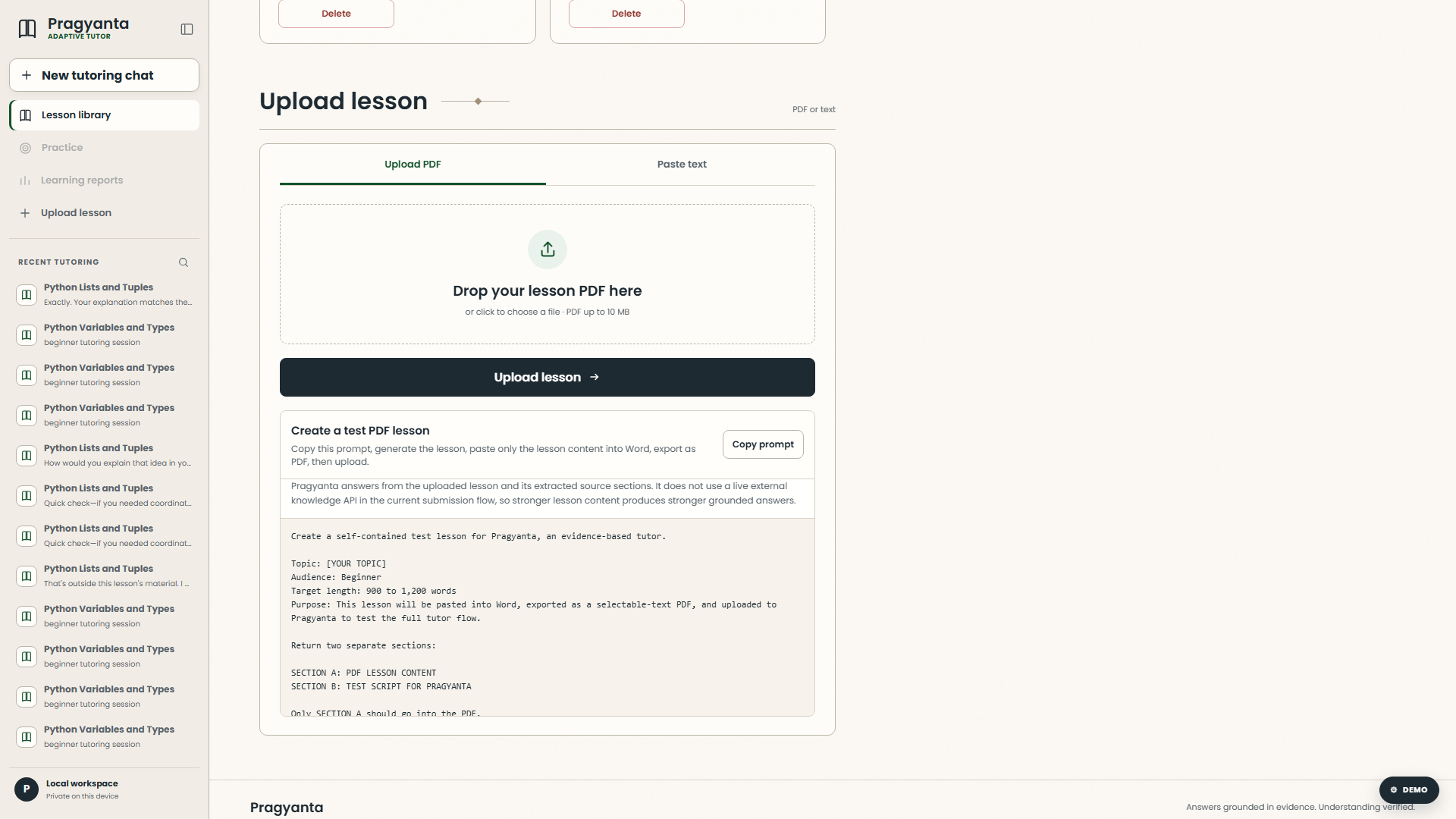
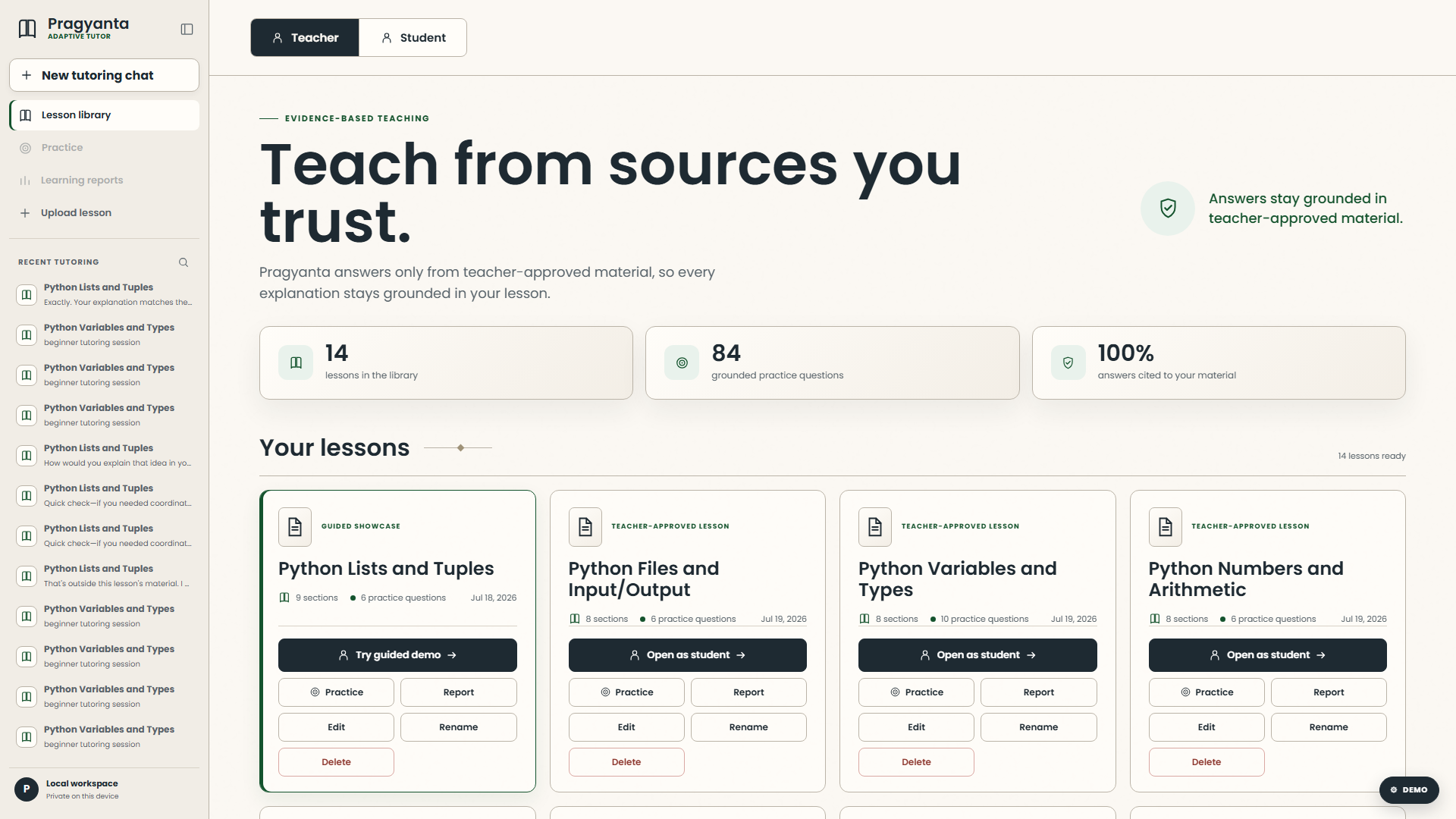
- Teachers upload lesson content (PDF or text), which becomes the system’s source of truth
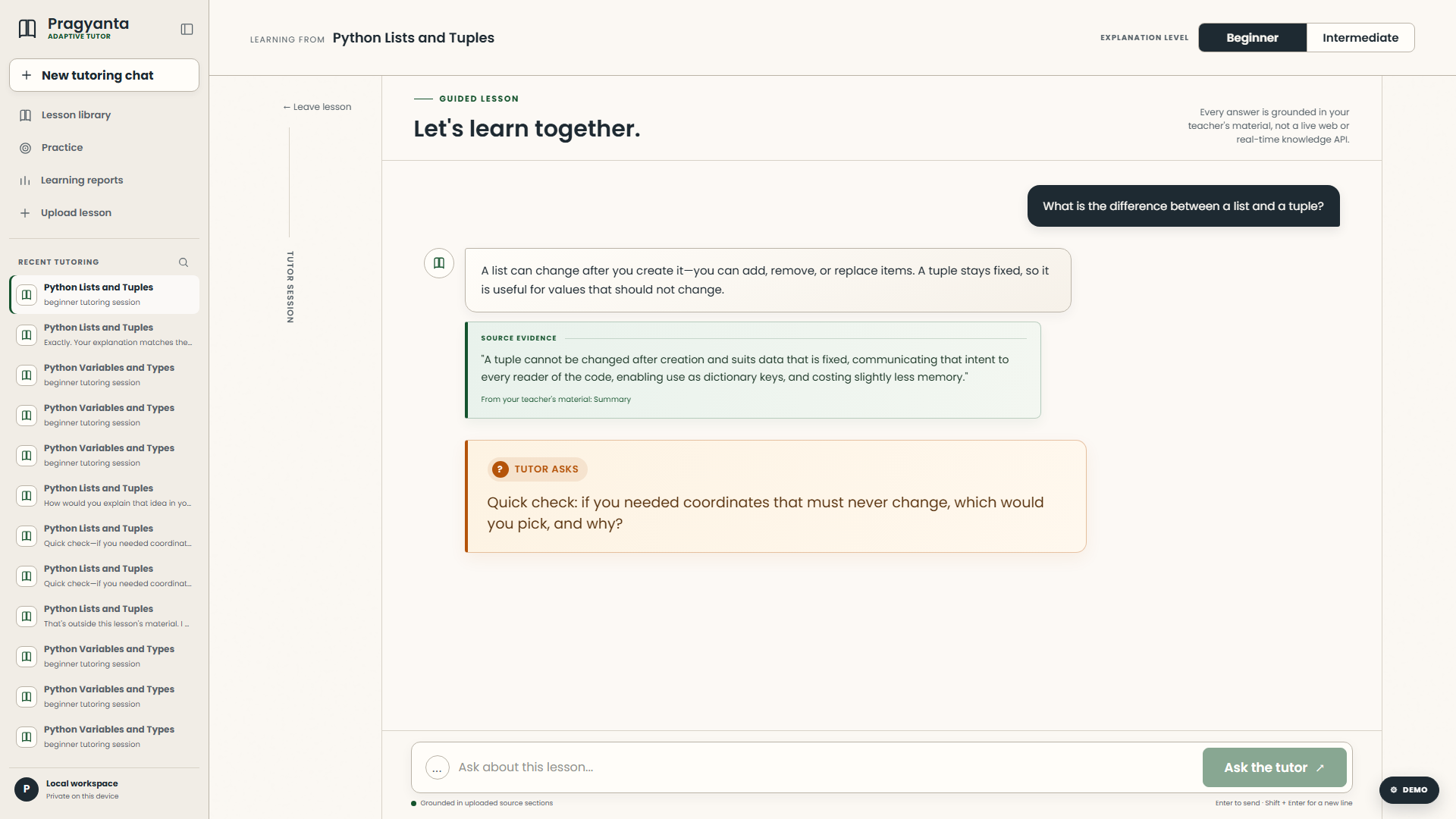
- Students ask questions, and answers are generated using relevant lesson content with citations
- Off-topic questions are declined instead of guessed
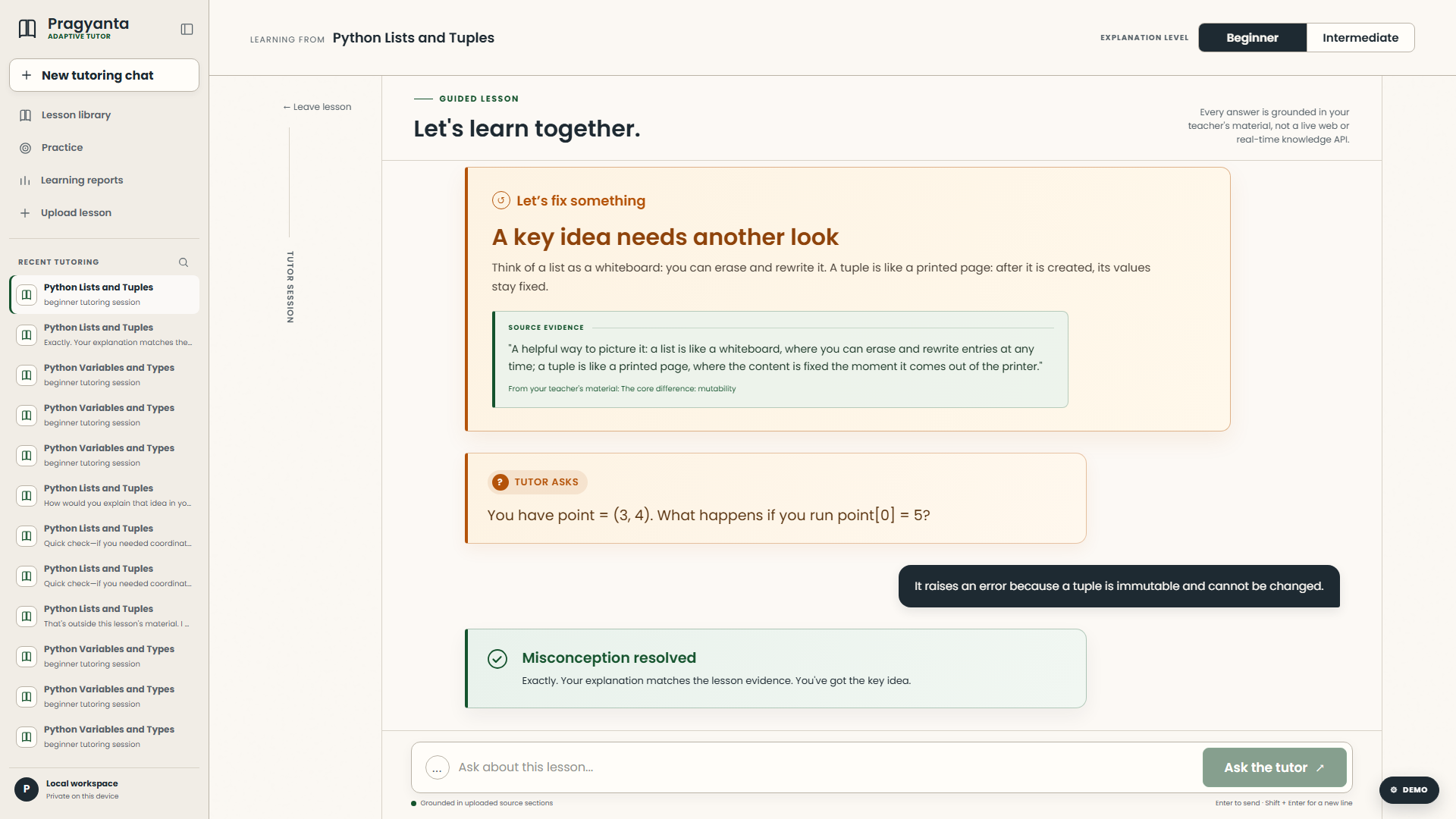
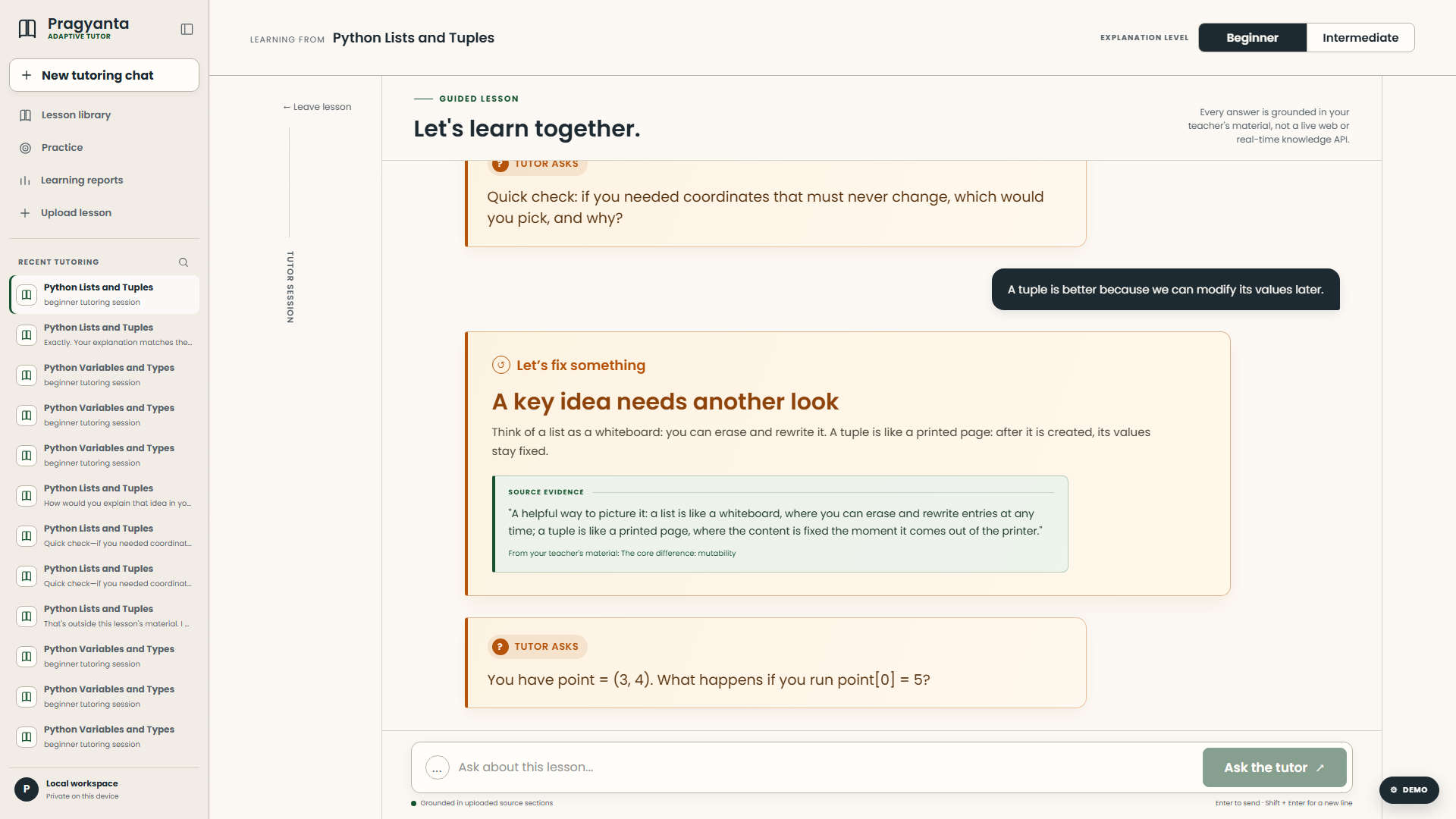
The system runs a structured learning loop:
Detect → Remediate → Verify
- Detects misconceptions from student responses
- Re-teaches the concept clearly
- Verifies understanding before moving forward
It also includes:
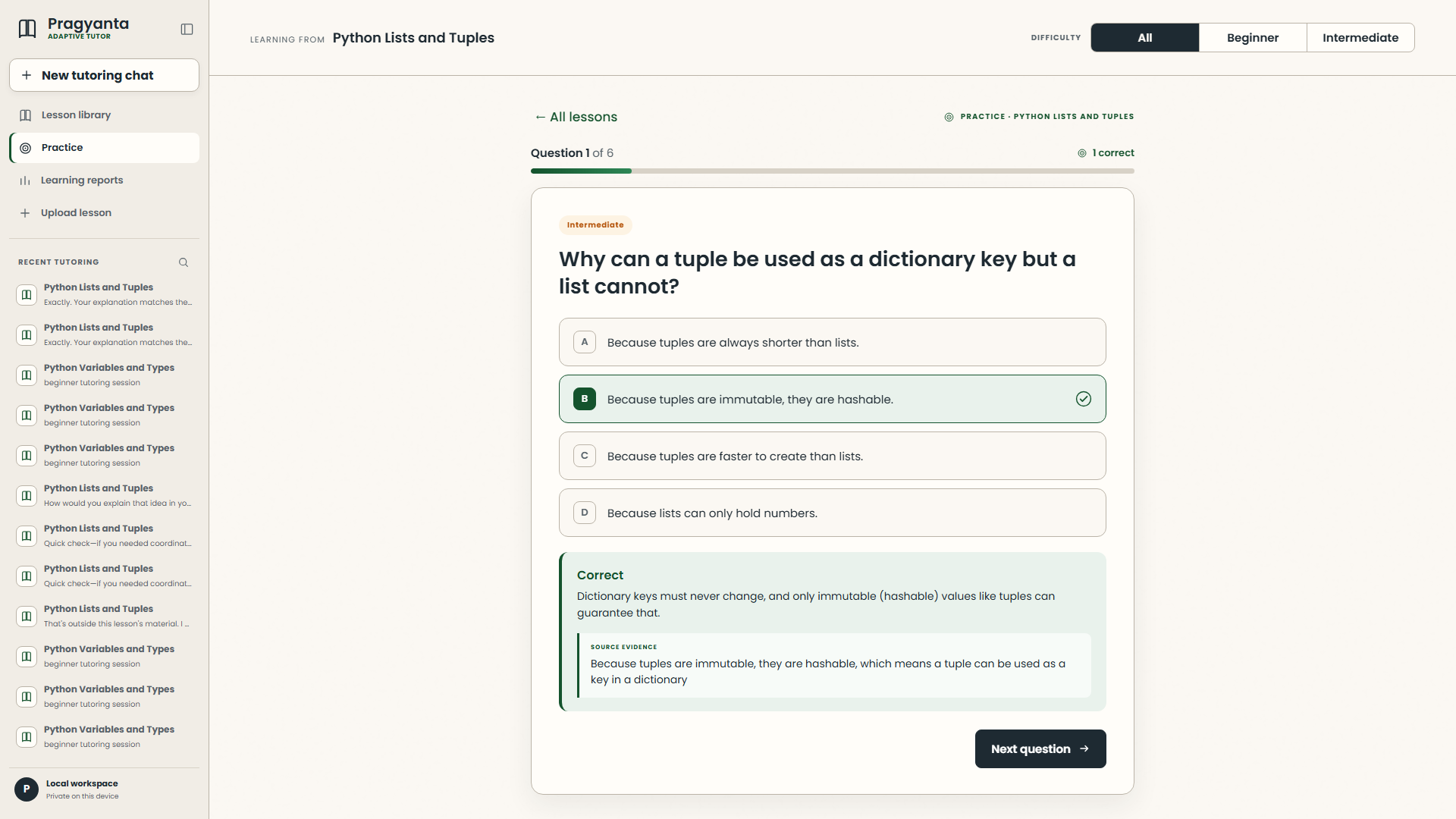
- Practice mode with multiple-choice questions derived from lesson content
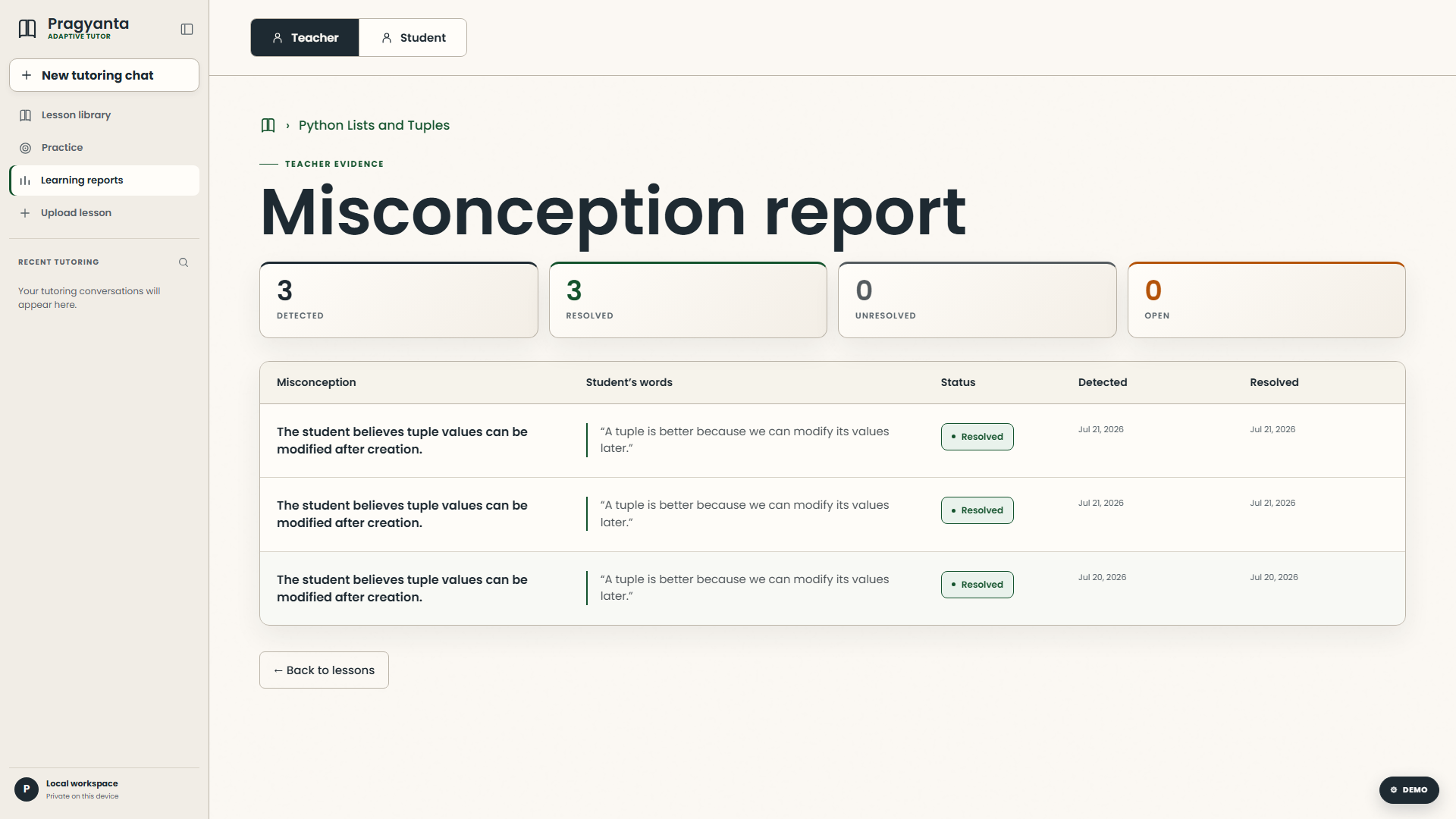
- A teacher report showing misconceptions, resolution status, and supporting evidence
- A deterministic keyless mode so the full experience works without API keys for judging
How we built it
Pragyanta Tutor uses a Retrieval-Augmented Generation (RAG) approach to ensure grounded and reliable responses.
- Teacher-provided material is processed into chunks and converted into vector embeddings
- These embeddings are stored in PostgreSQL using pgvector
- When a student asks a question, the system retrieves the most relevant chunks using similarity search
- The AI generates responses strictly within this retrieved context
- Citation-style references are enforced to maintain traceability of answers
The system is designed as a controlled, inspectable learning loop rather than an open-ended chatbot.
Tech stack:
- Frontend: React 18 + Vite
- Backend: FastAPI (Python)
- Database: PostgreSQL 16 with pgvector
- AI Layer: Pluggable provider (deterministic mock and optional live model)
- Infrastructure: Docker and Docker Compose
AI-assisted development:
- We used OpenAI Codex to accelerate implementation, structure components, and iterate quickly on both frontend and backend logic
- ChatGPT (GPT-5.6 series models) was used for architectural reasoning, debugging, prompt design, and refining the RAG pipeline and learning loop
Note: The demo runs in deterministic keyless mode for consistent evaluation. The full system includes real retrieval, vector search, and learning loop logic as implemented in the codebase.
Challenges we ran into
Keeping the tutor grounded Ensuring the system does not answer outside approved material required strict retrieval constraints, citation enforcement, and rejecting off-topic queries.
Designing a measurable learning loop Typical chat systems are stateless. We needed to persist misconception states across detect → remediate → verify to make learning outcomes trackable.
Balancing flexibility with control Allowing natural student interaction while enforcing strict content boundaries required careful system design.
Reliable judging environment To avoid API dependencies and variability, we implemented a deterministic keyless mode so the system behaves consistently for every judge.
Accomplishments that we're proud of
- A grounded AI tutor with source-backed answers
- A working Retrieval-Augmented Generation pipeline integrated into a real system
- A persistent adaptive learning loop with measurable outcomes
- A teacher reporting system that surfaces actionable insights
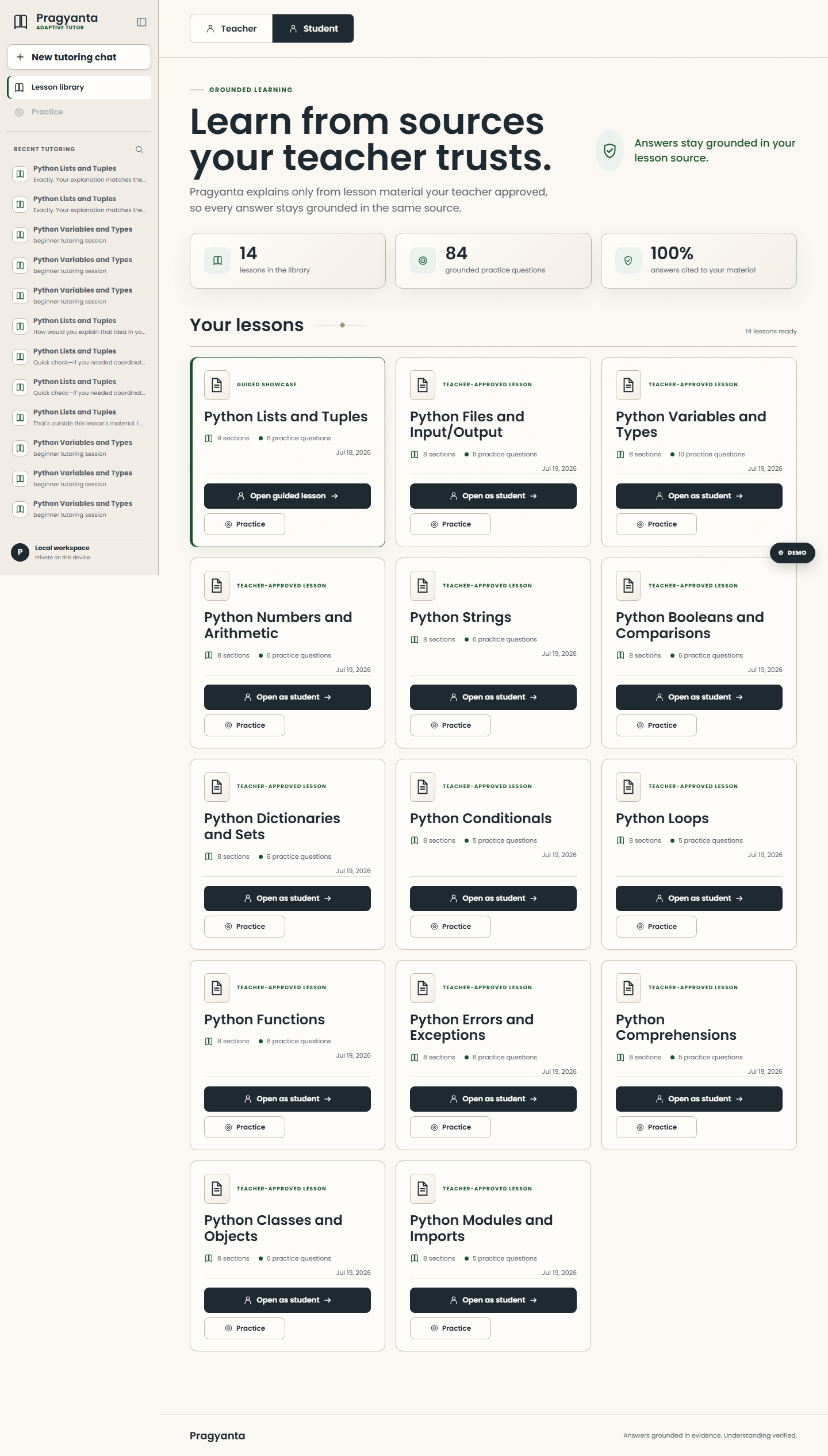
- A 14-lesson Python curriculum with practice questions
- A one-command setup using Docker that runs without API keys
- A tested system with backend, frontend, and end-to-end coverage
What we learned
- In education, trust and correctness are more important than open-ended AI capability
- Retrieval-Augmented Generation is essential for building reliable AI systems in controlled domains
- Persisting learning state transforms a chatbot into a measurable learning system
- AI-assisted development tools like Codex and ChatGPT significantly improve speed, iteration, and system design quality
What's next for Pragyanta-Tutor
- Expand beyond Python into multiple subjects and lesson formats
- Improve misconception detection using richer evaluation strategies
- Build class-level analytics for teachers to monitor overall performance
- Add authentication and multi-classroom support
- Enable optional production deployment with live AI models alongside the grounded default system
Built With
- ai
- chatgpt
- css
- docker
- docker-compose
- edtech
- education
- fastapi
- gpt-5.6
- html
- javascript
- machine-learning
- openai-codex
- pgvector
- playwright
- postgresql
- pytest
- python
- react
- rest-api
- vite

Log in or sign up for Devpost to join the conversation.