🏥 Inspiration
Finding the right doctor can be surprisingly difficult. Patients often have to search through specialties, locations, availability, insurance information, and reviews before they can even book an appointment. For someone who is already worried about their health, this process can feel overwhelming.
We built PractoAI to make healthcare access more intelligent and accessible.
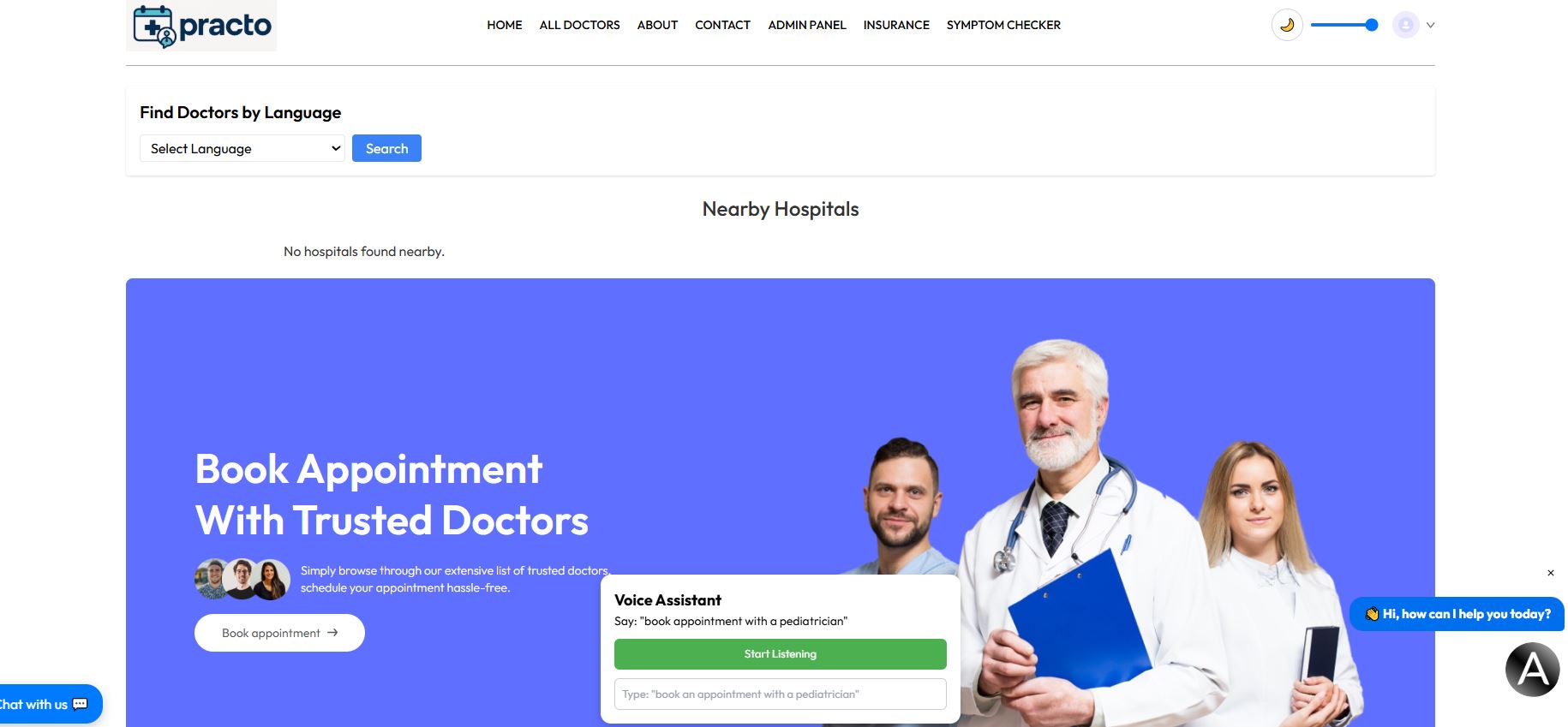
Instead of simply showing a list of doctors, PractoAI uses a patient's symptoms and preferences to help identify relevant specialists, while also providing tools for symptom guidance, virtual consultations, medical records, nearby hospitals, and voice-based appointment booking.
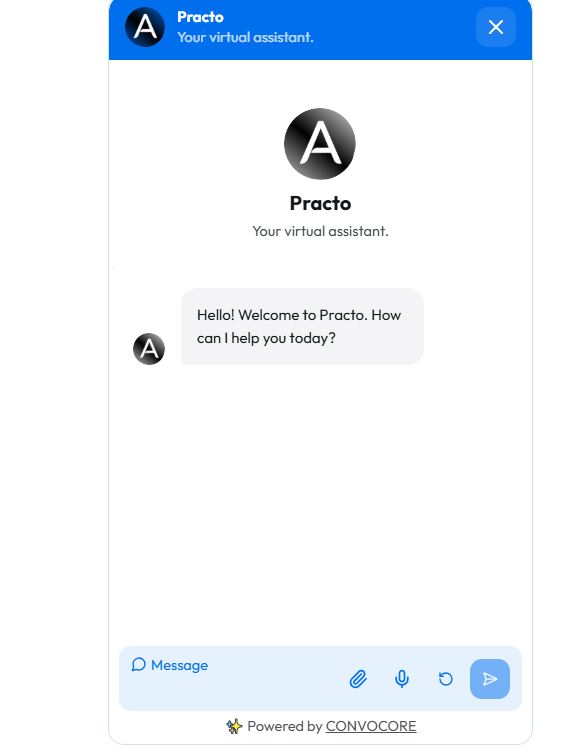
Our goal was to create a healthcare platform where AI helps patients navigate the healthcare system rather than simply adding another chatbot.
💡 What I Built
PractoAI is a full-stack healthcare platform that connects patients, doctors, and healthcare services in one system.
🤖 AI Doctor Matchmaking
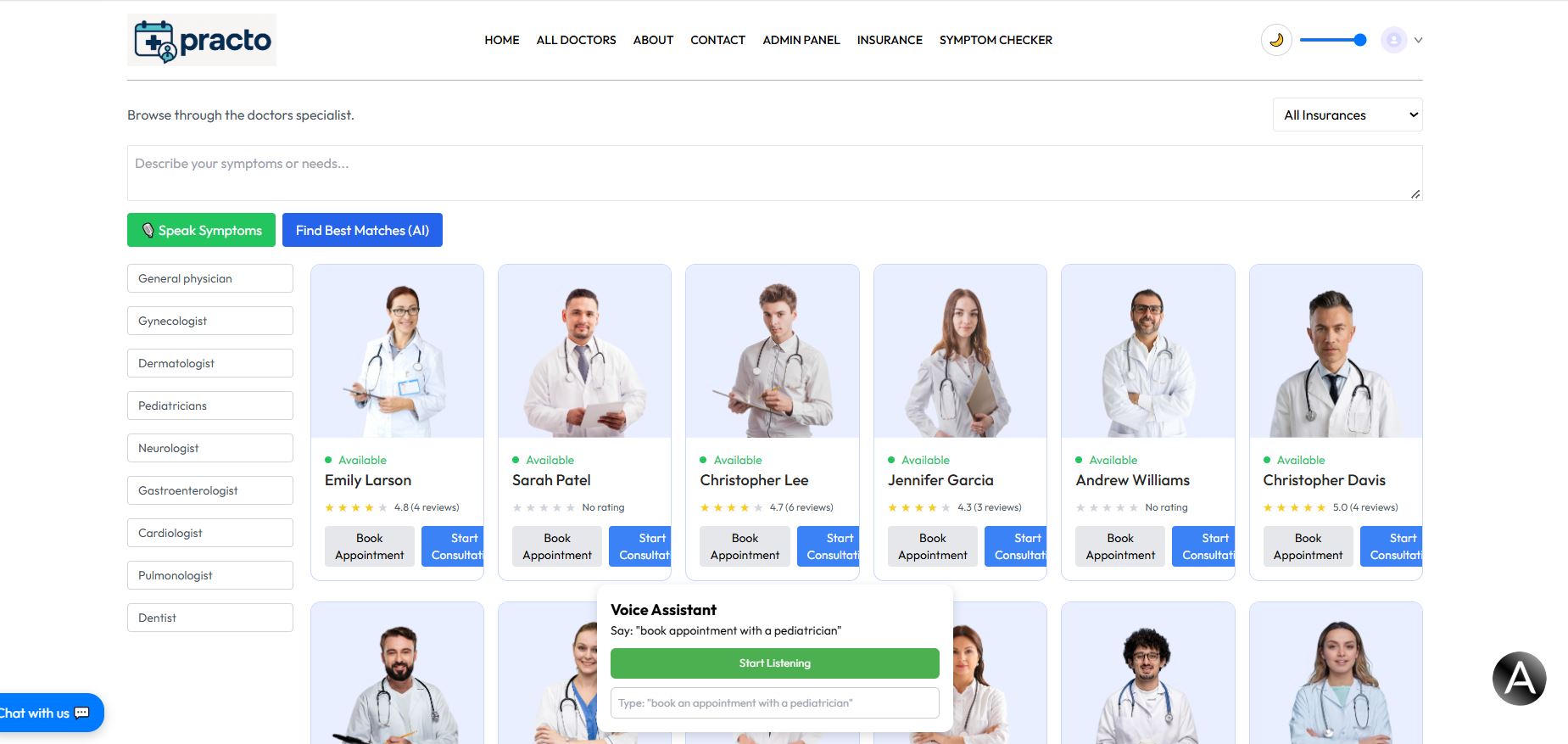
Patients can describe their symptoms in natural language. PractoAI converts the description into a semantic representation and compares it against doctor information to recommend relevant specialists.
The matchmaking system uses all-MiniLM-L6-v2 embeddings, FAISS similarity search, and additional preference-based ranking using factors such as:
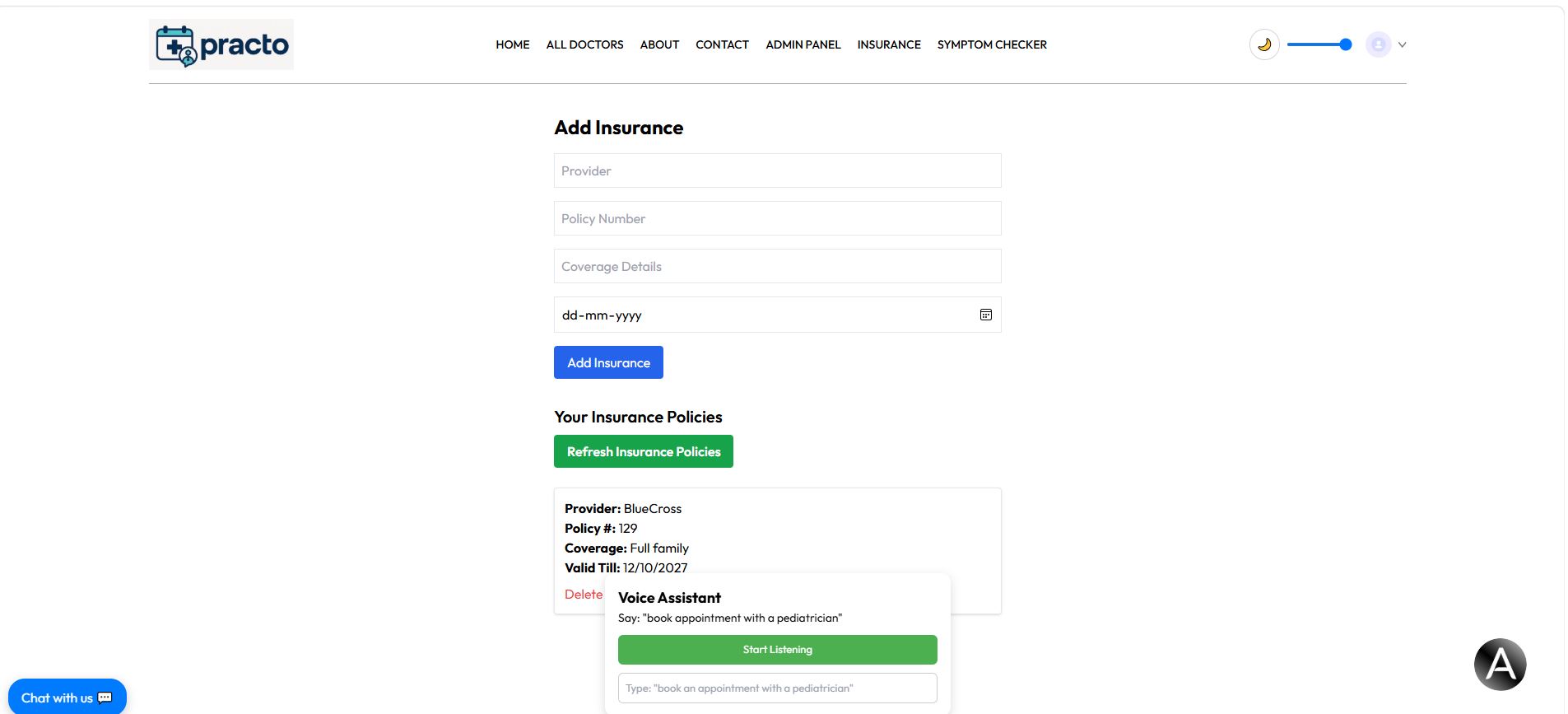
Medical specialty Symptoms and doctor expertise Languages Insurance compatibility Hospital information Patient preferences
The result is a ranked list of doctors with an AI-generated match score, helping patients make a more informed choice.
🩺 AI Symptom Checker
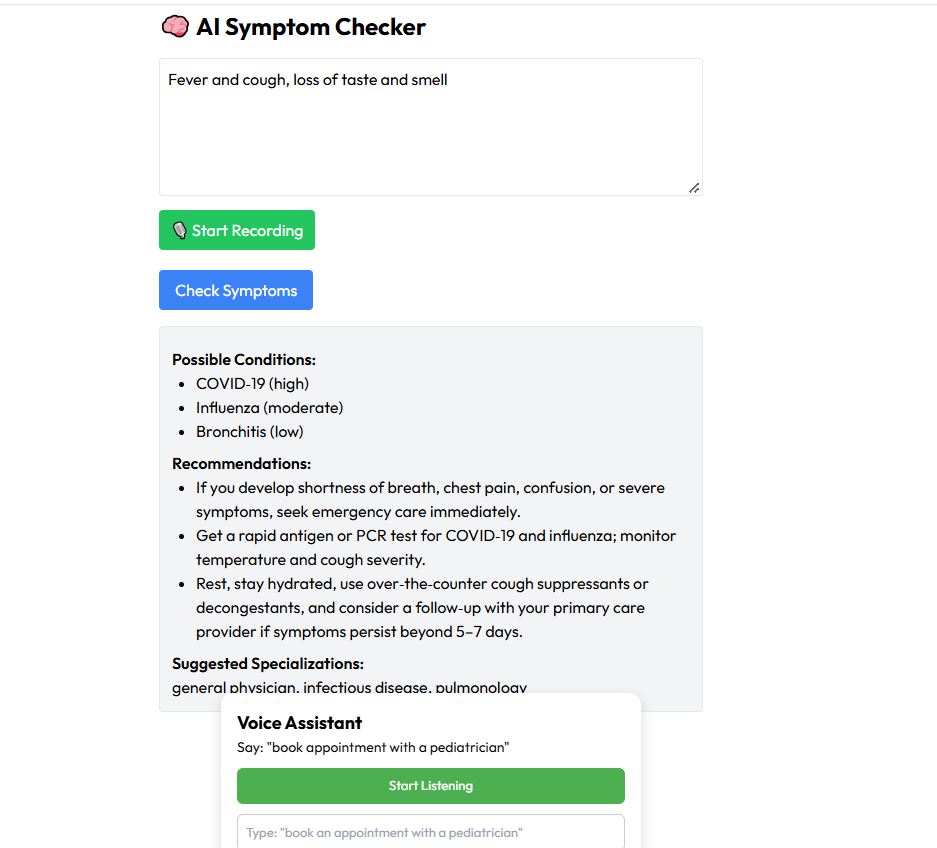
Patients can describe their symptoms and receive AI-powered guidance about possible health conditions and appropriate next steps.
The feature is designed as an initial information and navigation tool—not a replacement for a qualified medical professional.
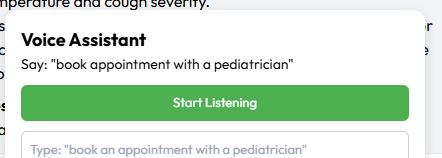
🎙️ Voice-Based Appointment Booking
We also wanted healthcare access to be easier for people who may find traditional interfaces difficult to navigate.
Patients can use voice commands to:
Request a type of doctor View suitable doctors Select a doctor Choose an available appointment Select insurance options Confirm the appointment
This combines voice interaction with the existing appointment-booking workflow.
📅 Complete Appointment Platform
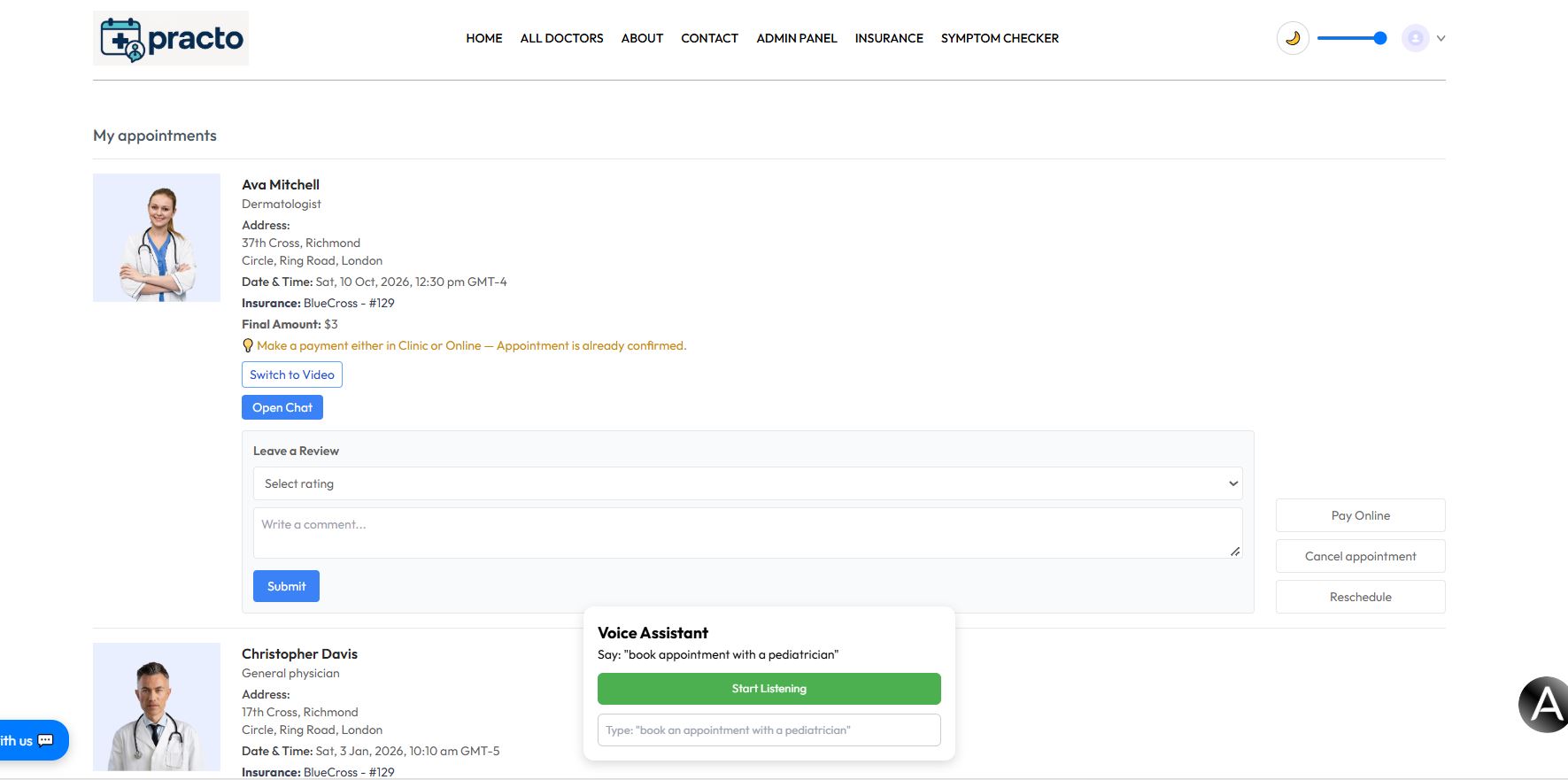
Patients can book, reschedule, or cancel appointments and choose between:
In-person consultations Virtual consultations Online payment Pay-at-clinic
Doctors have their own dashboards for managing availability and appointments.
📋 Medical Records
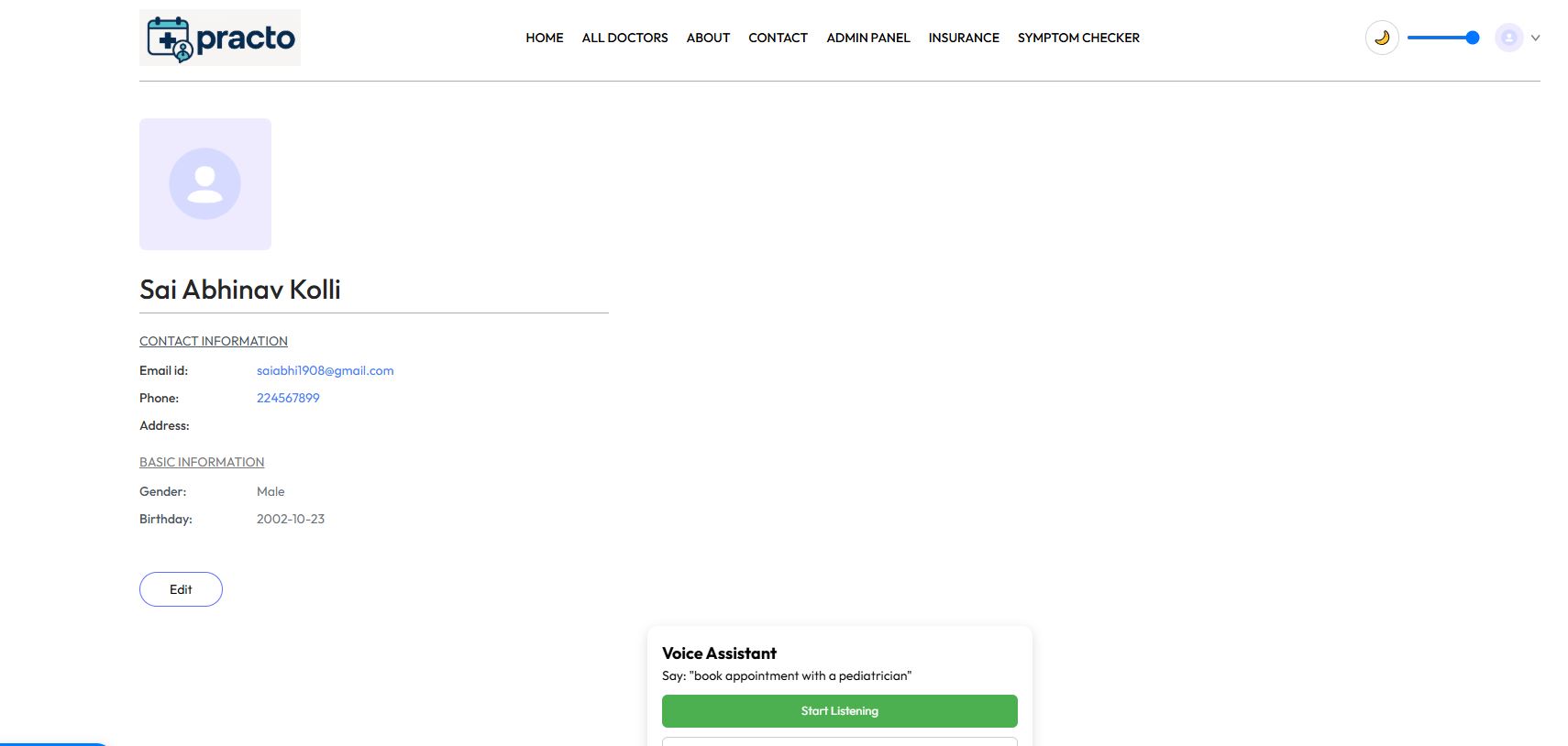
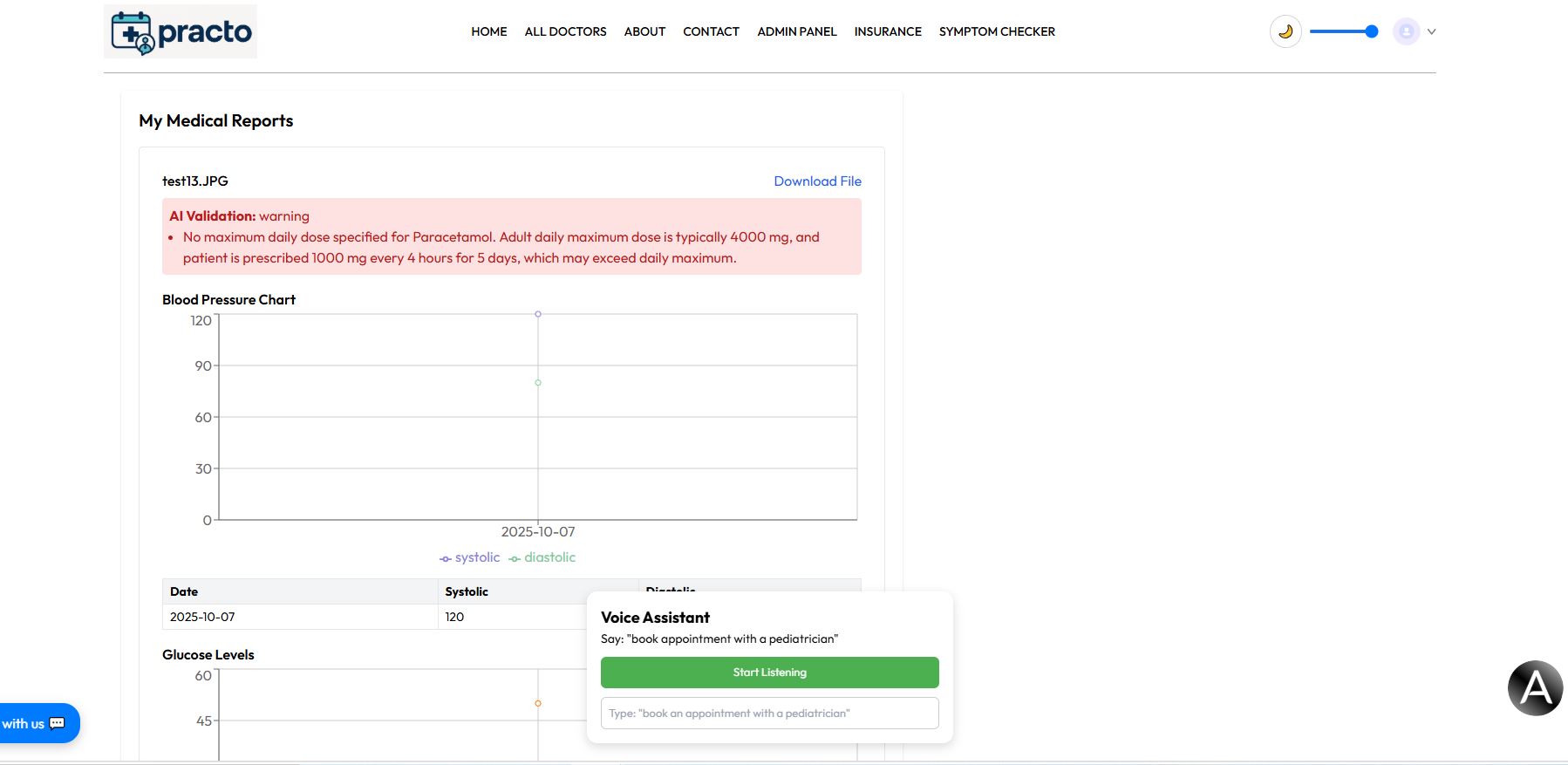
Patients can upload and access medical reports, while doctors and administrators can manage prescriptions and medical information.
The platform also provides visualization of health measurements such as blood pressure, sugar, and thyroid-related values, making longitudinal information easier to understand.
🏥 Nearby Healthcare Services
Patients can discover nearby hospitals and access information about available healthcare services, helping connect digital care with physical healthcare resources.
♿ Accessibility & Personalization
Accessibility was an important part of the project. PractoAI includes:
Voice navigation Voice assistant interactions Theme and adaptive UI options Language preferences Virtual consultation capabilities
The goal is to make the platform useful to a broader range of patients, including people who may have difficulty relying entirely on traditional visual interfaces.
🛠️ How I Built It
PractoAI is a full-stack application built around a React frontend, Node.js/Express backend, and MongoDB database.
Technology Stack Frontend: React.js, Vite, Tailwind CSS Backend: Node.js, Express.js AI/ML: Python, Sentence Transformers, all-MiniLM-L6-v2, FAISS Database: MongoDB / Mongoose Authentication: JWT, OTP, optional 2FA, Nodemailer Payments: Stripe Video Consultation: WebRTC / real-time video infrastructure Voice: Web Speech API Maps & Location: Google Maps / location services Real-time Communication: Socket.IO Deployment: Render
The AI matchmaking service communicates with the main healthcare application and uses information stored in MongoDB to generate relevant doctor recommendations.
🧠 What I Learned
One of the biggest lessons from building PractoAI was that adding AI is not enough by itself. The AI needs to be connected to a useful workflow.
For example, a symptom description becomes much more valuable when it can lead to:
Symptoms → AI understanding → Doctor matching → Doctor selection → Appointment → Consultation
We also learned how challenging it is to combine multiple technologies into one reliable application. Authentication, payments, databases, AI models, voice interaction, real-time communication, and appointment scheduling all have different requirements and failure cases.
Building the AI matchmaking system also taught us the importance of semantic similarity rather than relying only on keyword matching. Patients do not always describe symptoms using the exact terminology used in a doctor's profile, so embedding-based matching provides a more flexible way to connect patients with relevant specialists.
🚧 Challenges I Faced Connecting AI with real application data
A standalone AI model is relatively easy to demonstrate, but making AI recommendations using constantly changing doctor information, availability, insurance options, and patient preferences required much more engineering.
Making recommendations useful
A simple similarity score is not always enough. We had to consider additional factors such as specialty, language, insurance, and patient preferences to make the recommendations more practical.
Building a complete healthcare workflow
The project goes beyond one AI feature. Integrating authentication, appointments, payments, medical reports, video consultations, voice interactions, and AI into a single application introduced many integration challenges.
Designing for accessibility
We wanted voice interaction and accessible UI to be part of the actual healthcare experience rather than an isolated feature. Designing the interaction between voice commands and appointment workflows required additional thought and testing.
🌎 Real-World Impact
Healthcare systems can be difficult to navigate, especially when patients do not know which specialist they need.
PractoAI aims to reduce that friction by turning a patient's natural-language description of their needs into actionable healthcare options.
Instead of asking:
"Which doctor should I search for?"
the patient can start with:
"Here are my symptoms. Help me find the right doctor."
That is the problem we wanted PractoAI to solve.
🚀 What's Next
Future versions could incorporate more sophisticated medical knowledge retrieval, improved personalization, multilingual conversational interactions, stronger clinical validation, and additional healthcare-provider integrations.
Our long-term vision is to make PractoAI an intelligent healthcare access layer that helps patients move from understanding their needs to finding and accessing appropriate care more easily.
Built With
- ai-healthcare
- artificial-intelligence
- doctor-matching
- express.js
- faiss
- google-maps
- healthcare
- jwt
- machine-learning
- mongodb
- mongoose
- natural-language-processing
- node.js
- python
- react.js
- rest-api
- sentence-transformers
- socket.io
- stripe
- symptom-checker
- tailwind-css
- vite
- voice-assistant
- webrtc

Log in or sign up for Devpost to join the conversation.