Inspiration
Our team’s inspiration came from living through the chaos of misinformation ourselves. We’ve watched countless times as false content spread across TikTok, Instagram, and YouTube while the truth quietly disappeared. We realised that misinformation isn’t just an external problem; it’s a cultural one that directly affects our generation’s trust, democracy, and mental well-being. PPP (Pause, Prove & Protect) was born out of that frustration and hope our desire to build something by young people, for young people. We understand how misinformation moves, how it hooks attention, and what it takes to make truth-checking as instinctive as scrolling.
What it does
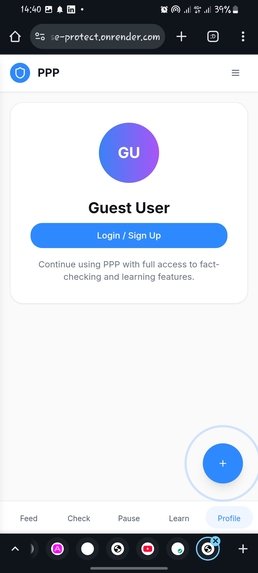
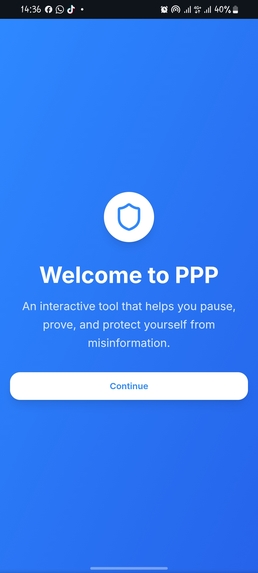
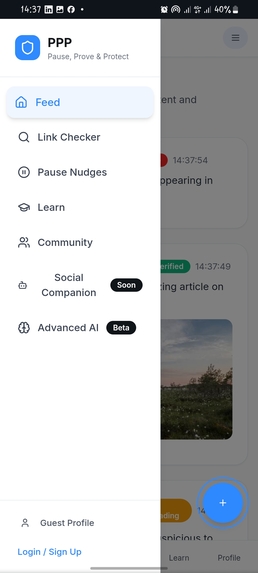
Pause, Prove & Protect (PPP) is an AI-powered behavioural intervention platform that helps people verify viral content before sharing it.
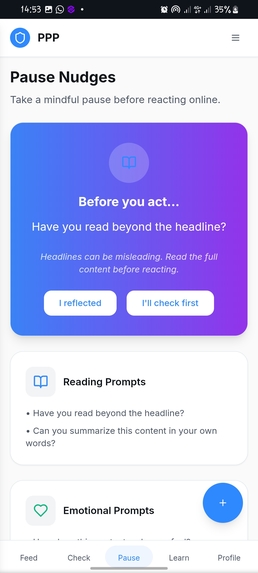
Pause introduces “friction by design” strategic prompts that slow down impulsive sharing and encourage users to think before reposting.
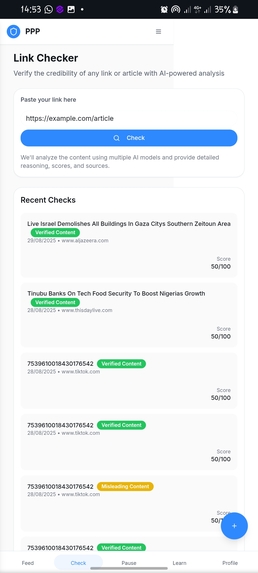
Prove uses our AI engine to detect deepfakes, identify sources, and highlight emotionally manipulative or misleading elements in real time.
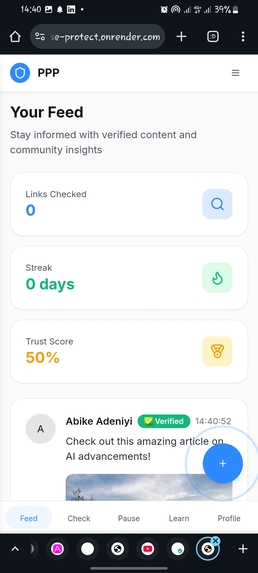
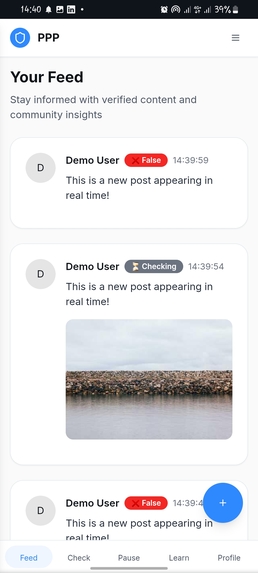
Protect fosters community accountability, showing transparent stats like “123 people verified this—45% found it misleading,” to create positive peer influence.
PPP transforms everyday content interaction into a chance to think critically, learn, and protect our digital spaces.
How we built it
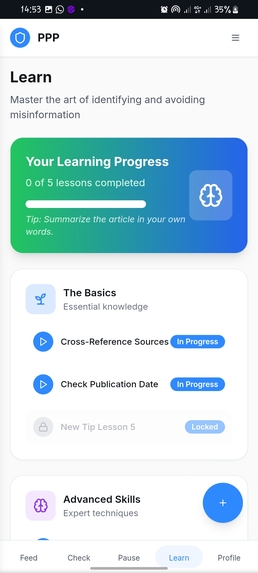
We built PPP as a working prototype to prove that behavioural design and AI could merge seamlessly into one solution. Our AI verification engine performs real-time deepfake detection, tracks cross-platform reposts, and analyses emotional or misleading cues in content. We integrated Media and Information Literacy (MIL) directly into the experience through gamified learning, badges, multilingual prompts, and accessibility-friendly layouts. Our live demo prototype at ppp-prove-pause-protect.onrender.com lets users experience how natural and engaging fact-checking can feel when it’s built into the moment of sharing.
Challenges we ran into
Building PPP came with its fair share of challenges. One of the biggest was finding the right balance between friction and user experience making verification feel natural, not annoying. We also struggled building the prototype due to having just one technical person on our team.
Another major setback came from a shortcoming of one of our former teammates, which unfortunately caused us to miss the submission deadline for the UNESCO MIL Youth hackathon. It was disappointing at the time, but it taught us a lot about team communication, accountability, and resilience. We came out stronger, more organised, and even more determined to keep building PPP into something impactful.
Accomplishments that we're proud of
We’re incredibly proud of what we’ve built.
We created a fully functional prototype that shows how AI and behavioural design can prevent misinformation before it spreads.
We shifted the narrative from reactive detection to proactive prevention, pioneering a “friction by design” approach in this space.
We proved that youth-led innovation matters because no one understands Gen Z digital behaviour like we do.
We developed a scalable model with potential for global partnerships, from the UNESCO MIL Alliance to the UNICEF Innovation Fund, to make media literacy universal.
What we learned
Throughout this journey, we learned that fighting misinformation isn’t just about technology it’s about understanding human behaviour. We realised that the most powerful tool we have is not just an algorithm, but empathy and awareness of how people interact online. We also learned that meaningful change happens when young people lead the charge when we design for our peers, the impact lasts longer. Most importantly, PPP taught us that protecting truth in the digital age is not a one-time solution it’s a mindset that grows stronger with every “pause” we create.
What's next for PPP
We look forward to taking PPP to the next stage by entering our project into many hackathons and receiving feedback to refine it to make it the next thing that would break the Internet.
Built With
- ai
- css
- groq
- html
- ml
- more!
- typescript
- vite


Log in or sign up for Devpost to join the conversation.