Inspiration
TiE University Unicon Hackathon, has a set of challenges for the digital transformation and for a sustainable future. These challenges align with us, as we believe digital transformation and sustainable future are two most important topics that innovation will catapult the change. Hence with this hackathon opportunity, we would like to contribute to solve these pressing issues.
What it does
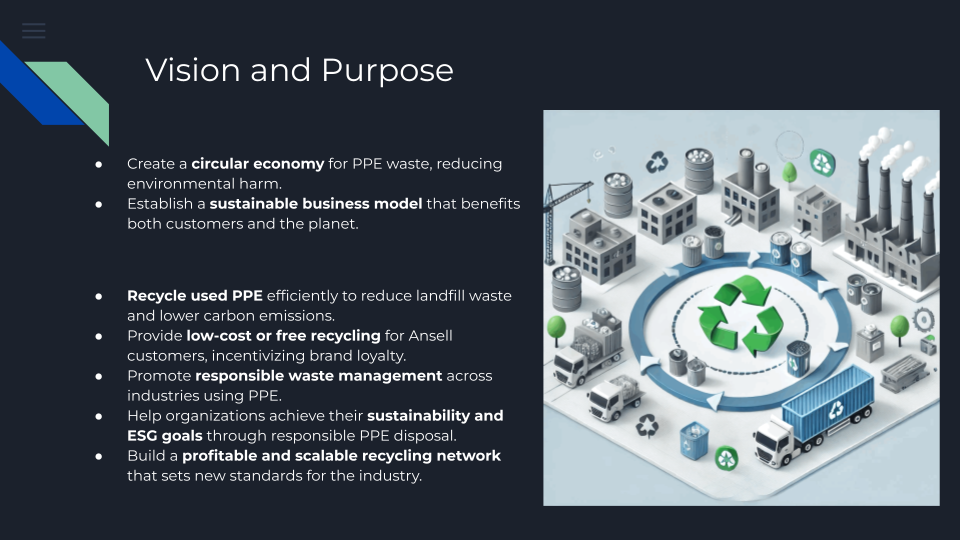
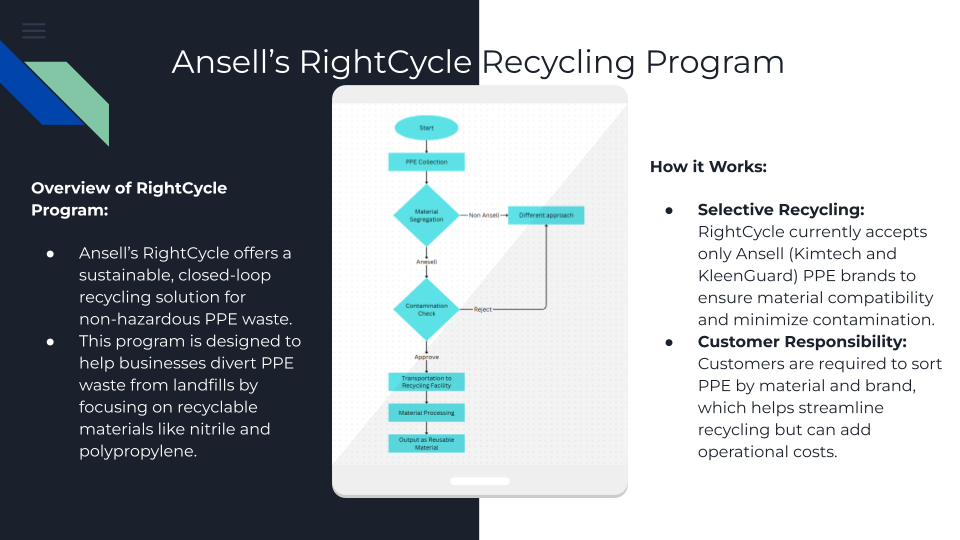
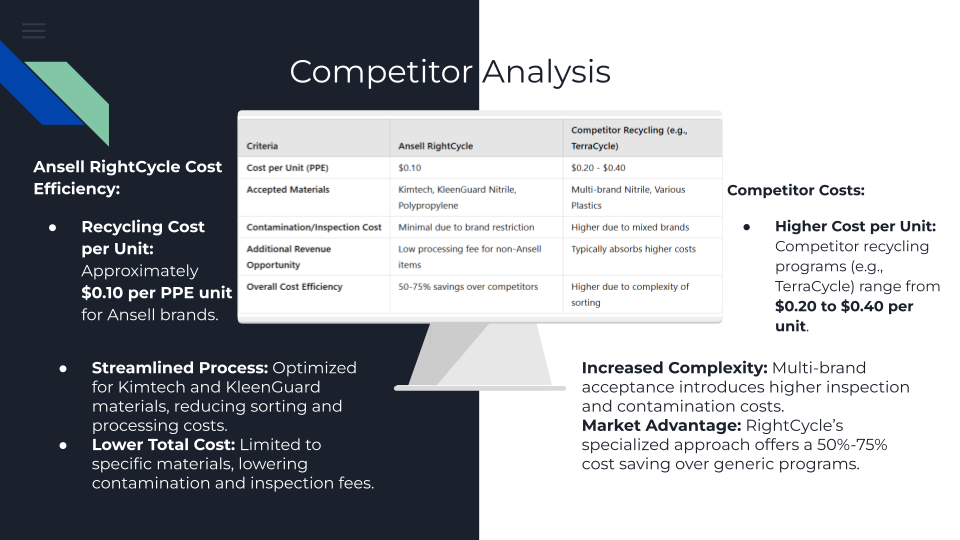
- This business plan offers a subscription-based PPE recycling service that encourages sustainable disposal of used PPE from Ansell and other brands.
- It provides low-cost or free recycling for Ansell products and paid tiers for other brands, incentivising customers to sort PPE with branded bins, mobile app scanning, and RFID tagging.
- Ansell gains exclusive recycling rights, enhances its sustainability credentials, and secures government subsidies, leading to increased product sales and potential cost reductions.
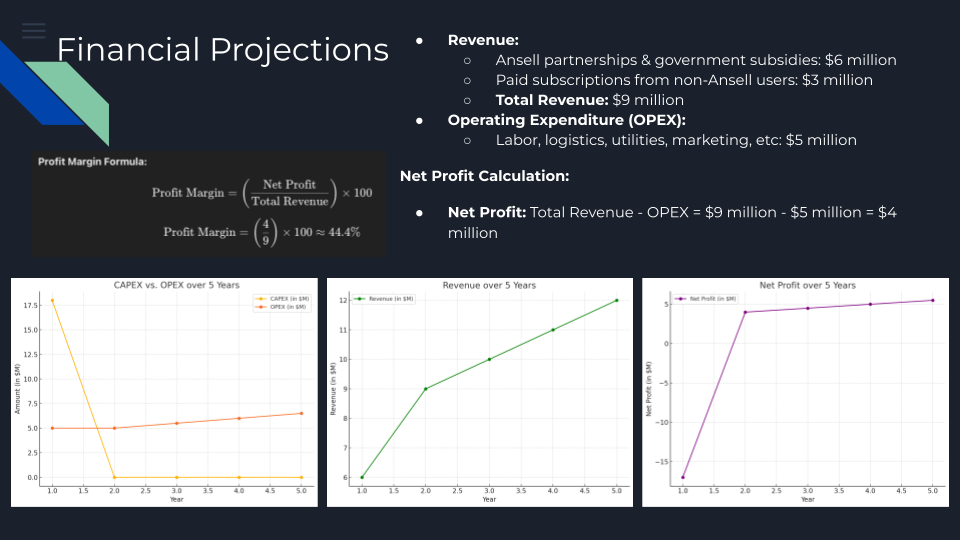
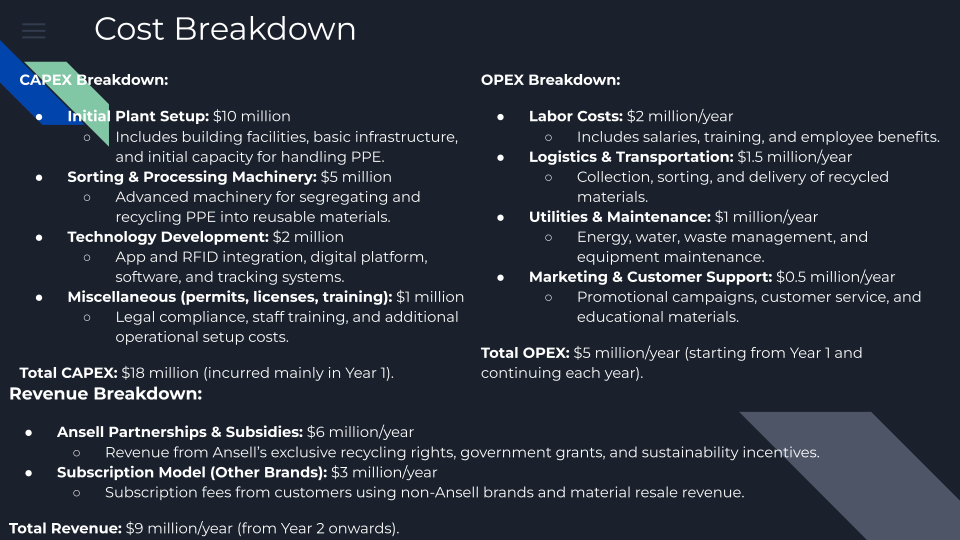
- With a projected 44% profit margin by Year 2, the model not only drives profitability but also promotes a circular economy, reinforcing Ansell's commitment to environmental stewardship.
How we built it
- We built the business model by centring it around a subscription-based recycling service that differentiates between Ansell PPE and other brands.
- The core idea was to provide low-cost or free recycling for Ansell products, funded through subsidies, extended partnerships, and potential cost savings from reusing recycled materials. For other brands, we designed a tiered, paid subscription model, generating additional revenue to offset processing costs.
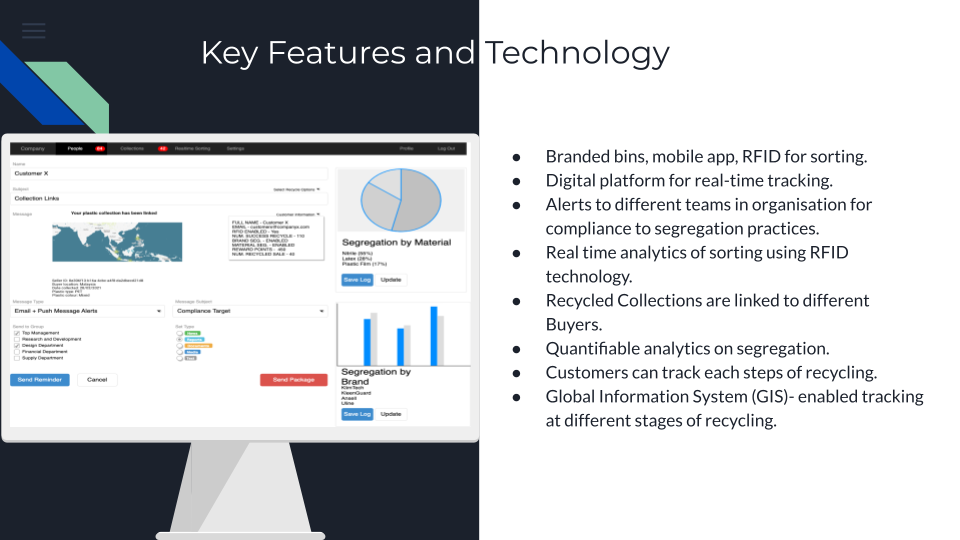
- To ensure proper segregation of PPE, we integrated brand-specific bins, mobile app scanning, and RFID tagging making it easy for customers to sort products.
- We then focused on securing strategic partnerships with logistics providers and government agencies to reduce operational expenses and gain subsidies, further enhancing the model’s cost-effectiveness.
- Financially, we calculated the CAPEX for recycling infrastructure and OPEX for logistics, labor, and technology, projecting profitability from Year 2 onward with a 44% margin.
- The model not only ensures sustainability but also leverages Ansell’s brand for competitive advantage, making it scalable and economically viable.
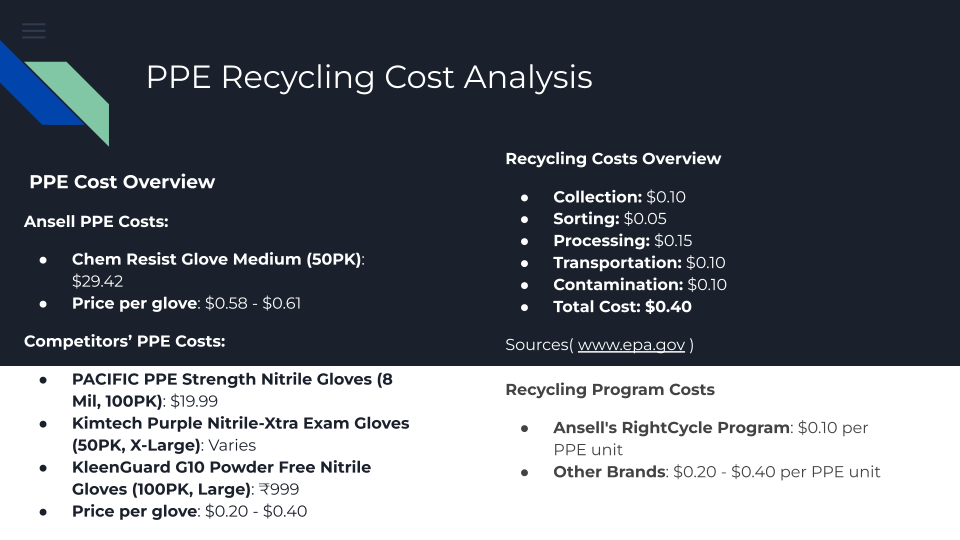
- We performed the cost per unit analysis associated with recycling using USEPA public data.
- Financial Projections are calculated using the approximate estimates of capital and operating expenses, using real data will surely improve the projections.
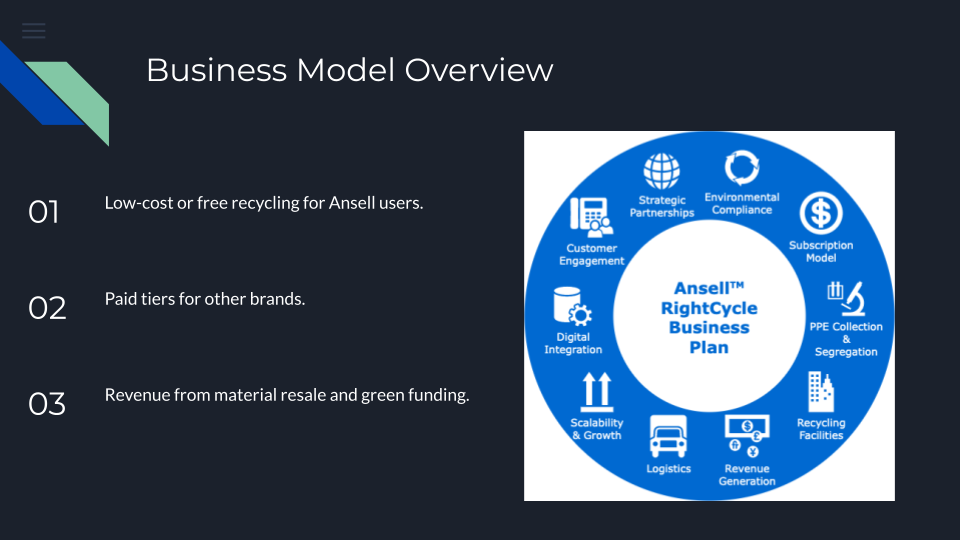
Business Model
Subscription-Based Revenue:
- Generates income through tiered plans, ranging from free/low-cost for Ansell users (including Kimtech and KleenGuard PPEs) to $100-$1,000/month for non-Ansell customers, based on volume and service levels.
Revenue from Recycled Material Sales:
- Processed PPE materials are sold to collection buyers and manufacturers as raw materials, such as pellets for industrial use, creating a consistent revenue stream and contributing to a circular economy.
Government Grants & Green Funding:
- Secures government subsidies and green funding, especially for handling Ansell’s PPEs, covering part of the operational costs and incentivizing sustainable waste management.
Strategic Partnerships:
- Revenue through alliances with logistics firms, tech providers, and compliance consultancies, which offer shared services, cost savings, and potential joint ventures in material reuse.
Add-On Services & Consulting:
- Additional income from customized services like extra pickups, hazardous waste disposal, and compliance consulting, priced at $50-$200/month. This enhances customer engagement and diversifies the revenue base.
This multi-channel revenue model ensures financial sustainability, scalability, and alignment with circular economy goals.
Subscription Model
Our subscription model is a multi-tiered plan for recycling PPEs :
Ansell Customers – Free/Low-Cost Plan:
- Designed for Ansell PPE users, including Kimtech and KleenGuard products, with free or $10-$20/month plans covering basic collection. Costs are mostly offset by Ansell and grants to encourage adoption and ensure sustainability.
Tier 1 (Basic Plan for Non-Ansell Users):
- For customers using up to 1,000 non-Ansell PPEs monthly, at $100/month, covering logistics and basic sorting. Add-ons like extra collection or disposal of other waste types are available for an additional fee.
Tier 2 (Intermediate Plan for Medium Users):
- For 1,000-5,000 non-Ansell PPEs monthly, at $250/month. Offers RFID-tagged bins, frequent collection, real-time tracking, and monthly impact reports.
Tier 3 (Premium Plan for Large Users):
- For 5,000+ non-Ansell PPEs, at $500-$1,000/month. Includes weekly collection, detailed ESG reports, advanced tracking, and priority service.
Add-On Services:
- Optional services like extra pickups or hazardous waste disposal, priced at $50-$200/month, allow clients to customise recycling based on their needs.
Challenges we ran into
Formulating this business plan for PPE recycling we encountered several challenges, including:
- complex market research,
- accurate financial projections, and
- identifying diverse revenue streams.
- Navigating regulatory compliance and designing a scalable, tech-integrated infrastructure are key hurdles, while logistics planning and customer engagement strategies require extensive analysis.
- Developing a model that aligns with Ansell’s strategic goals and forecasting sustainability impacts adds further complexity.
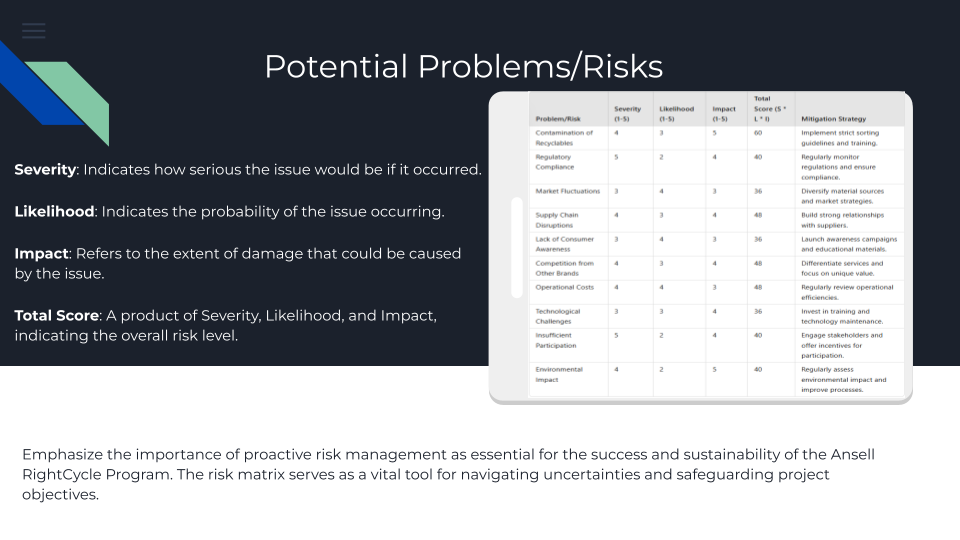
- Additionally, pinpointing key stakeholders and crafting a risk management strategy are essential but time-consuming tasks.
Successfully overcoming these challenges demands comprehensive research, strategic foresight, and flexibility in adapting the plan.
Accomplishments that we're proud of
Hackathon enabled us to interact with hackers and innovator around the globe and it help us reach out people with expertise and innovators with fresh ideas. Through the whatsapp group of this hackathon, the two team members got in contact and then we decided to hack the challenges for sustainability as we both had a deep passion for sustainability and innovation.
What we learned
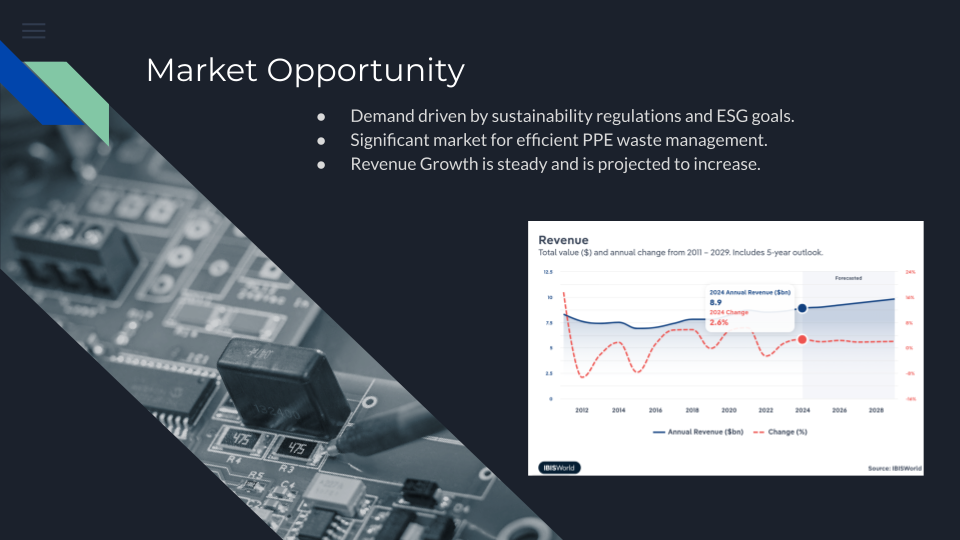
While developing the PPE recycling business plan, we learned that understanding market dynamics and segmenting customers effectively are crucial for success. Financial projections revealed uncertainties around costs, emphasizing the need for a balanced approach. Integrating technology, such as apps and RFID tagging, proved essential for efficient operations, while navigating complex regulatory requirements emerged as a major challenge, especially for scaling. Efficient logistics and strategic partnerships were identified as key drivers of profitability, along with measuring environmental impact to attract subsidies and funding. Overall, flexibility, clear segmentation, and adaptability to different markets are vital for creating a sustainable and scalable business model.
What's next for PPE Recycling Business Plan
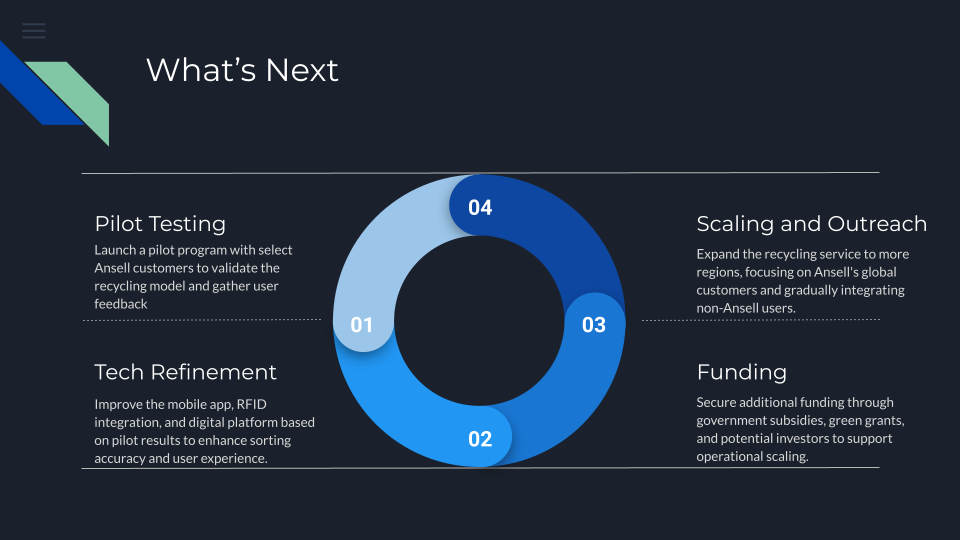
The next steps for the PPE Recycling Business Plan involves pilot testing the subscription model with a select group of Ansell customers to validate the cost structure, logistics, and customer engagement strategies. Additionally, focusing on finalising strategic partnerships with logistics providers, tech developers, and regulatory bodies to ensure seamless operations. Simultaneously, refinement of the mobile app and RFID integration to enhance customer experience and efficiency in PPE segregation. As the pilot progresses, Ansell can seek additional funding, including government subsidies and green grants, to support scaling efforts. Finally, we’ll develop a comprehensive marketing and awareness campaign to drive customer adoption and establish Ansell as a leader in sustainable PPE recycling.
For Judges: For detailed information about unit economics and others, please check the submission document and other subsequent details. Thank you.
Built With
- google-slides
- imovie


Log in or sign up for Devpost to join the conversation.