-
-
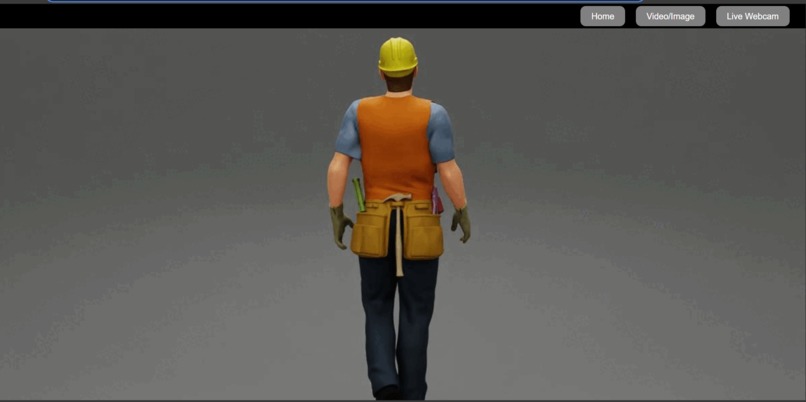
UI Sample
-
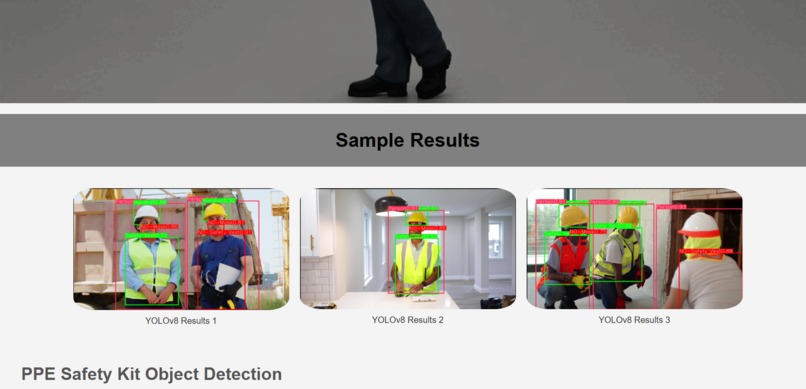
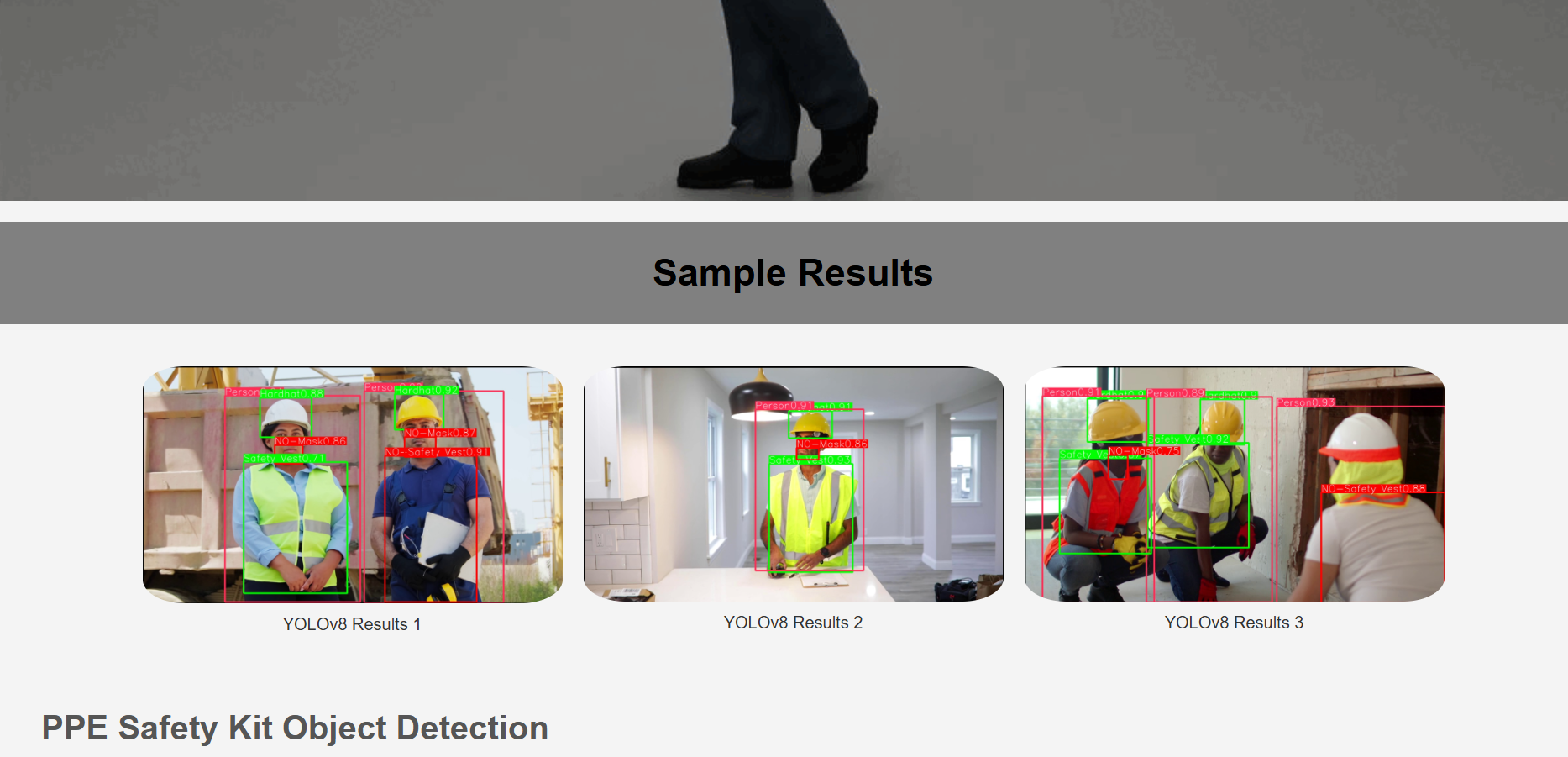
Result Sample
-
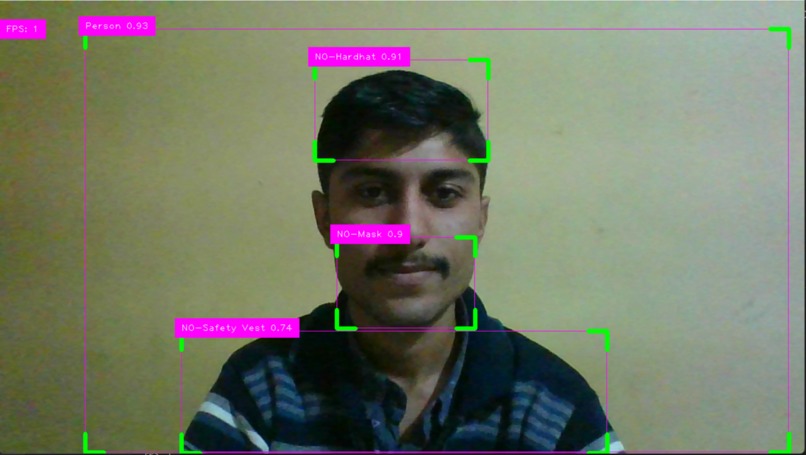
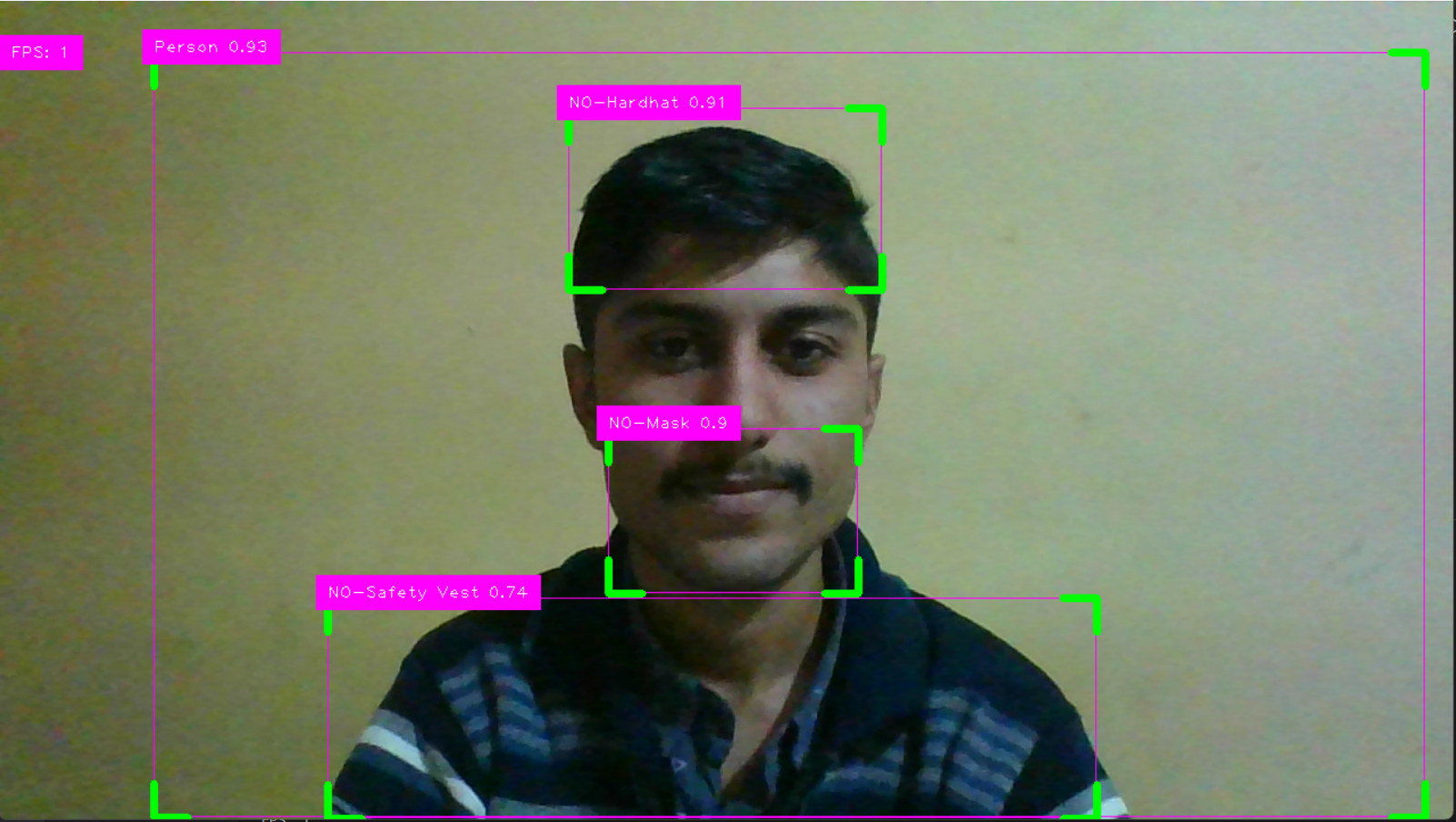
Live Webcam Result
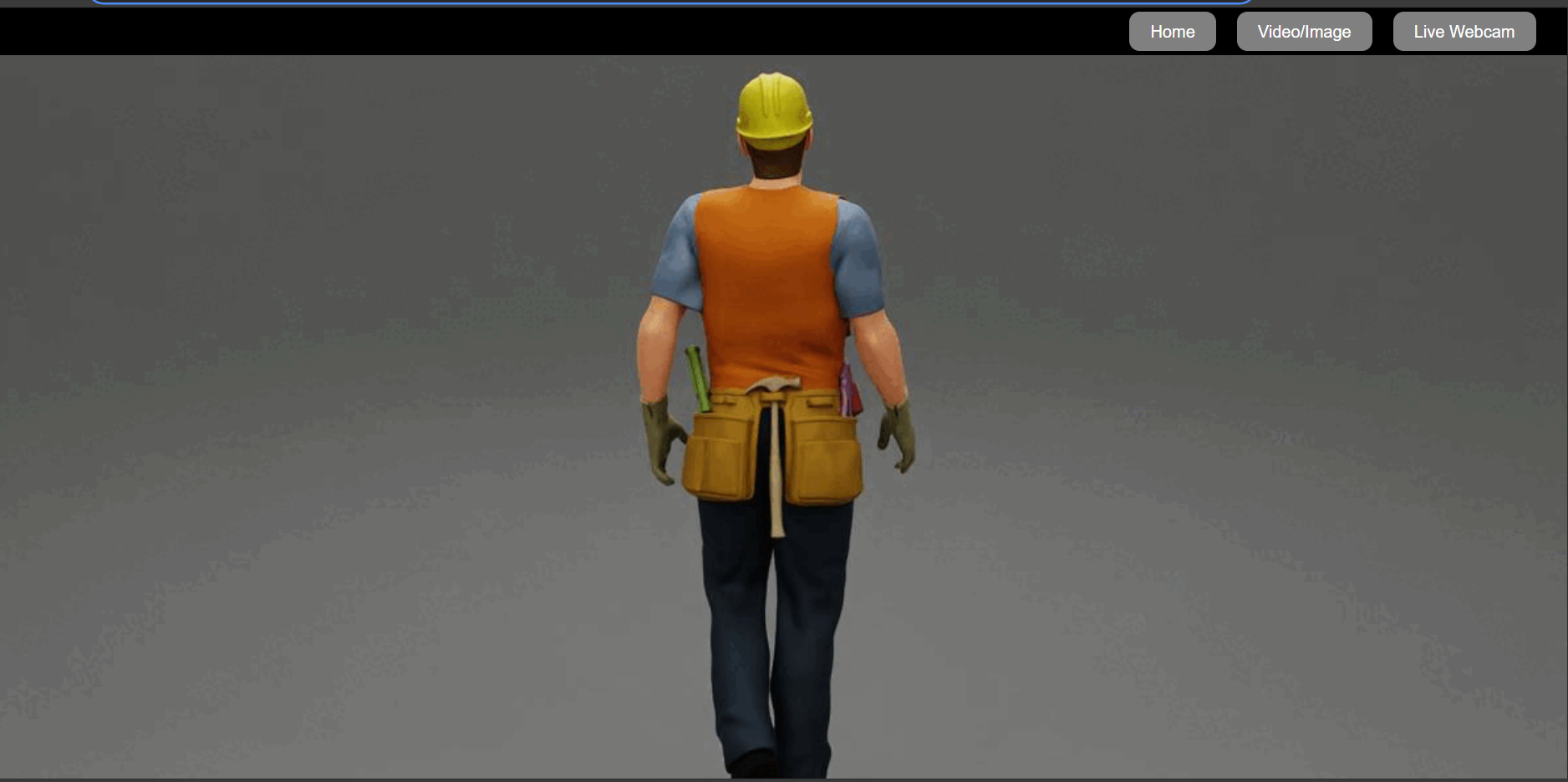
Inspiration
The inspiration for the PPE Kit Detection AI Project comes from the need to enhance safety in industrial and manufacturing environments. Workplace accidents often occur due to non-compliance with safety protocols, particularly in relation to Personal Protective Equipment (PPE). By using deep learning, computer vision, and face recognition technologies, we aimed to create a system that automatically ensures workers are properly equipped with the necessary PPE and are not in restricted areas.
What it does
The PPE Kit Detection AI system is designed to:
- Detect human presence in restricted zones (No-Human Zones) in real-time.
- Identify whether workers are wearing required PPE kits, such as helmets, radium jackets, boots, and goggles.
- Use face recognition technology to verify worker identities and ensure compliance with safety regulations.
- Generate real-time alerts and reports to monitor safety and compliance, reducing the risk of accidents and unauthorized access to restricted areas.
How we built it
We built the system using several core technologies:
- Deep Learning & Computer Vision: We used pre-trained models like YOLO (You Only Look Once) for object detection to identify PPE items and detect human presence.
- Face Recognition: Integrated facial recognition using models like OpenCV and FaceNet to authenticate worker identities.
- Real-time Monitoring: Developed a dashboard for real-time monitoring and automated alerts using a Python-based back-end and Flask for web integration.
- Data Collection & Training: We gathered a large dataset of worker images and PPE gear to train our model for optimal performance in various lighting conditions and poses.
Challenges we ran into
- Data Quality & Variability: Collecting diverse, high-quality images of workers in various environments with different lighting and poses was challenging. It required extensive data augmentation and fine-tuning of models.
- Real-time Processing: Achieving real-time performance while maintaining high accuracy in detecting PPE and workers in restricted zones posed some technical difficulties, requiring significant optimization of the model's speed.
- Integration of Components: Combining multiple complex components such as face recognition, PPE detection, and real-time alerting into a single seamless system presented integration challenges.
Accomplishments that we're proud of
- Accurate PPE Detection: The system successfully detects and identifies PPE, ensuring workers are wearing helmets, boots, jackets, and goggles with a high degree of accuracy.
- Real-time Alert System: We created a working real-time alert system that notifies safety officers when workers enter No-Human Zones or fail to wear required safety gear.
- Face Recognition Integration: The seamless integration of face recognition to verify worker identities was a significant achievement, ensuring security and compliance.
What we learned
- Model Optimization: We learned how to optimize deep learning models for both accuracy and speed, ensuring real-time detection even in a complex manufacturing environment.
- Data Diversity: The importance of training models on a wide variety of data to account for real-world variability was a crucial lesson in ensuring system robustness.
- System Integration: Integrating multiple technologies (e.g., computer vision, real-time monitoring, and face recognition) into one functional system taught us valuable lessons in modular system design and communication between components.
What's next for PPE-Kit-Detection-AI-Project
- Expanded PPE Detection: We plan to extend the system to detect additional PPE items, such as gloves, masks, and hearing protection.
- Scalability: Enhance the system to scale across large manufacturing facilities with more cameras and worker zones.
- Integration with Safety Management Systems: We aim to integrate the system with existing enterprise safety management platforms to provide detailed safety reports and analytics.
- Cloud-based Deployment: Implement cloud-based processing to offload heavy computation and make the system more accessible remotely for safety officers.


Log in or sign up for Devpost to join the conversation.