-
-

PowerWalk
-
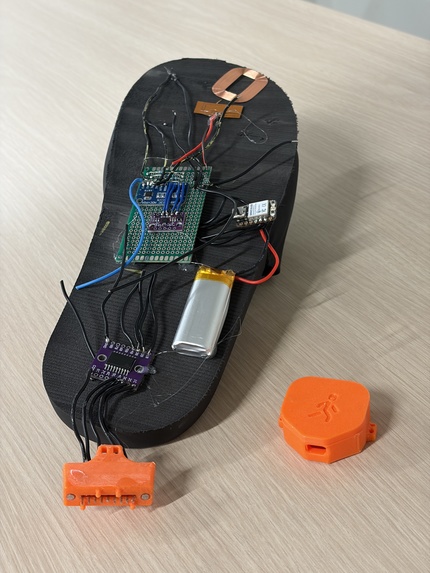
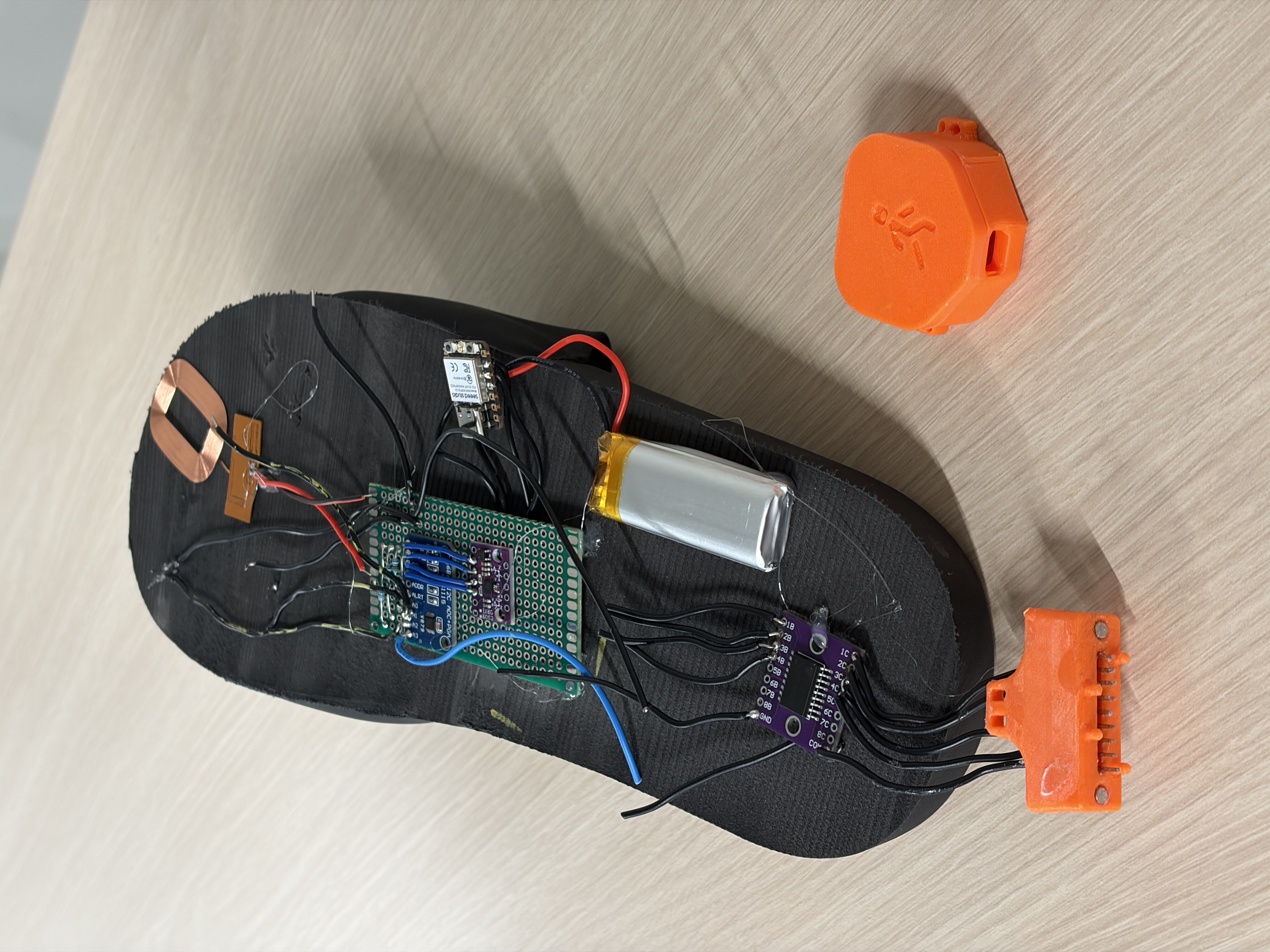
Electronics of the shoe
-
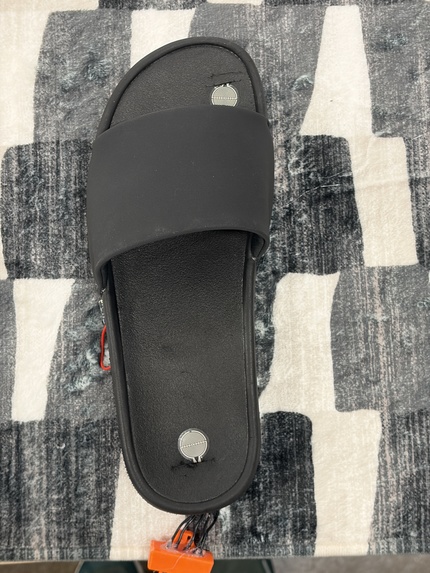
The shoe
-
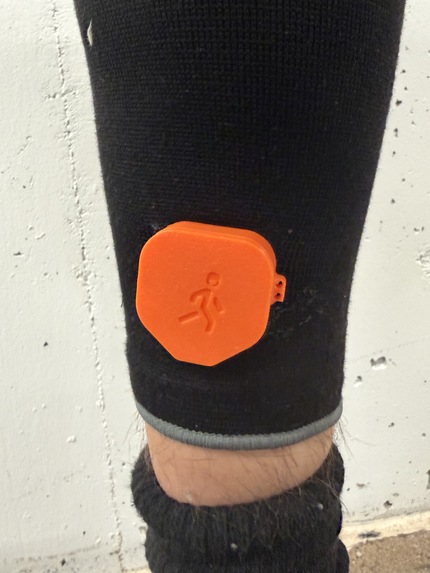
Calf module

Inspiration
PowerWalk was motivated by a clinically significant gap in preventative care for individuals with diabetes mellitus and peripheral neuropathy. These conditions degrade plantar mechanoreceptor sensitivity, impairing the body’s ability to detect pressure distribution and microtrauma during gait. As a result, patients are at high risk of developing pressure ulcers, which can progress to infection or amputation if left undetected.
Three of our four team members have immediate family members affected by these conditions, which exposed us to the lack of continuous, accessible plantar pressure monitoring systems outside of clinical environments. Existing solutions are either prohibitively expensive, non-portable, or fail to provide real-time actionable feedback. PowerWalk aims to bridge this gap with a low-cost, wearable, closed-loop feedback system that integrates sensing, processing, and haptic response.
What it does
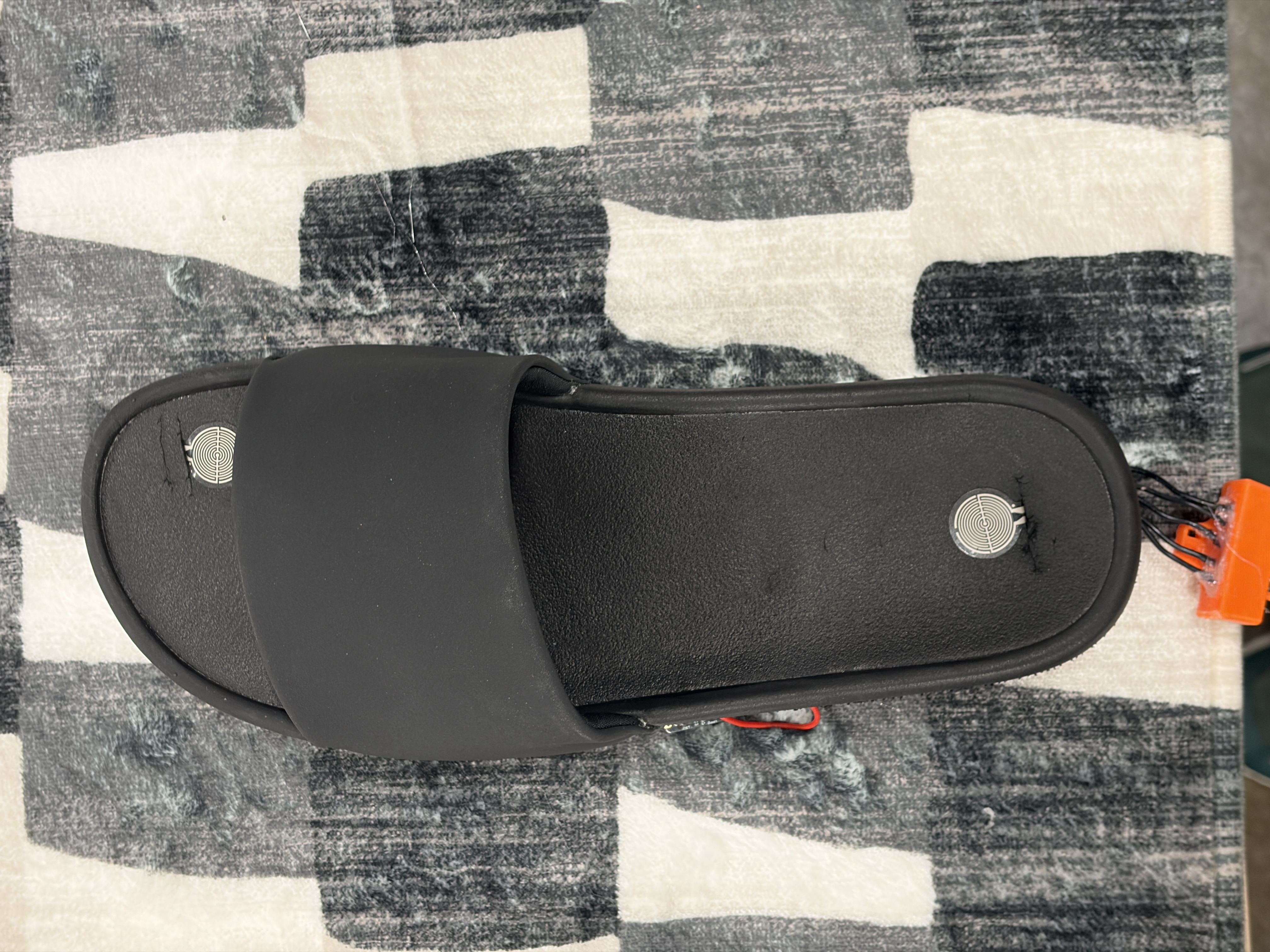
PowerWalk is a live plantar pressure sensing and biofeedback system. An array of force-sensitive resistors (FSRs) embedded at key anatomical pressure points (heel, metatarsal heads, hallux) captures dynamic load distribution during gait. These signals are used to compute the user’s center of pressure (CoP) and detect abnormal pressure concentrations.
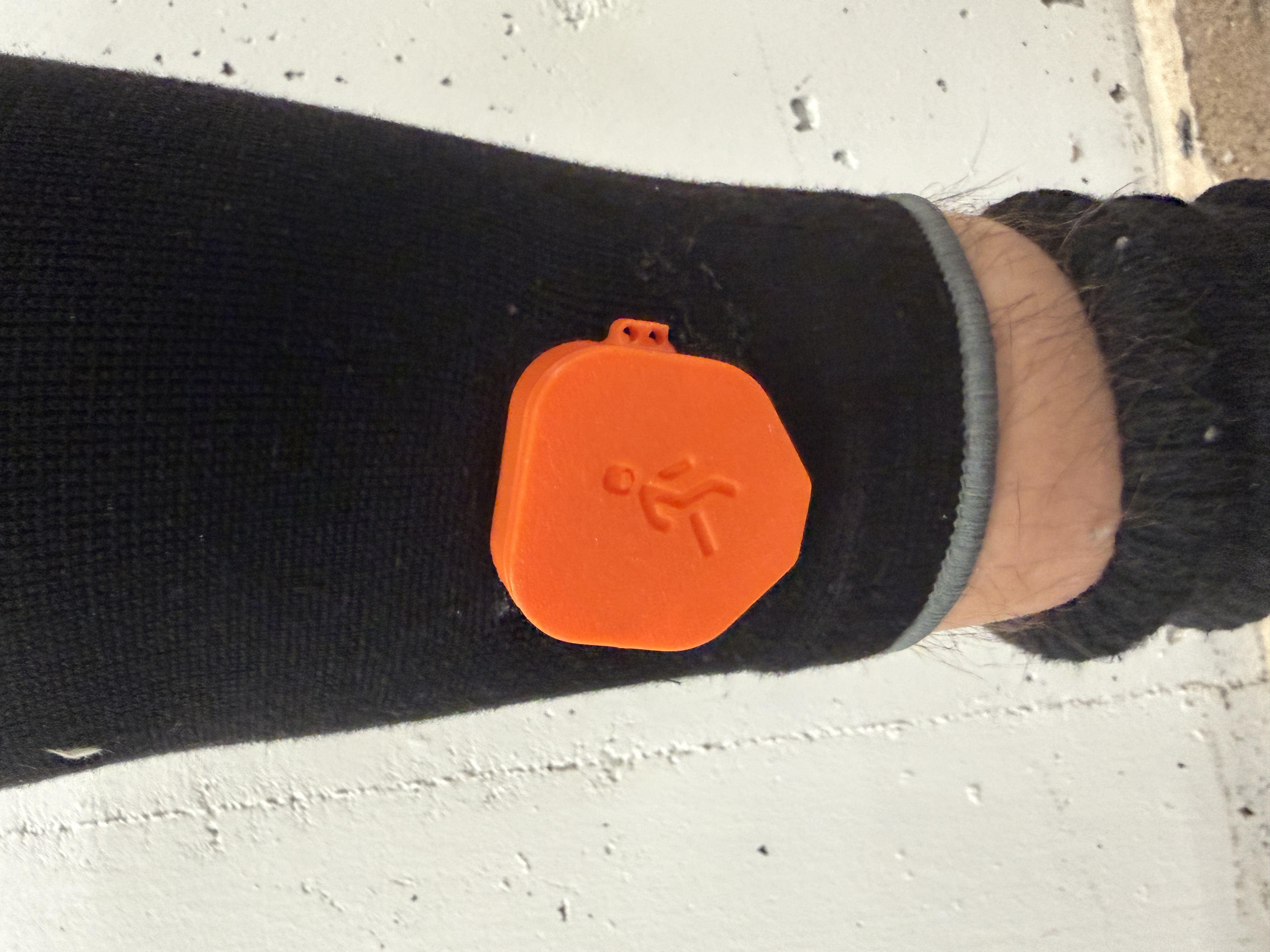
A network of haptic actuators (ERM vibration motors) mounted on a calf compression sleeve delivers spatially mapped feedback corresponding to plantar pressure deviations. This leverages principles of sensory substitution and neuroplasticity, where the central nervous system adapts to interpret alternative sensory inputs as proxies for lost plantar sensation.
The system operates in real time, which enables users to adjust posture, redistribute weight, and correct gait patterns to reduce injury risk.
How we built it
The hardware architecture integrates embedded sensing, wireless communication, and wearable actuation:
Sensing Layer: Multiple FSRs arranged in a pressure-mapping configuration within a custom insole Inertial Measurement Unit (IMU) (accelerometer + gyroscope) for gait phase detection and motion context Processing & Communication: ESP32 microcontroller handles analog signal acquisition via ADC, sensor fusion, and low-latency processing Real-time data transmission over Bluetooth Low Energy (BLE) to a web/mobile interface
Actuation Layer: Calf-mounted compression sleeve with embedded vibration motors Pulse-width modulation (PWM) used to modulate vibration intensity proportional to pressure magnitude
Software Stack: ESP-IDF/Arduino framework for sensor polling and BLE communication Backend signal processing and calibration logic in Python Frontend visualization built with JavaScript (likely React or similar) rendering a live pressure heatmap
Power System: Integrated rechargeable battery with a wireless inductive charging mat, eliminating exposed connectors and allowing easy charging
Accomplishments that we're proud of
It's feature complete.
Built With
- css
- esp32
- javascript
- python


Log in or sign up for Devpost to join the conversation.