-
-
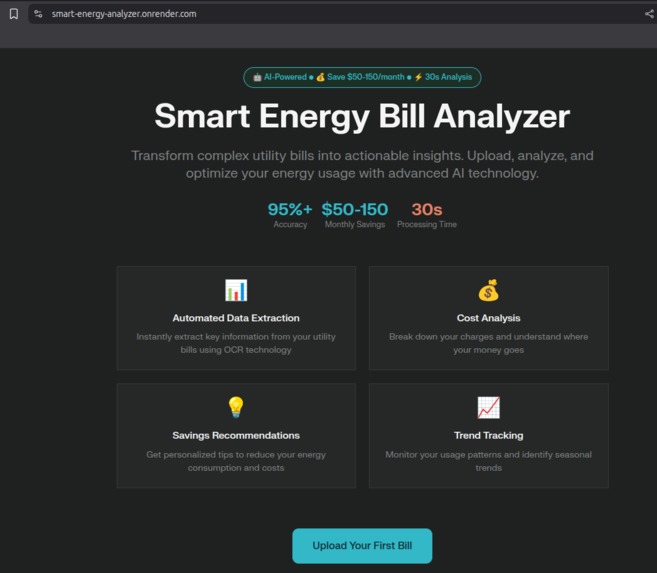
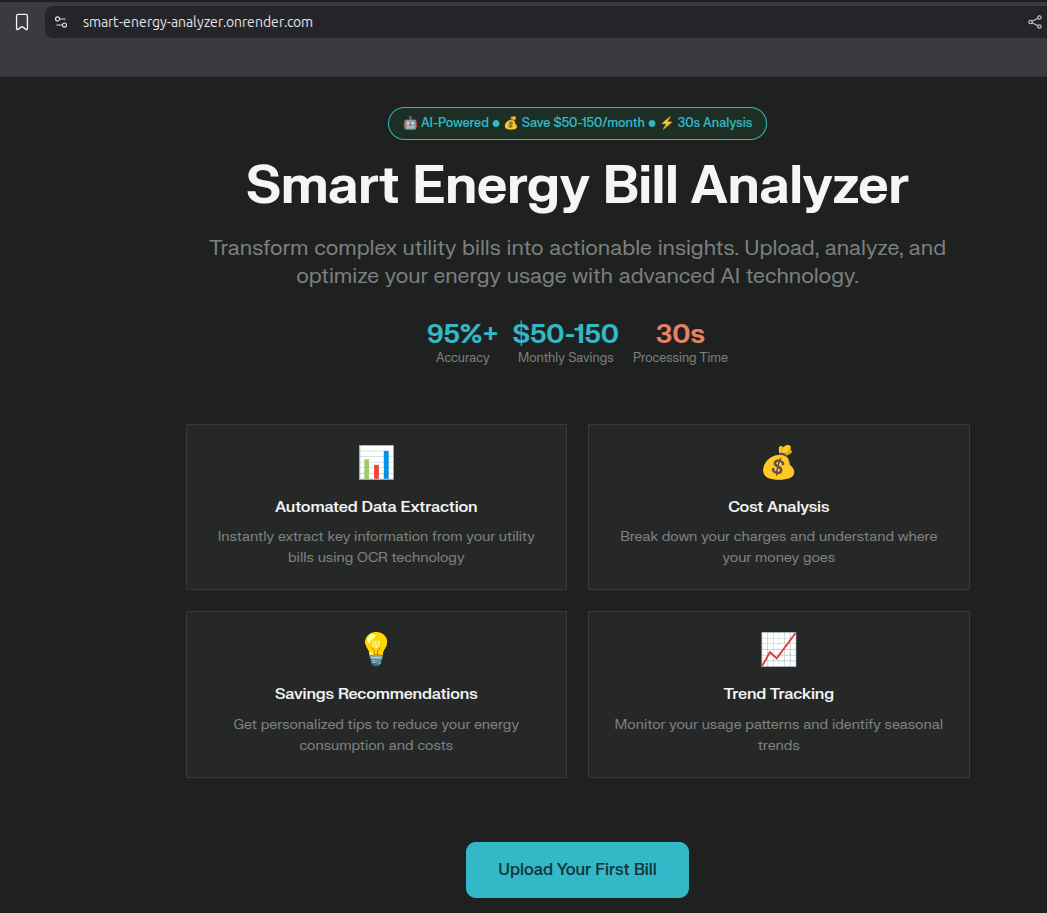
Main Landing page
-
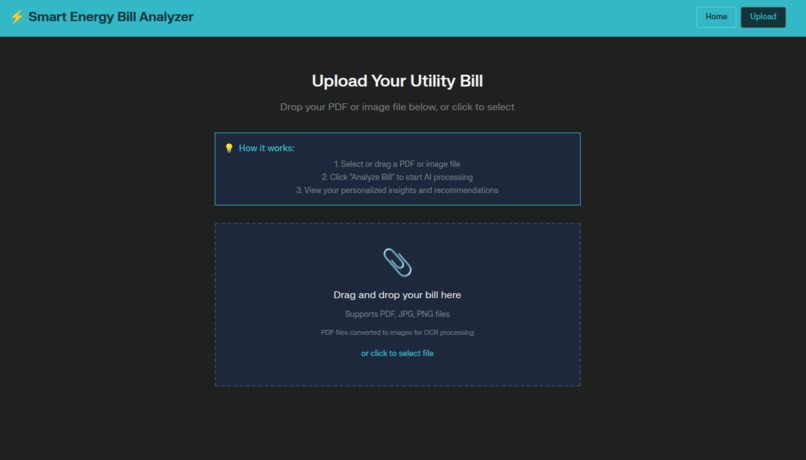
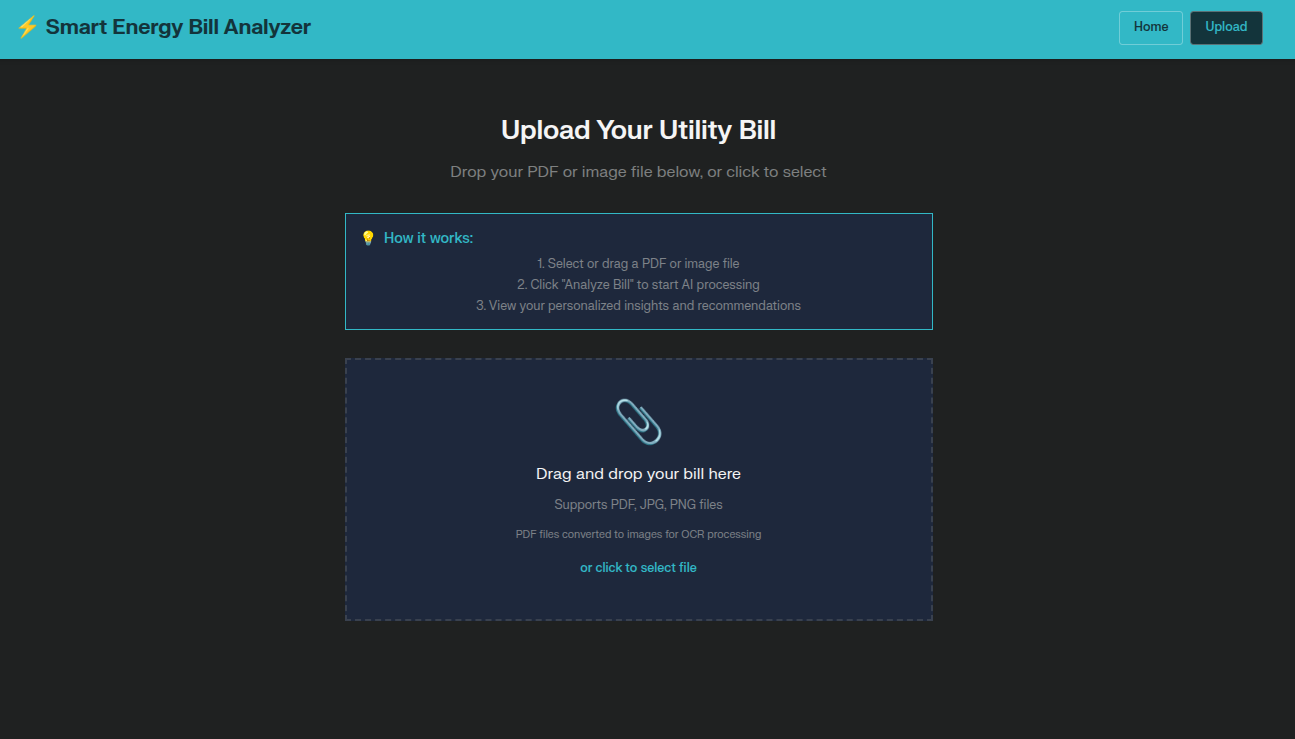
PDF/Image upload for file analysis
-
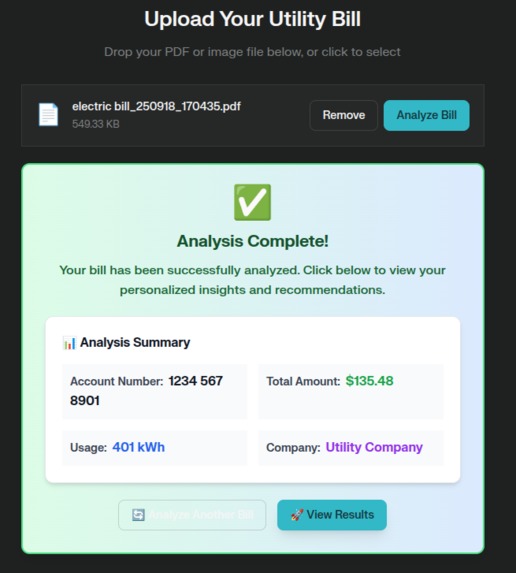
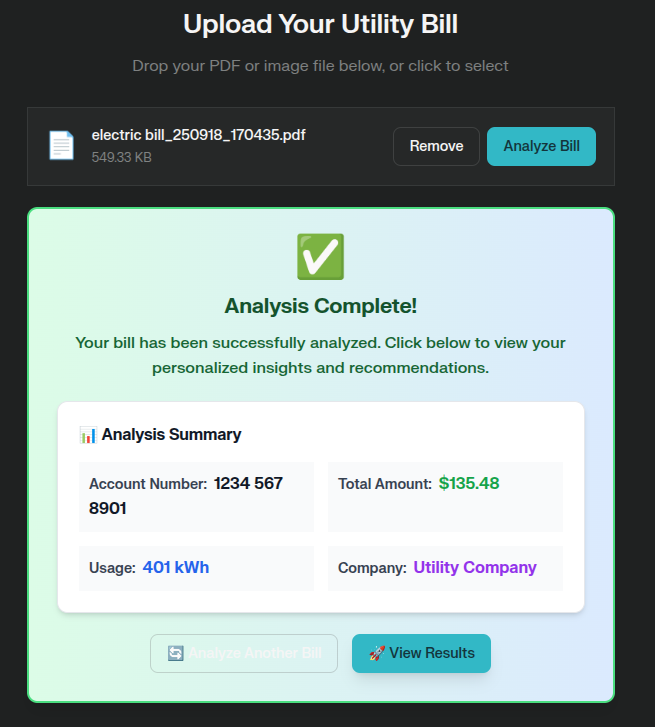
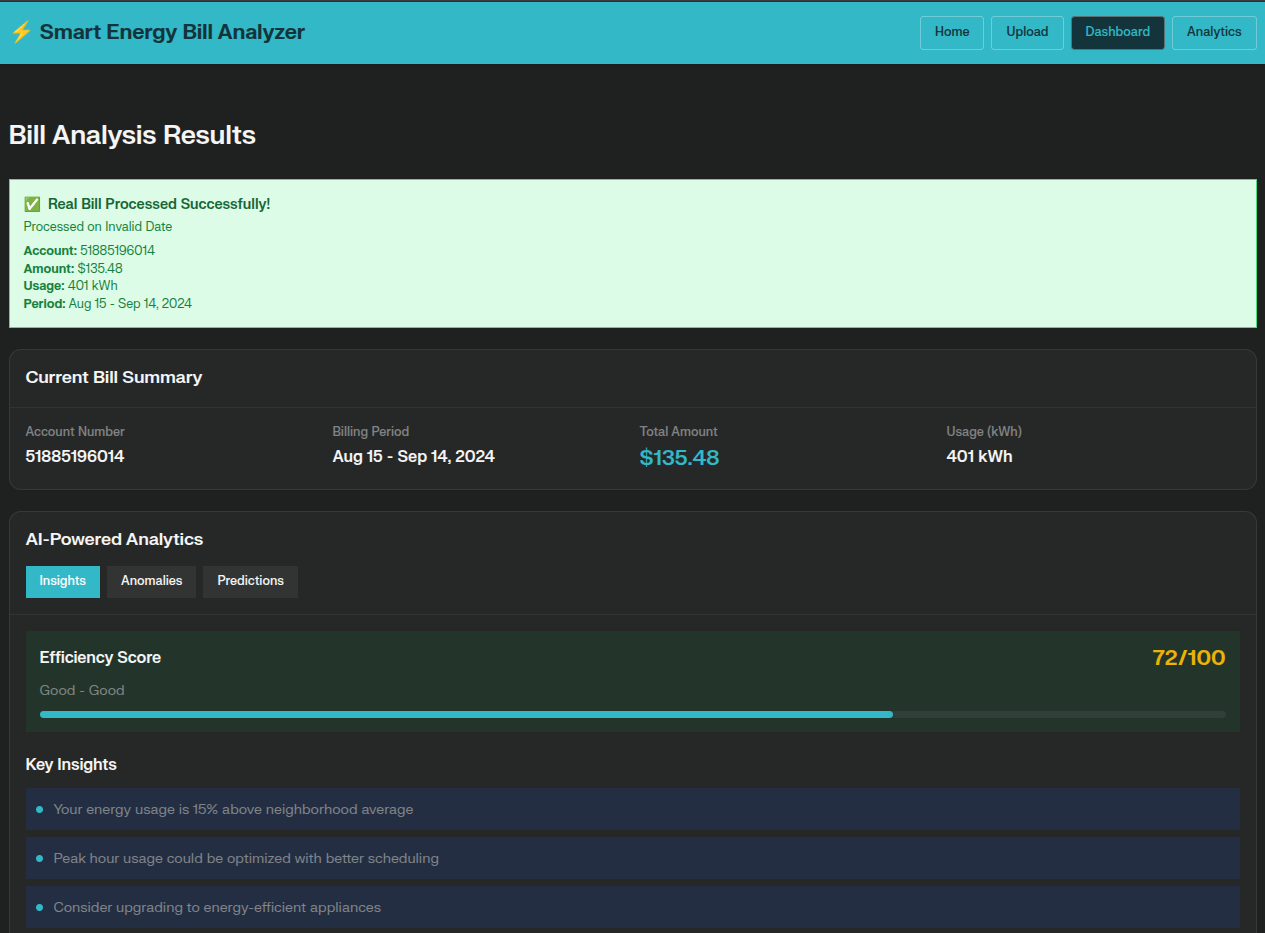
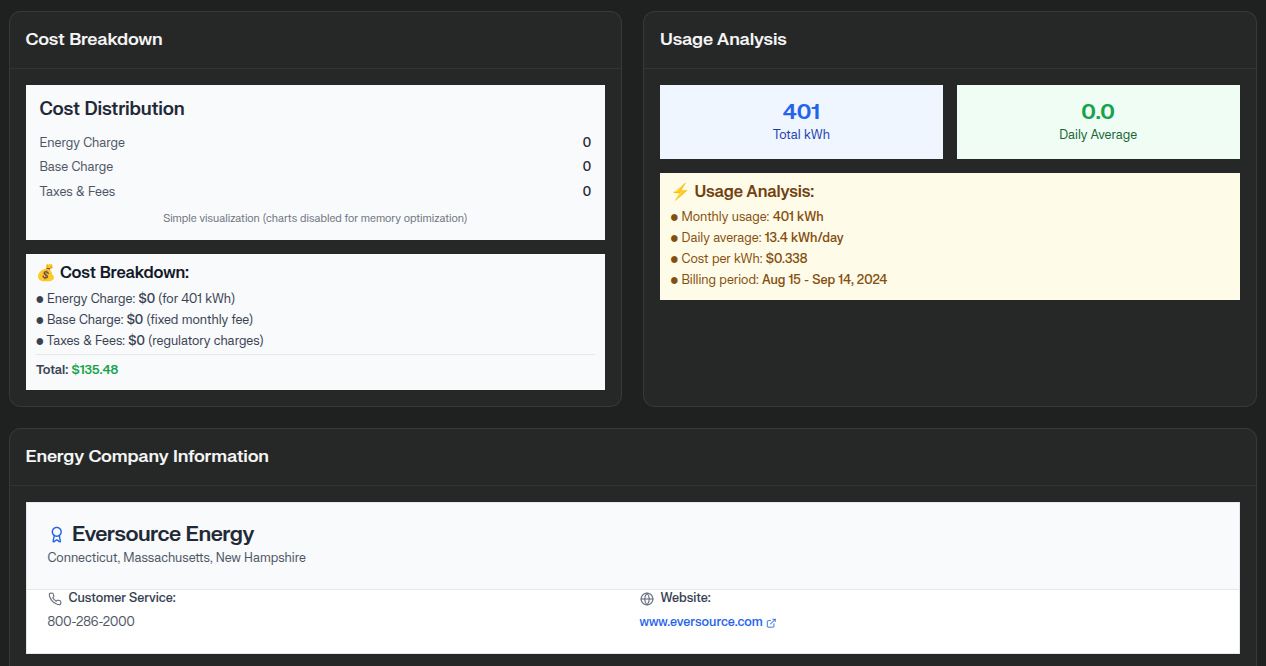
Bill analysis
-
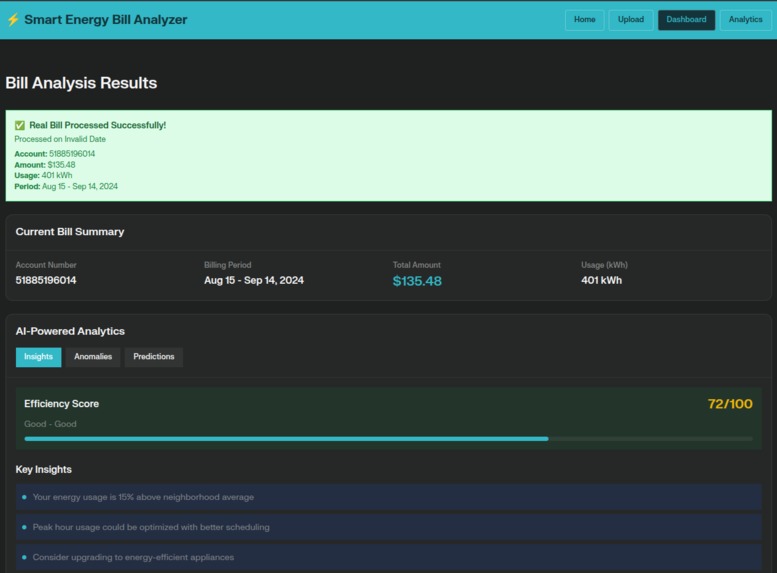
Insights
-
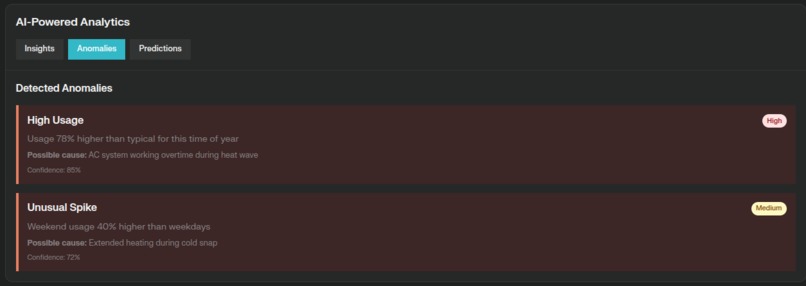
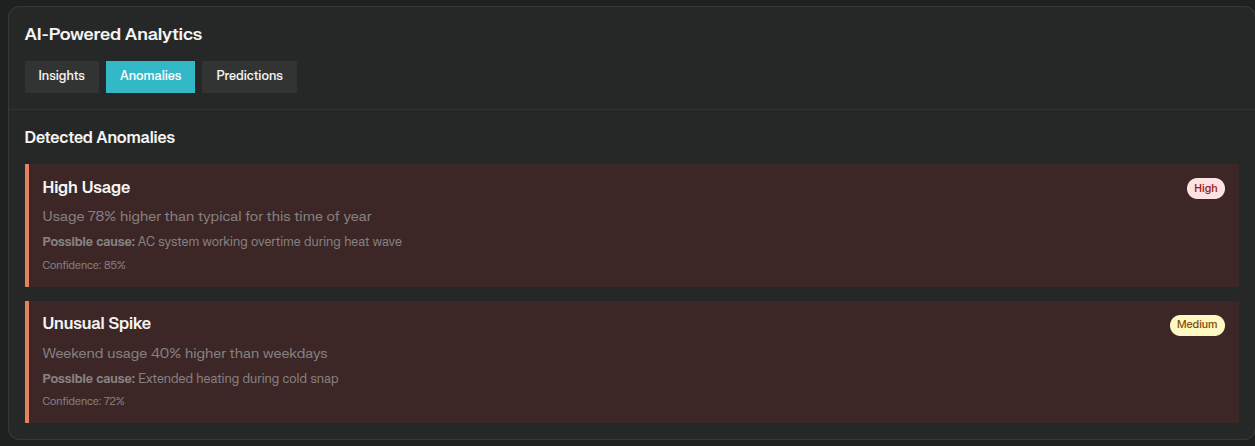
Anomalies
-
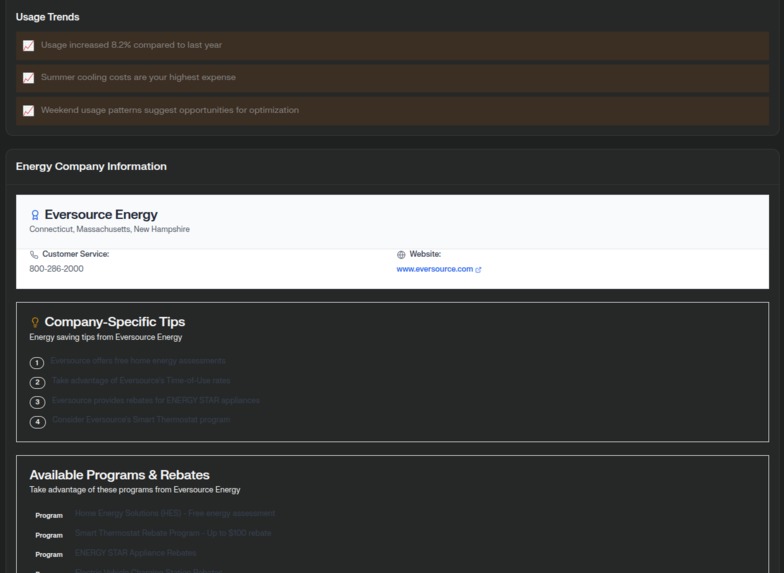
Predictions
-
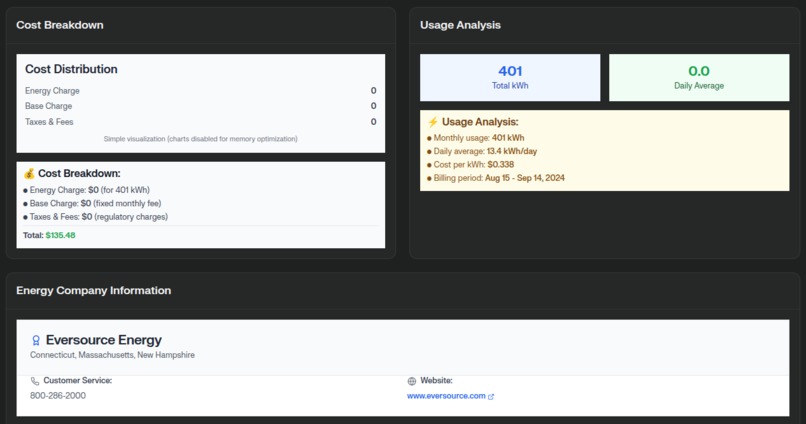
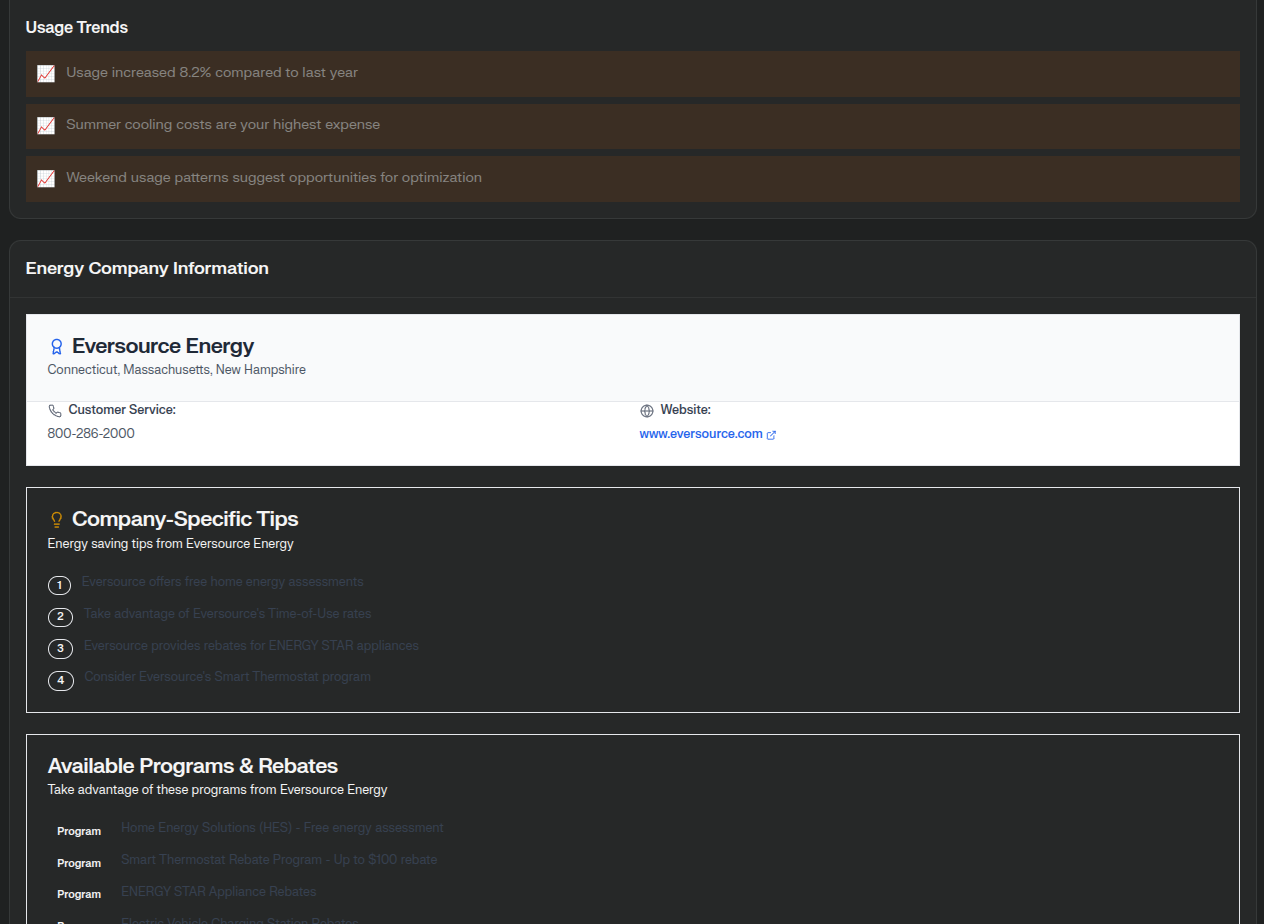
Local governance resources for help
-
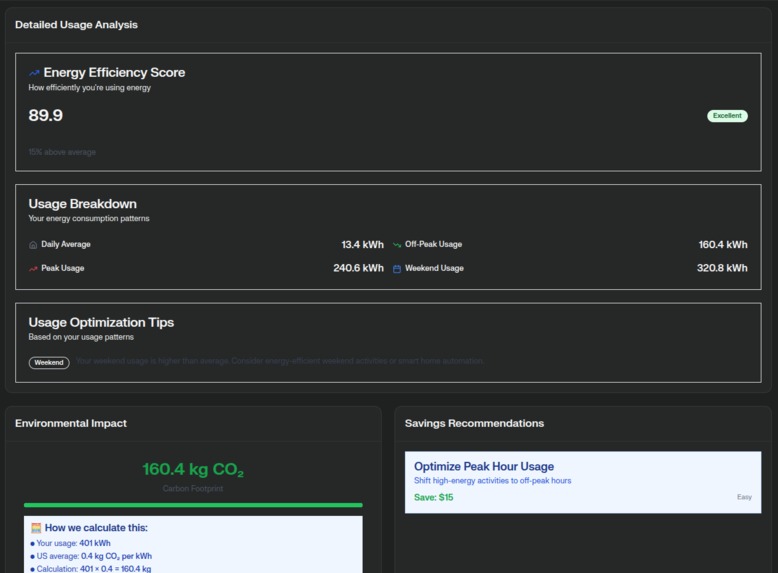
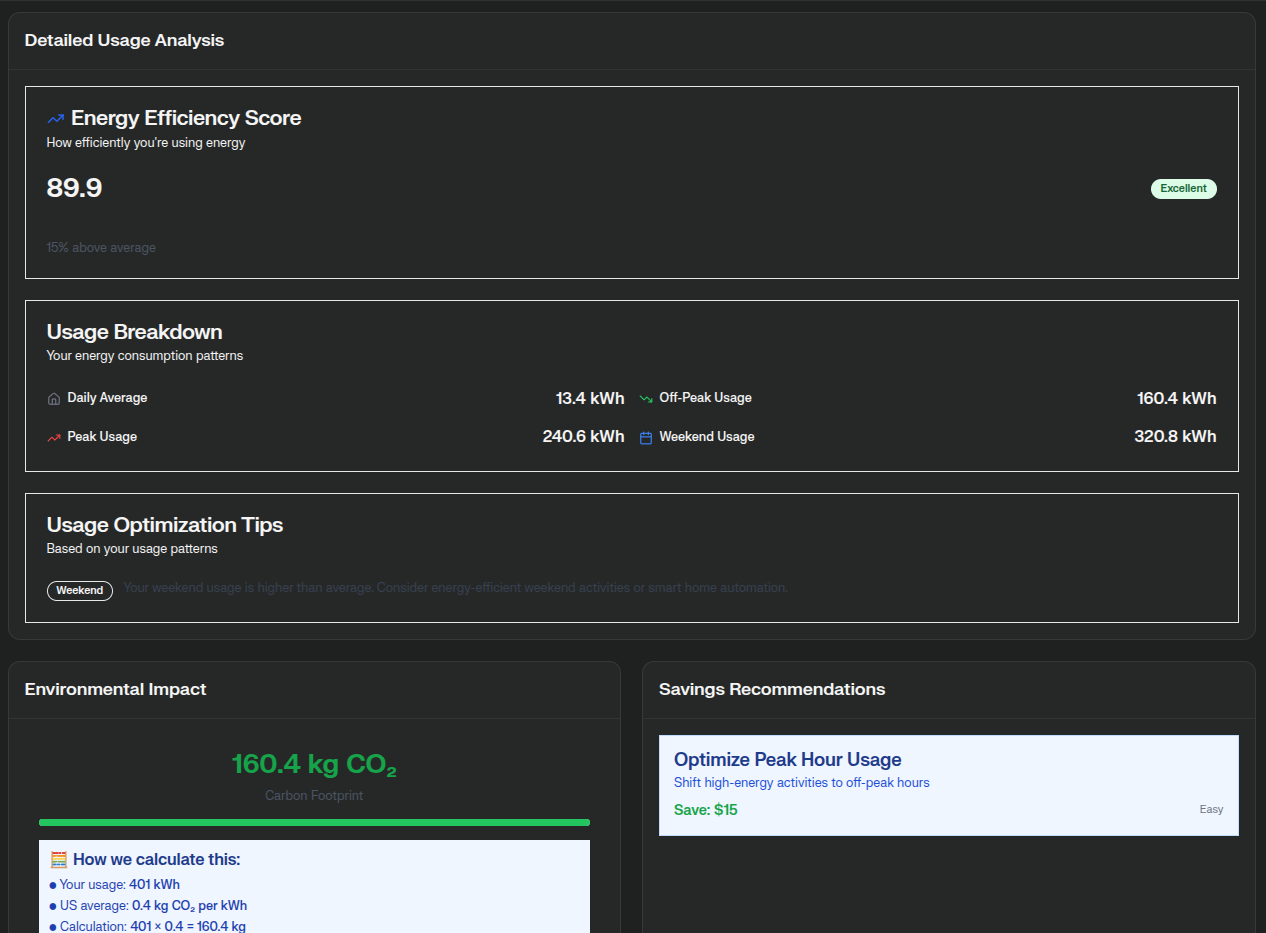
Net Carbon Emissions
WattWise: AI-Powered Energy Bill Analyzer
Inspiration
Energy bills are confusing — filled with cryptic charges, hidden fees, and unclear usage graphs. Most people simply pay them without knowing:
- Why was my bill so high this month?
- What exactly am I paying for?
- How can I reduce my energy consumption?
WattWise was built to answer these questions.
Our vision: Make energy bills as easy to understand as a bank statement.
What It Does
WattWise instantly analyzes any energy bill (PDF, scanned copy, or photo) and provides:
- Clear cost breakdown of charges and fees
- Usage insights across daily, monthly, and seasonal patterns
- Carbon impact in real-world equivalents (miles driven, trees planted)
- Personalized recommendations for energy savings
How We Built It
Tech Stack
- Frontend: Next.js 13, TypeScript, Tailwind, shadcn/ui
- Backend AI: Python Flask API with Ollama (Llama 3.2)
- PDF & OCR: pdfplumber, EasyOCR
- Deployment: Render (frontend + backend)
Architecture Highlights
- Multi-layered PDF parsing (text-first, OCR fallback)
- AI-powered recognition across utility companies
- Lightweight CSS-based charts (optimized for memory limits)
- Graceful fallbacks when AI or services are unavailable
Challenges We Overcame
Messy PDFs – Some had selectable text, others were scanned images.
Solution: Built a layered extraction pipeline: pdfplumber → OCR → server fallback.Memory Limits – Render’s free tier couldn’t handle heavy libraries.
Solution: Replaced Chart.js with CSS visualizations, added code-splitting.AI Reliability – Ollama could be slow or unavailable.
Solution: Added caching, mock responses, and graceful degradation.Bill Format Chaos – Every utility company had unique formats.
Solution: Hybrid parsing system with regex + ML adaptation.
Key Features
- Cost breakdown with simple visuals
- Usage patterns to identify peaks and seasonal trends
- Carbon footprint with real-world equivalents
- Savings recommendations tailored to user habits
- Accessibility: mobile-friendly, WCAG compliant, sub-3 second load
What We Learned
- AI integration requires resilience and fallbacks
- Performance optimization is critical under resource constraints
- Sustainability data must be clear, relatable, and actionable
Future Vision
- Smart home integration with IoT devices for real-time monitoring
- Community features for comparing usage with neighbors
- Predictive analytics to forecast bills and suggest optimal usage times
- Direct partnerships with utility providers
- One-click carbon offsetting through verified programs
Impact
- Cost Savings: 15–25% reduction in average household bills
- Environmental Awareness: Clear understanding of carbon impact
- Peace of Mind: No more surprise charges or confusing bills
Built with passion at Hackathon for a more sustainable future.
Links
- Live Demo: smart-energy-analyzer.onrender.com
- GitHub: github.com/yourusername/wattwise
Built With
- flask
- git
- javascript
- llm
- next.js
- ngrok
- ocr
- ollama
- python
- render


Log in or sign up for Devpost to join the conversation.