-
-
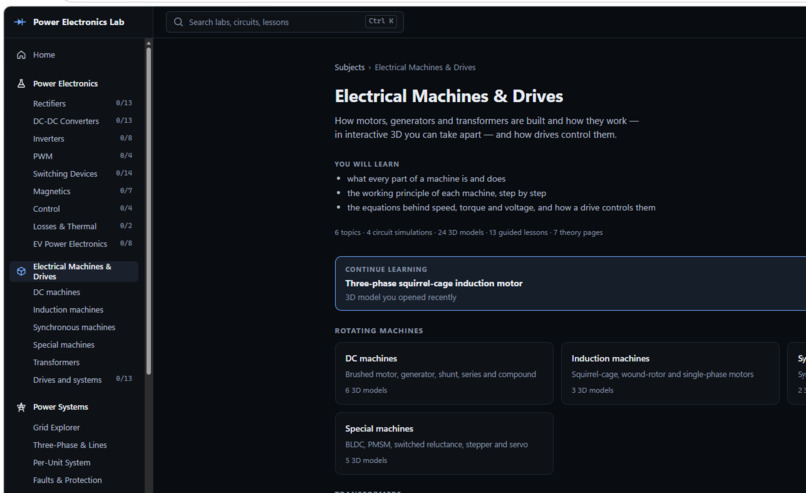
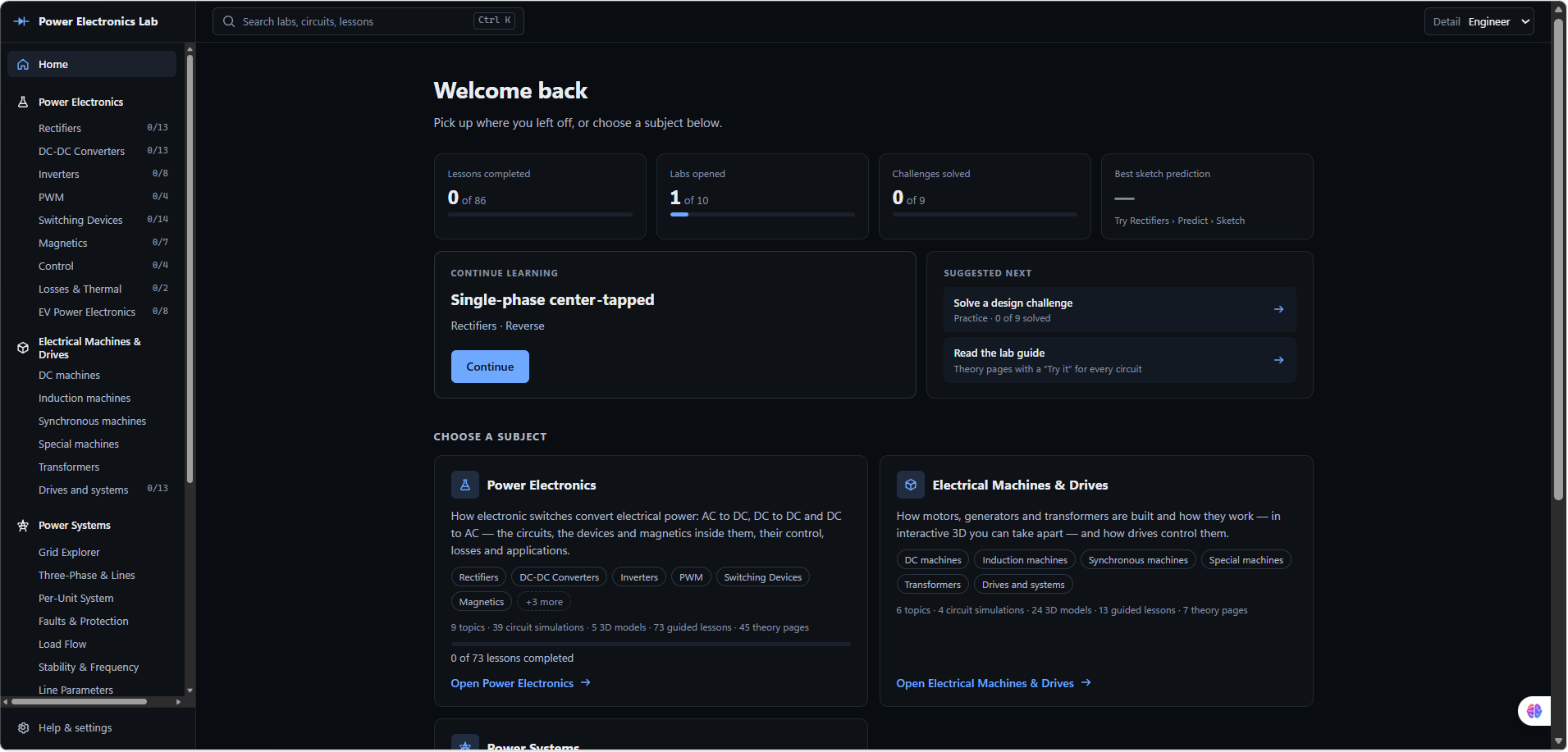
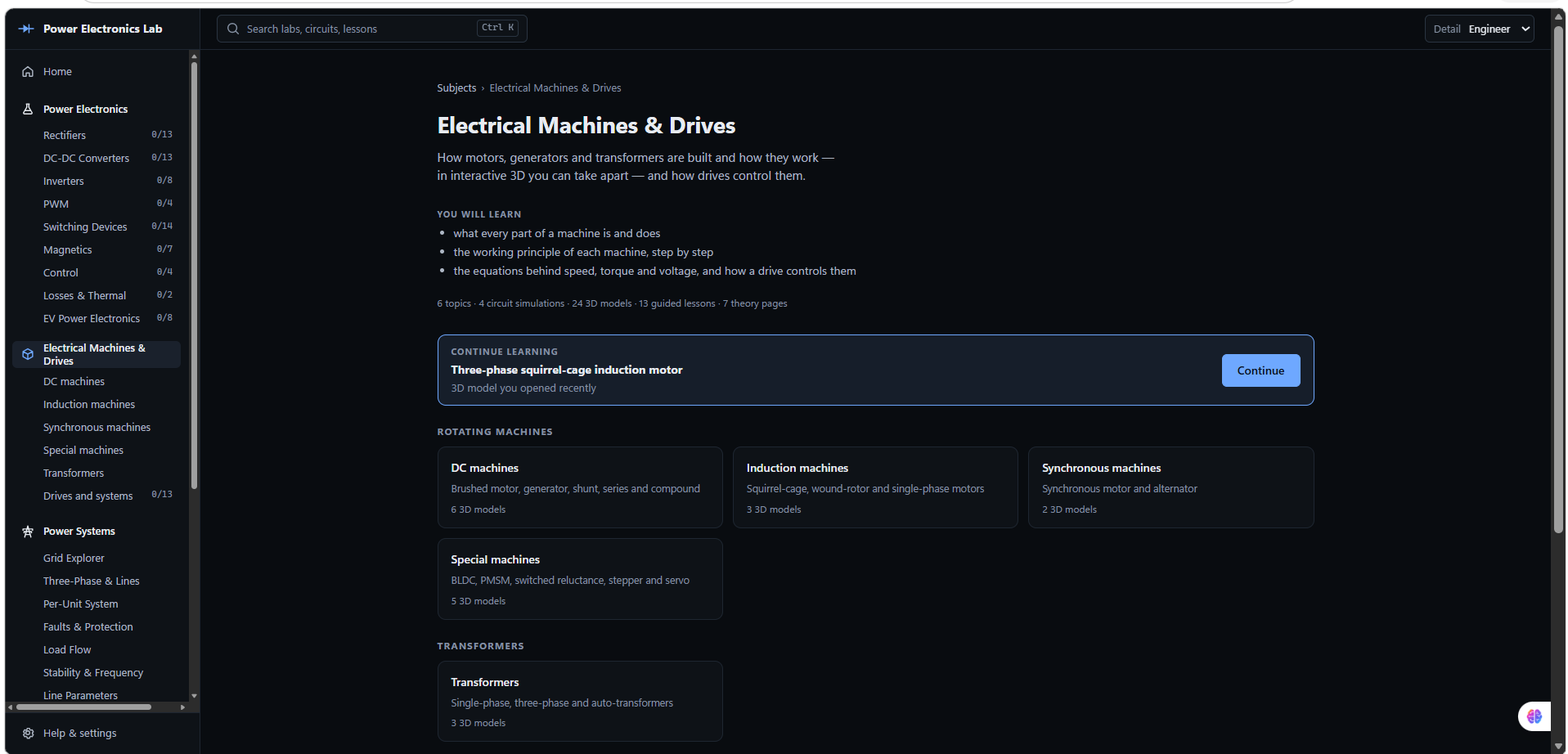
Navigate electrical engineering subjects through an organized, unified learning interface.
-
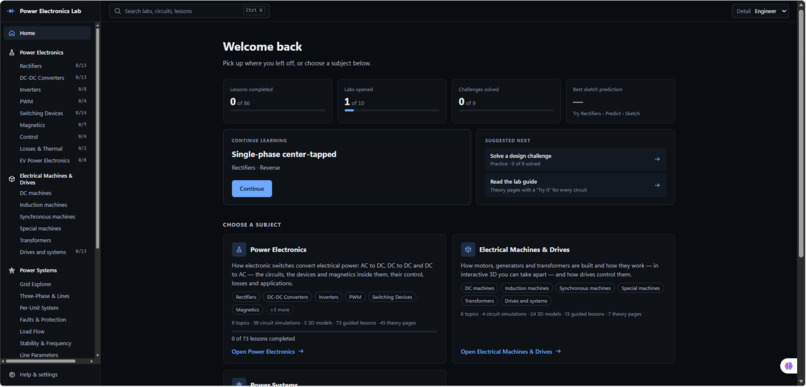
Access three electrical engineering subjects, track learning progress, and continue learning from one dashboard.
-
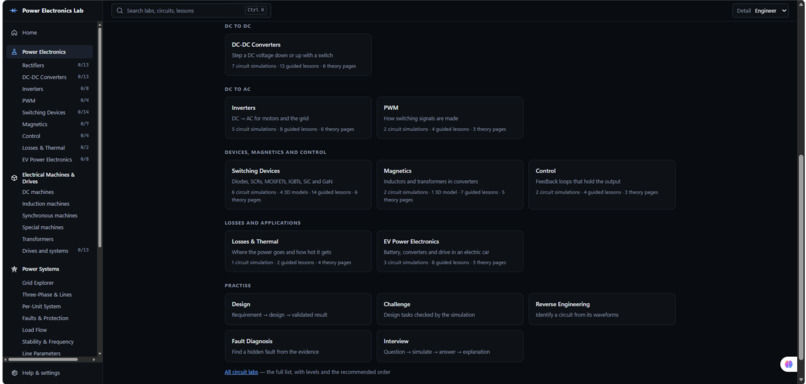
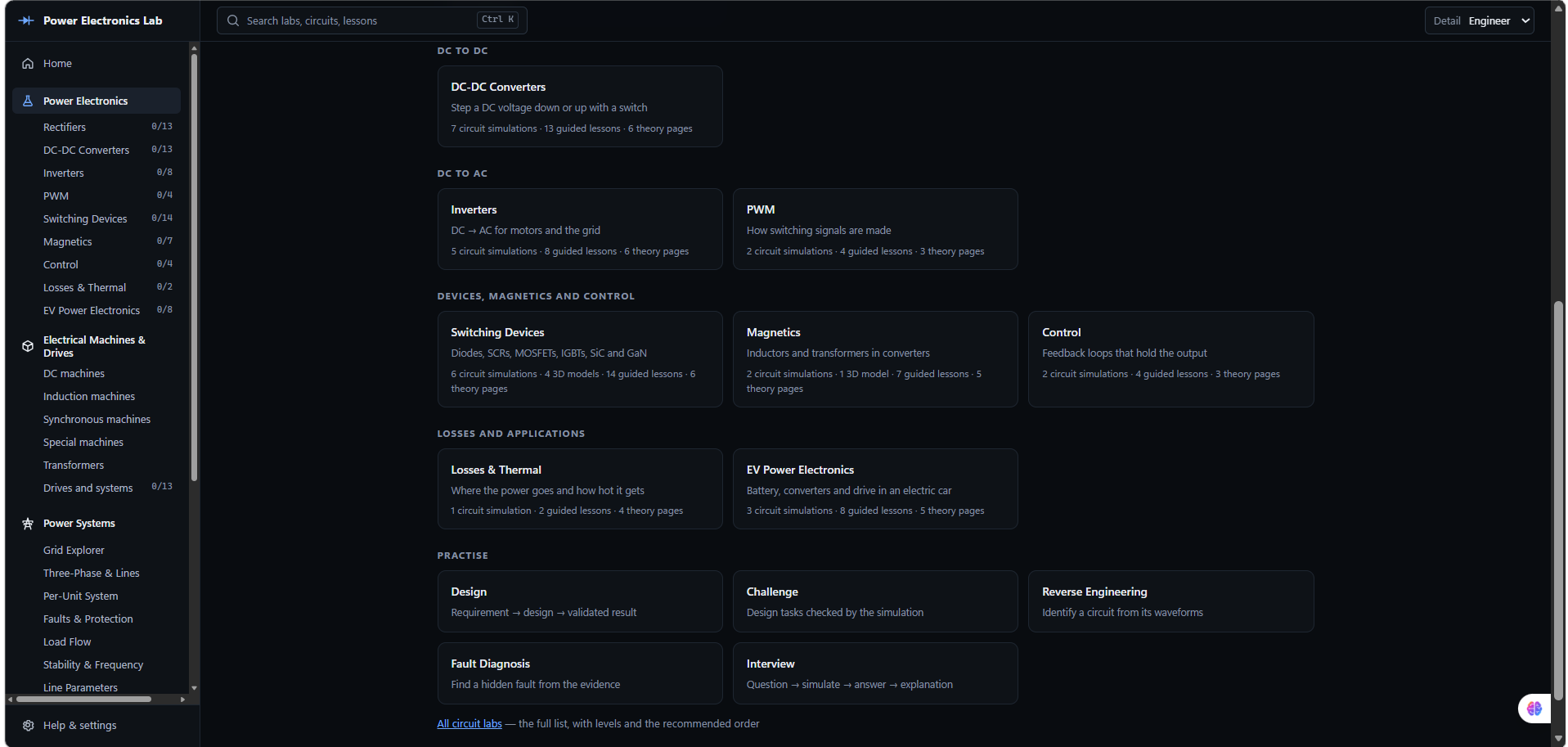
Explore rectifiers, converters, inverters, PWM, switching devices, magnetics, control, and EV applications.
-
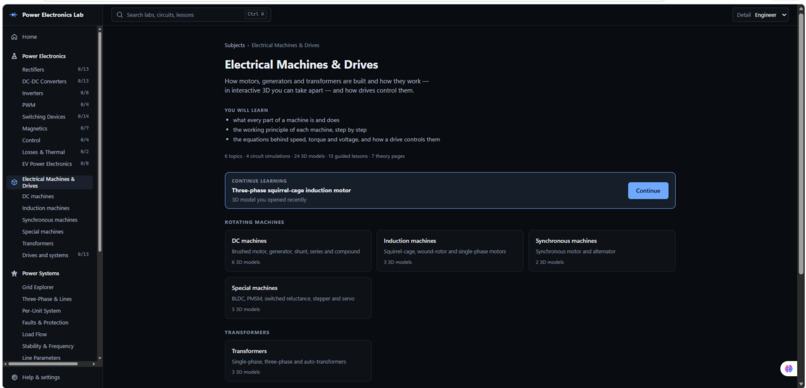
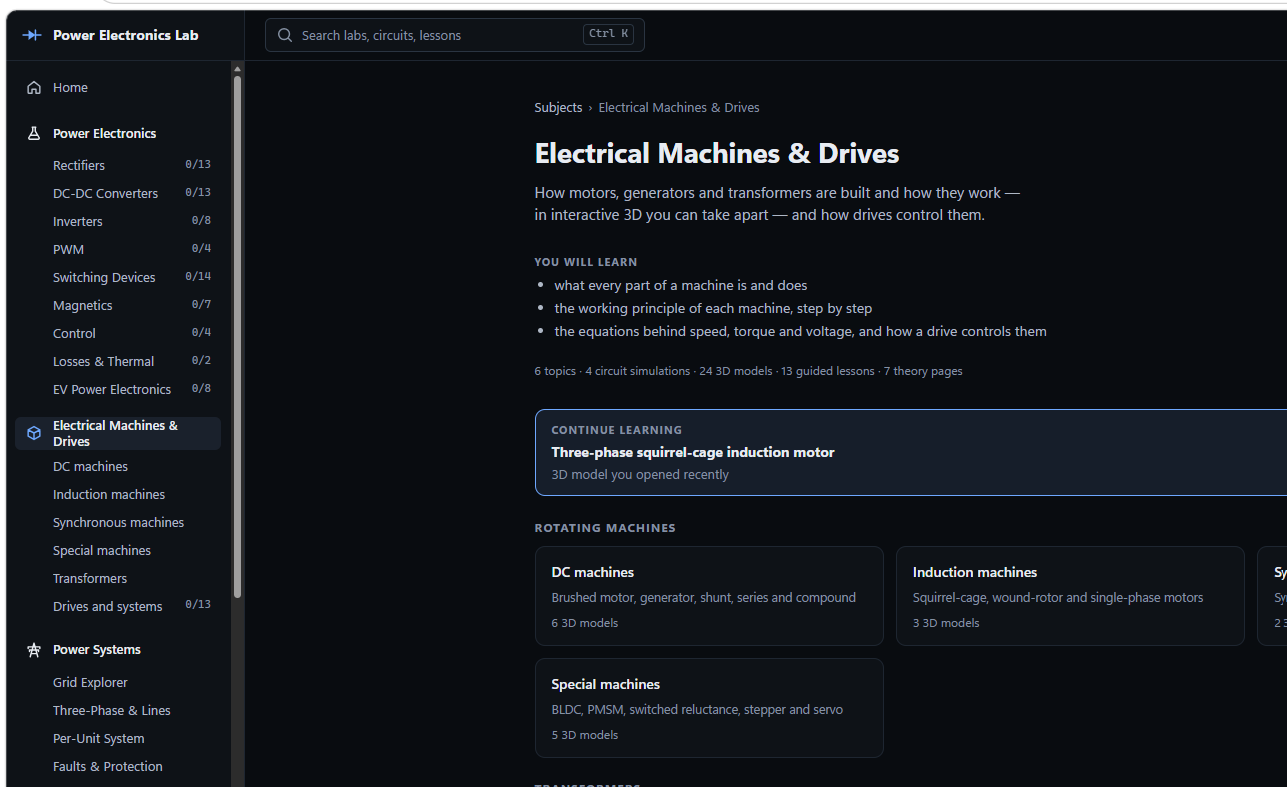
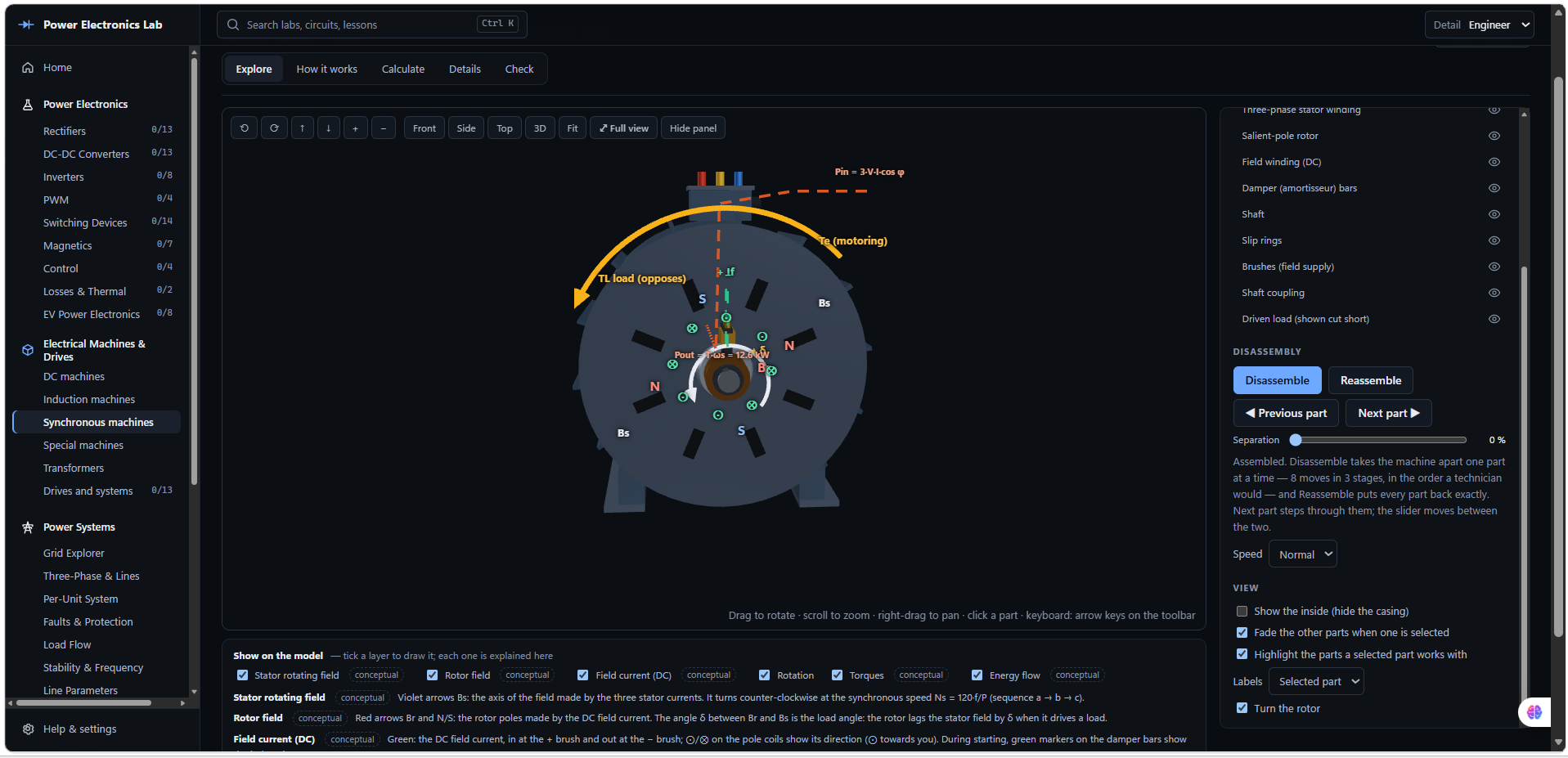
Learn DC, induction, synchronous, and special machines, transformers, and drives through 3D models.
-
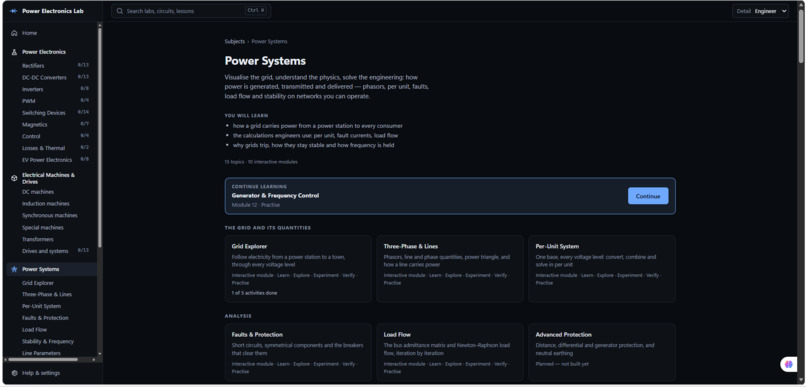
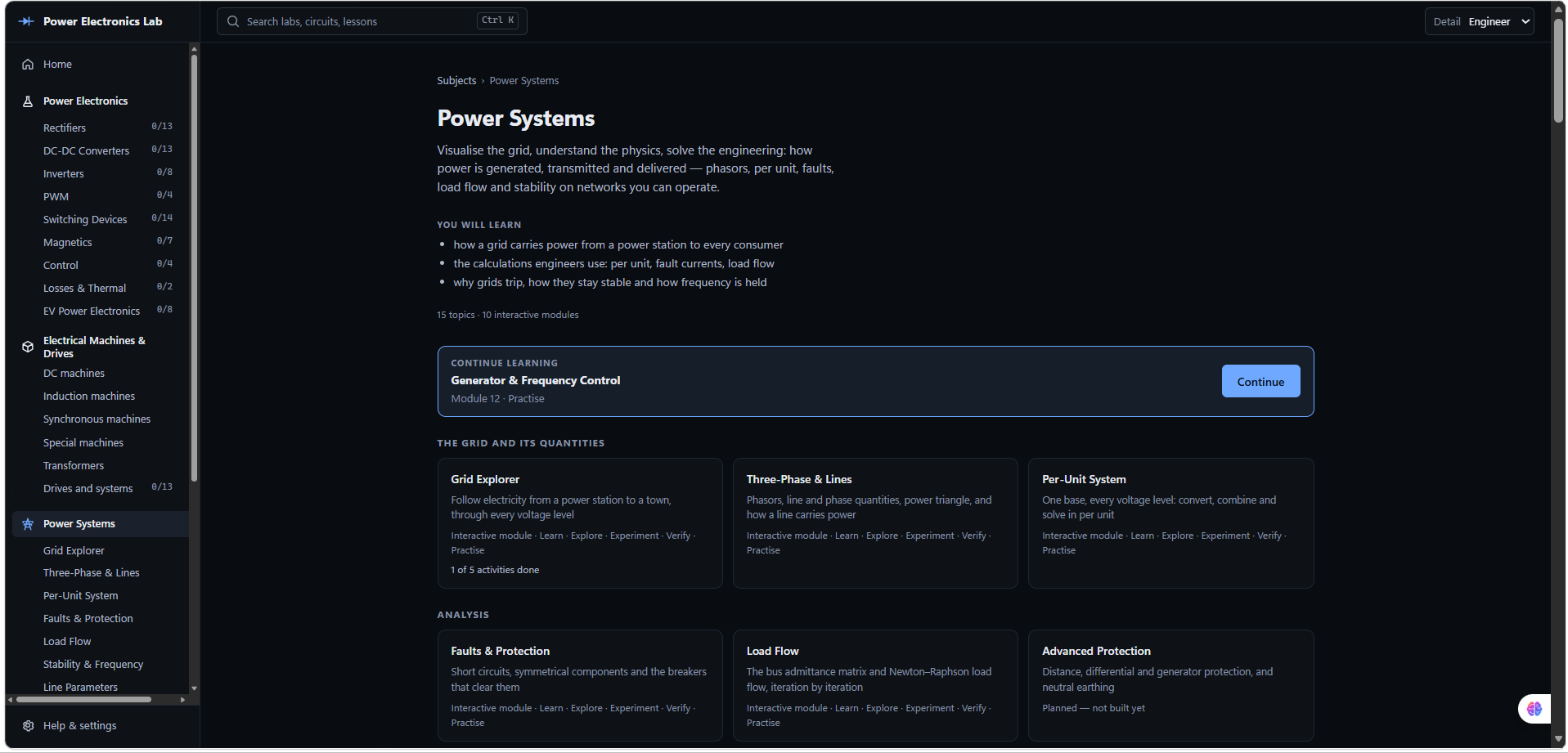
Explore interactive modules for grid operation, faults, load flow, stability, and protection.
-
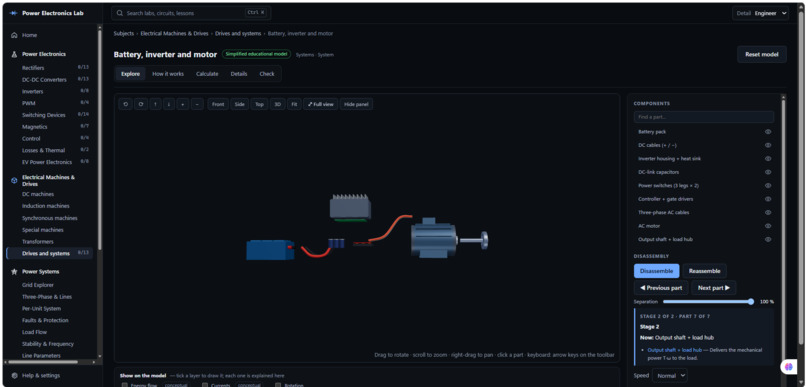
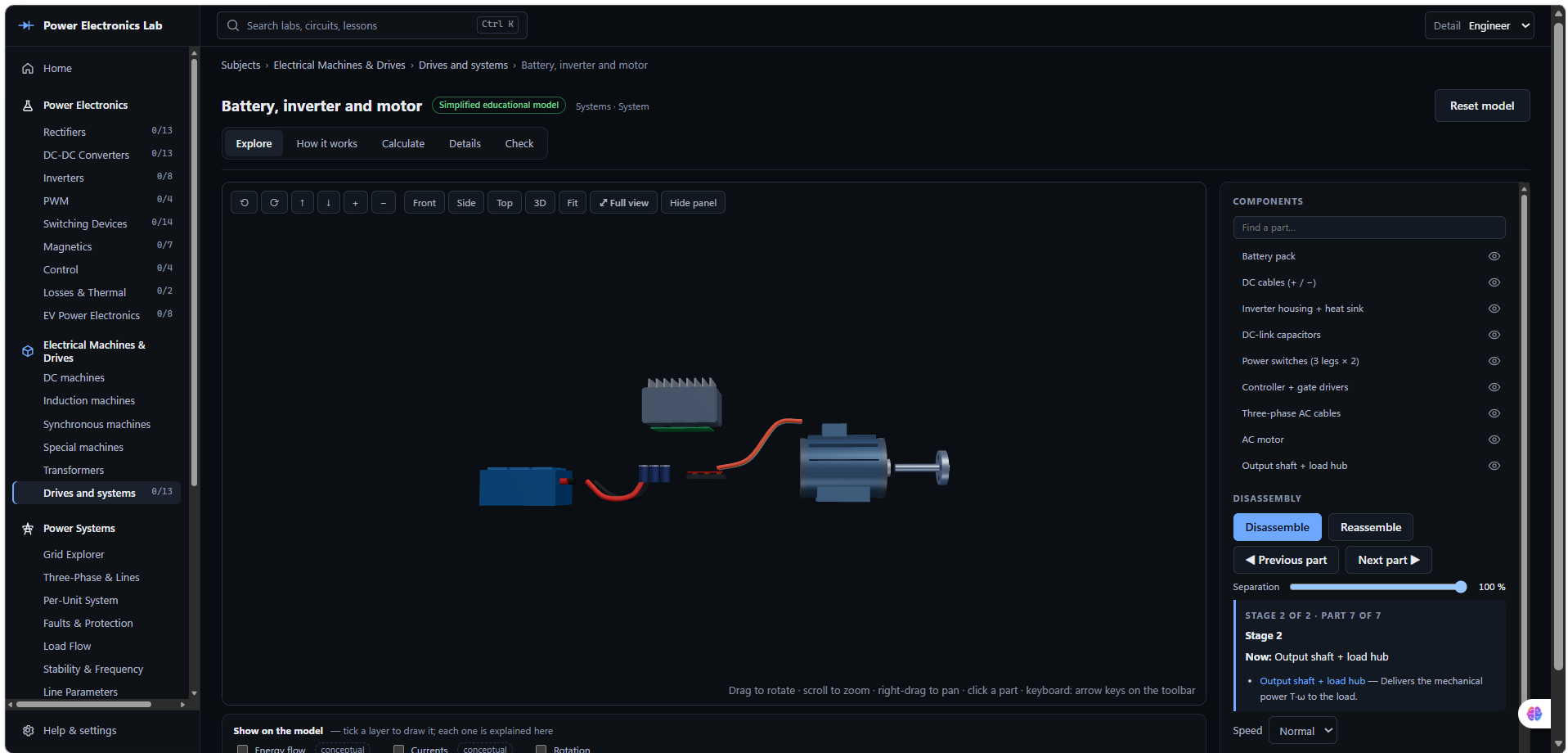
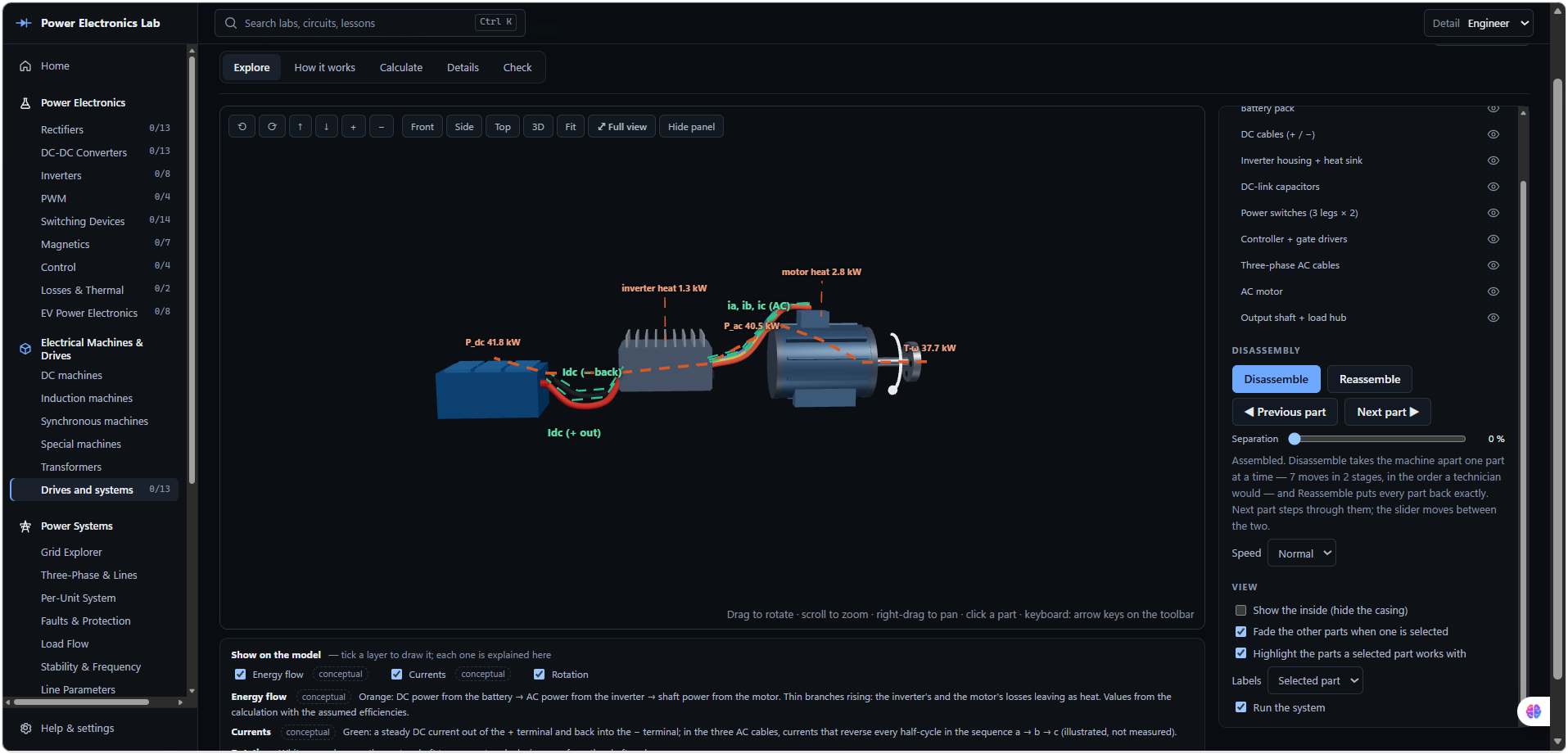
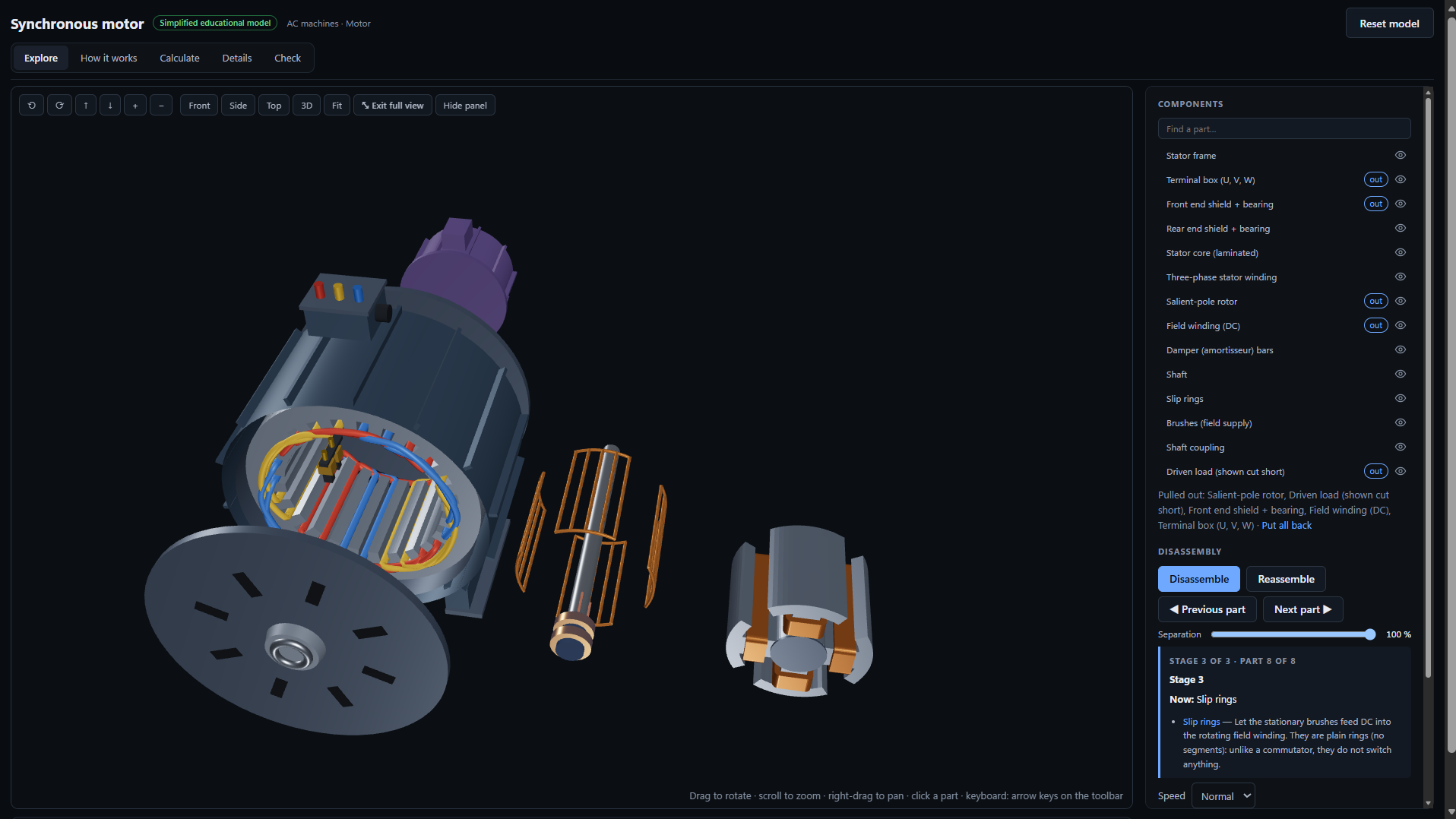
Explore individual powertrain components using interactive 3D disassembly and reassembly.
-
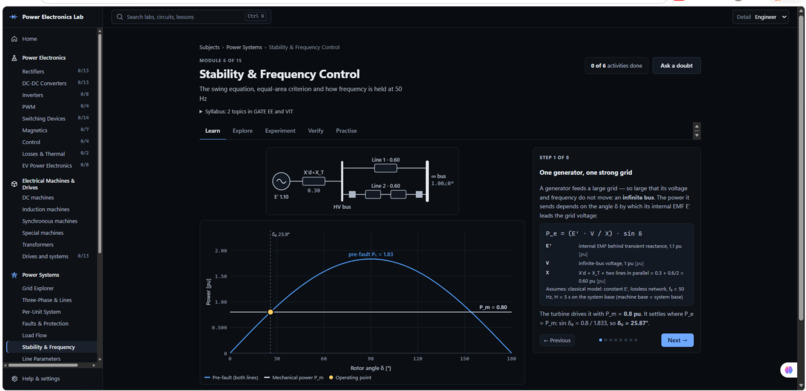
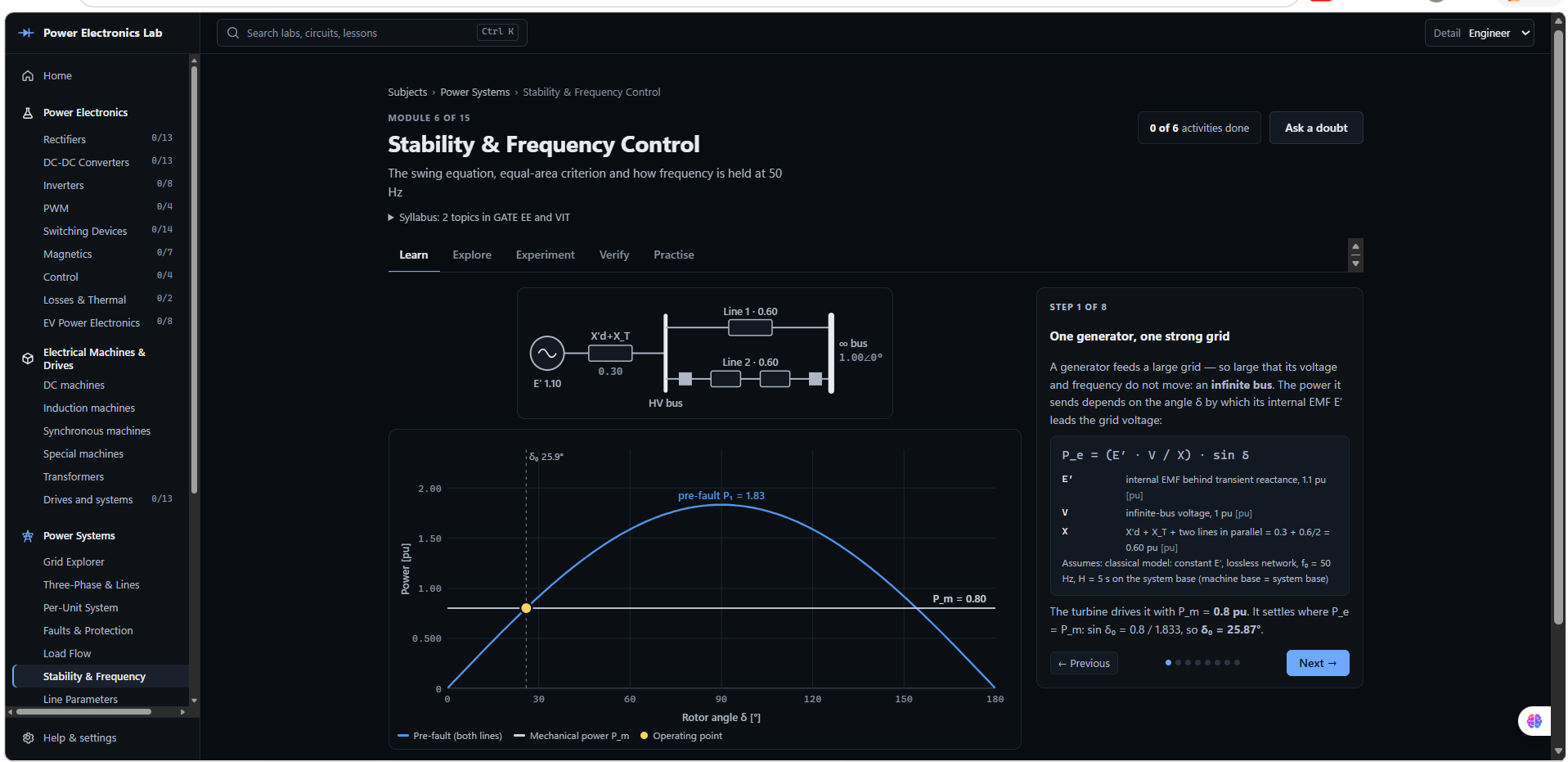
Interactive power-angle curves demonstrate generator stability, swing equations, and frequency control.
-
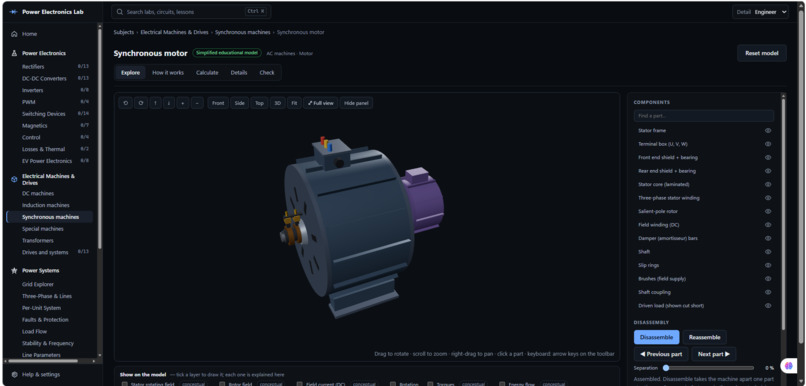
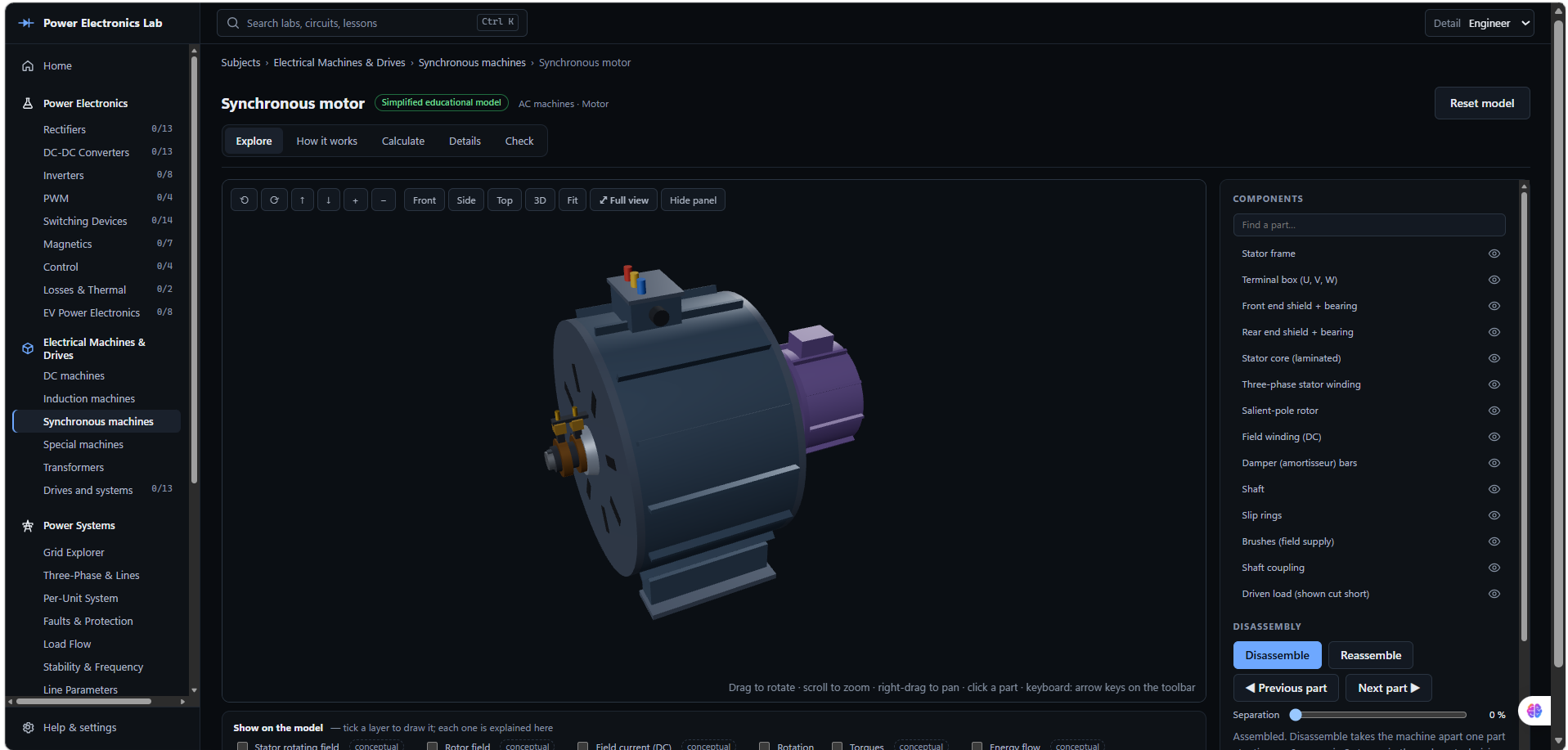
Rotate, zoom, and inspect a complete 3D synchronous motor with interactive component controls.
-
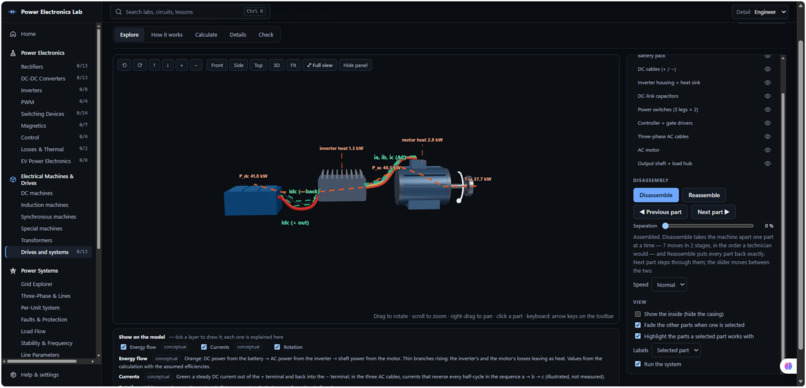
Visualize the battery, inverter, motor, electrical connections, power flow, and system losses.
-
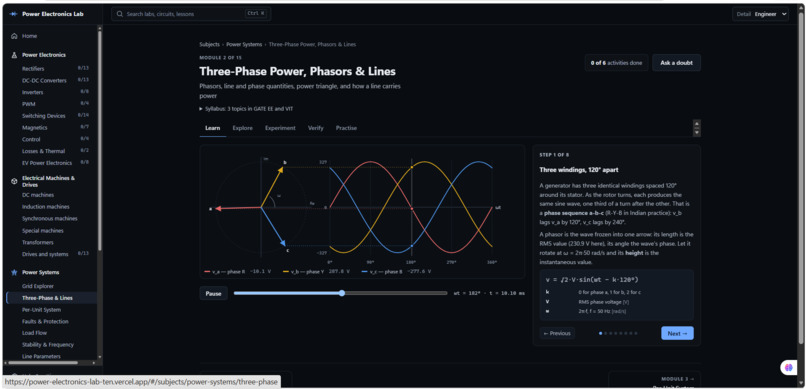
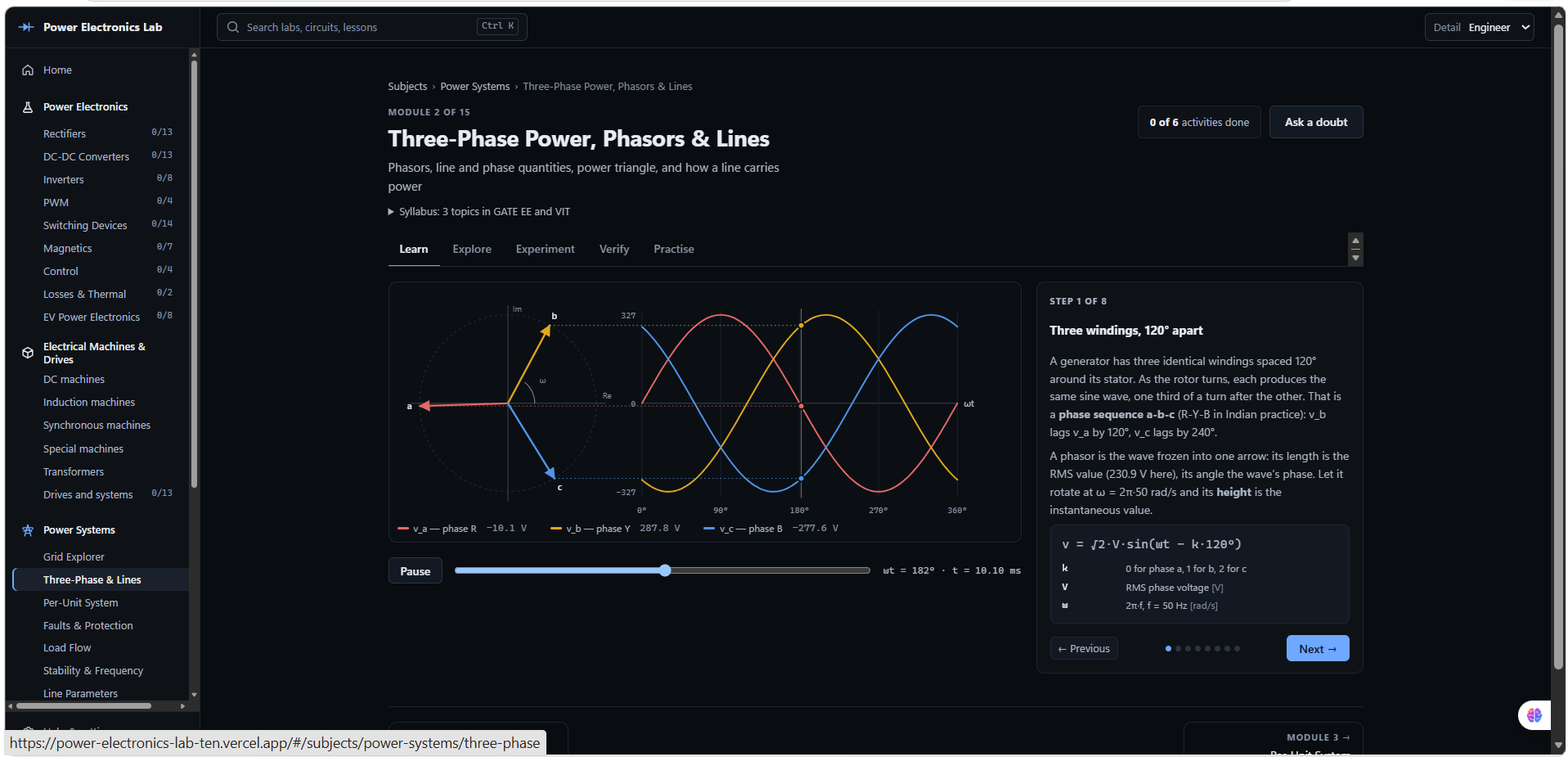
Explore animated three-phase waveforms, rotating phasors, and 120° phase differences.
-
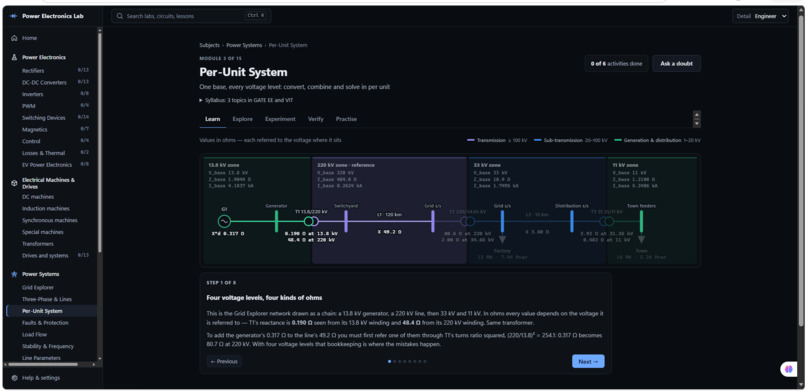
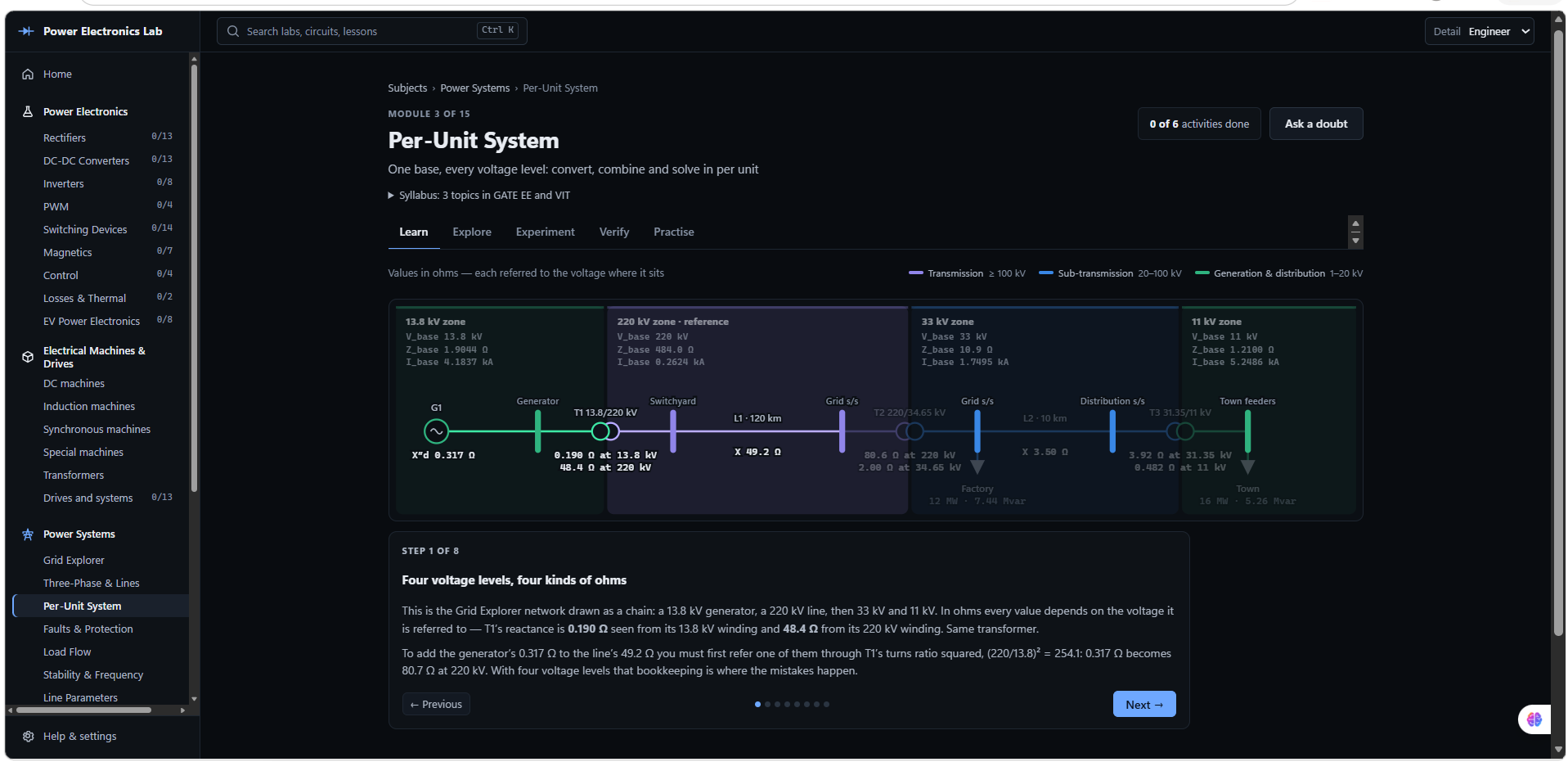
Visualize voltage zones, impedance conversion, transformer referral, and per-unit calculations.
-
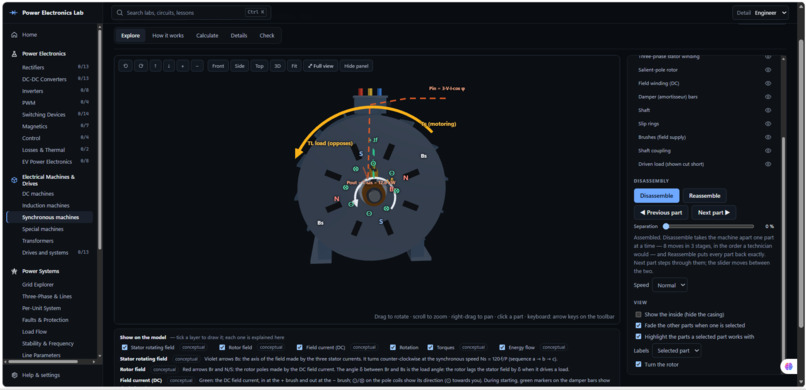
Understand rotor, stator, magnetic fields, field current, torque, and energy conversion in 3D.
-
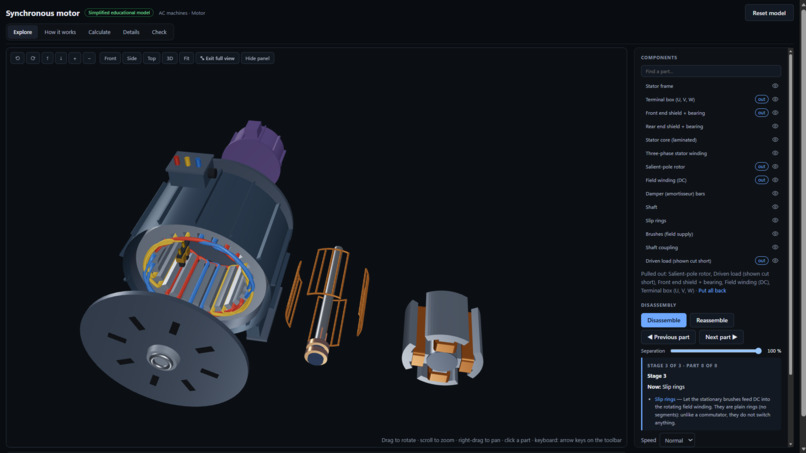
Inspect the stator, rotor, windings, slip rings, bearings, and other internal motor components.
Inspiration
What it does
How we built it
Inspiration
Electrical engineering is a fascinating field, but many students struggle to understand it because complex concepts are often taught using equations, static diagrams, and textbook explanations. It can be difficult to visualize how a rectifier converts AC to DC, how an electric motor works internally, or how power flows through an electrical grid.
This inspired us to build PowerLab, an interactive virtual laboratory that makes electrical engineering more visual, intuitive, and accessible. Our goal is to help students move beyond memorizing formulas and understand the actual working principles behind electrical systems.
What We Built
PowerLab brings three major areas of electrical engineering together in one learning platform:
Power Electronics: Interactive simulations of rectifiers, DC-DC converters, inverters, PWM, switching devices, magnetic components, control systems, losses, thermal behavior, and electric vehicle power electronics. Students can change parameters, observe circuit behavior, and analyze synchronized voltage and current waveforms.
Electrical Machines & Drives: An interactive 3D learning environment for exploring electrical machines, including DC machines, induction motors, synchronous machines, transformers, and drives. Students can inspect machine components, explore their construction, and understand how the different parts contribute to machine operation.
Power Systems: A visual and interactive environment for understanding electrical grids, three-phase power, transmission lines, per-unit calculations, faults and protection, load flow, stability, and frequency control. It also includes interactive engineering experiments and numerical challenges.
How It Works
PowerLab combines simulation, visualization, and guided learning. Students can adjust parameters, observe how the system responds, explore circuit behavior at different instants, and investigate why a particular result occurs. In Power Systems, they can explore network behavior and see how changes in loads, generators, and faults affect the system.
The platform also includes guided lessons, practice questions, experiments, engineering challenges, progress tracking, and an AI-powered doubt assistant to support independent learning.
Challenges We Faced
One of our biggest challenges was making the visualizations educational without sacrificing engineering accuracy. Waveforms, circuit states, numerical results, and explanations must remain consistent when a student changes a parameter.
Another challenge was designing interactive 3D machine models that allow students to explore individual components rather than simply view a rotating model. We also worked to make the platform beginner-friendly while retaining useful engineering details for advanced learners.
Building reliable numerical models, validating results, organizing multiple subjects into a consistent interface, and keeping the AI assistant secure were important parts of the development process.
What We Learned
This project helped us understand the importance of combining engineering fundamentals with software development, numerical modeling, visualization, testing, and user experience design. We learned that an effective educational tool must do more than display a result: it should help students understand why that result occurs.
What's Next
Our vision is to expand PowerLab with more interactive 3D models, additional power-system topics, richer experiments, and more guided learning experiences. We want to make it a practical companion for electrical engineering students preparing for university examinations, GATE, and real-world engineering applications.
PowerLab aims to turn electrical engineering from something students only read about into something they can explore, experiment with, and understand.
Challenges we ran into
Accomplishments that we're proud of
What we learned
What's next for PowerLab
Built With
- 3d-visualization
- css
- gemini-api
- javascript
- numerical-simulation
- playwright
- react
- three.js
- typescript
- vercel
- vite
- vitest
- webgl

Log in or sign up for Devpost to join the conversation.