-
-
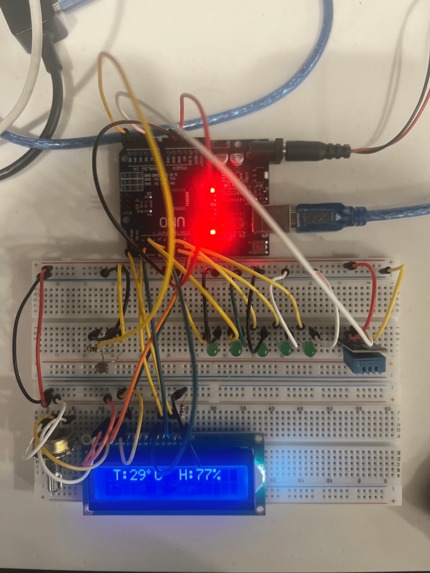
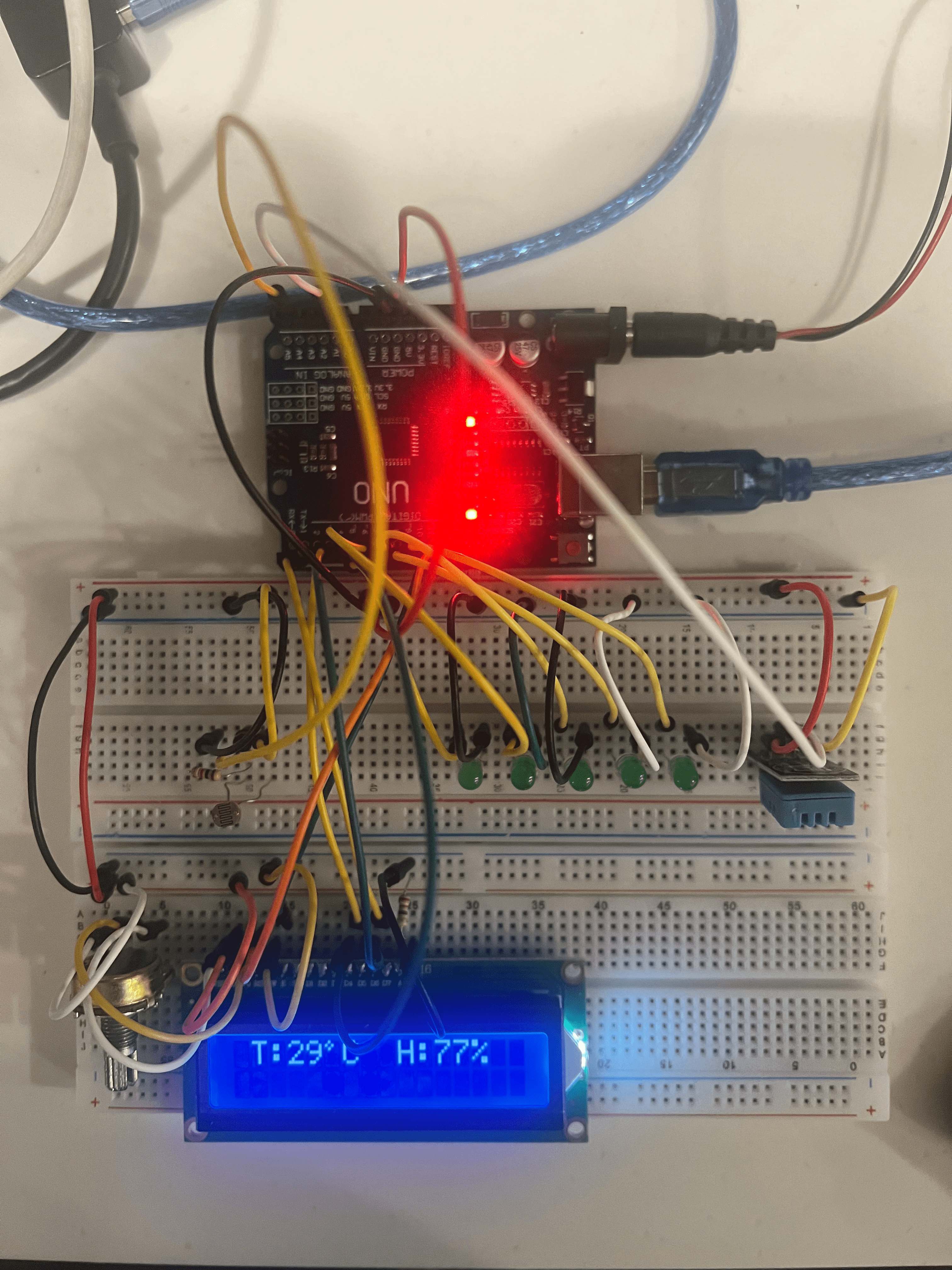
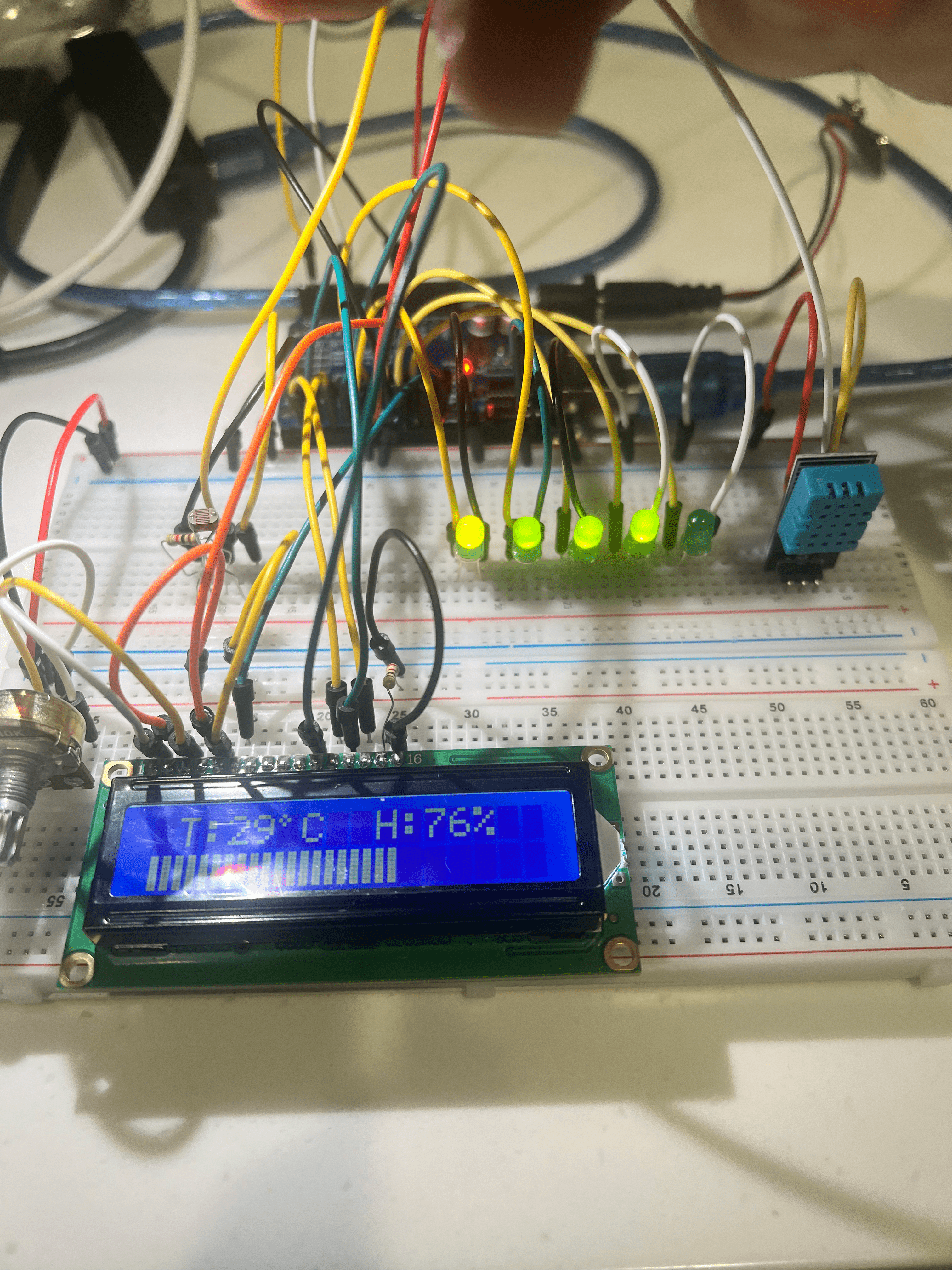
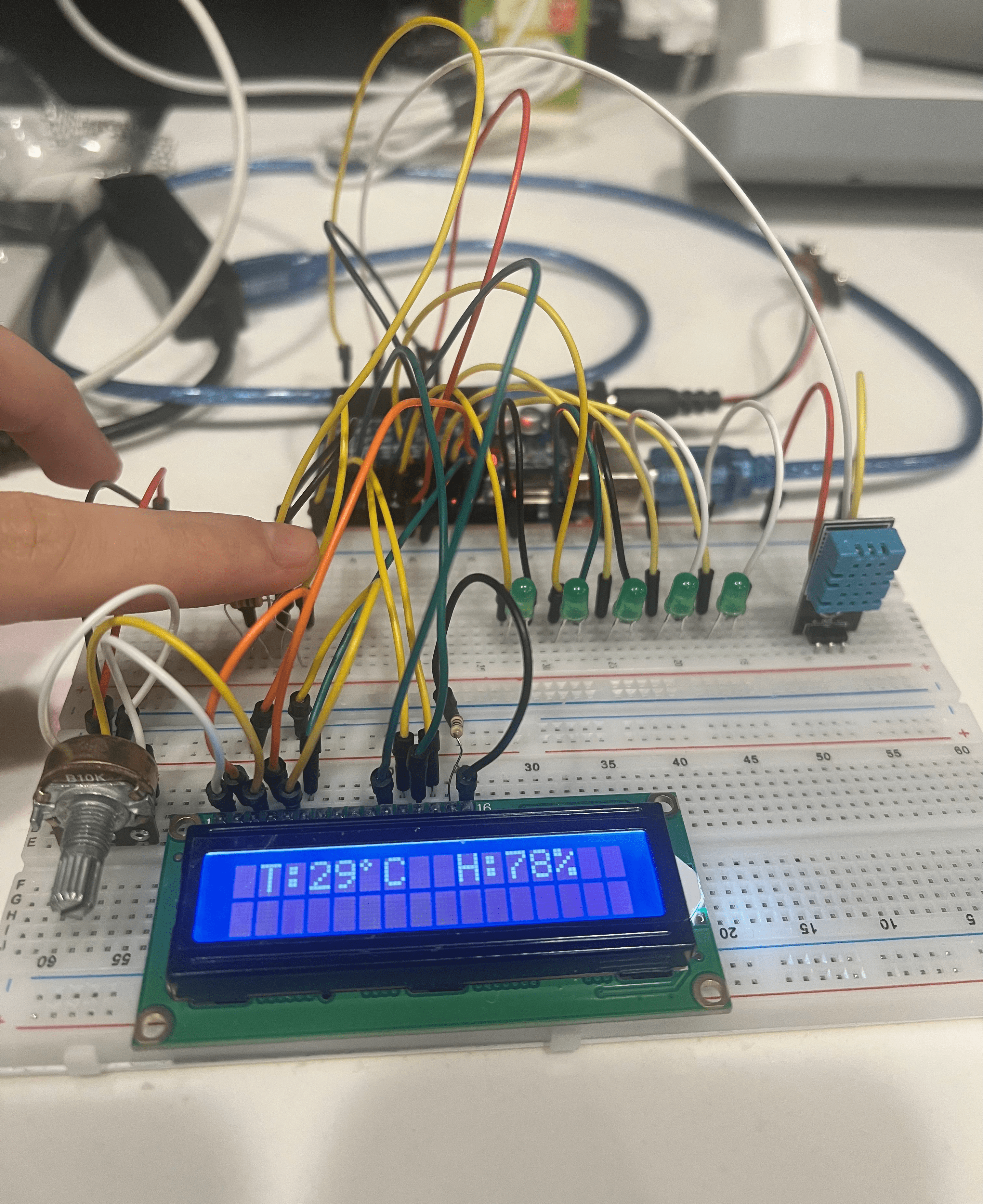
Arduino hardware with light, temperature and humidity sensors to determine weather conditions.
-
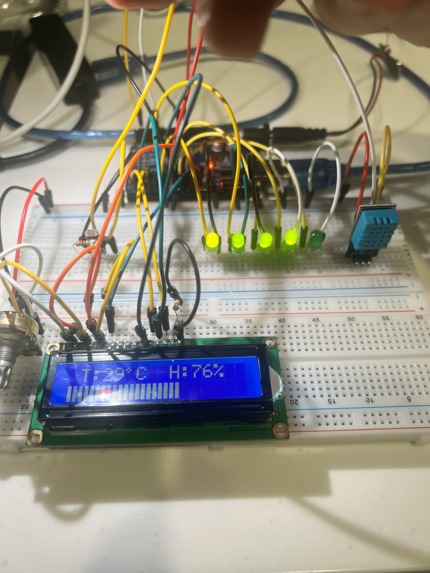
LCD when light source is near, along with DHT11 sensor. Bottom bar determines power production. LEDs determine the intensity of light.
-
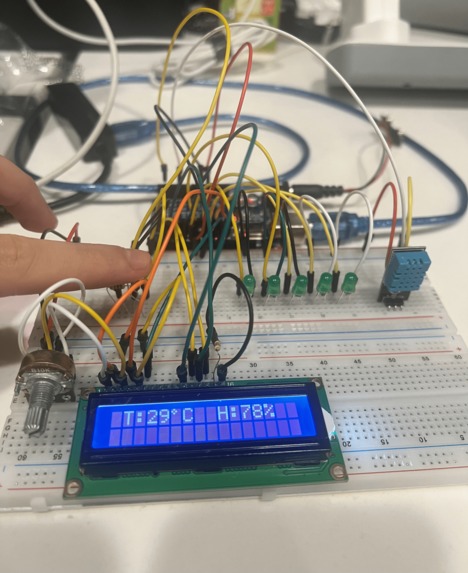
When little to no light, LEDs are turned off.
-
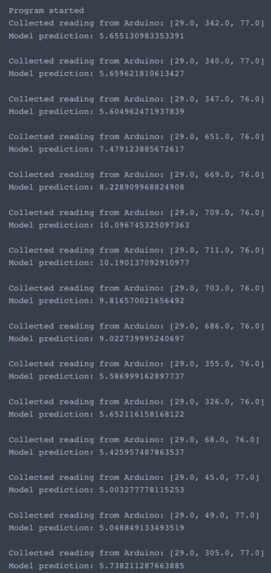
Model that constantly predict future power production based on surrounding weather factors such as, light, temperature and humidity.

Inspiration
As Singapore is a small nation with limitations on implementing renewable energy production, solar power is the future. With the upcoming Singapore-Australia solar power agreement, up to 15% of our energy produced would be supplied by Australia via solar panels. With plans to move towards becoming a smart nation, we realised the importance of smart energy production and management. Hence, this solution aims to help Singapore move towards this direction.
What it does
Power So-Lah utilises Arduino hardware which takes in environmental data such as temperature, light intensity and humidity via various sensors. These data is fed into our ML model from Arduino to predict future production of "solar panels" one hour in advance. Another ML model further predicts the energy demand for the following hour as well. Taken together, we can calculate and allocate the optimal amount of resources to meet the energy demand target. Hence, improving energy production management and efficiency.
How we built it
[Hardware] We used hardware components and Arduino code to receive real-world and real-time data to be fed into our model. [Software] We used datasets from Kaggle. Weather data, building dimensions, temporal factors and sector (i.e. education, retail, office etc.) to train and test our model for energy demand forecasts and, weather data, location data and irradiation to train and test our model for solar energy production forecasts. [Hardware & Software] After training our models, we coded Arduino scripts and Python scripts to receive data from our hardware to be used in our predictions. After going through the model, the data generated will be fed back to Arduino where it's LEDs and LCD display will show the model predictions at real-time.
Challenges we ran into
- Getting the ML model to produce meaningful and reliable results (i.e. being able to train properly on the training sets).
- Data cleaning, making sense of the data we found online.
- Finding good features.
Accomplishments that we're proud of
- Eventually the ML model worked and produced a sensible set of results for our usage.
- We managed to link Arduino to Python for real-time data processing, and Python to Arduino for displaying of processed data.
- Managed to implement a complex hardware circuit with no prior experience.
What we learned
We learnt a lot. We faced many issues with data cleaning and data analytics. We had to clean the data, check the models and run them multiple times to ensure that we got the results that was the most logical, sensible and meaningful. Incorporating hardware and software can be a fun but challenging moment.
What's next for Power So-Lah!
We hope to find better data to further improve our model for prediction. The hardware components are quite rudimentary and may not be the most accurate (though it is good enough for our current use).
Appendix
1) Auto, H. (2020, July 30). Australia fast-tracks plan to send solar power to Singapore. The Straits Times. Retrieved October 2, 2022, from https://www.straitstimes.com/business/economy/australia-fast-tracks-plan-to-send-solar-power-to-singapore
2) Person. (2022, June 24). Sun Cable's Australian Solar Power Export Project deemed investment ready. Reuters. Retrieved October 2, 2022, from https://www.reuters.com/business/energy/sun-cables-australian-solar-power-export-project-deemed-investment-ready-2022-06-24/
3) Shahane, S. (2021, March 28). Horizontal photovoltaic power output data. Kaggle. Retrieved October 3, 2022, from https://www.kaggle.com/datasets/saurabhshahane/northern-hemisphere-horizontal-photovoltaic
4) Singapore Energy Statistics. EMA. (2022, March 16). Retrieved October 2, 2022, from https://www.ema.gov.sg/Singapore_Energy_Statistics.aspx
5) Machine learning modeling of horizontal photovoltaics using weather and ... (n.d.). Retrieved October 2, 2022, from https://www.researchgate.net/publication/341511536_Machine_Learning_Modeling_of_Horizontal_Photovoltaics_Using_Weather_and_Location_Data
6) Ashrae - Great Energy Predictor III. Kaggle. (n.d.). Retrieved October 3, 2022, from https://www.kaggle.com/competitions/ashrae-energy-prediction/data
Built With
- arduino
- linear-regression
- machine-learning
- neural-network
- python
- tensorflow

Log in or sign up for Devpost to join the conversation.